
Posted in Daily, Food

Jelly with the Beans

“You can tell a lot about a fellow’s character by his way of eating jelly beans.”  Ronald Reagan

What happens on hybridization of Turkish Delights ( sweet, chewy candy with powdery sugar coating) and Jordan almonds ( almonds encased in a crunchy sugar shell) ? Possibly it may lead to the creation of “the classic candy with a soft chewy center and thin crunchy coating” , famously known as “jelly beans”. For avid Harry Potter readers, “Bertie Botts” may sound familiar with flavours of Banana, Black Pepper, Blueberry, Booger, Candyfloss, Cherry, Cinnamon, Dirt, Earthworm, Earwax, Grass, Green Apple, Marshmallow, Rotten Egg, Sausage, Lemon, Soap, Tutti-Frutti, Vomit and Watermelon.

The exact origins of jelly beans aren’t known. While the Mid Eastern confection of Turkish delight has been there since B.C.; the shell coating process known as “panning” can be traced to the cooks of the Royal Court in 17th century France. Over time, as the two process made its’ way to the Americas and the earliest known appearance of Jelly Beans has been credited there. One commonly cited but unconfirmed proof was an advertisement (1861) for William Schrafft (Boston) promoting the delivery of jelly beans to soldiers in the Union Army duting the Civil War.

Initially, (late 1800s, early 1900’s) jelly beans were sold by weight as penny candy in general stores and taken home in paper bags. By 1930s, jelly beans became part of the Easter holiday partially as it fit in well with its’ round egg-like shape, which was a symbol of the renewal of spring.

Why “jelly” and “bean” ? With candy-makers trying out novelty shapes for candy, the Goelitz family candy-makers has archive lists with candies as vegetables, chestnuts, carrots and turnips as well as bunnies for Easter. Once the bean shaped soft jelly came with shell that won’t let them stick, the name “Jelly beans” have stayed on.

Ever since 1976, there have been two types of jelly beans, gourmet (smaller, softer with shell and middle both flavoured) and traditional (only shells are flavoured). Their basic ingredients include sugar, tapioca or corn syrup, pectin or starch with relatively minor amounts of the emulsifying agent lecithin, anti-foaming agents, an edible wax (carnauba wax, beeswax), salt, confectioner’s glaze and flavouring agents. Depending on the type and flavours, jelly beans take approximately six to ten days to be made. National Jelly Bean Day has been celebrated (April 22nd) by foodimentarians worldwide. With endless flavour possibilities available as well as satisfying the palate and creating edible works of modern art, their popularity still holds true today.

“Jelly beans! Millions and billions of purples and yellows and greens and licorice and grape and raspberry and mint and round and smooth and crunchy outside and soft-mealy inside and sugary and bouncing jouncing tumbling clittering clattering skittering fell on the heads and shoulders and hardhats and carapaces of the Timkin works, tinkling on the slidewalk and bouncing away and rolling about underfoot and filling the sky on their way down with all the colors of joy and childhood and holidays, coming down in a steady rain, a solid wash, a torrent of color and sweetness out of the sky from above, and entering a universe of sanity and metronomic order with quite-mad coocoo newness. Jelly beans!” ? Harlan Ellison (“Repent, Harlequin!” Said the Ticktockman)

Posted in Daily, Life, Quotes, Reflections

Over the Years

“Another adventure filled year awaits you. Welcome it by celebrating your birthday with pomp and splendor. Wishing you a very happy and fun-filled birthday!”

“Count not the candles…see the lights they give. Count not the years, but the life you live. Wishing you a wonderful time ahead. Happy birthday.”

While writing or receiving birthday messages to friends, family and colleagues; one is often reminded of how fragile age, time and life are. In the quest in our life for happiness, two of the many things that never stop are time and age. Growing old is never easy for one is not only reminded of the passing time and unfulfilled dreams but also of the follies and lost opportunities of each year.

“Middle age is when you still believe you’ll feel better in the morning.” Bob Hope

We often wait for happiness round the corner, yet what comes is age. In fact old age approaches us without knocking but walking on stepping over the so called hurdles in her path. Initially we dread growing old, but later when we learn to take it as it comes and move ahead accordingly, each year becomes a gift of God with knowledge and wisdom being imparted at the right time.

“Old age is like everything else. To make a success of it, you’ve got to start young.” Fred Astaire

No one knows how long we will or how will we be then. Life is indeed a gift, precious and precarious. Let each drop from the cup be drained savoring the taste and learning to embrace the heat, bitterness, sweet, salt or cold as it comes, without spilling or cribbing along the way for long. Living life on earth with strong roots of mental, emotional and spiritual presence is important in order to make the physical entity that we have remain happy, satisfied and at peace within.

“We have to be able to grow up. Our wrinkles are our medals of the passage of life. They are what we have been through and who we want to be.” Lauren Hutton

Posted in Christian, Life, Personal Musings, Reflections

Of Easter, Hope and New Beginnings

“Jesus said to her, “I am the resurrection and the life. Whoever believes in me, though he die, yet shall he live.” (John 11:25 )

Easter, known as Pascha (Greek, Latin) or Resurrection Sunday, celebrates the resurrection of Jesus from the dead, occurring on the third day of his burial after his crucifixion by the Romans at Calvary c. 30 AD.

For the practicing Christian, Easter symbolizes love, forgiveness, renewal and hope. It signifies the ultimate triumph against the inner conflict of sin, that man is always prone to. Easter also highlights the grace of God, the ultimate sacrifice of His Son as well as new beginnings through Christ.

“God loves each of us as if there were only one of us.” Saint Augustine

Sacrifice is never easy. The modern day concept of love often mars the age old concept of “sacrifice”. Today the love is affirmed by open declarations and shows of splendour, lavishness, gifts and many more outlandish, expensive or exotic ways; all more or less involving materialism, wealth, money and riches. The old love of making a cup of tea for the better half, picking up cloths and socks off the floor to help reduce the chores, helping in the cooking, cleaning, washing and above all, making time to be just there at the most difficult, stressful times as well as lending an ear and hand, all involves “love” of the sacrificial type. To discern the true bonds of love among “better halves”, family and friends, is never easy but involves immense and mutual understanding, kindness, sacrifice, acceptance and forgiveness.

“Love always involves responsibility, and love always involves sacrifice. And we do not really love Christ unless we are prepared to face His task and to take up His Cross.” William Barclay

How more magnificent is the love and grace of God towards his creation, Man. Sacrificing His Son for the sins of man, even though He was innocent. Agape love or “selfless, sacrificial, unconditional love” describes the kind of love Jesus Christ has for his Father and for his followers.” As the Corinthian Love teaches us ( 1 Corinthians 13:4-8), love can indeed go a long way to bring humaneness back into the modern living.

“But the angel said to the women, “Do not be afraid, for I know that you seek Jesus who was crucified. He is not here, for he has risen, as he said.” (Matthew 28:5-6)

The proof of Good over Evil, Right over the Wrong and Truth over Sin, is highlighted by the resurrection of Christ, marking Easter. The significance of Eternal Life is highlighted. Although man decries his own fellow beings with heresy, false accusations, biased notions and framed wrong doings; in the end truth will always be revealed, if not now then later. Through His Resurrection, the war against good and evil is highlighted; bringing second chances as well as hope to man.

“In him we have redemption through his blood, the forgiveness of our trespasses, according to the riches of his grace, which he lavished upon us, in all wisdom and insight making known to us the mystery of his will, according to his purpose, which he set forth in Christ as a plan for the fullness of time, to unite all things in him, things in heaven and things on earth.” Ephesians 1:7-10

The underlying theme of Christian faith is echoed in Easter. Echoed through the concept of living sacrifice, as seen through Easter, the worldly lives don’t conform by the rules of the world, but by the laws of the Lord and the fruits of the Holy Spirit. True Faith involves love, hope, kindness, gentleness and above all, forgiveness for one’s own faults more than others. Easter symbolizes the hope of renewal, love of God, His Grace, His Mercy, His Forgiveness as redemption through Christ. The messages of Easter when echoed through the Christian Life year round, as well as one can, would make a small but huge difference to one’s own life as well as the lives around us. Most of all, one can be at peace within and live the given life on Earth to the tunes of own happiness, contentment as well as harmony.

“The great gift of Easter is hope – Christian hope which makes us have that confidence in God, in his ultimate triumph, and in his goodness and love, which nothing can shake.” Basil Hume


Jesus said to him, “I am the way, the truth, and the life. No one comes to the Father except through Me.” (John 14:6)

Posted in Christian, Family and Society, Food, Life, poetry, Stories Around the World

Of Easter,Tradition and Trends

“I still believe in Santa, the Easter Bunny, the Tooth Fairy and true love. Don’t even try to tell me different.” Dolly Parton

With Easter Sunday being celebrated tomorrow, preparations are quietly underway which would make the day special tomorrow primarily keeping the children in mind. Easter Sunday is the day signifying the love of God for man, a time for hope, renewal and resurrection through His Son. With the season of Lent coming to a close and breaking the Lenten fast involves special significance, especially when one has abstained from something dear to them through this period. Sacrificing something that one is fond of is never easy, but a whole new meaning and character is acquired when we abstain from the “materialistic” pleasure that we being man, often crave every now and then. Which is why, every Easter Sunday meal is something that the entire family and friends look forward to. Besides being a time for togetherness, it also signifies the breaking of the Lenten Fast.

“The blessing of food for the Easter Sunday meal is especially popular among people of Eastern European descent, especially those from Poland. Families prepare baskets with the food they will eat on Easter morning – decorated eggs, sausage, ham, bacon, a loaf of bread with a cross cut into the crust, cheese, salt, horseradish, and butter carved in the shape of a lamb.” Ken Untener, The Little White Book for Easter

Around the world, various traditions are there on Easter. While initially they were modeled after the spring celebrations, later the trends were modified to give new relevance with the basis of the last supper or “Passover” or “Passove Sedar” in mind. Among the Easter Lunch, the fast is often broken by the “star of Easter”; painted, dyed, gilded in various hues, hidden or hung on trees, found on the treasure hunt, bough to church or given as gifts are the “Easter Eggs”. Most of the legends state them to be “symbol of life”.

“I agree. You don’t want it to look boring. It’s [the Easter egg] got to look good otherwise it’s just like every other chocolate. And size does matter when it comes to the egg, as that’s what Easter eggs are all about.” Liam Tomassi

Previously believed by the Egyptian and few Persian civilization of the early times, eggs were considered to be symbolic of after life. Few traditions believe that Mary Magdalene and the Virgin Mary held eggs during the crucifixion or that they were eaten at the first meal after the Resurrection. In the Eastern Orthodox churches, the hard shell of the egg represents the stone walls of Jesus’ tomb, with the egg itself representing the new life of the Resurrection. Eggs also were the easiest, most economical and available foods to eat while breaking the Lenten Fast. This popularity has lead in the presence of “the Easter Egg” predominate every Easter celebration.

“The Easter eggs symbolizes our ability to break out of the hardened, protective shell we’ve surrounded ourselves with that limits our thoughts and beliefs. As we break open our hearts and minds we discover a transformation to new, life enhancing thoughts and beliefs.” Siobhan Shaw

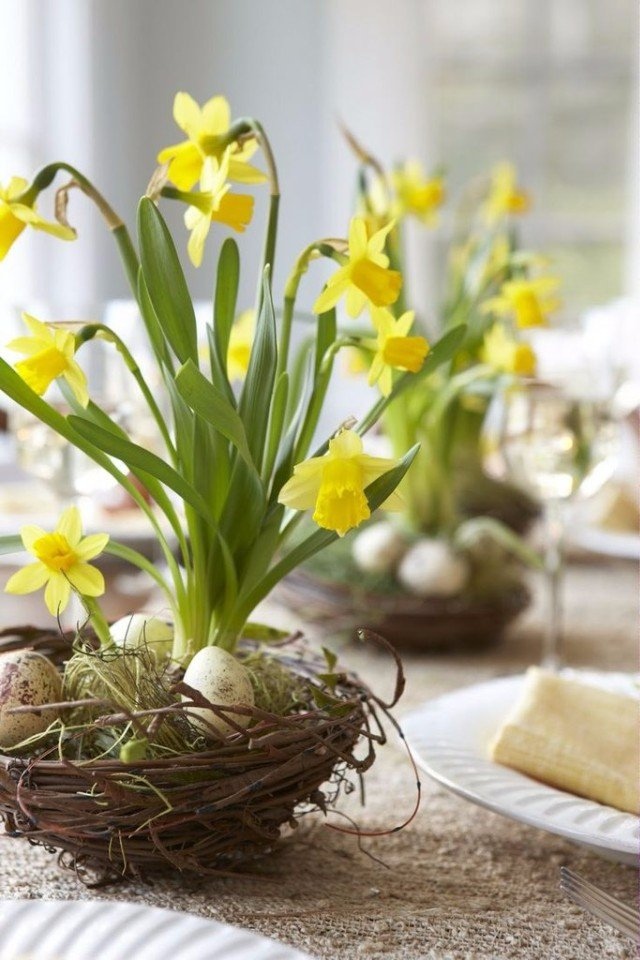
Another popular tradition was the Easter Basket, which was an “Easter Nest” originally. Arising from the concepts of fertility and springtime, Eastern basket was a German tradition which had gained mass popularity. Initially children would make “nests,” filled with grass, in hopes that Peter Cottontail would fill the nest with eggs. Later these nests evolved into baskets, which were bigger, less messier and easy to carry.

Amidst the Easter Eggs in the basket would be the “hollow chocolate bunnies”. While there is no historical or religious documentation on why the bunny represents Easter, the association would be more by the calendar. With Easter mostly during Spring, the month of April showered not only spring flowers but also signals the birth of baby rabbits. Thus spring time and bunnies symbolize birth and renewal. Coat the bunnies with chocolate and hollow them out to fill them with candies; voila the treat is irresistible for every kid in the block.

Other Easter traditions include eating ham or meat to the making of “Hot cross buns” and other breads marked with an X to symbolize the cross are a tradition on many Easter tables. From the “Choreg” of Armenia, Ukranian “Paska”, Polish “Babka” to Tsoureki of Greece, a wide varied variety of sweet breads are made around the world. With eggs being baked in most, these are conspicuously risen breads, quite different from the Passover tradition of unleavened bread.

As we get ready to break the Lenten Period and celebrate Easter, with all the food to be made ready, decorations to put up, church to be readied and tables to be set, the core message of renewal, togetherness and love shouldn’t be forgotten. One of the best ways to spread the message of love would be to share the delectable creations of Easter around.

The Easter Bunny came by today
and left surprises along his way.
Colorful eggs are all around.
With baskets in hand we search the ground.
Hiding in places here and there
Easter eggs are everywhere.
-Author Unknown

Posted in Daily, Personal Musings, Quotes, Reflections

To Allow Ourselves

One of the persistent feelings that runs down every couple of months is the “feeling of being trapped, compressed and stuck” into something that we want not to be a part of. In those occasions certain gentle reminders will help us get back into the grove of being content and at peace with ourselves.

“The snow goose need not bathe to make itself white. Neither need you do anything but be yourself.” Lao Tzu

Let ourselves to be wrong once in a while. It doesn’t really matter what others think about what we know or don’t, or what we said or didn’t. For the record, mistakes happen to all. No one can be truly accurate or right in their known field or what others expect us to know. No can be the “knowledge holder” of everything. At times, we tend to go wrong and so be it.

Once in a while, get out of the rush. Do make a slight change in the daily routine. Routines are lovely for they set things going and offer least surprises and roadblocks. Yet every now and then, break out, set a change and be surprised.

Hold the thoughts, words and anger when sorely tried. Try to allow ourselves to not respond to provocations. Certain things or events once done, can’t be easily undone, deleted or reversed. The impact and consequences may be near or in the future. Once damaged, not everything can be reset. Why then attempt to test those waters, when one knows that sharks will bite.

“To help yourself, you must be yourself. Be the best that you can be. When you make a mistake, learn from it, pick yourself up and move on.” Dave Pelzer

Avoid the trend to not make excuses, neither do anything to prove ourselves or when strongly persuaded. Regret is time lost. Once the sequence of events are set in motion, regret then or later will not revert the sequence or consequence.

Allow ourselves to let go and walk away. Step aside, away from those who are in the way or from those who resent us for the sake of it. Actions sidestepped are better for the peace. Even if we initiate the side step; more than the ego being trampled on, the mind will be at ease.

Being different is alright and fine. One doesn’t have try to fit into any categories, frames, stereotypes, typologies and types. Neither does one have to justify the expectations set by others. At the end of the day, we have to be comfortable in our own skin and mould.

Try not to run ahead or behind. Be at par with the speed of life and time. Just don’t run. At times, waiting for the train till it comes at the right station crossing or turn may be better to start going in the right direction again.

Above all, allow ourselves to be just ourselves.

“Be yourself, but always your better self.” Karl G. Maeser

Posted in Daily, Food

Learning the “Animal Cracker’s” Way

Eyes closed with eagerness, a tiny little hand dives into a box. Grabbing one bit and clenching the fist so as not to lose that precious little thing, the little hand comes out and palm up, its’ a bear. With a gleeful shout, that little bear is raised up and chomped down. And the hunt for the next “animal cracker” begins.

Almost every childhood has been marked by animal crackers or cookies and milk. These particular type of small cookies have been baked in the shape of animals ( zoo or circus), slightly sweet, made by a single layered dough like crackers.

Although the initial varieties were light coloured and slightly sweet; today darker chocolate flavoured or coloured frosted variants have made their way into the supermarket shelves. From the initial “Stauffer’s Biscuit Company produced animal crackers and Nabisco’s “Barnum’s Animals”, today other animal shaped crackers or cookies have gained popularity like Teddy Grahams, Goldfish, Hello Panda and Koala’s March. These differ from traditional animal crackers in flavor and assortment.

“Animal crackers, and cocoa to drink
That is the finest of suppers, I think
When I’m grown up and can have what I please,
I think I shall always insist upon these.”
-Christopher Morley (Founder of ‘Saturday Review’, 1924-1941)

Around 6th to 7th century, the custom of shaping cookies to resemble animals began from the Yule Tribe. During their times, it was common to sacrifice animals to the gods during the Julfest ceremonies, in hope that such offerings would bring a mild winter and an early spring. As the poor people couldn’t afford to kill any of their animals, they gave token sacrifices in the form of animal-shaped breads and cookies. Over the years, animal crackers became household or local bakery goods.

Yet the crisp animal crackers came from the 19th century Victorian England as attractive cookies or biscuits. The “crisp biscuits” (sweet and cookie-like biscuit) were very popular and the English called the ones that shaped like animals “Animals”. During the late 19th century, these “Animals” were imported from England to the United States. Due to their local popularity and high demand, local manufacture also began their own “Animals” making business. American businesses like Stauffer’s Biscuit Company, which still exists today, made their first animal crackers in 1871 York, Pennsylvania.

Around 1889 in England, animal crackers were manufactured as marketing promotions for popular entertainment, P.T. Barnum’s Circus. In 1902 animal cracker boxes designed for “Barnum’s Animals” (became “Barnum’s Animal Crackers” in 1948) were also designed for the Christmas season. The initial cracker boxes had a piece of string to hang them from the Christmas Trees as ornaments.

Almost 54 different animals crackers’ have been created in total, with 37 different animals have been featured into Animal Crackers ( Nabisco’s Barnum’s). The only ones survived the entire lifetime of the product are bears, elephants, lions and tigers. Interestingly among all their “cracker animals”, it’s only the monkey that wears pants. Also rabbits have never been a part of them even today (unlike portrayed in the Shirley Temple Song of 1935). Commemorating the 100th anniversary of Animal Crackers, the “name-our-next animal” contest in 2002 saw the koala bear became the latest addition by beating out the penguin, walrus and cobra in the customer survey.

Thus on National Animal Cracker Day (April 18th) it would remiss not to include the animal crackers on the menu. The range is varied from mini-sized treats to additions into soups, crunchy salads or even with ice-cream, fruit salads, custards or just with tea, having them the old, simple way. For a break from the “adult-life” going back into the childhood treats can be good physical and mental “calorie” breaks.

“Animal crackers in my soup Monkeys and rabbits loop the loop Gosh oh gee but I have fun Swallowing animals one by one In every bowl of soup I see Lions and Tigers watching me I make ’em jump right through a hoop Those animal crackers in my soup When I get hold of the big bad wolf I just push him under to drown Then I bite him in a million bits And I gobble him right down When their inside me where it’s dark I walk around like Noah’s ark I stuff my tummy like a goop With animal crackers in my soup.” Shirley Temple

Posted in Christian, Daily, Family and Society, Life, Quotes, Reflections, Work

Dealing With that Itch

With spring season around and evening walks are in the to-do list, one may have encountered the occasional sting or bite when on or after the walk. When the mosquito bites or insect stings, the deadly red mark starts forming in the skin. There are few distinct pictures that follow. First the yell or howl, followed by the distinct smack (almost always missing the culprit) with the application of a balm to soothe the pain. Left alone, the bite slowly settles and passes after a while. On the other hand, once the sting appears and one enters the itch mode, then the bite is extensively combed, scratched and the blister (in the place of the little red spot) is born. Consequently the sting stays, the irritation grows and the pain doesn’t recede. Worse is the infection and the bleeding that then follows. Being a parent to a toddler, one must be familiar with this cycle.

“Without forgiveness life is governed by… an endless cycle of resentment and retaliation.” Roberto Assagioli

Yet what is familiar, is the “feeling of the itch” is something similar to resentment. How we deal with resentment falls into similar patterns of an insect bite. Resented when treated in the right manner, ceases to sting; but when scratched, makes the whole mood go down. When dealt with an insult; if one tries to forgive and forget it, then it gradually goes out of the hearts. On self -dissecting it and chronic dwelling on it similar to self-persecution or self-pity; then the insult becomes stronger and deadlier.

“Our fatigue is often caused not by work, but by worry, frustration and resentment.” Dale Carnegie

Dealing with offense is not easy. True that we must reflect on the events that had happened and words or actions exchanged. But one doesn’t have to mark it against oneself and fester it, to the point of destroying the self. Instead hand over those feelings to the wind, for then we become more wiser and gracious. For when things are left to His Will, life becomes more sweet and simple. This is a very good skill that is learned over the course of time.

“Let go of resentment for it will hold you back. Do not worry about what could have been, what is to come is what matters.” Leon Brown

Take the burden that we can handle and the rest, hand them over to Him and let His Will be done. The same with resentment. Yes one was offended but one doesn’t have to carry it around and ruin the only life that we have been blessed with. Let things figure out eventually in His Time and then we discover that what was felt big, bad and ugly initially will seem inconsequential in the long run in His Time.

“The final proof of greatness lies in being able to endure criticism without resentment.” Elbert Hubbard