Posted in Daily, Food

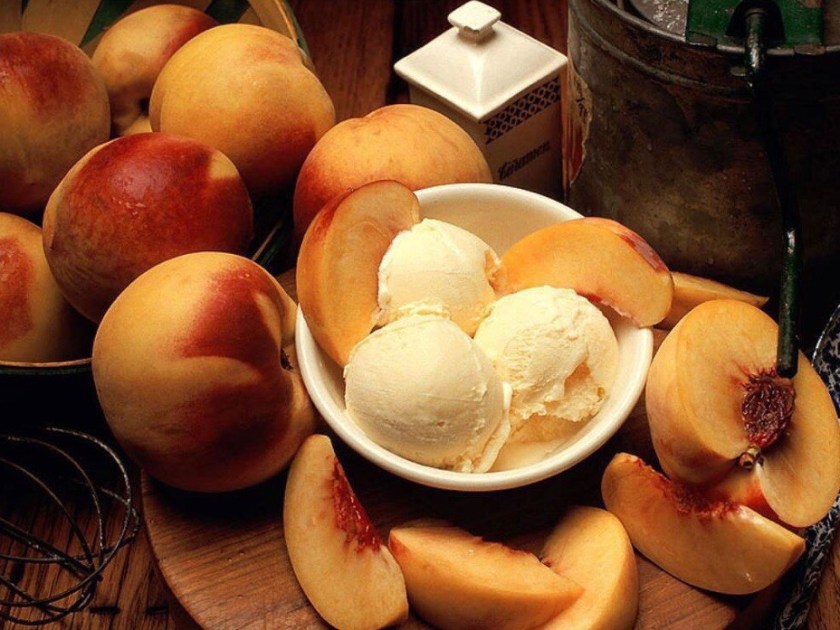
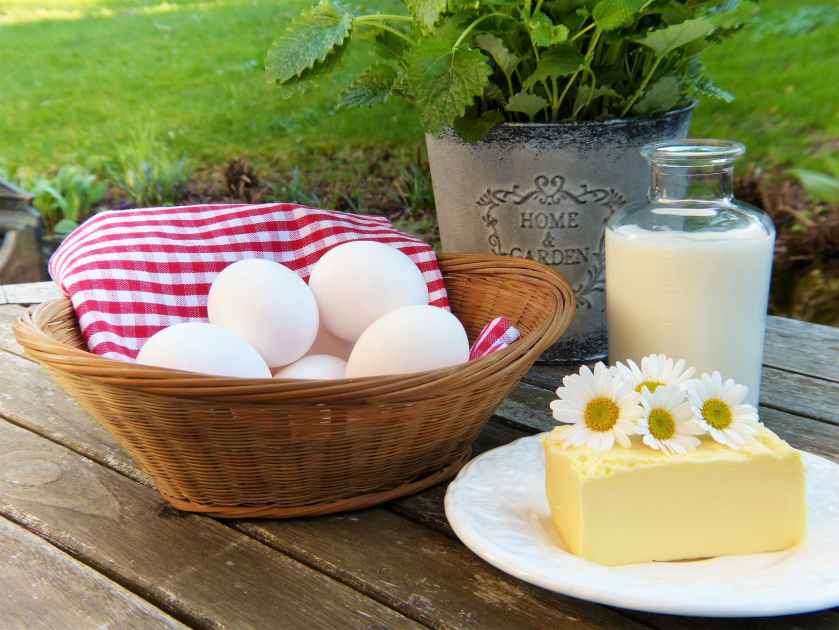
Benedict’s Way with the Eggs

“Sometimes life is a feast with eggs Benedict & hollandaise sauce, waffles & strawberries, sausage links & hashed brown potatoes. And sometimes life is scrambled eggs. In the end, your stomach gets full all the same. And years from now, you may not remember exactly what you ate.” Lisa Schroeder

Known as Eggs Benedict or Eggs Benny, this traditional American that consists of two halves of an English muffin topped with a poached egg, bacon or ham, and hollandaise sauce. The dish was first popularized in New York City and mostly served for breakfast or as brunch.

Interestingly, there are many conflicting accounts as to the origin of Eggs Benedict.The earliest record is based on the menu of Delmonico’s of lower Manhattan whcih states that “Eggs Benedict was first created in our ovens in 1860.” One of its former chefs, Charles Ranhofer had published the recipe for Eggs à la Benedick in 1894.

As per other sources, based on the interview of Lemurel Benedict, a retired Wall Street stock broker recorded in the “Talk of the Town” column of The New Yorker in 1942. As per his words, in 1894 he had wandered into the Waldorf Hotel hoping to find a cure for his morning hangover and had ordered “buttered toast, poached eggs, crisp bacon, and a hooker of hollandaise”. The dish had impressed Oscar Tschirky, the maître d’hôtel that it had earned its’ place on the breakfast and luncheon menus with modifications like ham for the bacon and a toasted English muffin for the toast.

Another claim to this creation was made by Edward P. Montgomery on behalf of Commodore E. C. Benedict. Montgomery wrote a letter to then The New York Times food columnist (1967) which included a recipe he had received through his uncle, a friend of Commodore Benedict. This recipe had varied greatly from the Ranhofer version, especially in the hollandaise sauce, recording the addition of a “hot, hard-cooked egg and ham mixture”.

Today many variations are available globally, often varied as per the local cuisine and favourite add on preparation. Like for instance, substitute the streaky bacon for the ham and add a slice of tomato to get Eggs Blackstone. While Eggs Blanchard states to add Béchamel sauce for Hollandaise and Eggs Florentine includes spinach instead of the ham or adds it underneath (where previously there were added to poached or shirred eggs). Eggs Omar (also known as a steak benedict) substitutes a small steak in place of the ham, and sometimes replaces the hollandaise with béarnaise.

In fact each ingredient of the original Eggs Benedict can be substituted to make a new or exotic variant adaptable to the local culture, food trends and seasonal ingredients. One can substitute the ham for salmon (smoked or plain) to make Eggs Atlantic, Eggs Hemingway or Eggs Norvégienne among the the many locale names for it. This is one of the most common variant found in places where bacon or pork products can’t be served. Additionally the ham can be substituted by corned beef, Irish bacon, pork “debris” (Eggs Cochon) or some even prefer hash browns to the ham.

To make the original Eggs Benedict more creative is to add sliced avocados or the the bread can be substituted by Hollard rusks, a large buttermilk biscuit (Eggs Cochon) or even toast. Either Eggs Benedict can give numerous variations with one’s own favourite ingredients and make for a healthy breakfast in the morning melee or even had as an evening snack. Little wonder then, that a whole day was devoted as National Eggs Benedict Day ( April 16th). Besides having fun with plenty options to modify it, they make a healthy and wholesome food, with palatable mix ups as well inspiring creative cooking and art in the kitchen.

“She dipped a clean pinkie into the hollandaise in the bowl. It coated her finger like a sheath of yellow velvet. Despite her nerves, she plated swiftly and surely. She lifted the poached eggs clear from the shimmering, hot water with a safecracker’s touch, laying each one with infinite care in place on top of its foundation of English muffin and Canadian bacon. Silky drizzle of hollandaise, sprinkle of fresh parsley, grind of black pepper, framed with creamed spinach, dusted with paprika. Done.” Brian O’Reilly, author of Angelina’s Bachelors
Posted in Family and Society, Life, Personal Musings, Random Thoughts, Reflections

Paradoxes of Time

“Silentium est aureum”

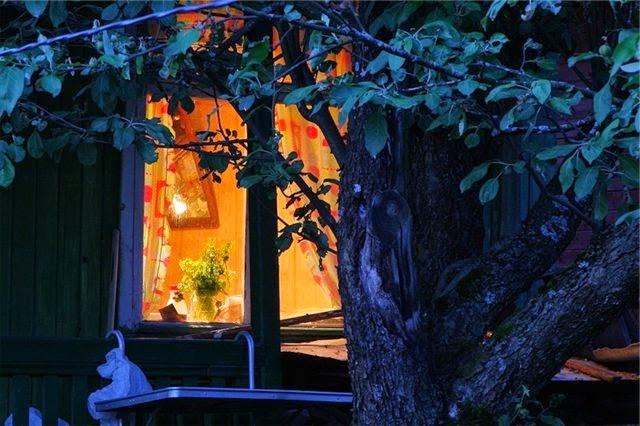
Over the weekend, with the entire family in the neighbourhood; it was quite refreshing and entertaining to exchange the various events, stories and happenings over the past few months. Listening to my cousins as they had regaled us the best parts of their college life; it brought back the memories of the younger days. From the days of classes, fun, music, dance, parties, sleepovers and all nighters to the present day of work, colleagues, time schedules, planners, pending household work and rambunctious toddlers running around the house; brings to mind the sharp contrast between the two lives. While in the younger days one had longed for the company of friends and fun; the older we grow, one longs for the occasional or frequent peace, quiet and solitude for a while. As the famous Latin proverb goes; Silence is indeed golden.

“We sit silently and watch the world around us. This has taken a lifetime to learn. It seems only the old are able to sit next to one another and not say anything and still feel content. The young, brash and impatient, must always break the silence. It is a waste, for silence is pure. Silence is holy. It draws people together because only those who are comfortable with each other can sit without speaking. This is the great paradox.” Nicholas Sparks

Time has a huge list of paradoxes. Remember the younger days of sleep overs, gate crashing parties, Goobers, lemonade sprees, stuffing one self with kachoris, pizzas and the long list of the “forbidden” as well as movie nights over the weekends. These days, although one has the freedom to enjoy food, friends, parties, music and entertainment to the maximum, without the constant nagging and laying down of the rules; when in excess life feels mundane.

Over time, as our personal trends, habits and favorites change, alter or get refined; certain relationships tend to get overlooked. The ships that once had anchored us, may be lost due to bad navigation or the storms that we encounter. One might put them down to “growing up” or the transition phase. Unfortunately when caught up in the silence later; the feeling of guilt, regret and remorse run through as common thread leaving behind fond memories laced with guilt.

“If you look the right way, you can see that the whole world is a garden.” Frances Hodgson Burnett

To not let the set-down of remorse, guilt and incompleteness happen, one has to only look around and view the world from far. To enjoy the pleasures of nature, we need both the new and the old. The presence of the ever present flowers, plants and the green with comfort of our friends, family and good shoes making our walk through life more comfortable and memorable. To enjoy the garden, one needs both company and solace at the right time. Learning to put the situation to use at the given time is one of the arts that life has taught us and will keep on teaching us through its’ own time.

Posted in Christian, Daily, poetry, Reflections

Following His Path

” 12 The next day the great crowd that had come for the festival heard that Jesus was on his way to Jerusalem. 13 They took palm branches and went out to meet him, shouting, “Hosanna! ” “Blessed is he who comes in the name of the Lord!”“Blessed is the king of Israel!” 14 Jesus found a young donkey and sat on it, as it is written: 15 “Do not be afraid, Daughter Zion; see, your king is coming, seated on a donkey’s colt.” ” (John 12:12-15)

With today being Palm Sunday, the next one week will take us through the journey of Lord Christ as he is crucified on the “basis of the sins” that he had committed, so that Man can be given a chance at salvation. For us Christians, it is a significant week which recounts the experience and final days that “The Lamb of God” had underwent.

Essentially Palm Sunday commemorates Lord Jesus’s entry into Jerusalem, as mentioned in the four canonical Gospels. Today the service is marked by the procession of the faithful carrying palms which represents the palm branches the crowd scattered in front of Jesus as he rode into Jerusalem. In certain places, as it was difficult to procure palms, they were substituted with branches of native trees, including box, olive, willow, and yew. The Sunday was often named after these substitute trees, as in Yew Sunday or by the general term of Branch Sunday.

“Rejoice greatly, O daughter of Zion; shout, O daughter of Jerusalem: behold, thy king cometh unto thee; he is just, and having salvation; lowly, and riding upon an ass, even upon a colt the foal of an ass.” ( Zechariah 9:9)

As per the Old Testament, the procession of Palm Sunday was earlier prophesied through the teachings and words of the Prophet Zechariah. The shout of “Hosanna” holds a significant meaning. The Hebrew word, “hoshi’a na,” when translated into Greek as “(h)osanna” and in English as “hosanna.” The original meaning of the word is “Save Please!”. It is a plea for help, understanding the potential impact of the scenario, the helplessness underwent and need for help to survive and live. Putting this into our spiritual lives, this security is in God. In the purest form, “Hosanna” is worship as we feel we have to come to the end of ourselves and we need God to intervene.

“25 LORD, save us! LORD, grant us success! 26 Blessed is he who comes in the name of the LORD. From the house of the LORD we bless you.” (Psalm 118:25-26)

Reading through the scriptures, another meaning of Hosanna was as a proclamation of “Salvation! Thank you!”. Here “Hosanna” stands for gratitude to the Lord for His Grace, His Mercy and His Love. The liturgical and sermon songs of today as well as messages open with the words of “Hosanna” where it is used as a phrase of adoration, praise and worship. Thereby, “Hosanna” implies both a cry for His Help as well thanksgiving for His Blessings that He has bestowed on us.

If wounded by words,
There is no reason to be distressed.
You show love affairs
Forgetting about the status, rank.

If rudeness, quarrels, screams
Cause a duel
Do not prepare peaks for battle
No saint cartel.

If someone could not resist,
Released a verbal poison,
You, my friend, is right, since he did not break,
Did not send the poison back.

If the pain is unbearable,
If the word burns like thorns,
Remember, friend, you are God’s Son:
He was humble to death!

Be close to Christ in communion,
asking for the victory of your strength.
Let it be, friend,
Meekness is known to all your people!

Ermolova S.

Posted in Daily, Life, Personal Musings, Quotes, Reflections, Stories Around the World, Work

Broken but Spirited

“The greatest test of courage on earth is to bear defeat without losing heart.” Robert Green Ingersoll

As a part of the quasquicentennial (125th) anniversary celebration in the work place, there were numerous discourses and seminars on the rise of the institute from the very early days. The common thread running through all, was the perseverance through struggles, defeat and trials. As history and nature have taught us, in order to survive, it’s not about being big or strong, but adaptable, brave and courage to continue the struggle, live and grow. For more evidence, the survival of the mammals through the Ice Age, rise and overthrow of civilization, survival of the Holocaust and the two great Wars as well as struggle for independence from the colonial and civil unrest are broad examples to learn from.

“Failure is simply the opportunity to begin again, this time more intelligently.” Henry Ford

As we introspect our lives and those around us, the moment we lose hope we fail. True that there will be days when we are drained of all hope. Times like those call for rest and to draw strength and courage from the lives of the past, present and those around us, undergoing their share of sorrows but staying strong. The rainbows of life don’t happen on sunny days; but after downpours and when we chose to withstand the rain and seek for the surprises that nature give us. All of us have our own worth, to keep going despite all the pitfalls; rest, draw courage, refresh the hope and dream, all the while persistently going ahead and keeping the belief in oneself strong and practical against all odds.

“A popular speaker started off a seminar by holding up a $20 bill. A crowd had gathered to hear him speak. He asked, ‘Who would like this $20 bill?’Many hands went up. He said, ‘I am going to give this $20 to one of you but first, let me do this.’ He crumpled the bill up. He then asked, ‘Who still wants it?’ All hands were still raised. ‘Well,’ he replied, ‘What if I do this?’ Then he dropped the bill on the ground and stomped on it with his shoes. He picked it up, and showed it to the crowd. The bill was all crumpled and dirty. ‘Now who still wants it?’ All the hands still went up.
‘My friends, I have just showed you a very important lesson. No matter what I did to the money, you still wanted it because it did not decrease in value. It was still worth $20. Many times in our lives, life crumples us and grinds us into the dirt. We make bad decisions or deal with poor circumstances. We feel worthless. But no matter what has happened or what will happen, you will never lose your value. You are special – Don’t ever forget it!’

Posted in Daily, Food

“Cobble” it Together

“Cherry cobbler is shortcake with a soul.” Edna Ferber

With summer round the corner and plenty of fruits to go around, desserts are always the reason why the meal gets completed in the twinkling of an eye, especially for the children. Even with the lack of time or frozen products over, dessert can be done soon, especially when bits of fruit over biscuit dough, batter or dumpling are baked to give the warm “cobbler” feel of the spring and summer skies.

Believed to have originated from the archaic word “cobeler” (recorded from 1859) meaning wooden bowl, cobblers were essentially a byproduct of the early years of European settlement in the Americas, especially by the English and the Dutch. They had initially emerged as a makeshift version of the popular pie recipes as a trail-modified desert.

“My earliest memory is making peach cobbler with my grandmother. A wonderful memory. I grew up in a restaurant family – B.B.Q. restaurant.” Rick Bayless

Unable to make the traditional puddings or pies, due to lack of ingredients or equipment as the settlers moves westward, modifications were made to the original methods. Consequently various ingredients were “cobbled together” with the available fruit, more common as peaches, plum or cherries, which were dried, preserved or canned, leavened dough (using baking powder) and an open fire. The initial cobbler were being made with a covered stewed filling with a layer of uncooked plain biscuits or dumplings, fitted together.

“Chocolate’s okay, but I prefer a really intense fruit taste. You know when a peach is absolutely perfect… it’s sublime. I’d like to capture that and then use it in a dessert.” Kathy Mattea

Cobblers were meant to be more palatable and sweet than pretty. Fruit, however it came, was dumped into a Dutch oven, topped with globs of biscuit dough and baked over an open fire until golden brown. Soon cobblers were quickly integrated into the settler diet, with the sweet dish being eaten for breakfast, as first course or as a main dish. Towards the late 19th century, the cobbler was officially labeled as a dessert.

“My earliest memory is making peach cobbler with my grandmother. A wonderful memory. I grew up in a restaurant family – B.B.Q. restaurant.” Rick Bayless

With modern technology of preservation, trade and transport; cobblers today have been vastly modified to include many fruit varieties including raspberries, blackberries as well being topped with cinnamon or vanilla essence, adding colours and flavours to the original version. Variants like grunts, pandowdy and slumps are Canadian Maritimes and New England varieties of cobbler are labelled when they are typically cooked on the stove-top or in an iron skillet or pan, with the dough on top in the shape of dumplings. The name originates from the grunting sound they make while cooking. Other popular variants include the apple pan dowdy (an apple cobbler whose crust has been broken and perhaps stirred back into the filling), the Betty or Brown Betty ( made with breadcrumbs or bread pieces or graham cracker crumbs and fruit, usually diced apples, in alternating layers, baked covered with a consistency of bread pudding) and the buckle (made with yellow batter like cake batter with the filling mixed in with the batter) among many others.

On the other hand, the scone-topped cobbler predominates in the UK where they are made both as sweet or savoury. While the common sweet fillings include apple, blackberry or peach; the savoury ones consists of beef, lamb or mutton as a casserole filling, sometimes with a simple ring of cobbles around the edge, rather than a complete layer, to aid cooking of the meat. The savoury versions may be topped with cheese or herb scones.

Over the years, cobblers have remained popular especially as they were quick to make for the luncheons and brunches. Little wonder then that the Georgia Peach Council declared April 13th National Peach Cobbler Day. Taking a bite of the rosy fruit cradled in warm pillows of cinnamon-scented dough and blanketed with the melted vanilla ice cream brings rich splendor to the senses, giving warmth and happiness all the way. For all the foodists at heart, have a little bite of cobbler to revel in the taste of sunny skies and warm sunshine.

“There are a couple of different types of food I eat a lot. I was raised in the South, in Tennessee, so I’m going to go with comfort food, soul food. I would probably start with collard greens and candied baby carrots and then have some biscuits and white gravy – and for dessert, probably blackberry cobbler.” Megan Fox

Posted in Christian, Family and Society, Life, Personal Musings, Reflections, Work

Anxious to Spill

“Anxiety does not empty tomorrow of its sorrows, but only empties today of its strength.” Charles Spurgeon

One of the worse things of happy times and days when everything goes as per the plan, is the niggling sense foreboding that something bad is going to happen. The problem arise most when we are doing well, yet one doesn’t understand how is it so and we often look for an excuse and cause for concern. One thinks of what will happen in a few years, after the exams, when children attend school or when the economy takes a turn for the worse. Worse of all are the thoughts of what will happen when one dies suddenly, about the events after, especially for loved ones, family, spouse, children, inheritance and life in general.

“The truth is that there is no actual stress or anxiety in the world; it’s your thoughts that create these false beliefs. You can’t package stress, touch it, or see it. There are only people engaged in stressful thinking.” Wayne Dyer

Anxiety is a painful condition often invented by man. Consequently we age ahead of our time; torturing ourselves as well as others with our wandering thoughts, imagination, speculations and scenarios that have yet to happen. Learning to put them to rest and submit our concerns to God, time and Faith will limit the “constant anxiety” which tries to pull us down and bind its’ chains around us.

“Every tomorrow has two handles. We can take hold of it with the handle of anxiety or the handle of faith.” Henry Ward Beecher

What we very often fail to remember is that our life is a gift from God above. Every second and minute is precious. So worry about each problem or issue once and as they come. For each sequence of events can turn out to be different, many a time, beyond our control. Try not to make our mind overrun with one’s imagination based on the present, for that alone is to blame for the scenarios in the mind that are invented, drawing from events that haven’t yet happened. There is a fine line between imagination and discernment. Learning to distinguish between both will help us enjoy the happiness that the present day life offers.

“My anxiety doesn’t come from thinking about the future but from wanting to control it.” Hugh Prather

“Look at the birds of the air; they do not sow or reap or store away in barns, and yet your heavenly Father feeds them. Are you not much more valuable than they? Can any one of you by worrying add a single hour to your life?” (Matthew 6:26-27).

Posted in Family and Society, Life, Personal Musings, Photography Art, Reflections, Stories Around the World, Work

Stepping Out of the Game

“A man can fail many times, but he isn’t a failure until he begins to blame somebody else.” John Burroughs

There lived two families in the neighborhood. In one family there was silence and grace, while in the second there were endless quarrels, showdowns etc. And then one day the wife said to her husband, “Why don’t you find out how they next door, turn out to live without scandals.” The husband went and hid behind their common fence and watched. As the neighbor washes the threshold, a bucket of water stands next to her and then her husband walked. Inadvertently he hooked his foot on the bucket and overturned it. “Well, it will start now,” thinks the neighbor behind the fence. Instead he heard the wife as she apologized to her husband that she had put a bucket of water in the way. And her husband also apologized to her for he had walked without looking and also added work to his beloved. In general, they apologized to each other, cleaned up everything together and went into the house. And the hapless neighbor came home in bewilderment and told his wife: “You know, my wife it is strange, we try to do everything right and have endless scandals, whereas they are both to blame and everything is amicable”.

“At the end of the day, you are solely responsible for your success and your failure. And the sooner you realize that, you accept that, and integrate that into your work ethic, you will start being successful. As long as you blame others for the reason you aren’t where you want to be, you will always be a failure.” Erin Cummings

Famously and colloquially known as “the blame game”, we all have been a part of it at some point in our life. From the high school days of incomplete assignment, low grades or addled performances to the college or university days, leading on to the work front; assigning of blame to someone else’s shoulders have been done consciously or subconsciously.

“Everyone’s quick to blame the alien.” Aeschylus

Like the spider’s web, once we get caught in this game; we tend to apply the same tactics in all the spheres of our life. Consequently the price paid is heavy, for not just effort but energy, work, relationships and above all, time is wasted. To get the trend down, a few quick steps would aid in sorting out and settling the mess.

“No matter how much fault you find with another, and regardless of how much you blame him, it will not change you. The only thing blame does is to keep the focus off you when you are looking for… reasons to explain your unhappiness or frustration.” Casey Stengel

When stuck in the mess or being falsely targeted for the work; first take a deep breath. Second were we in any way wrong, either while doing the task or assigning the task. If yes, take corrective measures; if not, still the option is to settle the scene and correct the wrong. Third and very practical of all, let bygones be bygones. Learn form the past, but don’t dwell too much on it, to spoil the pleasant surprises of the future.

“Don’t find fault, find a remedy.” Henry Ford