
Posted in Daily, Food

Of Macaron and Macaroon

“Orange pekoe flavor, with that gold confection dust on the top.” She holds one up to demonstrate. “Mascarpone filling.” She bites it clean in half and shows me the middle. “Rose jelly in the center.”
“Sounds good to me. What shall we call it?”
“I don’t know.”
I reach over and pick up a macaron, the texture, weight, and balance all perfect. Symmetry, lightness, both shells with excellent feet, wedded together with a smooth filling. Nodding with approval, I place it on my tongue. She is right; the orange and rose flavors melt lustily in your mouth. It’s just like Mama- all bright and full of surprises.” – Hannah Tunnicliffe, The Color of Tea

Known as “macaron” or “French macaroon”, this sweet meringue-based confection is made with egg white, icing sugar, granulated sugar, almond powder or ground almond and food coloring. Typically served with a ganache, buttercream or jam filling sandwiched between two such cookies (similar to a sandwich cookie), macarons have been one of the little delights gaining wide popularity globally. Mildly moist, melting when eaten; this confection is characterized by a smooth squared top, a ruffled circumference, referred to as the “crown” (or “foot” or “pied”) and a flat base. Macarons can be made in a wide variety of flavors that range from the traditional vanilla, raspberry, chocolate to the unusual flavours of foie gras, matcha and so on. There is some variation in whether the term macaron or macaroon is used, and the related coconut macaroon is often confused with the macaron.


Macarons are a little different from macaroons, wherein both start off with a base of egg whites and sugar. But macaroons are with the base is typically whipped into a stiff meringue , like meringue cookies. Whereas, for macarons after the meringue is whipped, a combination of powdered sugar and finely ground almonds gets folded in, not too much or too little. The resulting semi-liquid batter is piped into exact rounds and baked.

The origin of the macarons are quite debatable. Although macarons today are credited to France, the first known appearance of the macaron in Europe was believed to be back in the Middle Ages. In those times, the macaron was a small sweet made of almonds, egg white and sugar, crunchy on the outside and soft on the inside. As some food historians believe that, these “macarons” were initially made in Italy as a consequence of the Arab troops from modern Tunisia ( around 9th century AD), landing in Sicily. They had brought new foods along with them like lemons, rice, pistachios as well as a rich repertoire of nut-based sweets like almond paste candies wrapped in dough. In fact, the term “macaron” shares similarity to the Italian macaroni, which puts a shadow of doubt over it being a French creation.


Since the 8th century, Macarons have been produced in the Venetian monasteries. Yet they gained wide popularity in the French court, when the Italian pastry chef who were brought by Catherine de’ Medici when she had married King Henry II of France, during the Renaissance Era. During those years of the 16th century, macarons were known as ‘priest’s bellybuttons,’ due to the pastry’s shape. Yet as per Larousse Gastronomique, the macaron was created in 1791 in a convent near Cormery. Legend says that two Carmelite nuns, seeking asylum in Nancy during the French Revolution (1792), baked and sold the macaron cookies in order to pay for their housing. Later these nuns were known as the “Macaron Sisters”. These early years saw macarons being served without special flavors or fillings.

Towards the early 1990s, the modern day macarons had began to take shape. Largely credited to Pierre Desfontaines, the pastry chef and owner of the Parisian café, Ladurée; the modern day macaron was made when he had decided to take two macarons and fill them with ganache. The result was an instant success. These original “Gerbet” or “Paris Macaron” were composed of two almond meringue discs filled with a layer of buttercream, jam, or ganache filling. Similar styles were also claimed to be started by another baker, Claude Gerbet.

By the 1930s, macarons were served in two’s with the addition of jams, liqueurs, and spices. Since then macarons have evolved from a humble almond cookie to a versatile treat, coming in a variety of colours and flavours; alluring both to the taste buds, the experimenters’ kitchen as well as the creative mind. Towards the 21st century, confectioners started offering macarons with a difference in flavor between filling and cookie, in both savoury (Basil mint or Thai curry) and sweet styles. Little wonder that there are two days devoted to macarons with Macaron Day (March 20th) and National Macaroon Day ( May 31st) being celebrated across the world. Explore this little treat to enter another world of desserts, more than sandwich cookies, little delights both flavour some and edible art.


Posted in Daily, Life, Personal Musings, Quotes, Work

Patience to Thy Own

“Patience is when you’re supposed to get mad, but you choose to understand.” Anonymous

At the grocers’ en-route from work, as the shopping was underway, the realization that the long list taped to the refrigerator door was still stuck on there, had raised the annoyance levels. Consequently the shopping was a very quick one and while paying for the bill and for the rest of the journey, the niggling sense that the shopping was incomplete and things were still undone was lingering on. The journey back was disturbing for one’s peace of mind. Later on, while defusing the day’s stress with tea, the fact that one is least patient with one’s own self struck the core thoughts.

“One minute of patience, ten years of peace.” ~ Greek proverb

One of the first subjects is patience towards oneself, although we often tend to lose sight of this fact. By tolerating oneself means that on seeing our own mistakes and shortcomings or failures, one shouldn’t be distraught to an unnecessary extent or be greatly upset or indignant. For all these are signs of pride, leading to one’s own downfall. Instead accept that even oneself is prone to make mistakes. Understanding this requires the patience towards self first. For once we learn to be patient with one’s self, then only will the art of patience with others’ and in our daily lives be the routine norm.

“Have patience, my friend, have patience; For Rome wasn’t built in a day! You wear yourself out for nothing In many and many a way! Why are you nervous and fretty When things do not move along fast; Why let yourself get excited Over things that will soon be past?” – Gertrude Tooley Buckingham, “Patience”

Being human implies that all of us will make mistakes. There are no perfect people in this world. One is prone to stumble and fall, on way or the other. Unless we learn to have patience to correct our steps and put one foot in front of the other, we will never move on or away from our own troubles. Accepting the ignorance of own mind, heart and thoughts; learning to be careful and cautious but having the patience to accept the fact that we have been wrong, will aid us in finding help from His Grace, to rise again and turn the day’s mood from sour to happy. Patience with own help us not only to learn from our mistakes, but also to grow ourselves. If one is not patience with oneself, who else will be patient with us.

“Have courage for the great sorrows of life and patience for the small ones; and when you have laboriously accomplished your daily task, go to sleep in peace. God is awake.” Victor Hugo

“Patience Is Not the Ability to Wait:
Patience is not the ability to wait. Patience is to be calm no matter what happens, constantly take action to turn it to positive growth opportunities, and have faith to believe that it will all work out in the end while you are waiting.” Roy T. Bennett, The Light in the Heart

Posted in Daily, Life, Personal Musings, poetry

Writing on the Asphalt

“Even your past pain can be a blessing to someone. Hope-lifters are willing to reach back and pass hope on.” Kathe Wunnenberg

One of the perks of waiting in the city traffic, is that there are an endless sightings to view. From observing the roadside shops, their wares or whether they are new or already around, and doing a little bit of “window shopping” to noticing the passersby that walk on the sidewalks and reading the graffiti and artwork on the walls; these are the few things that keep the Thoughts, mind and eyes occupied during the traffic wait in the city as compared to the highway.

Yet what catches the eye and leaves an impression is the graffiti on the walls. Form the local city news to artwork defining the city or the town, to words of famous sayings; these have words that linger on in the mind imparting and affecting the mood of the day subtly. While walking on the sidewalk especially when the parking spot is a considerable distance away from the final destination, the writing on the sidewalk as well on the walls of the various buildings on the street; trigger old memories, feelings of nostalgia either of the fortunate or unfortunate events that we hold on to in our minds, giving a sense of thankfulness for the unasked or asked blessings given to us at the low points in our lives.

All these words reflect the emotions of many and each word read with thought or subconsciously leaves an impact. While graffiti is usually frowned on, beautiful sayings leaving the sense of hope, kindness and love are needed to remind oneself of the distance we have journeyed, the struggles we had underwent and the unaccounted and saving graces that we have all been blessed with. Each one has indeed their own baggage, but by giving hope we not only lighten the burden of others’ but also learn how to carry and deal with our baggage better. For the light of one candle never loses out by sharing its’ flame with others, they all die depending on their length of time.

“Even one’s yesterdays could not continue to stir and move in a man’s mind unless there were a future for those yesterdays to make.” Mary Ellen Chase

“Everything will be fine! I recognized! ”-
The inscription on the pavement chalked.
I stood for a long time in affection
And I admit, I did not want to leave.

Who wrote and for whom – I do not know,
But these lines have warmed my soul,
Like forget-me-nots in mid-May,
Like white snowdrops of April.

A simple and short phrase,
At first glance – so wise,
But how much optimism gives at once,
And lights up joyful smiles!

Everything will be fine? Of course it will be!
And I want to believe it boldly!
It’s great to give hope to people,
Even if it’s just on chalk on asphalt …

Natalya Smirnova

“Hope is not easily defined, but impossible to embrace without faith. The more we search for meaning in what seems hopeless; we realize that our “hopelessness” is a state of mind, not a reality.” Carol Bright

Posted in Daily, Food

Of “Burger” and Origins

“Fashion is like food! Some people like sushi, others think hamburgers are divine! People like different things!” Michael Kors

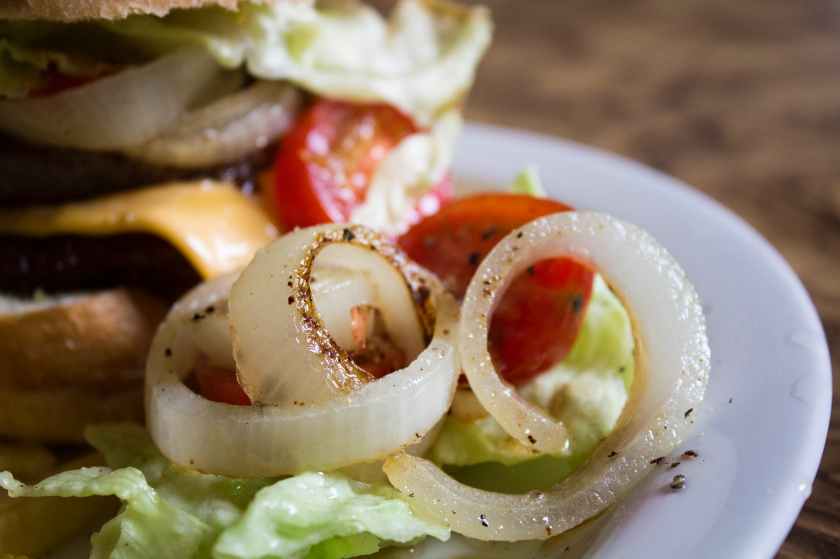
One of the most popular comfort foods, snack foods or a complete meal to splurge occasionally, or for fun and festive, is the hamburger or burger. Essentially a sandwich consisting of one or more cooked patties (pan fried, grilled or flame broiled) of meat placed inside a sliced bread roll or bun and often served with cheese, lettuce, tomato, onion, pickles and other adds ons, as well as condiments like ketchup, mayonnaise, mustard, relish, or “special sauce”, these sandwiches or “burgers” have stormed the food industry ever since their introduction. While today, the patties can range from meat, fish, egg or vegan; hamburgers or burgers have evolved from being that of fast food joints or the regular diners to specialty or high end restaurants. Like all sandwiches, its’ what goes in and the entire taste and texture that counts.

“It requires a certain kind of mind to see beauty in a hamburger bun.” ~ Ray Kroc


Although the term, “hamburger” is originally derived from Hamburg, Germany’s second-largest city; its’ origins have been subject to much dispute, claim and uncertainty. Before the “disputed invention” of the hamburger in the United States, similar foods already existed in the culinary tradition of Europe. As recorded in The Apicius cookbook, a collection of ancient Roman recipes that may date to the early 4th century, “isicia omentata” preparation is detailed as a baked patty in which meat is mixed with pine kernels, black and green peppercorns, and white wine, considered to be the earliest precursor to the hamburger. Later on with various conquests, civilizations and trade, similar recipes were made with various varieties of the meat available then, like the “steak tartare” made of minced horse-meat of the 12th century.

The evolution of the name “Hamburg” came as the town was known for its’ ports famous for trade with the “New World” as well as then ” Old Europe”. With immigrants reminiscing about home, various dishes made with steak came to known with the name “Hamburg” added along side the dish name on the various menus especially when at sea or the ports, like the Hamburg-style American fillet.


However the exact origin of the hamburger may never be known with any certainty. While most historians believe it was invented by a cook who placed a Hamburg steak between two slices of bread in a small town in Texas; few others credit the founder of White Castle for developing the “Hamburger Sandwich.” With records being scarce, the stories and claims still remain as “legends”. With most claims for the invention occurring towards the early 19th century, common factors include large crowds like fairs, festivals, amusement parks as well as street vendors, who for simplicity, ease and increased sales had placed the steak between two buns filed with few vegetables to get the taste and the sales” going.

Yet by whichever origin, the “burgers” have been evolved across the globe adapting to the taste, local ingredients, culture and essence of the locality like the Vietnamese rice-burger. Varied experimentation with the ingredients can be made with ease, to give rise to a style or art with home cooking the “burgers” especially on the International Burger Day (May 28th). Depending on the mood or scene, from barbecues to cook-outs various combinations can be made, traded and shared with fun memories to treasure. Or one can ordering the good old regular “burger” for not just satisfying the hunger pangs but also for comfort in the memories of the good old times. As the old saying goes, “moderation is the key to having fun while eating”.


Posted in Daily, Life, poetry, Quotes, Reflections

Yearnings before the Summer

“The world is full of magic things, patiently waiting for our senses to grow sharper.” W.B. Yeats

With the heat of summer approaching and spring nearing its’ end, a longing comes for the early pleasant winter days or the cooler autumn. While summer is indeed a time for beaches and water and cooler evenings making up for the oppressive heat of the mornings, one often longs to escape to the coldest part of the time for a few days.

“Happiness doesn’t depend on what we have, but it does depend on how we feel toward what we have. We can be happy with little and miserable with much.” William D. Hoard

Looking back, the seasons do expose the strength of one’s endurance. During the extreme cold of winter, one harbours the longing for summer and reverse feelings in winter. These feelings bring to front the changing nature of the whims and fancies of man. Being human, one often tends to change one’s mind, thoughts and actions depending on the mood of the situation. Yet at times, we lose sight of the moral principle while engaging on the whims.

“We are all faced with a series of great opportunities brilliantly disguised as impossible situations.” Charles R. Swindoll

To transform, mature and to experience life, change is important. Yet if we are always on the lookout for change, without experiencing the moments of the present, we fail to learn what time and life has in store for us with every passing moment. Flitting from branch to another, we may always on the lookout for something better, brighter and more purposeful. In doing so, we tend to lose out on the meaning of the wonders of the present. Once lost, that Time would never come back. In His Timeline and among His Creations, one often learns that during uncertain situations, difficult choices or troubled times; stepping out and taking a breath of fresh air helps to find new perspective. The sooner we do so, the most difficult and rough season becomes an enjoyable one for the time.

“The best remedy for those who are afraid, lonely or unhappy is to go outside, somewhere where they can be quiet, alone with the heavens, nature and God.
Because only then does one feel that all is as it should be.” Anne Frank

I See You Spring

I see you, spring,
In my double window.
You’re not very red,
and even a little dirty.

There is no greenery yet.
The earth is exactly two-colored photo,
And the snow only catches the moment
To disappear from us imperceptibly.

And sleepy shade carts,
Squeaking axes,
On the same trampled snow
They derive sleds in the autumn.

And chomping with a check,
And twisting the wheels with his hands,
And a drop of rain on his cheek
Suddenly feels like tears.

Varlam Shalamov

Posted in Christian, Family and Society, Life, Quotes, Stories Around the World

Mosaic Aspects of the Golden Rule

“Those who are not looking for happiness are the most likely to find it, because those who are searching forget that the surest way to be happy is to seek happiness for others.” Martin Luther King, Jr.

One of the greatest benefits and downfalls of the social order is, being subject to and as well as adding to the actions and behaviour that affects not just own but also others. Ranging from the work place to the general market, local stores, neighbourhood and community fronts or even on the routine commute; one comes across a number of situations where direct involvement or even being an indirect viewer; where one may object to an “n” number of things. Yet dealing with those situations should be done in a very tact, moralistic and delicate manner, learning not to impart offense but to be at peace aftermath.

“When a man is guided by the principles of reciprocity and consciousness, he is not far from the moral law. Whatever you don’t wish for yourself don’t do unto others.” Confucius

One of the Golden Rules of the Social Order often quoted in almost every religious and ancient philosophical writings of behavioural and social precepts like the New Testament, Talmud, Koran, the Analects of Confucius and many more; state that one should behave and act towards others as one would want it to be done to one’s self. To quote one of the earliest appearances in English is Earl Rivers’ translation of a saying of Socrates ( Dictes and Sayenges of the Philosophirs , 1477): “Do to other as thou wouldst they should do to thee, and do to none other but as thou wouldst be done to.”

“So in everything, do to others what you would have them do to you, for this sums up the Law and the Prophets.” (Mathew 7:12)

One of the commands based on words of Jesus in the Sermon on the Mount, this Mosaic law holds a parallel commandment: “Whatever is hurtful to you, do not do to any other person.” Despite the universal saying of “What goes around, comes around”, at times the temptation to strike back is very high. Yet the effect, guilt, regrets and remorse aftermath is more min and conscience numbing. Instead holding back may be more internally satisfactory for one. Whether the behaviour we unto others may benefit us at a later stage or not, is irrelevant for by doing the right then, we will be so much more at peace within for a long time.

“The reason for our success is no secret. It comes down to one single principle that transcends time and geography, religion and culture. It’s the Golden Rule – the simple idea that if you treat people well, the way you would like to be treated, they will do the same.” Isadore Sharp

Two Neighbors

A wise and successful man bought a beautiful house with a huge orchard. But, not all were happy for him. An envious man lived in an old house next to him. He constantly tried to make his fellow neighbor’s stay in the beautiful house as miserable as possible. He threw garbage under his gate and made other nasty things. One fine day the wise man woke up in a good mood and went into the porch to notice buckets of garbage thrown there. The man took a bucket , cleaned his porch. He carried a bucket and went to knock his envious neighbor‘s door. The envious neighbor heard a knock at his door and gleefully thought, “ I finally got him!”. He answered his door ready to quarrel with his successful neighbor. However the wise man gave him a bucket of freshly picked apples saying, “The one who is rich in something, shares it with others.”

“The greatest good you can do for another is not just to share your riches but to reveal to him his own.” Benjamin Disraeli

Posted in Daily, Food, Stories Around the World

“Grill or Barbecue” Summer

With the scent of summer and warm weather, there’s nothing more fun than having an outdoor cooking session. Open space, vegetables and meat or fish with lots of sauces, condiments, rice as well as firewood or outdoor grills and everyone is getting set for the weekend family cookout. Interestingly one may be naturally guess that the concept of outdoor cooking has been there since the time of the prehistoric man. While in the early years, it was more of a necessity than leisure; over time it became an occasion for gatherings, mass cooking as well as festive or season celebrations.

“If summer had one defining scent, it’d definitely be the smell of barbecue.” Katie Lee

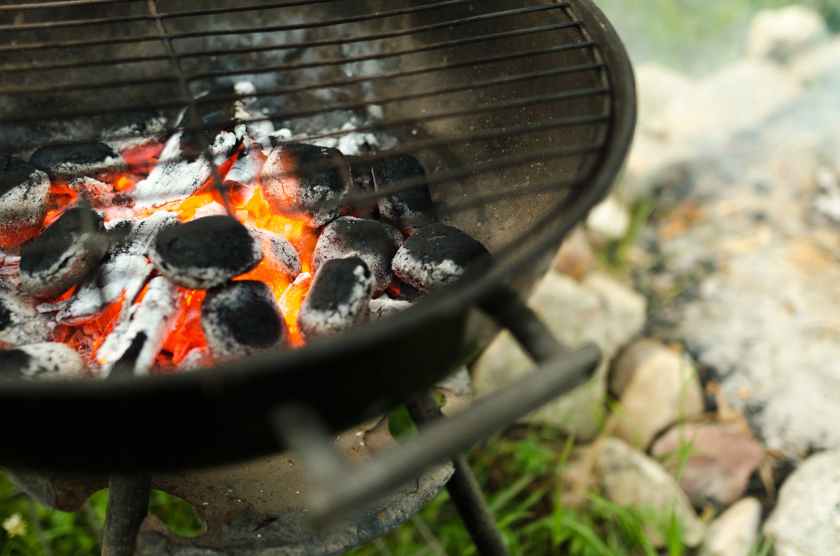
Contrary to popular notion, grilling and barbecue aren’t the same. The initial years had seen majority of outdoor or open fire cooking where in the art of getting vegetables and meat well done were perfected. Slowly there were distinct methods and styles as well as flavours of getting food well done over fire were learnt and modified, like smoking, roasting or baking, braising and grilling. While these may be largely encompassed under the banner of barbecue, there subtle distinctions by the manner each is done. Each technique by which it is named so involves cooking using smoke at low temperatures and the duration of cooking hours from few to several. While baking uses an oven to convection cook with moderate temperatures for an average cooking time of about an hour; braising combines direct, dry heat charbroiling on a ribbed surface with a broth-filled pot for moist heat. Grilling is done over direct, dry heat, usually over a hot fire for a few minutes. Technically barbecue is a method as well as an apparatus for cooking meat, poultry and occasionally fish with the heat and hot smoke of fire, smoking wood or hot coals of charcoal.

“There are two different things: there’s grilling, and there’s barbecue. Grilling is when people say, ‘We’re going to turn up the heat, make it really hot and sear a steak, sear a burger, cook a chicken.’ Barbecue is going low and slow.” Guy Fieri

Since the pre-colonization era, grilling had existed in the Americas. However, the origin of the term “barbecue” can’t be exactly determined. The earliest records were that when the Spanish, upon landing in the Caribbean, had seen the natives like the Arawak people of South America or the Caribbean Taino Indians (accounts vary) who had a method of slow-cooking meat over a wooden (or green sticks) structure known as “barbacoa” in Spanish. For centuries, the term barbacoa referred to the wooden structure and not the act of grilling, but it was eventually modified to “barbecue”.

As per the records of the earliest English tales of barbecue as written by Edward Ward ( 18th century) in his travel accounts, “The Barbacue Feast: or, the three pigs of Peckham, broil’d under an apple-tree.” As per his story, the social aspects of “cooking food over fire” for several hours while enjoying the evening was a new and noteworthy experience. Later on this techniques had caught on and with the spread of colonies, civil wars and later, as festive or celebratory occasions, the technique, art, style and precision of cooking by “barbecue” were perfect and made into an enjoyable social as well as family occasion.

“Cooking and eating food outdoors makes it taste infinitely better than the same meal prepared and consumed indoors.” Fennel Hudson

Across the globe, similar techniques were being practiced like the Korean barbecue features thin slices of beef or pork cooked and served with rice, Argentinian “asado” or marinade-free meat cooked in a smokeless pit and the Indian “tandoor” cooking. The “tandoor” is a large pot, typically buried in the ground up to its neck with hot coals added to the bottom. Made of ceramic, the Tandoor holds in the heat and focuses it on the food cooked inside. With the “true barbecue” has evolved into its’ distinct style over the years; summer evenings and holidays turned into occasions of fun, beating the heat and humid season. With a range of styles from open pit or fire cooking to grills or barbecue, outdoor cooking of summer is indeed an experience to try as well as appreciate.