
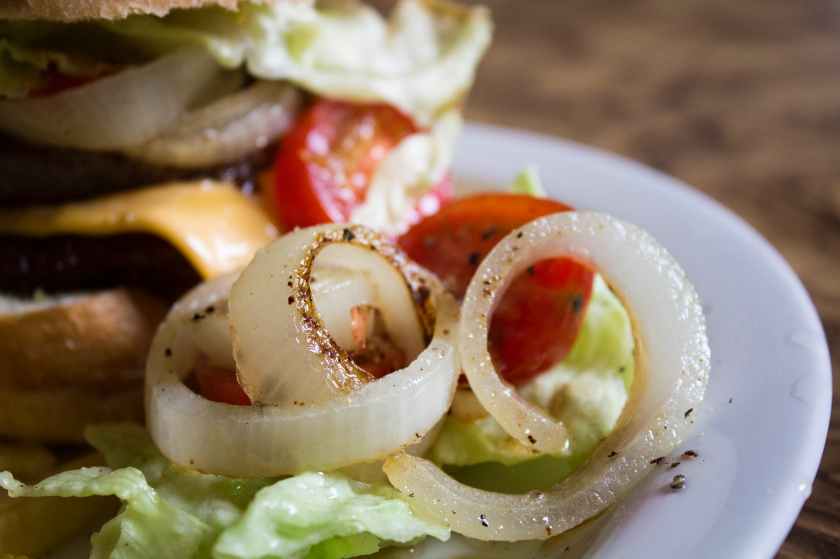
“Fashion is like food! Some people like sushi, others think hamburgers are divine! People like different things!” Michael Kors
One of the most popular comfort foods, snack foods or a complete meal to splurge occasionally, or for fun and festive, is the hamburger or burger. Essentially a sandwich consisting of one or more cooked patties (pan fried, grilled or flame broiled) of meat placed inside a sliced bread roll or bun and often served with cheese, lettuce, tomato, onion, pickles and other adds ons, as well as condiments like ketchup, mayonnaise, mustard, relish, or “special sauce”, these sandwiches or “burgers” have stormed the food industry ever since their introduction. While today, the patties can range from meat, fish, egg or vegan; hamburgers or burgers have evolved from being that of fast food joints or the regular diners to specialty or high end restaurants. Like all sandwiches, its’ what goes in and the entire taste and texture that counts.
“It requires a certain kind of mind to see beauty in a hamburger bun.” ~ Ray Kroc


Although the term, “hamburger” is originally derived from Hamburg, Germany’s second-largest city; its’ origins have been subject to much dispute, claim and uncertainty. Before the “disputed invention” of the hamburger in the United States, similar foods already existed in the culinary tradition of Europe. As recorded in The Apicius cookbook, a collection of ancient Roman recipes that may date to the early 4th century, “isicia omentata” preparation is detailed as a baked patty in which meat is mixed with pine kernels, black and green peppercorns, and white wine, considered to be the earliest precursor to the hamburger. Later on with various conquests, civilizations and trade, similar recipes were made with various varieties of the meat available then, like the “steak tartare” made of minced horse-meat of the 12th century.
The evolution of the name “Hamburg” came as the town was known for its’ ports famous for trade with the “New World” as well as then ” Old Europe”. With immigrants reminiscing about home, various dishes made with steak came to known with the name “Hamburg” added along side the dish name on the various menus especially when at sea or the ports, like the Hamburg-style American fillet.


However the exact origin of the hamburger may never be known with any certainty. While most historians believe it was invented by a cook who placed a Hamburg steak between two slices of bread in a small town in Texas; few others credit the founder of White Castle for developing the “Hamburger Sandwich.” With records being scarce, the stories and claims still remain as “legends”. With most claims for the invention occurring towards the early 19th century, common factors include large crowds like fairs, festivals, amusement parks as well as street vendors, who for simplicity, ease and increased sales had placed the steak between two buns filed with few vegetables to get the taste and the sales” going.
Yet by whichever origin, the “burgers” have been evolved across the globe adapting to the taste, local ingredients, culture and essence of the locality like the Vietnamese rice-burger. Varied experimentation with the ingredients can be made with ease, to give rise to a style or art with home cooking the “burgers” especially on the International Burger Day (May 28th). Depending on the mood or scene, from barbecues to cook-outs various combinations can be made, traded and shared with fun memories to treasure. Or one can ordering the good old regular “burger” for not just satisfying the hunger pangs but also for comfort in the memories of the good old times. As the old saying goes, “moderation is the key to having fun while eating”.


 Sugar And Spice... Among Other Things