“Orange pekoe flavor, with that gold confection dust on the top.” She holds one up to demonstrate. “Mascarpone filling.” She bites it clean in half and shows me the middle. “Rose jelly in the center.”
“Sounds good to me. What shall we call it?”
“I don’t know.”
I reach over and pick up a macaron, the texture, weight, and balance all perfect. Symmetry, lightness, both shells with excellent feet, wedded together with a smooth filling. Nodding with approval, I place it on my tongue. She is right; the orange and rose flavors melt lustily in your mouth. It’s just like Mama- all bright and full of surprises.” – Hannah Tunnicliffe, The Color of Tea
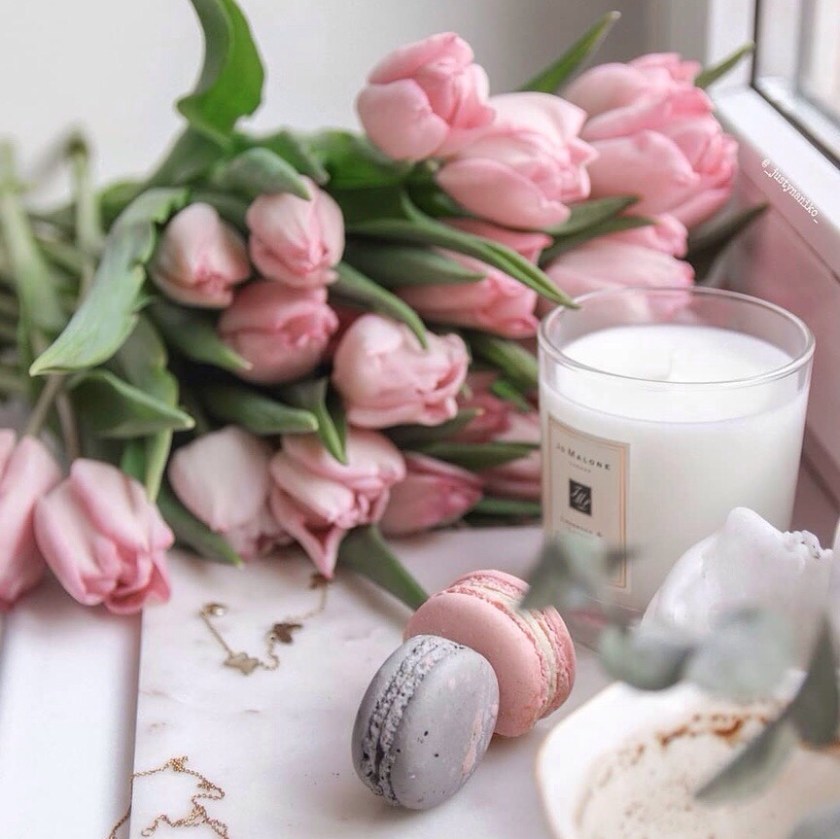
Known as “macaron” or “French macaroon”, this sweet meringue-based confection is made with egg white, icing sugar, granulated sugar, almond powder or ground almond and food coloring. Typically served with a ganache, buttercream or jam filling sandwiched between two such cookies (similar to a sandwich cookie), macarons have been one of the little delights gaining wide popularity globally. Mildly moist, melting when eaten; this confection is characterized by a smooth squared top, a ruffled circumference, referred to as the “crown” (or “foot” or “pied”) and a flat base. Macarons can be made in a wide variety of flavors that range from the traditional vanilla, raspberry, chocolate to the unusual flavours of foie gras, matcha and so on. There is some variation in whether the term macaron or macaroon is used, and the related coconut macaroon is often confused with the macaron.


Macarons are a little different from macaroons, wherein both start off with a base of egg whites and sugar. But macaroons are with the base is typically whipped into a stiff meringue , like meringue cookies. Whereas, for macarons after the meringue is whipped, a combination of powdered sugar and finely ground almonds gets folded in, not too much or too little. The resulting semi-liquid batter is piped into exact rounds and baked.
The origin of the macarons are quite debatable. Although macarons today are credited to France, the first known appearance of the macaron in Europe was believed to be back in the Middle Ages. In those times, the macaron was a small sweet made of almonds, egg white and sugar, crunchy on the outside and soft on the inside. As some food historians believe that, these “macarons” were initially made in Italy as a consequence of the Arab troops from modern Tunisia ( around 9th century AD), landing in Sicily. They had brought new foods along with them like lemons, rice, pistachios as well as a rich repertoire of nut-based sweets like almond paste candies wrapped in dough. In fact, the term “macaron” shares similarity to the Italian macaroni, which puts a shadow of doubt over it being a French creation.


Since the 8th century, Macarons have been produced in the Venetian monasteries. Yet they gained wide popularity in the French court, when the Italian pastry chef who were brought by Catherine de’ Medici when she had married King Henry II of France, during the Renaissance Era. During those years of the 16th century, macarons were known as ‘priest’s bellybuttons,’ due to the pastry’s shape. Yet as per Larousse Gastronomique, the macaron was created in 1791 in a convent near Cormery. Legend says that two Carmelite nuns, seeking asylum in Nancy during the French Revolution (1792), baked and sold the macaron cookies in order to pay for their housing. Later these nuns were known as the “Macaron Sisters”. These early years saw macarons being served without special flavors or fillings.
Towards the early 1990s, the modern day macarons had began to take shape. Largely credited to Pierre Desfontaines, the pastry chef and owner of the Parisian café, Ladurée; the modern day macaron was made when he had decided to take two macarons and fill them with ganache. The result was an instant success. These original “Gerbet” or “Paris Macaron” were composed of two almond meringue discs filled with a layer of buttercream, jam, or ganache filling. Similar styles were also claimed to be started by another baker, Claude Gerbet.
By the 1930s, macarons were served in two’s with the addition of jams, liqueurs, and spices. Since then macarons have evolved from a humble almond cookie to a versatile treat, coming in a variety of colours and flavours; alluring both to the taste buds, the experimenters’ kitchen as well as the creative mind. Towards the 21st century, confectioners started offering macarons with a difference in flavor between filling and cookie, in both savoury (Basil mint or Thai curry) and sweet styles. Little wonder that there are two days devoted to macarons with Macaron Day (March 20th) and National Macaroon Day ( May 31st) being celebrated across the world. Explore this little treat to enter another world of desserts, more than sandwich cookies, little delights both flavour some and edible art.


 Sugar And Spice... Among Other Things