Posted in Daily, Life, Reflections

Time for “Own”

“Knowing yourself is the beginning of all wisdom.” Aristotle

With the current pace of today, finding “alone time” takes a backseat. Multiple reasons can be attributed to the lack of “me-time”. Professional, person or family and even community obligations always take up a few more precious seconds. Yet once in a while, it feels wonderful to leave everything to get some quiet time.

Research has shown that at least ten minutes per day to indulge in self time really helps. Speaking from a personal viewpoint, taking time for one, be it a whole day or couple of hours, depends on one’s choice. A few minutes of indulging in one’s personal interests to a whole day of the same; should both serve the same purpose. Of being happy and finding a sense f calmness and peace of living in the daily melee.

Be sure to leave at least one day for yourself. Get up when you want.
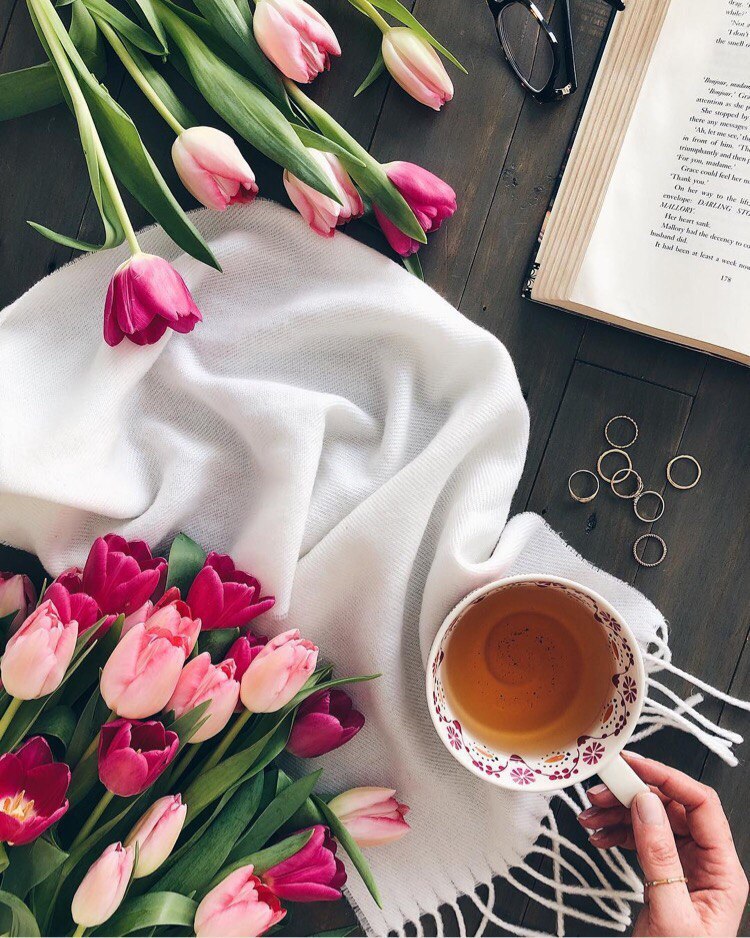
Take your time to drink fragrant mint tea or aromatic coffee.
Leisurely walk. Confused tracks among the favorite streets of the city.
Or maybe spend the whole day at home, in soft beloved pajamas,
leafing through the pages of your favorite book.
At last, to do what one had long dreamed of.
Pick up a camera, and maybe a brush and paint.
Bake a cake for a new recipe. Learn the first words in French.
Just live the day the life you dream about.
Just be yourself. Just be happy …
Anna Koryagova

Posted in Daily, Family and Society, Life, poetry, Reflections

To Curb the Unrest

“It isn’t what you have or who you are or where you are or what you are doing that makes you happy or unhappy. It is what you think about it.” Dale Carnegie

Some days, as we head about the daily grind or schedule, a sudden gush of unhappiness may slice the feeling of joy. The sudden unrest, feeling of uneasiness and irritation often stems when we start looking at our lives, through the shades of others’ lives. Comparison is a two edged vice, for when done in the right way it may help us grow and aim for the higher objective. Yet when approached and viewed by the wrong measures, it causes severe discontentment blotting out the regular peace of our lives.

“Many people lose the small joys in the hope for the big happiness.” Pearl S. Buck

To be content and at the same time, to try to grow for the betterment of one, is a delicate art, which when learnt can be an aid to achieving the simple joys of live. Being content is a feeling that one often fails to find i the modernity and complexity of this world. The sad truth is that things are really simple. For life has many joys and pleasures across its’ time, although it may seem murky from far. Learning to delight in the simple joys of life, helps us find and fulfill the purpose of our very existence.

“Because one believes in oneself, one doesn’t try to convince others. Because one is content with oneself, one doesn’t need others’ approval. Because one accepts oneself, the whole world accepts him or her.” Lao Tzu

Contentment

It was spring but it was summer I wanted; the warm days and the great outdoors.
It was summer but it was autumn I wanted; the colourful leaves and the cool dry air.
It was autumn but it was winter I wanted; the beautiful snow and the joy of the holiday season.
It was winter but it was spring I wanted; the warmth and the blossoming of nature.
I was a child but it was adulthood I wanted; the freedom and the respect.
I was twenty but it was thirty I wanted; to be mature and sophisticated.
I was middle-aged but it was twenty I wanted; the youth and the free spirit.
I was retired but it was middle-age that I wanted; the presence of mind without limitations.
My life was over but I never got what I wanted.

Source: “Calm My Anxious Heart” by Linda Dillow

Posted in Family and Society, Life, Reflections, Stories Around the World, Work

The Worth of Every Effort

“Knowing trees, I understand the meaning of patience. Knowing grass, I can appreciate persistence.” Hal Borland

Entering into the work zone every morning, is like walking into a different time frame. From childhood we have been told to take pride in doing our work, be it simple household chores, completing homework or assignments on time, getting involved in school sports, drama or musicals, working for college scholarships, the university Christmas choir and the like. The focus was laid on doing well so as to bear fruit. As we grow older one realizes that not everything bears fruit with immediate effect. By working hard, there is guarantee that the task would bear fruit to be the selected or winning project; or despite all the hard work, sales target mayn’t be met or more clients , may be lost than gained. Yet the underlying benefit of enjoying and working to one’s maximum potential, is knowing that one has tried their respective best. That mental satisfaction is worth every penny of one’s sweat.

“Indeed, this life is a test. It is a test of many things – of our convictions and priorities, our faith and our faithfulness, our patience and our resilience, and in the end, our ultimate desires.” Sheri L. Dew


Each one of us have our own difficult scales to balance. From managing family and work, to taking care of aged parents, managing the kids, night classes to attain the additional professional degree, juggling two jobs to repay the loans; each one knows their own struggle. Being discouraged and disheartened despite all the efforts is human. In those moments, it’s alright to take a breather, regroup, refocus and find the inner muse to get going. For once one decides not to drop the gauntlet, staying true to the efforts with the inner drive pushing one on; the ultimate outcome would be heartening, beyond one’s wildest hopes and dreams.

“Perseverance is not a long race; it is many short races one after the other.” Walter Elliot


The Other Side of the Wall

There was a young woman who took great pride in the growth and care of the flowers in her flower garden. She had been raised by her grandmother who taught her to love and care for flowers as she herself had done. Like her grandmother, her flower garden was second to none. One day while looking through a flower catalog she often ordered from, a picture of a plant immediately caught her eye. She had never seen blooms on a flower like that before. “I have to have it,” she said to herself, and she immediately ordered it.
When it arrived, she already had a place prepared to plant it. She planted it at the base of a stone wall at the back of her yard. It grew vigorously, with beautiful green leaves all over it, but there were no blooms. Day after day she continued to cultivate it, water it, feed it, and she even talked to it attempting to coax it to bloom. But, it was to no avail.
One morning weeks later, as she stood before the vine, she contemplated how disappointed she was that her plant had not bloomed. She was giving considerable thought to cutting it down and planting something else in its place. It was at this point that her invalid neighbor, whose lot joined hers, called over to her. “Thank you so much! You can’t imagine how much I have enjoyed the blooms of that vine you planted.” The young woman walked through the gate into her neighbor’s yard, and sure enough, she saw that on the other side of the wall the vine was filled with blooms. There were indeed the most beautiful blooms she had ever seen. The vine had crept through the crevices and it had not flowered on her side of the fence, it had flowered luxuriantly on the other side.

Just because you cannot see the good result of your labour does not mean that it bore no fruit.
Author: Randy Reynolds

“Every great dream begins with a dreamer. Always remember, you have within you the strength, the patience, and the passion to reach for the stars to change the world.” Harriet Tubman


Posted in Daily, Food

Evolution of the “Salad”

“A salad is not a meal, it is a style.” Fran Lebowitz

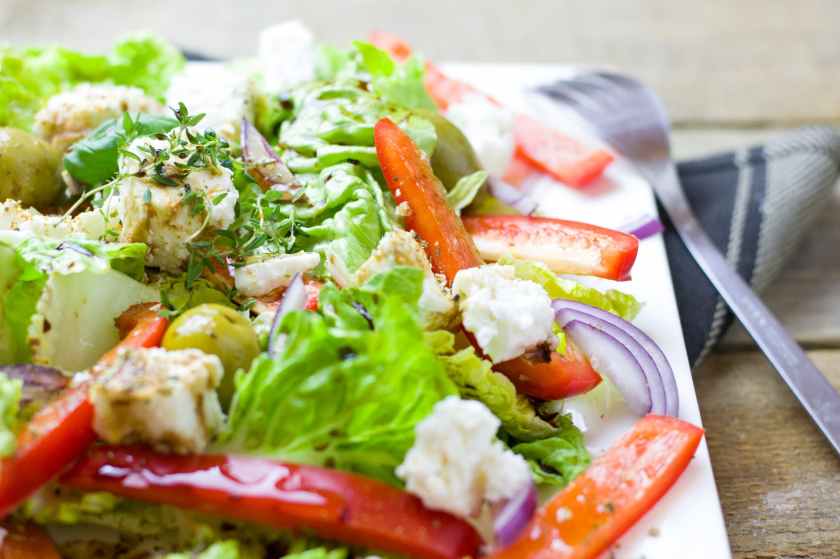
Originating from the Latin sal (means salt) to the Provençal “salada”, later as the Old French salade to finally the late Middle English “sallet” of 14th century or the modern day “salad” which it is now known by, salads have gradually evolved over the years. From simply starting a meal to being the main meal by itself, salads have been redefined both in content, style and flavours. With summer in full swing, fresh produce available and kids at home, salads can be both fun, entertaining and creative.

“Salad can get a bad rap. People think of bland and watery iceberg lettuce, but in fact, salads are an art form, from the simplest rendition to a colorful kitchen-sink approach.” Marcus Samuelsson

Salads were favored since the early Babylonian Era, where the greens were dressed with oil and vinegar. Likewise Egyptians made salad dressed with oil, vinegar and Asian. Even the Romans and ancient Greek Era saw mixed greens with dressing, a type of mixed salad. With imperial expansions, these layered and dressed salads were favourites in the menus of the European courts. Royal chefs often combined many ingredients in one enormous salad bowl including exotic greens as well as flower petals. The favourite salad of King Henry IV was a tossed mixture of new potatoes (boiled and diced), sardines and herb dressing, where as Mary, Queen of Scots, preferred boiled celery root diced and tossed with lettuce, creamy mustard dressing, truffles, chervil and hard-cooked egg slices.

“To make a good salad is to be a brilliant diplomatist – the problem is entirely the same in both cases. To know exactly how much oil one must put with one’s vinegar.” Oscar Wilde

Today salads are made in two classical manners of being artfully arranged or “composed” to ingredients being mixed with dressings or “tossed”. At any point of time on the meal salads may be served; as appetizers or side salads, as well as main course salads with high protein foods (like meat, eggs or fish), or as dessert salads. The latter version is one of the most popular with these sweet versions containing fruit, gelatin, sweeteners or whipped cream.

“It takes four men to dress a salad: a wise man for the salt, a madman for the pepper, a miser for the vinegar, and a spendthrift for the oil.” Anonymous

Technically there are five types of salads. Starting with the green salad or garden salad, consisting mostly of leafy greens with a healthy mix of coloured vegetables. If the latter are more, it is termed as a “vegetable salad”. From olives, artichokes as well as beans, celery or nuts, berries and seeds; these salads can be made in a colourful array. When made on a lettuce leaf, the “wedge salad” is created. When thick sauces are added to salads, they become “bound salads”, the second category of salads. Most types include those with mayonnaise like tuna salad, chicken salads, potato salad or egg salad, which can be served as “scoops” or sandwich fillers, making it a popular necessity for picnics and barbecues.

“As long as mixed grills and combination salads are popular, anthologies will undoubtedly continue in favor.” Elizabeth Janeway

The remaining three types include the “dinner salads” or main course salads, fruit and dessert salads. The former is made with meat, seafood or even eggs like the Cobb salad, Caesar salad and the Chinese chicken salad. With culinary fruits, a quick “fruit salad” can be made to complete the meal or a more elaborate “dessert salad” like jello salad, pistachio salad or ambrosia can answer the sweet cravings. Fancier creations like cookie salads, rice crispies salad, snickers salad or glorified rice salad. Finally topping the salads are the dressings which can be vinaigrette, creamy dressings as well as honey mustard or Italian dressing to mention a few. Dressing a salad depends on the final flavour that one wants to have.

Either for fun or for hunger, salad making can be an entertaining as well creative art, giving ample pleasure for both the taste buds, hunger pangs and health goals. With June being the foodimentarian ” National Month of Salads”, it would be fun to give few fancy salads a try.

“Kids in aprons appeared, putting tureens of vegetable soup on the tables and plates of boiled eggs, potatoes and lentils, bowls of endive-and-radish salad, small rounds of cheese and loaves of brown bread, all looking quite delicious, in Zoe’s opinion.” Christine Brodien-Jones, The Glass Puzzle
Posted in Daily, Family and Society, Life, Quotes, Reflections

At a Child’s Pace

“Let the child be the scriptwriter, the director and the actor in his own play.” Magda Gerber

Every morning, before going off to work, my toddler sees me off before going to his day care. As his centre is close to my work place, the daily morning walk is all of ten minutes only. Yet some days we both take almost thirty minutes to get there by foot; for then we walk at his pace. Walking at his pace involves, stopping to watch the traffic, examine the caterpillar crawling across, collecting the smooth round pebbles near the stream and bringing along the sturdy sticks to his daycare and back to home as well.

“Children are not things to be molded, but are people to be unfolded.”  Jess Lair

At times, the mothers’ pace in me comes to full force, with loud “Hurry up’s”, holding his hand and flying ahead, not stopping to look at the “distractions or landscape”. These situations are later compensated when we go homeward bound in the evening. The memories of “walking at a child’s pace” are beautiful.The warring thoughts in their mind, while attaining their “collectible treasures” of “funny shaped rocks”, watching the pigeons drink the water, seeing the frogs leaping across with various emotions flitting across their faces offer refreshing joy and peace to the adult mind. Leave them in the garden alone, with child safe measures and behold, its’ like watch fountains of joy and laughter explode like hot springs. Watching them ponder and examine what they see, the wonder of seeing the “big cars, JCB’s, buses” on the road (for the miniature toy ones are in their control) and their joy in the simple things of life are treasured moments.

“Curiosity is the wick in the candle of learning.”  William Arthur Ward

Living with the speed of a child is never easy for us adults, but when we do, the joy of experiencing the little delights that life offers makes the “slowing down” all the more worth. Over the years, this valuable time is what helps not just our children to grow, but also help us adults to handle the bad days with these happy moments. For the “child’s‘ pace” teaches us to find time to notice the wonders’ of the skies, the smell of the earth and be surprised by the simple but beautiful things that life offers us.

“A child can teach an adult three things: to be happy for no reason, to always be busy with something, and to know how to demand with all his might that which he desires.” Paulo Coelho

Posted in Food, Life, Quotes, Reflections

Slices of “Strawberry” Summer

“Happiness, I have grasped, is a destination, like strawberry fields. Once you find the way in, there you are, and you’ll never feel low again.” Rachel Simon

With the scent of summer still in the air, one wouldn’t miss the scent of wild strawberries in the fields. With lazy weekends beckoning a walk, it would be a perfect time for some family bonding as well as strawberry picking.

“You can pick wild strawberries with your eyes closed, locating them by smell, for they are two parts perfume to one part taste. An hour of searching might yield a handful if you’re lucky. Wild strawberries can’t be encouraged, nor can they be discouraged: They come to you unbidden and unearned. They appear, or do not, by the grace of the sun.” Hope Jahren

During this impromptu excursion, certain moments get engraved silently in the mind. The rapid passing of time, children growing up fast as well as hectic weeks leaving very less time to unwind, converse as well as simply relax; all highlight the significance in shutting down the media and heading back to nature.

“Each moment is just what it is. It might be the only moment of our life; it might be the only strawberry we’ll ever eat. We could get depressed about it, or we could finally appreciate it and delight in the preciousness of every single moment of our life.” Pema Chodron

With plenty of fresh strawberries to go around, it would be fun to go artsy, creative and add some sweetness to the regular meals as well as desserts. Browsing through the old recipes and brushing them with some “taste of summer” would make the strawberries as well as moments and memories to capture for the later years.

“As our lives speed up more and more, so do our children’s. We forget and thus they forget that there is nothing more important than the present moment. We forget and thus they forget to relax, to find spiritual solitude, to let go of the past, to quiet ambition, to fully enjoy the eating of a strawberry, the scent of a rose, the touch of a hand on a cheek…” Michael Gurian

“It is the sweet, simple things of life which are the real ones after all.” — Laura Ingalls Wilder

Posted in Daily, Food, Stories Around the World

“Hoagie” from Scratch

“I love a sandwich that you can barely fit in your mouth because there’s so much stuff on it. The bread should not be the main thing on a sandwich.” Adrianne Palicki

Little did John Montagu, the fourth Earl of Sandwich (1718-92) realize that his “sandwich” invention would become even bigger, longer and filled up with more varieties than before. Known popularly by the name of sub, hoagie, hero, grinder or Italian sandwich, the “submarine sandwich” has become one of the fastest growing sandwiches, adapted by many into a complete meal for the busy days or a healthier diet. Consisting of a length of bread or roll split lengthwise, filled with a variety of meats, cheeses, vegetables and condiments, this sandwich has no standardized name and has a dozen varieties and combinations globally. In fact those submarine sandwiches longer in length or filled with greater quantities of ingredients than usual, are known as battleship, flattop or destroyer sandwiches.

This sandwich is believed to have originated in the various Italian American communities from the late 19th to mid-20th centuries. The most widespread term of term “submarine” or “sub” is believed to have been after the resemblance of the roll to the shape of a submarine. Various theories have been put forward to the origin of the name. While one theory states that “the submarine” was brought by Dominic Conti (1874–1954), an Italian immigrant who came to New York (1900s) named it after seeing the recovered 1901 submarine called Fenian Ram in the Paterson Museum of New Jersey in 1928.

As per his granddaughter had accounted : “My grandfather came to this country circa 1895 from Montella, Italy. Around 1910, he started his grocery store, called Dominic Conti’s Grocery Store, on Mill Street in Paterson, New Jersey where he was selling the traditional Italian sandwiches. His sandwiches were made from a recipe he brought with him from Italy, which consisted of a long crust roll, filled with cold cuts, topped with lettuce, tomatoes, peppers, onions, oil, vinegar, Italian herbs and spices, salt, and pepper. The sandwich started with a layer of cheese and ended with a layer of cheese (this was so the bread wouldn’t get soggy).”

Eventually while the “submarine” had caught on; it would seem that the “hoagie” was already in vogue. Originating in the World War I era shipyard in Philadelphia known as Hog Island, where emergency shipping was produced for the war effort; Italians working there introduced the sandwich by putting various meats, cheeses, and lettuce between two slices of bread. This later was known as the “Hog Island” sandwich; shortened to “Hoggies”, then the “hoagie”.

“It’s like making a sandwich. I start with the bread and the meat. That’s the architecture. Add some cheese, lettuce and tomato. That’s character development and polishing. Then, the fun part. All the little historical details and the slang and the humor is the mayonnaise. I go back and slather that shit everywhere. The mayo is the best part. I’m a bit messy with the mayo.” Laini Giles

However, the Philadelphia Almanac and Citizen’s Manual states attributed this creation to the early-twentieth-century street vendors called “hokey-pokey men”. They had sold antipasto salad, meats, cookies and buns with a cut in them. When bakeries produced a long loaf called the pinafore(1879); Entrepreneurial “hokey-pokey men” sliced the loaf in half, stuffed it with antipasto salad, and sold the world’s first “hoagie”. Whereas another explanation is that the word “hoagie” arose in the late 19th to early 20th century, among the Italian immigrant community in South Philadelphia. Deli owners would give away scraps of cheeses and meats in an Italian bread-roll known as a “hokie”, but pronounced by the Italian immigrants as “hoagie”. After the WWII, the term “hoagie” had caught on and stayed.

There are numerous variants of these “submarine sandwiches” which have been named so based on the mix of ingredients or bread type like the New York “Hero”, New England “grinder” (a hot submarine sandwich (meatball; sausage; etc.) or a oven toasted hoagie) or Gatsby of Cape Town, South Africa. Come by whichever name, “submarine” or “hoagies” are here to stay. With National Hoagie Day (May 5th), it would be a time for some food fun.