Posted in Christian, Daily, Life, Personal Musings, poetry, Quotes

Midsummer…Another Chance

“Oh, the summer night,
Has a smile of light,
And she sits on a sapphire throne.”
– Barry Cornwall

With midsummer this weekend, the knowing that summer is coming to a close is acknowledged deep inside. Change is always happening, either in small degrees or in mighty moves. All the same, it’s the aftermath and the consequences that highlight the events.

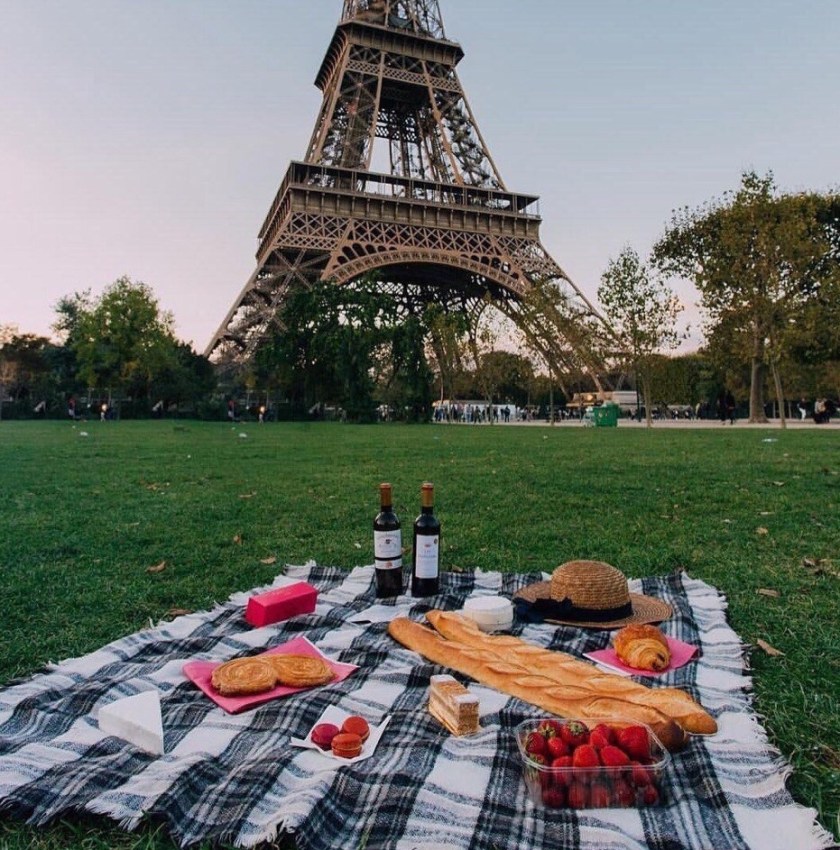
While Midsummer is celebrated as the longest day of the year as the Summer Solstice; it has a rich history of centuries old tradition especially in the Northern Hemisphere as a time for community based festivals and bonfires as well as the feast day of the early Christian martyr St. John the Baptist.


As the Christian community prepares to commemorate this day, neighbourhood and community as well as the Church prepares for the feast if St. John. The 4th century A.D. Christian Church had established this day, in honour of the birth of the Saint John the Baptist, which as recorded in the Gospel had been six months before the birth of Christ. Accordingly the Feast of Saint John (Saint John’s Day) was celebrated at midsummer, exactly sixth months before the nativity. additionally as St. John prepared the way before Christ, his words “He must increase, but I must decrease”( John 3:30) is symbolized by the fact that the “sun begins to diminish at the summer solstice and eventually increases at the winter solstice.”

Marked by varied traditions and celebrations around the globe like processions of ships down the Danube (Austria), quadrilha of Brazil, light great fires (Canada), maypole dances (Sweden for instance) to list a few; midsummer is marked by highlighting the life and plays on St. John the Baptist as well as celebrations of fireworks, bonfires and dances. The pre-Christian Era had seen similar celebrations, primarily as a pagan ritual as well as marking the end of the summer farming season.

“In summer, the song sings itself.” William Carlos Williams


Midsummer, this year brings to mind, the fact that six months will be soon gone by. Has the time passed been of “inner value or gain” for one’s betterment ? Has the time gone by, resulted in the growing of the True Path and His Way within; or are we still clamoring for material gains and worldly pleasures ? The answer is need for one’s self alone and not for the appeasement or gratification of others. Once we realize the truth, making the change soon would be better before the year comes to an end by it’s own time.

“Peacefully
The quiet stars came out, one after one;
The holy twilight fell upon the sea,
The summer day was done.”
– Celia Thaxter


“It is God in the house when the curtains lift gently at the windows, and a young child sucks his itching gums.
We do not understand the mysteries of God.
God the winter. Summer, Septembers.
Moody dark tones of fathers dying.
The splash and laughter.
Children playing.”
– Ellease Southerland
Posted in Daily, Food, Stories Around the World

“Canna” with the “petite duchesse”

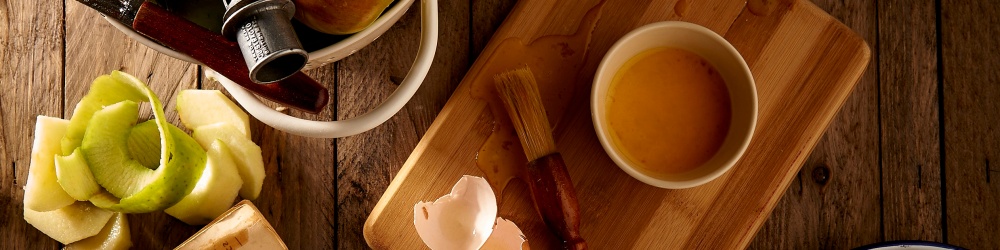
Ever had “flashes of lighting” alongside “tubes of rich goodness” ? If the answer is in the negative or a query; with the month of June nearing to an end, it would be a good time to take up on the celebratory days of the éclair (choclate éclair, to be very specific, June 22nd) as well as the cannoli (June 16th), respectively. With the local deli’s and bakers’ going on full swing of celebratory discounts as well as interesting combinations to mark these days for foodists; delving a little bit into their food history would be quite interesting.

Originating from the 19th century France, also known as sweet baguette, an éclair was an oblong pastry made with choux dough filled with a cream and topped with chocolate icing. Typically piped into an oblong shape, the dough is baked until it becomes crisp and hollow within. When cooled, the pastry can be filled with a wide range of flavours, like vanilla, coffee or chocolate-flavoured custard (crème pâtissière), with whipped or chiboust cream and then iced with fondant icing. More exotic fillings include pistachio and rum flavoured custard, fruit-flavoured fillings or chestnut purée. If the icing is of caramel, the dessert is known as “a bâton de Jacob.”

Etymology speaking, the pastry title comes from French éclair “flash of lightning”, named so because it is eaten quickly (in a flash). Initially known as “pain à la Duchesse” or “petite duchesse” til the 1850. Towards the 1860s the word eclair took over, both in English and French. Historically the speculation was that this little delight was first made by Antonin Carême (1784–1833), the famous French chef of grande cuisine.

“Leave the gun. Take the cannolis.” Clemenza, in ‘The Godfather’

Moving across to the Sicilian and the Italian-American cuisine, delicate “tube-shaped shells of fried pastry dough”, usually with a sweet, creamy filling (most commonly containing ricotta) have been quite popular especially in the island of Sicily. Known as “cannoli”, they range from sizes of cannulicchi (smaller than finger sized) to the fist-sized proportions typically found south of Palermo, Sicily, in Piana degli Albanesi.

With its roots tracing back to the Middle Ages; this best known Sicilian pastry takes its’ name “cannolo (cannoli in English)” from the long tubular shape, as a diminutive of canna (a cane like reed) like sugar cane stalk. Back in the ninth centruy, Arabs had introduced sugar cane into the Sicilian cooking, thereby replacing honey as the sweetener of Sicilian confectionary to sugar. Similar desserts from the Middle East include Zainab’s fingers (filled with nuts) and qanawāt which were deep fried dough tubes filled with various sweets.

During the medieval years, the tubular shell shape was formed by rolling the paste into a flat, circular shape, then wrapping it around a sugar cane stalk. Legends abound but among them, most lead to the origin from western Sicily, probably in Palermo or nearby. Made often as a springtime item, most commonly associated when sheep produced more milk for ricotta around the Fat Tuesday (Carnevale).

Summer still going strong and picnics in full swing, for the first timers it would be a good time to experiment the sweet delicacies for a change. As for the kitchen experimenters and part time chefs, getting creative with homemade eclairs and cannoli would be a good change from the routine desserts.


Posted in Family and Society, Life, Personal Musings

Finding “Nemo” and Oneself Too…

Dory: Hey there, Mr. Grumpy Gills. When life gets you down do you wanna know what you’ve gotta do?
Marlin: No I don’t wanna know.
Dory: [singing] Just keep swimming. Just keep swimming. Just keep swimming, swimming, swimming. What do we do? We swim, swim.
Marlin: Dory, no singing.
Dory: Ha, ha, ha, ha, ho. I love to swim. When you want to swim you want to swim.
Marlin: Now I’m stuck with that song… Now it’s in my head.
Dory: Sorry.
– From “Finding Nemo”

One of the perks of being an avid animation movie fan in a household of toddlers is that one gets to indulge in them more often with a guilt free mind. For weekend movie nights, it’s a tussle between kids’ and parental choice. Last weekend was “Finding Nemo” (2003), the plot centers around Marlin, an overprotective ocellaris clown fish who along with Dory, a regal blue tang search for Nemo, his son who was abducted. Their journey takes them all the way to Sydney Harbour. Along the way, Marlin learns to take risks and comes to terms with Nemo taking care of himself.

“Just when I think I have learned the way to live, life changes.” Hugh Prather

With it’s classical funny dialogues and realistic as well as artistic animation scenes, for the toddler’s mind it was three hours of joy, music and fun. What went through the adult mind was two central themes of taking life as it comes as well as finding oneself. On a personal front, this animation feature had set the mind thinking. Among the underlying messages and emotional undercurrents, few of the thoughts that were highlighted include taking life as it comes, with risks and all; as well as finding oneself among the responsibilities. Additionally for the parental conscience, it includes guiding the fledglings to find their own call, to watch over  them but not to hound or be too over protective in any manner.

“It’s a helluva start, being able to recognize what makes you happy.” Lucille Ball

Following the norms of society, culture, tradition and patterns of life; while on the journey we often neglect to take risks and allow for personal growth and betterment. At times, one gets the opportunity to rectify and take the risks to follow the dreams. Over and over again, it may not be so and one follows the set pattern, often falling into a rut and mundane existence. Instead of always living in conformity to the said rules of society; one should take the effort to attempt and risk, to do what one loves and believes in. If one does so in the true and honest manner, “Finding Nemo” would be akin to a quest of finding oneself, their dreams and hopes; not a journey in vain.

“You’ll learn, as you get older, that rules are made to be broken. Be bold enough to live life on your terms, and never, ever apologize for it. Go against the grain, refuse to conform, take the road less traveled instead of the well-beaten path. Laugh in the face of adversity, and leap before you look. Dance as though EVERYBODY is watching. March to the beat of your own drummer. And stubbornly refuse to fit in.” Mandy Hale

Posted in Daily, Family and Society, Life, Quotes, Reflections, Stories Around the World, Work

Words Worth “Weight in Gold”

“Appreciation can make a day, even change a life. Your willingness to put it all into words is all that is necessary.” Margaret Cousins

As part of developing work etiquette as well as relationship skills within the workplace, there was an assignment given in one of the workshops where in each one of the ten participants were supposed to list and write anonymously the most difficult colleague to work with among them. In the second phase, the requirement was to write one quality that one could remember well about that person and anonymously the paper was handed over to them. Two weeks later, the feedback was collected about the change in the relationship with that same person. much to the surprise of the psychologist conducting the session, the dislike wasn’t there as much as before with the workshop. Besides the relationship between the colleagues as well as the workplace atmosphere had improved as per the ratings scale.

“Feeling grateful or appreciative of someone or something in your life actually attracts more of the things that you appreciate and value into your life.” Northrup Christiane

It doesn’t take a genius to figure out that among the many things that man craves, one of the most common, but less talked about are “the feeling of being appreciated.” The person who delivers the daily paper, the cashier who bags the groceries in an efficient and neat manner, the waitress at the deli who brings us the lunch order quickly or even the bus driver who patiently waits for us to board the bus with the groceries, shopping and toddler in tow, are few of the many people that silently help us in the daily life. While most of their behaviour is a part of the service they provide us; it does take time and patience to do any task diligently.

“Let us be grateful to the people who make us happy; they are the charming gardeners who make our souls blossom.” Marcel Proust

While we may silently acknowledge, saying those words out loud will bring a positive feeling not only towards them but within ourselves too. One of the gifts that we humans have been blessed with is the skill of communication. What better way is there to use that and exchange words of appreciation that lifts up those around us?

“Being told something positive about yourself, whether from someone you’re close to, or a passing acquaintance, should really lift the spirits. Just the fact that someone has taken the time to let you know, should have you feeling noticed and appreciated.” Paul Bailey

While one shouldn’t wait to earn them; when one feels that what has been done for them is good, express the gratitude by sharing the feelings as kind words. It’ll go a long way to lift up the moods around for each one will never know the complete story of the other person. Do one’s bit and spread good cheer and kindness around.

“Appreciation is a wonderful thing. It makes what is excellent in others belong to us as well.” Voltaire

“I DIDN’T KNOW THAT YOU LOVE ME SO”

Once, a math teacher from Minnesota gave the students the following task: to make a list of the class, think what you like most about each of your classmates, and write down this quality opposite his last name. At the end of the lesson she collected lists. That was on Friday. Over the weekend, she processed the results and on Monday handed out to each student a piece of paper on which all the good things her classmates noticed in her were distributed. The guys were reading, here and there whispering was heard: “Is it all about me? I didn’t know that they love me so much.” They did not discuss the results in class, but the teacher knew that she had reached the goal. Her students believed in themselves.
A few years later one of these guys died in Vietnam. He was buried at home in Minnesota. Friends, former classmates, and teachers came to say goodbye to him. At the commemoration, his father went up to a math teacher: “I want to show you something,” he took out a folded sheet of paper folded in folds from his wallet. “It was obvious that he had been read and re-read many times. – It is found in the things of the son. He did not part with him. Do you recognize? “
He handed the paper to her. It was a list of positive qualities that classmates noticed in his son. “Thank you so much,” his mother said. – Our son so valued it.
And then an amazing thing happened: one by one, classmates took out the same sheets. Many always kept them in their wallet. Someone even kept them in their family album. One of them said: “We all kept these lists. Is it possible to throw it away? ”
– Gary Chapman, “Five Ways to a Child’s Heart

“Make it a habit to tell people thank you. To express your appreciation, sincerely and without the expectation of anything in return. Truly appreciate those around you, and you’ll soon find many others around you. Truly appreciate life and you’ll find that you have more of it.” Ralph Marston

Posted in Daily, Life, poetry, Quotes, Reflections

Mark the “Present” First

“For after all, the best thing one can do when it is raining is let it rain.” Henry Wadsworth Longfellow

With the scorching heat of the summer giving way to the wet rainy days, one is forced to reckon the the mud and wet roads along with the joy and the smell of fresh earth, not to forget the fact of getting wet with the rain perpetually on the daily commute to work. These thundering wet days often draws forth the longing for the dry windy days of autumn or the fresh days of spring. Nature, unheeding just goes on and teaches man to find the joy in all, giving us a bit of everything there.

“Be thankful for what you have; you’ll end up having more. If you concentrate on what you don’t have, you will never, ever have enough.” Oprah Winfrey

Man being man, will always longs for the next event. One always has a long never-ending list of “wants” and “dreams of doing better” and achieving something in life. While there is nothing wrong in trying to change for the better; many a time we lose the beauty and the pleasures of the present in the quest for ” the better future”. Each one of us longs to leave behind our own mark in this world. Yet “this mark” starts not in the future, but in the days and hours that we live this minute. To make changes, the individual character and disposition matters more than circumstances. Finding contentment amidst the quest for the better tomorrow is indeed an art and an attribute best to “live every moment of life”.

“The greater part of our happiness or misery depends upon our dispositions, and not upon our circumstances.” Martha Washington

Contentment

It was spring but it was summer I wanted; the warm days and the great outdoors.
It was summer but it was autumn I wanted; the colourful leaves and the cool dry air.
It was autumn but it was winter I wanted; the beautiful snow and the joy of the holiday season.
It was winter but it was spring I wanted; the warmth and the blossoming of nature.
I was a child but it was adulthood I wanted; the freedom and the respect.
I was twenty but it was thirty I wanted; to be mature and sophisticated.
I was middle-aged but it was twenty I wanted; the youth and the free spirit.
I was retired but it was middle-age that I wanted; the presence of mind without limitations.
My life was over but I never got what I wanted.
Source: “Calm My Anxious Heart” by Linda Dillow

Posted in Family and Society, Life, Musique, Stories Around the World

Of Summers and Picnics

Although “eating outdoors” may have been a part of civilization since the beginning, the concept of enjoying a picturesque relaxed lunch were in fad post French revolution (1789) when the royal parks were opened to the French public. This concept saw a gradual evolution with hunting parties, Renaissance era country feasts and Victorian garden parties, especially the latter as grand occasions complete with tables, chairs, linens, crystals, catering and gourmet food to top it. Known as “pique-nique” (France, 1794) then, this event turned out to be a social calendar earmarked occasion, catching the trend across Europe and became officially known as “picnic”.

The tales of Robin Hood are one of the first accounts of picnicking when Robin with his band of Merry Men would dine informally under the shelter of trees. The concept of “picnicking” once started had caught on with picnic societies, long picnics as well as “picnic fashion” and “themed social picnics” being created. With International Picnic Day today (June 18th) and to get the most reluctant picnic goers out there, here are a few picnic trivia around the world to get one started.

To have a superb picnics with cushions, rugs and furniture, one would have to go to Turkey, where the trend was initiated. Along with comfort, games and string lighting; a potluck-style selection of stuffed veggies, grilled meats and desserts are often brought. Towards nightfall, picnics still going on turn into bonfires complete with music, dancing and raki (Turkish licorice-flavored alcohol).

Enjoying the National Picnic Week held each June in Britain, it would be incomplete without the Scotch Egg. One of the most iconic picnic foods created towards the late 18th century, these fried sausage-wrapped boiled eggs were easy to be eaten on the road. Other choices like pasta salad, fish and chips, potato salad, deviled eggs, cheese, brownies, cookies, sandwiches, subs and many more form form the huge list of picnic foods which taste good when served cold.

Picnics in the French outdoors especially Bastille Day involves fine dining especially as far as wines are concerned. Plastic cups spoil the flavour and aroma of wine with fresh air. On a personal front, keeping plastic to a minimum and enjoying reusable Tupperware will make the outdoor dining more enjoyable and nature safe.

To enjoy Christmas picnics, the Argentinian beaches would be good place to start. Holidays outdoors are celebrated complete with roasted or barbecued turkey or goat. Going north, Americans enjoy picnics specially on the Fourth of July where along with competitive races, three legged races and other picnic games; speed eating contests of pies, watermelons, burgers and the like have become the major “game attraction”.

While cherry blossoms or “hanami” announce the Japanese picnicking season; the Italians prefer Easter Monday, known as Angel’s Monday or Pasquetta as picnic time. One of the most iconic picnics was the Pan-European Picnic (August 19, 1989) where picnics were held with hundreds of East Germans grabbed the opportunity to cross into Austria. Weeks later Hungary had opened the border, the Iron Curtain had been breached, and on 9th November the Berlin Wall came down. While croquet, soccer, and badminton are common picnic games; kubb is a regular game in Denmark, Finland and Sweden. This lawn game is a mix between bowling and chess, where players attempt to knock over wooden blocks called kubbs with wooden batons.

With the great outdoor weather, it would be remiss to lose out on the opportunity to go back to childhood, capture the bliss of the summer skies and comfort food, while finding peace in the midst of nature. The only catch is to enjoy, being nature safe and eco-friendly. As the best things of life are captured by moments and memories; the essence to living is to make more and enjoy them too.

“If you go down in the woods today, you’re sure of a big surprise
If you go down in the woods today, you’d better go in disguise
For every bear that ever there was will gather there for certain
Because today’s the day the teddy bears have their picnic

Every teddy bear who’s been good is sure of a treat today
There’s lots of marvellous things to eat and wonderful games to play
Beneath the trees where nobody sees they’ll hide and seek as long as they please

That’s the way the teddy bears have their picnic “

….The Teddy Bear’s Picnic by Henry Hall

Posted in Daily, Life, Personal Musings, Stories Around the World, Work

To “Sharpen” Thyself

“The difference between ordinary and extraordinary is that little extra.” Jimmy Johnson

Working on any difficult task, project or activity, one of the first things said is to make it different or “think outside the box”. While many of us do set the grey cells things and speculate and calculate the various possibilities and outcome; very few engage in the activity of going back and revising or re-training their skills. Consequently very often we fail to improve and work with the regular or even less output.

“The pessimist complains about the wind; the optimist expects it to change; the realist adjusts the sails.” William Arthur Ward

The work environment in today’s world revolves around not just the “output” but also being different and innovative. Yet through all this what runs silently through is the “basics”. Unless one takes the effort to sit down and review, revisit and relearn the new and the old; progress would be limited. For it’s the little things that matter the most. What may appear as a “waste of time” may be more time saving of all the options.

“The man who will use his skill and constructive imagination to see how much he can give for a dollar, instead of how little he can give for a dollar, is bound to succeed.” Henry Ford

Whether one is an entrepreneur, baker, artist, structural engineer, theologian, health administrator, stock traders or a poet as the list goes on; unless one learns to sharpen their skill by being willing to learn or re-learn, change for the better mayn’t be the very best shot that one can give. Doing the work with full persistence and effort isn’t just enough; doing it smart with effectiveness and renewing their skills is better, for not only improving the output but also for one’s own self-satisfaction.

“Give me six hours to chop down a tree and I will spend the first four sharpening the axe.” Abraham Lincoln

The two lumberjacks

It was the annual lumberjack competition and the final was between an older, experienced lumberjack and a younger, stronger lumberjack. The rule of the competition was quite simply who could fell the most trees in a day was the winner.
The younger lumberjack was full of enthusiasm and went off into the wood and set to work straight away. He worked all through the day and all through the night. As he worked, he could hear the older lumberjack working in another part of the forest and he felt more and more confident with every tree he felled that he would win. At regular intervals throughout the day, the noise of trees being felled coming from the other part of the forest would stop. The younger lumberjack took heart from this, knowing that this meant the older lumberjack was taking a rest, whereas he could use his superior youth and strength and stamina to keep going. At the end of the competition, the younger lumberjack felt confident he had won. He looked in front of him at the piles of felled trees that were the result of his superhuman effort.
At the medal ceremony, he stood on the podium confident and expecting to be awarded the prize of champion lumberjack. Next to him stood the older lumberjack who looked surprisingly less exhausted than he felt.
When the results were read out, he was devastated to hear that the older lumberjack had chopped down significantly more trees than he had. He turned to the older lumber jack and said: “How can this be? I heard you take a rest every hour and I worked continuously through the night. What’s more, I am stronger and fitter than you old man”.
The older lumberjack turned to him and said: “Every hour, I took a break to rest and sharpen my saw”.

“The expectations of life depend upon diligence; the mechanic that would perfect his work must first sharpen his tools.” Confucius