Posted in Daily, Family and Society, Life, Personal Musings, poetry, Quotes

Of Skies, Clouds and Serenity

“It is the individual who knows how little they know about themselves who stands the most reasonable chance of finding out something about themselves before they die.” S. I. Hayakawa

The perils of being an adult with a large family, primarily involves lack of alone time for oneself. Either a homemaker or an employer or employee, the hours and days are swallowed up by work, commute, schedules or basic activities for the daily sustenance. As the weekend approaches, eagerness slowly occupies the mind for the possibility of some self time. On Sunday mornings, post church and Sunday luncheon, there’s nothing more blissful than packing up the household, with kids, pets and essentials for a quick trip to the fields, park or even the far reaches of the gardens and lying under the shade of the trees with the noon sun throwing it’s rays. For parents, the lazing around brings around some much needed quiet and downtime with nature and her elements calming the chaos within. For children it’s freedom to explore what nature has hidden.

“I went to the woods because I wished to live deliberately, to front only the essential facts of life, and see if I could not learn what it had to teach, and not, when I came to die, discover that I had not lived.” Henry David Thoreau

Finding oneself and refreshing the spirits may be difficult but not impossible as one long as one makes time and takes advantage of the options at hand. Nature has the best cure and healing approach for the chaos that man often lands into. While a trip to the distant lands for a long break may be somewhere on the bucket list and not feasible for the present, taking time off within the presence of nature of today may be a viable option. The days of summer, vast fields and green lawns often brings to mind the beauty of daffodils. While carpets of yellow daffodils may be absent in the tropics, the greenness of nature calms the soul and brings rest to weary minds and souls. After all, nature is God’s way of telling us to rest and let Him shoulder the burdens of the day.

“When we were in the woods beyond Gowbarrow park we saw a few daffodils close to the water side, we fancied that the lake had floated the seed ashore and that the little colony had so sprung up – But as we went along there were more and yet more and at last under the boughs of the trees, we saw that there was a long belt of them along the shore, about the breadth of a country turnpike road. I never saw daffodils so beautiful they grew among the mossy stones about and about them, some rested their heads upon these stones as on a pillow for weariness and the rest tossed and reeled and danced and seemed as if they verily laughed with the wind that blew upon them over the Lake, they looked so gay ever glancing ever changing. This wind blew directly over the lake to them. There was here and there a little knot and a few stragglers a few yards higher up but they were so few as not to disturb the simplicity and unity and life of that one busy highway – We rested again and again. The Bays were stormy and we heard the waves at different distances and in the middle of the water like the Sea.”
—Dorothy Wordsworth, The Grasmere Journal Thursday, 15 April
(Wordsworth ed. Woof (2002) p. 85)

Posted in Daily, Food

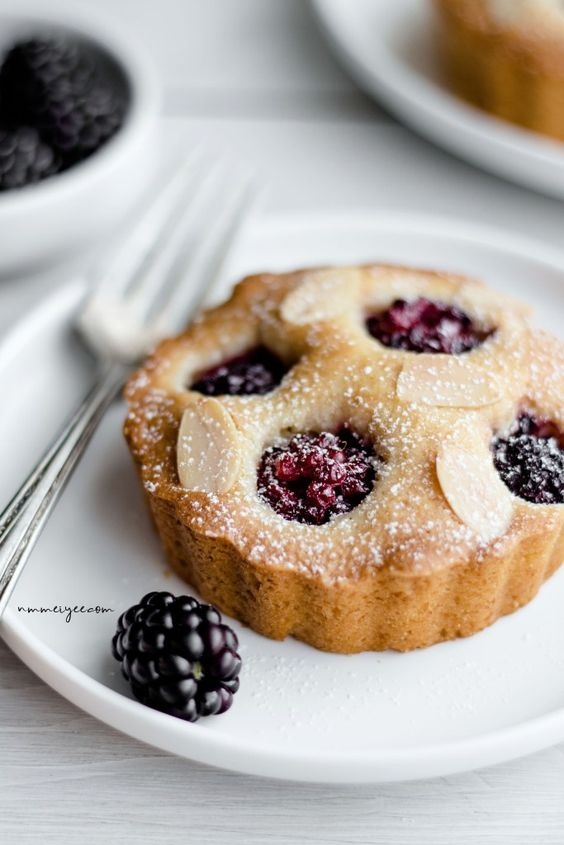
Origin, Evolution and Art of “Tarte”

“The Queen of Hearts, she made some tarts,
All on a summer day:
The Knave of Hearts, he stole those tarts,
And took them quite away!” – Lewis Carroll

As echoed by the words of Lewis Carroll, the association of “tarts” to the upper ranks of pastries has been there since the medieval ages. Fast forward to the present, their popularity hasn’t diminished by any means with more than three food holidays for tarts like the raspberry tart day (May 3rd), Cherry Tart Day (June 18th), Butter Tart Day (June 1st) and even National Milk Tart Day (February 27th) as declared and celebrated by “foodimentarians” around the world.

Tart is basically a baked dish with filling over a pastry base with the top left open. While the pastry is usually of shortcrust, the filling can vary from sweet to savoury; although modern tarts are fruit-based with or without custard. Miniature tarts known as tartlets like egg tarts are also gaining widespread popularity as they can essentially substitute for a complete breakfast for the “busy fast paced” world out there.

Originating from the Old French “tarte” or Medieval Latin “tarta”; the distinction of tart with flan, quiche and pie are often blurred with differentiation on the basis of the covering over the pastry or the filling type being sweet, savoury or meat and vegetable based. the categories of “tart”, “flan”, “quiche”, and “pie” overlap, with no sharp distinctions.

“Unless you are a professional, you will find the tart to be a high-maintenance, unforgiving whistle-blower of a pastry.” Sloane Crosley

On tracing the origins of tart, most food historians believe that they came about from the tradition of layering food or “putting things on top of other things” especially over notably round, flat pieces of bread or bread based crusts. Over time, the base was pastry type and then tarts had come about. Another line of thought maintains that tarts spring from the Medieval pie-making tradition, as a kind of flat, open-faced pie. Dating to at least mid 15th century, one of the earliest tarts was “the Italian crostata”, described as a “rustic free-form version of an open fruit tart” or “an open-faced sandwich or canape” due to its’ crusted appearance.

With the arrival of enriched dough around the 1550s, pies took a setback of being a common man’s way of recycling offal and table scraps, while tarts were made with fillings of “high cuisine” often made artistic and pleasing to the eye as well as palate. Often custard-based, a large, open tart presented a broad canvas upon which an artistic chef might compose a work of edible art with brightly-colored fruits, vegetables and spices added onto or into them, mostly being sweet than savoury, or a little of both.

Typically free-standing with firm pastry base of dough, itself made of flour, thick filling, and perpendicular sides; tarts have been made with varied fillings including jam, Treacle tart, meringue tart, tarte Tatin and Bakewell tart.

In fact, the “tarte Tatin”, named after the hotel (originated in France) serving it as its signature dish, is an upside-down pastry in which the fruit (usually apples) are caramelized in butter and sugar before the tart is baked. Over the years, this version as spread to other countries over the years with the filling upside-down being of not just apples or other fruit but also onions, tomatoes and other vegetables.

With savoury tarts getting their own special niche of “quiches”, German Zwiebelkuchen ‘onion tart’ or Swiss cheese tart (Gruyere); tarts and their related varieties are here to stay, especially for quick, comfortable, fun and artistic cooking. With June being the month of outdoors and picnics, tarts and pies are very much here to stay.

“I’m really a scientist. I follow recipes exactly – until I decide not to. And then I’ll follow something else exactly. I may decide I could turn this peach tart into a plum tart, but if I’m following a recipe, I follow it exactly.” Ina Garten

Posted in Christian, Daily, Family and Society, Life, Personal Musings, Stories Around the World

Of the White Handkerchief

” We must develop and maintain the capacity to forgive. He who is devoid of the power to forgive is devoid of the power to love. There is some good in the worst of us and some evil in the best of us. When we discover this, we are less prone to hate our enemies.” Martin Luther King, Jr.

Many of us, during our school or college days, may have those “friends” who were a part of needless teasing and mocking group who had often made days miserable, troublesome and quite depressing, in those times. Fast forward years later, when emails and contact with them were kept to a bare minimum or ignored to prevent emotional setbacks, thinking of those days. Suddenly out of the blue, a phone call or an appointment with the very same people who were directly or indirectly involved then. Will it be within each one of us to forgive them or not ? The old adage, “let bygones be bygone” may sound simple; but when faced with reality, it will never be easy.

“13 Bear with each other and forgive one another if any of you has a grievance against someone. Forgive as the Lord forgave you.” (Colossians 3:13)

As life and time teaches us again and again; there would be nothing good in fostering the hatred, regrets or dark memories. While those may have happened, it’s how we move on ahead that matters.

” 31 Get rid of all bitterness, rage and anger, brawling and slander, along with every form of malice. 32 Be kind and compassionate to one another, forgiving each other, just as in Christ God forgave you.” ( Ephesians 4:31-32)

On abetting the bad memories, we often lose out on enjoying and gaining our own happiness in life. When one part of us says, “forgive and move on” and the other holds us back with “the memories”; learn to chose the right one.

” 3 So watch yourselves. “If your brother or sister sins against you, rebuke them; and if they repent, forgive them. 4 Even if they sin against you seven times in a day and seven times come back to you saying ‘I repent,’ you must forgive them.” ( Luke 17:3-4)

All of us have been bad in someone’s books; which we may or mayn’t know about. When given a chance or opportunity to “do good”, do so without letting the memories of “what has happened with them” keep us from doing the right thing. We all need forgiveness from somebody at some point of our life, be it at the resent, in the past or the future. As life and the scriptures teach us, unless we learn to hold the olive branch; no one will lend us one or share the one in our hand. Above all what goes around, comes back to us; so despite all the setbacks and disappointments or dark memories of people, be kind, forgive and do good; if not for their happiness but for our happiness as well as one’s own peace of mind.

“25 And when you stand praying, if you hold anything against anyone, forgive them, so that your Father in heaven may forgive you your sins.” (Mark 11:25)

White Handkerchief

Freed from imprisonment, he returned home by train. The railway ran through their native places, and approaching its station, it would certainly pass by its native home. But the closer the house came, the more restless it became in his heart. It was hard for him to realize; how much grief he brought to his parents.
Despite the fact that the separation lasted for many years, he loved his parents and dreamed of meeting with them. The fact that he often neglected the love of his parents was even more his than the crime he committed.
He was not at all sure whether they would accept him at home or not. Therefore, he wrote home a letter in advance asking; hang a white handkerchief in the yard if parents are ready to take it. If the scarf will not …
However, the closer the house came, the stronger the heart beats. The house is still far away, but he does not take his eyes off, looks intently into the distance, to the place where people endlessly close to him live.
They are waiting for me at home, or I, the outcast, have to roam the world; for many days these thoughts have not given him peace.
As slowly as this train goes, it seems that it deliberately intensifies its suffering with its slow speed.
And in the distance they appeared at home. Soon will be his home. There is a white handkerchief in the courtyard of the house or not …
And suddenly … tears gushed from his eyes. He saw his home and yard, which was covered with large white sheets … ( Translated from Russian)

This above story may have been shared with similar versions across the world, either by word of mouth or in some forgotten book or been told an acquaintance or friends as “real stories” to those known by them. Maybe this story is one of those that emerge every few years, told new in one form or another. Even though the setting and the people may shift; the message endures. The feeling that it did happen, somewhere and at sometime helps one to believe int he spirit of forgiveness as well as the kindness, love and humaneness of man and society.

“When you forgive, you in no way change the past – but you sure do change the future.” Bernard Meltzer

Posted in Christian, Family and Society, Life, Quotes, Reflections, Stories Around the World, Work

The Spirit Within

“It takes courage to grow up and become who you really are.” E.E. Cummings

In ancient Indian legend tells of a mouse that was afraid of cats until the wizard agreed to turn it into a cat. And it stopped being afraid of cats, until it met a dog. Then the wizard turned it into a dog. The mouse who was turned initially into a cat, then later as a dog, was pleased until it met the tiger. Then the wizard turned it into a tiger, the animal which it was afraid of. But when this “tiger” came to the wizard with complaints that it was afraid of the hunter, the wizard refused to help and said, “You will again become a mouse, because in your body, even as a tiger, the heart of the mouse still beats.”

“One who conquers fear cannot be conquered by anyone.” Matshona Dhliwayo

This legend often brings familiarity to many of us with similar emotions experienced at some point in our lives. There are days when one has to put on a courageous face, hiding the fear and insecurities within, in order to brave the world. Yet that is alright, as long as we shore up our inner courage by strengthening the spirit, mind and soul. Faith, hope and love are all required to maintain the courage within. In fact this is a continuous cycle, wherein which when one link is broken; it would be difficult to continue the journey without stopping to fix the “broken links”.

“Courage is not the absence of fear, but rather the judgement that something else is more important than fear.” Ambrose Redmoon

For those among us, who brave on and face both insecurities and fear, by keeping the spirit of courage in our hearts; being a mouse or a tiger, one will still prevail. Yet when we refuse to address the spirit, but seek to pacify oneself under the guise of aggressiveness or personal appeasement by accumulation of wealth, social standing and the like; the spirit will stay on only for so long, before it breaks down. Security in the material world is always temporary. One was born with the mind, soul and body with hands open and empty; the going may be similar. What we can hold on to is our spirit and memories which keeps the days going fruitful in the short time that we have been allotted here, in this world.

“One isn’t necessarily born with courage, but one is born with potential. Without courage, we cannot practice any other virtue with consistency. We can’t be kind, true, merciful, generous, or honest.” Maya Angelou

The courage to strengthen the spirit, brave the world, live our dreams and stay true to the right morale all depends on the mind, spirit and soul. In fact, courage is a function of what we are. While the external surroundings can momentarily support us; it’s the internal soul, the fortress of spirit that generates courage and keeps us at peace within. Nothing true in life happens overnight. This will all need time, patience and fortitude with the will to stay on His Path and the true conscience. His Grace and His Spirit strengthens us to do so, as long as we let them to work on us.

“Your time is limited, so don’t waste it living someone else’s life. Don’t be trapped by dogma – which is living with the results of other people’s thinking. Don’t let the noise of other’s opinions drown out your own inner voice. And most important, have the courage to follow your heart and intuition. They somehow already know what you truly want to become. Everything else is secondary.” Steve Jobs

Posted in Daily, Family and Society, Life, Personal Musings, poetry, Quotes, Stories Around the World

The “Air” That We Breathe

“The environment is where we all meet; where we all have a mutual interest; it is the one thing all of us share.” Lady Bird Johnson

As the world gears up to acknowledge the environment today as World Environment Day (June 5th); the focus for this year is on “the air around us”. For the basic survival of man, the dependence on nature and her elements are huge. Since the beginning many things have been taken for granted, from the earth forests for shelter; water to drink; other living resources as food to the availability of air for existence. Unfortunately over time, the trend has changed from use to misuse and abuse. For those of us who live thoughtless of the future, little do we realise how much the present affects us. The rise of air pollution based diseases creeping early into childhood years to early phases of “bad lungs” from young adulthood; the impact is vast and huge.

“The ultimate test of man’s conscience may be his willingness to sacrifice something today for future generations whose words of thanks will not be heard.” Gaylord Nelson

Although this focus is on the “air” for now; gradual understanding and implementation of measures to address the core issues of climate change and pollution have to be done on small scale as well large scale to repair the significant damage done and avoid more harm. As the saying goes, “little drops of water make rivers and lakes, finally leading into seas and oceans.”

“Away, away, from men and towns,
To the wild wood and the downs, —
To the silent wilderness,
Where the soul need not repress its music.”
—Percy Bysshe Shelley

Habits started young, stay for life. Hence start small measures for now, keeping it up to slowly add on and lead to big changes. With children at home, from using water wisely, replenishing water back into the soil, recycling old toys and reusing the plastic around for school projects are few of the many measures to start off. For adolescents and young adults, options for changes act at a more significant level like carpooling, cleanliness and planting drives as well taking significant measures to reduce and reuse plastic, switch to conserve electricity as well as power use are few of the many efforts that can be made for helping to sustain the environment that we live on.

Growing older, sticking to these measures and putting them into the daily practical life is what matters the most. The clash is always between convenience, comfort, essential and effort. To “reduce, reuse and recycle”, use wisely or even sustain and conserve, is never easy but requires tremendous care, foresight and planning from one. After all, to maintain the best things in life, it was never easy. The environment is never ours alone but to be shared across all species and it has the potential to sustain us when used wise and destroy us when the balance is harmed.

The Brook
By Alfred Tennyson

I come from haunts of coot and hern,
I make a sudden sally
And sparkle out among the fern,
To bicker down a valley.

By thirty hills I hurry down,
Or slip between the ridges,
By twenty thorpes, a little town,
And half a hundred bridges.

Till last by Philip’s farm I flow
To join the brimming river,
For men may come and men may go,
But I go on for ever……

Posted in Daily, Food, Stories Around the World

Of “Catchup” and Origins…

“Three tomatoes are walking down the street – a papa tomato, a mama tomato and a little baby tomato. Baby tomato starts lagging behind. Papa tomato get angry, goes over to Baby tomato and squishes him…..and says ‘Ketchup!”
-Uma Thurman in ‘Pulp Fiction’ (1994)

Sweet and tangy, often used as a condiment for the “hot or fried, greasy” dishes and at times, as an add on for dressings, sauces or flavouring for the main course dishes; “ketchup” or “catchup” has evolved into being almost a must in every household. In fact, to flavour the most mundane or for a quick scratch meal; ketchup is the answer. Little wonder then with hoards of “tomato sauce” enthusiasts around, a whole day has been dedicated as National Ketchup Day (June 5th).

Typically made from tomatoes, sugar, vinegar, assorted seasonings and spices; this sauce had initial recipes of egg whites, mushrooms, oysters, mussels, or walnuts, among other ingredients. Some of these ingredients have been modified and labelled under other sauces; such that the term “ketchup” (earlier known as catsup, catchup, red sauce, ketsup) refers to the unmodified tomato ketchup (not the mushroom ketchup). While the specific spices and flavors may vary; most commonly include onions, allspice, coriander, cloves, cumin, garlic, mustard and sometimes celery, cinnamon or ginger.

“You know, you really can’t beat a household commodity – the ketchup bottle on the kitchen table.” Adlai Stevenson

Condiments and sauces have been an accompaniment for main course meals a s well as snacks from the very early days of civilizations. Delving into the origins and roots of “ketchup”, this concoction of the Orient had been passed on to the colonists. The 17th century Chinese cuisine included a concoction of pickled fish and spices; known as kôe-chiap (Amoy dialect) or kê-chiap meaning the brine of pickled fish (like salmon juice) or shellfish. Seen in the Malay States (Malaysia and Singapore) of early 18th century; as kicap or kecap (pronounced “kay-chap”) English colonists had first tasted it. The English settlers had taken it back with them, later to their American colonies. Over time “kecap” had evolved into catchup” or “ketchup”. From an etymological point of view, multiple competing theories offer explanations for the name “ketchup”, yet the most widely believed is the Malay or Chinese origin.

“I mix mayonnaise, ketchup and brandy and a little bit of mustard. This is a heck of a good sauce for seafood.” Jose Andres

Originally and historically, the initial preparations of the English ketchup had mushroom (sometimes even walnuts) rather than tomatoes as primary ingredient(1750 to 1850). While many variations of ketchup were created, the tomato-based version appeared a century later after other types. The early versions had anchovies placing its’ roots to fish-sauce ancestry. The mid-1850s saw anchovies being dropped from the ingredients.

Gather a gallon of fine, red, and full ripe tomatoes; mash them with one pound of salt.
Let them rest for three days, press off the juice, and to each quart add a quarter of a pound of anchovies, two ounces of shallots, and an ounce of ground black pepper.
Boil up together for half an hour, strain through a sieve, and put to it the following spices; a quarter of an ounce of mace, the same of allspice and ginger, half an ounce of nutmeg, a drachm of coriander seed, and half a drachm of cochineal.
Pound all together; let them simmer gently for twenty minutes, and strain through a bag: when cold, bottle it, adding to each bottle a wineglass of brandy. It will keep for seven years. – Recipe for “Tomato Catsup” from 1817
(Source: Wikipedia and Apicius Redivivus: Or, The Cook’s Oracle: Wherein Especially the Art of …)

“I can fry hollandaise, I can fry ketchup, I can fry mustard.” Wylie Dufresne

Besides the primary use as a condiment, add on to the marinade or to the minced mix as well as converting it sauces like brown ( barbeque) sauce, sweet and sour sauce or red remoulade; ketchup has its’ own special uses too.

  • Shine copper and silverware with ketchup, with the latter being a very effective cleaning agent. At times, mixing it with Worcestershire Sauce enhances the cleaning effect. Ketchup can be used to clean up the tarnish from the car parts, as well as a great agent to shine up alloy based metals; though it won’t clean up the dirt. The technique would be to first clean and remove the dirt, then use ketchup to add the shine.
  • To correct green highlights in bleached hair, ketchup can be used. Besides ketchup acts as a great conditioner, bringing back the natural oils into the hair.
  • Last but the most creative use of ketchup is its’ use as fake theatrical blood. Additionally ketchup as well as its’ bottle acts as a great base for food based paints and dyes for “toddler art and paint fun”.

With more than the “food” factor for ketchup, this condiment will continue to remain as an essential part of the pantry and the household, whatever may come.  For every food experimenter, getting creative and adding a bit of sweet, sour and tangy flavours to the routine recipes can lead to entertaining and surprising new flavours, combinations as well as artistic renderings ( like Eureka!!).  


Posted in Family and Society, Life, poetry, Quotes, Reflections

Finding the “Shade”

“Folks are usually about as happy as they make their minds up to be.” Abraham Lincoln

With summer break nearing to an end and summer camps coming to a close, the excited chatter and the melee around were a welcome sight last weekend. Like every year, contests were held and best prizes were announced. Interestingly during the course of events, especially at the award ceremony, the expressions on the faces of many adults, parents or guardians and the like had caught the eye. While kids were happy that they had or hadn’t secured a prize, the momentary disappointment as well loss of happiness on the adults’ faces was a cause for surprise. At the end of the day, the tussle of thoughts were whether prizes do really matter or is the joy of the vent more fun.

“Happiness is when what you think, what you say, and what you do are in harmony.” Mahatma Gandhi

The catch to happiness always depends on how one defines it. One can be happy or sad for the same reason. One can find joy for the moments or consistently ponder over the uncertainty of the next and lose sight of the present. Like there are many shades to a single colour, there are innumerable ways on how to react to a particular situation as well as choose the face of our happiness. Eventually everything boils down to our understanding of happiness in life and what it comprises of.

“Now and then it’s good to pause in our pursuit of happiness and just be happy.” Guillaume Apollinaire

When we react to any event, they are two main faces that can happen. Either we chose to be happy or change the mood such that the events don’t shadow the inner happiness or peace. On the other hand, we can let the sequence of events affect one’s actions, words and thoughts dimming or darkening the mood for the day. What we fail to realize that all the wile, people around us, near or far are affected by one’s own after-effects. The change of moods can start off a chain reaction of words or actions, which in some cases, once said may not be easily taken back. When those affected around us are children, what those young minds grasp and learn from the adult behaviour goes a long way to influence and shape theirs. The next time one cribs about losing one’s happiness; look around and ponder within whether we are solely responsible for it or not. For the actions belong to others, but power of thoughts, remedial thinking and words are in our own court.

“When one door of happiness closes, another opens, but often we look so long at the closed door that we do not see the one that has been opened for us.” Helen Keller

What Is Happiness?

So, what is that happiness, people?
Ones answer, “It is to be mingled
With cards, alcohol and flirtations –
And all kinds of tempting sensations.

The others have beatitude’s vision
In money and higher position:
In flattering ‘kindly’ permitted,
And awe of the workers submitted.

The thirds think that it is in actions
Reflecting the perfect relations:
Sweet kindness, good care, attention
And general hearts’ comprehension.

The fourths think that it’s just advises
To meet with your dear sunrises,
To tell her your love and your favor
And go together forever.

And sometimes the meaning is longing
That it is the permanent burning:
The job, dreams and searching enlivened,
The pair of the wings for the heaven!

I think that in all enterprises,
Has happiness different sizes:
From peaks to a lowest mound,
Depending from people around.

-Eduard Asadov, Translated by Yevgeny Bonver, March, 2001

“True happiness arises, in the first place, from the enjoyment of one’s self.” Joseph Addison