No festive season is complete without the traditional accompaniment of wine. For winter, the entire holidays and Christmas centers around the mulled wine. Traditionally mulled wine, also known as spiced wine, is usually made with red wine along with various mulling spices and sometimes raisins which may be served warm. While most versions are alcoholic, there are many non-alcoholic variations especially for children during Christmas.
Tracing the origins of mulled wine, the second century Roman cuisine saw records of wine being spiced and heated in some areas. Although their era came to an end, certain aspects of the Roman cuisine had been merged with the local cuisine. As wine and viticulture spread along the rest of Europe and till the Scottish border, various variations and traditions with mulled wine entered into the local cuisine and culture. As recorded in the Medieval English cookbook “The forme of Curry” (1390) mentions “Pur fait Ypocras …” (mulled wine) to grind together cinnamon, ginger, galangal, cloves, long pepper, nutmeg, marjoram, cardamom, and grains of paradise (“spykenard de Spayn”, rosemary may be substituted), mix them with red wine and sugar (form and quantity unstated).


Early variations include the concept of mulled wine being transferred to mulled ale, mulled cider or mulled apple juice. Though today recipes for mulled wine include the combination of orange, lemon, cinnamon, nutmeg, fennel seed (or star anise), cloves, cardamom, and ginger. Usually the spices are combined and boiled in a sugar syrup, then red wine is added, heated and served usually in small porcelain glass mugs.
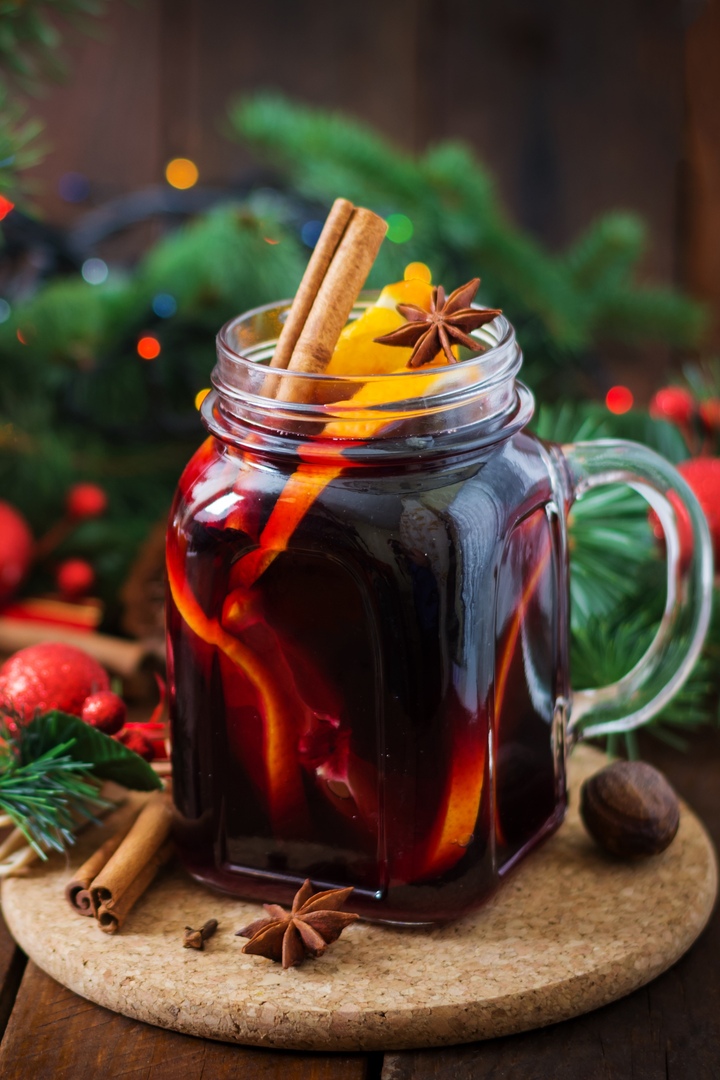
A quick way to make it would be to add a tea bag of spices to red wine, which is heated along slices of orange or lemon. Common variations include the addition of brandy or ginger wine.Served with an orange or lemon slice garnish studded with cloves, cinnamon or star anise; this brings winter Christmas in a mug. Not just confined to wine; mulling spices can be added to beer and cider, as in the preparation of Wassail punch, a recipe since the Victorian Era.
While known as mulled wine in English based cuisine, other varieties are indigenous to the different cuisines with the difference ranging from the type of wine used, method of preparation as well as the spice mix. For instance Glühwein popular in German-speaking countries and Alsace (France) is made from red wine with the addition of vanilla pods to the spices. Glögg, gløgg or glögi, which is mulled wine in the Nordic countries (sometimes spelled as glog or glug) are made wiht stronger spirits like rum, vodka, brandy or just plain fruit juices. Vinho quente served in the Brazil is typically made with red wine, cinnamon sticks and cloves. On the other hand, greyano vino served in Bulgaria is made of red wine, homey and peppercorn.


With the festive and holiday season in full swing, mulled wine essentially brings the warmth of the season in a cup. In fact, it is one of the best seasons to start the traditional family recipe of own. More than the experimentation, it is the memories that get passed on over the years.
TO MULL WINE.
INGREDIENTS.- To every pint of wine allow 1 large cupful of water, sugar and spice to taste.
Mode.-In making preparations like the above, it is very difficult to give the exact proportions of ingredients like sugar and spice, as what quantity might suit one person would be to another quite distasteful. Boil the spice in the water until the flavour is extracted, then add the wine and sugar, and bring the whole to the boiling-point, then serve with strips of crisp dry toast, or with biscuits. The spices usually used for mulled wine are cloves, grated nutmeg, and cinnamon or mace. Any kind of wine may be mulled, but port and claret are those usually selected for the purpose; and the latter requires a very large proportion of sugar. The vessel that the wine is boiled in must be delicately cleaned, and should be kept exclusively for the purpose. Small tin warmers may be purchased for a trifle, which are more suitable than saucepans, as, if the latter are not scrupulously clean; they spoil the wine, by imparting to it a very disagreeable flavour. These warmers should be used for no other purpose.
(Traditional recipe for Mulled Wine. Mrs Beeton’s Book of Household Management. 1869. Revised edition. Pg.929-930 (Paragraph 1961))


 Sugar And Spice... Among Other Things