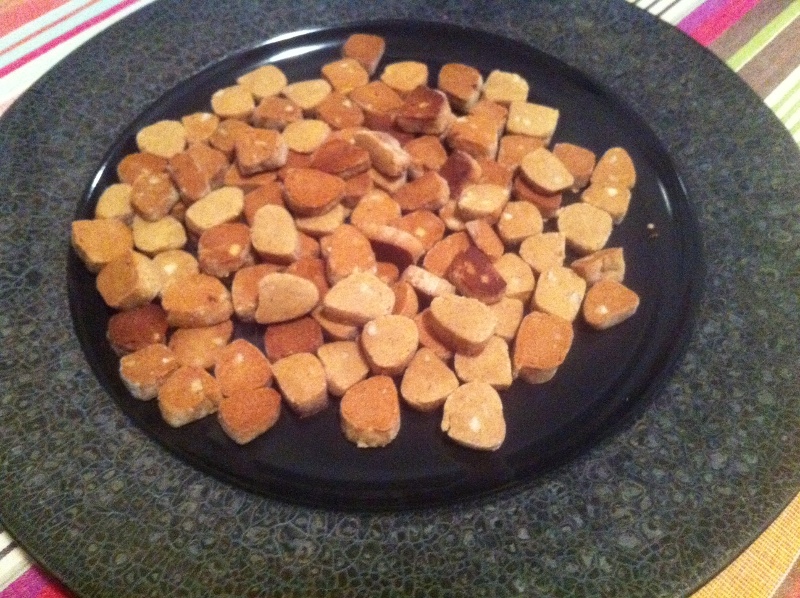

No Christmas or winter holidays would be complete without the tiny peppernuts, cookies baked and stored in tins, kept for the cold nights or after hours of carolling. Made with plenty of assistance, these holiday cookies come by many different names, varying from region to region, with their own legends behind them. These tiny spice cookies are quite popular as holiday treats, known as pepernoten (Dutch), pfeffernuesse or peppernuts (English) or pebernødder in Danish. While the exact origin maybe uncertain, traditional beliefs links these cookies to the Dutch feast of Sinterklaas, where children receive gifts from St. Nicholas. Since 1850, these cookies have been a part and parcel of the European yuletide celebrations.


Flour, brown sugar, sugar, cloves, cinnamon.
Unlike the name “peppernut”, these cookies don’t always contain nuts in its ingredients. The size of the cookie, roughly similar to nuts and can be eaten as a handful, which probably accounts for the name. The ease of making these pfeffernüsse has resulted in a varied range of recipes, with variations made in the used of the amounts of aromatic spices like cinnamon, cloves, mace, nutmeg, cardamom or anise as well as the sweeteners used, ranging from options of powdered sugar, brown sugar, molasses, honey or a fine dusting of icing sugar. To make the dough similar to the early century versions, leavening agents like potassium or ammonium carbonate are used to get the sticky and dense consistency.


Accounting for the regional variations pepernoots are similar Dutch cookie-like confectionery. Certain recipes are similar to the Pfeffernüsse although they look completely different when baked. Other recipes vary in the adding of cardamom, pepper, butter, vinegar, eggs, brown syrup to the usual holiday cookie ingredients of flour (wheat or rye), cinnamon and cloves. Light brown and square shaped, they are fairly chewy and harden gradually when exposed to the air.
“Best of all are the decorations the grandchildren have made ~ fat little stars and rather crooked Santas, shaped out of dough and baked in the oven.” Gladys Taber


In addition to the baking, the customs with these pepernoten (or pepernoots) stay on. From hiding handfuls of them through the room so that children can look for them or hiding pocketfuls of them while caroling or for ice skating breaks. In earlier days, new parents would place one or two carrots underneath the infant’s pillow so that Sinterklaas would then come and bless the child by showering the infant with “pepernoten”.
Modifying these recipes by choice, making them gluten-free or adding the favourite ingredients and toppings gives these holiday cookies a personal touch and flavour. In the midst of all, getting the ingredients kneaded with help of many tiny hands gives these holiday spice cookies a pleasant feel and memories full of warmth and laughter worth treasuring for life.
“Peacekeeper Christmas Spice Cookies 225g butter, softened 200g sugar 235ml molasses 1 egg 2 tbsp. sour cream 750g all-purpose flour 2 tbsp. baking powder 5g baking soda 1 tsp. ground cinnamon 1 tsp. ground ginger pinch salt 145g chopped walnuts 145g golden raisins 145g chopped dates In a large mixing bowl, cream the butter and sugar together. Add the molasses, egg and sour cream; mix well. Combine the flour, baking powder, baking soda, cinnamon, ginger and salt; gradually add to creamed mixture. Stir in walnuts, raisins and dates. Chill for 2 hours or until easy to handle. On a floured surface, roll out dough finely. Cut with a 21/2-inch round cookie cutter. Place on greased baking sheets. Bake at 325°F for 12–15 minutes. Cool completely.”
Jenny Colgan (Christmas at the Cupcake Cafe)


 Sugar And Spice... Among Other Things