Posted in Food, Stories Around the World

Cookies, Spices and Holidays

No Christmas or winter holidays would be complete without the tiny peppernuts, cookies baked and stored in tins, kept for the cold nights or after hours of carolling. Made with plenty of assistance, these holiday cookies come by many different names, varying from region to region, with their own legends behind them. These tiny spice cookies are quite popular as holiday treats, known as pepernoten (Dutch), pfeffernuesse or peppernuts (English) or pebernødder in Danish. While the exact origin maybe uncertain, traditional beliefs links these cookies to the Dutch feast of Sinterklaas, where children receive gifts from St. Nicholas. Since 1850, these cookies have been a part and parcel of the European yuletide celebrations.

Flour, brown sugar, sugar, cloves, cinnamon.

Unlike the name “peppernut”, these cookies don’t always contain nuts in its ingredients. The size of the cookie, roughly similar to nuts and can be eaten as a handful, which probably accounts for the name. The ease of making these pfeffernüsse has resulted in a varied range of recipes, with variations made in the used of the amounts of aromatic spices like cinnamon, cloves, mace, nutmeg, cardamom or anise as well as the sweeteners used, ranging from options of powdered sugar, brown sugar, molasses, honey or a fine dusting of icing sugar. To make the dough similar to the early century versions, leavening agents like potassium or ammonium carbonate are used to get the sticky and dense consistency.

Accounting for the regional variations pepernoots are similar Dutch cookie-like confectionery. Certain recipes are similar to the Pfeffernüsse although they look completely different when baked. Other recipes vary in the adding of cardamom, pepper, butter, vinegar, eggs, brown syrup to the usual holiday cookie ingredients of flour (wheat or rye), cinnamon and cloves. Light brown and square shaped, they are fairly chewy and harden gradually when exposed to the air.

“Best of all are the decorations the grandchildren have made ~ fat little stars and rather crooked Santas, shaped out of dough and baked in the oven.” Gladys Taber

In addition to the baking, the customs with these pepernoten (or pepernoots) stay on. From hiding handfuls of them through the room so that children can look for them or hiding pocketfuls of them while caroling or for ice skating breaks. In earlier days, new parents would place one or two carrots underneath the infant’s pillow so that Sinterklaas would then come and bless the child by showering the infant with “pepernoten”.

Modifying these recipes by choice, making them gluten-free or adding the favourite ingredients and toppings gives these holiday cookies a personal touch and flavour. In the midst of all, getting the ingredients kneaded with help of many tiny hands gives these holiday spice cookies a pleasant feel and memories full of warmth and laughter worth treasuring for life.

“Peacekeeper Christmas Spice Cookies 225g butter, softened 200g sugar 235ml molasses 1 egg 2 tbsp. sour cream 750g all-purpose flour 2 tbsp. baking powder 5g baking soda 1 tsp. ground cinnamon 1 tsp. ground ginger pinch salt 145g chopped walnuts 145g golden raisins 145g chopped dates In a large mixing bowl, cream the butter and sugar together. Add the molasses, egg and sour cream; mix well. Combine the flour, baking powder, baking soda, cinnamon, ginger and salt; gradually add to creamed mixture. Stir in walnuts, raisins and dates. Chill for 2 hours or until easy to handle. On a floured surface, roll out dough finely. Cut with a 21/2-inch round cookie cutter. Place on greased baking sheets. Bake at 325°F for 12–15 minutes. Cool completely.”
Jenny Colgan (Christmas at the Cupcake Cafe)

Posted in Christian, Personal Musings, Random Thoughts

Tune of the Fesitivity

“I love the Christmas-tide, and yet,
I notice this, each year I live;
I always like the gifts I get,
But how I love the gifts I give!”
Carolyn Wells

As the hours of Christmas Eve ticked by, the flurry of activity never ceased as the last minute preparations were underway. Ranging from rearranging the set of cookies and assortment to be given to the church, wrapping up the gifts for the children, getting the early preparations for the Christmas lunch tomorrow as well as keeping the house open for last minute carol singers and guests, the list of things to get into order was endless.

Through all these hours, the willingness to help and share the joy was what kept all our spirits high. And that is what forms the basis of the spirit of Christmas. Not in how much one can receive, but one can give.

“God never gives someone a gift they are not capable of receiving. If He gives us the gift of Christmas, it is because we all have the ability to understand and receive it.” Pope Francis

Each of us have our share from the “Season of Giving”. For that is what makes up the core of Christmas and the miracles of this season. Giving can vary in many forms. From the materialistic gifts of clothing for the orphanages, gifts to those in the poorer sections of society, spending time at the old age homes, bringing cheer to the patients admitted in the local hospitals, nursing homes or the shelters and the list goes on. The essence of Christmas lies in the spirit of giving.

Through the last hours before Christmas, spreading the cheer starts from within. By the actions we do, the expressions and the vibes we carry. Being human, there may be sparks of negativism or frustration that rise every now and then. Yet learning to quell them down with the joys of sharing the spirit of kindness, love, hope and warmth through the gift of giving would carry more happiness and peace within. In addition to the decor and gaiety of Christmas season, it is the cheer one spread and miracles that happen due to goodwill and humaneness that light up the season in it’s true meaning.

“Oh sweet December,
You bring us Charlie Brown, chestnuts and candy canes,
You add such sweetness to your name
You bring us garland, gingerbread and mistletoe,
You also bring us everything wrapped in a bow
Oh sweet December-you’re so good to us,
You always prepare us for The Christmas fuss”
Charmaine J Forde

Posted in Christian, Family and Society, Life, Random Thoughts

More than A Chance

“A little child, a shining star, a stable rude, the door ajar. Yet in that place, so crude, forlorn, the Hope of all the world was born.” Anonymous

As the last Sunday before the Advent approached, the youth group had decided to do a different tree for this year. Along with the tradition of setting up the big Christmas tree, green complete with the tiny ornaments, snow globes, garlands and clumps of holly; the “Jesse Tree” was set up in the central lawn of the chapel. Unlike the elaborately Christmas tree, the Jesse Tree was one of the very old medieval customs to mark and celebrate the gift of the Advent. As per the custom, a tree was selected and during the four weeks leading to the Advent, each day had the teachings and records from the Scriptures, from the Creation to the day of the Advent. With each story, the respective symbol was up on the tree.

“Glory to God in the highest, and on earth peace, good will toward men.” (Luke 2:14)

The last week before this Sunday had seen the symbols of water lily, made from fine white crepe paper as well as a miniature painting of the mother and child go up. Numerous symbols adorned the tree ranging from the miniature apple (Adam and Eve) , the rainbow ( story of Noah’s Ark and the flood), the cutout drawing of a tent (God’s promise to Abraham), the ram, multicoloured robe, the six pointed star of “David”, a temple cutout, the scallop shell and the like, were few of the tokens adorning the tree.

Each branch of the Jesse tree is a sign of new beginnings. The first Jesse trees were large carvings, tapestries or even stained glass windows put in Churches that helped illiterate people to learn about the Bible, from the creation to the Christmas Story. These trees today, stay as an Advent calendar, serving to remind each Christian of the promises of His Word and gift of another Chance through the birth of His Son.

While the significance of the Jesse tree lies in the scriptures of the prophet Isaiah wherein His Promise of new Life and beginnings through His Son Christ. The greatest gift of the Advent is the “gift of His Love”, another chance to receive the fruits of the Spirit as well as the gift of His Grace and His Love. During the times of turmoil, be it from external or internal influences, it is His Promise that helps us gain the courage to survive the ordeal and return strengthened and reinforced in His Love. Let this Advent be another blessing, giving each one their own special gift, miracle as well as memories to hold for a lifetime.

“11 A shoot will come up from the stump of Jesse;
from his roots a Branch will bear fruit.
2 The Spirit of the Lord will rest on him—
the Spirit of wisdom and of understanding,
the Spirit of counsel and of might,
the Spirit of the knowledge and fear of the Lord—
3 and he will delight in the fear of the Lord.
He will not judge by what he sees with his eyes,
or decide by what he hears with his ears;
4 but with righteousness he will judge the needy,
with justice he will give decisions for the poor of the earth.
He will strike the earth with the rod of his mouth;
with the breath of his lips he will slay the wicked.
5 Righteousness will be his belt
and faithfulness the sash around his waist.”
(Isaiah 11:1-5.King James Version)

Posted in Food, Photography Art, Stories Around the World

Flavoured, Festive and Wine

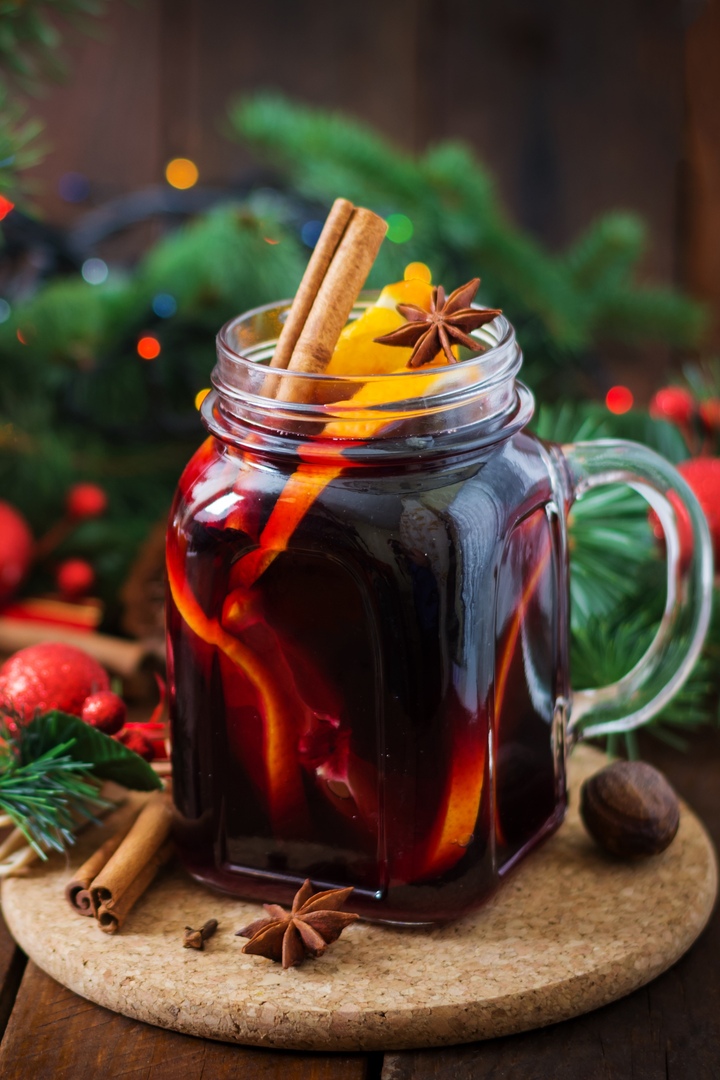
No festive season is complete without the traditional accompaniment of wine. For winter, the entire holidays and Christmas centers around the mulled wine. Traditionally mulled wine, also known as spiced wine, is usually made with red wine along with various mulling spices and sometimes raisins which may be served warm. While most versions are alcoholic, there are many non-alcoholic variations especially for children during Christmas.

Tracing the origins of mulled wine, the second century Roman cuisine saw records of wine being spiced and heated in some areas. Although their era came to an end, certain aspects of the Roman cuisine had been merged with the local cuisine. As wine and viticulture spread along the rest of Europe and till the Scottish border, various variations and traditions with mulled wine entered into the local cuisine and culture. As recorded in the Medieval English cookbook “The forme of Curry” (1390) mentions “Pur fait Ypocras …” (mulled wine) to grind together cinnamon, ginger, galangal, cloves, long pepper, nutmeg, marjoram, cardamom, and grains of paradise (“spykenard de Spayn”, rosemary may be substituted), mix them with red wine and sugar (form and quantity unstated).

Early variations include the concept of mulled wine being transferred to mulled ale, mulled cider or mulled apple juice. Though today recipes for mulled wine include the combination of orange, lemon, cinnamon, nutmeg, fennel seed (or star anise), cloves, cardamom, and ginger. Usually the spices are combined and boiled in a sugar syrup, then red wine is added, heated and served usually in small porcelain glass mugs.

A quick way to make it would be to add a tea bag of spices to red wine, which is heated along slices of orange or lemon. Common variations include the addition of brandy or ginger wine.Served with an orange or lemon slice garnish studded with cloves, cinnamon or star anise; this brings winter Christmas in a mug. Not just confined to wine; mulling spices can be added to beer and cider, as in the preparation of Wassail punch, a recipe since the Victorian Era.

While known as mulled wine in English based cuisine, other varieties are indigenous to the different cuisines with the difference ranging from the type of wine used, method of preparation as well as the spice mix. For instance Glühwein popular in German-speaking countries and Alsace (France) is made from red wine with the addition of vanilla pods to the spices. Glögg, gløgg or glögi, which is mulled wine in the Nordic countries (sometimes spelled as glog or glug) are made wiht stronger spirits like rum, vodka, brandy or just plain fruit juices. Vinho quente served in the Brazil is typically made with red wine, cinnamon sticks and cloves. On the other hand, greyano vino served in Bulgaria is made of red wine, homey and peppercorn.

With the festive and holiday season in full swing, mulled wine essentially brings the warmth of the season in a cup. In fact, it is one of the best seasons to start the traditional family recipe of own. More than the experimentation, it is the memories that get passed on over the years.

TO MULL WINE.
INGREDIENTS.- To every pint of wine allow 1 large cupful of water, sugar and spice to taste.
Mode.-In making preparations like the above, it is very difficult to give the exact proportions of ingredients like sugar and spice, as what quantity might suit one person would be to another quite distasteful. Boil the spice in the water until the flavour is extracted, then add the wine and sugar, and bring the whole to the boiling-point, then serve with strips of crisp dry toast, or with biscuits. The spices usually used for mulled wine are cloves, grated nutmeg, and cinnamon or mace. Any kind of wine may be mulled, but port and claret are those usually selected for the purpose; and the latter requires a very large proportion of sugar. The vessel that the wine is boiled in must be delicately cleaned, and should be kept exclusively for the purpose. Small tin warmers may be purchased for a trifle, which are more suitable than saucepans, as, if the latter are not scrupulously clean; they spoil the wine, by imparting to it a very disagreeable flavour. These warmers should be used for no other purpose.
(Traditional recipe for Mulled Wine. Mrs Beeton’s Book of Household Management. 1869. Revised edition. Pg.929-930 (Paragraph 1961))

Posted in Christian, Daily, Personal Musings, poetry, Random Thoughts

The Selflessness Within

With the weather turning for the worse and the rush for the holiday season in full swing, one would tend to get lost in this rush. Yet what keeps the spirit of the season going would be simple acts of kindness that we ought to do once we keep our hearts and minds open with a willingness to lend a hand at times. May be that would account for me adopting a waif of a kitten and a half starved puppy for winter, courtesy of my toddler who had discovered them both while accompanying on the last minute shopping. Sharing their hearth this cold season, the two strays were given a bit of space in the household by Queenie and Jerry, our two pets loaned from his grandparents for the season as they were out of town, on holidays with his aunt.

“If I can stop one heart from breaking,
I shall not live in vain;
If I can ease one life the aching,
Or cool one pain,
Or help one fainting robin
Unto his nest again,
I shall not live in vain.”
– Emily Dickinson

Each of our days are filled with numerous opportunities for random acts of kindness and gentleness. To be selfless by nature it may be quite difficult, for some element of protecting our own interests arises within. But it is learning on how to balance between both is what helps us to nurture the feel of togetherness and spirit of kindness within us. Sparing an extra meal for the homeless down the alley, doing a rapid cleaning and bundling off old clothes to the shelter downtown or offering wither in contribution, service or in kind to the community kitchens, spending time at the old age homes and orphanages are ways by which the season of giving can be experienced in it’s true form.

Many people that we may meet are like ships passing through the night. While it mayn’t be possible to provide for every ship that docks or passes, not obstructing the way of the passing ship or helping them pass paves way for smooth travel. The reality of the other side is known only when one stands in those same shoes. Being gracious and kind isn’t just for hoping that the return would happen one day, but for the fact that there is nothing to lose when one offers a helping hand now and then. It is those simple random acts that makes the world a home by itself.

Posted in Daily, Family and Society, Life, Personal Musings, poetry, Random Thoughts

Beacon through the Mist

“The rocky ledge runs far into the sea,
And on its outer point, some miles away,
The Lighthouse lifts its massive masonry,
A pillar of fire by night, of cloud by day.”
(excerpt from The Lighthouse by Henry Wadsworth Longfellow)

With schools closed for the holiday break, free hours were taken by impromptu walks, daytime exploration of the countryside with abandoned buildings or simple hanging out at the family homestead. During their trip to the small harbour while accompanying Grandpa was their exploration of the abandoned building standing tall amidst the rocks across the coastline. Being near my workplace, I had agreed to pick up the kids after office hours, their volley of shouts and play in the lighthouse tower brought to mind, the stories and experiences seen and held in those strong bricks.

“To be a lighthouse, you must be strong enough to resist every kind of storm, to every kind of loneliness and you must have a powerful light inside you!” Mehmet Murat Ildan

What had initially started as fires built on hilltops to guide the mariners had later lead to attempts to increase the visibility of the fire by placing it on a platform. Thereby, the ancient lighthouses were built functioning both as entrance markers to ports and as warning signal for reefs and promontories. As per the Homeric legend, Palamedes of Nafplio invented the first lighthouse, attested by the Lighthouse of Alexandria and the Colossus of Rhodes. Although records show that Themistocles had earlier established a lighthouse at the harbor of Piraeus connected to Athens in the 5th century BC, essentially a small stone column with a fire beacon.

These on passing by the abandoned lighthouse that falls on my regular route, one tends to contemplate of the stories, the secrets, the experiences and the storms witnessed by that solitary tower. Those ships who had seen that light during the downpour and storms, or the bright yellow directing the way across the hazy air around them. With advanced communications and signalling, lighthouse may feel to be a thing of the past. Yet the reality depends on the place. Even today, it may be the strong beacon of light which guides the seafarers through the treacherous rocks, as compared to the radio signals which may be more lost than found in the storm.

Each of our lives echo the effect of the lighthouse, standing lone but independent and strong, felt similarly at certain points in our lives. As long as one decides to stay true and do their best in every situation, their very lives will be the beacon of hope and throw light to dispel the darkness and gloom surrounding those who watch them. No lighthouse blasts away their name, but by being just there as themselves in those crucial points help to steer away major loss and disaster. Instead, their beacon of light shows the way out through those difficult hours.

“We are told to let our light shine, and if it does, we won’t need to tell anybody it does. Lighthouses don’t fire cannons to call attention to their shining- they just shine.” Dwight L. Moody

On the Lighthouse at Antibes
by Mathilde Blind

A stormy light of sunset glows and glares
Between two banks of cloud, and o’er the brine
Thy fair lamp on the sky’s carnation line
Alone on the lone promontory flares:

Friend of the Fisher who at nightfall fares
Where lurk false reefs masked by the hyaline
Of dimpling waves, within whose smile divine
Death lies in wait behind Circean snares.

The evening knows thee ere the evening star;
Or sees thy flame sole Regent of the bight,
When storm, hoarse rumoured by the hills afar,
Makes mariners steer landward by thy light,
Which shows through shock of hostile nature’s war
How man keeps watch o’er man through deadliest night.

Posted in Daily, Family and Society, Life, Personal Musings, Reflections

“Adiago” Melody in Us

As the festive days are approaching, the preparations for the community centre celebrations were underway. Among the various events was the musical performance of “water adiago” planned as a slow music made with glasses filled with water. Observing the rehearsals, things though look simple at surface require an infinite care about the details. As the various participants had made sure that their glasses are at the right levels ( some were marked) and the musical notes were being coordinated; the realization that this event has a lot of little but very significant things relevant to the daily life, as the philosophical mind puts things into perspective.

“A vessel is formed from a lump of clay with care, however, it is the empty space within the vessel that makes it useful.” Laozi

Each one of us are a lot like those glasses of water with the potential to make music from what lies within us. No matter at what level one may find the water to be, when the right instrument and tap is used, the music that is made has the power to make one stop and listen. But as long as the glass stays empty, unless it gets filled to the level, the sound made made be the loudest but coarse and of no meaning, beauty or tune.

“As a vessel is known by the sound, whether it be cracked or not; so men are proved, by their speeches, whether they be wise or foolish.” Demosthenes

On some days, one makes the right music. On other days, the right tones are struck later on when one learns to stay silent and observe the music around them. There would be few occasions when one has to empty out the glass and refill it again. There would also be times when one has to remove or add a little more water till the right note is made by the same spoon with the water at the right level. To know and perceive that there has to a change for the right note; time, patience and willingness has to be there. Which ever way one looks at it for beautiful notes to be heard, repeated corrections and alterations are necessary. While this may happen only after immense efforts, the beguiling melody is worth the pain.

“Just for today, allow yourself to embrace all that you are every moment. Know that you are a vessel of light. Allow yourself to release all doubts about your ability, the mistakes of the past, the fear of the future.” Iyanla Vanzant