Posted in Daily, Food, Quotes

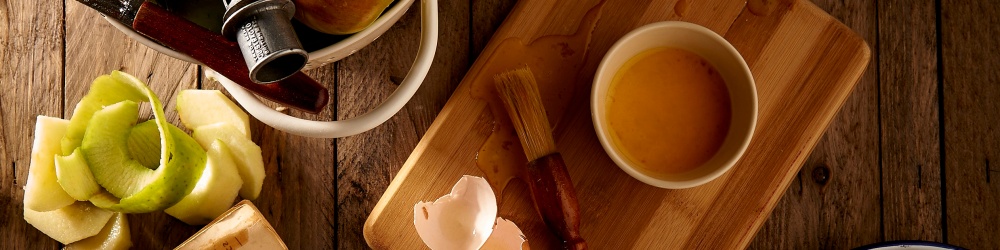
Lessons from the Kitchen

“Find something you’re passionate about and keep tremendously interested in it.” Julia Child

The second week of August always results in a tussle for the television remote, especially during the evening hours, before dinner. Eventually one gets to watch the latest sports round up or the current political scenes; while the other ends up watching You Tube for the vintage episodes of Julia Child’s shows namely “The French Chef”. Marking the birth week of Julia Child who had made French cooking sound feasible, few shows presenting her famous recipes, episodes or the iconic movie Julie & Julia (2009), paying a tribute to this legendary chef. Though one mayn’t be an avid chef or interested in the art of cooking, there are a couple of lessons on the kitchen front that Julia Child had taught her viewers over the years.

“You’ll never know everything about anything, especially something you love.” Julia Child

“…no one is born a great cook, one learns by doing.” Julia Child, My Life in France

The first few years away from the home environment results in one learning the basic few cooking skills. As the years move on, with the intermixing of cuisines and experimentation, taste buds refine and the likes develop. Entering into relationships and the adult life of the family, cooking for loved ones including making or recreating dishes as per their taste. As one’s own family evolves, cooking comes from the heart. In sequence, what comes from the heart is born out of love, care and interest for the loved ones. Such purpose will conquer the fear of “the dish going bad or wrong”. Along with finesse, it is the dash of love that matters the most.

“The only real stumbling block is fear of failure. In cooking you’ve got to have a what-the-hell attitude.” Julia Child

“You don’t have to cook fancy or complicated masterpieces – just good food from fresh ingredients.” Julia Child

During the early years, kitchens were fun especially during the rainy days. Learning to mix the flour, knead it and make flatbread was more about fun and doing, than understanding what happens. Then as home science begins during the middle school and science is explored further, one begins to comprehend the science in the kitchen. Later once alone, cooking becomes an experimentation of flavours, mix of colours, interest and imagination. Eventually cooking evolves into a form of art and science, spiking the interest of the mind as well as the senses.

“The more you know, the more you can create. There’s no end to imagination in the kitchen.” Julia Child via Lynn Gilbert, Particular Passions: Talks With Women Who Have Shaped Our Times

“One of the secrets, and pleasures, of cooking is to learn to correct something if it goes awry; and one of the lessons is to grin and bear it if it cannot be fixed.” Julia Child, My Life in France

Over the years from a novice to learning to master the meals for family and friends, there have been epic disasters, emergency restaurant bookings, late night takeaways and unplanned visits for the family homestead dinners. Yet through the mess, mistakes have been understood and corrected. New recipes and cuisines experimented, modified and old, tested or tried recipes redone with one’s own signature style. Through the uphills and downhills in the kitchen, it is still the fun that stays in the memories made for the self, with children, family and friends around. Man mayn’t live by bread alone, but making it in style, from scratch and with own flavours gives a full sense of accomplishment, happiness within and fun memories to hold onto for a lifetime.

“This is my invariable advice to people: Learn how to cook- try new recipes, learn from your mistakes, be fearless, and above all have fun!” Julia Child, My Life in France

Posted in Daily, Family and Society, poetry, Quotes, Reflections, Work

Deep Within

“The gem cannot be polished without friction, nor man perfected without trials.” Chinese Proverb

While stepping into primary school, the enjoyment of the preschooler or kinder-gardener child is at times, marred by the sudden fear of how will school be, will their pre-school friends be there and above all, will one survive. Similar emotions resurface on entering middle school and high school. During each step, there is a constant surge of excitement on attaining the next level, albeit marked by the shadows of fear. During the later high school years, choices, decisions and plans have to be made, on how one wants to shape out their individual lives. From then on, the daily grind involves a battle of fears and uncertainties in own potential as well as the world around one.

“Start by doing what’s necessary; then do what’s possible; and suddenly you’re doing the impossible.” Francis of Assisi

While attending the graduation of children of family friends, the emotions across many “graduated faces” all echoed the above sentiments. Looking back on own struggles, difference and growth in life largely involves believing in oneself. During the struggle for the better, emotions range from determination, intermittent fear and insecurity as well as hopes continuously flit in and out. The degree of how much one gives in to the “negative emotions” than the positive ones, all changes the outlook, the effort and ultimately the outcome.

“Turn your wounds into wisdom.” Oprah Winfrey

Each individual has the potential to be better than the other at something or the other. Talents are unique in manner, form, presentation and outcome. While others may view facets of these; the entire picture is viewed by the individual alone. That alone makes the big difference for it settles the restlessness in one’s mind, body and soul. The journey in life moves forward by keeping all the senses in motion. For happiness, peace and contentment to touch one’s life, learning to conquer their inner world made of fears, temporary obstacles, insecurities and the like, makes the “better parts of life” attainable and worth every effort to get them.

“The pessimist complains about the wind, the optimist expects it to change and the realist adjusts the sails.” William Arthur Ward

There’s nothing you cannot do
There’s nothing to fear, you’re as good as the best.
As strong as the mightiest, too.
You can win in every battle or test.
For there’s no one just like you.

There’s only one you in the world today.
So nobody else, you see.
Can do your work in as fine a way.
You’re the only you there’ll be.

So face the world, and all life is yours.
To conquer and love and live.
And you’ll find the happiness that endures.
In just the measure you give.

There’s nothing too good for you to possess.
Nor heights where you cannot go.
Your power is more than belief or guess.
It is something you have to know.

There is nothing to fear, you can and you will.
For you are the invincible you.
Set your foot on the highest hill.
There’s nothing you cannot do.
Author Unknown
(Source: vk.com)

“The most beautiful people I’ve known are those who have known trials, have known struggles, have known loss, and have found their way out of the depths.” Elizabeth Kübler-Ross

Posted in Christian, Daily, poetry, Random Thoughts, Work

To HIS Tune

It is he who made the earth by his power,
who established the world by his wisdom,
and by his understanding stretched out the heavens. (Jeremiah 10:12)

This Sunday marked the beginning of the month’s inter-church cultural activities. On the lines similar to the school or college based events like prose, elocution, recital, music, bible verse memorization, quiz and so on; children from each church had participated and competed to represent each of their individual church in the zonal event and finally state based events to be held later this year. It was the poetry or recital that had caught my attention this morning.

Essentially, man is created with each one having their own style of distinctiveness. In the natural order, even identical twins have their individual style, which may be felt by their close ones alone. Despite the special talent that each one has, when one decides to let God be a part of their lives, the music played has more eloquence and beauty than when strung alone. For this to happen, it is necessary to let go of the entire control of one’s plans and commit them to His Hand with each one putting their best forward. Plan but don’t over-plan or draw the minute exactness. Be prepared for things to go change. Trust those plans into His Hands. At the end of the day, even if things go haywire, the notes written, the music strung and the words will still be of the finest, when committed into His Hands.

But Jesus looked at them and said, “With man this is impossible, but with God all things are possible.” (Mathew 19:26)

The Touch Of The Master’s Hand
Myra Brooks Welch

It was battered and scarred,
And the auctioneer thought it
Hardly worth his while
To waste his time on the old violin,
But he held it up with a smile.
“What am I bid, good people”, he cried,
“Who starts the bidding for me?”
“One dollar, one dollar, Do I hear two?”
“Two dollars, who makes it three?”

“Three dollars once, three dollars twice,
Going for three”. . . but no!
From the room far back a gray-haired man
Came forward and picked up the bow;
Then wiping the dust from the old violin,
And tightening up the strings,
He played a melody, pure and sweet,
As sweet as an angel sings.

The music ceased and the auctioneer
With a voice that was quiet and low,
Said “What now am I bid for this old violin?”
As he held it aloft with its bow.
“One thousand, one thousand, Do I hear two?”
“Two thousand, Who makes it three?”
“Three thousand once, three thousand twice,
Going and gone”, said he.

The people cheered, but some of them cried,
“We do not quite understand.
What changed its worth?” Swift came the reply:
“The touch of the Master’s hand.”
And many a man with life out of tune,
And battered and scarred with sin,
Is auctioned cheap to the thoughtless crowd
Much like the old violin.

A “mess of pottage,” a glass of wine,
A game and he travels on,
He’s going once, and going twice –
He’s going – and almost gone!
But the MASTER comes, and the foolish crowd,
Never can quite understand,
The worth of a soul, and the change that’s wrought
By the touch of the MASTER’S hand.

“The LORD your God is in your midst, a mighty one who will save; he will rejoice over you with gladness; he will quiet you by his love; he will exult over you with loud singing.” Zephaniah 3:17

Posted in Daily, Food

Of Panini, Origin and Evolution

Meaning small bread or bread rolls as derived from the Italian panini [paˈniːni] or panino; these sandwiches are made with Italian bread (such as ciabatta and michetta), usually served by grilling or toasting. While the modern panini may have baguette as the bread; the deli ingredients of the horizontally cut bread can be filled with one’s own choice. From salami, cheese, ham, vegetables sliced or pickled; the choices are aplenty.

“[Panini] are said to have originated in Lombardy, Italy, in response to the demand among Milanese office workers for a quick lunch without sacrifice in flavor and quality. In both Italy and the United States, panini are eaten for lunch and as snacks and appetizers. In Italy, sandwich shops traditionally wrap the bottom of the panino in a crisp white paper napkin, providing a practical solution to drips while enhancing aesthetics. Quality Italian bread is an absolute must for a killer panini, and most sandwich chefs will opt for a relatively thin artisan bread like grooved focaccia or ciabatta, slicing it in half horizontally. Panini are always grilled, so most restaurants and cafes have invested in professional grooved sandwich presses that flatten and heat the sandwich while creating a crunch, buttery outer crust.” -American Sandwich: Great Eats from all 50 States, Becky Mercuri [Gibbs Smith:Salt Lake City UT] 2004 (p. 81)

The earliest precursor of panini was believed to be in the 16th century Italian cookbook; food historians have traced these sandwiches to the trendy Milanese bars, called paninoteche (1960s). As their popularity had crossed the Atlantic in the mid-1970s, the first American reference to panini dates to 1956. With each city having their own distinctive version of panini, variation were developed in plenty. During the 1980s, “paninaro” had evolved which was the youngsters’ culture typical of teenagers to enjoy a meet and eat place like the sandwich bars, such as Milan’s Al Panino. These had later evolved to the initial style of fast food restaurants opened in Italy.

Over time, panini had evolved to more flavours and texture with the bread changing type along with the mix. As their popularity spread across the seas to the Asian continent and the Orient, the portability, easy preparatory, individual taste and choice have contributed to their fair share in the menus across the globe. Little wonder, why then August had been dedicated as the month of the panini  by experimental foodimentarians, for every kitchen of theirs would have made or had the “panini” at some point of time.

Posted in Daily, Family and Society, Life, Personal Musings, poetry, Reflections, Stories Around the World, Work

Risks to Take

“Fire is the test of gold; adversity, of strong men.” Martha Graham

Decisions. Changes. Progress. Stagnation, growth or downfall. Uncertainty.

One of the innate emotions that human nature craves for is the feeling of contentment and comfort within one’s own zone. Making a slight change in those factors sets off the warning bells in the mind, invoking the fear of the change. By the time, the opportunity knocks and waits for the response; staying indecisive for more time than allotted results in the “chance walking away” with the possibility for it being lost for ever. On hindsight, regret bites and those stings hurt for long.

“The greater the obstacle, the more glory in overcoming it.” Molière

Stepping out and facing what deemed difficult would result in the latter, being re-judged as feasible if one is willing to give every reasonable challenge or opportunity a try. Risks are there in the everyday life. From walking to the market for the daily shopping or taking the long car commute on the highway; risks are there in every nook or cranny. While at times we may realize, other times may be not so. When risks are involving a change from the comfort zone; grabbing the opportunity with both hands, especially if it centers around the dream goals in life, is better than looking back with regrets.

Risks are there in everything that may be achieved for the better. By avoiding risks and change; one may avoid imbalance, uprooting, temporary sufferings or sorrows. On the other hand, the better things of life which help one learn, grow and live to one’s potential is lost. Whether one would prefer being chained to the comfort zone or servitude, losing out on all freedom of emotions and growth; or would prefer to soar like the eagle, knowing when to fly down and catch the prey of opportunity, setting no boundaries to attained by aiming for the skies, is the individual choice alone. These thought all make the difference when deciding to risk the change or not. Life is all about balancing the change. Learning to do so at the earliest helps in the short time that one is allotted in this world that we live in.

To Risk
To laugh is to risk appearing a fool.
To weep is to risk appearing sentimental.
To reach out to another is to risk involvement.
To expose feelings is to risk exposing your true self.
To place your ideas and dreams before a crowd is to risk their loss.
To love is to risk not being loved in return.
To live is to risk dying.
To hope is to risk despair.
To try is to risk failure.
But risks must be taken because the greatest hazard in life is to risk nothing. The person who risks nothing, does nothing, has nothing, is nothing.

(Source: vk.com)

“We don’t develop courage by being happy every day. We develop it by surviving difficult times and challenging adversity.” Barbara De Angelis

Posted in Family and Society, Life, Personal Musings, Stories Around the World

Missed Out

In one of the recent birthday celebrations, one of the party games was to ask the blindfolded person was asked to to guess what was wrapped in the paper by feeling out the package through tactile methods. While some got their guesses right, many went way off track; which was the fun of the game. Introspectively one plays a lot of the “blind guesses in life”.

“Blessings sometimes show up in unrecognizable disguises.” Janette Oke

One of the perils of engaging the human mind is that it thinks way off track than the reality. When in a conundrum, the human mind brings more things to imagination than the reality. Consequently a lot is lost in life as one is too busy wildly speculating, instead living in the present. On the other hand, when one waits for events to unfold and see what is at hand; the blessings enjoyed would be many.

“Learn to get in touch with the silence within yourself, and know that everything in life has purpose. There are no mistakes, no coincidences, all events are blessings given to us to learn from.” Elisabeth Kubler-Ross

Unfortunately the human mind learns most through certain regrets in life. Then it may be too late to change things and get back on track. Each one of us have been given the gift of the present. Instead of guessing out whether we will receive what we have always asked for; continue to put in one’s best shot in life. Doing the latter, would result in better blessings or gifts, more that one may have dreamed of. Losing out on the blessings due to one’s pride, arrogance, blind expectations or insecurities can result in opportunities being missed, lost relationships and precious time wasted. Although by the time, hindsight, regrets and remedial measures may be taken, it may be too late to do them.

“Sometimes we don’t realize the blessings we have until we no longer have them. Appreciate all the blessings in your life, take none for granted.” Catherine Pulsifer

A young man was getting ready to graduate from university. For a long time he had admired a beautiful sports car in a dealers showroom and knowing his father could well afford it, he told his Dad that was all he wanted. As his graduation day approached the young man began looking for signs that his father had bought the car. Finally on the morning of his graduation, his father called him into his study. His father told him how proud he was to have such a fine son and he told him how much he loved him. He handed his son a beautifully wrapped gift box. Curious, but somewhat disappointed, the young man opened the box and found a lovely leather bound Bible with the young man’s name embossed in gold. Angry, he raised his voice to his father and said, ‘With all your money you give me a Bible?’ and then stormed out of the house, leaving the Bible.

Many years passed and the young man was very successful in his own business. He had a beautiful home and wonderful family, but realised his father was very old and thought perhaps he should go to him as he had not spoken to him since that graduation day. Before he could make arrangements, he received a telegram telling him that his father had passed away and had willed all his possessions to his son so he needed to come home and take care of things. When he arrived at his father’s house sadness and regret filled his heart. He began sorting through his fathers papers and saw the still new Bible just as he had left it years ago.

With tears in his eyes he opened the Bible and began to turn the pages. His father had carefully underlined a verse . . . Matthew – 7:11, ‘And if ye, being evil, know how to give good gifts to your children, how much more shall your heavenly Father which is in Heaven give to those who ask him?’As he read these words a car key dropped from the back of the Bible. It had a tag with the dealers name and on the tag was the date of his graduation and the words paid in full.
How many times do we miss out on blessings because they are not packaged as we expected?
Author Unknown (Source:vk.com)


Posted in Daily, Life, Personal Musings, poetry

Reality of the Frequent “Cannot”

“Opportunities will come and go, but if you do nothing about them, so will you.” Richie Norton

One of the most frequently encountered on assigning any project at the high school age group is the word “can’t”. Those “cannot”s revolve around the excuses of lack of time, to increased work load, less fun time, more effort required and so on. The resonance of “cannot”s increases almost in proportional to the effort or inconvenience caused. While in school life, “the cannot”s are heard maximum when asked to help in household chores, baby sit, accompany on hospital visits or grocery shopping; adult life “cannot”s echo almost a similar vein albeit largely increasing the responsibility level.

“Whenever you are asked if you can do a job, tell ’em, ‘Certainly I can!’ Then get busy and find out how to do it.” Theodore Roosevelt

Little does one realize the potential havoc caused by that word or emotion “can’t”. From an opportunity to learn or do something new, grow in responsibility, bond together, chance on new avenue of opportunities and so on; are all lost at that single word “can’t”. While can’t may be really necessary at certain points in life; frequently indulging them will result in more loss than gain in the long run.

“Never say that you can’t do something, or that something seems impossible, or that something can’t be done, no matter how discouraging or harrowing it may be; human beings are limited only by what we allow ourselves to be limited by: our own minds. We are each the masters of our own reality; when we become self-aware to this: absolutely anything in the world is possible. Master yourself, and become king of the world around you. Let no odds, chastisement, exile, doubt, fear, or ANY mental virii prevent you from accomplishing your dreams. Never be a victim of life; be it’s conqueror.” Mike Norton

Can’t
Can’t is the worst word that’s written or spoken;
Doing more harm here than slander and lies;
On it is many a strong spirit broken,
And with it many a good purpose dies.
It springs from the lips of the thoughtless each morning
And robs us of courage we need through the day:
It rings in our ears like a timely sent warning
And laughs when we falter and fall by the way.

Can’t is the father of feeble endeavour,
The parent of terror and half hearted work;
It weakens the efforts of artisans clever,
And makes of the toiler an indolent shirk.
It poisons the soul of the man with a vision,
It stifles in infancy many a plan;
It greets honest toiling with open derision
And mocks at the hopes and the dreams of a man.

Can’t is a word none should speak without blushing;
To utter it should be a symbol of shame;
Ambition and courage it daily is crushing;
It blights a man’s purpose and shortens his aim.
Despise it with all of your hatred of error;
Refuse it the lodgement it seeks in your brain;
Arm against it as a creature of terror,
And all that you dream of you someday shall gain.

Can’t is the word that is for to ambition,
An enemy ambushed to shatter your will;
Its prey is forever the man with a mission
And bows but to courage and patience and skill.
Hate it, with hatred that’s deep and undying,
For once it is welcomed ’twill break any man;
Whatever the goal you are seeking, keep trying
and answer this demon by saying: ‘I can.’
-Edgar A. Guest