Posted in Daily, Life, poetry, Quotes, Random Thoughts

Silent to Listen

“We went down into the silent garden. Dawn is the time when nothing breathes, the hour of silence. Everything is transfixed, only the light moves.” Leonora Carrington

With rising rays bringing forth the day, when the world around is absent of the daily noise from the street, appliances and speech; the music of nature can be heard. From the distant chirping of the birds to the quiet flutter of the leaves, fall of the coloured leaves and the fleeing swish of the patio curtains by the wandering breeze; all highlight how many things can be heard when the fruitless chatter ceases and one learns to listen.

“I tried to discover, in the rumor of forests and waves, words that other men could not hear, and I pricked up my ears to listen to the revelation of their harmony.” Gustave Flaubert

Reflecting back, there may be many instances when one may have lost out on not really listening. Missed notes during meetings or sessions, wrong information imparted, silent indicators to the tenuousness of relationships and worse, misinterpretations as a consequence of the impatience attached to listening and the constant hurry. On the other hand, there have been occasions wherein one keeps silent when the right words would have been necessary to set things right. The pans on the balance may swing on either side.

Yet many are on the chase, than learning to listen, learn from the silence and live the dream. As one ages, the realization that the constant run may cause one to miss out on what has been there along the road. By the time, one realizes that we do need to stop at the right rest points to rejuvenate; the path travelled may have gone too far away from the right course. While the old bones try to remap their course and regain the silence to refresh; the younger ones should learn to appreciate their silent sources at hand, which help one to grow, rejuvenate and learn from the yesteryear.

“Silence is a source of Great Strength.” Lao Tzu

Learn To Be Quiet
You need not do anything.
Remain sitting at your table and listen.
You need not even listen, just wait.
You need not even wait,
just learn to be quiet, still and solitary.
And the world will freely offer itself to you unmasked.
It has no choice, it will roll in ecstasy at your feet.
– Franz Kafka

Posted in Daily, Food, Stories Around the World

Splash of White

“I had some dreams, they were clouds in my coffee.” Carly Simon

For coffee connoisseurs around the globe, knowing the exact coffee-lingo is a must. Following the dictum of “When in Rome, do as the Romans do”, coffee lingo too changes as per place. Be it the espresso macchiato or the Caffè macchiato (not the latte macchiato) or the “café pingado”, all routes lead to another coffee concoction.

Known as espresso macchiato or Caffè macchiato (latter in Italy), it is essentially an espresso coffee drink with a small amount of milk (usually foamed) in it. The origin of this drink could be possibly attributed to the baristas which needed to show their serving waiters the difference between an espresso and the effect to it after a little bit of milk was added to it. The purpose was to just mark or stain the espresso. In Italian, macchiato means “stained” or “spotted” so the literal translation of caffè macchiato is “stained” or “marked coffee.” Moving over to the Portuguese version of this drink where it is renamed as “café pingado” literally translated to coffee with a drop. Although in Mexico, it is called a cortada, the latter terminology mayn’t be used in other countries as it meant for another coffee beverage with a higher amount of milk in it as compared to the macchinato.

“Black as the devil, hot as hell, pure as an angel, sweet as love.” Charles Maurice de Talleyrand

As compared with any other similar coffee drink with milk, the caffè macchiato has the highest ratio of espresso to milk. The key to a perfect macchiato lies in getting the quantities right. As the name suggests, this coffee should contain just a splash of milk, which is added to pure espresso. The traditional macchiato is about one and a quarter ounce that is one ounce of espresso with a small amount (around one to two teaspoons) of milk, the latter is mostly steamed with slight foam so there is a visible mark. The purpose of the milk is to enhance in moderation (rather than being overwhelming), preserving the bold flavour and the taste of the coffee while adding a delicate touch of sweetness (as an alternative to added sugar).

For coffee cognoscente attention to details are required for the preferred coffee. While an average cappuccino has an 1:2 ratio and latte has a 1:3 ratio of espresso to milk, the average size espresso macchiato has a 2:1 ratio. To prepare the drink at home or in a semi-professional barista set-up, a single shot of espresso is poured into a demitasse (a small espresso cup) and then a splash of hot milk is added. Few recipes suggest adding 1–2 teaspoons (approx. 5 to 10 grams) of milk heated to 140 to 150°F (60–66°C). Heating the milk so, would introduce steam into the milk causing the fats to expand and develop a layer of little bubbles like a “micro-foam.” This is most often done using an espresso machine and a steam wand.

For a change, as the autumn showers run by and the cold wintry winds approaching soon, the scent and flavours of coffee maybe enjoyed the “macchiato” way. As any javaphile would agree, those little beans can liven up the day at any hour or moment of time.

“To espresso or to latte, that is the question…whether ’tis tastier on the palate to choose white mocha over plain…or to take a cup to go. Or a mug to stay, or extra cream, or have nothing, and by opposing the endless choice, end one’s heartache.” Jasper Fforde


Posted in Daily, Life, Personal Musings, poetry, Quotes

Colours Across the Path

“Life starts all over again when it gets crisp in the fall.” F. Scott Fitzgerald

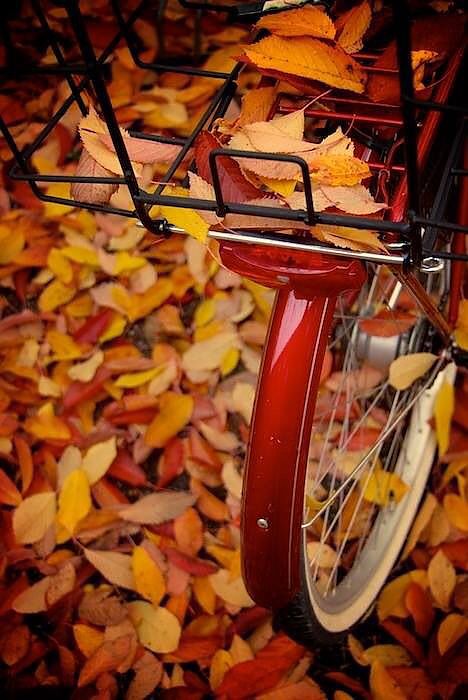
Being in the tropics, the time of fall isn’t as colourful as the temperate areas. Though the winds and the rain against the mosaic of colours still mark the season of autumn. Collecting the leaves for my toddler’s scrapbook is never a job too tedious or tiring. Coming across each leaf with their own shape and colours, even though dead, each leaf has their own beauty and story to say.

“If only humans could die like the autumn leaves, with a splash of beauty and the promise of another season.” Shana Chartier

Each leaf has a story of their origin through spring, summer and travel across the wind. Each leaf may have seen the good and the bad. Some leaves may have been the vibrant green placed amongst the fragrance of flowers, while others may have been subject to the town air, of dust and grime. Despite the changes, they follow their course and change their tunes as per the season. No leaf stays the same. Like us, each leaf is subject to change and tune their travel as per the requirement of the elements, never losing out on their initial spark. Little wonder then, that even towards the end of their journey and back to being a part of the earth; they colour the lives around them, bringing joy to the faces and lives around them.

“Leaves grow old gracefully, bring such joy in their last lingering days. How vibrant and bright is their final flurry of life.” Karen Gibbs

An Autumn Leaf
Immanual Joseph

Yesterday, I was the mist of the waterfall
Tomorrow I will be a raindrop
Racing toward my destiny
But today I am the cloud
Floating amidst the mountain peaks
The hangman’s noose is empty
For I am life
I cannot be destroyed
The winds of adversity
Buffet and mould me
Yet I float free
I am freedom
The bird that flits happily
Among olive trees
I am the wind of the evergreen glades
I am boundless
Without secrets, without fear
I am love
The red ferns on mossy grass
I am Now
This hour, eternity
I know no beginning or end
I cannot be destroyed.

“The last dead leaves of fall crackled underfoot, winter-crisp.” Neil Gaiman

Posted in Christian, Daily, poetry, Reflections

Reach Out and Pray

“Trust the unknown to His Hands of the Known”

During the days when things go wrong, such that one feels that the whole world is conspiring against them; it is certain words or emotions that echo through the mind preserving the sanctity and peace. Lost adrift in the rising tide, the options are stark. Cry for help, reach out for the help, cry and splash around in the water drowning in the process or remember HIS Words and pray for HIS Help to hold on to and find a way out.

As one tries to find a wave in the sea to ride along and get back the bearings; reaching out for His Known Hand may be what makes the difference in catching the wave, which helps one to reach the shore safely.

“For I know the plans I have for you,” declares the LORD, “plans to prosper you and not to harm you, plans to give you hope and a future.” ( Jeremiah 29:11)

A Plea To The Lord
Rosemary Ammar

I woke up on Monday and looked up at the sky
With a pain in my heart and tears in my eyes
I said “Lord, please help me, I don’t know what to do.
I lost my job, I need some help, I have no one but you.”

The Lord looked down upon me with sadness in his eyes.
“The world is in a sorry state and I apologize.
For all the pain it’s caused you, there’s just one thing I’ll say:
“It’s okay to cry my child, but don’t forget to pray.”

I woke up on Tuesday and looked up at the sky
With a pain in my heart and tears in my eyes
I said “Lord please help me, I don’t know what to do.
The food is scarce, the kids are sick, I have no one but you.

The week dragged by thru Saturday and things seemed worse each day.
I remembered what the Lord said: “It’s okay to cry, but pray”
So I cried and prayed, I cried and prayed, with no relief in sight.
And I went to bed exhausted but couldn’t sleep that night.

I woke up on Sunday and looked up at the sky
With pain in my heart and tears in my eyes
I said “Lord I’ve had enough and I’m about to break
I think I might just end it all, for everybody’s sake.”

“I’ve not deserted you my child, I’ve counted every tear
Your burdens, although heavy, are not more than you can bear
Soon the sun will warm your face and make you smile again
So rest a little easier and trust in me till then.”

Then the Lord reached down and held me in his arms
With a gentle hand he wiped my tears and spoke these words so calm
“My child I love you dearly and have heard you pray your best
But there is no crying on Sunday, it is the day of rest.

I’ve heard you cry, I’ve heard you pray and I will not desert you
Your faith in Me will get you through these tragedies that hurt you.
So rest today and worry not and leave the rest to me
If you do that, I can promise you, the best is yet to be.”

Posted in Daily, Food, Stories Around the World

As Basic as Bread

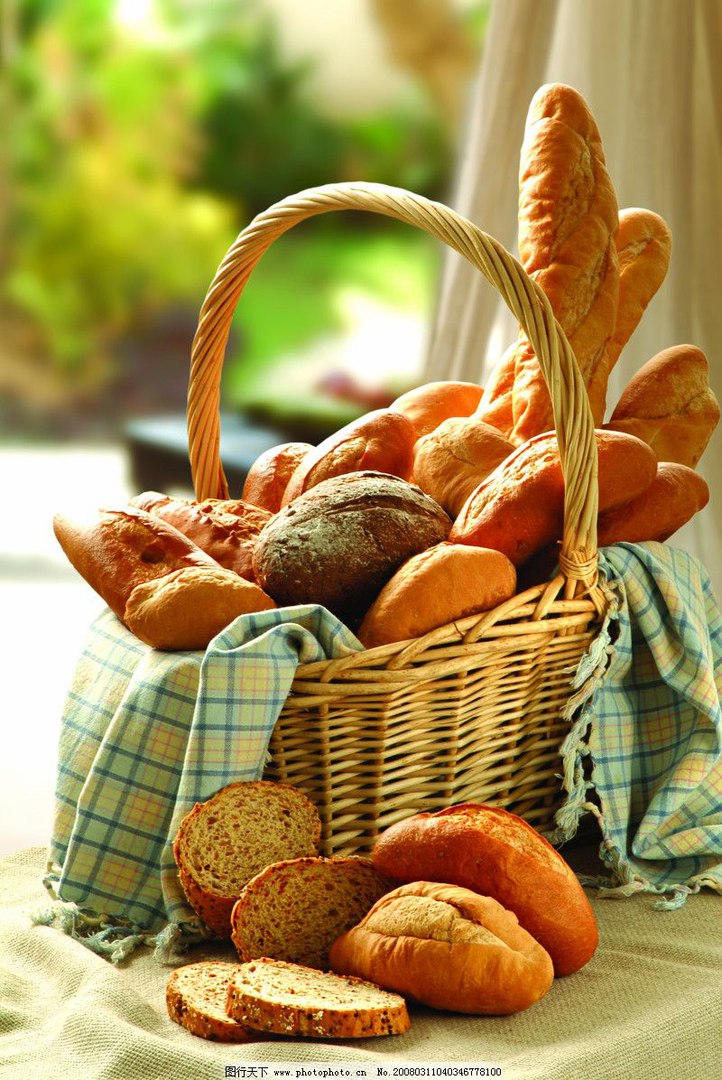
One of the after-effects of mixing flour, water and yeast which was later baked had resulted in the preparation of the one of the most staple foods had across different countries of the globe. With the dawn of civilization and agriculture leavened (or in certain areas the unleavened form) bread has become a part of the local cuisine and culture, such that existence without it for a couple of days would be quite unthinkable.

Etymology tracing the roots, the word “bread” originally meant “broken piece” or “morsel”, as evidenced by the appearance of West Frisian brea, Dutch brood, German Brot, Swedish bröd, Norwegian and Danish brød; all a part of the Gemanic languages which had transferred few of it’s roots to the Middle and Modern English. Although “hlaf” was the old English name for bread (hlaifs in Gothic: modern English loaf).

One of the earliest prepared foods, archaeological evidence shows starch residue on rocks. Possibly roots of certain plants (possibly cattails and ferns)were pounded on these rocks for their starch extract, then placed over a fire and cooked, which would be the earliest primitive form of flatbread. With the rise of agriculture ( Neolithic Age) and cultivation of certain plants, cereal may have then been the mainstay of bread making.

“Good bread is the most fundamentally satisfying of all foods; and good bread with fresh butter, the greatest of feasts.” James Beard

Leavening of the bread in the early years may have happened through multiple sources. One possibility would be that leaving the uncooked dough exposed to air for sometime would result in the airborne yeast spores falling in. Another fact is that many yeast spores are naturally found on the surface of cereal grains, so if any dough is left to rest, it may leaven naturally. Records of Pliny the Elder report that the Gauls and Iberians used barm (the foam skimmed from beer) to produce “a lighter kind of bread than other peoples” such as barm cake. Other parts of the ancient world used their knowledge of wine to find a source of yeast, either by making a paste composed of grape juice and flour that was allowed to begin fermenting or wheat bran steeped in wine. Another common source of leavening was to retain a piece of dough from the previous day to use as a form of sourdough starter.

Modern methods of bread making was initiated by the Chorleywood bread process (1961) which uses the intense mechanical working of dough to dramatically reduce the fermentation period and the time taken to produce a loaf. Mostle used on a factory scale, this resulted in bread being easily available on a large scale and in the commercial market.

Alternative to the regular wheat bread, bread may be made from other wheat species like spelt, emmer, einkorn and kamut or made from non-wheat cereals like rye, barley, corn, oats, sorghum, millet and rice have been used to make bread. Although only rye bread can be made exclusive of wheat, others may need a little of wheat flour for binding process. Although for the purpose of preparing gluten-free breads, ground flours from various alternatives like almonds, rice, sorghum, corn, legumes (like besan), tubers (cassava) maybe used. As these flours mayn’t hold their shape as they rise and hence may be dense without the aeration, additives such as corn starch, eggs, xanthan gum and the like are used to compensate for the lack of gluten.

From sliced bread to sourdough loaves, there are a variety of breads being made pertaining to each locality and region like the yeast based anadama bread, hoppers, Scottish bannock, cottage loaf, Austrian kifli, Spanish mollete or the Swiss Zopf to mention a few. There is nothing more satisfying than making own bread once in a while. From the regular bread to short bread, the choice of recipes and methods are plenty. Giving the sweet tooth a rest, it would be an interesting experience to give bread baking a try, may be adding a more individual, experimental and creative touch to it.

“The smell of good bread baking, like the sound of lightly flowing water, is indescribable in its evocation of innocence and delight… [Breadmaking is] one of those almost hypnotic businesses, like a dance from some ancient ceremony. It leaves you filled with one of the world’s sweetest smells… there is no chiropractic treatment, no Yoga exercise, no hour of meditation in a music-throbbing chapel. that will leave you emptier of bad thoughts than this homely ceremony of making bread.” M.F.K. Fisher, The Art of Eating

Posted in Daily, Life, Personal Musings, poetry, Reflections

As they Bloom

“There are so many ways to be brave in this world. Sometimes bravery involves laying down your life for something bigger than yourself, or for someone else. Sometimes it involves giving up everything you have ever known, or everyone you have ever loved, for the sake of something greater. But sometimes it doesn’t. Sometimes it is nothing more than gritting your teeth through pain, and the work of every day, the slow walk toward a better life. That is the sort of bravery I must have now.” Veronica Roth

Last evening in lieu of a small thank you meeting being organized, arrangements were being made and the event went as planned. The next day, saw many being greeted by the vases were filled with flowers of yesterday, with their freshness still intact. For once, the atmosphere was brightened by their beauty and their grace. Though over a few days, they wane off and lose their initial sparkle, the memories of their beauty still linger on.

“A life filled with complete certainty is absurdity.” Maxime Lagacé

Life, on the whole, echoes the moments of flowers in bits and pieces. Over unexpected elements, finding the sunshine rays and the available resources, to grow and bring forth their colours. Though the uncertainty of their survival looms high, whether they being plucked or not, the fodder for the animals and so on, it doesn’t prevent them from colouring the world around them. Such that, their grace and beauty brings forth a smile even on the most dull and tired faces. To be like them, is not difficult but hard, depending on own will and inner peace. When one tries to imbibe and live as the grace of the flowers, then the beauty of life will increase by manifold.

“You can be anything you want to be, do anything you set out to accomplish if you hold that desire with singleness of purpose.” Abraham Lincoln

The Grace Of Flowers
Sue Coppernoll

Gladiolas in a white vase,
their magenta faces shining
in early morning light
streaming through a windowpane
speckled with last night’s raindrops,
bring me to wakefulness,
adoration, and hope.

Another volley of blossom
unfolds atop their stems,
assuring me that on the morrow
I shall yet have their company.

Breathing gratitude,
I pour cool water from a crystal pitcher
into the vase with a devout prayer:
“May my life also unfold in radiance and in beauty.”

I return the flowers
to a corner of the hearth,
knowing I am ready, now,
for what the day may bring.

Posted in Daily, Family and Society, Personal Musings, poetry, Reflections

Rainbow of the Day

“When I set a glass prism on a windowsill and allow the sun to flood through it, a spectrum of colors dances on the floor. What we call “white” is a rainbow of colored rays packed into a small space. The prism sets them free. Love is the white light of emotion.” Diane Ackerman

One of the most important tasks as mother to a toddler is finding space for the innumerable handiwork with the colours either on the cupboards, kitchen cabinets, door or the refrigerator door (walls aren’t an option). Just the other day, there was a struggle to find space for “the rainbow” which eventually displaced the “dog and cat” on the fridge door.

Taking a close look at the rainbow, there are more than the scientific seven colours lined up. More than the aesthetic and art sense, what makes it more important is the love behind the drawing and to acknowledge the skills of the child, learning to appreciate them and let them grow by themselves, just guiding them and not pointing out or training them. The pot of gold at the end of the rainbow depends on how one views it.

“Sometimes it’s important to work for that pot of gold. But other times it’s essential to take time off and to make sure that your most important decision in the day simply consists of choosing which color to slide down on the rainbow.” Douglas Pagels

I’ll Paint You A Rainbow
Grace E. Easley

I’ll paint you a rainbow to hang on the wall,
to brighten your heart when the gray shadows fall.
On a canvas of joy outlasting the years,
with a soft brush of sweetness to dry all your tears.
I’ll paint you a rainbow with colors of smiles
That glow with sincerity over the miles.
On a palette of words I will tenderly blend
Tones into treasures of sunlight and wind.

I’ll paint you a rainbow that reaches so wide,
Your sights and your sorrows will vanish inside,
And deep in the center of each different hue,
A memory fashioned especially for you.
So lift up your eyes, for suspended above,
A rainbow designed by the fingers of love…