Posted in Daily, Food

Of Panini, Origin and Evolution

Meaning small bread or bread rolls as derived from the Italian panini [paˈniːni] or panino; these sandwiches are made with Italian bread (such as ciabatta and michetta), usually served by grilling or toasting. While the modern panini may have baguette as the bread; the deli ingredients of the horizontally cut bread can be filled with one’s own choice. From salami, cheese, ham, vegetables sliced or pickled; the choices are aplenty.
“[Panini] are said to have originated in Lombardy, Italy, in response to the demand among Milanese office workers for a quick lunch without sacrifice in flavor and quality. In both Italy and the United States, panini are eaten for lunch and as snacks and appetizers. In Italy, sandwich shops traditionally wrap the bottom of the panino in a crisp white paper napkin, providing a practical solution to drips while enhancing aesthetics. Quality Italian bread is an absolute must for a killer panini, and most sandwich chefs will opt for a relatively thin artisan bread like grooved focaccia or ciabatta, slicing it in half horizontally. Panini are always grilled, so most restaurants and cafes have invested in professional grooved sandwich presses that flatten and heat the sandwich while creating a crunch, buttery outer crust.” -American Sandwich: Great Eats from all 50 States, Becky Mercuri [Gibbs Smith:Salt Lake City UT] 2004 (p. 81)

The earliest precursor of panini was believed to be in the 16th century Italian cookbook; food historians have traced these sandwiches to the trendy Milanese bars, called paninoteche (1960s). As their popularity had crossed the Atlantic in the mid-1970s, the first American reference to panini dates to 1956. With each city having their own distinctive version of panini, variation were developed in plenty. During the 1980s, “paninaro” had evolved which was the youngsters’ culture typical of teenagers to enjoy a meet and eat place like the sandwich bars, such as Milan’s Al Panino. These had later evolved to the initial style of fast food restaurants opened in Italy.

Over time, panini had evolved to more flavours and texture with the bread changing type along with the mix. As their popularity spread across the seas to the Asian continent and the Orient, the portability, easy preparatory, individual taste and choice have contributed to their fair share in the menus across the globe. Little wonder, why then August had been dedicated as the month of the panini  by experimental foodimentarians, for every kitchen of theirs would have made or had the “panini” at some point of time.

Posted in Daily, Family and Society, Life, Personal Musings, poetry, Reflections, Stories Around the World, Work

Risks to Take

“Fire is the test of gold; adversity, of strong men.” Martha Graham

Decisions. Changes. Progress. Stagnation, growth or downfall. Uncertainty.

One of the innate emotions that human nature craves for is the feeling of contentment and comfort within one’s own zone. Making a slight change in those factors sets off the warning bells in the mind, invoking the fear of the change. By the time, the opportunity knocks and waits for the response; staying indecisive for more time than allotted results in the “chance walking away” with the possibility for it being lost for ever. On hindsight, regret bites and those stings hurt for long.

“The greater the obstacle, the more glory in overcoming it.” Molière

Stepping out and facing what deemed difficult would result in the latter, being re-judged as feasible if one is willing to give every reasonable challenge or opportunity a try. Risks are there in the everyday life. From walking to the market for the daily shopping or taking the long car commute on the highway; risks are there in every nook or cranny. While at times we may realize, other times may be not so. When risks are involving a change from the comfort zone; grabbing the opportunity with both hands, especially if it centers around the dream goals in life, is better than looking back with regrets.

Risks are there in everything that may be achieved for the better. By avoiding risks and change; one may avoid imbalance, uprooting, temporary sufferings or sorrows. On the other hand, the better things of life which help one learn, grow and live to one’s potential is lost. Whether one would prefer being chained to the comfort zone or servitude, losing out on all freedom of emotions and growth; or would prefer to soar like the eagle, knowing when to fly down and catch the prey of opportunity, setting no boundaries to attained by aiming for the skies, is the individual choice alone. These thought all make the difference when deciding to risk the change or not. Life is all about balancing the change. Learning to do so at the earliest helps in the short time that one is allotted in this world that we live in.

To Risk
To laugh is to risk appearing a fool.
To weep is to risk appearing sentimental.
To reach out to another is to risk involvement.
To expose feelings is to risk exposing your true self.
To place your ideas and dreams before a crowd is to risk their loss.
To love is to risk not being loved in return.
To live is to risk dying.
To hope is to risk despair.
To try is to risk failure.
But risks must be taken because the greatest hazard in life is to risk nothing. The person who risks nothing, does nothing, has nothing, is nothing.

(Source: vk.com)

“We don’t develop courage by being happy every day. We develop it by surviving difficult times and challenging adversity.” Barbara De Angelis

Posted in Daily, Life, Personal Musings, poetry

Reality of the Frequent “Cannot”

“Opportunities will come and go, but if you do nothing about them, so will you.” Richie Norton

One of the most frequently encountered on assigning any project at the high school age group is the word “can’t”. Those “cannot”s revolve around the excuses of lack of time, to increased work load, less fun time, more effort required and so on. The resonance of “cannot”s increases almost in proportional to the effort or inconvenience caused. While in school life, “the cannot”s are heard maximum when asked to help in household chores, baby sit, accompany on hospital visits or grocery shopping; adult life “cannot”s echo almost a similar vein albeit largely increasing the responsibility level.

“Whenever you are asked if you can do a job, tell ’em, ‘Certainly I can!’ Then get busy and find out how to do it.” Theodore Roosevelt

Little does one realize the potential havoc caused by that word or emotion “can’t”. From an opportunity to learn or do something new, grow in responsibility, bond together, chance on new avenue of opportunities and so on; are all lost at that single word “can’t”. While can’t may be really necessary at certain points in life; frequently indulging them will result in more loss than gain in the long run.

“Never say that you can’t do something, or that something seems impossible, or that something can’t be done, no matter how discouraging or harrowing it may be; human beings are limited only by what we allow ourselves to be limited by: our own minds. We are each the masters of our own reality; when we become self-aware to this: absolutely anything in the world is possible. Master yourself, and become king of the world around you. Let no odds, chastisement, exile, doubt, fear, or ANY mental virii prevent you from accomplishing your dreams. Never be a victim of life; be it’s conqueror.” Mike Norton

Can’t
Can’t is the worst word that’s written or spoken;
Doing more harm here than slander and lies;
On it is many a strong spirit broken,
And with it many a good purpose dies.
It springs from the lips of the thoughtless each morning
And robs us of courage we need through the day:
It rings in our ears like a timely sent warning
And laughs when we falter and fall by the way.

Can’t is the father of feeble endeavour,
The parent of terror and half hearted work;
It weakens the efforts of artisans clever,
And makes of the toiler an indolent shirk.
It poisons the soul of the man with a vision,
It stifles in infancy many a plan;
It greets honest toiling with open derision
And mocks at the hopes and the dreams of a man.

Can’t is a word none should speak without blushing;
To utter it should be a symbol of shame;
Ambition and courage it daily is crushing;
It blights a man’s purpose and shortens his aim.
Despise it with all of your hatred of error;
Refuse it the lodgement it seeks in your brain;
Arm against it as a creature of terror,
And all that you dream of you someday shall gain.

Can’t is the word that is for to ambition,
An enemy ambushed to shatter your will;
Its prey is forever the man with a mission
And bows but to courage and patience and skill.
Hate it, with hatred that’s deep and undying,
For once it is welcomed ’twill break any man;
Whatever the goal you are seeking, keep trying
and answer this demon by saying: ‘I can.’
-Edgar A. Guest

Posted in Daily, Food

Flavoured, Creamy and Soft

“My idea of a perfect day is a frozen custard at Shake Shack and a walk in the park.” Nora Ephron, I Remember Nothing: and Other Reflections

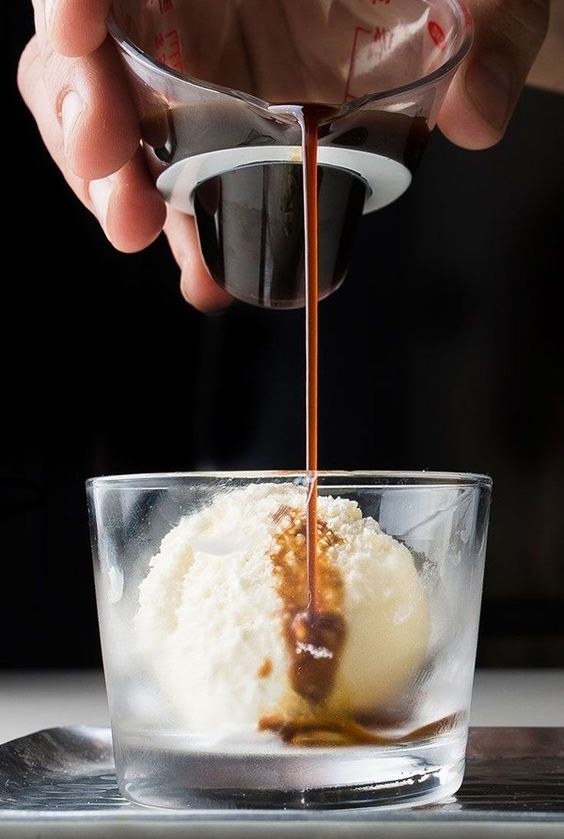
Similar to ice cream, but denser and containing higher percentage of egg in addition to cream and sugar; frozen custard has been of late in rage, especially when one wants a break from the regular cold dessert of ice-cream.

Since the 1690s, experimentally egg yolks were tried for the ice cream recipe, the percentage was very low and the popularity stayed strong with ice-cream as such. Yet when vendor Archie C. Kohr had increased the concentration of egg yolk to the regular ice cream; not only was the texture improved, it became more denser and didn’t melt quickly. Thus, “frozen custard” was invented in Coney Island (1919). Later this frozen custard was introduced at the Chicago World’s Fair. From then on, it had gained the hearts of dessert lovers. As this silky product is extruded through the huge metallic contraptions (sometimes known as “iron lungs”), into the bucket and then scooped into cups or wafer cones; the smooth, cream coloured texture is rich but not cloying on the taste buds.

As per the U.S. FDA, the distinction between ice-cream and frozen custard is very fine with the latter to consist of at least 10 percent milk fat and 1.4 percent egg yolk solids. The true or original frozen custard is a very dense dessert. Air is not pumped into the mix, nor is it added as an “ingredient” but gets into the frozen state by the agitation of liquid similar to whisking a meringue. The high percentage of butterfat and egg yolk gives frozen custard a thick, creamy texture and a smoother consistency than ice cream.

For the experimenters, there is always homemade frozen custard to be made with the added fun of an ice-cream social. Also the store bought or a good deli frozen custard can spice up the regular Sunday brunch desserts as add-ons to cake, regular shakes or prepped up with nuts, crushed almonds or m&m’s. All said, with foodimentarians gearing up to celebrate the National Frozen Custard Day(August 8th), it would be a good time to try out this cold dessert.

Posted in Christian, Daily, Family and Society, Personal Musings, Random Thoughts

Answers through Prayer

“And this is the confidence that we have in him, that, if we ask any thing according to his will, he heareth us.” 1 John 5:14

As the sermon today morning was being delivered, the thoughts of the numerous changes that have happened over the past one year ran through the mind. From a change of job to new residential area, children attending school and the like. At each point of change, there was a huge unrest. The question of what to decide, how to choose or whether the decision made was right or wrong made the mind, soul and thoughts restless. Through all this haziness were the thoughts of “why now ?” .

“Then shall ye call upon me, and ye shall go and pray unto me, and I will hearken unto you.” Jeremiah 29:12

Those restless moments were settled when asking the Lord for answers. Each time a stumbling block was felt, looking back now; the Lord had always shown a way out. Though it had made no sense at that time; now that everything had fallen into place, these tough points don’t seem so bad anymore. One never knows till one prays and asks for guidance. There will always be an answer to our prayer.

“Be careful for nothing; but in every thing by prayer and supplication with thanksgiving let your requests be made known unto God. And the peace of God, which passeth all understanding, shall keep your hearts and minds through Christ Jesus.” Philippians 4:6-7

Everything I Needed
Author Unknown

I asked for strength and
God gave me difficulties to make me strong.

I asked for wisdom and
God gave me problems to solve.

I asked for prosperity and
God gave me brawn and brains to work.

I asked for courage and
God gave me dangers to overcome.

I asked for patience and
God placed me in situations where I was forced to wait.

I asked for love and
God gave me troubled people to help.

I asked for favors and
God gave me opportunities.

I received nothing I wanted
I received everything I needed.

My prayers have all been answered.

Posted in Daily, Food, Stories Around the World

Chip it In, Bake It

Whitman, Massachusetts, 1938

“We had been serving a thin butterscotch nut cookie with ice cream. Everybody seemed to love it, but I was trying to give them something different. So I came up with Toll House cookie. Add up chopped up bits from from a Nestlé semi-sweet chocolate bar into a cookie. The original recipe is called “Toll House Chocolate Crunch Cookies.”
– American Chef Ruth Graves Wakefield, Toll House Inn
(Wakefield, Ruth Graves (1942). Ruth Wakefield’s Toll House Tried and True Recipes. M. Barrows & Company, Inc.)

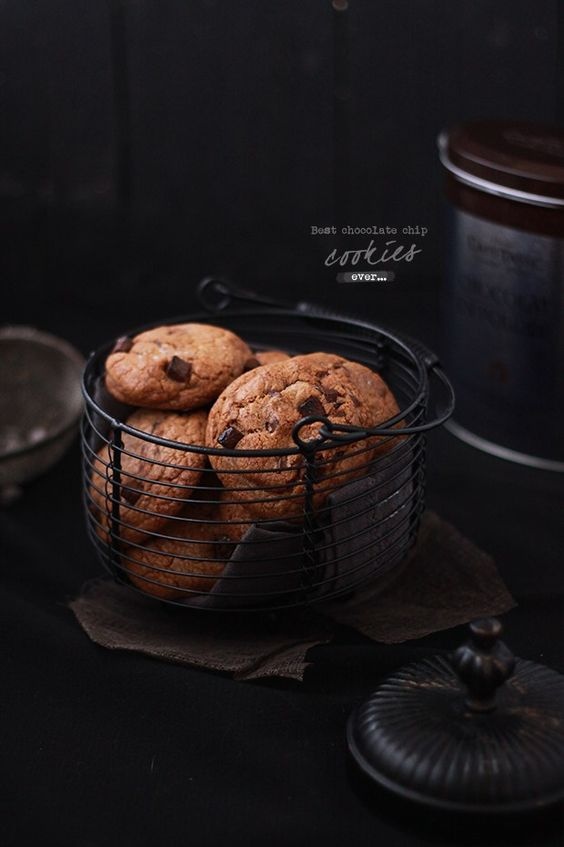
One of the famous drop cookies, “the chocolate chip cookie” had its’ origins in the early 1900s; wherein chocolate chips or choclate morsels were added to the regular cookie dough as the distinguishing ingredient. With a dough composed of butter, both brown and white sugar, semi-sweet chocolate chips and vanilla; the traditional recipe had evolved. Originally invented by the American chef Ruth Graves Wakefield and chef Sue Brides (1938) when the former owned the Toll House Inn (Whitman, Massachusetts); a popular restaurant that featured home cooking. Wakefield credited Brides with helping her make the famous chocolate chip cookie.

Over the years, variations with different varieties of chocolate, change of ingredients like nuts, oatmeal, raisins and the like paved way. Variations on the original recipe may add other types of chocolate, vegan substitutes as well as additional ingredients such as nuts or oatmeal. The ‘double’ or ‘triple’ chocolate chip cookies are so called when dough flavored with chocolate or cocoa powder are used before chocolate chips are mixed in. These variations of the recipe are often referred to as , depending on the combination of dough and chocolate types.

“If you can’t change the world with chocolate chip cookies, how can you change the world?” Pat Murphy

As the popularity grew, especially during WWII, soldiers from Massachusetts who were stationed overseas shared the cookies they received in care packages from back home with soldiers from other parts of the United States. Soon hundreds of soldiers asked their families to send them some Toll House cookies. Thus began the craze for the chocolate chip cookie with Wakefield receiving letters around the world requesting her recipe.

In proportion to the increased popularity of the choclate chip cookie, the sales of Nestlé’s semi-sweet chocolate used rose. Andrew Nestlé offered Ruth a deal to buy the rights to her recipe, as well as the rights to use her and the Toll House name when advertising his acquisition. The business proposal was accepted by Ruth for one whole dollar and a lifetime supply of Nestlé chocolate. Nestlé quickly launched a new marketing campaign that advertised the chocolate chips primarily as main ingredients for cookies, engraving the recipe for the Toll House Cookie on the package print.

“ One of the best things in life- warm chocolate chip cookies.” Anonymous

In an interview (2017), Sue Brides’ daughter, Peg shared the original recipe that was passed down to her.  The original Toll House cookie recipe, according to Peg:

1 1/2 cups of shortening
1 1/8 cups of sugar
1 1/8 cups of brown sugar
3 eggs
1 1/2 teaspoon of salt
3 1/8 cups of flour (Peg prefers King Arthur all purpose)
1 1/2 teaspoon of hot water
1 1/2 teaspoon of baking soda
1 1/2 teaspoon of vanilla
Chocolate chips (and walnuts)
Bake at 350 degrees for 12-13 minutes
[The Tried and True Recipes cook book specifies “2 bars (7 oz.) Nestlé’s yellow label chocolate, semi-sweet, which has been cut in pieces the size of a pea.”]
(Source:Stephanos, Maria (2017-06-21). “Secret’s out! Here’s the ‘real recipe’ for Toll House chocolate chip cookies”)

With Chocolate Chip Cookie Day being celebrated by foodimentarians tomorrow (August 4th), making similar or own variations of this delectable treat would be a lovely weekend surprise and fun event.

Posted in Daily, Family and Society, Life, Quotes, Stories Around the World

The Need to Listen

“We have two ears and one mouth, so we should listen more than we say.” Zeno of Citium, as quoted by Diogenes Laërtius

The visit to the retailers’ during the end season is marked with a slight wariness. Though the anticipation of rummaging through the variety on display and searching for the “good stuff” are the few of the many reasons that one enters the mall during the peak season; underlying is the feel that one may run into someone that one knows. When the acquaintance is one who has been in regular touch, it is a quick chat but if it is someone who has been out of town for a long time; there is the cup of coffee and a snack brunch or dinner to follow. On the latter encounters, what one later realizes was in the monologue; it was the trait of listening that was being developed.

“Not everyone with a problem needs you to solve it. Sometimes all a person needs is to feel like they’ve been heard. Listening without judging can be more effective than injecting your opinions or trying to solve a problem that doesn’t have an easy answer.” Zero Dean

For those people with a comfortable circle of friends and colleagues, it is the trait of listening that is highly valued. Many a time, when caught in a quandary, more people want to be simply listened to than being poured with advice. The art of listening is indeed a rare one. To be quiet, lend a ear and actually comprehend what one days builds up the relationship, self respect and harmony of both. It may be easy to judge, offer opinions or point out mistakes. Yet those things may be eventually felt by the speaker themselves, once they are allowed to sort out things by themselves. More than speaking, it is listening impartially, openly ans with an interest than builds not just relationships, but also gives insight, forethought as well as learning to be imparted and used in the future. Any relationship is always a coordination of speech, silence, listening, kindness and acceptance. When these seeds are first sown, the plant grows healthy. Only when one learns to listen, will they to be listened to.

“Wisdom is the reward you get for a lifetime of listening when you’d have preferred to talk.” Doug Larson

We all know what it’s like to get that phone call in the middle of the night. This night was no different. Jerking up to the ringing summons, I focused on the red, illuminated numbers of my clock. It was midnight and panicky thoughts filled my sleep-dazed mind as I grabbed the receiver. ‘Hello?’ My heart pounded, I gripped the phone tighter and eyed my husband, who was now turning to face my side of the bed. ‘Mum?’ The voice answered. I could hardly hear the whisper over the static. But my thoughts immediately went to my daughter. When the desperate sound of a young crying voice became clear on the line, I grabbed for my husband and squeezed his wrist.
‘Mum, I know it’s late. But don’t … don’t say anything until I finish. And before you ask, yes I’ve been drinking. I nearly ran off the road a few miles back and…’ I drew in a sharp, shallow breath, released my husband and pressed my hand against my forehead. Sleep still fogged my mind, and I attempted to fight back the panic. Something wasn’t right. ‘… and I got so scared. All I could think of was how it would hurt you if a policeman came to your door and said I’d been killed. I want to come home. I know running away was wrong. I know you’ve been worried sick. I should have called you days ago but I was afraid, afraid …’
Sobs of deep-felt emotion flowed from the receiver and poured into my heart. Immediately I pictured my daughter’s face in my mind, and my fogged senses seemed to clear, ‘I think …. ‘ ‘No! Please let me finish! Please!’ She pleaded, not so much in anger, but in desperation. I paused and tried to think what to say. Before I could go on, she continued. ‘I’m pregnant, Mum. I know I shouldn’t be drinking now … especially now, but I’m scared, Mum. So scared!’
The voice broke again, and I bit into my lip, feeling my own eyes fill with moisture. I looked up at my husband, who sat silently mouthing, ‘Who is it?’ I shook my head and when I didn’t answer, he jumped up and left the room, returning seconds later with a portable phone held to his ear. She must have heard the click in the line because she asked, ‘Are you still there? Please don’t hang up on me! I need you. I feel so alone.’
I clutched the phone and stared at my husband, seeking guidance. ‘I’m here, I wouldn’t hang up,’ I said. ‘I should have told you, mum. I know I should have told you. But, when we talk, you just keep telling me what I should do. You read all those pamphlets on how to talk about sex and all, but all you do is talk. You don’t listen to me. You never let me tell you how I feel. It is as if my feelings aren’t important. Because you’re my mother you think you have all the answers. But sometimes I don’t need answers. I just want someone to listen.’
I swallowed the lump in my throat and stared at the how-to-talk-to-your-kids pamphlets scattered on my nightstand. ‘I’m listening,’ I whispered.

‘You know, back there on the road after I got the car under control, I started thinking about the baby and taking care of it. Then I saw this phone booth and it was as if I could hear you preaching to me about how people shouldn’t drink and drive. So I called a taxi. I want to come home.’ ‘That’s good honey,’ I said, relief filling my chest. My husband came closer, sat down beside me and laced his fingers through mine. ‘But you know, I think I can drive now.’ ‘No!’ I snapped. My muscles stiffened and I tightened the clasp on my husband’s hand. ‘Please, wait for the taxi. Don’t hang up on me until the taxi gets there.’ ‘I just want to come home, Mum.’ ‘I know. But do this for your Mum. Wait for the taxi, please.’
I listened to the silence in fear. When I didn’t hear her answer, I bit into my lip and closed my eyes. Somehow I had to stop her from driving. ‘There’s the taxi now.’ Only when I heard someone in the background asking about a Yellow Cab did I feel my tension easing. ‘I’m coming home, Mum.’

There was a click, and the phone went silent. Moving from the bed, tears forming in my eyes, I walked out into the hall and went to stand in my 16-year-old daughter’s room. My husband came from behind, wrapped his arms around me and rested his chin on the top of my head. I wiped the tears from my cheeks. ‘We have to learn to listen,’ I said to him. He studied me for a second, and then asked, ‘Do you think she’ll ever know she dialed the wrong number?’ I looked at our sleeping daughter, then back at him. ‘Maybe it wasn’t such a wrong number.’
‘Mum, Dad, what are you doing?’ The muffled voice came from under the covers. I walked over to my daughter, who now sat up staring into the darkness. ‘We’re practicing,’ I answered. ‘Practicing what?’ she mumbled and laid back on the mattress, but her eyes already closed in slumber. ‘Listening,’ I whispered and brushed a hand over her cheek.

Author Unknown

“The art of conversation lies in listening.” Malcom Forbes