Posted in Christian, Daily, Life, Personal Musings, poetry

Thy Will be Done

“Make me to know your ways, O Lord; teach me your paths. Lead me in your truth and teach me, for you are the God of my salvation; for you I wait all the day long. He leads the humble in what is right, and teaches the humble his way.” (Psalm 25:4—5,9)

Following the principles of the Christian Faith, family prayer is an essential part of the daily life. On praying aloud with children in the family; for a toddler to understand elaborate words may be difficult. For the little ones, to comprehend the concept of Christ and His Sacrifice may be difficult, but they deeply feel the love of God and His Kindness. On reading passages from the Bible, they’re engaged in the story and the events that unfolded. Yet while praying together, keeping it short and simple is easy for them to learn and understand the essence of Christian Faith.

“Whoever gives thought to the word will discover good, and blessed is he who trusts in the LORD.” (Proverbs 16:20)

While teaching the little ones to pray before they sleep, the Love of Christ, God’s Grace as well as the protection of the Holy Spirit is said as a part of their prayers. however complete submission to God’s Will and His Role in the Christian need not be echoed by elaborate words but as simple words as , “Lord let it all be as by thy Will”. Prayer from the heart doesn’t demand nor does it ask for concessions. To pray from the heart with complete surrender putting their worries into His Hands, repenting for the wrongs, trusting His Will and His immense Grace to make things go as per His Plan, is not easy to practise; yet much is the power of true prayer.

“Rejoice always, pray without ceasing, give thanks in all circumstances; for this is the will of God in Christ Jesus for you.”(1 Thessalonians 5:16–18)

God, Here Is Bill

Simple and poor
The old negro prayed to God.
Husky bass he firmer
Only three words. “God, here, Bill,”

Pastor John with him for a long time struggled
to pray he studied,
to a beautiful saying,
Not just:. “God, here Bill”

Negro hours on his knees
slalom Creator Thanksgiving
but prayer is offered
as succinctly: “God, here, Bill,”

His life has come to a close,
and in the hospital room
he for the poor hit.
Pastor John to it went.

But once it was clear
that the empty bunk Bill.
the pastor politely asked
patients: “And where is Bill?”

The whole hospital room,
Quietly embraced with joy,
Bloomed like a May garden.
And the patient said:

“Oh, Bill, our saint, believe me.
In the morning, before the death
of Tycho, the last effort
to pray,” God, here, Bill. “

The entire chamber followed by
illuminating the bright light
as if the angelic palace.
From the Sky, a voice: “Bill, God is here.”

The pastor fell to his knees,
To praise the Creator,
But he managed to say
only three words: “God, John is here.”
-Vladimir Artemyev

(Translated to English, Source:vk.com)

“…….. your kingdom come, your will be done, on earth as it is in heaven.” (Matthew 6:10)

Posted in Daily, Food, Stories Around the World

OF Fries, Origin and Evolution

Thin or thick, served hot, soft or crispy and had as snack food or in accompaniment to main course of lunch or dinner; french fries or just fries (known as chips or finger fries) are batonnet or allumette-cut deep fried potatoes. An all time favourite especially for children, foodies, surprise occasions; they can be had salted or plain, or with ketchup, vinegar, mayonnaise, local specialty sauces and dips, or even be topped more heavily as chilli cheese fries, poutine and the like.

“Even if I’m eating healthy, I let myself indulge with french fries. That’s my favorite thing. You only live once!” Kate Mara

Like all the best things in the “food dictionary”, the origin or creator of these “golden strips” aren’t exactly known. Although the general consensus is that the “French Fry” is more of “Belgian origin than French.”

Potatoes were first introduced to Europe through the Spanish. On the Spanish exploration of Americas, they had encountered potatoes among the native food supply. As accounts of Jimenez de Quesada and the Spanish forces ( 1537) detail the discovery of potatoes among the native villages of Colombia, where they were called as “truffles” initially. When potatoes were brought back to Spain and introduced to Italy too. Then these potatoes were quite small, bitter and didn’t grow well in both places. Over time, larger and less bitter varieties were cultivated and gradually accepted elsewhere in Europe. Spain then controlled much of the modern day Belgium. While historical accounts indicate that Belgians were frying up ( or sauteing) thin strips of potatoes ( 17th to 18th century) in the Meuse Valley between Dinat and Liege. This idea could possibly arise from the original Belgian cuisine which usually fried small fish as part of their staple meals. With shortage of fish in winter, potatoes were an alternative.

“I try to have no absolute nos. I love french fries, I like a good burger, and I like pie. And that’s okay.” Michelle Obama

To explain the “French” of the French fries would be possible when two historical events are taken into account. What once the French had considered as hog feed or cause of various diseases, the change in their opinion due to potatoes was largely credited to the French Army medical officer Antoine-Augustine Parmentier, who was a captive of the Seven Years War and had survived on potatoes as a part of his prison rations. On his return back to France, he had aggressively campaigned as well as cultivated potatoes, promoting it’s benefits to the upper classes as well.

Also during the Franco-Austrian War, which had taken place near around the modern day Belgium, the possibility that French soldiers were introduced to the potato fries by the Belgians exists. Although gradually potato was accepted and cultivated in France; the famine of 1785 made potatoes popular in France. Slowly newer recipes and modes of cooking these spuds were tried. Once discovered or invented or improvised (from Belgian fries?), these fries became popular, especially in Paris, where they were known as “frites” and sold by push-cart vendors on the streets.

“Show me a person who doesn’t like french fries and we’ll swap lies.” Joan Lunden

Whether from Belgium or France, once these “frites” became popular, through colonization, migration as well as wars; they had become a much loved food on the menus across Europe, Britain and Americas. With the spread of fast food chains, these “frites” began to be introduced to the world largely as “French Fries”.

“If I could eat French fries every day of my life, I would.” Adrienne C. Moore

The modern day french fries, though best loved when salted, spiced and fried in oil; for more healthier options can be baked (or even grilled) with seasonings, toppings and all. From the various types of cut fries (crinkle-cut or wavy, curly, shoestring, steak, tornado, waffle) to different preparations like french fry sandwiches, chilli cheese fries, chorrillana to mention a few as well as alternatives like sweet potatoes or potato wedges; one can go creative with these frites. To celebrate the National French Fry day ( July 13th) it would be fun to go on a limb and try the regular to the different combination of the modern fries. For the more experimental ones, it would be interesting to combine fries to the regular dishes. For those of us who dislike potatoes or want healthier options, try baking sweet potatoes, thinly sliced carrots or beetroot with seasoning and all. After all the whole point of food is to relish various flavours, experiment, enjoy and simply have fun.

Posted in Daily, Family and Society, Life, Quotes, Reflections, Stories Around the World

From “Being Helped” to “Helping”

“Those who are the happiest are those who do the most for others.” Booker T. Washington

Raising children is never easy. From the first child, parents or guardians have to devise a system which encompasses love, teaching, helping and guiding them to live a life rich in love, joy, of right values and principles. From infancy to toddler-hood, being too small to do the simple things like brushing their teeth, the morning routine, tying laces or filling a glass of water; these are done by elders, adults or even the bigger children. Yet along the way as they grow older, at times, the coddling doesn’t stop. When an adult puts on shoes for a healthy seven year old, something has gone wrong somewhere. When a healthy ten year old child refuses to make their bed, put their toys away or need to be fed their breakfast; the “coddling” may be a little overdone.

“You will discover that you have two hands. One is for helping yourself and the other is for helping others.” Audrey Hepburn

Every child needs their space to grow. Once they are let to do s, only then will they develop and learn to think. Basic life skills are necessary for any child. They start young, from being able to put on their shoes themselves, to dressing themselves and helping small in the household. When a child from school refuses to note their father’s tired face and demand to go out for shopping a new toy; alterations and right changes have to be made in the set routine to ensure that these children grow up to responsible and develop humaneness fr the society of tomorrow.

“Never get tired of doing little things for others, sometimes those little things occupy the biggest parts of their hearts.”  Unknown

As children are taught to help in the simple things of life, they bloom internally and learn to gain joy on helping others. Rightly said that, “Charity begins at home”; what these young minds learn, observe and undergo in their childhood are carried over to their adulthood and eventually, these same teachings, principles and feelings are carried down over to the generations that they raise. There’s an interesting post from one of my social network pages (translated to English), that goes on to show how children can be taught as “What can we do for you ?”

Being the “grownups” of today, we need to teach our children to “help after being helped when they were small”, so that the basic values of kindness, love, humaneness and service are always carried on, in the future society.

“Everybody can be great…because anybody can serve. You don’t have to have a college degree to serve. You don’t have to make your subject and verb agree to serve. You only need a heart full of grace, a soul generated by love.” Martin Luther King Jr.

Today I understood raising children correctly. The mother-in-law came to us, as always, brought a bunch of gifts to the children, as always, began her little aggressive concern:
– Let me smear you a sandwich! Let me wear you socks! Sit-sit, grandmother will wash the apple-clean-cut-lay!
As always, this is a bit annoying and even annoying for all of us. I have independent children, who clean their own sandwiches and smear apples. And then there was such a stunning stream of turbulent activity!
And a six-year-old son suddenly asked at dinner:
“Grandma, what can we do for you?”
– What? – Grandmother did not understand.
– You do so much for us! – Ilya explained, – You take care of us, care for us. So I ask, and what can WE do for YOU?
He so matured, so deliberately said it, that I felt myself at that moment, as if an angel from heaven had come down and handed me the medal for motherhood. All my pedagogical throwings, all my megawatts of energy and kilometers of nerves, piles of books on education, thousands of arms that fell, all came together today and crystallized into the phrase: “What WE can do for YOU.”
Ksenia Smyslova

“People will forget what you said, people may forget what you did, but they will never forget how you made them feel.” Maya Angelou

Posted in Daily, Food, Stories Around the World

Of Piña Colada, Origin and Evolution

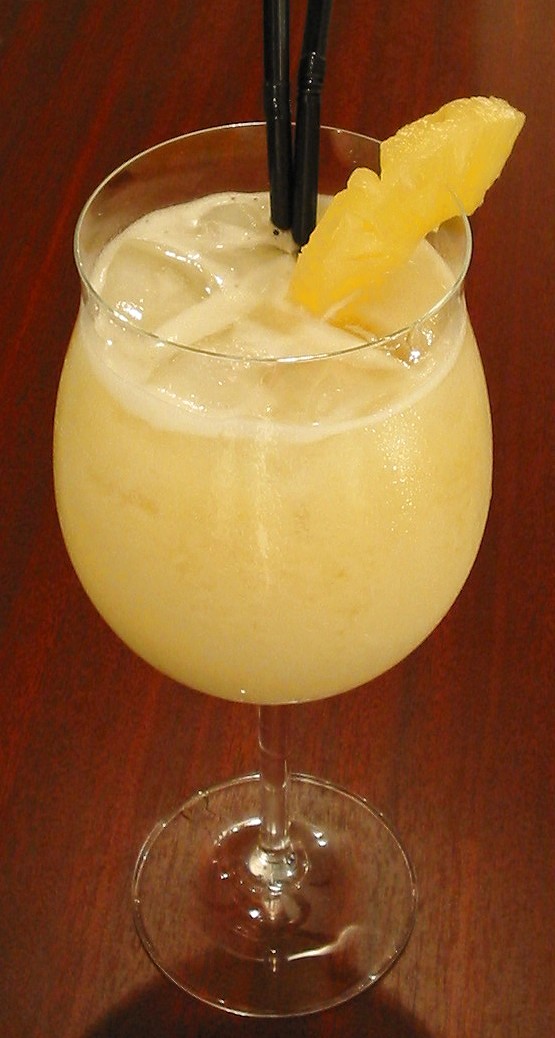
“Blend or shake 6 ounces of pineapple juice, 3 ounces of coconut cream, 1½ ounces of white rum and crushed ice until smooth. Serve in chilled glasses, garnished with pineapple wedge and/or a maraschino cherry.” – Piña Colada (1954 recipe)

Proclaimed as the national drink by Puerto Rico (1978), this cocktail although steadily popular in all Spanish and Portuguese speaking countries, is widely enjoyed across the world. The popularity is affirmed by it being a part of the world of entertainment, from music, popular lyrics to cinemas. For instance, “Escape (The Piña Colada Song)” by American musician Rupert Holmes (1979) had reached the number one spot and stayed there for few weeks.

While the name piña colada literally means “strained pineapple” in Spanish; this sweet cocktail is made with rum, coconut cream or coconut milk and pineapple juice. Usually served either blended or shaken with ice, it may be garnished with either a pineapple wedge, maraschino cherry or both.

Legends abound the origin of this cocktail. The earliest known legend states that Puerto Rican pirate Roberto Cofresí, to boost his crew’s morale, gave them a beverage or cocktail that contained coconut, pineapple and white rum; what would be later known as the famous piña colada (19th century). This recipe was believed to be lost with his death (1825). Yet this story is widely disputed by food historians.

By popular belief, the creation of the piña colada was credited to bartender Ramon “Monchito” Marrero (1954). Working in the Beachcombers Bar of the Caribe Hilton, one of the premier luxury hotels in San Juan; he was asked by hotel management to create a signature drink that captured the flavors of the island. By his account, Marrero had spent three months experimenting with hundreds of combinations before perfecting his sweet, frothy concoction of rum, cream of coconut and pineapple juice. Once introduced it had gained mass popularity. Marrero mixed up and served his creation at the hotel for 35 years until his retirement (1989). Concurrently another barman, Spaniard Ricardo Gracia who had served drinks at the Caribe Hilton, had claimed that he invented the cool, creamy cocktail. As per the interview to the Coastal Living magazine (2005), a strike by a coconut-cutters union (1954) had prevented him from serving up the popular mixed drink of rum, cream of coconut and crushed ice in its traditional sliced coconut. When forced to improvise, Gracia had poured the drink into a hollowed-out pineapple. When the fruit’s added flavor proved popular, Gracia said he added freshly pressed and strained pineapple juice to the previous combination of rum and cream of coconut, to create the piña colada.

Concurrently two miles west of the Caribe Hilton, another San Juan hotspot stakes its claim as the birthplace of piña colada. As attested by the marble plaque outside the entrance of the Restaurant Barrachina ( established late 1850s), Ramon Portas Mingot, a Spanish mixologist who wrote cocktail books and worked in the top bars of Buenos Aires, had made the first piña colada (1963) inside its doors.

Although the piña colada, was born in Puerto Rican capital of San Juan; the identity of the bartender who first mixed up the iconic rum-based cocktail remains a point of contention. However the modern-day beach cocktail wouldn’t be possible until the invention of Coco Lopez, a pre-made cream of coconut (1954). Developed by Ramon Lopez-Irizarry, an agriculture professor at the University of Puerto Rico; he had blended cream from the hearts of Caribbean coconuts with natural cane sugar, which later became an integral part of the island’s piña coladas.

Over the years, different proportions of the core ingredients, as well as different types of rum, may all be used in the piña colada to create different and new signature varieties. While frozen piña coladas are also served today; other named variations like the Amaretto colada (amaretto substituted for rum),  Chi chi (vodka in place of rum), the Virgin piña colada or piñita colada ( non alcoholic, without the rum) or even the Soda colada (resembles the original recipe, but soda is used instead of coconut milk) to list a few. For the more resourceful or food connoisseurs and experimenters, piña colada can be blended into smoothies, milk shakes, cupcakes or even into cheesecake.

With National Piña Colada (July 10th) being celebrated tomorrow, it would be fun to experiment and create a similar based concoction, or simply enjoy the flavours of the original piña colada to mark special occasions.

CARIBE HILTON’S PIÑA COLADA RECIPE

2 ounces rum
1 ounce cream of coconut
1 ounce heavy cream
6 ounces fresh pineapple juice
1/2 cup crushed ice

Mix rum, cream of coconut, heavy cream and pineapple juice in a blender. Add ice and mix for 15 seconds. Serve in a 12-ounce glass and garnish with fresh pineapple and a cherry.

Posted in Daily, Family and Society, Life, Personal Musings, Quotes, Stories Around the World, Work

Navigate From Within

“Life is like a game of cards. The hand you are dealt is determinism; the way you play it is free will.” Jawaharlal Nehru

One of the advantages of chance meetings with old friends, colleagues or neighbours when one has time on their hands, is the quick catch up session followed by exchange of news as well contact details. In that short time, information is passed about common acquaintances who have moved on, made changes or are still there. For those who have done better, we often compare ourselves to them. For those who have done worse, we acknowledge that their life has taken a different turn and at times, blame fate. What we almost always fail to realize is that, commenting about others progress (whether one wants to or not) never really makes a difference, for each holds their own destiny in their hand.

“Lots of folks confuse bad management with destiny.” Kin Hubbard

Destiny, has been one of the concepts that man prefers to fall back on, when things never go the way planned. Post any setback, the reactions range from blame those around one to the sequence of events, circumstances and so on and so forth; everything but the person alone. The drawback of such a cycle, is that, once started it is difficult to break it. Moreover, the tendency to always indulge in the cycle of acts persists.

“Everywhere man blames nature and fate, yet his fate is mostly but the echo of his character and passions, his mistakes and weaknesses.” Democritus

Another way that man deals with setbacks is to hire “services” that offer to point out the right time as per mathematical, astrological, zodiac or other elemental methods of calculation. Little does one realize, that plans, setbacks, success and failure all lies within one person, their reaction to sequence of events in relation to their plans, dreams and hopes in life. Destiny, success, hard work, plans, hope and achievement all starts within. One decides wisely for oneself; knowing their own limitations, merits and lapses.

“The only person you are destined to become is the person you decide to be.” Ralph Waldo Emerson

To face destiny and achieve success requires one to introspective, willing to learn and observe from own as well as others’ lives. By blinding the eyes of the mind, the path taken will always be wrought with weeds of trouble, failures and uncertainties. To stay strong, one has to believe that they can navigate, as long as one knows how, where and what to look for. Man always has the discernment to make plans and tune destiny to work in one’s favour, provided one always believes in themselves, knows oneself with flaws, strength and all.

“If we would see the color of our future, we must look for it in our present; if we would gaze on the star of our destiny, we must look for it in our hearts.”
Canon Farra

The Warrior’s Destiny

A great Japanese warrior named Nobunaga was going to war with a fierce enemy with only one-tenth the number of men the opposition commanded. He knew that he could win the fight with a well planned strategy, but his soldiers were in doubt. On the way the leader stopped at a Shinto shrine and told his men: “After my visit to the shrine I will toss a coin. If the head comes, we will win; if tails, we will lose. Destiny holds us in her hand.” Nobunaga entered the shrine and offered his prayers. Then he came forth and tossed a coin in front of his men. Heads appeared. The soldiers were filled with confident and were eager to win the battle.
“No one can change the hand of destiny,” one of his attendants told him after the battle.
“Indeed not,” said Nobunaga and showed the coin which was doubled with heads on the both side.

“ Destiny is not a matter of chance, it is a matter of choice; it is not a thing to be waited for, it is a thing to be achieved.” William Jennings Bryan

Posted in Christian, Daily, Family and Society, Life, Reflections

When in a Quandary

Flights cancelled due to bad weather. Consequently connecting flights lost. Whether refunded or not, the planned visit, trip, seminar or conference mayn’t work with plans delayed, changed or cancelled.

Daycare and school cancelled owing to unforeseeable circumstances. Grandparents out of town. No leave available. Working from home for both parents aren’t an option. Adjustments and decisions need to made quickly so that children aren’t left alone during office hours.

Stuck in a traffic block and getting late for an appointment, all this happening even though one had started off early.

Traffic diversions. Routes re-routed. Unprecedented road chaos. Job insecurities. Health affected. Promotion with long distance transfer. Lost employment opportunities. Loans and bills overdue.

During all the above scenarios and many more that may have a similar resonance to the above situations; evoking the same feelings of sudden disappointment, fear of the unknown, acute helplessness at the situation and disturbance of the routine or the expected; the words of the psalmist echoes in my mind, ” I will lift up mine eyes unto the hills, from whence cometh my help. My help cometh from the Lord, which made heaven and earth.” (Psalms 121:1-2)

Each of us, have our own share of problems and difficulties, maybe known only to us; while others perceive a rosy picture. Yet God above, who has created us, knowing every hair on our head (Luke 12:7) will never forsake us. Troubles will always come, in one form or the other; but tackling them, for any Christian, requires immense Faith and Trust that His Grace will always be with us. While on one hand, we do put our complete Faith in the Lord; on the other hand He demands us to still put our efforts and deal with the situations as best as we can (1 Timothy 5:8). When we allow God to work in our lives through Faith, it is by His Will that plans go, though at the same time, we continue our life and work by His Principle and His Teachings as the Scriptures have and still are teaching us.

For the practising Christian, there are innumerable places where when things have gone out of hand, sudden unexpected help had changed the scene or after a series of what may mean as “lost opportunities”, blessings in a more better manner with more feasibility or rewards were received, bringing peace and happiness within. When the balance tilts, the most important thing is to keep the Faith and go on giving one’s best shot, no matter what may come. God will always help is His Time, by His Will as per as His Plans, especially when Faith, Courage and Trust never waivers.

Psalm 121
1 I lift up my eyes to the mountains—
where does my help come from?
2 My help comes from the Lord,
the Maker of heaven and earth.

3 He will not let your foot slip—
he who watches over you will not slumber;
4 indeed, he who watches over Israel
will neither slumber nor sleep.

5 The Lord watches over you—
the Lord is your shade at your right hand;
6 the sun will not harm you by day,
nor the moon by night.

7 The Lord will keep you from all harm—
he will watch over your life;
8 the Lord will watch over your coming and going
both now and forevermore.

Posted in Daily, Food

Of “Portable Pies”

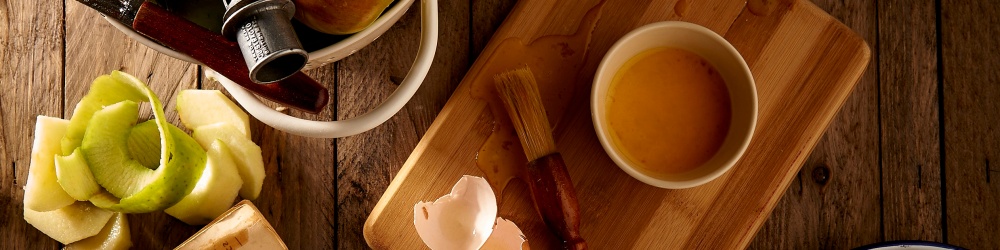
Although the modern lifestyle had attracted the tradition of “having food on the go” ranging from well wrapped portable sandwiches, cupcakes, tarts, salads to mention a few; portable pies were in existence since ancient times. Popularly known as “turnovers”, these portable pies were made by placing a filling on a piece of dough, folding the dough over, sealing, and baking it. Made sweet or savory, “turnovers” are often made as a sort of portable meal or dessert, similar to a sandwich; had for breakfast, snacks, desserts or quick picnics. From being baked to fried, fillings include fruits (apples, blueberries and cherries), meats ( chicken, beef and pork), vegetables (sweet potatoes, carrots, peas), eggs or even cheese. Specialty versions are made with fillings of wild rabbit and leek.

Traditionally turnovers are usually sweet, with popular pastry being the classical puff pastry. Known as sweet tarts initially, the term turnovers had come to reference around the eighteenth century. Made then as a sort of small, typically individual pie or pasty, in which the filling is placed on one side of a piece of rolled-out pastry and the other side is then turned over’ to cover it, forming a semicircular shape (Sporting Magazine, 1798).

Though these “turnovers” may have been there across different cuisine, albeit under other popular names. From the empanada of South and Central America (mixture of chopped meats, hard-boiled eggs, minced vegetables, olives, raisins, highly seasoned), the Russian pirozhki (meat, fish, cabbage, mushrooms or cheese), the famous Cornish pasties (large turnovers filled with beef, onions, turnips), Chinese dimsum (meat, fish, vegetables), Indian Samosas (chickpeas, potatoes, spices), Polish Pierogies, Middle Eastern Sanbousic (cheese and dill) and the Greek Spanokopitas (fillings of spinach, cottage and feta cheese with olives) are few among the many “global turnover” choices to experiment with as “quick meals or snacks” on the go.

With arising global popularity, little wonder then Turnovers have their own days. To mark celebrated food days of the National Apple Turnover Day (July 5th) as well as the World Chocolate Day (July 7th), sweet apple turnovers drizzled with chocolate may be a good way to mark them. For kitchen chefs, experimenting with turnovers may be a change from the regular desserts or savoury versions can be stuffed with meat leftovers, vegetables or just sweet fillings, depending on the mood of the hour. From sweet, savoury to spicy or cheesy; “turnover pies” have a variety of taste to offer, besides being a “quick solution” for sudden brunches, high teas or simply cravings.