Posted in Daily, Family and Society, Life, Personal Musings, poetry, Quotes

Power of the “Little Things”

“Success in life is founded upon attention to the small things rather than to the large things; to the every day things nearest to us rather than to the things that are remote and uncommon.” Booker T. Washington

Of the many attributes that binds man, family, friends, community and neighbourhood in general, is the art of paying attention. Simply put, the secret of happiness, love, respect and kindness have a common subset of “attention”.

“Give whatever you are doing and whoever you are with the gift of your attention.” Jim Rohn

Excellence at work or the chosen field, lies in the art of doing it well and as per the targets or goals set. All this would be void without due attention being paid to each and every aspect.

Time spent for family and children can be sought only when attention is paid to what may seem trifle things, but can make the daily grind seem lighter. For instance, putting the breakfast dishes in the sink, putting toys on the play corner only, soiled clothes in the cloth basket (not on the floor) may seem trivial, but when done properly echoes to the other person that one does care.

Patiently listening to a colleague’s woes. Forgotten calls replied when possible. Due help given whenever possible, especially when requested. Being around for hospital visits with parents, as they grow old. Though these may seem trivial at that moment; for the other person it means big.

“Attention is vitality. It connects you with others. It makes you eager. Stay eager.” Susan Sontag

As far as family, friends and loved ones go; actions do speak louder than words. The essence of love, respect and kindness isn’t reflected in the big things, but the small things of life, that really matter the most. To seek happiness of home, family, friends or community is in the individual minutes of small, quickly forgettable pleasures of a hugs, smiles, kind look, heartfelt compliment and countless small, but kind thoughts and sincere feelings, all arising when one pays due attention to those who around them. Love, kindness, joy and peace also need their daily bread.

“I love you” in the family vocabulary.
Sounds in other kind words:
“I will hang the linen myself on the balcony”,
“Let’s go on a holiday to the dacha to mother”.

“Cool, dress warmly”,
“Let the angels lead you everywhere”,
“Didn’t work out this time? Come on bolder!”,
“Get some sleep, I will wash the dishes in a flash”.

We sometimes do not notice much, The
most important thing is not grasping the essence,
With honeyed tea served in bed,
“I love” and the native people say.

Inna Kucherova (Translated to English)

Posted in Daily, Family and Society, Life, Quotes, Reflections, Stories Around the World, Work

Leave the Perch

“We cannot become what we want to be by remaining what we are.”- Max DePree

Holidays or long weekend breaks are not just a break from work to relax, but serve as a platform to engage with family, friends and neighbours. In the process of “engagement”, one always learns something new. With children, it’s often a tussle of learning to play the game or sport of the time, get theatrically busy with home productions or simply explore the outdoors with them, the nature’s way. An impromptu gathering of neighbours, friends or family brings “the experimental chef” mode back on, brushing up on the music, instrument or dancing skills among others. Time off from the daily schedule of work, involves indulging in the bucket list or wish list ranging from new hobbies, adventure sports or seeing new places.

“Life begins at the end of your comfort zone.” Neale Donald Walsch

The underlying common essence of holidays is to step beyond the regular zone and try something new. We all need our own zones to be comfortable, sane and happy. Our zones should be like a second skin, protecting us as well as helping us to remain happy. Yet when the zones become too familiar, mundane or deteriorating into a rut; it’s time to get moving and re-frame the environment, mind and oneself.

“Inaction breeds doubt and fear. Action breeds confidence and courage. If you want to conquer fear, do not sit home and think about it. Go out and get busy.” Dale Carnegie

Life is like a big canvas. The picture we paint can’t be done by staying in one frame for so long. When the branch one is perched, obscures the view ; then it’s time to leave it and fly to another. Flitting around will never get us anywhere, but staying on one perch will neither be of any use. Attempting to invest time, discipline, self effort and will to improve oneself will benefit the lives that we lead, to be one of enrichment than mediocrity. Dream right to fly and step out of the “comfort zones” that one is often shackled to, by free will and choice. There’s a big world out there to live, experience and see; and time always has a mind of it’s own.

“The best piece of advice someone has ever given me was ‘do it scared.’ And no matter if you’re scared, just go ahead and do it anyway because you might as well do it scared, so it will get done and you will feel so much better if you step out of your comfort zone.” Sherri Shepherd

The Falcon and the Branch

Once a king received two magnificent peregrine falcons as a gift from one of his vassal state. They were the most beautiful birds he has ever seen. Though the Falcons were still quite young at the time, they were beautiful specimens groomed for keeping in his court specifically. The king called the head falconer and handed the two beautiful birds to be trained. The falconer trained the birds for months. But one day the falconer informed the king that one of the falcons was flying and soaring high in the sky while the other has not moved from its branch since the day it had arrived.
“I’ve never come across a bird as stubborn as this before,” the trainer complained to the king. He went on to describe how the creature ignored, refused and stubbornly lashed out at his every attempt. “May be there is something wrong with this bird. It just won’t fly.”said the trainer. The falconer was one of the best in the land, his talents widely lauded by all who knew him. So, the king decided to give the trainer some more time to make the bird fly. Months passed but the falcon never moved from the branch. The kings summoned all healers, sorcerers and other trainers from all the land to make the falcon fly. But none of them succeeded and the bird did not move from its perch.

One day a farmer was passing by the palace and heard about the stubborn falcon who wouldn’t fly. He thought he would give a try to make the bird fly. Having tried everything else, the king was desperate to make the bird fly, so he allowed the farmer attempt to make the bird fly. The next morning while the king was thrilled to see the two magnificent birds soaring high in the sky from his balcony. The king did not witness the feat himself, so he had the farmer brought before him to answer to his questions.

“I would like to know your secret,” the King said. “Tell me, how did you, achieve what the most highly trained, intuitive and wise men could not? How did you make the falcon fly?”
The farmer peered up from beneath his brow. “It was actually quite simple, your highness. I just cut the branch on which the bird was perched.”

We all are made to fly. But at times we we sit on to our branches, clinging to the things familiar to us and never attempting for a change. The possibilities in the world are endless, but most of it remains undiscovered because we never attempt to go beyond our comfort zone. We conform to the familiar, the comfortable, and the mundane. We need to go outside of our comfort zone, destroy the branch of fear we cling to and free ourselves to the glory of flight!

“Be willing to step outside your comfort zone once in a while; take the risks in life that seem worth taking. The ride might not be as predictable if you’d just planted your feet and stayed put, but it will be a heck of a lot more interesting.” Edward Whitacre, Jr.

Posted in Daily, Food, Photography Art

Cooking to Culinary Arts

“Tell me what you eat, and I will tell you what you are.” Jean Anthelme Brillat-Savarin

For most gastronomes, culinary specialists, chefs, nutritionists as well as home cooks, food being cooked, served or even eaten reflects a lot of the “mood within”. For instance, if one is extremely tired after a long day, the easiest meal to make in a jiffy for a home cook is pasta and cheese followed by ice cream for the sweet end. On the other hand, to mark any special occasion, the requirement of a full three course meal (salad or appetizer, main course and meat) completed by a splendid (if not necessarily elaborate) dessert is a must. When in an angry mood, every chef at heart will go with their inner basic meal, not tuning to art of the eye, but just ensuring that the basic taste is palatable. Too irritated or bothered to cook, it will be pizza or “Chinese order” on the house. And when the mood is sad, it will be the comfort food , homemade, with a striking resemblance to one’s childhood or mother’s style, or the fast food version.
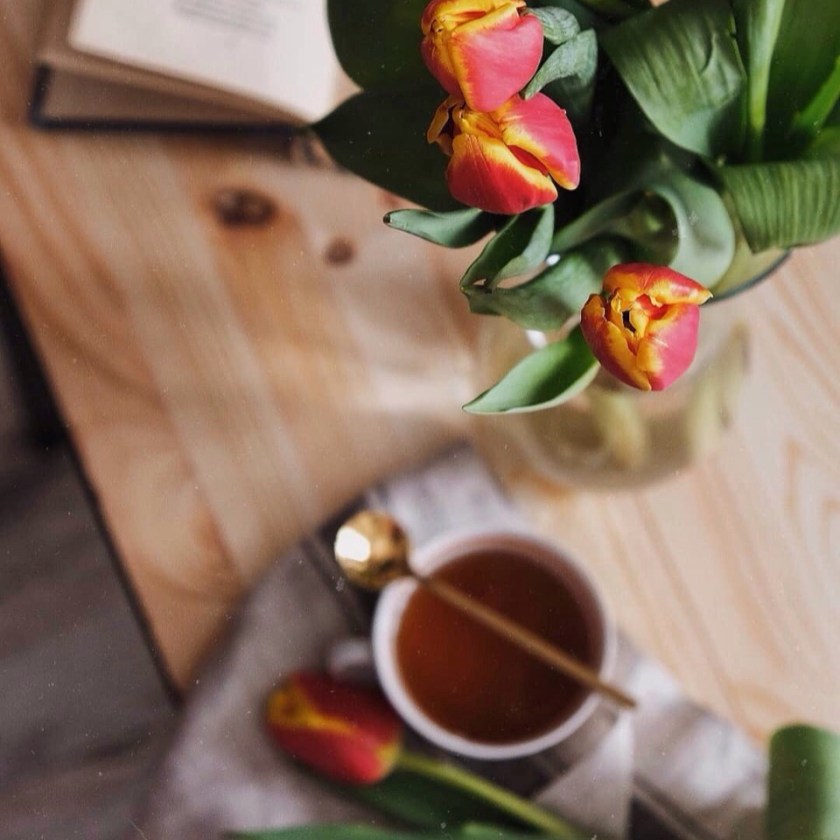
“The preparation of good food is merely another expression of art, one of the joys of civilized living.” Dione Lucas

Essentially, cooking is a very sensitive art. While one mayn’t have the intensive training or qualification to be a chef of Michelin three or five star rated restaurant, but if one can make a complete wholesome meal for self, family and friends, that alone is enough. In fact, cooking is an expression of love. For every ingredient which balances the meal, it is a reflection of the care, precision and the basics of science behind it.

“Anybody can make you enjoy the first bite of a dish, but only a real chef can make you enjoy the last.” Francois Minot

The “effective cooking” of today, is a balance of food and fun, of taste, experimentation and readily available ingredients. While baking involves following the written or “handed down” instructions to the point; cooking involves a little experimentation of ingredients, spices as well as art. The evolution of cooking into “culinary arts” over the years, has resulted in a whole new range of varied dishes blended together with taste, nutrition, quality, tradition, serving, managing as well as visual presentation to complete the effect.

“The discovery of a new dish confers more happiness on humanity, than the discovery of a new star.” Jean Anthelme Brillat-Savarin

Entering into the month of “culinary arts” (July); the professional cooks and chefs who bring innovative cuisine from their kitchens to our tables every day are being recognized not just for their talent but devotion as well as contribution to cooking as an art form. For the home cook to experiment with technique and style, vast differences can be made by the order of adding the ingredients, plating as well as trying and blending the new recipes with the old ones. To start off, experimenting in small amounts can be tried. While most of the time, home cooking involves the regular, to celebrate this month, it would be good to plate the regular different or try something new altogether. For every cook, is indeed a chef with a hidden artistic side.

“Culinary tradition is not always based on fact. Sometimes it’s based on history, on habits that come out of a time when kitchens were fueled by charcoal.” Alton Brown

“In the abstract art of cooking,
ingredients trump appliances,
passion supersedes expertise,
creativity triumphs over technique,
spontaneity inspires invention,
and wine makes even the worst culinary disaster taste delicious.”
Bob Blumer

Posted in Daily, Family and Society, Life, Personal Musings, poetry, Quotes

Effect of a Smile

“I love those who can smile in trouble, who can gather strength from distress, and grow brave by reflection. ‘Tis the business of little minds to shrink, but they whose heart is firm, and whose conscience approves their conduct, will pursue their principles unto death. ” Leonardo da Vinci

After work , one longs to put their feet up, shift the day’s tune and just delve into a different frame of the mind. In a home with kids and family, doing so may be little difficult. Very often, when stepping into the house or picking up kids from their different activities, one longs for some quiet. Yet a child’s smile changes everything and puts the mood into a different beat and rhythm. On seeing the smile of a toddler, one is reminded of the little joys and happiness in life as well as how precious that little action is. A smile indeed can change the world.

“Nobody needs a smile so much as the one who has none to give. So get used to smiling heart-warming smiles, and you will spread sunshine in a sometimes dreary world.” Lawrence G. Lovasik

A difficult day. Smile and the mood shifts, solutions crop up and the stress fades.

When facing mental hurdles. Smile and hand over the stress into His Hands.

Plagued by worry, doubt, insecurities and impatience. Smile to let go and embrace the present, facing each day by the hour, minute and seconds as they come by. Smile, lift up the inner spirit, stay strong and strive.

“Children show me in their playful smiles the divine in everyone. This simple goodness shines straight from their hearts and only asks to be loved.” Michael Jackson

The only rule to follow when one smiles; is to smile from the heart, honest, sincere and warm. Smile with hidden intent, plastic kind or while harbouring ill, does more harm to the “doer” than the receiver. Smile like a child from within to stay happy, calm and at peace.

The Smile

There is a Smile of Love
And there is a Smile of Deceit
And there is a Smile of Smiles
In which these two Smiles meet

And there is a Frown of Hate
And there is a Frown of disdain
And there is a Frown of Frowns
Which you strive to forget in vain

For it sticks in the Hearts deep Core
And it sticks in the deep Back bone
And no Smile that ever was smild
But only one Smile alone

That betwixt the Cradle & Grave
It only once Smild can be
But when it once is Smild
Theres an end to all Misery

– William Blake

“I’m a firm believer in smiles. I used to believe that everything had to be a belly laugh. But I’ve come to realize that a real sincere smile is mighty powerful.” Roy Clark

Posted in Christian, Daily, Family and Society, Life, Stories Around the World

Of Request and Trust

“Do not be anxious about anything, but in every situation, by prayer and petition, with thanksgiving, present your requests to God.” ( Phillipians 4:6)

From the very early years of childhood, the concept of prayer has been taught, explained and seen. Through the Scriptures, prayer has been a form of request, supplication, thanksgiving, forgiveness, help and many more. Prayer is the way in which one puts their complete trust and faith in His Love, His Guidance, His Mercy as well as ask for His Hands to be over us at all times.

“But you, Lord, do not be far from me. You are my strength; come quickly to help me.” (Psalm 22:19)


Yet man being man, the innate nature of trying to control every outcome to his own plan and purpose, little realizing or often forgetting that we ourselves are a part of His Plan. In fact, our lives are such that whichever way we go or whatever purpose or aim we try to reach, unless it is governed by His Will, all attempts or successes are in vain and in the long run, come to naught.

“I pray that out of his glorious riches he may strengthen you with power through his Spirit in your inner being.” (Ephesians 3:16)

While man tries to define everything by rational thinking, controlling of the causes and nurture by evidence based principles, put on the armour of reasoning, facts, logic and proved theories; not all things happen by those clauses. Many a time, one is forced to revise the “proved” of find a reason to define the change. In stead, when one learns to combine these facts, logic and realism with faith in the His Will, one eventually realizes that good things do happen at His right time. Doing so, in the long run, the final outcome may be beyond our wildest expectations. One needs to work and pray, doing their own share of effort, burning one’s own energy and sweat for their purpose or aims in life; but always request in prayer to let our will be in accordance with His Will and His Purpose. When one starts putting this ideology in practice, one discovers that this path will be difficult. For to live by the principles of both Faith and Trust is never easy; yet the final fruit goes beyond one’s own imagination.

“It is God who arms me with strength and keeps my way secure.” (Psalms 18:32)


One monk planted an olive tree and began to pray: “Lord, send rain to my tree.” And the Lord sent rain upon the earth. The tree was saturated with moisture, and the monk continued to pray: “And now, Lord, I ask you to send a lot of sunshine – my tree needs warmth.” And the Lord sent the sun. The tree grew. The monk continued to pray for him: “Lord, send a little frost to strengthen the roots and branches.” The Lord sent a frost and …. the tree died. The monk was very upset. He went to another monk to tell his story and share sorrow.

“I also have an olive tree, look,” another monk replied. His tree has grown beautifully. “But I prayed differently. I told God that He is the Creator of this tree and knows better what is needed for him. I just asked God to take care of him.”
This also applies to us. We often ask for what we think we need. But only the Lord knows what we need. Trust Him completely!
– Rus Svyataya

“If anyone speaks, they should do so as one who speaks the very words of God. If anyone serves, they should do so with the strength God provides, so that in all things God may be praised through Jesus Christ. To him be the glory and the power for ever and ever. Amen.” ( 1 Peter 4:11)


Posted in Daily, Food, Stories Around the World

Mix Them as “Mock” or “Cocktails”

One of the social necessities of being a part of a bigger, corporate or franchise based workforce, is attending the social or business social networking, popularly under the banner of “cocktail” evenings. At times, the conversations are silently laced with hunger pangs after a long day or the stress of the day filtering through the thoughts, which can be quite dangerous especially when thoughts and words don’t really gel well with the situation. While primarily the whole purpose is to extend the social “work based” or business connections, one can hardly ignore the “hors d’oeuvre” or appetizers as well as the baseline of the gathering, “cocktails or mocktails”.

“If it’s a cocktail party, I generally make five or six different things, and I try to choose recipes that feel like a meal: a chicken thing, a fish or shrimp thing, maybe two vegetable things, and I think it’s fun to end the cocktail party with a sweet thing.” Ina Garten


While the inventor of the cocktail evenings is quite a controversial topic, with some believing it to be Alec Waugh of London or Mrs. Julius S. Walsh Jr. of St. Louis, Missouri (May 1917). The former had detailed that the Alec Waugh noted that the first cocktail party in England was hosted by war artist Christopher Nevinson (1924) while Mrs. Walsh invited 50 guests to her house on a Sunday at high noon for a one-hour affair. The St. Paul’s Pioneer Press newspaper had declared that “The party scored an instant hit,” and stated that within weeks cocktail parties had become “a St. Louis institution”.

“A cocktail done right can really show your guests that you care.” Danny Meyer

Whether purely alcoholic or fruit based, a cocktail is essentially both palate satisfying as well as a work of “art”. As defined, “cocktail” is an alcoholic mixed drink, which is either a combination of spirits, or one or more spirits mixed with other ingredients such as fruit juice, lemonade, flavored syrup, or cream. Technically it contains alcohol, sugar and a bitter or citrus. While there are various types of cocktails, based on the number and kind of ingredients added; their origins are debated.


Also, when a mixed drink contains only a distilled spirit and a mixer, such as soda or fruit juice, it is a highball. When it contains only a distilled spirit and a liqueur, it is a duo. On adding a mixer to the duo, it becomes a “trio”. The additional ingredients may be sugar, honey, milk, cream, and various herbs. Mixed drinks without alcohol that resemble cocktails are known as “mocktails” or “virgin cocktails”.

“A cocktail can be made by the bartender. But the cocktail also can be made by the chef.” Jose Andres

The first use of the term “cocktail” is highly debatable. As per The London Telegraph, a satirical newspaper article (March 20, 1798) about what must have been a hell of a party had accounted the drinks imbibed by William Pitt (the younger) which included “L’huile de Venus,” “parfait amour,” and “‘cock-tail (vulgarly called ginger.)’” The challenge was whether “cocktail” in this article truly referred to an alcoholic drink, or something else. Another record was the article from The Farmer’s Cabinet ( Vermont, April 28, 1803), where to drink a cocktail was claimed to be “excellent for the head.” By 1806, the word “cocktail” had reached it’s current meaning as defined by the newspaper, Balance and Columbian Repository( May 13, 1806), the editor defined a cocktail as: “a stimulating liquor composed of spirits of any kind – sugar, water, and bitters.”


The exact derivation is attributed to multiple origins. One origin of “cocktail” is as a mispronunciation of the French word for eggcup “coquetier” (said as cocktay in English). In the late 18th century, apparently Antoine Amédée Peychaud, a New Orleans apothecary and inventor of Peychaud bitters had served brandy mixed with his bitters in eggcups. The second belief states that the name is derived from the term “cock tailings,” which was the practice of tavern owners combining the dregs (tailings) of nearly empty barrels together into a single elixir that was sold at bargain prices. In those days, the spigot of a barrel was sometimes referred to as a “cock.” Another reference was from the “cock tail” of regular “adulterated” horses entered into the races with the thoroughbred horses of docked tails, which during the early 17th century. As Liquor and races go hand in hand, this theory states that “mixed or adulterated drinks” were likened to the “cocktail” of the regular ( non-thoroughbred) horses in the race.

Whatever and however the origin may be, from mocktail to cocktails, the evenings for social or business purposes need them to keep the conversations flowing, mixing work with comparatively less stress of the regular work schedule. With summer in full swing, it would make these occasions more entertaining as well as in demand.


Posted in Daily, Family and Society, Life, Personal Musings, Quotes, Work

Restrain these “Feelings”

Delays not informed on time. Incomplete reviews and assessments. Incorrect information when collected and submitted. Snide remarks by colleagues, peers, juniors or seniors.

Regular parking spot occupied. Litter thrown on the sidewalk next to home. Incessant traffic queues caused by vehicles cutting in between. Grocery carts all used up and none empty. Regular groceries out of stock.

Socks on the floor. Dirty dishes in the sink. Laundry done with all colours mixed up. Bed not made. Toys all scattered on the floor. Mud tracks into the hall and kitchen.

One may be faced with some, few or similar situations as above, wherein the temperament has been sorely tested and one is struggling to rein in the anger and bitter words of resentment. In fact. these kinds of “irritation” is quite common. Each one of us at some point of our lives may have faced them, in some manner or the other. While the temptation to lash out and vent the bitterness, frustration and anger bred out the irritation is compelling; little do we realize the ramifications of indulging in so.

“The one who cannot restrain their anger will wish undone, what their temper and irritation prompted them to do.” Horace


Irritation in fact is one of the manifestations of bitterness, discontent and underlying pride or expectations that one’s words will always be followed. While “irritation” at times may be justified or understandable, keeping it in check will reveal the true character and personality within. If truth be told, with constant irritability, we devalue our work.

“I get irritated, I get upset. Especially when I’m in a hurry. But I see it all as part of our training. To get irritated is to lose our way in life.” Haruki Murakami

Each one of us has their own share of trials, misfortunes, difficulties, struggles, insecurities as well as stress. All the talk of love, kindness and humaneness is lost, unless one learns to understand and accept the differences of the other. What makes one different is when we learn to control the “irritation”.

” As a human being, anger is a part of our mind. Irritation also part of our mind. But you can do – anger come, go. Never keep in your sort of – your inner world, then create a lot of suspicion, a lot of distrust, a lot of negative things, more worry.” Dalai Lama


Controlling the irritation when one is over worked, stressed and trying to meet deadlines isn’t easy. But once we learn to breathe and let go; the next time it won’t be difficult to do so. In fact, that’s how one gets the hang of de-stressing the mind and not letting inconsequential things affect it. Even though things may go out of hand, getting irritated would never help. Instead facing the problem ahead and outlining the solution does wonders.

“If someone irritates you, it is only your own response that is irritating you. Therefore, when anyone seems to be provoking you, remember that it is only your judgment of the incident that provokes you.” Epictetus

The best memories, things or even feelings of life are never easy to attain if we constantly hang on to the emotional stress at each point of time. Learning to be gentle, less expectant as well as more patient will weed out the “irritation”, helping us to reduce the dreary days as well as the turbulent negative that may completely swamp us. Life is simple, once we learn to chose the most important things that it offers us.

“If you are irritated by every rub, how will your mirror be polished?” – Rumi