Posted in Daily, Family and Society, Life, poetry, Quotes, Reflections

Facing the Day Ahead

“Love yourself. It is important to stay positive because beauty comes from the inside out.” Jenn Proske

One of the most difficult tasks face especially when juggling between career and family is enjoying life along the way. One of the common scenarios faced in many homes  from dawn to dusk, includes checking off each activity off the list as a part of the routine job, making sure that everything is on time as per the schedule and above keeping things together. Along the way, the worries build up, stress accumulates and one is always constantly “at the list or schedule” looking for the next thing to do.

Many a time, we fail to enjoy the atmosphere at home, with family or even at work. Consequently we often fail to enjoy the happiness which is silently waiting at hand. Balancing is never easy, which is why unless we stick a few facts into our minds, living each day would be in a mundane manner, unknowingly breeding the stress within and cutting off our chances in living life as well as cherishing time and making moments and memories.

“Learn to enjoy every minute of your life. Be happy now. Don’t wait for something outside of yourself to make you happy in the future. Think how really precious is the time you have to spend, whether it’s at work or with your family. Every minute should be enjoyed and savored.” Earl Nightingale

Mistakes do happen. No one is perfect in each and every walk. Know this and let go. Try but enjoy. Worry but don’t overdo it. Give effort, time and God a chance.

Time is precious but so are memories. Spending time with loved ones may mean incomplete yard work or laundry done late or the like; but decide and prioritize. Few things in life that always run it’s due course irrespective of anything is time and age. They always go on.

Schedules do matter, but hand in hand with priority. Going to work on time, making our children reach the school on time and getting for the day as well. Yet prioritize and plan ahead. While one may make leeway for delayed or extra time, it mayn’t happen. Then improvise and modify. Getting stressed, losing the presence of mind or ranting and grumbling never works out. In fact, we lose more time and add to the inherent stress; not solving anything but adding to it. Stay calm, breathe and think. Life will go on.

” Learn to get in touch with the silence within yourself, and know that everything in life has purpose. There are no mistakes, no coincidences, all events are blessings given to us to learn from.” Elisabeth Kubler-Ross

Let’s live, love and wonder,
Let’s believe, remember and regret,
From happiness to cry, laugh heartily
Let’s live, so as not to grow old in our hearts.

Let’s just admire the Fields,
the sky, the silver of the dew,
And if it is difficult, still do not give up –
Go ahead without lowering your head.

Let’s be sincere in communication,
Honest in words, deeds and deeds,
Let’s believe, holy, without doubts
To live in vain, openly, not in dreams!

Let’s honestly admit
In your mistakes, envy and lies,
Let’s live, love and admire –
Spread your wings with your soul!
– Rus Svyataya

Posted in Daily, Food

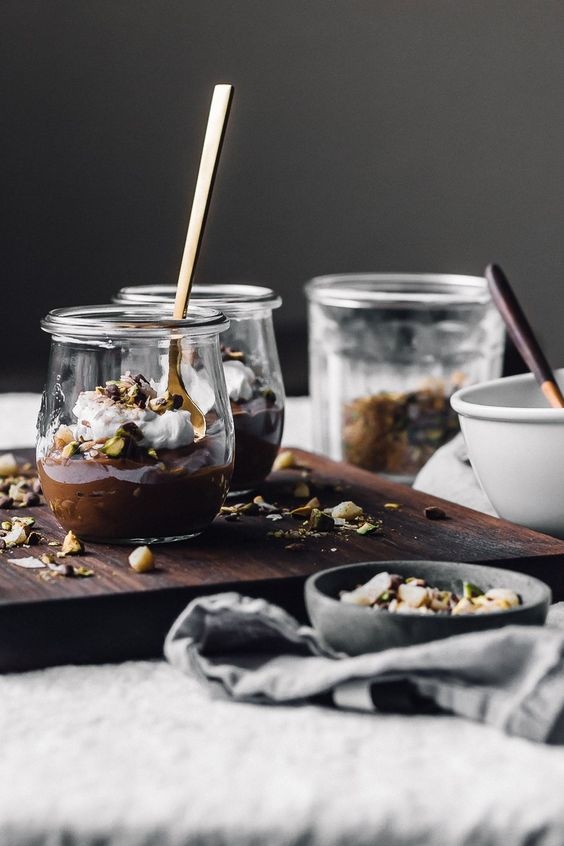
Puddings..of Chocolate and More

[1730]
“Chocolate Puddings. To a Pint of Cream take eight Eggs, the Whites of four, beat them well together, and mingle with your Cream; put in some Nutmeg, Cinnamon, and Ginger, a quarter of a Pound of Naples Bisket, and a quarter of a Pound of Chocolate grated very fine, put in a little Orange-Flower Water, and a little Citron minc’d; mingle it mighty well together, and if you bake it, put a Sheet of Puff-paste in your Dish, and raise a little Border in the Rim, put in your Pudding and cross-bar it, and ice it with thick Butter and Sugar, and bake it in a gentle Oven, and when bak’d serve it away, or you may boil it if you please.”
—The Complete Practical Cook, Charles Carter, facsimile 1730 edition [Gale Ecco Print Edition:Detroit] (p. 106)

One of the highlights of having warm weather is when impromptu visits are possible, especially on chance meeting of old friends or neighbours. With plenty of delivery services available at ” the fingertips or touch of thumb pads”; it’s often the desserts that need to be made or created in a jiffy. Which is why, certain desserts especially custard, ice cream, puddings to name few easy ones are one of the necessary knows for every “fledgling” cook.


One of the easiest desserts to make with the ingredients of cornstarch or flour, cream, milk, butter and vanilla for the most simple and basic puddings. Adding in cocoa, bananas, battered breadcrumbs and even eggs are the small variations that make an entirely new recipe and flavour of the “new pudding”. Few “pudding pointers” to keep in mind include:

  • Although easy to make, complete and whole attention is required from making the batter to setting it to chill or baking it.
  • Constant stirring is needed while cooking the pudding to avoid lumps or burning.
  • The flavours, texture and consistency is very adaptable, so don’t be afraid of experimenting.
  • Make sure the flour is sieved properly because no matter how it is whisked, if the flour is not smooth it will give you a lumpy texture.
  • To store it, cover it with a plastic wrap to avoid the formation of a layer. The same applies while chilling the pudding too.
  • For baked puddings, grease the tin with butter and then refrigerate it for few minutes. This will form a layer and avoid it from sticking to the base.


With National Chocolate Pudding Day tomorrow, one can go a step further with whole or shots of “pudding cakes” or “pudding shakes” with whipped cream, sprinkles and M &M’s to add on; not to forget the ice cream too.

“Life’s a pudding full of plums.” 
W.S. Gilbert (1836-1911)


Posted in Daily, Family and Society, Life, Personal Musings, Quotes, Stories Around the World, Work

“Dreams” Grounded in “Reality”

As children, one of the most common essay topics was to write about what we wanted to do in our lives, our dreams, aims and visions of our lives in the future. Ranging from being an astronauts to travelling around the world or being a chef or baker par excellence, the possibilities were endless.

“Be careful what you water your dreams with. Water them with worry and fear and you will produce weeds that choke the life from your dream. Water them with optimism and solutions and you will cultivate success. Always be on the lookout for ways to turn a problem into an opportunity for success. Always be on the lookout for ways to nurture your dream.” Lao Tzu


As we grew older, practicalities marred by realism as well as distractions and disappointments tempered by changing dreams set in. Along the way some changed their dreams, few lost them and some of us held onto them. As we nurtured the dreams and made them big, at times we lose the touch of reality and get dejected by the disappointments and setbacks. Life always has its’ own curve-balls that it often yields. It’s how we tackle them that makes one’s dream grow strong and live on.

“It does not do to dwell on dreams and forget to live.” J.K. Rowling

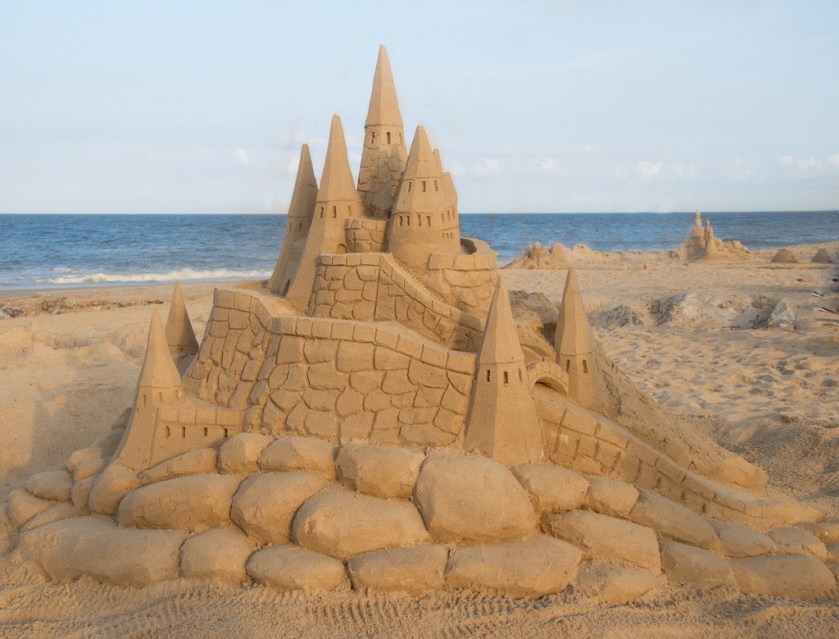
Very often, the dreams of childhood are like the sandcastles, that we build as children. As we strengthen the fortress with walls and moats, having most fun by building and creating with sand; deep inside one knows that eventually everything has the possibility of being washed down by the sea. Though one knows that all can be gone with a wave, we still build the sandcastles on the beach, for that is the fun of playing with the sand.

“Dream becoming reality runs like water between the fingers.” Willem Elsschot


Likewise when dreams are there deep inside, one should try to make them come true; nurturing them slowly, not losing hope, letting them build their roots strong, knowing that all dreams do come to an end or branch out in a different turn. Doing so will help us face life, so that as and when life takes it’s due course, one stays happy within both in the heart, mind and soul. Dreams are meant to be build and strengthened, but unless one enjoys the process of building and living the dream, there’s no point in chasing them.

“When you have a dream that you can’t let go of, trust your instincts and pursue it. But remember: Real dreams take work, They take patience, and sometimes they require you to dig down very deep. Be sure you’re willing to do that.” Harvey Mackay


Just as the child on the beach building life size castles becomes an engineer in real life. However on growing up and living the dream as an engineer or builder by career doesn’t merely involve juggling paperwork, new assignments, delegating the work or signing new contracts and raising new projects as well empires of financial investment, profits and capital gains; but also to enjoy the art of building them. Instead one is often submerged by the amount of stress, financial hurdles or losses as well practical constraints; such that one forgets to enjoy the gift of home, family, relationships, joy, life and talent given to each one of us. On building dreams, staying grounded in reality helps one to not only to achieve them better but aids to live life to the fullest in the process.


On a warm summer day at a beautiful beach a little boy on his knees scoops and packs the sand with plastic shovels into a bucket. He upends the bucket on the surface and lifts it. And, to the delight of the little architect, a castle tower is created. He works all afternoon spooning out the moat, packing the walls, building sentries with bottle tops and bridges with Popsicle sticks. With his hours of hard work on the beach a sandcastle will be built. In a Big city with busy streets and rumbling traffic, a man works in an office. He shuffles papers into stacks, delegates assignments, cradles the phone on his shoulder and punches the keyboard with his fingers. He juggles with numbers, contracts get signed and much to the delight of the man, a profit is made. All his life he will work. Formulating the plans and forecasting the future. His annuities will be sentries and Capital gains will be bridges. An empire will be built.

The two builders of the two castles have very much in common. They both shape granules into grandeurs. They both make something beautiful out of nothing. They both are very diligent and determined to build their world. And for both, the tide will rise and the end will come. Yet that is where the similarities cease. For the little boy sees the end of his castle while the man ignores it. As the dusk approaches and the waves near, the child jumps to his feet and begins to clap as the waves wash away his masterpiece. There is no sorrow. No fear. No regret. He is not surprised, he knew this would happen. He smiles, picks up his tools and takes his father’s hand, and goes home.
The man in his sophisticated office is not very wise like the child. As the wave of years collapses on his empire, he is terrified. He hovers over the sandy monument to protect it. He tries to block the waves with the walls he made. He snarls at the incoming tide. “It’s my castle,” he defies. The ocean need not respond. Both know to whom the sand belongs.

“Go ahead and build your dreams, but build with a child’s heart. When the sun sets and the tides take – applaud. Salute the process of life and go home with a smile.”


Posted in Christian, Daily, Life, Personal Musings, poetry, Quotes

Midsummer…Another Chance

“Oh, the summer night,
Has a smile of light,
And she sits on a sapphire throne.”
– Barry Cornwall

With midsummer this weekend, the knowing that summer is coming to a close is acknowledged deep inside. Change is always happening, either in small degrees or in mighty moves. All the same, it’s the aftermath and the consequences that highlight the events.

While Midsummer is celebrated as the longest day of the year as the Summer Solstice; it has a rich history of centuries old tradition especially in the Northern Hemisphere as a time for community based festivals and bonfires as well as the feast day of the early Christian martyr St. John the Baptist.


As the Christian community prepares to commemorate this day, neighbourhood and community as well as the Church prepares for the feast if St. John. The 4th century A.D. Christian Church had established this day, in honour of the birth of the Saint John the Baptist, which as recorded in the Gospel had been six months before the birth of Christ. Accordingly the Feast of Saint John (Saint John’s Day) was celebrated at midsummer, exactly sixth months before the nativity. additionally as St. John prepared the way before Christ, his words “He must increase, but I must decrease”( John 3:30) is symbolized by the fact that the “sun begins to diminish at the summer solstice and eventually increases at the winter solstice.”

Marked by varied traditions and celebrations around the globe like processions of ships down the Danube (Austria), quadrilha of Brazil, light great fires (Canada), maypole dances (Sweden for instance) to list a few; midsummer is marked by highlighting the life and plays on St. John the Baptist as well as celebrations of fireworks, bonfires and dances. The pre-Christian Era had seen similar celebrations, primarily as a pagan ritual as well as marking the end of the summer farming season.

“In summer, the song sings itself.” William Carlos Williams


Midsummer, this year brings to mind, the fact that six months will be soon gone by. Has the time passed been of “inner value or gain” for one’s betterment ? Has the time gone by, resulted in the growing of the True Path and His Way within; or are we still clamoring for material gains and worldly pleasures ? The answer is need for one’s self alone and not for the appeasement or gratification of others. Once we realize the truth, making the change soon would be better before the year comes to an end by it’s own time.

“Peacefully
The quiet stars came out, one after one;
The holy twilight fell upon the sea,
The summer day was done.”
– Celia Thaxter


“It is God in the house when the curtains lift gently at the windows, and a young child sucks his itching gums.
We do not understand the mysteries of God.
God the winter. Summer, Septembers.
Moody dark tones of fathers dying.
The splash and laughter.
Children playing.”
– Ellease Southerland

Posted in Daily, Food, Stories Around the World

“Canna” with the “petite duchesse”

Ever had “flashes of lighting” alongside “tubes of rich goodness” ? If the answer is in the negative or a query; with the month of June nearing to an end, it would be a good time to take up on the celebratory days of the éclair (choclate éclair, to be very specific, June 22nd) as well as the cannoli (June 16th), respectively. With the local deli’s and bakers’ going on full swing of celebratory discounts as well as interesting combinations to mark these days for foodists; delving a little bit into their food history would be quite interesting.

Originating from the 19th century France, also known as sweet baguette, an éclair was an oblong pastry made with choux dough filled with a cream and topped with chocolate icing. Typically piped into an oblong shape, the dough is baked until it becomes crisp and hollow within. When cooled, the pastry can be filled with a wide range of flavours, like vanilla, coffee or chocolate-flavoured custard (crème pâtissière), with whipped or chiboust cream and then iced with fondant icing. More exotic fillings include pistachio and rum flavoured custard, fruit-flavoured fillings or chestnut purée. If the icing is of caramel, the dessert is known as “a bâton de Jacob.”

Etymology speaking, the pastry title comes from French éclair “flash of lightning”, named so because it is eaten quickly (in a flash). Initially known as “pain à la Duchesse” or “petite duchesse” til the 1850. Towards the 1860s the word eclair took over, both in English and French. Historically the speculation was that this little delight was first made by Antonin Carême (1784–1833), the famous French chef of grande cuisine.

“Leave the gun. Take the cannolis.” Clemenza, in ‘The Godfather’

Moving across to the Sicilian and the Italian-American cuisine, delicate “tube-shaped shells of fried pastry dough”, usually with a sweet, creamy filling (most commonly containing ricotta) have been quite popular especially in the island of Sicily. Known as “cannoli”, they range from sizes of cannulicchi (smaller than finger sized) to the fist-sized proportions typically found south of Palermo, Sicily, in Piana degli Albanesi.

With its roots tracing back to the Middle Ages; this best known Sicilian pastry takes its’ name “cannolo (cannoli in English)” from the long tubular shape, as a diminutive of canna (a cane like reed) like sugar cane stalk. Back in the ninth centruy, Arabs had introduced sugar cane into the Sicilian cooking, thereby replacing honey as the sweetener of Sicilian confectionary to sugar. Similar desserts from the Middle East include Zainab’s fingers (filled with nuts) and qanawāt which were deep fried dough tubes filled with various sweets.

During the medieval years, the tubular shell shape was formed by rolling the paste into a flat, circular shape, then wrapping it around a sugar cane stalk. Legends abound but among them, most lead to the origin from western Sicily, probably in Palermo or nearby. Made often as a springtime item, most commonly associated when sheep produced more milk for ricotta around the Fat Tuesday (Carnevale).

Summer still going strong and picnics in full swing, for the first timers it would be a good time to experiment the sweet delicacies for a change. As for the kitchen experimenters and part time chefs, getting creative with homemade eclairs and cannoli would be a good change from the routine desserts.


Posted in Daily, Family and Society, Life, Quotes, Reflections, Stories Around the World, Work

Words Worth “Weight in Gold”

“Appreciation can make a day, even change a life. Your willingness to put it all into words is all that is necessary.” Margaret Cousins

As part of developing work etiquette as well as relationship skills within the workplace, there was an assignment given in one of the workshops where in each one of the ten participants were supposed to list and write anonymously the most difficult colleague to work with among them. In the second phase, the requirement was to write one quality that one could remember well about that person and anonymously the paper was handed over to them. Two weeks later, the feedback was collected about the change in the relationship with that same person. much to the surprise of the psychologist conducting the session, the dislike wasn’t there as much as before with the workshop. Besides the relationship between the colleagues as well as the workplace atmosphere had improved as per the ratings scale.

“Feeling grateful or appreciative of someone or something in your life actually attracts more of the things that you appreciate and value into your life.” Northrup Christiane

It doesn’t take a genius to figure out that among the many things that man craves, one of the most common, but less talked about are “the feeling of being appreciated.” The person who delivers the daily paper, the cashier who bags the groceries in an efficient and neat manner, the waitress at the deli who brings us the lunch order quickly or even the bus driver who patiently waits for us to board the bus with the groceries, shopping and toddler in tow, are few of the many people that silently help us in the daily life. While most of their behaviour is a part of the service they provide us; it does take time and patience to do any task diligently.

“Let us be grateful to the people who make us happy; they are the charming gardeners who make our souls blossom.” Marcel Proust

While we may silently acknowledge, saying those words out loud will bring a positive feeling not only towards them but within ourselves too. One of the gifts that we humans have been blessed with is the skill of communication. What better way is there to use that and exchange words of appreciation that lifts up those around us?

“Being told something positive about yourself, whether from someone you’re close to, or a passing acquaintance, should really lift the spirits. Just the fact that someone has taken the time to let you know, should have you feeling noticed and appreciated.” Paul Bailey

While one shouldn’t wait to earn them; when one feels that what has been done for them is good, express the gratitude by sharing the feelings as kind words. It’ll go a long way to lift up the moods around for each one will never know the complete story of the other person. Do one’s bit and spread good cheer and kindness around.

“Appreciation is a wonderful thing. It makes what is excellent in others belong to us as well.” Voltaire

“I DIDN’T KNOW THAT YOU LOVE ME SO”

Once, a math teacher from Minnesota gave the students the following task: to make a list of the class, think what you like most about each of your classmates, and write down this quality opposite his last name. At the end of the lesson she collected lists. That was on Friday. Over the weekend, she processed the results and on Monday handed out to each student a piece of paper on which all the good things her classmates noticed in her were distributed. The guys were reading, here and there whispering was heard: “Is it all about me? I didn’t know that they love me so much.” They did not discuss the results in class, but the teacher knew that she had reached the goal. Her students believed in themselves.
A few years later one of these guys died in Vietnam. He was buried at home in Minnesota. Friends, former classmates, and teachers came to say goodbye to him. At the commemoration, his father went up to a math teacher: “I want to show you something,” he took out a folded sheet of paper folded in folds from his wallet. “It was obvious that he had been read and re-read many times. – It is found in the things of the son. He did not part with him. Do you recognize? “
He handed the paper to her. It was a list of positive qualities that classmates noticed in his son. “Thank you so much,” his mother said. – Our son so valued it.
And then an amazing thing happened: one by one, classmates took out the same sheets. Many always kept them in their wallet. Someone even kept them in their family album. One of them said: “We all kept these lists. Is it possible to throw it away? ”
– Gary Chapman, “Five Ways to a Child’s Heart

“Make it a habit to tell people thank you. To express your appreciation, sincerely and without the expectation of anything in return. Truly appreciate those around you, and you’ll soon find many others around you. Truly appreciate life and you’ll find that you have more of it.” Ralph Marston

Posted in Daily, Life, poetry, Quotes, Reflections

Mark the “Present” First

“For after all, the best thing one can do when it is raining is let it rain.” Henry Wadsworth Longfellow

With the scorching heat of the summer giving way to the wet rainy days, one is forced to reckon the the mud and wet roads along with the joy and the smell of fresh earth, not to forget the fact of getting wet with the rain perpetually on the daily commute to work. These thundering wet days often draws forth the longing for the dry windy days of autumn or the fresh days of spring. Nature, unheeding just goes on and teaches man to find the joy in all, giving us a bit of everything there.

“Be thankful for what you have; you’ll end up having more. If you concentrate on what you don’t have, you will never, ever have enough.” Oprah Winfrey

Man being man, will always longs for the next event. One always has a long never-ending list of “wants” and “dreams of doing better” and achieving something in life. While there is nothing wrong in trying to change for the better; many a time we lose the beauty and the pleasures of the present in the quest for ” the better future”. Each one of us longs to leave behind our own mark in this world. Yet “this mark” starts not in the future, but in the days and hours that we live this minute. To make changes, the individual character and disposition matters more than circumstances. Finding contentment amidst the quest for the better tomorrow is indeed an art and an attribute best to “live every moment of life”.

“The greater part of our happiness or misery depends upon our dispositions, and not upon our circumstances.” Martha Washington

Contentment

It was spring but it was summer I wanted; the warm days and the great outdoors.
It was summer but it was autumn I wanted; the colourful leaves and the cool dry air.
It was autumn but it was winter I wanted; the beautiful snow and the joy of the holiday season.
It was winter but it was spring I wanted; the warmth and the blossoming of nature.
I was a child but it was adulthood I wanted; the freedom and the respect.
I was twenty but it was thirty I wanted; to be mature and sophisticated.
I was middle-aged but it was twenty I wanted; the youth and the free spirit.
I was retired but it was middle-age that I wanted; the presence of mind without limitations.
My life was over but I never got what I wanted.
Source: “Calm My Anxious Heart” by Linda Dillow