Posted in Daily, Life, Personal Musings, Stories Around the World, Work

To “Sharpen” Thyself

“The difference between ordinary and extraordinary is that little extra.” Jimmy Johnson

Working on any difficult task, project or activity, one of the first things said is to make it different or “think outside the box”. While many of us do set the grey cells things and speculate and calculate the various possibilities and outcome; very few engage in the activity of going back and revising or re-training their skills. Consequently very often we fail to improve and work with the regular or even less output.

“The pessimist complains about the wind; the optimist expects it to change; the realist adjusts the sails.” William Arthur Ward

The work environment in today’s world revolves around not just the “output” but also being different and innovative. Yet through all this what runs silently through is the “basics”. Unless one takes the effort to sit down and review, revisit and relearn the new and the old; progress would be limited. For it’s the little things that matter the most. What may appear as a “waste of time” may be more time saving of all the options.

“The man who will use his skill and constructive imagination to see how much he can give for a dollar, instead of how little he can give for a dollar, is bound to succeed.” Henry Ford

Whether one is an entrepreneur, baker, artist, structural engineer, theologian, health administrator, stock traders or a poet as the list goes on; unless one learns to sharpen their skill by being willing to learn or re-learn, change for the better mayn’t be the very best shot that one can give. Doing the work with full persistence and effort isn’t just enough; doing it smart with effectiveness and renewing their skills is better, for not only improving the output but also for one’s own self-satisfaction.

“Give me six hours to chop down a tree and I will spend the first four sharpening the axe.” Abraham Lincoln

The two lumberjacks

It was the annual lumberjack competition and the final was between an older, experienced lumberjack and a younger, stronger lumberjack. The rule of the competition was quite simply who could fell the most trees in a day was the winner.
The younger lumberjack was full of enthusiasm and went off into the wood and set to work straight away. He worked all through the day and all through the night. As he worked, he could hear the older lumberjack working in another part of the forest and he felt more and more confident with every tree he felled that he would win. At regular intervals throughout the day, the noise of trees being felled coming from the other part of the forest would stop. The younger lumberjack took heart from this, knowing that this meant the older lumberjack was taking a rest, whereas he could use his superior youth and strength and stamina to keep going. At the end of the competition, the younger lumberjack felt confident he had won. He looked in front of him at the piles of felled trees that were the result of his superhuman effort.
At the medal ceremony, he stood on the podium confident and expecting to be awarded the prize of champion lumberjack. Next to him stood the older lumberjack who looked surprisingly less exhausted than he felt.
When the results were read out, he was devastated to hear that the older lumberjack had chopped down significantly more trees than he had. He turned to the older lumber jack and said: “How can this be? I heard you take a rest every hour and I worked continuously through the night. What’s more, I am stronger and fitter than you old man”.
The older lumberjack turned to him and said: “Every hour, I took a break to rest and sharpen my saw”.

“The expectations of life depend upon diligence; the mechanic that would perfect his work must first sharpen his tools.” Confucius

Posted in Christian, Daily, Family and Society, Life, Reflections

“Situational Awareness” From Within

“This is my prayer: that your love may abound more and more in knowledge and depth of insight.” (Philippians 1:9)

With the long weekend off from work and the longing to go somewhere new, the whole joint family, with grandparents, children and all of us “working adults” found ourselves onward to the nearest hill station for an impromptu getaway. While exploring the national parks, wildlife boat rides as well as the mini treks, the constant checking if everyone was there, paying attention to those around us as well as what was going on. Today on reflecting the events of the past few days, the realization of how we were all silently practising the art of “situational awareness” had come as a surprise. The sad truth is the time such that the world we live in; it isn’t safe anymore.

“If any of you lacks wisdom, you should ask God, who gives generously to all without finding fault, and it will be given to you.” (James 1:5)


The concept of “situational awareness” has been drilled into military, law and order as well as defense to be their second nature. Yet with changing times, the more we see or hear of the current scenarios, the gravity and need for “being awake and alert” with every situation from a very young age arises. the everyday life demands that the consideration of the complexity of people, relationships, bills, jobs and responsibilities. One needs to have an innate awareness of their surroundings no matter how engrossing the task at hand may be or whether one is in a hurry. Even if cellphones are at hand, earphones on or if one is prepared; unless one stays awake, alert and aware, things may go out of hand.

“Or do you not know that your body is a temple of the Holy Spirit who is in you, whom you have from God, and that you are not your own? ” (1 Corinthians 6:19)


Situational awareness doesn’t exist based on physical, social or emotional front alone, but also on a spiritual level. Going downhill may take only a few moments, the struggle lies in going upwards and in the right way. The honest, true and just way is never easy. To fall into traps, snares and temptations along the journey in life can happen in a single moment, yet the ramifications can be huge, irreversible and regrettable. Which is why constant renewal of faith through His Word is necessary in these times.

“When the Spirit of truth comes, he will guide you into all the truth, for he will not speak on his own authority, but whatever he hears he will speak, and he will declare to you the things that are to come.” (John 16:13)

Prayer should echo the desire for increasing discernment with respect to the who, what, where and why of the situation. Going to the extreme of “being aware” would result in a load of worry, skepticism as well as unrest within. Instead seek His Word, His Wisdom and Guidance so as to remove the blinders from our eyes and see the complete picture around us. The best way of living would be when our lives springs from within with the awareness of God. Doing so would enable us to be “situationally aware” at all fronts of physical, social, emotional, mental as well as spiritual levels. Each one is given one life to live. While chances may be between few or many, it’s how we change situations or use them while being “alert and aware” is what matters the most. Just like time can never be reversed, life goes on always.

“Do not answer a fool according to his folly, or you yourself will be just like him.” ( Proverbs 26:4)


Posted in Daily, Food, Musique, Stories Around the World

Evolution of the “Accidental Fudge”

“Sandra turned to the page with the title “Toklas’ Hashich Fudge.” The original hashish brownies. ‘Peppercorns, nutmeg, cinnamon, coriander, stone dates, dried figs, shelled almonds, peanuts,… A bunch of canibus sativa can be pulverized. This along with the spices should be dusted over the mixed fruit and nuts… it should be eaten with care. Two pieces are quite sufficient…” – Allegra Goodman, The Cookbook Collector

Like most of the “delectable sweet pleasures of the palate “, this sugar candy made flavoured with choclate, fruits, nuts and other flavours; had hot or cold has made its’ own mark in the sweet world. These days, various flavours of “fudge” are made, giving them a vibrant as well as visual appeal to the eyes and the palate.

Technically, fudge is made by mixing sugar, butter and milk, heating it to the soft-ball stage and then beating the mixture while it cools down to get a smooth, creamy consistency with fruits, nuts, chocolate, caramel, candies and other flavoring agents being added either inside or on top. Yet the true origins of “fudge” can’t be exactly traced, though it’s believed to have been originated and gained popularity in late 19th century America. However popular belief among food historians was that the first batch was an accidental “fudged” batch of caramels; hence the name “fudge”.


A letter in the archives of Vasser College (1921) written by Emelyn Battersby Hartridge reveals the first documentation of “fudge”. Emelyn wrote that her schoolmate’s cousin made fudge in Baltimore (1886) and sold it for 40 cents a pound. This was the first known sale of fudge. In 1888, Miss Hartridge asked for the fudge recipe, and made 30 pounds of fudge for the Vassar Senior Auction. The recipe was very popular at the school from that point forward. The diary of another student mentions making “fudges” in 1892.

What is it that we love the best,
Of all the candies east or west,
Although to make them is a pest?
Fudges. **


An 1893 letter from another Vassar College student describes “fudges” as containing sugar, chocolate, milk and butter. “Fudges at Vassar” was a recipe printed in The Sun (1895) describing the confections as “Vassar chocolates”, which comprises of sugar, milk, butter and vanilla extract. Fudge became a new confection after word spread to other women’s colleges of the tasty delight. Later, Smith and Wellesley schools each developed their own recipe for fudge. Later fudge-making evolved a variety of flavors and additives as it grew beyond its popularity at colleges.

What perches us upon a chair
To stir a sauce-pan held in air,
Which, tipping, pours upon our hair —
Fudges. **

While the first recipe specified butter, milk and sugar, today, American fudge often differs with whipped cream instead of butter and the addition of chocolate flavouring. There are different types of similar recipes to “fudge” across the globe with the Indian “Barfi”, Polish “Krówki” ( Polish fudge, semi-soft milk toffee candies), the Italian “Penuche” which is a fudge-like candy made from brown sugar, butter, milk and vanilla flavouring; as well as the Scottish “Tablet” (taiblet in Scots). Tablet is a medium-hard, sugary confection made from sugar, condensed milk and butter, brought boiled to a soft-ball stage and allowed to crystallise. It is often flavoured with vanilla or whisky, and sometimes has nut pieces in it.

The versatility of fudge is that it can be had alone cold, or served on top of sundaes,  ice cream and even cakes as hot fudge. With various assortment, variety and fun in the process of fudge making; little wonder then that “a set of ditties”  (**) were made by the college girls during and for the “fudge making process”. On the occasion of National Fudge Day (June 16th), it would be time for some fun, rhymes and sweet cooking for all the “home kitchen chefs” or tasting for the food connoisseurs.

What needs more stirring than oat-mush,
And more still when we’re in a rush,
But what’s e’en sweeter than a “crush”?
Fudges.

What subtle odor doth recall,
To artless minds that “long-owed call,”
On the sweet maiden up the hall?
Fudges. **


Posted in Daily, Family and Society, Life, Reflections, Stories Around the World

Do we need these “stickers” ?

“Be a good human being, a warm hearted, affectionate person. That is my fundamental belief.”  Dalai Lama

A car ahead was moving like a turtle and not giving me way in-spite of my continuous honking! I was on brink of losing my cool when I noticed the small sticker on the car’s rear!
“Physically challenged; Please be patient.”
And that changed everything!! I immediately went calm & slowed down!! In fact, I got a little protective of the car & the driver!!! I reached home a few minutes late, but it was ok! And then it struck me. Would I have been patient if there was no sticker? Why do we need stickers to be patient with people!? Will we be more patient & kind with others if people had labels pasted on their foreheads?
Labels like “ Lost my job” , “Fighting cancer”, “Going through a bad divorce”,
“Suffering Emotional abuse “, “Lost a loved one”, “Feeling worthless”,
“Financially broken” and more like these!!
Everyone is fighting a battle we know nothing about. The least we can do is to be patient ,kind & compassionate. Let us respect the Invisible Labels !!!????
Have a Great day.

-CA Devanand Jethanandani ( Read more at: https://www.caclubindia.com /forum/ let-us-respect-the-invisible-labels-461171.asp )

This was one of the posts that had popped up on one of my social network services. Reading the above message had set me thinking for quite some time. The underlying question that the author had asked, “Do we need “stickers” to remind us to be human, empathetic and compassionate” continues to remain unanswered. Very often when stuck in traffic jams as well as the regular traffic, the car in front of us holds labels so that the driver behind remains aware of the situation within the vehicle at front. More as a precaution, these stickers help all to remain safe and above, to practice patience and stay calm on the road. Keeping them will save a number of lives. For putting the fickle nature of man into perspective, not everyone will take heed of caution or realize that their actions will have a drastic, immediate consequence on others’ lives.

“We think too much and feel too little. More than machinery, we need humanity; more than cleverness, we need kindness and gentleness. Without these qualities, life will be violent and all will be lost.” Charles Chaplin

When the society reforms to be the Utopian concept of being compassionate, patient and obeying the laws, keeping the calm and staying sane; then no reminders are needed to stay safe. To reach this, each one should respect the other, their struggles and practice a little patience laced with kindness. Although this may sound simple, this is quite a remarkable feat to achieve remembering the practical difficulties as well as the innate fickle and impatient human nature. Yet to try and fill each day with love, kindness, compassion and empathy would be good, for one never knows which day, hour or moment is going to be their respective last.

Keeping the very fragile aspect of life in mind, trying to change for the better would make the journey and time in this world more fulfilling leaving us both happy and satisfied.

“Each of us must work for his own improvement, and at the same time share a general responsibility for all humanity.” Marie Curie

Posted in Daily, Food, Stories Around the World

Of Falafel, Vada and Beyond…

Soak the raw chickpeas (with or without baking soda) overnight. Ground them with parsley, scallions, garlic as batter and add spices coriander or cumin, if needed. Instead of chickpeas, dried fava beans can be used similarly. They are stone ground and mixed with leek, parsley, coriander, cumin and dry coriander. Shape the mixture into balls or patties. Serve deep fried or oven baked. Falafel from the original Levantine cuisine is ready. Have them alone, wrapped (within lafa) or stuffed (into a hollow pita) with tahini and garnishes of tomatoes, cucumber, lettuce or even pickles.

One of the basic things of life, that brings together different cultures, places, and origins to a common area of interest is “food”. As one explores the different resources and basic ingredients; varieties are made, experienced and experimented with subtle differences across the cultures and cuisines. With International Falafel Day being held tomorrow (June 12th), it would be quite interesting to learn of similar recipes and try a few in the home kitchens or experiment with local ingredients making subtle changes.

Soak the legumes in water. Ground them for the batter. Season the batter with cumin seeds, onions, curry leaves ( sauteed or plain), salt, chillies, black pepper with or without minced or sauteed vegetables for more taste or nutrition. Add ginger or baking soda for large batch fermentation or more fluffiness respectively. Shape the mixture and deep fry. The Indian “Vada” is ready. Alternatives to legumes (pigeon pea, chickpea, black or green gram) are sago or potatoes. Serve hot or crunchy with or without dip.

Served as savoury fried snacks or even for breakfast; “Vada” also known as wada, vade, vadai, wadeh or bara have been a staple of South Indian cuisine as early as 12th century. There are varied types of vadas described as fritters, cutlets, doughnuts or dumplings. Popular ones include the medu vada of South India, batata vada of West India or mixed as food preparations like dahi vada or vada pav.

Season cooked and mashed black eyed peas with salt and chopped onions. Mould the mix as a large scone and deep fry in palm oil. Serve split in half and stuff with spicy pastes of vatapa, caruru made of shrimps, ground cashew, palm oil, okra, coconut milk and more. For vegans, serve with paste of hot peppers and green tomatoes. Acarje of West African and Brazilian cuisine are ready. Boil the basic ingredients (instead of frying) and abara is ready.

Derived from the Yoruba language, Àkàrà is a generic word meaning “bread” or “pastry” or the dish itself. “Acarajé” (brazilian) is derived from either the Yoruba word combinations “àkàrà” (bread) and “onje” (food) or “àkará” (a round pastry) and “je” (to eat). Popular in West Africa and a part of their culture; akara (rice flour, mashed banana, baking powder, sugar) was often fried and prepared for major occasions like childbirth, weddings, parties or funerals. When sold on the street with addition of ingredients like fried beef, mutton, dried shrimp, coconut among others; acarje was created and struck mass popularity since then on. Various similar combinations like acaca (steamed corn mush) have also coexisted.

Thus for a break from the “known dishes”, it would be fun to attempt newer simple recipes for a little different, spicy and healthy combination to keep the palate as well as “the kitchen experimentation spirit” going. With varied and subtle variations of familiar ingredients, it would be interesting to create a new family or home masterpiece or tradition to carry over to the next generations.

Posted in Daily, Family and Society, Life, Personal Musings, poetry, Quotes

Of Skies, Clouds and Serenity

“It is the individual who knows how little they know about themselves who stands the most reasonable chance of finding out something about themselves before they die.” S. I. Hayakawa

The perils of being an adult with a large family, primarily involves lack of alone time for oneself. Either a homemaker or an employer or employee, the hours and days are swallowed up by work, commute, schedules or basic activities for the daily sustenance. As the weekend approaches, eagerness slowly occupies the mind for the possibility of some self time. On Sunday mornings, post church and Sunday luncheon, there’s nothing more blissful than packing up the household, with kids, pets and essentials for a quick trip to the fields, park or even the far reaches of the gardens and lying under the shade of the trees with the noon sun throwing it’s rays. For parents, the lazing around brings around some much needed quiet and downtime with nature and her elements calming the chaos within. For children it’s freedom to explore what nature has hidden.

“I went to the woods because I wished to live deliberately, to front only the essential facts of life, and see if I could not learn what it had to teach, and not, when I came to die, discover that I had not lived.” Henry David Thoreau

Finding oneself and refreshing the spirits may be difficult but not impossible as one long as one makes time and takes advantage of the options at hand. Nature has the best cure and healing approach for the chaos that man often lands into. While a trip to the distant lands for a long break may be somewhere on the bucket list and not feasible for the present, taking time off within the presence of nature of today may be a viable option. The days of summer, vast fields and green lawns often brings to mind the beauty of daffodils. While carpets of yellow daffodils may be absent in the tropics, the greenness of nature calms the soul and brings rest to weary minds and souls. After all, nature is God’s way of telling us to rest and let Him shoulder the burdens of the day.

“When we were in the woods beyond Gowbarrow park we saw a few daffodils close to the water side, we fancied that the lake had floated the seed ashore and that the little colony had so sprung up – But as we went along there were more and yet more and at last under the boughs of the trees, we saw that there was a long belt of them along the shore, about the breadth of a country turnpike road. I never saw daffodils so beautiful they grew among the mossy stones about and about them, some rested their heads upon these stones as on a pillow for weariness and the rest tossed and reeled and danced and seemed as if they verily laughed with the wind that blew upon them over the Lake, they looked so gay ever glancing ever changing. This wind blew directly over the lake to them. There was here and there a little knot and a few stragglers a few yards higher up but they were so few as not to disturb the simplicity and unity and life of that one busy highway – We rested again and again. The Bays were stormy and we heard the waves at different distances and in the middle of the water like the Sea.”
—Dorothy Wordsworth, The Grasmere Journal Thursday, 15 April
(Wordsworth ed. Woof (2002) p. 85)

Posted in Daily, Food

Origin, Evolution and Art of “Tarte”

“The Queen of Hearts, she made some tarts,
All on a summer day:
The Knave of Hearts, he stole those tarts,
And took them quite away!” – Lewis Carroll

As echoed by the words of Lewis Carroll, the association of “tarts” to the upper ranks of pastries has been there since the medieval ages. Fast forward to the present, their popularity hasn’t diminished by any means with more than three food holidays for tarts like the raspberry tart day (May 3rd), Cherry Tart Day (June 18th), Butter Tart Day (June 1st) and even National Milk Tart Day (February 27th) as declared and celebrated by “foodimentarians” around the world.

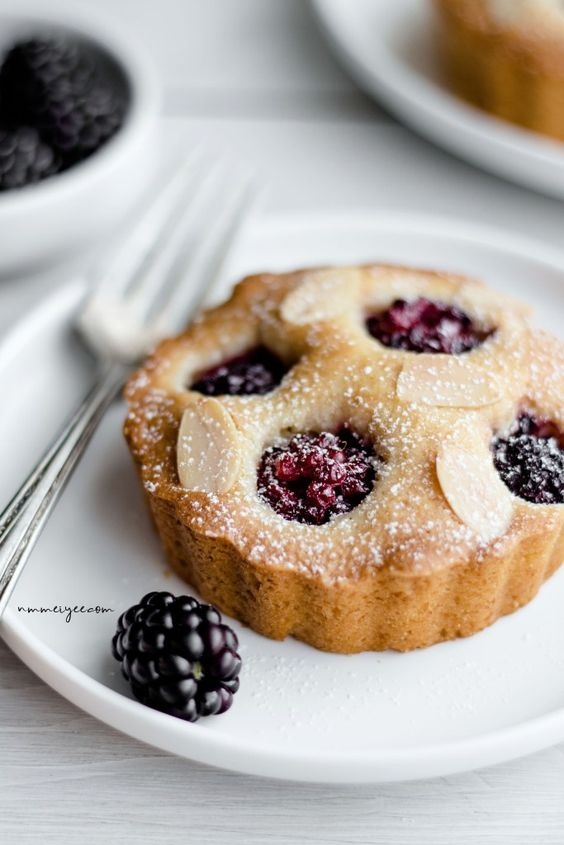
Tart is basically a baked dish with filling over a pastry base with the top left open. While the pastry is usually of shortcrust, the filling can vary from sweet to savoury; although modern tarts are fruit-based with or without custard. Miniature tarts known as tartlets like egg tarts are also gaining widespread popularity as they can essentially substitute for a complete breakfast for the “busy fast paced” world out there.

Originating from the Old French “tarte” or Medieval Latin “tarta”; the distinction of tart with flan, quiche and pie are often blurred with differentiation on the basis of the covering over the pastry or the filling type being sweet, savoury or meat and vegetable based. the categories of “tart”, “flan”, “quiche”, and “pie” overlap, with no sharp distinctions.

“Unless you are a professional, you will find the tart to be a high-maintenance, unforgiving whistle-blower of a pastry.” Sloane Crosley

On tracing the origins of tart, most food historians believe that they came about from the tradition of layering food or “putting things on top of other things” especially over notably round, flat pieces of bread or bread based crusts. Over time, the base was pastry type and then tarts had come about. Another line of thought maintains that tarts spring from the Medieval pie-making tradition, as a kind of flat, open-faced pie. Dating to at least mid 15th century, one of the earliest tarts was “the Italian crostata”, described as a “rustic free-form version of an open fruit tart” or “an open-faced sandwich or canape” due to its’ crusted appearance.

With the arrival of enriched dough around the 1550s, pies took a setback of being a common man’s way of recycling offal and table scraps, while tarts were made with fillings of “high cuisine” often made artistic and pleasing to the eye as well as palate. Often custard-based, a large, open tart presented a broad canvas upon which an artistic chef might compose a work of edible art with brightly-colored fruits, vegetables and spices added onto or into them, mostly being sweet than savoury, or a little of both.

Typically free-standing with firm pastry base of dough, itself made of flour, thick filling, and perpendicular sides; tarts have been made with varied fillings including jam, Treacle tart, meringue tart, tarte Tatin and Bakewell tart.

In fact, the “tarte Tatin”, named after the hotel (originated in France) serving it as its signature dish, is an upside-down pastry in which the fruit (usually apples) are caramelized in butter and sugar before the tart is baked. Over the years, this version as spread to other countries over the years with the filling upside-down being of not just apples or other fruit but also onions, tomatoes and other vegetables.

With savoury tarts getting their own special niche of “quiches”, German Zwiebelkuchen ‘onion tart’ or Swiss cheese tart (Gruyere); tarts and their related varieties are here to stay, especially for quick, comfortable, fun and artistic cooking. With June being the month of outdoors and picnics, tarts and pies are very much here to stay.

“I’m really a scientist. I follow recipes exactly – until I decide not to. And then I’ll follow something else exactly. I may decide I could turn this peach tart into a plum tart, but if I’m following a recipe, I follow it exactly.” Ina Garten