
Posted in Daily, Family and Society, Quotes, Reflections, Work

Language or Jargon

“It’s a strange world of language in which skating on thin ice can get you into hot water.” Franklin P. Jones

Living in a house with teenagers still in the family, one becomes an expert with short forms and abbreviations. In fact, one of the advantages (or disadvantages) of messaging and texting in the present day, is the use of less words, more of “emojis” and short forms that enable us to “save time”. Ironically what has happened is that we have forgotten how to spell correctly, speak in complete sentences or deliver a message without sounding garbled or hunting for the right words midway.

“When you lose a language and a language goes extinct, it’s like dropping a bomb on the Louvre.” Michael Krauss

Running through the official emails as well as personal ones’, the distinct difference in the style of writing, expression of words as well as use of “emoticons” highlight the official from the personal. Yet sometimes on rereading the mail, one has to very often guess the meaning behind the emoticons. Shifting between “smileys” and “dancing girls”, everything can be classified broadly into good or bad. In a way, words like adjectives, adverbs and similes have become almost extinct. Looking at the initial days of man, I guess we are back into the language of “expressions, hand signals, sounds, mono-, bi-or tri-syllables and garbles” just like the primitive ancestors.

“Losing the language means losing the culture. We need to know who we are because it makes a difference in who our children are.” Dottie LeBeau

Moving with the times is important. Hence striking a balance between the “cool” and “official language ” is a must, for us to convey complete and whole messages, before we lose out completely on our own sense of language, speech and words.

“At any one time language is a kaleidoscope of styles, genres and dialects.” David Crystal

“… once upon a time there were synonyms: “good, beautiful, valuable, positive, outstanding, excellent, wonderful, wonderful, wonderful, lovely, seductive, wonderful, cute, amazing, stunning, fantastic, magnificent, grandiose, irresistible attractive, fascinating, enticing, attractive, incomparable, unique, enticing, amazing, entrancing, divine “, and so on and so forth. And what? – left only “cool.” Less often – “cool” … ”  by T. Thick in “Hope and support”
Posted in Daily, Food

“Raisin” It Up

“Inject a few raisins of conversation into the tasteless dough of existence.” O. Henry

Being simply dried sweet grapes, raisins were the second in choice as a sweetener till the medieval times with honey being the top choice. The majority of the world’s supply of raisins comes from California, dried from Thompson seedless (95 percent), muscadine, or Black Corinth (Zante) grapes. Other main producers of Mosctael grapes are the USA, Turkey, Greece and Australia.

Originating from the Latin Racemus, from the ancient times raisins were in use. As evidence from history shows, raisins were an accidental discovery when they were found dried on the vines as early as 2000BC. The ancient Phoenicians and Armenians had taken the first steps in perfecting viticulture, the process of grape growing and selection.

While the Phoenicians started colonial vineyards in the areas of Malaga and Valencia of Spain and in Corinth (Greece)around 120-900BC; the Armenians founded their vineyards in Persia. These high yield growing areas had the perfect climate for making raisins and were also close to Greece and Rome, the first markets for raisins. Muscat raisins (over-sized with seeds and of fruity full flavor) were the primary crop in Malaga and Valencia. Corinth had grown the “Currants” which were tiny seedless, tangy raisins, where historians believe they got their name.

As the Phoenicians and Armenians began to trade raisins with the Greeks and the Romans who consumed them in large quantities; their popularity grew as well as their value. From being given as prizes to barter to trade or cure for ailments; raisins were always in demand. Raisins were a part of Hannibal’s troops rations when he had crossed the Alps.

“Raisins are a thing that lasts, they come in small boxes, and you always feel like eating raisins, even at six in the morning. A raisin is always an appropriate snack.” Fran Lebowitz

Although in popular demand, it wasn’t until the 11th century that raisins were seen in Europe. One of the reasons were the difficulty in maintaining the quality of the raisins for the long travel. By the 11th century, with improved packing and shipping techniques as well knights returning home from the crusades bringing back raisins with them, a huge market and demand was created.

By mid-14th century, the English cuisine included raisins and currants as it’s integral parts. As viticulture spread to France and Germany, grapes and raisins had entered the European cuisine spreading over to their colonial conquests. As viticulture had been perfected in Spain, grapes were being used to make products such as dry table wine, sweet dessert wines and Muscat raisins. With the colonization of the Americas and Mexico of today, their knowledge of viticulture had followed them there. By the 18th century, the Franciscan fathers had settled as far north as present-day Sonoma, California. Viticulture and its strong influence on California agriculture, was one of the enduring legacies left behind by the colonial rule. With the seedless grape variety (thin-skinned, seedless, sweet and tasty) being grown by the English immigrant William Thompson, newer variants of the products were created. By the late 1800s, once the Armenians (descended from the first founders of vineyards in Persia) began settling in the San Joaquin Valley, viticulture had progressed in California with supplies for raisins to nearly half the world, making it the largest producer anywhere.

“The wrinklier the raisin, the sweeter the fruit.” Alan Tudyk

Like most dried fruits, raisins can add the flavour to most recipes, ranging from the breakfast menu to elaborate meals as well as desserts. While buying raisins, their freshness can be determined by the containers being squeezable less hard and less rattling when shaken. Being blanched or plumped up (soak in hot water), sliced or chopped, added midway or at the end; the mode of introducing them into the recipes alters the flavours of the cooking giving a different effect at each step. Their popularity is marked by April holding two raisin days as National Raisin & Spice Bar Day (April 5th) and National Raisin Day (April 30th) celebrated by foodimentarians. Either way, into recipes or had directly, raisins spruce up the meal, both for the palate and nutrition wise.

“My indulgences are Skittles and rum raisin ice cream.” Sanya Richards-Ross

Posted in Daily, Family and Society, Life, Personal Musings, poetry, Quotes

Treasured Memories

“Childhood means simplicity. Look at the world with the child’s eye – it is very beautiful.” Kailash Satyarthi

The joyous days of fun, laughter and treasures are something that time or age can ever erase. For parents and guardians, having children around brings to mind and memory of their days. As children, they try to make out and see the best of everything. While it may be because they haven’t yet caught the cynicism and attitude of the world, the gentleness of children brings joy to the dark days.

“Imagination and invention go hand in hand. Remember how lack of resources was never a problem in childhood games? Shift a few pieces of furniture around the living room, and you have yourself a fort.” Alexandra Adornetto

Yet what happens when they grow up ? Caught in the modern paced world of consumerism, materialism as well as ambition; along the lines the simplicity of childhood is lost. As parents, care givers, guardians and nurturers of the future generations, care should be taken that in the modernism that we surround ourselves, children shouldn’t lose out on their best years of their life, their childhood. True that academics, cultural and sports do matter; cultivate their talents but let them do what they love. Forcing them into a mould from the very early days, breaks them from their very essence.

“One of the luckiest things that can happen to you in life is, I think, to have a happy childhood.” Agatha Christie

Roaming the lanes, exploring the backyard, learning how a frog leaps or why some plants creep and others grow tall, how the wind pane moves and the like are what engages their attention or interest. Their talents of dance, music and ball do matter; but let them pique their inquisitiveness as their minds grow. Draw the lines, set the limits but never curb their rightful curiosity. Let them grow and treasure the memories of their childhood; for its’ their right.

“If you carry your childhood with you, you never become older.” Tom Stoppard

In childhood, when we were immortal,
Were our wealth countless.
Each pebble was precious,
Life – well-dressed, as if on stage

Even fragments of broken dishes
Once again came to life in the mystery of a miracle.
There was no more beautiful doll rag,
It was not sweeter trickle krinynnoy.

Behind the wheel with an iron jump
into the future, boys ran away …
Old books, rare films
Were kept, were loved …

We, that we had a taste of the earthly paradise,
Were not surprised by the promise of another …
Believe me …
In childhood, when they were still immortal …

L. Znakovskaya

Posted in Daily, Food

Of Pretzels, Origin and Evolution

When facing an unexpected situation, the first emotion that one comes across is the “feeling of something happening, of being twisted and knotted” or the most popular feeling of “butterflies in the stomach”. With the month of April drawing to a close, it would be remiss if one would miss this month of “poetry, jazz, soft pretzels and humour” without experiencing the feeling of being in “pretzels”.

Originating in Europe, possible among the monks of the Middle Ages, “pretzel” were baked bread products made from dough, commonly shaped twisted into a knot. With the traditional pretzel in distinctive non-symmetrical loops; the modern pretzels comes in a varied range of shapes with exotic and common seasonings like chocolate, glazed, with nuts, seeds or with the flavours of several varieties of cheese. Today pretzels can be had “soft”, eaten shortly after preparation or “hard-baked” with a long shelf life.

“My mother always said, ‘When you’re eating pretzels, chew before you swallow’. Always listen to your mother.” George W. Bush

The true origin of pretzels have been traced to numerous accounts, though not verified. From the very early Italian monks making pretzels as rewards to children who learn their prayers or as a derivation of communion bread. In Germany, legends state that pretzels were the invention of desperate bakers held hostage by local dignitaries whereas, other legends elsewhere believe that pretzels were substitute for the heathen baking traditions of “sun cross” and the like.

Either way, the popularity of pretzels in the early years where evidenced as their use as an emblem by the various baker guilds. With the “knot of the pretzel” believed to be hands folded in prayer, pretzels had a religious significance in the Church based on their ingredients and shape. Additionally the three holes of the pretzels signified the Holy Trinity. As pretzels could be made by simply using flour and water (no eggs or lard were permitted during Lent); they provided a proper substitute during the Lent. Over the years, no Lent or Easter would be complete without pretzels, with them being sometimes substituted as Easter eggs. (https://tasty.co/recipe/homemade-soft-pretzels)

“Between evening and bedtime, Night is on the prowl for pretzels….” Rajat Kanti Chakrabarty

Despite the insignificant size and knotted shape, pretzels have an extensive influence on landscape architecture and sculpture (Pretzel Park, Philadelphia), in culture (pretzel dance move in swing dancing), furniture design inspired pretzel chairs and adoption of “pretzel logo” by Municipal government of City of Freeport, Illinois. Fashion, photography and the entertainment industry too have adapted the “pretzel” in a variety of styles, ranging from clothing to ecosystem techniques as well being a part of the literature, poetry and music. Although pretzels are no longer in fashion like the initial days, looks like they will still be around.

Posted in Daily, Family and Society, Life, Personal Musings, Quotes, Stories Around the World, Work

Communication Fillers and Gaps

“The single biggest problem in communication is the illusion that it has taken place.” George Bernard Shaw

One of the recently circulated video on my social network pages, shows a social experiment in which four queues of employees are made to stand, with a message being conveyed as a sequence of actions likened to starting a motorbike. (https://www.youtube.com/watch?v=FH_7F3KI8yg)

Unfortunately as the message, in the form of sequence of actions, were passed on, minor alterations were being added on, which eventually resulted in the last person of the queue mimicking the actions that were no where close to the initial sequence or message that the first person had initiated. Although the video may seem hilarious at the end, on reflecting later, the lack of communication as well as the errors in the message being conveyed, understood and repeated are alarming.

“Communication – the human connection – is the key to personal and career success.” Paul J. Meyer

At every walk in life, communication is what brings man apart from other living species. Knowing how to convey ideas, bring about changes as well discuss and share various aspects makes human life meaningful, interesting and enriched. Yet when thoughts are shared wrong, with each one modifying the truth as per one’s short-lived understanding, thinking or viewpoint, the real sequence of events gets distorted, destroying the harmony and peaceful thinking.

“The most important thing in communication is hearing what isn’t said.” Peter Drucker

Each time we come across any information, words or actions, thinking about them before e repeat them elsewhere would go a long way in maintaining one’s own peace and harmony. The process of adding one’s own bit to the real sequence of events, when not understood the right way, can do significant harm than plausible.

Posted in Daily, Food

Jelly with the Beans

“You can tell a lot about a fellow’s character by his way of eating jelly beans.”  Ronald Reagan

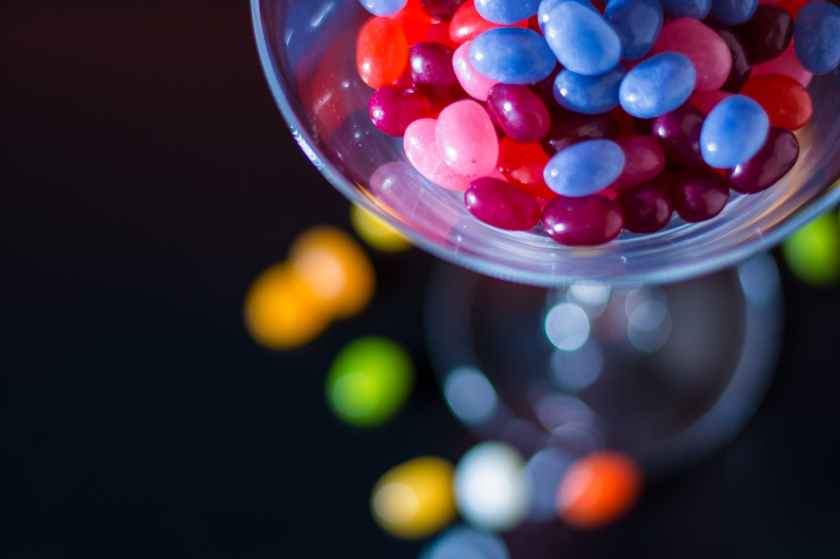
What happens on hybridization of Turkish Delights ( sweet, chewy candy with powdery sugar coating) and Jordan almonds ( almonds encased in a crunchy sugar shell) ? Possibly it may lead to the creation of “the classic candy with a soft chewy center and thin crunchy coating” , famously known as “jelly beans”. For avid Harry Potter readers, “Bertie Botts” may sound familiar with flavours of Banana, Black Pepper, Blueberry, Booger, Candyfloss, Cherry, Cinnamon, Dirt, Earthworm, Earwax, Grass, Green Apple, Marshmallow, Rotten Egg, Sausage, Lemon, Soap, Tutti-Frutti, Vomit and Watermelon.

The exact origins of jelly beans aren’t known. While the Mid Eastern confection of Turkish delight has been there since B.C.; the shell coating process known as “panning” can be traced to the cooks of the Royal Court in 17th century France. Over time, as the two process made its’ way to the Americas and the earliest known appearance of Jelly Beans has been credited there. One commonly cited but unconfirmed proof was an advertisement (1861) for William Schrafft (Boston) promoting the delivery of jelly beans to soldiers in the Union Army duting the Civil War.

Initially, (late 1800s, early 1900’s) jelly beans were sold by weight as penny candy in general stores and taken home in paper bags. By 1930s, jelly beans became part of the Easter holiday partially as it fit in well with its’ round egg-like shape, which was a symbol of the renewal of spring.

Why “jelly” and “bean” ? With candy-makers trying out novelty shapes for candy, the Goelitz family candy-makers has archive lists with candies as vegetables, chestnuts, carrots and turnips as well as bunnies for Easter. Once the bean shaped soft jelly came with shell that won’t let them stick, the name “Jelly beans” have stayed on.

Ever since 1976, there have been two types of jelly beans, gourmet (smaller, softer with shell and middle both flavoured) and traditional (only shells are flavoured). Their basic ingredients include sugar, tapioca or corn syrup, pectin or starch with relatively minor amounts of the emulsifying agent lecithin, anti-foaming agents, an edible wax (carnauba wax, beeswax), salt, confectioner’s glaze and flavouring agents. Depending on the type and flavours, jelly beans take approximately six to ten days to be made. National Jelly Bean Day has been celebrated (April 22nd) by foodimentarians worldwide. With endless flavour possibilities available as well as satisfying the palate and creating edible works of modern art, their popularity still holds true today.

“Jelly beans! Millions and billions of purples and yellows and greens and licorice and grape and raspberry and mint and round and smooth and crunchy outside and soft-mealy inside and sugary and bouncing jouncing tumbling clittering clattering skittering fell on the heads and shoulders and hardhats and carapaces of the Timkin works, tinkling on the slidewalk and bouncing away and rolling about underfoot and filling the sky on their way down with all the colors of joy and childhood and holidays, coming down in a steady rain, a solid wash, a torrent of color and sweetness out of the sky from above, and entering a universe of sanity and metronomic order with quite-mad coocoo newness. Jelly beans!” ? Harlan Ellison (“Repent, Harlequin!” Said the Ticktockman)

Posted in Daily, Life, Quotes, Reflections

Over the Years

“Another adventure filled year awaits you. Welcome it by celebrating your birthday with pomp and splendor. Wishing you a very happy and fun-filled birthday!”

“Count not the candles…see the lights they give. Count not the years, but the life you live. Wishing you a wonderful time ahead. Happy birthday.”

While writing or receiving birthday messages to friends, family and colleagues; one is often reminded of how fragile age, time and life are. In the quest in our life for happiness, two of the many things that never stop are time and age. Growing old is never easy for one is not only reminded of the passing time and unfulfilled dreams but also of the follies and lost opportunities of each year.

“Middle age is when you still believe you’ll feel better in the morning.” Bob Hope

We often wait for happiness round the corner, yet what comes is age. In fact old age approaches us without knocking but walking on stepping over the so called hurdles in her path. Initially we dread growing old, but later when we learn to take it as it comes and move ahead accordingly, each year becomes a gift of God with knowledge and wisdom being imparted at the right time.

“Old age is like everything else. To make a success of it, you’ve got to start young.” Fred Astaire

No one knows how long we will or how will we be then. Life is indeed a gift, precious and precarious. Let each drop from the cup be drained savoring the taste and learning to embrace the heat, bitterness, sweet, salt or cold as it comes, without spilling or cribbing along the way for long. Living life on earth with strong roots of mental, emotional and spiritual presence is important in order to make the physical entity that we have remain happy, satisfied and at peace within.

“We have to be able to grow up. Our wrinkles are our medals of the passage of life. They are what we have been through and who we want to be.” Lauren Hutton