
Posted in Daily, Personal Musings, Quotes, Reflections

To Allow Ourselves

One of the persistent feelings that runs down every couple of months is the “feeling of being trapped, compressed and stuck” into something that we want not to be a part of. In those occasions certain gentle reminders will help us get back into the grove of being content and at peace with ourselves.

“The snow goose need not bathe to make itself white. Neither need you do anything but be yourself.” Lao Tzu

Let ourselves to be wrong once in a while. It doesn’t really matter what others think about what we know or don’t, or what we said or didn’t. For the record, mistakes happen to all. No one can be truly accurate or right in their known field or what others expect us to know. No can be the “knowledge holder” of everything. At times, we tend to go wrong and so be it.

Once in a while, get out of the rush. Do make a slight change in the daily routine. Routines are lovely for they set things going and offer least surprises and roadblocks. Yet every now and then, break out, set a change and be surprised.

Hold the thoughts, words and anger when sorely tried. Try to allow ourselves to not respond to provocations. Certain things or events once done, can’t be easily undone, deleted or reversed. The impact and consequences may be near or in the future. Once damaged, not everything can be reset. Why then attempt to test those waters, when one knows that sharks will bite.

“To help yourself, you must be yourself. Be the best that you can be. When you make a mistake, learn from it, pick yourself up and move on.” Dave Pelzer

Avoid the trend to not make excuses, neither do anything to prove ourselves or when strongly persuaded. Regret is time lost. Once the sequence of events are set in motion, regret then or later will not revert the sequence or consequence.

Allow ourselves to let go and walk away. Step aside, away from those who are in the way or from those who resent us for the sake of it. Actions sidestepped are better for the peace. Even if we initiate the side step; more than the ego being trampled on, the mind will be at ease.

Being different is alright and fine. One doesn’t have try to fit into any categories, frames, stereotypes, typologies and types. Neither does one have to justify the expectations set by others. At the end of the day, we have to be comfortable in our own skin and mould.

Try not to run ahead or behind. Be at par with the speed of life and time. Just don’t run. At times, waiting for the train till it comes at the right station crossing or turn may be better to start going in the right direction again.

Above all, allow ourselves to be just ourselves.

“Be yourself, but always your better self.” Karl G. Maeser

Posted in Daily, Food

Learning the “Animal Cracker’s” Way

Eyes closed with eagerness, a tiny little hand dives into a box. Grabbing one bit and clenching the fist so as not to lose that precious little thing, the little hand comes out and palm up, its’ a bear. With a gleeful shout, that little bear is raised up and chomped down. And the hunt for the next “animal cracker” begins.

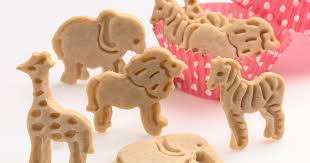
Almost every childhood has been marked by animal crackers or cookies and milk. These particular type of small cookies have been baked in the shape of animals ( zoo or circus), slightly sweet, made by a single layered dough like crackers.

Although the initial varieties were light coloured and slightly sweet; today darker chocolate flavoured or coloured frosted variants have made their way into the supermarket shelves. From the initial “Stauffer’s Biscuit Company produced animal crackers and Nabisco’s “Barnum’s Animals”, today other animal shaped crackers or cookies have gained popularity like Teddy Grahams, Goldfish, Hello Panda and Koala’s March. These differ from traditional animal crackers in flavor and assortment.

“Animal crackers, and cocoa to drink
That is the finest of suppers, I think
When I’m grown up and can have what I please,
I think I shall always insist upon these.”
-Christopher Morley (Founder of ‘Saturday Review’, 1924-1941)

Around 6th to 7th century, the custom of shaping cookies to resemble animals began from the Yule Tribe. During their times, it was common to sacrifice animals to the gods during the Julfest ceremonies, in hope that such offerings would bring a mild winter and an early spring. As the poor people couldn’t afford to kill any of their animals, they gave token sacrifices in the form of animal-shaped breads and cookies. Over the years, animal crackers became household or local bakery goods.

Yet the crisp animal crackers came from the 19th century Victorian England as attractive cookies or biscuits. The “crisp biscuits” (sweet and cookie-like biscuit) were very popular and the English called the ones that shaped like animals “Animals”. During the late 19th century, these “Animals” were imported from England to the United States. Due to their local popularity and high demand, local manufacture also began their own “Animals” making business. American businesses like Stauffer’s Biscuit Company, which still exists today, made their first animal crackers in 1871 York, Pennsylvania.

Around 1889 in England, animal crackers were manufactured as marketing promotions for popular entertainment, P.T. Barnum’s Circus. In 1902 animal cracker boxes designed for “Barnum’s Animals” (became “Barnum’s Animal Crackers” in 1948) were also designed for the Christmas season. The initial cracker boxes had a piece of string to hang them from the Christmas Trees as ornaments.

Almost 54 different animals crackers’ have been created in total, with 37 different animals have been featured into Animal Crackers ( Nabisco’s Barnum’s). The only ones survived the entire lifetime of the product are bears, elephants, lions and tigers. Interestingly among all their “cracker animals”, it’s only the monkey that wears pants. Also rabbits have never been a part of them even today (unlike portrayed in the Shirley Temple Song of 1935). Commemorating the 100th anniversary of Animal Crackers, the “name-our-next animal” contest in 2002 saw the koala bear became the latest addition by beating out the penguin, walrus and cobra in the customer survey.

Thus on National Animal Cracker Day (April 18th) it would remiss not to include the animal crackers on the menu. The range is varied from mini-sized treats to additions into soups, crunchy salads or even with ice-cream, fruit salads, custards or just with tea, having them the old, simple way. For a break from the “adult-life” going back into the childhood treats can be good physical and mental “calorie” breaks.

“Animal crackers in my soup Monkeys and rabbits loop the loop Gosh oh gee but I have fun Swallowing animals one by one In every bowl of soup I see Lions and Tigers watching me I make ’em jump right through a hoop Those animal crackers in my soup When I get hold of the big bad wolf I just push him under to drown Then I bite him in a million bits And I gobble him right down When their inside me where it’s dark I walk around like Noah’s ark I stuff my tummy like a goop With animal crackers in my soup.” Shirley Temple

Posted in Christian, Daily, Family and Society, Life, Quotes, Reflections, Work

Dealing With that Itch

With spring season around and evening walks are in the to-do list, one may have encountered the occasional sting or bite when on or after the walk. When the mosquito bites or insect stings, the deadly red mark starts forming in the skin. There are few distinct pictures that follow. First the yell or howl, followed by the distinct smack (almost always missing the culprit) with the application of a balm to soothe the pain. Left alone, the bite slowly settles and passes after a while. On the other hand, once the sting appears and one enters the itch mode, then the bite is extensively combed, scratched and the blister (in the place of the little red spot) is born. Consequently the sting stays, the irritation grows and the pain doesn’t recede. Worse is the infection and the bleeding that then follows. Being a parent to a toddler, one must be familiar with this cycle.

“Without forgiveness life is governed by… an endless cycle of resentment and retaliation.” Roberto Assagioli

Yet what is familiar, is the “feeling of the itch” is something similar to resentment. How we deal with resentment falls into similar patterns of an insect bite. Resented when treated in the right manner, ceases to sting; but when scratched, makes the whole mood go down. When dealt with an insult; if one tries to forgive and forget it, then it gradually goes out of the hearts. On self -dissecting it and chronic dwelling on it similar to self-persecution or self-pity; then the insult becomes stronger and deadlier.

“Our fatigue is often caused not by work, but by worry, frustration and resentment.” Dale Carnegie

Dealing with offense is not easy. True that we must reflect on the events that had happened and words or actions exchanged. But one doesn’t have to mark it against oneself and fester it, to the point of destroying the self. Instead hand over those feelings to the wind, for then we become more wiser and gracious. For when things are left to His Will, life becomes more sweet and simple. This is a very good skill that is learned over the course of time.

“Let go of resentment for it will hold you back. Do not worry about what could have been, what is to come is what matters.” Leon Brown

Take the burden that we can handle and the rest, hand them over to Him and let His Will be done. The same with resentment. Yes one was offended but one doesn’t have to carry it around and ruin the only life that we have been blessed with. Let things figure out eventually in His Time and then we discover that what was felt big, bad and ugly initially will seem inconsequential in the long run in His Time.

“The final proof of greatness lies in being able to endure criticism without resentment.” Elbert Hubbard

Posted in Daily, Food

Benedict’s Way with the Eggs

“Sometimes life is a feast with eggs Benedict & hollandaise sauce, waffles & strawberries, sausage links & hashed brown potatoes. And sometimes life is scrambled eggs. In the end, your stomach gets full all the same. And years from now, you may not remember exactly what you ate.” Lisa Schroeder

Known as Eggs Benedict or Eggs Benny, this traditional American that consists of two halves of an English muffin topped with a poached egg, bacon or ham, and hollandaise sauce. The dish was first popularized in New York City and mostly served for breakfast or as brunch.

Interestingly, there are many conflicting accounts as to the origin of Eggs Benedict.The earliest record is based on the menu of Delmonico’s of lower Manhattan whcih states that “Eggs Benedict was first created in our ovens in 1860.” One of its former chefs, Charles Ranhofer had published the recipe for Eggs à la Benedick in 1894.

As per other sources, based on the interview of Lemurel Benedict, a retired Wall Street stock broker recorded in the “Talk of the Town” column of The New Yorker in 1942. As per his words, in 1894 he had wandered into the Waldorf Hotel hoping to find a cure for his morning hangover and had ordered “buttered toast, poached eggs, crisp bacon, and a hooker of hollandaise”. The dish had impressed Oscar Tschirky, the maître d’hôtel that it had earned its’ place on the breakfast and luncheon menus with modifications like ham for the bacon and a toasted English muffin for the toast.

Another claim to this creation was made by Edward P. Montgomery on behalf of Commodore E. C. Benedict. Montgomery wrote a letter to then The New York Times food columnist (1967) which included a recipe he had received through his uncle, a friend of Commodore Benedict. This recipe had varied greatly from the Ranhofer version, especially in the hollandaise sauce, recording the addition of a “hot, hard-cooked egg and ham mixture”.

Today many variations are available globally, often varied as per the local cuisine and favourite add on preparation. Like for instance, substitute the streaky bacon for the ham and add a slice of tomato to get Eggs Blackstone. While Eggs Blanchard states to add Béchamel sauce for Hollandaise and Eggs Florentine includes spinach instead of the ham or adds it underneath (where previously there were added to poached or shirred eggs). Eggs Omar (also known as a steak benedict) substitutes a small steak in place of the ham, and sometimes replaces the hollandaise with béarnaise.

In fact each ingredient of the original Eggs Benedict can be substituted to make a new or exotic variant adaptable to the local culture, food trends and seasonal ingredients. One can substitute the ham for salmon (smoked or plain) to make Eggs Atlantic, Eggs Hemingway or Eggs Norvégienne among the the many locale names for it. This is one of the most common variant found in places where bacon or pork products can’t be served. Additionally the ham can be substituted by corned beef, Irish bacon, pork “debris” (Eggs Cochon) or some even prefer hash browns to the ham.

To make the original Eggs Benedict more creative is to add sliced avocados or the the bread can be substituted by Hollard rusks, a large buttermilk biscuit (Eggs Cochon) or even toast. Either Eggs Benedict can give numerous variations with one’s own favourite ingredients and make for a healthy breakfast in the morning melee or even had as an evening snack. Little wonder then, that a whole day was devoted as National Eggs Benedict Day ( April 16th). Besides having fun with plenty options to modify it, they make a healthy and wholesome food, with palatable mix ups as well inspiring creative cooking and art in the kitchen.

“She dipped a clean pinkie into the hollandaise in the bowl. It coated her finger like a sheath of yellow velvet. Despite her nerves, she plated swiftly and surely. She lifted the poached eggs clear from the shimmering, hot water with a safecracker’s touch, laying each one with infinite care in place on top of its foundation of English muffin and Canadian bacon. Silky drizzle of hollandaise, sprinkle of fresh parsley, grind of black pepper, framed with creamed spinach, dusted with paprika. Done.” Brian O’Reilly, author of Angelina’s Bachelors

Posted in Christian, Daily, poetry, Reflections

Following His Path

” 12 The next day the great crowd that had come for the festival heard that Jesus was on his way to Jerusalem. 13 They took palm branches and went out to meet him, shouting, “Hosanna! ” “Blessed is he who comes in the name of the Lord!”“Blessed is the king of Israel!” 14 Jesus found a young donkey and sat on it, as it is written: 15 “Do not be afraid, Daughter Zion; see, your king is coming, seated on a donkey’s colt.” ” (John 12:12-15)

With today being Palm Sunday, the next one week will take us through the journey of Lord Christ as he is crucified on the “basis of the sins” that he had committed, so that Man can be given a chance at salvation. For us Christians, it is a significant week which recounts the experience and final days that “The Lamb of God” had underwent.

Essentially Palm Sunday commemorates Lord Jesus’s entry into Jerusalem, as mentioned in the four canonical Gospels. Today the service is marked by the procession of the faithful carrying palms which represents the palm branches the crowd scattered in front of Jesus as he rode into Jerusalem. In certain places, as it was difficult to procure palms, they were substituted with branches of native trees, including box, olive, willow, and yew. The Sunday was often named after these substitute trees, as in Yew Sunday or by the general term of Branch Sunday.

“Rejoice greatly, O daughter of Zion; shout, O daughter of Jerusalem: behold, thy king cometh unto thee; he is just, and having salvation; lowly, and riding upon an ass, even upon a colt the foal of an ass.” ( Zechariah 9:9)

As per the Old Testament, the procession of Palm Sunday was earlier prophesied through the teachings and words of the Prophet Zechariah. The shout of “Hosanna” holds a significant meaning. The Hebrew word, “hoshi’a na,” when translated into Greek as “(h)osanna” and in English as “hosanna.” The original meaning of the word is “Save Please!”. It is a plea for help, understanding the potential impact of the scenario, the helplessness underwent and need for help to survive and live. Putting this into our spiritual lives, this security is in God. In the purest form, “Hosanna” is worship as we feel we have to come to the end of ourselves and we need God to intervene.

“25 LORD, save us! LORD, grant us success! 26 Blessed is he who comes in the name of the LORD. From the house of the LORD we bless you.” (Psalm 118:25-26)

Reading through the scriptures, another meaning of Hosanna was as a proclamation of “Salvation! Thank you!”. Here “Hosanna” stands for gratitude to the Lord for His Grace, His Mercy and His Love. The liturgical and sermon songs of today as well as messages open with the words of “Hosanna” where it is used as a phrase of adoration, praise and worship. Thereby, “Hosanna” implies both a cry for His Help as well thanksgiving for His Blessings that He has bestowed on us.

If wounded by words,
There is no reason to be distressed.
You show love affairs
Forgetting about the status, rank.

If rudeness, quarrels, screams
Cause a duel
Do not prepare peaks for battle
No saint cartel.

If someone could not resist,
Released a verbal poison,
You, my friend, is right, since he did not break,
Did not send the poison back.

If the pain is unbearable,
If the word burns like thorns,
Remember, friend, you are God’s Son:
He was humble to death!

Be close to Christ in communion,
asking for the victory of your strength.
Let it be, friend,
Meekness is known to all your people!

Ermolova S.

Posted in Daily, Life, Personal Musings, Quotes, Reflections, Stories Around the World, Work

Broken but Spirited

“The greatest test of courage on earth is to bear defeat without losing heart.” Robert Green Ingersoll

As a part of the quasquicentennial (125th) anniversary celebration in the work place, there were numerous discourses and seminars on the rise of the institute from the very early days. The common thread running through all, was the perseverance through struggles, defeat and trials. As history and nature have taught us, in order to survive, it’s not about being big or strong, but adaptable, brave and courage to continue the struggle, live and grow. For more evidence, the survival of the mammals through the Ice Age, rise and overthrow of civilization, survival of the Holocaust and the two great Wars as well as struggle for independence from the colonial and civil unrest are broad examples to learn from.

“Failure is simply the opportunity to begin again, this time more intelligently.” Henry Ford

As we introspect our lives and those around us, the moment we lose hope we fail. True that there will be days when we are drained of all hope. Times like those call for rest and to draw strength and courage from the lives of the past, present and those around us, undergoing their share of sorrows but staying strong. The rainbows of life don’t happen on sunny days; but after downpours and when we chose to withstand the rain and seek for the surprises that nature give us. All of us have our own worth, to keep going despite all the pitfalls; rest, draw courage, refresh the hope and dream, all the while persistently going ahead and keeping the belief in oneself strong and practical against all odds.

“A popular speaker started off a seminar by holding up a $20 bill. A crowd had gathered to hear him speak. He asked, ‘Who would like this $20 bill?’Many hands went up. He said, ‘I am going to give this $20 to one of you but first, let me do this.’ He crumpled the bill up. He then asked, ‘Who still wants it?’ All hands were still raised. ‘Well,’ he replied, ‘What if I do this?’ Then he dropped the bill on the ground and stomped on it with his shoes. He picked it up, and showed it to the crowd. The bill was all crumpled and dirty. ‘Now who still wants it?’ All the hands still went up.
‘My friends, I have just showed you a very important lesson. No matter what I did to the money, you still wanted it because it did not decrease in value. It was still worth $20. Many times in our lives, life crumples us and grinds us into the dirt. We make bad decisions or deal with poor circumstances. We feel worthless. But no matter what has happened or what will happen, you will never lose your value. You are special – Don’t ever forget it!’

Posted in Daily, Food

“Cobble” it Together

“Cherry cobbler is shortcake with a soul.” Edna Ferber

With summer round the corner and plenty of fruits to go around, desserts are always the reason why the meal gets completed in the twinkling of an eye, especially for the children. Even with the lack of time or frozen products over, dessert can be done soon, especially when bits of fruit over biscuit dough, batter or dumpling are baked to give the warm “cobbler” feel of the spring and summer skies.

Believed to have originated from the archaic word “cobeler” (recorded from 1859) meaning wooden bowl, cobblers were essentially a byproduct of the early years of European settlement in the Americas, especially by the English and the Dutch. They had initially emerged as a makeshift version of the popular pie recipes as a trail-modified desert.

“My earliest memory is making peach cobbler with my grandmother. A wonderful memory. I grew up in a restaurant family – B.B.Q. restaurant.” Rick Bayless

Unable to make the traditional puddings or pies, due to lack of ingredients or equipment as the settlers moves westward, modifications were made to the original methods. Consequently various ingredients were “cobbled together” with the available fruit, more common as peaches, plum or cherries, which were dried, preserved or canned, leavened dough (using baking powder) and an open fire. The initial cobbler were being made with a covered stewed filling with a layer of uncooked plain biscuits or dumplings, fitted together.

“Chocolate’s okay, but I prefer a really intense fruit taste. You know when a peach is absolutely perfect… it’s sublime. I’d like to capture that and then use it in a dessert.” Kathy Mattea

Cobblers were meant to be more palatable and sweet than pretty. Fruit, however it came, was dumped into a Dutch oven, topped with globs of biscuit dough and baked over an open fire until golden brown. Soon cobblers were quickly integrated into the settler diet, with the sweet dish being eaten for breakfast, as first course or as a main dish. Towards the late 19th century, the cobbler was officially labeled as a dessert.

“My earliest memory is making peach cobbler with my grandmother. A wonderful memory. I grew up in a restaurant family – B.B.Q. restaurant.” Rick Bayless

With modern technology of preservation, trade and transport; cobblers today have been vastly modified to include many fruit varieties including raspberries, blackberries as well being topped with cinnamon or vanilla essence, adding colours and flavours to the original version. Variants like grunts, pandowdy and slumps are Canadian Maritimes and New England varieties of cobbler are labelled when they are typically cooked on the stove-top or in an iron skillet or pan, with the dough on top in the shape of dumplings. The name originates from the grunting sound they make while cooking. Other popular variants include the apple pan dowdy (an apple cobbler whose crust has been broken and perhaps stirred back into the filling), the Betty or Brown Betty ( made with breadcrumbs or bread pieces or graham cracker crumbs and fruit, usually diced apples, in alternating layers, baked covered with a consistency of bread pudding) and the buckle (made with yellow batter like cake batter with the filling mixed in with the batter) among many others.

On the other hand, the scone-topped cobbler predominates in the UK where they are made both as sweet or savoury. While the common sweet fillings include apple, blackberry or peach; the savoury ones consists of beef, lamb or mutton as a casserole filling, sometimes with a simple ring of cobbles around the edge, rather than a complete layer, to aid cooking of the meat. The savoury versions may be topped with cheese or herb scones.

Over the years, cobblers have remained popular especially as they were quick to make for the luncheons and brunches. Little wonder then that the Georgia Peach Council declared April 13th National Peach Cobbler Day. Taking a bite of the rosy fruit cradled in warm pillows of cinnamon-scented dough and blanketed with the melted vanilla ice cream brings rich splendor to the senses, giving warmth and happiness all the way. For all the foodists at heart, have a little bite of cobbler to revel in the taste of sunny skies and warm sunshine.

“There are a couple of different types of food I eat a lot. I was raised in the South, in Tennessee, so I’m going to go with comfort food, soul food. I would probably start with collard greens and candied baby carrots and then have some biscuits and white gravy – and for dessert, probably blackberry cobbler.” Megan Fox