Posted in Daily, Family and Society, Life, Reflections

Converse to Communicate

Ideal conversation must be an exchange of thought, and not, as many of those who worry most about their shortcomings believe, an eloquent exhibition of wit or oratory. Emily Post

In our day-to-day life, we come across many people of different personality types, various behaviours or views, and going through their individual set of emotions at the various phases in their lives. Yet a common thread running through all the people we meet either at work, neighbourhood or market is conversation. The latter can range from being a casual nod to a simple greeting of “Hello, How do you do ?” or talk of the weather, politics (regional to global), work and the daily happenings.

A conversation is a dialogue, not a monologue. That’s why there are so few good conversations: due to scarcity, two intelligent talkers seldom meet. Truman Capote

Unfortunately not all of us can strike a conversation at the right time or a fruitful one which doesn’t end up in a war of words or ideas. This art has come to a point where social messaging and screen talk leaves one more comfortable than being engaged in a face-to-face conversations. The sad fact is real communication doesn’t grow from written words but meaningful exchange of words, ideas, thoughts, expressions and emotions.

The single biggest problem in communication is the illusion that it has taken place. George Bernard Shaw

Yet when conversing makes us uneasy, tactless, upset or bored to the point of losing people, breaking relationships and friendships; it is time to introspect and sift through the mind to find out what went wrong. There are a few tips that I often find helpful when discoursing with others.

1. When you know something, but not asked; it helps to keep quiet and listen.
2. When you are at the receiving end of a talk, learn to be silent to listen. Two can’t talk at once for no one would be able to hear then.
3. Do not interfere in other people’s conversations especially when standing in a sub groups of group.

Wise men speak because they have something to say; Fools because they have to say something. Plato

4. Answer the questions, but do not elaborate to the point where others’ get a faraway look, start yawning or contemplating other activities’ in their mind.
5. When you want to tell something before you start doing, hold the tongue. For don’t tell others before time, until you have done it. Instead switch over the talk to interest, advice or opinion.
6. Do not tell people of their shortcomings, unless asked.

Communication leads to community, that is, to understanding, intimacy and mutual valuing. Rollo May

7. When feelings are hurt or reproached, keeping quiet with a smile and walking away really helps.
8. When the talk seems unfair or unjustified to you; say the same with reasoning, quietly and calmly.
9. Speaking abruptly, out of context or with excitement doesn’t help in the exchange of ideas or flow of words. Instead simmer the glee, watch their eyes and body language and then explore the ideas running in the mind with context to the situation at hand.

Conversation should be pleasant without scurrility, witty without affectation, free without indecency, learned without conceitedness, novel without falsehood. William Shakespeare

Ideas, talk and words are like milk. Once spilt, can’t be completely retrieved. As Shannon L. Adler had said, “The most important thing in communication is hearing what isn’t being said. The art of reading between the lines is a life long quest of the wise.”

Posted in Daily, Food

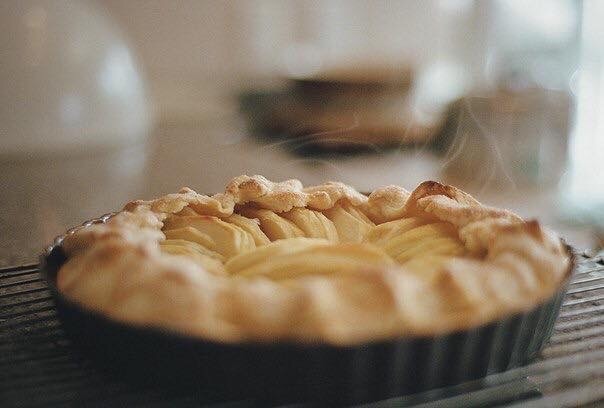
Of Pie and Beyond

“Sing a song of sixpence,
A pocket full of rye.
Four and twenty blackbirds,
Baked in a pie.”….Sing a Song of Sixpence (Roud Folk Song Index 13191)

On the basis of etymology, “Pie” came from “pastry” of middle 14th century or older “piehus” referring to bakery (12th century) or the Medieval Latin of pie or pia of meat or fish enclosed in pastry. The popularity of pie can be attested by its’ use in nursery rhymes to popular holiday or pot luck dinners as well as references to slap stick humour, pie-throwing contests and the like.

“Georgie Porgie, pudding and pie,
Kissed the girls and made them cry,
When the boys came out to play,
Georgie Porgie ran away.”….Georgie Porgie ( Roud Folk Song Index number 19532)

From the very early days of man’s existence, With long travels, difficult storage and introduction of baking, reliable food sources were needed. This lead to the Egyptians “dhourra cake” (flat brittle bread loaf of millet bread) and Romans biscuit known as “buccellum” being in popular use especially among the sailors. Yet the Ancient Greeks were believed to have first made use of the pie pastry concept. From then on, Romans slowly evolved the art of pie making which later spread over to Medieval Europe and hence has stayed on.

“Little Jack Horner
Sat in the corner,
Eating his Christmas pie…” from Little Jack Horner ( Roud Folk Song Index number 13027)

From being savory or sweet, pies were the answer for middle, working class people for besides being easy to make, they can be made with the locally available ingredients based on the locality, weather and the time of the year. For pie enthusiasts, any filling can be put into a pie from meat fillings to fruits, cheese and even the basic vegetables. Sometimes, porcelain ornaments have graced the top of pies, primarily to release steam, identify the contents as well being an eye-catcher. With the lack of time and need for quick homemade meals and ready made pie pastry, pies are an answer for quick, healthy, nutritious meals or delectable desserts. Above all, pies encompass feelings of homeliness, togetherness and experimentation laced with traditions, experiences and nostalgia.

Doing projects really gives people self-confidence. Nothing is better than taking the pie out of the oven. What it does for you personally, and for your family’s idea of you, is something you can’t buy. Martha Stewart

Posted in Daily, Family and Society, Quotes, Work

Measure of Intelligence

Being innate hunters and gatherers for the purpose of survival, man doesn’t limit this action to his physical existence alone, but also to enhance his mental, emotional and spiritual thirst for life. From the very beginning, the questions of why, how, when, where and why has always fascinated man. To this purpose, the development of “intelligentia or intellectus” began from a purely scholarly view point to betterment of one’s existence. Fast forwarding to the present day, on the purpose of enhancing one’s intelligence; education, travel as well as acquiring information has been on the achievements list.

The test of a first-rate intelligence is the ability to hold two opposed ideas in the mind at the same time, and still retain the ability to function. F. Scott Fitzgerald

In fact, many consider an intelligent person is one who reads a lot, received a good education, travelled a lot, knows several languages and bears a lot of facts, data or information. While all this is partly correct, one can have all yet lose sight of humanity. In other words, we can have all the prerequisites of being intelligent and be unintelligent. On the contrary, we can’t have any of the requirements and still be an internally intelligent person.

Character is higher than intellect. A great soul will be strong to live as well as think. Ralph Waldo Emerson

For along the way we have lost sight of the real purpose of “intelligence”. The latter which in turn stems from the verb “intelligere” means to comprehend or perceive. Today both comprehension and perceptions are lost in the acquisition of intelligence.

Intelligence lies is not only in displaying knowledge, but also in the ability to understand others. It manifests itself in a thousand and a thousand trifles: in the ability to argue respectfully, behave modestly at the table, quietly (imperceptibly) help others, not to drop litter around themselves, not to utter hurtful or bad words or rude ideas.

Intelligence is the ability to understand, to perceive, it is a tolerant attitude towards the world and towards people. Dmitry Sergeevich Likhachev

So this begs the final question of whether we are intelligent enough to change for better and before things go from bad to worse. Or should we cling to what our beliefs and ideals were once formed on, even if they are humanely incorrect, egotistic and narrow minded to the point of stifling our relationships with fellow beings and curbing our growth, happiness and inner peace.

Intelligence is the ability to adapt to change. Stephen Hawking

Posted in Daily, Food

To Say “Cheese”

The early bird may get the worm, but its the second mouse that gets the cheese. Jeremy Paxman

Cheese is one of the oldest foods of man, existed since the domestication of animals began. It was used in the ancient times of Egyptians as evidenced in their tombs and hieroglyphics. The Romans had built up “cheese making” as a very profitable industry. Besides being a rich source of calories, proteins and minerals as well as a great supplement to meals, certain types of cheese(Roquefort blue cheese) have benefits for cardiovascular health as well anti stress benefits of tryptophan.

The word cheese comes from Latin “caseus”, from which the modern word casein is also derived. The word cheese can be traced to chese (in Middle English) and ciese or cese (in Old English). Similar words are shared by other West Germanic languages—West Frisian tsiis, Dutch kaas, German Käse, Old High German chasi—all from the reconstructed West-Germanic form *kasi, which in turn is an early borrowing from Latin.

For every pound of cheese, ten pounds of milk are required. On the record the biggest and heaviest cheese produced weighed 57,518 pounds and was 32 feet long. It was cheddar and came from a Canadian cheese maker who used 540,000 pounds of milk to make it.With different ways of making cheese, there are around 500 different varieties recognized by the International Dairy Federation although there are more than 1,000 varieties approved by Sandine and Elliker. There is no single method to classify or group cheese. Various criteria like length of ageing, texture, methods of making, fat content, animal milk, country or region of origin, etc. are used either singly or in combination.

Nothing says holidays, like a cheese log. Ellen DeGeneres

Cheese has its’ own share of history and legends. By legend, blue cheese was invented when a young boy was eating a sandwich near a cave and abandoned his lunch to pursue her. When he returned a few days later, the sandwich was covered with mold, but he still ate it and well, the rest is blue cheese history. People who love cheese are called turophiles. Yet cheese was relatively unheard of or less popular in east Asian cultures and pre-Columbian Americas to name a few. With the spread of European imperialism, and later of Euro-American culture and food, cheese has gradually become known and increasingly popular worldwide.

Culture and tradition have to change little by little. So ‘new’ means a little twist, a marriage of Japanese technique with French ingredients. My technique. Indian food, Korean food; I put Italian mozzarella cheese with sashimi. I don’t think ‘new new new.’ I’m not a genius. A little twist. Masaharu Morimoto

Posted in Christian, Daily, Family and Society, Random Thoughts

Through the Toil

“Don’t worry. It will all be alright.”

Very often, we come across these words but though these words are precious their impact varies from person to person, from time to time and situation to situation.

For those of us who hear them, the degree of belief oscillates from disregarding these words to acknowledging them in our heart or simply pass through the words realizing that this is what everyone will say. For those of us who often speak these words, they are said when we may be at a loss of what to say or can truly mean what we have gone through. When it comes from the latter, it genuinely strikes a chord to the person who hears it.

Whichever way or what ever context these words come into play, the fact remains that these words will not change the present situation but can offer a semblance of hope that time will pass through these troubles and we too shall pass this phase. As Charlie Chaplin had once said, “Nothing is permanent in this wicked world – not even our troubles.”

David also said to Solomon his son, “Be strong and courageous and do the work. Do not be afraid or discouraged, for the LORD God, my God is with you. He will not fail you or forsake you until all the work for the service of the temple of the LORD is finished. (1 Chronicles 28:20)

We don’t develop courage by being happy every day. We develop it by surviving difficult times and challenging adversity. Barbara De Angelis

The world when it is turned upside down, is like a niggling wound. We can’t turn away from trouble and nothing will change when we run away, besides getting a temporary respite. Trouble can only be passed through and one has to cross the waters either at that point of time or later.

To quote Angelina Jolie , “I do believe in the old saying, ‘What does not kill you makes you stronger.’ Our experiences, good and bad, make us who we are. By overcoming difficulties, we gain strength and maturity.”

Overhearing what they said, Jesus told him, “Don’t be afraid; just believe.” (Mark 5:36)

Instead, what we can do is glean hope from others and the Word of God as we travel through the storms and tempest. While we wish courage to all who have trouble, I wish compassion for all those who had trouble and passed. She was with you so that you would not forget about her and feel sorry for those who are today in what you once were and wept.

Therefore, my dear brothers and sisters, stand firm. Let nothing move you. Always give yourselves fully to the work of the Lord, because you know that your labor in the Lord is not in vain. (1 Corinthians 15:58)

Posted in Daily, Food, Photography Art

Of Gourmet Coffee

“Coffee in Brazil is always made fresh and, except at breakfast time, drunk jet black from demitasses first filled almost to the brim with the characteristic moist, soft coffee sugar of the country, which melts five times as fast as our hard granulated,” wrote Bob Brown and Cora Rose in the 1939 South American Cook Book, adding “For breakfast larger cups are used, and they’re more than half filled with cream. This cafe con leite doesn’t require so much sugar as cafe preto – black coffee.”

The brewed drink prepared from roasted beans and the seeds of berries from certain Coffea species have grown to worldwide acclaim. Initially the genus Coffea was native to tropical Africa and certain areas like Madagascar, the Comoros, Mauritius; coffee plants are now cultivated in over 70 countries. The two most commonly grown varieties are C. arabica and C. robusta. Once ripe, coffee berries are picked, processed, and dried. Dried coffee seeds or “beans” are roasted to varying degrees, depending on the desired flavor. Roasted beans are ground and then brewed with near-boiling water to produce the beverage known as coffee.

“The morning cup of coffee has an exhilaration about it which the cheering influence of the afternoon or evening cup of tea cannot be expected to reproduce.” Oliver Wendell Holmes, Sr.

Gourmet coffee has been in vogue now. They are coffees grown by a specific country which can also refer to a specific grade or region of a country. For example Dejardin Supremo Colombian refers to the region: Dejardin, the grade: Supremo and the country: Colombian.

“No one can understand the truth until he drinks of coffee’s frothy goodness. Sheik Abd-al-Kadir”

Regardless of the type, what matters most is how coffee tastes, smells, and whether or not it makes you feel alert and happy. There are quite a lot of different types of coffee beverages with more than thirty on my count with most popular being Cappucino, Cafe au lait, Caffe Americano, Espresso, Mocchacino and Irish Coffee available at most coffee outlets.

“Among the numerous luxuries of the table…coffee may be considered as one of the most valuable. It excites cheerfulness without intoxication; and the pleasing flow of spirits which it occasions…is never followed by sadness, languor or debility.” Benjamin Franklin

Posted in Daily, Food

Flavoured Hot and Spicy

“Great cooking is about being inspired by the simple things around you – fresh markets, various spices. It doesn’t necessarily have to look fancy.” G. Garvin

The Latin root “spec” became Old French of espice or epice, what we now commonly call as “spice”. Add to it the original Nahuatl “chilli” of today and voila, we are ready for the International Hot and Spicy Food Day tomorrow. The origins of both happened quite exclusive of each other, although when we blend the hot and spicy, a whole new palatal feast is experienced.

“Once you get a spice in your home, you have it forever. Women never throw out spices. The Egyptians were buried with their spices. I know which one I’m taking with me when I go.” Erma Bombeck

Spice trade had developed in Middle East, South and East Asia as early as 2000 BCE with predominant use of cinnamon, black pepper and herbs. As the Egyptians practised mummification, the constant demand for imported spices and herbs kept the “spice trade” alive. The earliest written records from the Egyptian, Chinese and Indian cultures connect spices with magic, medicine, religion and tradition. On the other hand, capsicum and chilli peppers were originally in wide spread use in the Americas primarily, Central and South America as well as Mexico around 6000 to 7500 years ago. With the advent of Portuguese trade and spread of the chilli peppers to Asia around the 15th century, the cooking of hot and spicy food took onto newer shores.

“A good spicy challenge strikes a balance between flavour and fear.” Adam Richman

For every food enthusiast, celebrating ” International Hot and Spicy Food Day” ( January 16th) is different every year as each spicy cuisine ranging from the Indian masala to spicy Mexican tortas or Vietnamese Bun bo Hue to Cajun cooking and so on; no cuisine mimics the taste of the other. As for those who have been challenged to enter the hot and spicy waters on this day, keeping the spice to low numbers as per the Scoville scale ( the spiciness or heat scale) helps to ace the test. An additional tip would be to keep starch rich food like bread or “naan” with cold water to combat the heat and spice. Hot and spicy can be tuned to one’s own taste bud, for the beauty lies in experience, experimentation, fun and art of cooking and dining.

“From a young age, I understood the idea of balanced flavor – the reason you put ketchup on a hamburger. I was that kid who wouldn’t eat something if there was something missing. I never really understood it until I began cooking professionally, balancing acids, sweets, spicy flavors and fat.” Michael Mina