Posted in Daily, Food, Stories Around the World

As Simple as “Sandwich”

Typically there in almost every household menu, whether it be a snack meal, lunch or dinner or simply a flash picnic meal, ranging from being savoury to sweet or deli made as well as simple and loaded with plenty of fillings, sandwiches have been undeniably had by the old and the young, at some point of time. The popularity lies in it’s ease in making it as well as having it, tapering each menu as per own individual choice.

“The idea of a sandwich as a snack goes back to Roman times. Scandinavians perfected the technique with the Danish open-faced sandwich, or smorroebrod, consisting of thinly sliced, buttered bread and many delectable toppings.” DeeDee Stovel ( author of Picnic: 125 Recipes with 29 Seasonal Menus)

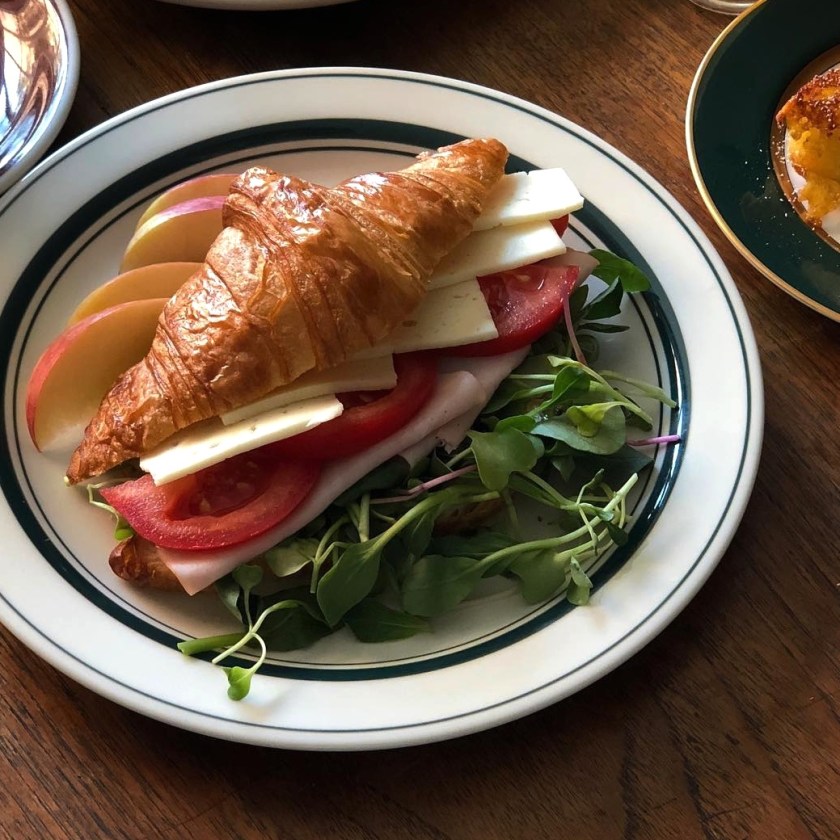
Fillings of either a savoury kind (vegetables, sliced cheese, meat and the like) or simply something sweet and buttery placed on or between slices of bread (two or more) make up the basic sandwich. Although in general, if two or more pieces of bread serve as a wrap or container holding in a set of fillings, which can be had as finger foods, constitute “the sandwich”. Though the name “sandwich” is attributed to John Montagu, 4th Earl of Sandwich, this basic combination has been there quite earlier.

The use of bread (including flat-breads) or bread-like staple to lie over and under or simply cover up or used to scoop up, enclose or wrap up another mix of ingredients was used in such a fashion in various cultures across the continents. Throughout Western Asia and northern Africa areas, the indigenous cuisine had the use of flat-breads ( bread baked in flat rounds, contrasted tot he European loaf), whih were used to scoop or wrap small amounts of food (in a spoon like fashion) while having the meal.

As per records, Hillel the Elder (ancient Jewish sage) had wrapped meat from the Paschal lamb and bitter herbs in a soft matzah—flat, unleavened bread—during Passover (like a modern wrap). The European Middle Ages saw “trenchers” (thick slabs of coarse and usually stale bread) being used as plates. After the meal, these food-soaked trenchers were fed to dogs. Seventeenth century Netherlands had the immediate culinary precursor (with a direct connection to the English sandwich)as recorded by the naturalist John Ray that in the taverns beef hung from the rafters “which they cut into thin slices and eat with bread and butter laying the slices upon the butter”, which were served as the Dutch “belegde broodje” an open-faced sandwich.

“It’s like making a sandwich. I start with the bread and the meat. That’s the architecture. Add some cheese, lettuce and tomato. That’s character development and polishing. Then, the fun part. All the little historical details and the slang and the humor is the mayonnaise. I go back and slather that shit everywhere. The mayo is the best part. I’m a bit messy with the mayo.” Laini Giles

Moving forwards to the eighteenth century England, the popularity of the sandwich arose as the popular myth that bread and meat sustained Lord Sandwich at the gambling table (as recorded in Tour to London by Pierre-Jean Grosley). As legend goes Lord Sandwich ( being a very conversant gambler and into many portfolios for the government) didn’t take the time to have a meal during his long hours playing at the card table. Instead he would ask his servants to bring him slices of meat between two slices of bread. This habit (well known among his gambling friends) enticed them to order as “the same as Sandwich!”. Thus the terminology “sandwich” was born. Alternative account as written by N.A.M.Rodger (Sandwich’s biographer), who suggests that Sandwich’s commitments to the navy, politics and the arts meant that the first sandwich was more likely to have been consumed at his work desk. As per records the original sandwich was a piece of salt beef between two slices of toasted bread.

What was initially perceived as food that men shared while enjoying a game or drink as social nights, the sandwich slowly began appearing in polite society as a late-night meal among the aristocracy. With the rise of the industrial era and the working classes as well as the ease of making and inexpensive ingredients, the popularity of the sandwich rose in the nineteenth century. The street vendors had popularized the sandwich sales (London, 1850). Also typically serving liver and beef sandwiches, sandwich bars were set up (especially in western Holland). The sandwich was first promoted as an elaborate meal at supper, in the United States. As bread became a staple of the American diet (early 20th century), the sandwich became the same kind of popular, quick meal following the widespread trend of the Mediterranean and European cuisine.

“I love sandwiches. Let’s face it, life is better between two pieces of bread.” Jeff Mauro

By itself, sandwich has a wide range of varieties, from the simple PB&J sandwich to the more complicated fillings. Broadly mentioning the major types of sandwich include those with the two slices of bread (or halves of a baguette or roll) with other ingredients between; more complex sandwiches like club, hero, hoagie or submarine sandwich, open-faced sandwich and the pocket sandwiches. Based on the fillings as well as type of sandwich, there is the BLT, cheese sandwich, French dip, hamburger, Monte Cristo, muffuletta, pastrami on rye, peanut butter and jelly sandwich, cheese-steak, Reuben and sloppy joe to mention a few.

Few misnomers include the sandwich cookies and ice cream sandwiches, named by analogy not because of them being bread containing food are generally not considered sandwiches in the sense of a bread-containing bits. Another variant is the layer cake or sandwich cake, made of multiple stacked sheets of cake, held together by frosting or another filling type like such as jam or other preserves.

“Enjoy every sandwich.” Warren Zevon

Sandwiches, today can be filled with a variety of fillings, ingredients based on choice, availability, ingenuity and locality. From the Baloney salad sandwich to the Vietnamese Bánh mì or the Chilean Churrasco, French croque-madam, Chinese Rou jia mo, Southeast Asian Roti john, Finnish Ruisleipä and Hunagrian Zsíroskenyér to mention a few, the sandwich culture has evolved in a way. Keeping in a more creative manner fillings can range from the more bizarre like popcorn or marshmellows to Oreo cookies or the more intricate and spicy curry for a change. So when in a flurry for time, getting creative with a sandwich can o wonders for the body, mind and soul.

“I put some flour, salt, and spices in a freezer bag and then put the pieces of lamb in and then went shake-shake-shake. The lamb was nicely covered with the flour. I browned the lamb and then put it aside. Then I fried some onion with cinnamon, cloves, and cardamom, added some tomatoes and then the lamb, and cooked until the lamb was all flaky. I mixed chopped lettuce, pieces of avocado, and pomegranate seeds, along with a little bit of lemon juice. I cut the pita bread open, put the lamb curry in, and then the lettuce-avocado mixture. All done!” Amulya Malladi (author of Serving Crazy with Curry)


Posted in Daily, Food, Stories Around the World

“Pop” the Corn

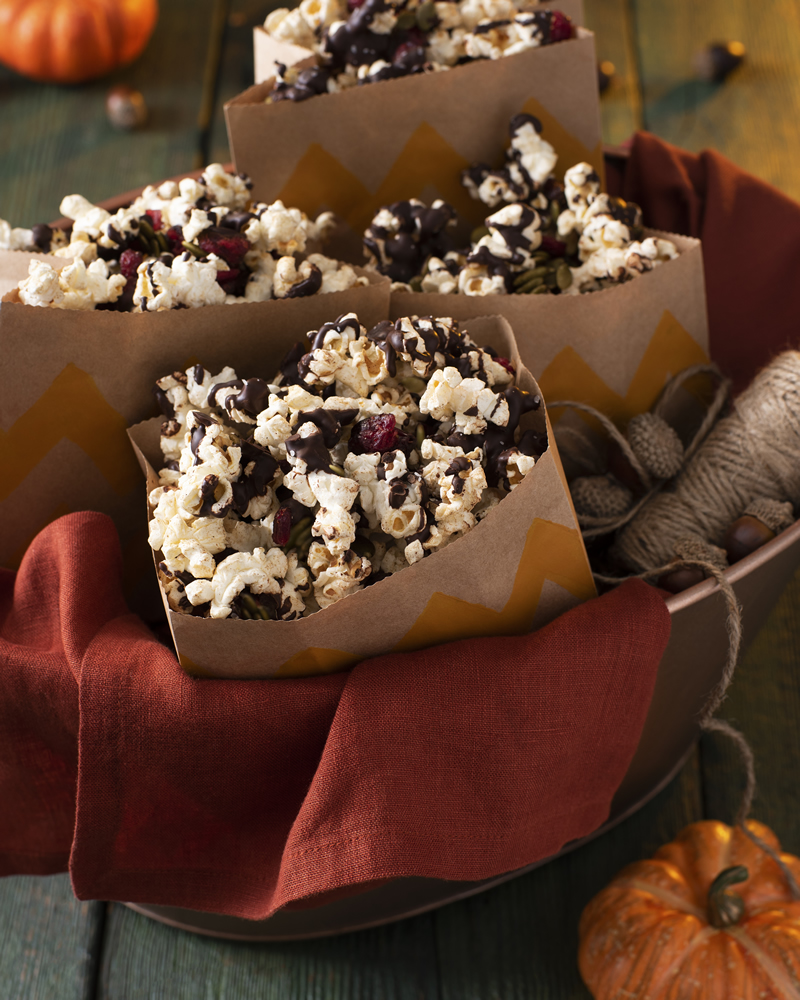
One of the appealing reasons of having the children start off the early weekend at the family homestead are the possibility of enjoying the late movie nights. While all their cousins gather for fun night followed by sleepover, we adults can enjoy a late night with either a marathon movie run with that huge tempting bowl of popcorn. Minus this combination, the movie runs feel incomplete. Along with the numerous flavourings and seasonings, each popcorn night lets the experimentation streak run free.

“Have you ever pondered the miracle of popcorn? It starts out as a tiny, little, compact kernel with magic trapped inside that when agitated, bursts to create something marvelously desirable. It’s sort of like those tiny, little thoughts trapped inside an author’s head that? in an excited explosion of words?suddenly become a captivating fairy tale!” Richelle E. Goodrich

One of the first use of the first use of wild and early cultivated corn was popping. Food historians believe that popped corn was integral to the South American regions as well as a part of the Aztec Indian ceremonies (early 16th century). As recorded by Bernardino de Sahagun, “And also a number of young women danced, having so vowed, a popcorn dance. As thick as tassels of maize were their popcorn garlands. And these they placed upon (the girls’) heads.” To date, the oldest ears of popcorn ever found were discovered in west central New Mexico(Bat Cave, 1948 and 1950) and dated to about four thousand years old.

Not just for basic food, popcorn was also used as decoration for ceremonial headdresses, necklaces and ornaments on statues of their gods (Aztec Indian), including Tlaloc, the god of rain and fertility. Following the traditions of Peruvian Indians, “They toast a certain kind of corn until it bursts. They call it pisancalla, and they use it as a confection (Spaniard Cobo, 1650).” Accounts of French explorers wrote of Iroquois people popping tough corn kernels in pottery jars filled with heated sand.

Early Spanish accounts write of various ceremonies honouring their gods as, “They scattered before him parched corn, called momochitl, a kind of corn which bursts when parched and discloses its contents and makes itself look like a very white flower; they said these were hailstones given to the god of water.” Finding it’s place among burial grounds as well, these kernels of popcorn were so well preserved that they would pop even though they were a thousand years old.

With colonization, trade imports and exports, popcorn had entered into the food patterns of the settlers and colonists. Initially through the 19th century popping of the kernels was achieved by hand on the stove-top. In fact the term “popped corn” first appeared in John Russell Bartlett’s Dictionary of Americanisms(1848) with the very early years seeing them popped by hand and added as ingredients to various products. Although popcorn was beloved by families as a late-night snack in front of the fire, or at picnics and sociables; mass consumption of the treat took off after Charles Cretors, a Chicago based entrepreneur who had built the first popcorn-popping machine (late 1890s) with the arrival of street carts with fully equipped steam-powered popcorn makers.

Adding to the ease of availability was the fairly inexpensive cost, such that it became a popular snack especially during the Great Depression. With the snack being popular especially at the movies as well as drive in shows, carnivals, fairs and matches, it became an essential part of these events. Over time popcorns have evolved from their basic style to a varied range of flavoured variants like caramel chipotle, coffee caramel and kettle, cheddar; although the classic butter and salt still stays ahead on the favoured list.

“Of course life is bizarre, the more bizarre it gets, the more interesting it is. The only way to approach it is to make yourself some popcorn and enjoy the show.” David Gerrold

Not just for the basic munch time, popcorn has found it’s place in numerous recipes like cheesy popcorn bread, power bars, glazed into sweet treats, muffins or as an add on to the salads, cereals, healthy mixes or simply into edible or inedible art, going beyond the food zone. Little wonder then why this kernel of delight has stayed on since it’s evolution from the very early years, still being a favourite then and now, with age never being a barrier.

Posted in Daily, Food, Stories Around the World

Of Pasta, Origin and Style

“Life is a combination of magic and pasta.” Federico Fellini

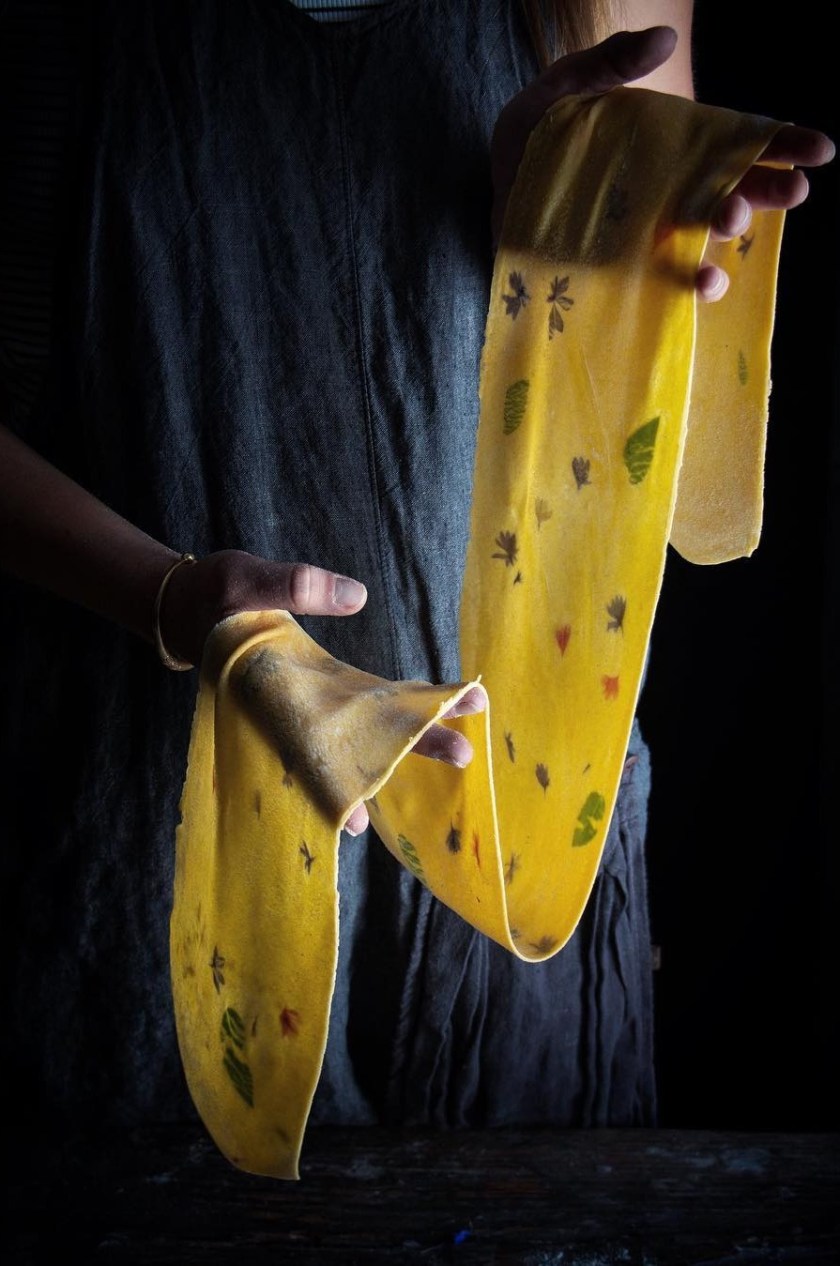
Typically made from an unleavened dough of durum wheat flour (semolina) mixed with water or eggs, formed into various shapes or as sheets, then cooked by boiling or baking, pasta has been there since the ancient years. Although etymology speaking, the first English attestation of the word “pasta” (1874) comes from Italian pasta, which was from the Latin pasta, the latter being the  Latinization of the Greek παστά (pasta) meant as “barley porridge”.

“You don’t need a machine to make pasta: a rolling pin and a fast hand can create a smooth, if thick, sheet.” Yotam Ottolenghi

Broadly divided as two categories of fresh (pasta fresca, prepared traditionally by hand or at home) and dried (pasta secca, commercial preparation). One of the advantages of pasta is it’s versatility from being the main course to a side dish, as salad or as a filler for sandwiches or as an accompaniment to main course or as light lunches. Classically there are three main kinds of prepared dishes. One type is the pasta asciutta (or pastasciutta) wherein the cooked pasta is plated and served with a complementary side sauce or condiment. Another is the pasta in brodo, in which the pasta is part of a soup-type dish. The third category is the pasta al forno where the pasta is incorporated into a dish that is subsequently baked in the oven.

Tracing the origin of pasta, the entire roots don’t lead back to Italy alone. The writings of Horace (1st century AD) mention lagana (singular: laganum) made of fine sheets of fried dough used in the daily menu. Athenaeus of Naucratis (2nd century AD) provides a recipe attributed to Chrysippus of Tyana(1st century AD) wherein sheets of dough made of wheat flour and the juice of crushed lettuce, then flavoured with spices and deep-fried in oil. However the method of cooking these sheets of dough does not correspond to the modern pasta, although the basic ingredients and perhaps the shape were similar. Food historians have noted several milestones, similar to pasta. Like the itrion (mentioned by Greek physician Galen, 2nd century AD) as homogeneous compounds made of flour and water, later modified as a boiled dough known as itirum common to Palestinian lands (300 to 500 AD) and recorded so in the Talmud. The Arab physician and lexicographer Isho bar Ali (9th century AD) defines itriyya, the Arabic cognate, as string-like shapes made of semolina and dried before cooking. A form of itriyya is laganum (Latin) which refers as a thin sheet of dough, a precursor of the modern Italian lasagna.

“You can buy a good pasta but when you cook it yourself it has another feeling.” Agnes Varda

The North African areas had couscous (steamed balls of crushed durum wheat semolina or of pearl millet and sorghum), more like droplets of dough which is less malleable than pasta. Rustichello da Pisa writes in his Travels that Marco Polo described a food similar to “lagana”. With traces of pasta being found in Ancient Greece and later Arabian cuisine records of similar dishes, pasta has come a long way before being ingrained into the Italian cuisine and culture. The first concrete information concerning pasta products in Italy dates from the 13th or 14th century. And as far as shapes of pasta and their sauces are concerned, there is a whole mine of information out there. From long to short, minute pasta for soups (pastina) or pasta all’uovo (egg pasta), there are many varieties of the basic pasta. For those of us, who need them gluten free, alternatives include rice flour, brown rice, shirataki noodles, chickpea, quinoa, corn, millet, buckwheat and amaranth to mention a few with certain varieties of gluten free being multigrain (mix of all above).

Although pasta dishes are generally simple, individual dishes vary in preparation with the flavors of local cuisine being incorporated when possible. With the mood for autumn setting in and ingredients varying to availability and choice, spicing up a basic pasta dish to the more elaborate style can set the creative cooking into full swing with an undeniable delectable pleasure for the palate and the taste buds. A bit of pasta can add plenty of spice, the way one wants it so.

Posted in Daily, Food, Stories Around the World

The “Gin and Tonic” Way

“A Spoonful of sugar helps the medicine go down
The medicine go down-wown
The medicine go down
Just a spoonful of sugar helps the medicine go down
In a most delightful way”
( Excerpt from the Lyrics of A Spoonful of Sugar in the movie Mary Poppins, an 1964 American musical fantasy film.)

The process of making any child take their medicine involves plenty of guile and quick action. Maybe such a trick was used by the Scottish doctor George Cleghorn to ensure that quinine had reached the officers in the malaria prone areas of the Indian subcontinent and other tropical regions (1700s).

“The gin and tonic has saved more Englishmen’s lives, and minds, than all the doctors in the Empire.” Winston Churchill

To mark the bitter taste of quinine, a traditional cure for malaria, it was drunk in tonic water to mask the bitter taste. The early 19th century saw the British officers add a mixture of water, sugar, lime and gin to the quinine in order to make the drink more palatable, thus leading to the birth of gin and tonic. With the passage of years and evolution of modern medicine, the quinine in tonic water has been tapered down to a bare minimum. In hindsight, science has proved that essentially this practice of quinine intake was impractical for malaria prophylaxis or even treatment. Keeping those facts aside, it is the “gin and tonic” that stays on.

“When life gives you juniper berries, make gin!” Laurie Buchanan

Today gin and tonic serves as a highball cocktail with the ratio of gin to tonic varying as per taste, strength of the gin, the presence of other drink mixers; although most recipes mention a ratio between 1:1 to 1:3. The classical garnish was with a slice or wedge of lime. The mixers today include lime juice, lemon juice, orange juice, spiced simple syrup, grenadine, tea or a dash of champagne (the Parisian), super smokey whiskey (the Ol’ Smokey), peach liqueur and grapefruit bitters (Tonic Delight), mint bitters and chocolate liqueur (the Guilty Pleasure) and the like or simply mixed with a sorbet. From the classical lime wheel garnish to the orange peel, a slice of ginger, star anise, thyme-elder flower or the more exotic combinations of pink grapefruit and rosemary, mint and black peppercorns, strawberry and basil the evolution of the garnishes for gin and tonic is depending on own taste and local availability. The Spanish variation of gin and tonic has the drink from being fruit based or the use of herbs and vegetables served in a balloon glass as the latter helps to appreciate the aroma of the drink better.

On similar lines to gin and tonic, the Dubonnet, a sweet, aromatised wine-based aperitif made as a blend of fortified wine, herbs, and spices with alcohol was first sold by Joseph Dubonnet (1846) to find a way of persuading French Foreign Legionnaires in North Africa to drink quinine. Likewise the “Lillet” and quinquina were similar aperitif wines initially made for medical reasons with the latter purpose made obsolete over time.

The popularity of the variations of the gin and tonic has led to the establishment of exclusive Gin-Tonic bars, in which customers can choose their preferred gin, tonic, and garnish from a menu. With the creativity streak coming to the forefront at gatherings especially when supplies are limited, the different variations of gin and tonic bring forth recipes and mixes worth the change.

Posted in Daily, Food

Sparkles on the Cups

Originally referred to as number cakes or “1234 cakes” (based on the measures of the ingredients), these sugary delicacies of 1700s have reached their own level of importance and appeal for the dessertarian of the present era.

“Cupcakes take the cake.” Unknown Author

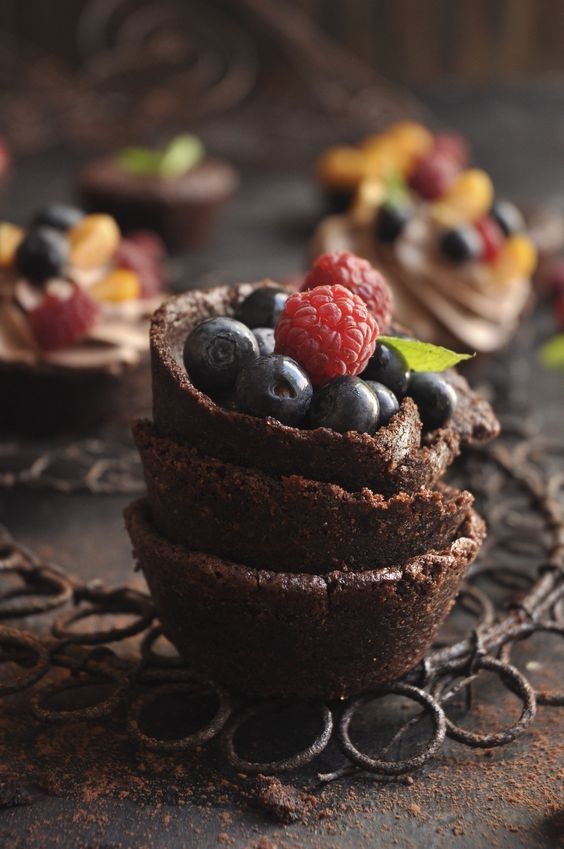
While the earliest description of today’s cupcake was based as a recipe for “a light cake to bake in small cups” as written in American Cookery (1796) by Amelia Simmons, the term “cupcake” itself was seen earlier as per Eliza Leslie’s Receipts cookbook in “Seventy-five Receipts for Pastry, Cakes, and Sweetmeats” (1828). Though the early 19th century saw the distinction between “cup cake” (based on measures or cups” and the cupcake, the difference was more for the baker’s perspective. Over the years, cupcakes turned from the simple delights to those with frosting, icing, sprinkles and sparkles. With the redesigning and reassembling and additions of ingredients, flavours and colours, the “cupcake” became a palatable fest and an art by itself. For special occasions, elaborately designed and frosted cupcakes have replaced the specially designed cakes, for a while.

With the arise of a variety of cupcakes, many other variants to the regular baking techniques have been seen. Like the popular “cake in mug” (made in a microwave) or “cake in a jar” are other ways of making cupcakes. By the latter technique, a glass jar instead of muffin tins or cupcake liners is used to bake the mix. Of the specially designed variants, are the fairy cakes or butterfly cake, a variant of cupcake made from any flavour of the cake. The top of the cupcake is cut off or carved out with a spoon and cut in half. Butter cream, whipped cream, jam or similar sweet fillings are spread into the hole. Finally the two cut halves are stuck into the butter cream to resemble butterfly wings with the “wings of the cake” being often decorated using icing to form various patterns.

Likewise “cake balls” are individual portion of cake, round like a chocolate truffle, coated in chocolate and made from crumbled cake mixed with frosting (than being baked) made as a sphere. Yet the specialty are in the “gourmet cupcake” of today, a recent variant of the routine cupcake. These “gourmet cupcakes” are large filled cupcakes, based around a variety of flavor themes like Tiramisu, Cappuccino, Oreo cookie shards, M &M rich and other exotic flavours.

“When you look at a cupcake, you’ve got to smile.” Anne Byrn

With each cupcake getting it’s special days, for the Chocolate Cupcake Day (October 18th) it would be fun to redesign the simple chocolate cupcakes as elaborate fairy cakes, sprinkles and icing or simply experiment and enhance the available recipe to an exotic twist. For that’s the fun with the sugar rush and art of dessert.

Posted in Daily, Food, Stories Around the World

Yorkshire, Pudding and a Twist

Flour. Eggs. Milk.

On one quiet Sunday afternoon, these four staple ingredients in the pantry brought out the urge to try something different for the Sunday dinner. As the option of sweet or savoury were being considered, the experimentation ran into attempts at making Yorkshire pudding.

One of the most favoured English dishes, Yorkshire pudding is a baked pudding which can be served in numerous ways. From being a main course dish served with meat and gravy or filled with banger and mash or made into dessert with fillings of chocolate, the options keep on changing depending on the choice of ingredients, the size of the pudding, and the accompanying components of the dish.

“Make a good batter as for pancakes; put in a hot toss-pan over the fire with a bit of butter to fry the bottom a little then put the pan and butter under a shoulder of mutton, instead of a dripping pan, keeping frequently shaking it by the handle and it will be light and savoury, and fit to take up when your mutton is enough; then turn it in a dish and serve it hot.
– A recipe for “a dripping pudding” as published in the book “The Whole Duty of a Woman” by Lady A; Kenrick, William (1737).

While the exact origins of this dish aren’t traced to any particular era, the recipe in records was seen in the sixteenth century. Originally this dish was believed to be served as first course to dull the appetite for the main meat and vegetables served as the second course. In poorer households, the pudding was often served as the only course. As to the name “Yorkshire”, the probability lies in the crispier batter of the pudding in this region, made so by the higher temperatures produced by the coal.

One of the reasons of its’ popularity lies in the ease of cooking. By pouring the batter made from milk (or water), flour and eggs ( basic ratio of 1/3rd cup flour and 1/3rd liquid per egg), into preheated, oiled, baking pans, ramekins or muffin tins (in the case of miniature puddings), they can be made steamed, in the pan or ovens. A steamed recipe involves covering the pudding with grease proof paper to steam it and then serve with jam and butter (1926).

“It is an exceeding good pudding, the gravy of the meat eats well with it,” states Glasse. “…. To set your stew-pan on it under your meat, and let the dripping drop on the pudding and the heat of the fire come to it, to make it of a fine brown.” (recipe as recorded in The Art of Cookery Made Plain and Easy by Hannah Glasse (1747)).

The versatility of the Yorkshire pudding can be felt across the various cuisines. With Laplanders (also known as popovers) of the American cuisine, these are light rolls made from an egg batter similar to that of Yorkshire pudding, typically baked in muffin tins or dedicated popover pans (straight-walled sides rather than angled). Similar dishes ( batter based savoury dishes) include the French gougère (a savoury choux pastry mixed with cheese), Bismarck or Dutch baby pancakes, takoyaki (a Japanese puff batter dumpling with octopus) or the more elaborate dish of “Toad in the Hole”. Traditional variants with local flours like sago, split gram flour, gluten free or palaeo based Yorkshire puddings and the like have been tried. The beauty of experimentation of the different recipes lies in simple adaptation, palatability and above all, bringing a bit of another culture to the table.

Half a pound of flour
1 ounce of butter
2 eggs
Milk to mix
Put the half-pound of flour into a basin and rub in the butter. Make a hollow in the centre of the mixture and break in the egg, beat well adding the milk gradually until all is mixed. Then beat for a further fifteen minutes, when the mixture coats a spoon it is ready. Grease a pudding basin and pour in the mixture, cover with greaseproof paper and steam for one and a half hours. Serve with jam, butter and sugar. [Note, for cooking the water should only come half way up the dish.
Source: Recipes Past and Present. A Wootton Bridge Historical website

Posted in Food, Photography Art, Stories Around the World

Shape in Style

“Life is a cake and love is the icing on top of it. Without love, it becomes difficult to swallow life.” Mehek Bassi

Accompanying my cousin to the bakery was an enlightening event yesterday. With the twins birthday approaching in two weeks time, it was time for the placing the order for the cake. Like all to-be-four year old minds, they had very specific ideas for their cake; from the “Cars” based theme to the Disney’s “Frozen” theme, the possibility of getting one big cake design was the heart of the discussion with the main baker.

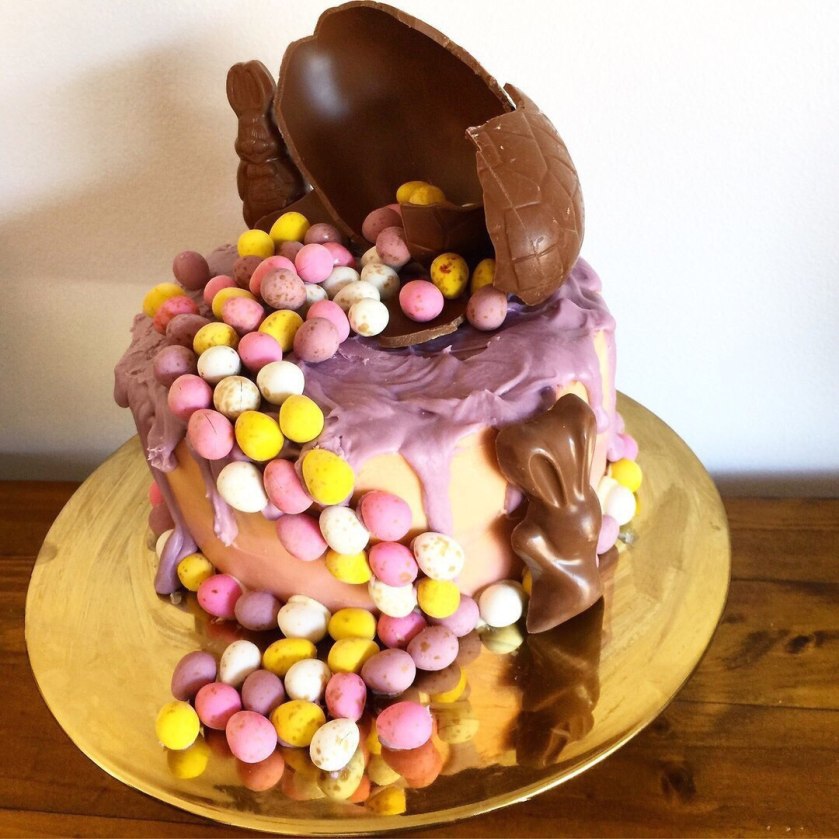
While waiting, scanning through the cake design books and available cakes on display was a feast for the artistic eye. While my childhood consisted mostly of cream with icing birthday cakes, these days fondant designed and themed cakes are the rage. Today, the early methods akin to construction of a structure by cutting shapes out of cake and piecing them together have been superseded by preformed character based designs and the shaping of cakes out of fondant and different forms of marzipan. From fondant (sugar paste or ready roll icing), royal icing, marzipan, modeling chocolate, gum paste and latest of few, edible ink printing, the design over cake has been transformed greatly.

Cake decorating had originated in Europe around the 17th century. With the production of baking powder and temperature controlled ovens (1840s), baking cakes became easy and the presentation more elaborate. The exact origins of cake decorating was believed to from a French bakery (1840s) when prices were increased on their cakes as the latter were decorated. With decorative shapes, cakes were adorned with icing, formed into patterns, flowers and food colouring was used to accent the frosting or layers of cake. Over the years depending on the occasions, cake decorating styles have been enhanced along with the ornamentation being more artistic.

These days even homemade cakes are being embellished with something simple as powdered icing, chocolate layer with sprinkles or the good old coloured icing. With the numerous designs and models of 2-D or 3-D made, no wonder that cake shows and related artistry are the all time rage not just for the special occasions or celebrations but also for avid dessertarian, dessert chefs or simply for the love of baking and art. 

“Whether you’re a bride or a birthday boy, your options are much the same. Cake comes in chocolate, yellow, or white. Frosting comes in chocolate or vanilla buttercream, or you can opt for whipped cream. Fillings are either chocolate or vanilla custard, fresh bananas, or strawberries or raspberries in season. For birthday cakes, you can have either flowers or balloons in your choice of colors. For wedding cakes, you can add either fondant or marzipan covering, or either smooth or basket-weave buttercream, in white or ivory, with either pearl-like dots or ribbony swags made of frosting, and fondant faux flowers are extra.” Stacey Ballis ( author of Wedding Girl)