Posted in Daily, Food, Stories Around the World

The “Meringue” Way

“To make white bisket bread.
Take a pound & a half of sugar, & an handfull of fine white flower, the whites of twelve eggs beaten verie finelie, and a little annisseed brused, temper all this together, till it be no thicker than pap, make coffins with paper, and put it into the oven, after the manchet is drawen.”
– Recipe for the “white biskit bread” in the book of recipes started (1604) by Lady Elinor Poole Fettiplace (c.1570 – c.1647) of Gloucestershire.
(Fettiplace, Eleanor Poole (1994). Hilary Spurling (ed.). Elinor Fettiplace’s Receipt Book. Translated by John Spurling. Bristol (U.K.): Stuart Press. Volume 1, page 23) noted by Muster (ref.)

Made from egg whites and sugar, whipped up to a finesse with a binding agent (salt, cornstarch or gelatin) and an occasional acidic ingredient (lemon, vinegar or cream of tartar) or flavorings of vanilla, coconut or almond; meringue had graced the dessert menu especially to highlight a special occasion or simply enjoy the pleasures of an exquisite delight. The origin till date, is a point of contention for food historians.

The name “meringue” had first appeared in cookbook by François Massialot (1692) (“XXVIII: Des Meringues & Macarons”. Nouvelle instruction pour les confitures, les liqueurs et les fruits (in French). Paris: Charles de Sercy. pp. 186–188). While the word “meringue” had first appeared in English in an English translation of Massialot’s book (1706); two considerably earlier seventeenth-century English manuscript books of recipes give instructions for confections known as “white bisket bread” and “pets” of what are today are recognizable as meringue. The other claim was that meringue was invented in the Swiss village of Meiringen and improved by an Italian chef named Gasparini between the end of the 17th century and the beginning of the 18th century.

“To make Pets
Take a pownd of Drye fine searsed [sifted] suger, & beat the whites very wel then take off froutgh [froth] & put your suger, bye litle & litle in to it — contineually stiring it & beating it with a spoone ore laydle, and when it is exceedingly well beaten, then have some pye plates ready buttred & wipe the buter of because the lesse buter it hath the beter, then drope them upon the plate & put in to every drope a carieway seede or coriander then let your oven be very temparate and watch them with a candle all the while & if they be right they will rise and looke very white, it is good at the first to set a scilet [skillet] of water, with them in to the oven,& when they be thowrow [thoroughly] drye then take them out, you must in the mixing of them put 12 graines of muske & 12 of Abergrisse [Ambergris] which you must bruse with suger before you stire it in to the egge & suger.”
– Recipe for a baked beaten-egg-white-and-sugar confection (1630) is given in a manuscript of collected recipes written, by Lady Rachel Fane (1612/13 – 1680) of Knole, Kent. (Barry, Michael (1995). Old English Recipes. Jarrod (archived at the Centre for Kentish Studies, Maidstone, Kent). p. 64f.)

The faster they are beaten, the better is the flavour. The key to the formation of a good meringue is the formation of stiff peaks by denaturing the protein of egg whites by pure mechanical shear force. Today these light, airy and sweet confections are made at home (more chewy and soft, and crisp exterior), though the commercial ones still thrive. Interestingly, meringues were traditionally shaped between two large spoons (still done so at the home kitchens) till Antonin Carême piped the “meringue through a pastry bag”.

Over the years, various techniques have been improvised to bring forth the French or basic meringue, Italian, Swiss and even the vegan meringue. From biscuits, desserts to embellishment, each meringue based recipe like the lemon meringue pie, baked Alaska, dacquoise, Esterházy torte to mention a few, all have a story and art of their own to tell. With meringue taking the form of whimsical shapes such as mushrooms; or piped into a crisp basket that is baked and filled with cake, fruit, or flowers are few of the many reasons why these delicacies are here to stay and transform the art and flavours of dessert.

Posted in Daily, Food, Quotes

Lessons from the Kitchen

“Find something you’re passionate about and keep tremendously interested in it.” Julia Child

The second week of August always results in a tussle for the television remote, especially during the evening hours, before dinner. Eventually one gets to watch the latest sports round up or the current political scenes; while the other ends up watching You Tube for the vintage episodes of Julia Child’s shows namely “The French Chef”. Marking the birth week of Julia Child who had made French cooking sound feasible, few shows presenting her famous recipes, episodes or the iconic movie Julie & Julia (2009), paying a tribute to this legendary chef. Though one mayn’t be an avid chef or interested in the art of cooking, there are a couple of lessons on the kitchen front that Julia Child had taught her viewers over the years.

“You’ll never know everything about anything, especially something you love.” Julia Child

“…no one is born a great cook, one learns by doing.” Julia Child, My Life in France

The first few years away from the home environment results in one learning the basic few cooking skills. As the years move on, with the intermixing of cuisines and experimentation, taste buds refine and the likes develop. Entering into relationships and the adult life of the family, cooking for loved ones including making or recreating dishes as per their taste. As one’s own family evolves, cooking comes from the heart. In sequence, what comes from the heart is born out of love, care and interest for the loved ones. Such purpose will conquer the fear of “the dish going bad or wrong”. Along with finesse, it is the dash of love that matters the most.

“The only real stumbling block is fear of failure. In cooking you’ve got to have a what-the-hell attitude.” Julia Child

“You don’t have to cook fancy or complicated masterpieces – just good food from fresh ingredients.” Julia Child

During the early years, kitchens were fun especially during the rainy days. Learning to mix the flour, knead it and make flatbread was more about fun and doing, than understanding what happens. Then as home science begins during the middle school and science is explored further, one begins to comprehend the science in the kitchen. Later once alone, cooking becomes an experimentation of flavours, mix of colours, interest and imagination. Eventually cooking evolves into a form of art and science, spiking the interest of the mind as well as the senses.

“The more you know, the more you can create. There’s no end to imagination in the kitchen.” Julia Child via Lynn Gilbert, Particular Passions: Talks With Women Who Have Shaped Our Times

“One of the secrets, and pleasures, of cooking is to learn to correct something if it goes awry; and one of the lessons is to grin and bear it if it cannot be fixed.” Julia Child, My Life in France

Over the years from a novice to learning to master the meals for family and friends, there have been epic disasters, emergency restaurant bookings, late night takeaways and unplanned visits for the family homestead dinners. Yet through the mess, mistakes have been understood and corrected. New recipes and cuisines experimented, modified and old, tested or tried recipes redone with one’s own signature style. Through the uphills and downhills in the kitchen, it is still the fun that stays in the memories made for the self, with children, family and friends around. Man mayn’t live by bread alone, but making it in style, from scratch and with own flavours gives a full sense of accomplishment, happiness within and fun memories to hold onto for a lifetime.

“This is my invariable advice to people: Learn how to cook- try new recipes, learn from your mistakes, be fearless, and above all have fun!” Julia Child, My Life in France

Posted in Daily, Food

Of Panini, Origin and Evolution

Meaning small bread or bread rolls as derived from the Italian panini [paˈniːni] or panino; these sandwiches are made with Italian bread (such as ciabatta and michetta), usually served by grilling or toasting. While the modern panini may have baguette as the bread; the deli ingredients of the horizontally cut bread can be filled with one’s own choice. From salami, cheese, ham, vegetables sliced or pickled; the choices are aplenty.

“[Panini] are said to have originated in Lombardy, Italy, in response to the demand among Milanese office workers for a quick lunch without sacrifice in flavor and quality. In both Italy and the United States, panini are eaten for lunch and as snacks and appetizers. In Italy, sandwich shops traditionally wrap the bottom of the panino in a crisp white paper napkin, providing a practical solution to drips while enhancing aesthetics. Quality Italian bread is an absolute must for a killer panini, and most sandwich chefs will opt for a relatively thin artisan bread like grooved focaccia or ciabatta, slicing it in half horizontally. Panini are always grilled, so most restaurants and cafes have invested in professional grooved sandwich presses that flatten and heat the sandwich while creating a crunch, buttery outer crust.” -American Sandwich: Great Eats from all 50 States, Becky Mercuri [Gibbs Smith:Salt Lake City UT] 2004 (p. 81)

The earliest precursor of panini was believed to be in the 16th century Italian cookbook; food historians have traced these sandwiches to the trendy Milanese bars, called paninoteche (1960s). As their popularity had crossed the Atlantic in the mid-1970s, the first American reference to panini dates to 1956. With each city having their own distinctive version of panini, variation were developed in plenty. During the 1980s, “paninaro” had evolved which was the youngsters’ culture typical of teenagers to enjoy a meet and eat place like the sandwich bars, such as Milan’s Al Panino. These had later evolved to the initial style of fast food restaurants opened in Italy.

Over time, panini had evolved to more flavours and texture with the bread changing type along with the mix. As their popularity spread across the seas to the Asian continent and the Orient, the portability, easy preparatory, individual taste and choice have contributed to their fair share in the menus across the globe. Little wonder, why then August had been dedicated as the month of the panini  by experimental foodimentarians, for every kitchen of theirs would have made or had the “panini” at some point of time.

Posted in Daily, Food

Flavoured, Creamy and Soft

“My idea of a perfect day is a frozen custard at Shake Shack and a walk in the park.” Nora Ephron, I Remember Nothing: and Other Reflections

Similar to ice cream, but denser and containing higher percentage of egg in addition to cream and sugar; frozen custard has been of late in rage, especially when one wants a break from the regular cold dessert of ice-cream.

Since the 1690s, experimentally egg yolks were tried for the ice cream recipe, the percentage was very low and the popularity stayed strong with ice-cream as such. Yet when vendor Archie C. Kohr had increased the concentration of egg yolk to the regular ice cream; not only was the texture improved, it became more denser and didn’t melt quickly. Thus, “frozen custard” was invented in Coney Island (1919). Later this frozen custard was introduced at the Chicago World’s Fair. From then on, it had gained the hearts of dessert lovers. As this silky product is extruded through the huge metallic contraptions (sometimes known as “iron lungs”), into the bucket and then scooped into cups or wafer cones; the smooth, cream coloured texture is rich but not cloying on the taste buds.

As per the U.S. FDA, the distinction between ice-cream and frozen custard is very fine with the latter to consist of at least 10 percent milk fat and 1.4 percent egg yolk solids. The true or original frozen custard is a very dense dessert. Air is not pumped into the mix, nor is it added as an “ingredient” but gets into the frozen state by the agitation of liquid similar to whisking a meringue. The high percentage of butterfat and egg yolk gives frozen custard a thick, creamy texture and a smoother consistency than ice cream.

For the experimenters, there is always homemade frozen custard to be made with the added fun of an ice-cream social. Also the store bought or a good deli frozen custard can spice up the regular Sunday brunch desserts as add-ons to cake, regular shakes or prepped up with nuts, crushed almonds or m&m’s. All said, with foodimentarians gearing up to celebrate the National Frozen Custard Day(August 8th), it would be a good time to try out this cold dessert.

Posted in Daily, Food, Stories Around the World

Chip it In, Bake It

Whitman, Massachusetts, 1938

“We had been serving a thin butterscotch nut cookie with ice cream. Everybody seemed to love it, but I was trying to give them something different. So I came up with Toll House cookie. Add up chopped up bits from from a Nestlé semi-sweet chocolate bar into a cookie. The original recipe is called “Toll House Chocolate Crunch Cookies.”
– American Chef Ruth Graves Wakefield, Toll House Inn
(Wakefield, Ruth Graves (1942). Ruth Wakefield’s Toll House Tried and True Recipes. M. Barrows & Company, Inc.)

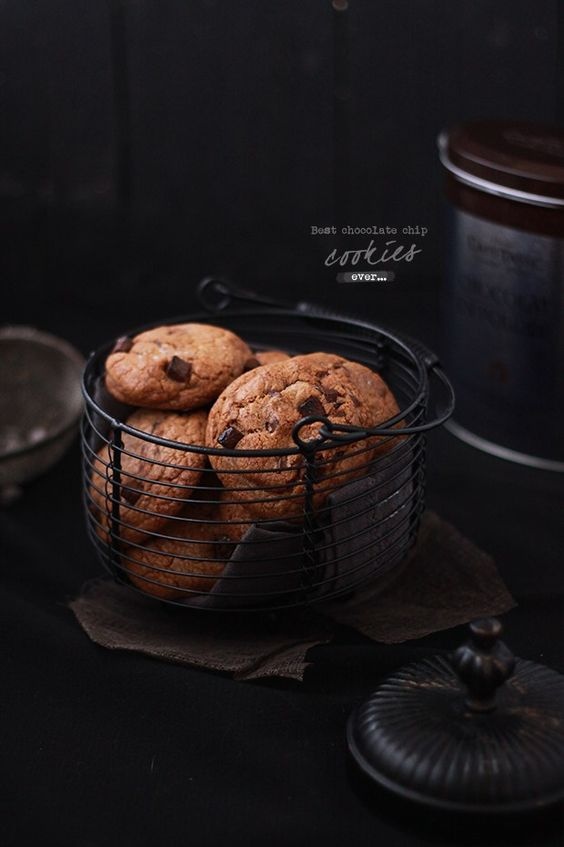
One of the famous drop cookies, “the chocolate chip cookie” had its’ origins in the early 1900s; wherein chocolate chips or choclate morsels were added to the regular cookie dough as the distinguishing ingredient. With a dough composed of butter, both brown and white sugar, semi-sweet chocolate chips and vanilla; the traditional recipe had evolved. Originally invented by the American chef Ruth Graves Wakefield and chef Sue Brides (1938) when the former owned the Toll House Inn (Whitman, Massachusetts); a popular restaurant that featured home cooking. Wakefield credited Brides with helping her make the famous chocolate chip cookie.

Over the years, variations with different varieties of chocolate, change of ingredients like nuts, oatmeal, raisins and the like paved way. Variations on the original recipe may add other types of chocolate, vegan substitutes as well as additional ingredients such as nuts or oatmeal. The ‘double’ or ‘triple’ chocolate chip cookies are so called when dough flavored with chocolate or cocoa powder are used before chocolate chips are mixed in. These variations of the recipe are often referred to as , depending on the combination of dough and chocolate types.

“If you can’t change the world with chocolate chip cookies, how can you change the world?” Pat Murphy

As the popularity grew, especially during WWII, soldiers from Massachusetts who were stationed overseas shared the cookies they received in care packages from back home with soldiers from other parts of the United States. Soon hundreds of soldiers asked their families to send them some Toll House cookies. Thus began the craze for the chocolate chip cookie with Wakefield receiving letters around the world requesting her recipe.

In proportion to the increased popularity of the choclate chip cookie, the sales of Nestlé’s semi-sweet chocolate used rose. Andrew Nestlé offered Ruth a deal to buy the rights to her recipe, as well as the rights to use her and the Toll House name when advertising his acquisition. The business proposal was accepted by Ruth for one whole dollar and a lifetime supply of Nestlé chocolate. Nestlé quickly launched a new marketing campaign that advertised the chocolate chips primarily as main ingredients for cookies, engraving the recipe for the Toll House Cookie on the package print.

“ One of the best things in life- warm chocolate chip cookies.” Anonymous

In an interview (2017), Sue Brides’ daughter, Peg shared the original recipe that was passed down to her.  The original Toll House cookie recipe, according to Peg:

1 1/2 cups of shortening
1 1/8 cups of sugar
1 1/8 cups of brown sugar
3 eggs
1 1/2 teaspoon of salt
3 1/8 cups of flour (Peg prefers King Arthur all purpose)
1 1/2 teaspoon of hot water
1 1/2 teaspoon of baking soda
1 1/2 teaspoon of vanilla
Chocolate chips (and walnuts)
Bake at 350 degrees for 12-13 minutes
[The Tried and True Recipes cook book specifies “2 bars (7 oz.) Nestlé’s yellow label chocolate, semi-sweet, which has been cut in pieces the size of a pea.”]
(Source:Stephanos, Maria (2017-06-21). “Secret’s out! Here’s the ‘real recipe’ for Toll House chocolate chip cookies”)

With Chocolate Chip Cookie Day being celebrated by foodimentarians tomorrow (August 4th), making similar or own variations of this delectable treat would be a lovely weekend surprise and fun event.

Posted in Daily, Food, Stories Around the World

Of Cheesecake, Origins, Style and Evolution

Pound the cheese until smooth and pasty. Mix the pounded cheese in a brass pan with honey and spring wheat flour. Heat the cheese cake “in one mass”, allow to cool and serve. ( Records from the oldest known Greek recipe, Athenaeus 230 A.D.)

One of the well loved desserts of “cheese cake” has its’ origins as early as the Greek civilizations of 6th century B.C. . Although it was believed that the first cheese cake may have been created on the Greek island of Samos, this mayn’t be exact. In fact, cheese and related products may have been there since the domestication of animals and use of milk by the primitive man. Th earliest evidence of cheese cake, was as per Greek records ( 5th century records of Greek physician Aegimus, Olympic records of 776 B.C. or Athenaeus writings of 230 A.D.) during sports and weddings (as the main wedding cake). Then the basic ingredients of flour, cheese, honey and wheat were taken in the right amounts and baked.

With the conquering of Greece by the Romans, the “cheesecake recipe” was modified to include crushed cheese and eggs. Either baked under a hot brick and served warm, or put into the pastry as a filling; the Roman cheesecake known as “libuma” was meant for special occasions. Cato the Elder’s De Agri Cultura accounts the earliest cheesecake recipes, which mentions three types; libum, savillum and placenta. The latter is almost like the modern cheesecake recipe with a crust that is separately prepared and baked.

“A dessert without cheese is like a beautiful woman with only one eye.” Anthelme Brillat

With the extension of Roman empire, later fall and rise of other civilization; cuisines and recipes were exchanged, experimented and evolved throughout Europe. From Great Britain to Eastern Europe, each region had their unique differences of ingredients, texture, method and presentation of cheesecake. The twelfth century had seen, a cheesecake recipe in the English cookbook, Forme of Curry (1390). Described as a flour based sweet food, various accounts also state cheesecake recipes as “cheese cut into very small pieces, soaked in milk for three hours; the mixture strained and eggs, butter and sugar being added (accounts of chef in employ of Henry VIII).”

Although the name “cheesecake” was used since the 15th century; the modern form of “cheesecake” had evolved around the 18th century. Then yeast was substituted with beaten eggs; thereby removing the overpowering yeast flavour and make it more “dessert-ish” and sweet. With immigration and migration to Americas, the recipes were further modified. The modern American cream cheese was developed in 1872 as an accidental discovery by William Lawrence (Chester, New York) as he tried to recreate the soft, French cheese Neufchâtel. Although he had made an “unripened cheese”, heavier and creamier than the regular; similar creations were made independently by other dairymen.

“New York means many different things to me. It certainly means cheesecake, more species of cheesecake than I ever knew existed: rum, orange, hazelnut, chocolate marble, Italian, Boston, and of course, New York.” David Frost

On a technical point, cheesecake today is more as a torte (based on number of eggs), tart or flan than being a “cake” as they have a separate crust, soft filling and the absence of flour in most recipes. In fact, modern cheesecake comes as two different types; of the baked cheesecake or cheesecakes made with uncooked cream-cheese on a crumbled-biscuit base.

With cheesecakes being broadly categorized as two basic types of baked or unbaked, each region or continent have their own versions or varieties. Like the most popular variety of South African made with whipped cream, cream cheese, gelatin filling, buttered digestive biscuit crust with Amarula liqueur, if not baked or the Asian style cheesecake of cornstarch and eggs (Japan) or cottage cheese, sugar and nuts ( Indian chhena poda, Odishan recipe) or the common unbaked Australian cheesecakes; one can modify the recipe for more fruit based or sweet (chocolate, vanilla or caramel) based flavouring.

“My favourite pudding is a toss-up between cheesecake – proper, New York cheesecake – and apple crumble and custard. Custard is very important, or dark chocolate mousse. Tea: probably Earl Grey, splash of milk.” Tom Hiddleston

For a more global cheesecake style, one can experiment and base recipes as per the French style (Neufchâtel cheese, gelatin), Italian-style (ricotta or mascarpone cheese, sugar, vanilla extract, small bits of candied fruit and sometimes barley flakes), Polish sernik, Russina vatrushka or like in the United Kingdom and Ireland.

The latter make their cheesecake typically with a base of crushed, buttered biscuits and often topped with a fruit compote. The usual filling is a mixture of cream cheese, sugar, cream and gelatin at times. Popular non fruit variations are banoffee, coffee, tea, chocolate, Irish cream, white chocolate, marshmallow flavors and even smoked salmon (Scotland). The New York style (heavy cream or sour cream based) and Chicago style (baked cream-cheese, fluffy with a shortbread based crust) cheesecakes are few of the popular American varieties.

The versatility, wide variety and variants, ease as well as simple ingredients of cheesecake are what makes them popular for quick occasions, simple desserts or more elaborate functions. To celebrate the National Cheesecake Day (July 30th), it would be fun to start a “cheesecake” tradition or recipe for family and friends. After all, cheese refines with age, in taste, flavours and texture. Intermixing recipes for new palatable combinations would be an interesting experimentation for the homemaker, artisan as well as the “chef’s eye”.

Posted in Daily, Food, Stories Around the World

Add “Milk” to “Chocolate”

Although this sweet, brown food preparation of roasted and ground cacao seeds have had their earliest evidence of use traced to the Olmecs of Mexico (1900 BC); adding milk to this creation has been a much later development, believed to be around the 19th century.

“Anything is good if it’s made of chocolate.” Jo Brand

Around the mid-17th century, milk was sometimes used as an addition to chocolate beverages. With drinking choclate gaining momentum and the Cadbury brothers (1820) had widely marketed it. In order to tackle the flood of chocolate that was entering the UK mainly from Switzerland and France, Fry and Son (1847) started to make tablets of roasted and ground beans, mixed with sugar which were sold as eating chocolate. With expansion of the new “eating chocolate market”, the Swiss chocolatier Daniel Peter (1876) working in conjunction with Nestlé, (who had a creamery was next door to his factory), formulated the first commercial milk chocolate recipe. Only a minuscule amount of moisture was used “condensed” milk. The final major manufacturing technique to produce the “modern milk” chocolate was developed three years later by Lindt (1879). He had discovered that when choclate was repeatedly rolled from side to side (in a stone vessel) a much smooth,er textured product could be made. This process, known as “conching” can go on for as long as five days. With the invention of the “conching machine”, the chocolate industry had grown further. Milk chocolate today has 20% cocoa solids as per the British regulations, while for the rest of the European Union, the minimum is 25%. In the US, concentration of chocolate liquor of ten percent is required.

Though proof of later historical details are present, there still exists some confusion as to the first use of milk in chocolate. As legend goes, it was believed that Sir Hans Sloane, founder of the British Museum and physician to Queen Anne and George II, had the brainwave of adding milk to drinking chocolate (1672). While on his travels to Jamaica, Sir Hans had recognized the therapeutic qualities of chocolate. On seeing malnourished, sickly babies being revived after being given a mixture of cocoa, spices and water; it was thought that he had introduced milk with cocoa, recognizing that milk had complimentary nutritional qualities. This recipe was regarded as purely for medicinal purposes.

“There are four basic food groups: plain chocolate, milk chocolate, dark chocolate, and white chocolate.” Jill Shalvis

While chocolate is for something special, the making of “milk chocolate” is a labour of love, with three main stages. First is to blend milk ingredients and sugar and gently mix them with chocolate liquor and cocoa powder. Secondly is to dry the mixture where it becomes a milk chocolate crumbly powder. The final stage is where milk chocolate gets its smooth and velvety taste and texture is by ‘conching’, which involves carefully mixing all the ingredients together. The traditional long conching process guarantees a rich, subtle flavour development. While this process starts at a low temperature; as the mixing starts, the temperature is raised very slowly to help it dry and develop new delicate flavours from the heat. Delicate care is taken to gently mix for long enough to full develop the chocolate flavours, to get the most silky way possible.

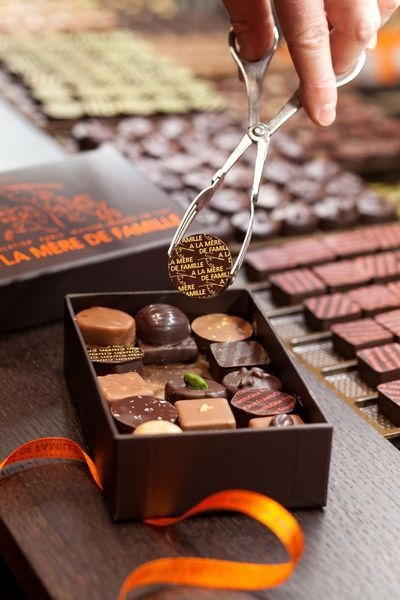
Besides being a ready indulgence for any time, milk chocolate when melted can add the exotic flavours of sweet and bitter, to the regular dessert, be it from ice cream and coffee, marshmallows, cupcakes, mousse, wafer biscuits or even a chocolate pizza; the list is endless. Little wonder then, that National Milk Chocolate Day (July 28th) is being celebrated by connoisseurs of chocolate, chocolatiers as well as chocolate lovers, both young and the old worldwide. Just like sugar, salt and spice, a little bit of “milk choclate” goes a long way.