Posted in Daily, Food, Stories Around the World

Mix Them as “Mock” or “Cocktails”

One of the social necessities of being a part of a bigger, corporate or franchise based workforce, is attending the social or business social networking, popularly under the banner of “cocktail” evenings. At times, the conversations are silently laced with hunger pangs after a long day or the stress of the day filtering through the thoughts, which can be quite dangerous especially when thoughts and words don’t really gel well with the situation. While primarily the whole purpose is to extend the social “work based” or business connections, one can hardly ignore the “hors d’oeuvre” or appetizers as well as the baseline of the gathering, “cocktails or mocktails”.

“If it’s a cocktail party, I generally make five or six different things, and I try to choose recipes that feel like a meal: a chicken thing, a fish or shrimp thing, maybe two vegetable things, and I think it’s fun to end the cocktail party with a sweet thing.” Ina Garten


While the inventor of the cocktail evenings is quite a controversial topic, with some believing it to be Alec Waugh of London or Mrs. Julius S. Walsh Jr. of St. Louis, Missouri (May 1917). The former had detailed that the Alec Waugh noted that the first cocktail party in England was hosted by war artist Christopher Nevinson (1924) while Mrs. Walsh invited 50 guests to her house on a Sunday at high noon for a one-hour affair. The St. Paul’s Pioneer Press newspaper had declared that “The party scored an instant hit,” and stated that within weeks cocktail parties had become “a St. Louis institution”.

“A cocktail done right can really show your guests that you care.” Danny Meyer

Whether purely alcoholic or fruit based, a cocktail is essentially both palate satisfying as well as a work of “art”. As defined, “cocktail” is an alcoholic mixed drink, which is either a combination of spirits, or one or more spirits mixed with other ingredients such as fruit juice, lemonade, flavored syrup, or cream. Technically it contains alcohol, sugar and a bitter or citrus. While there are various types of cocktails, based on the number and kind of ingredients added; their origins are debated.


Also, when a mixed drink contains only a distilled spirit and a mixer, such as soda or fruit juice, it is a highball. When it contains only a distilled spirit and a liqueur, it is a duo. On adding a mixer to the duo, it becomes a “trio”. The additional ingredients may be sugar, honey, milk, cream, and various herbs. Mixed drinks without alcohol that resemble cocktails are known as “mocktails” or “virgin cocktails”.

“A cocktail can be made by the bartender. But the cocktail also can be made by the chef.” Jose Andres

The first use of the term “cocktail” is highly debatable. As per The London Telegraph, a satirical newspaper article (March 20, 1798) about what must have been a hell of a party had accounted the drinks imbibed by William Pitt (the younger) which included “L’huile de Venus,” “parfait amour,” and “‘cock-tail (vulgarly called ginger.)’” The challenge was whether “cocktail” in this article truly referred to an alcoholic drink, or something else. Another record was the article from The Farmer’s Cabinet ( Vermont, April 28, 1803), where to drink a cocktail was claimed to be “excellent for the head.” By 1806, the word “cocktail” had reached it’s current meaning as defined by the newspaper, Balance and Columbian Repository( May 13, 1806), the editor defined a cocktail as: “a stimulating liquor composed of spirits of any kind – sugar, water, and bitters.”


The exact derivation is attributed to multiple origins. One origin of “cocktail” is as a mispronunciation of the French word for eggcup “coquetier” (said as cocktay in English). In the late 18th century, apparently Antoine Amédée Peychaud, a New Orleans apothecary and inventor of Peychaud bitters had served brandy mixed with his bitters in eggcups. The second belief states that the name is derived from the term “cock tailings,” which was the practice of tavern owners combining the dregs (tailings) of nearly empty barrels together into a single elixir that was sold at bargain prices. In those days, the spigot of a barrel was sometimes referred to as a “cock.” Another reference was from the “cock tail” of regular “adulterated” horses entered into the races with the thoroughbred horses of docked tails, which during the early 17th century. As Liquor and races go hand in hand, this theory states that “mixed or adulterated drinks” were likened to the “cocktail” of the regular ( non-thoroughbred) horses in the race.

Whatever and however the origin may be, from mocktail to cocktails, the evenings for social or business purposes need them to keep the conversations flowing, mixing work with comparatively less stress of the regular work schedule. With summer in full swing, it would make these occasions more entertaining as well as in demand.


Posted in Daily, Food

Puddings..of Chocolate and More

[1730]
“Chocolate Puddings. To a Pint of Cream take eight Eggs, the Whites of four, beat them well together, and mingle with your Cream; put in some Nutmeg, Cinnamon, and Ginger, a quarter of a Pound of Naples Bisket, and a quarter of a Pound of Chocolate grated very fine, put in a little Orange-Flower Water, and a little Citron minc’d; mingle it mighty well together, and if you bake it, put a Sheet of Puff-paste in your Dish, and raise a little Border in the Rim, put in your Pudding and cross-bar it, and ice it with thick Butter and Sugar, and bake it in a gentle Oven, and when bak’d serve it away, or you may boil it if you please.”
—The Complete Practical Cook, Charles Carter, facsimile 1730 edition [Gale Ecco Print Edition:Detroit] (p. 106)

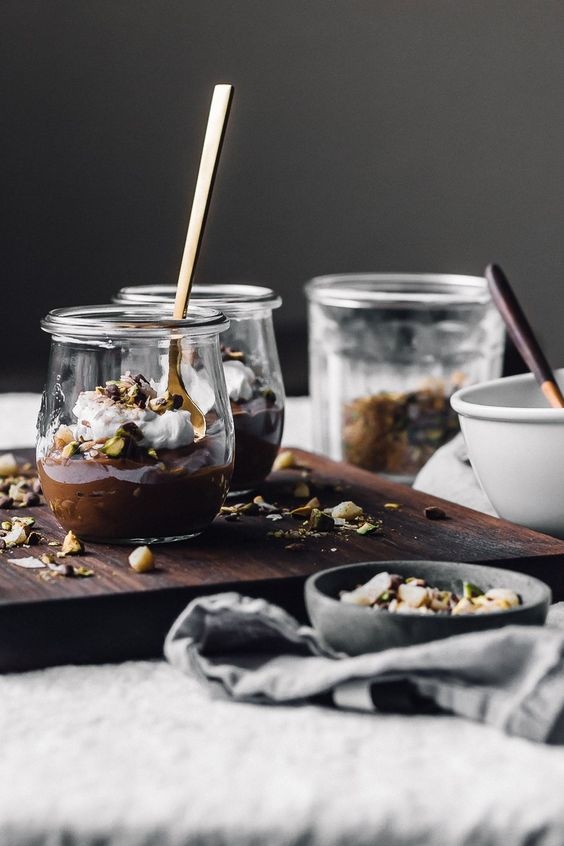
One of the highlights of having warm weather is when impromptu visits are possible, especially on chance meeting of old friends or neighbours. With plenty of delivery services available at ” the fingertips or touch of thumb pads”; it’s often the desserts that need to be made or created in a jiffy. Which is why, certain desserts especially custard, ice cream, puddings to name few easy ones are one of the necessary knows for every “fledgling” cook.


One of the easiest desserts to make with the ingredients of cornstarch or flour, cream, milk, butter and vanilla for the most simple and basic puddings. Adding in cocoa, bananas, battered breadcrumbs and even eggs are the small variations that make an entirely new recipe and flavour of the “new pudding”. Few “pudding pointers” to keep in mind include:

  • Although easy to make, complete and whole attention is required from making the batter to setting it to chill or baking it.
  • Constant stirring is needed while cooking the pudding to avoid lumps or burning.
  • The flavours, texture and consistency is very adaptable, so don’t be afraid of experimenting.
  • Make sure the flour is sieved properly because no matter how it is whisked, if the flour is not smooth it will give you a lumpy texture.
  • To store it, cover it with a plastic wrap to avoid the formation of a layer. The same applies while chilling the pudding too.
  • For baked puddings, grease the tin with butter and then refrigerate it for few minutes. This will form a layer and avoid it from sticking to the base.


With National Chocolate Pudding Day tomorrow, one can go a step further with whole or shots of “pudding cakes” or “pudding shakes” with whipped cream, sprinkles and M &M’s to add on; not to forget the ice cream too.

“Life’s a pudding full of plums.” 
W.S. Gilbert (1836-1911)


Posted in Daily, Food, Stories Around the World

“Canna” with the “petite duchesse”

Ever had “flashes of lighting” alongside “tubes of rich goodness” ? If the answer is in the negative or a query; with the month of June nearing to an end, it would be a good time to take up on the celebratory days of the éclair (choclate éclair, to be very specific, June 22nd) as well as the cannoli (June 16th), respectively. With the local deli’s and bakers’ going on full swing of celebratory discounts as well as interesting combinations to mark these days for foodists; delving a little bit into their food history would be quite interesting.

Originating from the 19th century France, also known as sweet baguette, an éclair was an oblong pastry made with choux dough filled with a cream and topped with chocolate icing. Typically piped into an oblong shape, the dough is baked until it becomes crisp and hollow within. When cooled, the pastry can be filled with a wide range of flavours, like vanilla, coffee or chocolate-flavoured custard (crème pâtissière), with whipped or chiboust cream and then iced with fondant icing. More exotic fillings include pistachio and rum flavoured custard, fruit-flavoured fillings or chestnut purée. If the icing is of caramel, the dessert is known as “a bâton de Jacob.”

Etymology speaking, the pastry title comes from French éclair “flash of lightning”, named so because it is eaten quickly (in a flash). Initially known as “pain à la Duchesse” or “petite duchesse” til the 1850. Towards the 1860s the word eclair took over, both in English and French. Historically the speculation was that this little delight was first made by Antonin Carême (1784–1833), the famous French chef of grande cuisine.

“Leave the gun. Take the cannolis.” Clemenza, in ‘The Godfather’

Moving across to the Sicilian and the Italian-American cuisine, delicate “tube-shaped shells of fried pastry dough”, usually with a sweet, creamy filling (most commonly containing ricotta) have been quite popular especially in the island of Sicily. Known as “cannoli”, they range from sizes of cannulicchi (smaller than finger sized) to the fist-sized proportions typically found south of Palermo, Sicily, in Piana degli Albanesi.

With its roots tracing back to the Middle Ages; this best known Sicilian pastry takes its’ name “cannolo (cannoli in English)” from the long tubular shape, as a diminutive of canna (a cane like reed) like sugar cane stalk. Back in the ninth centruy, Arabs had introduced sugar cane into the Sicilian cooking, thereby replacing honey as the sweetener of Sicilian confectionary to sugar. Similar desserts from the Middle East include Zainab’s fingers (filled with nuts) and qanawāt which were deep fried dough tubes filled with various sweets.

During the medieval years, the tubular shell shape was formed by rolling the paste into a flat, circular shape, then wrapping it around a sugar cane stalk. Legends abound but among them, most lead to the origin from western Sicily, probably in Palermo or nearby. Made often as a springtime item, most commonly associated when sheep produced more milk for ricotta around the Fat Tuesday (Carnevale).

Summer still going strong and picnics in full swing, for the first timers it would be a good time to experiment the sweet delicacies for a change. As for the kitchen experimenters and part time chefs, getting creative with homemade eclairs and cannoli would be a good change from the routine desserts.


Posted in Daily, Food, Musique, Stories Around the World

Evolution of the “Accidental Fudge”

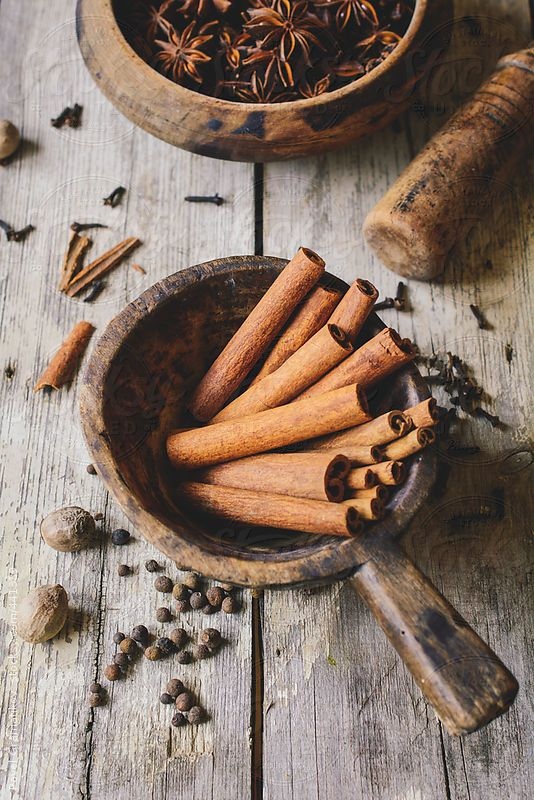
“Sandra turned to the page with the title “Toklas’ Hashich Fudge.” The original hashish brownies. ‘Peppercorns, nutmeg, cinnamon, coriander, stone dates, dried figs, shelled almonds, peanuts,… A bunch of canibus sativa can be pulverized. This along with the spices should be dusted over the mixed fruit and nuts… it should be eaten with care. Two pieces are quite sufficient…” – Allegra Goodman, The Cookbook Collector

Like most of the “delectable sweet pleasures of the palate “, this sugar candy made flavoured with choclate, fruits, nuts and other flavours; had hot or cold has made its’ own mark in the sweet world. These days, various flavours of “fudge” are made, giving them a vibrant as well as visual appeal to the eyes and the palate.

Technically, fudge is made by mixing sugar, butter and milk, heating it to the soft-ball stage and then beating the mixture while it cools down to get a smooth, creamy consistency with fruits, nuts, chocolate, caramel, candies and other flavoring agents being added either inside or on top. Yet the true origins of “fudge” can’t be exactly traced, though it’s believed to have been originated and gained popularity in late 19th century America. However popular belief among food historians was that the first batch was an accidental “fudged” batch of caramels; hence the name “fudge”.


A letter in the archives of Vasser College (1921) written by Emelyn Battersby Hartridge reveals the first documentation of “fudge”. Emelyn wrote that her schoolmate’s cousin made fudge in Baltimore (1886) and sold it for 40 cents a pound. This was the first known sale of fudge. In 1888, Miss Hartridge asked for the fudge recipe, and made 30 pounds of fudge for the Vassar Senior Auction. The recipe was very popular at the school from that point forward. The diary of another student mentions making “fudges” in 1892.

What is it that we love the best,
Of all the candies east or west,
Although to make them is a pest?
Fudges. **


An 1893 letter from another Vassar College student describes “fudges” as containing sugar, chocolate, milk and butter. “Fudges at Vassar” was a recipe printed in The Sun (1895) describing the confections as “Vassar chocolates”, which comprises of sugar, milk, butter and vanilla extract. Fudge became a new confection after word spread to other women’s colleges of the tasty delight. Later, Smith and Wellesley schools each developed their own recipe for fudge. Later fudge-making evolved a variety of flavors and additives as it grew beyond its popularity at colleges.

What perches us upon a chair
To stir a sauce-pan held in air,
Which, tipping, pours upon our hair —
Fudges. **

While the first recipe specified butter, milk and sugar, today, American fudge often differs with whipped cream instead of butter and the addition of chocolate flavouring. There are different types of similar recipes to “fudge” across the globe with the Indian “Barfi”, Polish “Krówki” ( Polish fudge, semi-soft milk toffee candies), the Italian “Penuche” which is a fudge-like candy made from brown sugar, butter, milk and vanilla flavouring; as well as the Scottish “Tablet” (taiblet in Scots). Tablet is a medium-hard, sugary confection made from sugar, condensed milk and butter, brought boiled to a soft-ball stage and allowed to crystallise. It is often flavoured with vanilla or whisky, and sometimes has nut pieces in it.

The versatility of fudge is that it can be had alone cold, or served on top of sundaes,  ice cream and even cakes as hot fudge. With various assortment, variety and fun in the process of fudge making; little wonder then that “a set of ditties”  (**) were made by the college girls during and for the “fudge making process”. On the occasion of National Fudge Day (June 16th), it would be time for some fun, rhymes and sweet cooking for all the “home kitchen chefs” or tasting for the food connoisseurs.

What needs more stirring than oat-mush,
And more still when we’re in a rush,
But what’s e’en sweeter than a “crush”?
Fudges.

What subtle odor doth recall,
To artless minds that “long-owed call,”
On the sweet maiden up the hall?
Fudges. **


Posted in Daily, Food, Stories Around the World

Of Falafel, Vada and Beyond…

Soak the raw chickpeas (with or without baking soda) overnight. Ground them with parsley, scallions, garlic as batter and add spices coriander or cumin, if needed. Instead of chickpeas, dried fava beans can be used similarly. They are stone ground and mixed with leek, parsley, coriander, cumin and dry coriander. Shape the mixture into balls or patties. Serve deep fried or oven baked. Falafel from the original Levantine cuisine is ready. Have them alone, wrapped (within lafa) or stuffed (into a hollow pita) with tahini and garnishes of tomatoes, cucumber, lettuce or even pickles.

One of the basic things of life, that brings together different cultures, places, and origins to a common area of interest is “food”. As one explores the different resources and basic ingredients; varieties are made, experienced and experimented with subtle differences across the cultures and cuisines. With International Falafel Day being held tomorrow (June 12th), it would be quite interesting to learn of similar recipes and try a few in the home kitchens or experiment with local ingredients making subtle changes.

Soak the legumes in water. Ground them for the batter. Season the batter with cumin seeds, onions, curry leaves ( sauteed or plain), salt, chillies, black pepper with or without minced or sauteed vegetables for more taste or nutrition. Add ginger or baking soda for large batch fermentation or more fluffiness respectively. Shape the mixture and deep fry. The Indian “Vada” is ready. Alternatives to legumes (pigeon pea, chickpea, black or green gram) are sago or potatoes. Serve hot or crunchy with or without dip.

Served as savoury fried snacks or even for breakfast; “Vada” also known as wada, vade, vadai, wadeh or bara have been a staple of South Indian cuisine as early as 12th century. There are varied types of vadas described as fritters, cutlets, doughnuts or dumplings. Popular ones include the medu vada of South India, batata vada of West India or mixed as food preparations like dahi vada or vada pav.

Season cooked and mashed black eyed peas with salt and chopped onions. Mould the mix as a large scone and deep fry in palm oil. Serve split in half and stuff with spicy pastes of vatapa, caruru made of shrimps, ground cashew, palm oil, okra, coconut milk and more. For vegans, serve with paste of hot peppers and green tomatoes. Acarje of West African and Brazilian cuisine are ready. Boil the basic ingredients (instead of frying) and abara is ready.

Derived from the Yoruba language, Àkàrà is a generic word meaning “bread” or “pastry” or the dish itself. “Acarajé” (brazilian) is derived from either the Yoruba word combinations “àkàrà” (bread) and “onje” (food) or “àkará” (a round pastry) and “je” (to eat). Popular in West Africa and a part of their culture; akara (rice flour, mashed banana, baking powder, sugar) was often fried and prepared for major occasions like childbirth, weddings, parties or funerals. When sold on the street with addition of ingredients like fried beef, mutton, dried shrimp, coconut among others; acarje was created and struck mass popularity since then on. Various similar combinations like acaca (steamed corn mush) have also coexisted.

Thus for a break from the “known dishes”, it would be fun to attempt newer simple recipes for a little different, spicy and healthy combination to keep the palate as well as “the kitchen experimentation spirit” going. With varied and subtle variations of familiar ingredients, it would be interesting to create a new family or home masterpiece or tradition to carry over to the next generations.

Posted in Daily, Food

Origin, Evolution and Art of “Tarte”

“The Queen of Hearts, she made some tarts,
All on a summer day:
The Knave of Hearts, he stole those tarts,
And took them quite away!” – Lewis Carroll

As echoed by the words of Lewis Carroll, the association of “tarts” to the upper ranks of pastries has been there since the medieval ages. Fast forward to the present, their popularity hasn’t diminished by any means with more than three food holidays for tarts like the raspberry tart day (May 3rd), Cherry Tart Day (June 18th), Butter Tart Day (June 1st) and even National Milk Tart Day (February 27th) as declared and celebrated by “foodimentarians” around the world.

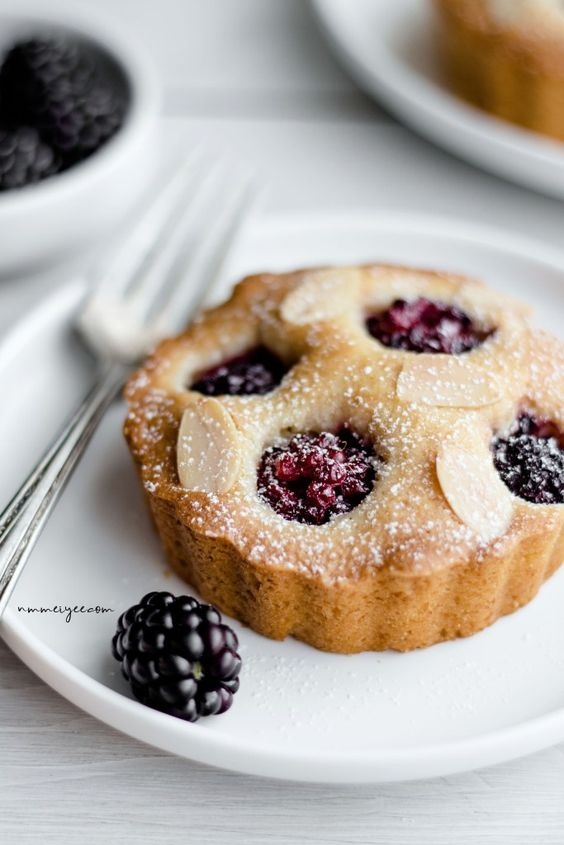
Tart is basically a baked dish with filling over a pastry base with the top left open. While the pastry is usually of shortcrust, the filling can vary from sweet to savoury; although modern tarts are fruit-based with or without custard. Miniature tarts known as tartlets like egg tarts are also gaining widespread popularity as they can essentially substitute for a complete breakfast for the “busy fast paced” world out there.

Originating from the Old French “tarte” or Medieval Latin “tarta”; the distinction of tart with flan, quiche and pie are often blurred with differentiation on the basis of the covering over the pastry or the filling type being sweet, savoury or meat and vegetable based. the categories of “tart”, “flan”, “quiche”, and “pie” overlap, with no sharp distinctions.

“Unless you are a professional, you will find the tart to be a high-maintenance, unforgiving whistle-blower of a pastry.” Sloane Crosley

On tracing the origins of tart, most food historians believe that they came about from the tradition of layering food or “putting things on top of other things” especially over notably round, flat pieces of bread or bread based crusts. Over time, the base was pastry type and then tarts had come about. Another line of thought maintains that tarts spring from the Medieval pie-making tradition, as a kind of flat, open-faced pie. Dating to at least mid 15th century, one of the earliest tarts was “the Italian crostata”, described as a “rustic free-form version of an open fruit tart” or “an open-faced sandwich or canape” due to its’ crusted appearance.

With the arrival of enriched dough around the 1550s, pies took a setback of being a common man’s way of recycling offal and table scraps, while tarts were made with fillings of “high cuisine” often made artistic and pleasing to the eye as well as palate. Often custard-based, a large, open tart presented a broad canvas upon which an artistic chef might compose a work of edible art with brightly-colored fruits, vegetables and spices added onto or into them, mostly being sweet than savoury, or a little of both.

Typically free-standing with firm pastry base of dough, itself made of flour, thick filling, and perpendicular sides; tarts have been made with varied fillings including jam, Treacle tart, meringue tart, tarte Tatin and Bakewell tart.

In fact, the “tarte Tatin”, named after the hotel (originated in France) serving it as its signature dish, is an upside-down pastry in which the fruit (usually apples) are caramelized in butter and sugar before the tart is baked. Over the years, this version as spread to other countries over the years with the filling upside-down being of not just apples or other fruit but also onions, tomatoes and other vegetables.

With savoury tarts getting their own special niche of “quiches”, German Zwiebelkuchen ‘onion tart’ or Swiss cheese tart (Gruyere); tarts and their related varieties are here to stay, especially for quick, comfortable, fun and artistic cooking. With June being the month of outdoors and picnics, tarts and pies are very much here to stay.

“I’m really a scientist. I follow recipes exactly – until I decide not to. And then I’ll follow something else exactly. I may decide I could turn this peach tart into a plum tart, but if I’m following a recipe, I follow it exactly.” Ina Garten

Posted in Daily, Food, Stories Around the World

Of “Catchup” and Origins…

“Three tomatoes are walking down the street – a papa tomato, a mama tomato and a little baby tomato. Baby tomato starts lagging behind. Papa tomato get angry, goes over to Baby tomato and squishes him…..and says ‘Ketchup!”
-Uma Thurman in ‘Pulp Fiction’ (1994)

Sweet and tangy, often used as a condiment for the “hot or fried, greasy” dishes and at times, as an add on for dressings, sauces or flavouring for the main course dishes; “ketchup” or “catchup” has evolved into being almost a must in every household. In fact, to flavour the most mundane or for a quick scratch meal; ketchup is the answer. Little wonder then with hoards of “tomato sauce” enthusiasts around, a whole day has been dedicated as National Ketchup Day (June 5th).

Typically made from tomatoes, sugar, vinegar, assorted seasonings and spices; this sauce had initial recipes of egg whites, mushrooms, oysters, mussels, or walnuts, among other ingredients. Some of these ingredients have been modified and labelled under other sauces; such that the term “ketchup” (earlier known as catsup, catchup, red sauce, ketsup) refers to the unmodified tomato ketchup (not the mushroom ketchup). While the specific spices and flavors may vary; most commonly include onions, allspice, coriander, cloves, cumin, garlic, mustard and sometimes celery, cinnamon or ginger.

“You know, you really can’t beat a household commodity – the ketchup bottle on the kitchen table.” Adlai Stevenson

Condiments and sauces have been an accompaniment for main course meals a s well as snacks from the very early days of civilizations. Delving into the origins and roots of “ketchup”, this concoction of the Orient had been passed on to the colonists. The 17th century Chinese cuisine included a concoction of pickled fish and spices; known as kôe-chiap (Amoy dialect) or kê-chiap meaning the brine of pickled fish (like salmon juice) or shellfish. Seen in the Malay States (Malaysia and Singapore) of early 18th century; as kicap or kecap (pronounced “kay-chap”) English colonists had first tasted it. The English settlers had taken it back with them, later to their American colonies. Over time “kecap” had evolved into catchup” or “ketchup”. From an etymological point of view, multiple competing theories offer explanations for the name “ketchup”, yet the most widely believed is the Malay or Chinese origin.

“I mix mayonnaise, ketchup and brandy and a little bit of mustard. This is a heck of a good sauce for seafood.” Jose Andres

Originally and historically, the initial preparations of the English ketchup had mushroom (sometimes even walnuts) rather than tomatoes as primary ingredient(1750 to 1850). While many variations of ketchup were created, the tomato-based version appeared a century later after other types. The early versions had anchovies placing its’ roots to fish-sauce ancestry. The mid-1850s saw anchovies being dropped from the ingredients.

Gather a gallon of fine, red, and full ripe tomatoes; mash them with one pound of salt.
Let them rest for three days, press off the juice, and to each quart add a quarter of a pound of anchovies, two ounces of shallots, and an ounce of ground black pepper.
Boil up together for half an hour, strain through a sieve, and put to it the following spices; a quarter of an ounce of mace, the same of allspice and ginger, half an ounce of nutmeg, a drachm of coriander seed, and half a drachm of cochineal.
Pound all together; let them simmer gently for twenty minutes, and strain through a bag: when cold, bottle it, adding to each bottle a wineglass of brandy. It will keep for seven years. – Recipe for “Tomato Catsup” from 1817
(Source: Wikipedia and Apicius Redivivus: Or, The Cook’s Oracle: Wherein Especially the Art of …)

“I can fry hollandaise, I can fry ketchup, I can fry mustard.” Wylie Dufresne

Besides the primary use as a condiment, add on to the marinade or to the minced mix as well as converting it sauces like brown ( barbeque) sauce, sweet and sour sauce or red remoulade; ketchup has its’ own special uses too.

  • Shine copper and silverware with ketchup, with the latter being a very effective cleaning agent. At times, mixing it with Worcestershire Sauce enhances the cleaning effect. Ketchup can be used to clean up the tarnish from the car parts, as well as a great agent to shine up alloy based metals; though it won’t clean up the dirt. The technique would be to first clean and remove the dirt, then use ketchup to add the shine.
  • To correct green highlights in bleached hair, ketchup can be used. Besides ketchup acts as a great conditioner, bringing back the natural oils into the hair.
  • Last but the most creative use of ketchup is its’ use as fake theatrical blood. Additionally ketchup as well as its’ bottle acts as a great base for food based paints and dyes for “toddler art and paint fun”.

With more than the “food” factor for ketchup, this condiment will continue to remain as an essential part of the pantry and the household, whatever may come.  For every food experimenter, getting creative and adding a bit of sweet, sour and tangy flavours to the routine recipes can lead to entertaining and surprising new flavours, combinations as well as artistic renderings ( like Eureka!!).