
Posted in Daily, Food, Stories Around the World

Third Wave and On…

“Coffee is a hug in a mug.” Anonymous

On a long postponed visit to the extended family line, we had to put in a three hour journey to-and-back. While waiting in the traffic and not being in the principal driver’s seat was an added incentive for window shopping. Naturally the sign of “discount” had your truly squinting to make out the deals. But it was the special offer of “The Flying Squirrel” (exclusively bought online) and Seven Beans that had snared my attention. After seconds of hedging, my husband had the car in park while I made a quick dash for it. With our luck in alignment, the buy didn’t take much time and we were on back homeward bound.

“It’s amazing how the world begins to change through the eyes of a cup of coffee.” Donna A. Favors

Interestingly “The Flying Squirrel” or “Seven Beans” is but two of the many brands caught in the “wave of coffee”. Entering into the artisanal food category, the third wave coffee movement is a retrospective entry of coffee wherein both coffee lovers and manufacturers share the joy and appreciation of high quality coffee. Like fine varieties of wine and cheese, the third wave of coffee explores the connoisseur-ship, stimulation of the senses and exploration of taste in a simple but buoyant cup of coffee. The unique characteristics of that simple coffee bean are highlighted, ranging from the diverse methods of growing, cultivation, processing, roasting as well as the practices and salient variables among the coffee bean cultivars and beverage preparation.

“The first wave of American coffee culture was probably the 19th-century surge that put Folgers on every table, and the second was the proliferation, starting in the 1960s at Peet’s and moving smartly through the Starbucks grande decaf latte, of espresso drinks and regionally labeled coffee. We are now in the third wave of coffee connoisseurship, where beans are sourced from farms instead of countries, roasting is about bringing out rather than incinerating the unique characteristics of each bean, and the flavor is clean and hard and pure.” Jonathan Gold, LA Weekly. (March 2008, Pulitzer Prize winning food critic on the third wave of coffee)

Technically the terminology of “third wave coffee” was most widely attributed to Trish Rothgeb, a coffee professional in an article for the Roasters Guild newsletter titled “Norway and Coffee,” (2003) with the first mainstream media mention in an National Public Radio piece about barista competitions. Although there is a lesser known reference in an obscure trade publication called “Tea & Coffee Trade Journal Asia” (1999) by specialty coffee pioneer Timothy Castle obliquely referring to the same. While the first and second waves dealt in the ready availability and highlight the countries of origin with (or not) of their signature dark roast profile (respectively), the third wave coffee is often associated with the concept of ‘specialty coffee’ with reference to the specialty grades of green (raw and unroasted) coffee beans (distinct from commercial grade coffee) or specialty coffee beverages of high quality and craft. Though coined earlier (1974), “specialty coffee” was meant to refer to high-quality beans scoring 80 points or more on a 100-point scale.

“It doesn’t matter where you’re from – or how you feel… There’s always peace in a strong cup of coffee.” Gabriel Bá

There is something in a cup of coffee that is dearly enjoyed across all age groups, from different countries, professions and cultures. To add to one’s own special highlight to that cup of coffee, along with the coffee wave, the addition of a tinge of vanilla, whisky, chocolate, cinnamon, cardamom or hot chocolate, can do wonders. Not to forget the ice-cream for the kids. Little wonder then, one would chose to miss an opportunity to ride “that coffee wave”.

Posted in Daily, Food, Stories Around the World

Simple, Smoked and Short

One of the downsides of having to work far from home, is to not only the commute but also getting the meals right. With lunch packed and breakfast a tight run, getting the right share of calories is a constant battle. While fruit and salad can be quite easy and handy; for unexpected long hours it keeps the hunger pangs at bay only for a short while. While vending machines, cafes and delis are there plenty around, they cause significant hurt to the wallet as well as physique. Which is why short quick healthy meals get highlighted and tagged, to be learnt as soon as feasible.

One of the first endeavors was to modify the healthy combination of carbs and proteins right, by the basic sandwiches. The first to be subjected was “pastrami on rye”, making it to own adaptation and specifications. Technically of Romanian origin, pastrami is a meat product usually made from beef brisket, lamb or turkey. The raw meat is brined, partially dried, seasoned with herbs and spices, then smoked and steamed. Etymologically, the name “pastrami” can be traced to Roamnian pastrama; the latter being traced to the Bulgarian pastrija or Turkish pastirma or “bastirma” meaning pressed meat.

While earlier meat shops used to process them, these days they are readily available in the commercial chain grocers or supermarkets, commonly made as per the norms of the locality, either from lamb, turkey or meat. One of the advantages of the “pressed meat” is that it can be cut into thin wafer slices, medium cuts or slices or a really large filled sandwich of choice. The best part is there is no frying or oil involved.

As the sandwich chains and delis got onto the trend, serving meat sandwiches especially pastrami sandwiches became a novelty. For all sandwich lovers, it is a must. While for school or office lunches, this makes a good change from the routine and a break form the elaborate morning kitchen preparations. That one hour of lunch break can be made into a light, wholesome and healthy meal.

“You sit down at Katz’s and you eat the big bowl of pickles and you’re eating the pastrami sandwich, and halfway through you say to yourself, I should really wrap this up and save it for tomorrow. But the sandwich is calling you: Remember the taste you just had.” Mario Batali

Posted in Food, Stories Around the World

Gooey, Sweet and Special

One of the advantages of the cellular networks is that news travels fast. Work promotions, kindergarten winnings, new projects or ideas accepted and launches as well as new family additions are few of the positive news that spreads fast. Some surprises call for impromptu celebrations which essentially involves something sweet. While instant baked goods mayn’t be available at hand round the clock, there is something about marzipan that can do wonders for the most basic of desserts.

Primarily consisting of sugar or honey and almond meal, marzipan is a confection with a wide array of uses. While it is often made into chocolate covered (or plain) sweet treats or as imitations of fruits, vegetables, cars, toys and the like; it can also be used as glazing for icing cake, biscuits or shaped into small figurines atop cakes especially meant for personalizing celebrations. It can also be added as a baking ingredient to the traditional recipes ( like the stollen, banket, king cake).

Tracing the origins, marzipan was believed to have originated through two different, though converging routes. One was via the Northeast Mediterranean line, introduced to Eastern Europe through the Turks, while the other possible origin was the Iberian Peninsula line, predominantly from the Al-Andalus area of Spain. With it’s widespread popularity, marzipan has numerous variations. While in Germany sugar and almonds are ground into a paste, syrup can be used to sweeten the mixture (France) while Middle East marzipan may include a dash of rosewater. Almonds may be replaced by apricot or peach kernels, to make a similar product known as the “persipan”. Other alternatives include substitution with soy paste or almond essence.

Homemade marzipan comes ready with very basic ingredients of almond paste (or freshly made almond meal), egg whites and sugar. Besides getting creative with marzipan made edible animals, figurines or delectable icing and decorative ideas; chunks of marzipan when added to cookie dough or cake batter make for an interesting twist to the taste. Wit marzipan, something simple can be made into simply amazing with basic ingredients, whole lot of creativity and plenty of ideas.

“Madre Carmela’s favorite nuts were almonds. Not only did she like the way they tasted the best among all nuts, but she loved the flavor they imparted to Sicilian desserts from cakes to biscotti, and her favorite of all, Frutta di Martorana- the perfect fruit-shaped confections made from pasta reale, or marzipan, which required plenty of almonds. Who would have thought that the base for an elegant, regal dessert like marzipan came from such a simple ingredient as the almond?”
― Rosanna Chiofalo, Rosalia’s Bittersweet Pastry Shop

Posted in Food, Stories Around the World

Biscuits, Crumbs and Milk

With plenty of biscuits left over from the holiday baking safely enclosed in their tins, it was their crumbs which had to be called to an order. After all the holiday cakes and ice-cream, evening desserts had to be something light, easy on the sugar and simple to make. What would be an easier solution for all the crumbs than the good old “biscuit pudding”.

Interestingly biscuit pudding is something that has evolved over time. With the British cuisine evolving the pudding from dumplings, the former had to be either in the meals or dessert category. More steamed than bakes, they were the savoury ones like steak and kidney pudding, haggis, pease pudding and the dessert ones (steamed in a basin and for afters) like the Christmas pudding, sticky toffee pudding and so on. Though essentially centuries on, pudding is more of a dessert than savoury. Dessert puddings like bread and butter pudding, biscuit pudding or simply with fruit.

“The proof of the pudding is in the eating.” Miguel de Cervantes, Spanish author. (1547-1616) ‘Don Quixote de la Mancha’

One of the very basic biscuit pudding recipes that resulted in the first stained smock of preschooler was the Chocolate biscuit pudding. Though claimed to be a Sri-Lankan dessert pudding introduced by the British during the colonial era; it may have been in the kitchens of the west long before then. To make it requires layers of a prepared chocolate pudding or icing mixture alternated in a serving dish with layers of biscuits (plain ones preferred) dipped in warm milk. Served cold (not baking or steaming) with chopped nuts as garnish, cutting through would see five to seven layers of biscuit and chocolate. An easy dish to keep bored children busy on cold days.

The old-fashioned biscuit pudding, usually handed over in the set of family recipes, the basic ingredients would be vanilla, eggs, milk and plenty of leftover biscuits. This moist pudding is usually had cold, garnished with ground cinnamon, raisins, candied fruit and with maple syrup. With fond memories, it puts the cracked biscuits and their crumbs to good use.

Posted in Food, Stories Around the World

From Spaghetti-o-iei’s

The noon drive from work during the last week day entitles picking up the kids from school. Once they are in the car, the ride then on is interspersed with narratives ranging from the classes, to “mom did you know that she/he” to playground falls, teacher praises, peer comments and the like. Among the narratives was their home science classes wherein the primary classes as well as kindergarten were taught about basic stuff like hand-washing, making cookies, tending the garden and sorting the recyclables. With detailed descriptions of how spaghetti was made in class, the three of us had trooped into the ice-cream parlour for the weekend scoop. Imagine to my surprise when the “today’s special” held the title “spaghettieis”. On clarification, the waitress told me that we serve ice cream only and spaghettieies was just noodle ice-cream.

Spaghettieis (German pronunciation: [ʃpaˈɡɛtiˌaɪs]) is a German ice cream dish made to look like a plate of spaghetti.

Created by Dario Fontanella, “spaghettieis” was a dish of vanilla ice cream extruded through a modified Spätzle press or potato ricer, giving it the appearance of spaghetti( late 1960s, Mannheim, Germany). The entire ice-cream spaghetti is then placed over whipped cream and topped with strawberry sauce (to simulate tomato sauce) with coconut flakes, grated almonds, or white chocolate shavings added over it (similar to the Parmesan cheese). Fontanella had served this innovative creation to tearful children and had received the Bloomaulorden, a medal bestowed by the city of Mannheim (2014).

As this innovation makes it’s rounds in popular gelaterias, ice cream parlours as well as special events; various variations have been experimented with. Popular among these simulations include the different flavours of the “ice-cream shaped like spaghetti” with dark chocolate ice cream, nuts, sprinkles, icing sugar and the like. To be a “spaghettiei” dessert, the simulation has to be one of the varied spaghetti versions like Spaghetti Carbonara, Spaghetti Bolognese, Spaghetti cacio e pepe (cheese and pepper) or the Spaghetti alle vongole appearance. With simple “mini-variations” a simple bowl of vanilla ice-cream can be turned into something decadent and delightfully elaborate but exquisite and simple.

Posted in Daily, Food, Stories Around the World

Christmas, Candy and Canes

What is the best to keep a crowd of noisy children quiet ? The best option would be to give a bag of sweets, preferably mints or hard boiled candies for then there would be snatches of quiet.

On similar lines as per folklore, the choirmaster at Cologne Cathedral ( Cologne, Germany 1670) wished to quieten the noise made by the children during the long Living Crèche ceremony of Christmas Eve at church. He asked the local candy maker for some “sugar sticks” and add a crook to the top of each stick. While the latter would have probably been meant to be symbolic of the shepherds visiting Infant Christ as well as to justify the practice of giving candy to children during worship services. With the white colour of converted sticks, children were taught about Christian belief in the sinless life of Jesus.

Their popularity from Germany had spread to the rest of Europe, wherein these candy canes were handed out during plays reenacting the Nativity. Another legend connects candy canes to the anniversary of the death of St. Nicholas (343 A.D.) with the candy cane representing the crozier or bishop’s staff of St. Nicholas. Though other legends may run through various locals, the candy cane especially the classical red and white one is synonymous with Christmastide. Records also mention of August Imgard (Wooster, Ohio, 1847) decorating a small pine tree with paper ornaments and candy canes.

With the similarity to the polkagris, candy canes are a part of Christmas tradition which stays on till New Year. From the simple red and white ones to the more coloured and striped ones, with various flavours of peppermints to spicy or salty variants, candy canes keep the confectioners busy for the end of the year season. Intermixing the essence of candy cane into varied desserts, from cookies to truffles or cupcakes, experimentation with candy cane is an experience in itself. With the smells of candy canes and Christmas time, the golden yesteryear of childhood still stay fresh in the mind. For that is what happy memories are all about.

Posted in Food, Stories Around the World

Cookies, Spices and Holidays

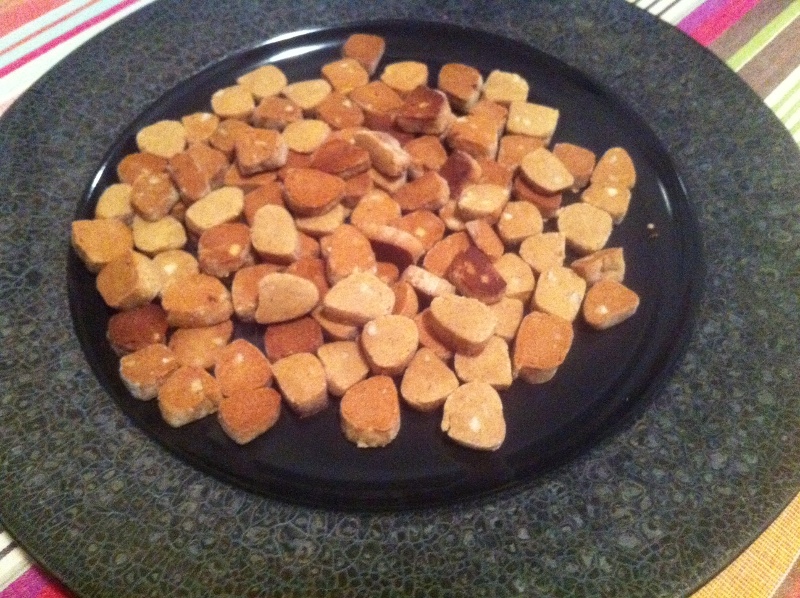
No Christmas or winter holidays would be complete without the tiny peppernuts, cookies baked and stored in tins, kept for the cold nights or after hours of carolling. Made with plenty of assistance, these holiday cookies come by many different names, varying from region to region, with their own legends behind them. These tiny spice cookies are quite popular as holiday treats, known as pepernoten (Dutch), pfeffernuesse or peppernuts (English) or pebernødder in Danish. While the exact origin maybe uncertain, traditional beliefs links these cookies to the Dutch feast of Sinterklaas, where children receive gifts from St. Nicholas. Since 1850, these cookies have been a part and parcel of the European yuletide celebrations.

Flour, brown sugar, sugar, cloves, cinnamon.

Unlike the name “peppernut”, these cookies don’t always contain nuts in its ingredients. The size of the cookie, roughly similar to nuts and can be eaten as a handful, which probably accounts for the name. The ease of making these pfeffernüsse has resulted in a varied range of recipes, with variations made in the used of the amounts of aromatic spices like cinnamon, cloves, mace, nutmeg, cardamom or anise as well as the sweeteners used, ranging from options of powdered sugar, brown sugar, molasses, honey or a fine dusting of icing sugar. To make the dough similar to the early century versions, leavening agents like potassium or ammonium carbonate are used to get the sticky and dense consistency.

Accounting for the regional variations pepernoots are similar Dutch cookie-like confectionery. Certain recipes are similar to the Pfeffernüsse although they look completely different when baked. Other recipes vary in the adding of cardamom, pepper, butter, vinegar, eggs, brown syrup to the usual holiday cookie ingredients of flour (wheat or rye), cinnamon and cloves. Light brown and square shaped, they are fairly chewy and harden gradually when exposed to the air.

“Best of all are the decorations the grandchildren have made ~ fat little stars and rather crooked Santas, shaped out of dough and baked in the oven.” Gladys Taber

In addition to the baking, the customs with these pepernoten (or pepernoots) stay on. From hiding handfuls of them through the room so that children can look for them or hiding pocketfuls of them while caroling or for ice skating breaks. In earlier days, new parents would place one or two carrots underneath the infant’s pillow so that Sinterklaas would then come and bless the child by showering the infant with “pepernoten”.

Modifying these recipes by choice, making them gluten-free or adding the favourite ingredients and toppings gives these holiday cookies a personal touch and flavour. In the midst of all, getting the ingredients kneaded with help of many tiny hands gives these holiday spice cookies a pleasant feel and memories full of warmth and laughter worth treasuring for life.

“Peacekeeper Christmas Spice Cookies 225g butter, softened 200g sugar 235ml molasses 1 egg 2 tbsp. sour cream 750g all-purpose flour 2 tbsp. baking powder 5g baking soda 1 tsp. ground cinnamon 1 tsp. ground ginger pinch salt 145g chopped walnuts 145g golden raisins 145g chopped dates In a large mixing bowl, cream the butter and sugar together. Add the molasses, egg and sour cream; mix well. Combine the flour, baking powder, baking soda, cinnamon, ginger and salt; gradually add to creamed mixture. Stir in walnuts, raisins and dates. Chill for 2 hours or until easy to handle. On a floured surface, roll out dough finely. Cut with a 21/2-inch round cookie cutter. Place on greased baking sheets. Bake at 325°F for 12–15 minutes. Cool completely.”
Jenny Colgan (Christmas at the Cupcake Cafe)