
Posted in Daily, Life, Personal Musings, Quotes, Reflections, Work

Let Go and Fly

“When I let go of what I am, I become what I might be. When I let go of what I have, I receive what I need.” Lao Tzu

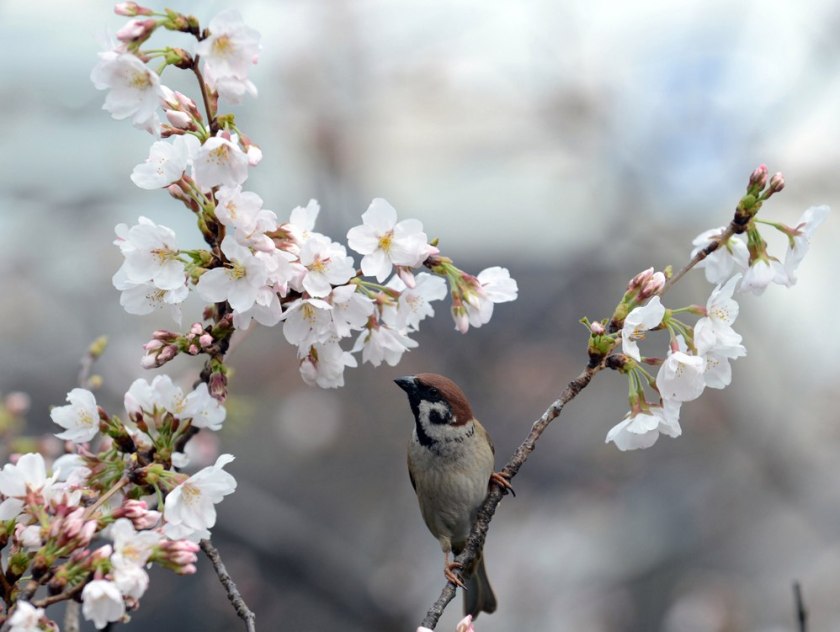
With the turn of the weather, rains settling down a little bit and the wind picking up speed; evenings are meant for long walks. Quite often one may spot the chirping of birds as they settle for the night or the distant view of the migratory birds as they gather speed for their next lap of their journey. Before settling for the night the local birds have to find a spot to sleep in; which should be well away from the rain, wind and safe. For this, they can be found flitting from one branch to another, finding high ground perches away from the two and four legged beings who may not just disrupt their sleep but harm them. To find a new place, they need to let go of their old perch. As morning hours come, these birds wake up the world from a different perch. Unless a little bird has the courage to leave the nest, neither it won’t be able to fly, explore the different branches nor see new sights from there.

“You will find that it is necessary to let things go; simply for the reason that they are heavy. So let them go, let go of them. I tie no weights to my ankles.” C. JoyBell C.

Like the birds that find different perches depending on their situation, one needs to find the similar courage and foresight in life to let go of the emotional branches of life that one tends to cling to. From innate beliefs, vices, negative emotions, regrets, bad memories and the like are the slippery branches where one tends to fall from. Clinging to them can prove to be unsafe and dangerous in the long run. Add to it, the feel of privileges, possessions and false safety make us stick on to that one branch, which may be well high for some time but later has been slowly breaking down and gathering rot.

“It’s hard to be clear about who you are when you are carrying around a bunch of baggage from the past. I’ve learned to let go and move more quickly into the next place.” Angelina Jolie

Knowing that the branches one clings to, stops them from fling high helps to change their respective positions and find new ground. In life, there will be times when one needs to fly, stay on safe ground or just watch the situation without a reaction. Like the birds, knowing to do what when and where, requires one to use their memories (not just cling on to them) and adapt to the situation by the right time and at the right moment.

“The truth is, unless you let go, unless you forgive yourself, unless you forgive the situation, unless you realize that the situation is over, you cannot move forward.” Steve Maraboli

To experience life and their various branches, use the time to let go of the clinging perch and find the courage to fly, to higher levels. While learning to experience the new vantage points, diving headlong into trouble or danger isn’t on the list. Let go but don’t be blind. As in every experience, be the like the bird, exploring new views but keeping their eyes open, exploring their surroundings with foresight, curiosity and care. Find the strength and soar high.

“Some people believe holding on and hanging in there are signs of great strength. However, there are times when it takes much more strength to know when to let go and then do it.” Ann Landers

No one can drive a car with different pressures in the tyres or cover long distances with less fuel. Unless one stops to change the tyre, fill the tank; one can’t go ahead. Likewise no bird flies high looking behind. It moves forward looking below, above and straight ahead as it covers different angles through its flight. Instead of looking back, use the past experiences to fly, experience the present and shape the future.

Posted in Life, Personal Musings, poetry, Quotes

Lessons of Fall

“At no other time (than autumn) does the earth let itself be inhaled in one smell, the ripe earth; in a smell that is in no way inferior to the smell of the sea, bitter where it borders on taste, and more honeysweet where you feel it touching the first sounds. Containing depth within itself, darkness, something of the grave almost.” Rainer Maria Rilke

Though the week is in its full swing, the days of autumn call for the awakening of the soul and refreshing of the mind. A few minutes held up in the long traffic queue, the view from the office window, the passing beauty of the landscapes on the bus or train journey; all bring forth the inner roll of emotions running through at that time.

Fall highlights the work of nature. Despite the dry winds and gradually decreasing sunshine, the colours of nature change in tune to the adverse elements, such that to still bring out the beauty of life. Each of our lives echo in some way, the emotions of the fall. As nature shows us that even in the face of adversities; counting the received blessing and moving forward will result in a beautiful canvas being brought forth.

“Is not this a true autumn day? Just the still melancholy that I love – that makes life and nature harmonise. The birds are consulting about their migrations, the trees are putting on the hectic or the pallid hues of decay, and begin to strew the ground, that one’s very footsteps may not disturb the repose of earth and air, while they give us a scent that is a perfect anodyne to the restless spirit. Delicious autumn! My very soul is wedded to it, and if I were a bird I would fly about the earth seeking the successive autumns.” [Letter to Miss Lewis, Oct. 1, 1841]” George Eliot

Fall Reflections
Barbara Aldrich

The air is crisp and clear
As the sun slowly rises.
I witness the breaking of a new day.
I check on my basket of blessings
As if examining a bumper crop of gathered apples
And find it full; Some small, some large, but
All perfectly formed and Heaven sent.
My heart gives thanks.
I turn on the morning news
And hear stories of the shriveled
Falling leaves of other’s lives
And realize the value of the bounty
In my basket of blessings.
Feeling helpless, I pray for a short winter
And the returning of brand new leaves to
The trees that have been left bare,
And examine the blessings in my basket
For ones that I can share.

Posted in Daily, Family and Society, Life, Quotes, Reflections, Stories Around the World

The Light from Within

“The moments when you have really lived are the moments when you have done things in the spirit of love.” Henry Drummond

Like the past years, the extended family had gathered together for the memorial of our grandfather. Although it has been more than five years, it just feels like yesterday when he used to sit with the newspaper on the patio with all of the children gathered around him as he used to narrate stories and spin the tales of legends. While the children miss him especially the fishing days, playing chess or simply going for long countryside walks; being adults it is the words of advice and quiet assurance that is being missed. Even though five years have gone, there would always be a void in the heart. At times, the gentle evening breeze or quiet afternoon rain brings the feel of his presence.

“Do your little bit of good where you are; it’s those little bits of good put together that overwhelm the world.” Desmond Tutu

Coming from a large family, there was always an endless lists of tasks for him to be done. From managing the farm to being a teacher, there was something to occupy his mind. During my childhood years, he used to busy running the farm. Despite all the important details to attend to, there was always time for him to spend with a tomboy who wanted to drive the tractor, fish or climb over to the loft, ride the horse, milk cows than play with dolls. For a busy person, those tiny grubby hands were no trouble. More than the gifts bestowed; through his time, he had showered love and joy which were treasured and comforting for the later years of adolescence, adulthood and life in general.

“You have not lived today until you have done something for someone who can never repay you.” John Bunyon

There is an aura about some people that although one mayn’t have spend a lot of time with them, still leave a comforting feel when those memories are refreshed. Just like the eyes speak of the soul, so does the character, kindness and love radiated by the ambiance around any person speak volumes. One sees a lot of this in the lives of people around them. Those apparently uneventful moments leave a distinct impression that brings fresh hope during the storms of life. As the story about what the eyes of a young man told, this powerful (maybe apocryphal) tale tells a lot about what the soul and mind of a person is, as reflected through his eyes and by the feel around him. No matter how much one of philanthropy one does, what is held within radiated itself outside. At the end of the day, the riches that life has to offer comes not just from the fruits of persistence and perseverance, but also from the love which is what nourishes the soul. Whether our lives reflects the richness of the soul or that of the worldly sheen, is up to one alone.

“Love, hope, fear, faith – these make humanity; These are its sign and note and character.” Robert Browning

Many years ago an old man stood on a Virginia riverbank. He was waiting to cross the river and, since it was bitterly cold and there were no bridges, he was hoping to get a ride across on horseback. After a lengthy wait he spotted a group of horsemen approaching. He let the first one pass, then the second, third, fourth and fifth. One rider remained. As he drew abreast, the old man looked him in the eye and said, ‘Sir, would you give me a ride across the river?’ The rider immediately replied, ‘Certainly.’ Once across the river, the old man slid to the ground. ‘Sir,’ the rider said before leaving. ‘I could not help but notice that you permitted all the other men to pass without asking for a ride. Then, when I drew abreast, you immediately asked me to carry you across. I am curious as to why you didn’t ask them and you did ask me.’ The old man quietly responded, ‘I looked into their eyes and could see no love and knew in my own heart it would be useless to ask for a ride. But when I looked into your eyes, I saw compassion, love and the willingness to help. I knew you would be glad to give me a ride across the river.’ The rider was touched. ‘I’m grateful for what you are saying,’ he said. ‘I appreciate it very much.’ With that, Thomas Jefferson turned and rode off to the White House.
By Steve Goodier

“Be a good human being, a warm hearted, affectionate person. That is my fundamental belief.” Dalai Lama

Posted in Daily, Life, Quotes, Reflections, Stories Around the World

Change the Grounds

“Without change there is no innovation, creativity, or incentive for improvement. Those who initiate change will have a better opportunity to manage the change that is inevitable.” William Pollard

Talent is indeed a precious thing. Many of us have a wide range of talents, from science to mechanics, music, poetry, performing arts and even sporting events. Yet at times, these talents are hidden or tempered down by the circumstances of time; at each phase of one’s life. Over the course of years, the innate art will present itself in many forms. Like the homemaker who loves embroidery livens up their homes with quilt art or the hidden musician who sings for their children.

What will happen when one chooses to change their circumstances or the environment around them ?

“Eagle, thou art an eagle. Stretch forth thy wings and fly.”

Then one would discover the true potential within them. There have been instances of adults in their forties signing up for music classes and those in their fifties trying their hand at pottery. One is never too old, too young or too busy to do what they really want to. If the talent and will is within one, then it would manifest itself when the efforts are made in the right circumstances, true surroundings and when the will within burns bright. As soon as one believes in their real potential, then soaring high would be within oneself.

“We accept the verdict of the past until the need for change cries out loudly enough to force upon us a choice between the comforts of inertia and the irksomeness of action.” Billings Learned Hand

Fable of the Eagle and the Chicken
A fable is told about an eagle that thought he was a chicken. When the eagle was very small, he fell from the safety of his nest. A chicken farmer found the eagle, brought him to the farm, and raised him in a chicken coop among his many chickens. The eagle grew up doing what chickens do, living like a chicken, and believing he was a chicken.
A naturalist came to the chicken farm to see if what he had heard about an eagle acting like a chicken was really true. He knew that an eagle is king of the sky. He was surprised to see the eagle strutting around the chicken coop, pecking at the ground, and acting very much like a chicken. The farmer explained to the naturalist that this bird was no longer an eagle. He was now a chicken because he had been trained to be a chicken and he believed that he was a chicken.

The naturalist knew there was more to this great bird than his actions showed as he “pretended” to be a chicken. He was born an eagle and had the heart of an eagle, and nothing could change that. The man lifted the eagle onto the fence surrounding the chicken coop and said, “Eagle, thou art an eagle. Stretch forth thy wings and fly.” The eagle moved slightly, only to look at the man; then he glanced down at his home among the chickens in the chicken coop where he was comfortable. He jumped off the fence and
continued doing what chickens do. The farmer was satisfied. “I told you it was a chicken,” he said. The naturalist returned the next day and tried again to convince the farmer and the eagle that the eagle was born for something greater. He took the eagle to the top of the farmhouse and spoke to him: “Eagle, thou art an eagle. Thou dost belong to the sky and not to the earth. Stretch forth thy wings and fly.” The large bird looked at the man, then again down into the chicken coop. He jumped from the man’s arm onto the roof of the farmhouse. Knowing what eagles are really about, the naturalist asked the farmer to let him try one more time. He would return the next day and prove that this bird was an eagle. The farmer, convinced otherwise, said, “It is a chicken.”

The naturalist returned the next morning to the chicken farm and took the eagle and the farmer some distance away to the foot of a high mountain. They could not see the farm nor the chicken coop from this new setting. The man held the eagle on his arm and pointed high into the sky where the bright sun was beckoning above. He spoke: “Eagle, thou art an eagle! Thou dost belong to the sky and not to the earth. Stretch forth thy wings and fly.” This time the eagle stared skyward into the bright sun, straightened his large body, and stretched his massive wings. His wings moved, slowly at first, then
surely and powerfully. With the mighty screech of an eagle, he flew.
–(In Walk Tall, You’re A Daughter Of God, by Jamie Glenn)

Posted in Daily, Quotes, Reflections, Stories Around the World

Using the “Whys”

“True happiness… is not attained through self-gratification, but through fidelity to a worthy purpose.” Helen Keller

With the summer season coming to a close, the weekend shopping involves hunting for the best discount sale. Once there, it is a rampage. Scores of people are hunting for the best product based on the requirement, utility, purpose, limits of the budget or just impulse; although the degree of each may vary while taking the final decision. The latter feel i.e. “impulsiveness” is what is the most dangerous. While the tricks of the sale are in full swing, it is the “why” which helps a lot while making the final decision. In fact these “five whys” helps a lot in figuring out a solution to the most contrary or doubtful scenarios.

“It is mental slavery to cling to things that have stopped serving it’s purpose in your life.” Chinonye J. Chidolue

The founder of Toyota, Sakiti Toyoda, constantly used the “five why” rule. In all incomprehensible situations, he used this method, and he always helped him. Here is the rule. For example, you want a fur coat.
You ask yourself: why do I want a fur coat? This is the first “why.” Answer: because I want to surprise everyone. Okay, the second “why”: Why do you want to surprise everyone? Answer: Because I want to pay attention to me. Third “why”: Why do you need to be noticed? Answer: Because I feel insecure. Fourth “why”: Why do you feel insecure? Answer: Because I can’t be realized, because I’m sitting in one place. Fifth “why”: Why can’t you realize yourself? Answer: Because I do what I do not like. And say now, what’s the fur coat? Sakiti Toyoda taught that in response to the fifth “why” lies the root cause, which, at first glance, is not visible. The fifth “because” brings to light that which is hidden. If you will, the fifth “because” is the real you. This is a very effective way to check what you are actually hiding, what you are afraid to admit even to yourself, what you really want and what, in fact, is just tinsel.
(Source: vk.com)

“Occupy your thoughts with purpose and you will be so busy pursuing a meaningful future there will be no time for doubt, chaos and disappointment.” Carlos Wallace

Although the “five whys” have been primarily used in the industry as well as management field, a lot of it applies in the daily rules and habits of life, that one lives by. Each one of us have our own brand of “unnecessary regrets, urges and habits”, from being perpetually late to work or not attending social gatherings or similarly; whether it be in the work field, spending or budgeting, social network and the like. Finding the root cause behind the trait is what results in a change being made. Time has always and will always be short, especially when one wants to make something out of their own time. Eliminating the unnecessary regrets or habits would be the first, made easier as long as we remember to question by the whys. Doing so, one can get to the heart of the problem or situation and root it out.

“The greatest challenge in life is to be our own person and accept that being different is a blessing and not a curse. A person who knows who they are lives a simple life by eliminating from their orbit anything that does not align with his or her overriding purpose and values. A person must be selective with their time and energy because both elements of life are limited.” Kilroy J. Oldster

Posted in Daily, Family and Society, Personal Musings, Quotes, Stories Around the World, Work

Ignite the Spark

“Potential is a priceless treasure, like gold. All of us have gold hidden within, but we have to dig to get it out.” Joyce Meyer

Trying to reason with a preschooler or a primary school child isn’t easy. When the word “no” appears in any manner, directly or very subtly, the effect and chaos created is quite remarkable. For instance, telling a toddler to not climb and sit on the table as he may pull the tablecloth and spill the milk may sound like a challenge. After trying to give many more reasons or distractions, the best way out as few of us parents have discovered is the way through. That is, spoil the fun of the climb by lifting him on to the table, distract and then take him to the sturdy outdoor table for a climb. At times, these similar “way out” may be a better alternative than the screaming, mutinous expression and tantrums courtesy of the “essential no’s”.

“To pay attention, this is our endless and proper work.” Mary Oliver

One of the innate elements of children is their ability to experiment and do things different. While handling the antics of a toddler, one is reminded of how similar techniques may have to apply while reasoning with adults. Whether they be siblings, extended family, friends, neighbours or even colleagues, motivating or reasoning out with someone involves a wide range of means to get the point across. From scientific reasoning, display of facts to emotional cajoling and threatening ways in order to change of a set thinking or behaviour may be attempted. Some ways may work, other don’t.

“We can see through others only when we can see through ourselves.” Bruce Lee

Among the better ways to incite a change in attitude, behaviour, manners or thoughts; is to stimulate their curiosity, project out the possible sequence of events and excite their sense of accomplishment. The challenge to change is half done when one realizes how important the change is, in order to be a part of something great. To quote the words of Antoine de Saint-Exupery,”If you want to build a ship, don’t drum up the men to gather wood, divide the work, and give orders. Instead, teach them to yearn for the vast and endless sea.” By exploring their dreams, aligning a little bit of it to the bigger goals and stimulating their interest, the potential of what can be achieved when the right changes are made, is immense. When the true and just vision of one person joins with similar dreams of those around him, it isn’t just the society that becomes better but life in general, becomes more beautiful, meaningful and of purpose.

“There is no man living who isn’t capable of doing more than he thinks he can do.” Henry Ford

There was once a small boy who banged a drum all day and loved every moment of it. He would not be quiet, no matter what anyone else said or did. Various attempts were made to do something about the child. One person told the boy that he would, if he continued to make so much noise, perforate his eardrums. This reasoning was too advanced for the child, who was neither a scientist nor a scholar. A second person told him that drum beating was a sacred activity and should be carried out only on special occasions. The third person offered the neighbours plugs for their ears; a fourth gave the boy a book; a fifth gave the neighbours books that described a method of controlling anger through biofeedback; a sixth person gave the boy meditation exercises to make him placid and docile. None of these attempts worked. Eventually, a wise person came along with an effective motivation. He looked at the situation, handed the child a hammer and chisel, and asked, ‘I wonder what is inside the drum?’ No more problem.
-Author Unknown


Posted in Daily, Family and Society, poetry, Quotes, Reflections

Eyes That Watch Us

“Children learn more from what you are than what you teach.” W.E.B. DuBois

As the little toddler grows up in the family, certain mannerisms and phrases have been coming along too quickly for his age. From putting into place a cushion seat for his tiny legs during the allotted television time to aligning his shoes, experimenting with his father’s hair gel and picking up phrases of “Wipe your feet”, “no phone during meal times” and the like; highlights how much more they learn as they watch and observe the adults around them.

“What we are teaches the child far more than what we say, so we must be what we want our children to become.” Joseph Chilton Pearce

As time flies, being parents or guardians of these little wonders, one never realizes how much they significantly imbibe more from the world around them, than what they have been taught in the kindergarten or later even in school. Like the old adage goes, family is the first teacher of a child; the little things that children pick have an immense effect on their future. Whether it be the physical, emotional, mental or social aspects of their life, parents and elders are their first educators.

“Children or babies learn to mimic the vibration of the adults who surround them long before they learn to mimic their words.” Abraham-Hicks

For adults knowing this matters the most; for this silent teaching is what determines the future of those little ones. The errors of the present would require a huge effort in the future to be corrected then, instead of now. Realizing this significance in the present would shape their future thinking, behaviour and character. Time will always go ahead as always. Let the present memories not be those of regret and guilt; but treasured ones as they move ahead in their future lives.

“Your children will see what you’re all about by what you live, rather than what you say.” Wayne Dyer

When You Thought I Wasn’t Looking

When you thought I wasn’t looking, I saw you hang my first painting on the refrigerator and I immediately wanted to paint another one.

When you thought I wasn’t looking I saw you feed a stray cat, and I learned that it was good to be kind to animals.

When you thought I wasn’t looking, I saw you make my favourite cake for me and I learned that the little things can be the special things in life.

When you thought I wasn’t looking I heard you say a prayer, and I knew there is a God I could always talk to and I learned to trust in God.

When you thought I wasn’t looking, I saw you make a meal and take it to a friend who was sick, and I learned that we all have to help take care of each other.

When you thought I wasn’t looking, I saw you give of your time and money to help people who had nothing and I learned that those who have something should give to those who don’t.

When you thought I wasn’t looking, I saw you take care of our house and everyone in it and I learned we have to take care of what we are given.

When you thought I wasn’t looking, I saw how you handled your responsibilities, even when you didn’t feel good and I learned that I would have to be responsible when I grow up.

When you thought I wasn’t looking, I saw tears come from your eyes and I learned that sometimes things hurt, but it’s alright to cry.

When you thought I wasn’t looking, I saw that you cared and I wanted to be everything that I could be.

When you thought I wasn’t looking, I learned most of life’s lessons that I need to know to be a good and productive person when I grow up.

When you thought I wasn’t looking, I looked at you and wanted to say, ‘Thanks for all the things I saw when you thought I wasn’t looking.’

– Mary Rita Schilke Korzan