Posted in Daily, Family and Society, Personal Musings, Stories Around the World, Work

Share the Light

“We only have what we give.” Isabel Allende

During the floods that had hit my hometown a year ago, it was a difficult time. Some from the community had lost a sizable amount of crop, livestock and trade; others had their homes uprooted and some escaped by an inch. The aftermath saw everyone pitching in, with funds pouring in from different corners around the globe. No one was left alone to pick up the pieces and rebuild again. Everyone, from the community, volunteers and outsiders had pitched in to restore the neighbourhood.

“There is no exercise better for the heart than reaching down and lifting people up.” John Holmes

Connectedness is an essential part of our lives. Unless one learns to help those around him, self improvement wouldn’t be within their own reach. For a person to grow, the environment around him has to be whole. Take a child’s life for instance. His world is complete when he receives the love, care and joy. Then the happiness is spread around him, lighting up the lives around him. Yet when the little one is troubled by any tiny aspect, the whole mood shifts. How different will it be for the adult ?

For one person to prosper, he must be at peace with those around him. The welfare of one person depends not on him alone, but when he learns to help others. Life of one has and will always be measured not by material gains alone; but by the numerous lives it touches with positive vibes. Each one has a pair of hands, to help and be helped. Harmony rests not with self alone, but also with the world around one.

“In teaching others we teach ourselves.” Traditional proverb

Growing Good Corn
There once was a farmer who grew award-winning corn. Each year he entered his corn in the state fair where it won a blue ribbon. One year a newspaper reporter interviewed him and learned something interesting about how he grew it. The reporter discovered that the farmer shared his seed corn with his neighbours.
‘How can you afford to share your best seed corn with your neighbours when they are entering corn in competition with yours each year?’ the reporter asked.
‘Why sir,’ said the farmer, ‘didn’t you know? The wind picks up pollen from the ripening corn and swirls it from field to field. If my neighbours grow inferior corn, cross-pollination will steadily degrade the quality of my corn. If I am to grow good corn, I must help my neighbours grow good corn.’
Source:James Bender (Author of How to Talk Well, published in 1994 by McGraw-Hill Book Company Inc.)

Posted in Daily, Food, Stories Around the World

The “Gin and Tonic” Way

“A Spoonful of sugar helps the medicine go down
The medicine go down-wown
The medicine go down
Just a spoonful of sugar helps the medicine go down
In a most delightful way”
( Excerpt from the Lyrics of A Spoonful of Sugar in the movie Mary Poppins, an 1964 American musical fantasy film.)

The process of making any child take their medicine involves plenty of guile and quick action. Maybe such a trick was used by the Scottish doctor George Cleghorn to ensure that quinine had reached the officers in the malaria prone areas of the Indian subcontinent and other tropical regions (1700s).

“The gin and tonic has saved more Englishmen’s lives, and minds, than all the doctors in the Empire.” Winston Churchill

To mark the bitter taste of quinine, a traditional cure for malaria, it was drunk in tonic water to mask the bitter taste. The early 19th century saw the British officers add a mixture of water, sugar, lime and gin to the quinine in order to make the drink more palatable, thus leading to the birth of gin and tonic. With the passage of years and evolution of modern medicine, the quinine in tonic water has been tapered down to a bare minimum. In hindsight, science has proved that essentially this practice of quinine intake was impractical for malaria prophylaxis or even treatment. Keeping those facts aside, it is the “gin and tonic” that stays on.

“When life gives you juniper berries, make gin!” Laurie Buchanan

Today gin and tonic serves as a highball cocktail with the ratio of gin to tonic varying as per taste, strength of the gin, the presence of other drink mixers; although most recipes mention a ratio between 1:1 to 1:3. The classical garnish was with a slice or wedge of lime. The mixers today include lime juice, lemon juice, orange juice, spiced simple syrup, grenadine, tea or a dash of champagne (the Parisian), super smokey whiskey (the Ol’ Smokey), peach liqueur and grapefruit bitters (Tonic Delight), mint bitters and chocolate liqueur (the Guilty Pleasure) and the like or simply mixed with a sorbet. From the classical lime wheel garnish to the orange peel, a slice of ginger, star anise, thyme-elder flower or the more exotic combinations of pink grapefruit and rosemary, mint and black peppercorns, strawberry and basil the evolution of the garnishes for gin and tonic is depending on own taste and local availability. The Spanish variation of gin and tonic has the drink from being fruit based or the use of herbs and vegetables served in a balloon glass as the latter helps to appreciate the aroma of the drink better.

On similar lines to gin and tonic, the Dubonnet, a sweet, aromatised wine-based aperitif made as a blend of fortified wine, herbs, and spices with alcohol was first sold by Joseph Dubonnet (1846) to find a way of persuading French Foreign Legionnaires in North Africa to drink quinine. Likewise the “Lillet” and quinquina were similar aperitif wines initially made for medical reasons with the latter purpose made obsolete over time.

The popularity of the variations of the gin and tonic has led to the establishment of exclusive Gin-Tonic bars, in which customers can choose their preferred gin, tonic, and garnish from a menu. With the creativity streak coming to the forefront at gatherings especially when supplies are limited, the different variations of gin and tonic bring forth recipes and mixes worth the change.

Posted in Daily, Family and Society, Personal Musings, Stories Around the World

Beyond the Glimpse

“Look beneath the surface; let not the several quality of a thing nor its worth escape thee.” Marcus Aurelius

The neighbourhood had seen a new couple settling into their recently bought villa. Like all small town neighbourhood, this one was no different. Next door neighbours had visited the new couple, pleasantries were exchanged and information was relayed on to the rest of the community. With the husband’s regular job being certified at the town hall office; the two of them were enfolded into the community social gatherings. A little later, few neighbours as well as the police had observed that lights were always on at the far east corner of the house at wee hours of the night. Follow this up with a moving van making an appearance on their lawn with no adverts on them. When this instance was observed by many over the next couple of weeks; the curiously, speculation and gossip grew leaps and bounds. Yet no one directly discussed it with them. Finally with the boss of the young man came to know about this, questions were asked. Imagine the local neighbourhood surprise to know that his wife was an upcoming artist with her first gallery viewing to be set up in the state capital shortly. With the curiosity abated, the neighbourhood became quiet again.

“Supposing is good, but finding out is better.” Mark Twain

The above neighbourhood scenario was from one of my siblings’ account. Neighborhoods like these are quite common, though happening in various degrees or shades. The adult mind tends to speculate, exaggerate and judge a lot. From people to cars, houses, furniture and many more, opinion are tossed around without any prior research or knowledge. Many a time, these opinions are what is taken for the hard truth. Little does one break the “shell of supposed view” to discover the reality hidden beneath. When these myopic view is perpetually transferred to how one views people, then social life becomes difficult. Each person has their own reason or story to say. It is only when the various versions are heard, does the story have a complete ending. Live and let live. Going by the cover of the presumed and assumed, very often hides the exact reality. When the error made is discovered and rectified, it may be too late to set things back on the right track.

“It’s easy to look back and see it, and it’s easy to give the advice. But the sad fact is, most people don’t look beneath the surface until it’s too late.” Wendelin Van Draanen

A man was exploring caves by the seashore. In one of the caves he found a canvas bag with a bunch of hardened clay vessels. It was like someone had rolled balls of clay and left them out in the sun to bake. They didn’t look like much, but they intrigued the man, so he took the bag out of the cave with him. As he strolled along the beach, he would throw the clay balls one at a time out into the ocean as far as he could. He thought little about it, until he dropped one of the clay balls and it cracked open on a rock. Inside was a beautiful, precious stone! Excited, the man started breaking open the remaining clay vessels. Each contained a similar treasure. He found thousands of dollars worth of jewels in the 20 or so clay balls he had left. Then it struck him. He had been on the beach a long time. He had thrown maybe 50 or 60 of the clay balls with their hidden treasure into the ocean waves. Instead of thousands of dollars in treasure, he could have taken home tens of thousands, but he had just thrown it away!
Author Unknown

Posted in Daily, Food, Stories Around the World

Yorkshire, Pudding and a Twist

Flour. Eggs. Milk.

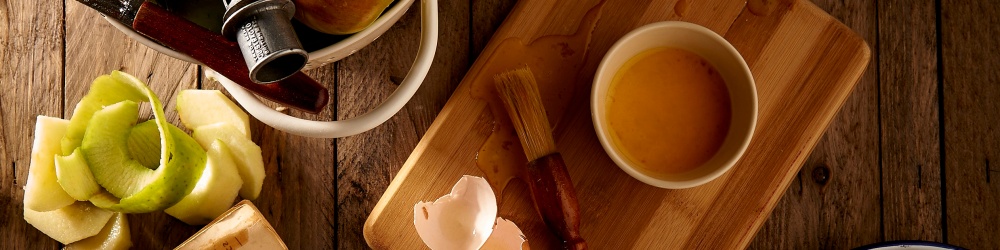
On one quiet Sunday afternoon, these four staple ingredients in the pantry brought out the urge to try something different for the Sunday dinner. As the option of sweet or savoury were being considered, the experimentation ran into attempts at making Yorkshire pudding.

One of the most favoured English dishes, Yorkshire pudding is a baked pudding which can be served in numerous ways. From being a main course dish served with meat and gravy or filled with banger and mash or made into dessert with fillings of chocolate, the options keep on changing depending on the choice of ingredients, the size of the pudding, and the accompanying components of the dish.

“Make a good batter as for pancakes; put in a hot toss-pan over the fire with a bit of butter to fry the bottom a little then put the pan and butter under a shoulder of mutton, instead of a dripping pan, keeping frequently shaking it by the handle and it will be light and savoury, and fit to take up when your mutton is enough; then turn it in a dish and serve it hot.
– A recipe for “a dripping pudding” as published in the book “The Whole Duty of a Woman” by Lady A; Kenrick, William (1737).

While the exact origins of this dish aren’t traced to any particular era, the recipe in records was seen in the sixteenth century. Originally this dish was believed to be served as first course to dull the appetite for the main meat and vegetables served as the second course. In poorer households, the pudding was often served as the only course. As to the name “Yorkshire”, the probability lies in the crispier batter of the pudding in this region, made so by the higher temperatures produced by the coal.

One of the reasons of its’ popularity lies in the ease of cooking. By pouring the batter made from milk (or water), flour and eggs ( basic ratio of 1/3rd cup flour and 1/3rd liquid per egg), into preheated, oiled, baking pans, ramekins or muffin tins (in the case of miniature puddings), they can be made steamed, in the pan or ovens. A steamed recipe involves covering the pudding with grease proof paper to steam it and then serve with jam and butter (1926).

“It is an exceeding good pudding, the gravy of the meat eats well with it,” states Glasse. “…. To set your stew-pan on it under your meat, and let the dripping drop on the pudding and the heat of the fire come to it, to make it of a fine brown.” (recipe as recorded in The Art of Cookery Made Plain and Easy by Hannah Glasse (1747)).

The versatility of the Yorkshire pudding can be felt across the various cuisines. With Laplanders (also known as popovers) of the American cuisine, these are light rolls made from an egg batter similar to that of Yorkshire pudding, typically baked in muffin tins or dedicated popover pans (straight-walled sides rather than angled). Similar dishes ( batter based savoury dishes) include the French gougère (a savoury choux pastry mixed with cheese), Bismarck or Dutch baby pancakes, takoyaki (a Japanese puff batter dumpling with octopus) or the more elaborate dish of “Toad in the Hole”. Traditional variants with local flours like sago, split gram flour, gluten free or palaeo based Yorkshire puddings and the like have been tried. The beauty of experimentation of the different recipes lies in simple adaptation, palatability and above all, bringing a bit of another culture to the table.

Half a pound of flour
1 ounce of butter
2 eggs
Milk to mix
Put the half-pound of flour into a basin and rub in the butter. Make a hollow in the centre of the mixture and break in the egg, beat well adding the milk gradually until all is mixed. Then beat for a further fifteen minutes, when the mixture coats a spoon it is ready. Grease a pudding basin and pour in the mixture, cover with greaseproof paper and steam for one and a half hours. Serve with jam, butter and sugar. [Note, for cooking the water should only come half way up the dish.
Source: Recipes Past and Present. A Wootton Bridge Historical website

Posted in Daily, Personal Musings, Quotes, Reflections, Stories Around the World, Work

Across the Road

“The art of life lies in a constant readjustment to our surroundings.” Kakuzo Okakura, The Book of Tea

While visiting the extended family as a part of the routine monthly road trip; travel sickness, traffic gridlocks and bad roads are major issues often encountered. Although one comes out of them to reach the farmstead, time is often lost. Consequently after two long journeys courtesy of road congestion, we had decided to leave a little early, around the wee morning hours. Although it was difficult packing up the family including toddler, pets and all for a two day stay; the task was accomplished with joint effort of both the adults. While the first journey was successful, the second was bad due to the unprecedented rains and really bad worn out roads. Consequently the route was adjusted to include the state highways. Though extra distance was covered, the journey was not hampered by bad roads or excessively heavy traffic. Change from the familiar and adaptability to the situation paved way for the smooth travel.

“I cannot say whether things will get better if we change; what I can say is they must change if they are to get better.” Georg C. Lichtenberg

There may be similar instances in our lives, wherein one has to take a different route to reach the final target. Even though the final target is an appreciated goal, deflecting from the routine, known or approved approach encounters a lot of courage and foresight to go ahead, in the face of open opposition and criticism. A lot of security is often laid at doing something in the known way. While the “known” helps one many a time, at times it is necessary to try a different technique to achieve the purpose.

“The price of doing the same old thing is far higher than the price of change.” Bill Clinton

Through history and time, to try again and not give up has been the requisite for achievement of any goal, dream or target. Yet constantly trying to find a way out through the tiny spaces of the bricks doesn’t help us cross the path, unless one remodels the bricks to a more suitable form. Simply putting in extra hours isn’t the sole method to achieve more. Instead finding an alternative method, correct, true and just with adequate effort, perseverance and determination combined with intelligence and smart honest work helps us reach the dream. When the stakes are solely set on “harder than ever” instead of “trying better, different and with thought”; the former may kill the chance of a breakthrough.

“You never change things by fighting the existing reality. To change something, build a new model that makes the existing model obsolete.” Buckminster Fuller

I’m sitting in a quiet room at the Millcroft Inn, a peaceful little place hidden back among the pine trees about an hour out of Toronto. It’s just past noon, late July, and I’m listening to the desperate sounds of a life-or-death struggle going on a few feet away. There is a small fly burning out the last of its short life’s energy in a futile attempt to fly through the glass of the windowpane. The whining wings tell the poignant story of the fly’s strategy – try harder. But it’s not working. The frenzied effort offers no hope for survival. Ironically, the struggle is part of the trap. It is impossible for the fly to try hard enough to succeed at breaking the glass. Nevertheless, this little insect has staked its life on reaching its goal through raw effort and determination. This fly is doomed. It will die there on the windowsill.
Across the room, ten steps away, the door is open. Ten seconds of flying time and this small creature could reach the outside world it seeks. With only a fraction of the effort now being wasted, it could be free of this self-imposed trap. The breakthrough possibility is there. It would be so easy.
Why doesn’t the fly try another approach, something dramatically different? How did it get so locked in on the idea that this particular route, and determined effort, offers the promise of success? What logic is there in continuing, until death, to seek a breakthrough with ‘more of the same’? No doubt this approach makes sense to the fly. Regrettably, it’s an idea that will kill.
Author: Price Pritchett

“If you always do what you’ve always done, you’ll always get what you’ve always got.” Henry Ford

Posted in Food, Photography Art, Stories Around the World

Shape in Style

“Life is a cake and love is the icing on top of it. Without love, it becomes difficult to swallow life.” Mehek Bassi

Accompanying my cousin to the bakery was an enlightening event yesterday. With the twins birthday approaching in two weeks time, it was time for the placing the order for the cake. Like all to-be-four year old minds, they had very specific ideas for their cake; from the “Cars” based theme to the Disney’s “Frozen” theme, the possibility of getting one big cake design was the heart of the discussion with the main baker.

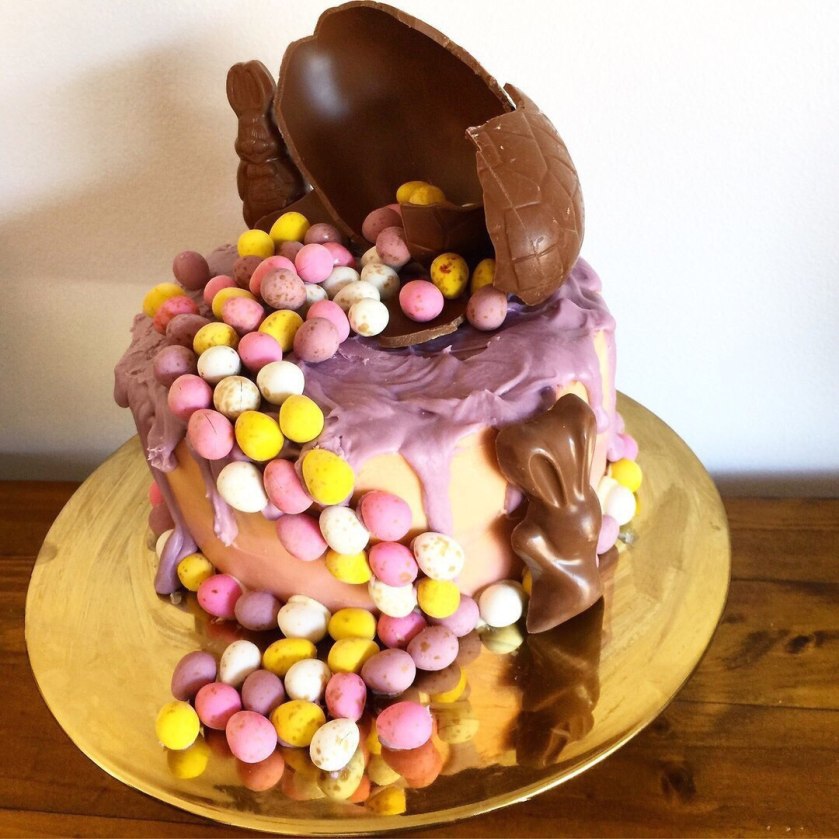
While waiting, scanning through the cake design books and available cakes on display was a feast for the artistic eye. While my childhood consisted mostly of cream with icing birthday cakes, these days fondant designed and themed cakes are the rage. Today, the early methods akin to construction of a structure by cutting shapes out of cake and piecing them together have been superseded by preformed character based designs and the shaping of cakes out of fondant and different forms of marzipan. From fondant (sugar paste or ready roll icing), royal icing, marzipan, modeling chocolate, gum paste and latest of few, edible ink printing, the design over cake has been transformed greatly.

Cake decorating had originated in Europe around the 17th century. With the production of baking powder and temperature controlled ovens (1840s), baking cakes became easy and the presentation more elaborate. The exact origins of cake decorating was believed to from a French bakery (1840s) when prices were increased on their cakes as the latter were decorated. With decorative shapes, cakes were adorned with icing, formed into patterns, flowers and food colouring was used to accent the frosting or layers of cake. Over the years depending on the occasions, cake decorating styles have been enhanced along with the ornamentation being more artistic.

These days even homemade cakes are being embellished with something simple as powdered icing, chocolate layer with sprinkles or the good old coloured icing. With the numerous designs and models of 2-D or 3-D made, no wonder that cake shows and related artistry are the all time rage not just for the special occasions or celebrations but also for avid dessertarian, dessert chefs or simply for the love of baking and art. 

“Whether you’re a bride or a birthday boy, your options are much the same. Cake comes in chocolate, yellow, or white. Frosting comes in chocolate or vanilla buttercream, or you can opt for whipped cream. Fillings are either chocolate or vanilla custard, fresh bananas, or strawberries or raspberries in season. For birthday cakes, you can have either flowers or balloons in your choice of colors. For wedding cakes, you can add either fondant or marzipan covering, or either smooth or basket-weave buttercream, in white or ivory, with either pearl-like dots or ribbony swags made of frosting, and fondant faux flowers are extra.” Stacey Ballis ( author of Wedding Girl)

Posted in Daily, Family and Society, poetry, Quotes, Reflections, Stories Around the World

Sliver of Hope

“Once you choose hope, anything’s possible.” Christopher Reeve

While awaiting scholarship and university acceptance for higher studies, volunteering in the cancer ward at the city hospital for brownie points was one of my interim jobs. The experience during those three short months was enlightening and had a paramount influence in the later years of my life. Seeing the faces of different years, from the young adult to the elderly as they underwent the various stages of their treatment be it chemo or radiation or both had a wide range of emotions running across them. While there was disbelief, despair and regret at the initial phases it was the acceptance, hope and the will to survive that had surfaced as the treatment progressed. Although some responded and some didn’t, it was the will to try and the hope for better tomorrow that gave the will to live today.

“It is because of hope that you suffer. It is through hope that you’ll change things.” Maxime Lagacé

Carrying those memories towards the later years of life, one gears up to face setbacks and disappointments of life with perseverance and will to go on. What drives the person in the face of all odds, is the promise and hope of the future. In fact, hope is really a special, wonderful and marvellous gift from God, Time and Faith. Although hope may vary, bend around the corners, twists to a very thin segment and hides from plain sight, it never breaks or vanishes as long as one never forgets it. When the darkness, doubt and despair set in; it is hope that sustains one, giving a reason to go on, courage to let go and move ahead. Instead of giving up or sinking down, it is hope that helps one to stay afloat and survive.

“I dwell in possibility.” Emily Dickinson

While one needs to sustain and nurture hope to get out of tough times; sitting simply and twiddling doesn’t help. Instead combine fortitude, strength and courage with a heavy dose of knowledge, foresight, will and hope to go ahead and face the situation. Although one hopes for the best, preparation for the worst scenario should be made. Refresh the hope and the will to survive, then event he darkest corner would light up.

“May your choices reflect your hopes, not your fears.” Nelson Mandela

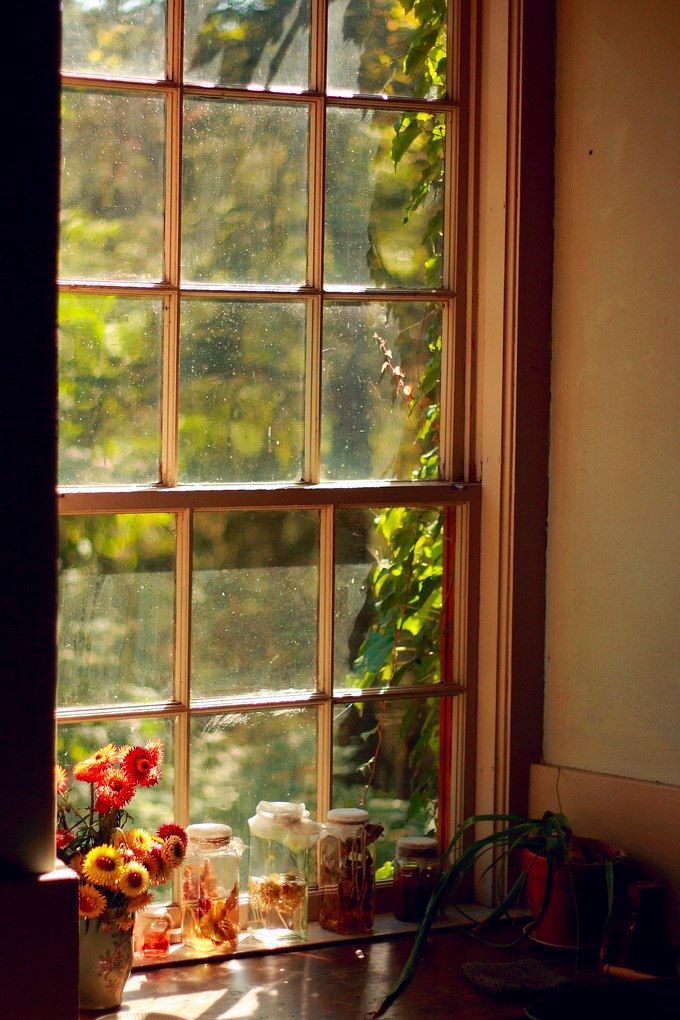
If you can look at the sunset and smile, and find beauty in the colours of a small flower, then you still have hope.
If you can find pleasure in the movement of a butterfly, and if the smile of a child can still warm your heart, then you still have hope.
If you can see the good in other people, and if the rain breaking on a roof top can still lull you to sleep, then you still have hope.
If the sight of a rainbow still makes you stop and stare in wonder, and if the soft fur of a favoured pet still feels pleasant under your fingertips, then you still have hope.
If you meet new people with a trace of excitement and optimism, and if you give people the benefit of the doubt, then you still have hope.
If you still offer your hand in friendship to others that have touched your life, and if receiving an unexpected card or letter still brings a pleasant surprise, then you still have hope.
If the suffering of others still fills you with pain and frustration, and if you refuse to let a friendship die, or accept that it must end, then you still have hope.
If you look forward to a time or place of quiet and reflection, and if you still watch love stories or want the endings to be happy, then you still have hope.
If you can look to the past and smile, and when faced with the bad, when told everything is futile, you can still look up and end the conversation with the phrase … ‘yes, but ….’ Then you still have hope. (Source: vk.com)

“Hope is a good thing, maybe even the best of things, and good things never die.” Andy Dufresne (Shawshank Redemption)