Posted in Daily, Food, Musique, Stories Around the World

A Penny, A Bun…

Hot cross buns!
Hot cross buns!
One a penny, two a penny,
Hot cross buns!

If you have no daughters,
give them to your sons.
One a penny, two a penny,
Hot cross buns!
– Roud Folk Song Index Number (13029)

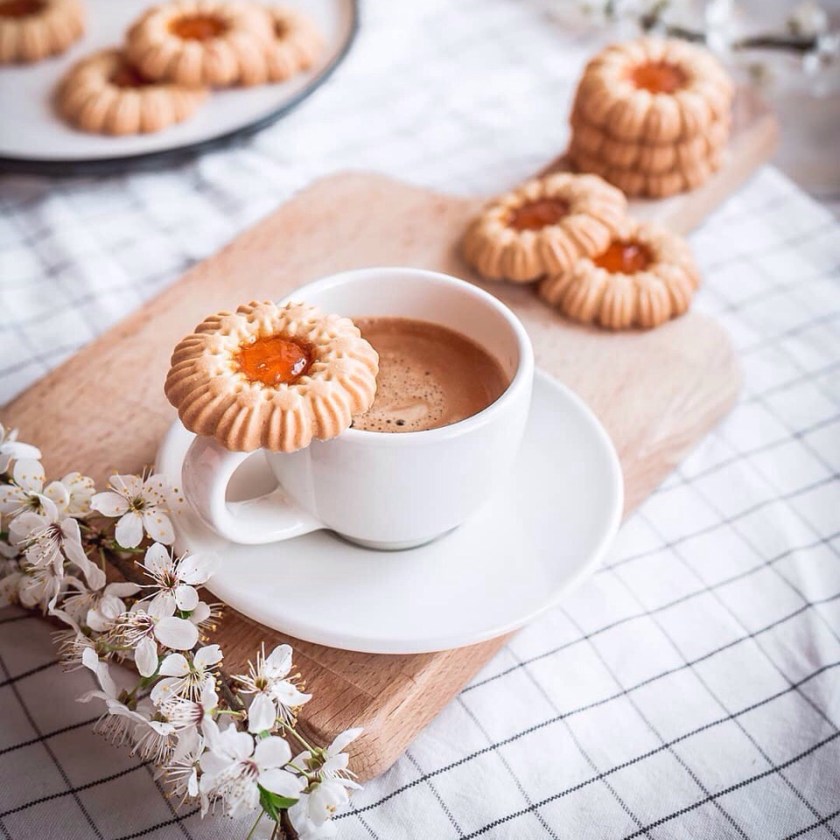
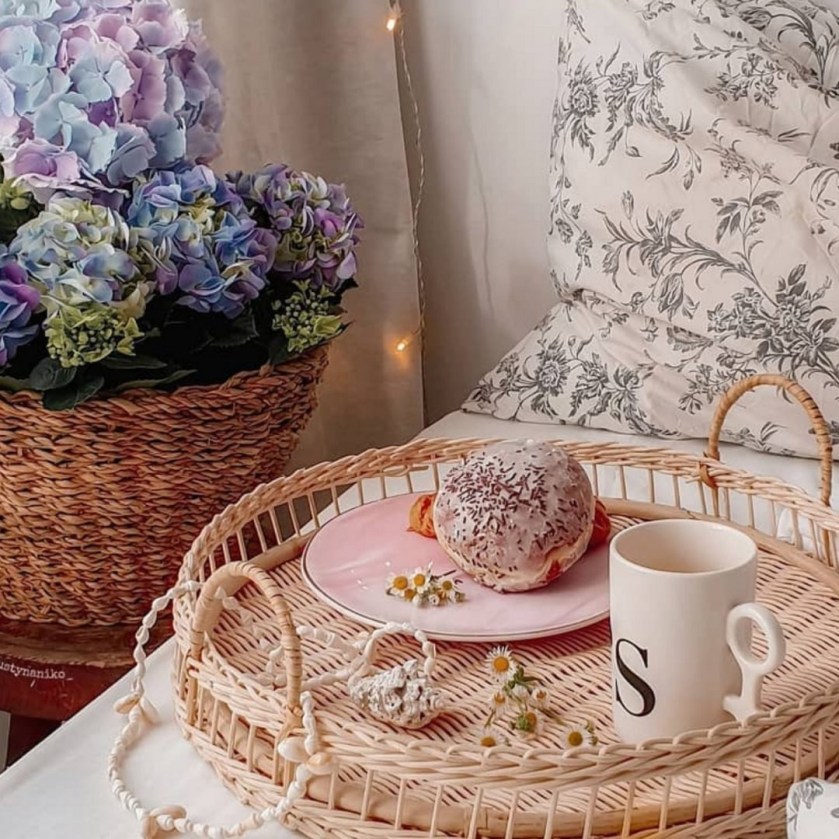
Almost every parent, guardian or caregiver has heard of the predefined set of nursery rhymes (ranging from Twinkle Twinkle Little Star to Ba Ba Black Sheep), especially when trying to make the young mind learn a bit of the English language, rhymes and songs. The above song “Hot Cross Bun” is no stranger to the set of these rhymes. However it was the smell of freshly baked buns (butter buns, fruit buns mainly) from the bakery near my workplace that would account for the sudden thoughts of “Hot Cross Bun” ( originally an English street cry) being dredged up from the grey cells. Like those memories that linger, thoughts of a pot of tea with fresh buns do enter the list of sudden urges for the taste buds occasionally.

This spiced sweet bun usually made with fruit and traditionally marked with a cross (as sugar toppings or partially sliced through) was associated with the end of Lent and is usually eaten on Good Friday. At times, spices are also added. These days hot cross buns are available all year round at most places, even in the supermarket chains with varieties like toffee, orange-cranberry, salted caramel and chocolate, apple-cinnamon, coffee flavoured, white chocolate and raspberry, banana and caramel, sticky date and the list goes on to being more creative and flavoured in certain bakeries and delis.

The exact origin of “hot cross buns” was historically believed to be associated with the rise of Christianity. During the Lent period, plain buns were made without any dairy products and eaten hot or toasted. Although archaeological evidence suggest that the Greeks (6th century) may have marked cakes with a cross. While one theory states that the Hot Cross Bun originated when where Brother Thomas Rodcliffe, a 14th Century monk at St Albans Abbey (1361), developed a recipe (similar to hot cross bun) called an ‘Alban Bun’ and distributed them to the local poor on Good Friday.  Though the London street cry,”Good Friday comes this month, the old woman runs. With one or two a penny hot cross buns”, which had appeared in Poor Robin’s Almanac (1733) was the first ever definite record of hot cross buns. On trying to trace if these buns were made earlier than 18th century London, records of recipes come to a blank.

More of interest are the numerous traditions and beliefs surrounding these “hot cross” buns. While one says that buns baked and served on Good Friday will not spoil or grow mouldy during the subsequent year, others encourage keeping these buns purely for medicinal purposes or are carried along for long sea voyages to protect against shipwreck. Few kitchens may have a “hanging hot cross bun” which gets replaced every year, done so as to protect against fires and ensure that all breads turn out to be perfect and exquisite.

Be it the Lent season or not, hot cross buns are one of the best spiced buns are to have, especially hot or toasted ( or cold as per preference). The more the variety, the better. Moreover, one doesn’t need to wait for the right time to indulge that heavenly taste and flavour. With creative flavourings on the rise, these buns are definitely worth a try.

Posted in Daily, Family and Society, Life, Reflections, Stories Around the World, Work

The Mark Left Behind

“How far that little candle throws his beams! So shines a good deed in a weary world.” William Shakespeare

Walking into the shopping centre (similar to Walmart) downtown, unknowingly one would be found scanning their eyes at random for the familiar face of the friendly store clerk. On spotting that familiar “friendly face” shopping becomes easier especially when figuring out the offers. One longs for that similar friendly face in public offices, the court as well as at the municipal office, to get the unfamiliar procedure, forms, certifications and the rest sorted out to the layman.

In this era, where time always runs short for everybody; offering help, being kind, of grace and courteous isn’t always easy. Amidst loads of paperwork, targets to be achieved, over time hours, less holidays, rushing through two to three jobs to make ends meet; doing a job with utmost professional gains at time more importance than being kind, helpful and humane. For those who learn to balance both; their faces leave a distinct impression in the minds of those who meet them.

“Some people come into our lives, leave footprints in our hearts and minds and we are never the same again.” Jared Leto

Besides the work that we do for the basic bread and butter, the individual prints of approaching each turn that life takes one through, shows hint of the true character and underlying personality. Our every action, word and deed echoes more about ourselves than the promises that we make. The inner person reflects what it is within, for the world outside to see. Just like every vessel will pour out what it has or contains, so will a person leave their prints behind. While the first impression may be the best one; if the ones that follow aren’t true, losses would happen in the long run. Being kind and true within is what makes the difference in the lives of each person, whether it be their social, personal or professional life.

“Do things for people not because of who they are or what they do in return, but because of who you are.” Harold S. Kushner

The old man shuffled slowly into the restaurant. With head tilted and shoulders bent forward, he leaned on his trusty cane with each unhurried step. His tattered cloth jacket, patched trousers, worn out shoes, and warm personality made him stand out from the usual Saturday morning breakfast crowd. Unforgettable were his pale blue eyes that sparkled like diamonds, large rosy cheeks, and thin lips held in a tight, steady smile.
He stopped, turned with his whole body, and winked at a little girl seated by the door. She flashed a big grin right back at him.

A young waitress named Mary watched him shuffle toward a table by the window. Mary ran over to him, and said, ‘Here, Sir . . . let me give you a hand with that chair.’ Without saying a word, he smiled and nodded a thank you. She pulled the chair away from the table. Steadying him with one arm, she helped him move in front of the chair, and get comfortably seated. Then she scooted the table up close to him, and leaned his cane against the table where he could reach it.
In a soft, clear voice he said, ‘Thank you, Miss . . . and bless you for your kind gestures.’ ‘You’re welcome, Sir.’ She replied. ‘And my name is Mary. I’ll be back in a moment and if you need anything at all in the mean time, just wave at me!’ After he had finished a hearty meal of pancakes, bacon and hot lemon tea, Mary brought him the change from his bill. He left it lay on the table. She helped him up from his chair and out from behind the table. She handed him his cane and walked with him to the front door. Holding the door open for him, she said, ‘Come back and see us, Sir!’ He turned with his whole body, winked and smiled, then nodded a thank you. ‘You are very kind.’ he said softly.

When Mary went to clean his table, she almost fainted. Under his plate she found a business card and a note scribbled on a napkin. Under the napkin was a one hundred dollar bill. The note on the napkin read . . . ‘Dear Mary, I respect you very much and I can see you respect yourself too. It shows by the way you treat others. You have found the secret of happiness. Your kind gestures will shine through to all those who meet you.’ The man she had waited on was the owner of the restaurant where she worked. This was the first time that she or any of his employees had ever seen him in person. 

Written by Steve Brunkhorst


Posted in Daily, Family and Society, Personal Musings, Quotes, Stories Around the World, Work

Stay on the Course

“Failures, repeated failures, are finger posts on the road to achievement. One fails forward toward success.” C. S. Lewis

The seventh rejection is often hard. Especially for a young couple who want to start their own bakery and chocolatier. Though ideas are plenty, talent is present; getting a bank loan as well as rental premises in the right place for a start-up is as important as skill and talent. In addition to it, getting funds for the best raw ingredients is what matters the most. When approaching for a loan, the few initial rejections may sting a bit; yet when it happens too frequently it takes courage to stick on to the plan and find alternatives. At times, in those moments, it is the family, neighbourhood and community that help initially till better options become available. Yet, even in their absence, finding alternate jobs as well as using available resources for starting small scale is what later makes the big dreams feasible.

“The successful man will profit from his mistakes and try again in a different way.” Dale Carnegie

Many of us, have similar plans or ventures, whether they be setting a shop with known or innate talents, building a new skill (like tapestry, crocheting) or exploring new ventures; obstacles are bound to be there. Staying on, despite the constant brick walls popping up, the hidden taunts, open criticism and judgmental nods, makes the final achievement more sweet. Keeping the latter alone in the forefront won’t make a difference. Being dedicated and focused on the dream itself and not the glory, reward or fame of succeeding is what makes most dreams come true. Success is secondary to mental and emotional satisfaction.

Inspiring stories are always there to be seen from the lives of the people around us, of the present and the past. As William S. Banowsky stated, the story behind one of the greatest leaders of the 19th century is one of dogged persistence in the face of repeated setbacks.
In 1831 he failed in business.
In 1832 he was defeated for the state legislature.
In 1833 he failed again in business.
In 1834 he was elected to the state legislature.
In 1835 his sweetheart died.
In 1836 he had a nervous breakdown.
In 1838 he was defeated for Speaker.
In 1840 he was defeated for Elector.
In 1843 he was defeated for Congress.
In 1846 he was elected for one term to Congress.
In 1848 he was defeated again for Congress.
In 1855 he was defeated for the Senate.
In 1856 he was defeated for Vice President.
In 1858 he was defeated again for the Senate.
In 1860 he, finally, was elected President of the United States. And these are just a few of the rough spots in the life of Abraham Lincoln.

“If God closes a door AND a window, consider the fact that it might be time to build a whole new house.” Mandy Hale

Sitting back and just brooding over the setbacks with pessimism, dejected and down-heartened mood will not make things better. Instead try to improvise, find alternative means, work hard, keep the faith and try again from a different angle. Learning from mistakes isn’t easy for self-correction clashes with the ego. However with constructive criticism, corrective measures may be made for a better outcome. It is never the occasional rain than makes the stones smooth but the running water which flows making a path for itself, keeping the odds, feasibility and practicality in mind.

“The harder you fall, the heavier your heart; the heavier your heart, the stronger you climb; the stronger you climb, the higher your pedestal.” Criss Jami


Posted in Daily, Life, Personal Musings, Stories Around the World, Work

To Strengthen Oneself

“To every disadvantage there is a corresponding advantage.” W. Clement Stone

As the founding day of the establishment where I work at was drawing near, a wide range of activities were planned to mark the jubilee year. Among them was the reuse, reduce and recycle plastic waste project, with door to door campaigning and collection of recyclable plastic. One can then imagine the huge gap in the team when one of its members fell from the parapet and ended up with a cast of one leg. Although the team had changed members, time wasn’t wasted, but by taking to social media, speech and other funding measures to gather support for the project. What may be an unfortunate event, didn’t feel so when time, effort and means are taken to get the goals accomplished.

“Your hardest times often lead to the greatest moments of your life. Keep going. Tough situations build strong people in the end.” Roy T. Bennett

As history has time and again proved, as seen by the lives of Stephen Hawking, Christopher Reeves and many more; every perceived disadvantage, misfortune or flaw can be made to one’s advantage, when used with the right support, training, effort and will to make something of their time in life. If one’s biggest weakness is the perceived fear or inability to do a skill; then gaining courage to do it will not put the fear to rest but also open the doors of opportunity. Learning to use the perceived defects us in, to master and strength them would make the difficult trials feasible.

“In life, try your best to do the right thing. Have fun while you’re alive. Take advantage of every asset you have. Don’t take anything for granted.” Justin Chon

This story is of one 10-year-old boy who decided to study judo despite the fact that he had lost his left arm in a devastating car accident. The boy began lessons with an old Japanese judo master. The boy was doing well, so he couldn’t understand why, after three months of training, the master had taught him only one move. ‘Sensei,’ the boy finally said, ‘Shouldn’t I be learning more moves?’ ‘This is the only move you know, but this is the only move you’ll ever need to know,’ the sensei replied. Not quite understanding, but believing in his teacher, the boy kept training. Several months later, the sensei took the boy to his first tournament. Surprising himself, the boy easily won his first two matches. The third match proved to be more difficult, but after some time, his opponent became impatient and charged; the boy deftly used his one move to win the match. Still amazed by his success, the boy was now in the finals.
This time, his opponent was bigger, stronger, and more experienced. For a while, the boy appeared to be overmatched. Concerned that the boy might get hurt, the referee called a
time-out. He was about to stop the match when the sensei intervened. ‘No,’ the sensei insisted, ‘Let him continue.’ Soon after the match resumed, his opponent made a critical mistake; He dropped his guard and instantly, the boy used his move to pin him. The boy had won the match and the tournament. He was the champion. On the way home, the boy and the sensei reviewed every move in each and every match. Then the boy summoned the courage to ask what was really on his mind.
‘Sensei, how did I win the tournament with only one move?’ ‘You won for two reasons,’ the sensei answered. ‘First, you’ve almost mastered one of the most difficult throws in all of judo. And second, the only known defense for that move is for your opponent to grab your left arm.’ The boy’s biggest weakness had become his biggest strength.
By Joel Garfinkle

Posted in Daily, Family and Society, Personal Musings, Quotes, Stories Around the World

Balance the Scales

“All that we see or seem is but a dream within a dream.” Edgar Allan Poe

The day before the weekends or sometimes the weekends themselves, bring out the cleaning spree in me. Bitten by the “cleaning bug”, from the curtains to the upholstery as well as furnishings including all the mats and the carpets are brought out, aired, sun dried and brought in, especially before the dark clouds start hovering around. When bitten bu the bug, the entire household tip toes around fearing the retribution of a spilled cup of water on the floor or even those muddy footprints around. Yet by sun down, the shining and polished furniture starts showing a scrape of grime brought by little hands after their outdoor (or attic) fun. While slowly the red fiery steam starts rising within, a heavy dose of temperance is brought out from within to quench the flames, lest the gleeful smiles and childhood memories are lost for the day.

“Be thankful for what you have; you’ll end up having more. If you concentrate on what you don’t have, you will never, ever have enough.” Oprah Winfrey

There will be days in each of our lives, where one goes out of the way to do everything in the right manner. Despite all the efforts, there would be no returns but regrets and inner unrest. Those days, when one learns to take events in stride and move on, those perceived unhappy moments turn into blessed ones. In the light of the events of those days, the attitude that one chooses and the perceptions used to colour the day brightens up the gloomy mood, bringing forth the inner light.

“To change ourselves effectively, we first had to change our perceptions.” Stephen R. Covey

Each one is in the rush to lead their own lives. While each one may seem to measure the other, in the end it is the personal happiness and the inner peace that each one strives and craves for. Knowing when to remove the dust, leave it on or capture the muddy prints makes the difference in the day. To redefine the angry moments of the day by changing the perceived notions is important. Finding the balance between the “to do”, would like to do and long to do, is important to live our lives to the potential that one was born to.

“Dream delivers us to dream, and there is no end to illusion. Life is like a train of moods like a string of beads, and, as we pass through them, they prove to be many-colored lenses which paint the world their own hue. . . . ” Ralph Waldo Emerson

Dust if you must, but wouldn’t it be better to paint a picture or write a letter, bake a cake or plant a seed, or even ponder the difference between want and need?
Dust if you must, but there’s not much time, with rivers to swim and mountains to climb, music to hear and books to read, friends to cherish and life to lead.
Dust if you must, but the worlds out there with the sun in your eyes, the wind in your hair, a flutter of snow, a shower of rain. This day will not come around again.
Dust if you must, but bear in mind, old age will come and it’s not kind. And when you go – and go you must, you, yourself will make more dust! It’s not what you gather, but what you scatter that tells what kind of life you have lived … and remember, a layer of dust protects the wood beneath it.
Author Unknown

Posted in Life, Personal Musings, Quotes, Reflections, Stories Around the World, Work

The Real Skill

“Real knowledge is to know the extent of one’s ignorance.” Confucius

With a fundraiser planned as part of the community projects at the work place; each one was designated a special set of tasks based on individual choices and skills. Some were forefront with the raising funds sections, while others were allotted in projects from cooking to art, designing posters and so on. Amidst all this, comparisons and remarks were found in the conversations regarding the ability or lack of special talents or skills. The truth is each one is skilled in their own way. While one may excel at baking, the other may be better at managing events or designing the vent posters. Each one has their special own skills.

“Attitude is more important than the past, than education, than money, than circumstances, than what people do or say. It is more important than appearance, giftedness, or skill.” Charles R. Swindoll

Beyond the skills that define one, it is the mind and the attitude behind them that reflects the real self within. Each one is skilled or can excel at certain tasks; but knowing one better than the other, doesn’t imply that one person is better than the other. Believing that one is defined by their skills alone, is a foolhardy thought. Each one is gifted in a way of their own. Yet beyond that, it is the mind that matters more. One can always outshine the other at the same or similar art; but keeping a kind, humane and gentle approach will leave a characteristic individualized hand-print behind, for the rest of the world to observe, reflect and learn from.

“The only person who is educated is the one who has learned how to learn and change.” Carl R. Rogers

After winning several archery contests, the young and rather boastful champion challenged a Zen master who was renowned for his skill as an archer. The young man demonstrated remarkable technical proficiency when he hit a distant bull’s eye on his first try, and then split that arrow with his second shot. ‘There,’ he said to the old man, ‘see if you can match that!’

Undisturbed, the master did not draw his bow, but rather motioned for the young archer to follow him up the mountain. Curious about the old fellow’s intentions, the champion followed him high into the mountain until they reached a deep chasm spanned by a rather flimsy and shaky log. Calmly stepping out onto the middle of the unsteady and certainly perilous bridge, the old master picked a far away tree as a target, drew his bow, and fired a clean, direct hit. ‘Now it is your turn,’ he said as he gracefully stepped back onto the safe ground.

Staring with terror into the seemingly bottomless and beckoning abyss, the young man could not force himself to step out onto the log, no less shoot at a target. ‘You have much skill with your bow,’ the master said, sensing his challenger’s predicament, ‘but you have little skill with the mind that lets loose the shot.’
Author Unknown

“The only true wisdom is in knowing you know nothing.” Socrates

Posted in Daily, Food, Stories Around the World

Of “Petit Pots”

“Heat the milk and cream. Make it a bit bubbly. Add the flavours, mix it into the whisked eggs and egg yolks. Strain the mixture and pour into cups. Bake these cups in a water bath at low heat. Depending on taste, one can flavour this dessert with pieces of broken or melted choclate, rum, add a base of crunchy texture or garnish with almond slivers, sliced berries, cinnamon, colorful sugar or sprinkles; all leading to a piece of art as well as of delectable taste.”

The above simple dessert similar to a lightly set baked custard, known as “Pot de crème” or “petit pots” was believed to have originated from France during the 17th century. While the name means “pot of custard” or “pot of cream”,referring to the porcelain cups which were used to make and serve the dessert; the latter concept may have evolved from the from English Syllabub.

Usually looser than other custards, crème brulee, flans or crème caramel; it requires minimal preparatory time and can be made with the ingredients at hand. Such that it can be prepared without milk or had frozen. Hardly surprising that, this delight has got its’ own special place and day (August 27th) in the foodimentarian’s heart. For all the dessert connoisseurs, it would be time to experiment the taste buds with the varieties of preparations. While for the experimental chefs, let the steps to make an artful and palatable creation begin.