Posted in Daily, Family and Society, Life, Quotes, Reflections, Stories Around the World, Work

Of Choices, Time and Priorities

“Things which matter most must never be at the mercy of things which matter least.” Johann Wolfgang von Goethe

No matter how hard one tries to stretch the allotted time of twenty hours each day; there are bound to be a few things from the mental task list, still left undone. One of the earliest habits drilled during the school days was to prioritize and get the tasks completed for the day. While the initial years saw the assigned tasks being prioritized from somewhere around middle school onward; later on it became a daily must for most days of high school, college and later on in the adult world.

Prioritize.

Almost the whole of the adult lives revolve around prioritizing events scheduled around the planners, from big ones to the small ones. The scales have to be struck in a very fine manner between work, relationships, personal growth, hobbies or interests, family life and personal time. Too much of one focus results in the undermining of the others which may or mayn’t have consequences in the later years.

“Most of us spend too much time on what is urgent and not enough time on what is important.” Stephen R. Covey

Prioritizing is as much an art, dependent on the way how one perceives the important facets of life. When one realizes that the focus has been on certain direction for quite some time, it may be too late to turn things around as time has already run out in those spheres. Learning not to step into those lines is a special talent. Priorities are shaped by the choices, desires, interests as well as the purpose that we grow within ourselves. Until one defines what they want out of their respective lives, the prioritization mayn’t work out right. One’s priorities should eventually bring completeness as well as pleasant emotions in life. Once when those aspects are met, the time spent for the prioritized tasks is time well spent; worth the treasure chest of memories, lessons and happiness that it brings along.

“Desires dictate our priorities, priorities shape our choices, and choices determine our actions.” Dallin H. Oaks

Priorities
So many things to do, I’m always rushing ’round
I wish that I had time to just sit still
I’ll get done all the things I need to do today
I promise then I’ll stop a while, I will

And so I start to tackle the list of chores I made
I’ll make this house look really spick and span
I’ll tidy up and wash the floor and vac and dust as well
Clean the bathrooms, clean the house – I know I can

A friend rings up. She’s feeling down. She wants to come around
She asks if I have time to talk a while
I stop to make a coffee and lend a listening ear
I have nothing to give except my smile

Then, when she’s feeling better and she knows that she’s been heard
She thanks me and then she goes on her way
I look around my house and continue with my chores
For I am going to get somewhere today

The telephone then rings. My son’s teacher’s on the phone
She wants me to come down and get him now
I go down to the school and I bring my sick child home
I’ll clean this house up later on somehow

And later when the kids are home; ‘Mum, I need to talk’
And so I stop to listen for a while
My daughter tells me how she feels, she opens up her heart
Then, when she knows I’ve heard her, she can smile

When the night has come, I wonder, ‘what did I achieve?’
And, then I look back on all I have done
The house is still not tidy and there’s still so much to do
Just like it was when I had first begun

But, then I stop and realise my priorities are right
For when someone’s in need then, I am there
I give to them the time they need and help them where I can
I let them know how much I really care

For when the years have passed and my kids have all moved out
They will feel the love and warmth I had to give
And I know that they’ll remember the lessons that they learnt
In self-worth and in how they choose to live

Written by Michelle Tetley
©2005

Posted in Daily, Food, Stories Around the World

Of Sponge Cake, Styles and Flavours

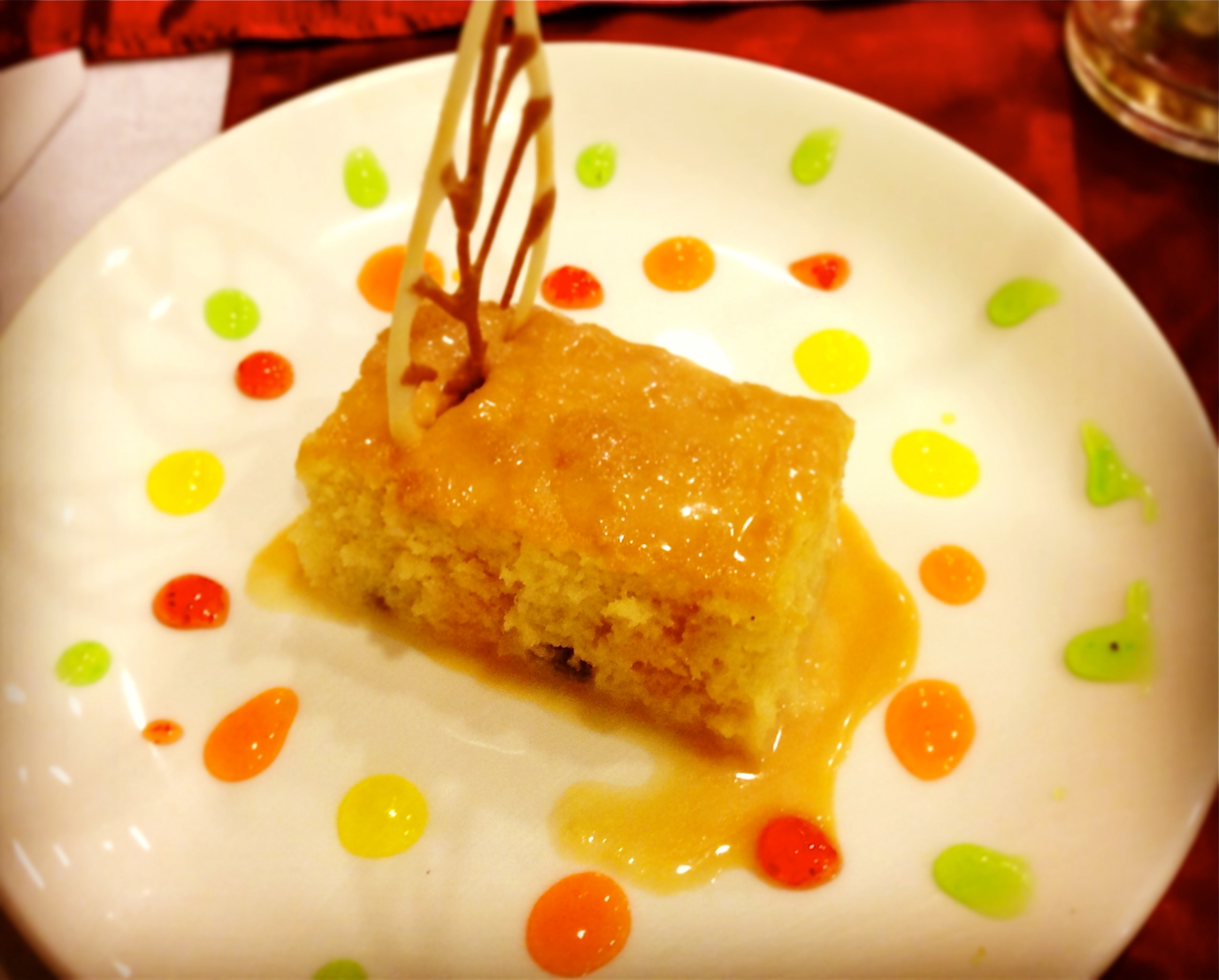
One of the very basic cakes, known to most kitchens and tea times; made of the very basic ingredients of flour, sugar, butter and eggs, mostly made as the non-yeasted cakes but leavened with beaten eggs are the “sponge cakes”.

With the roots tracing back to Spain of the early Renaissance period; the forerunner of sponge cake was initially believed to be have made more as a biscuit, flat and thin. The brainchild recipe was believed to be by the Italian pastry chef Giovan Battista Cabona (called Giobatta), at the court of Spain with his lord, the Genoese marquis Domenico Pallavicini, approximately around the middle of the 16th century. In fact the earliest original and attested sponge cake recipe was seen in English poet, Gervase Markham’s “The English Huswife, Containing the Inward and Outward Virtues Which Ought to Be in a Complete Woman (1615).” The thin crisp cookie like cake became it’s present form when bakers started using beaten eggs as the rising agent (mid 18th century). With baking powder (Victorian period, Alfred Bird, 1843), sponge cakes became higher and lighter.

The British sponge cake is produced using the batter method, with the layered Victorian sponge cake and the Madeira cake being popular in the high tea menu; these cakes made using the batter method are known as butter or pound cakes in US. The typical Victoria sponge filling consists of strawberry jam and whipped double cream sandwiched between two sponge cakes with the top of the cake layered with a dusting of icing sugar.

While sponge cakes are made using the batter method; cakes made using the trapped are known as “foam cakes”. Cakes made based on the technique of using trapped air to life the cake, partially or wholly, existed in most European patisseries. Like the Anglo-Jewish “plava”, pan di Spagna (Italy), génoise (Italian), pão-de-ló (Portugese) to mention a basic few.

The derivatives of the basic sponge cake idea include the American chiffon cake, the Mawa cake (Indianized British sponge cake from Mumbai) and the Latin American tres leches cake. The latter is a sponge cake soaked in three kinds of milk: evaporated milk, condensed milk, and heavy cream. From the simple sponge cake, before it has cooled, the creation of rolled cakes as in the Swiss rolls, trifles, Madeleine and ladyfingers are possible. Little wonder then, this basic cake has been a part of the kitchens over the centuries. With the National Sponge Cake (August 23rd) being recognized by foodimentarians today; experimenting and indulging in the basic cakes of the childhood days would make way for a change fr the usual.

“Kai slices the cake, his version of the banana cake I have always talked about. He has made a vanilla sponge cake, soaked in vanilla simple syrup, and layered with sliced fresh bananas and custard. There is a central layer of dark chocolate ganache with bits of crispy pecans and toffee, and the whole thing is covered in chocolate buttercream, with extravagant curls of chocolate and chocolate-dipped banana slices piled in the middle. I accept a thin slice, savoring the flavors, both of the cake, and of simple joy.” Stacey Ballis (Good Enough to Eat)

Posted in Daily, Life, Personal Musings, Photography Art, Quotes, Stories Around the World, Work

Dance through the Storm

“ Your attitude is like a box of crayons that color your world. Constantly color your picture gray, and your picture will always be bleak. Try adding some bright colors to the picture by including humor, and your picture begins to lighten up.” Allen Klein

Although the skies have been still cloudy and the roads are wet and slippery, with children clambering to escape outdoors and get wet with every opportunity that presents; the regular downpours don’t seem like a hindrance. The daily adult life, both at home and at work involves getting past the rain and into safety of the indoor world, regaling adventures in, around, about and out of the rain. The dark clouds outside need not necessarily darken the mood within, especially if one doesn’t allow it to happen.

“Our attitudes control our lives. Attitudes are a secret power working twenty-four hours a day, for good or bad. It is of paramount importance that we know how to harness and control this great force.” Tom Blandi

Like the rainy days, each one of us have our own “personal bad”. Whether it be the lack of material comfort, an uncomfortable job or family situations, ill health, difficult employer or simply being there at the wrong time; things will pass on. Yet never let those dark moments define or destroy the brightness that each day brings forth. Just as each one has their own “kettle of troubles”, it’s how one reacts hen the water boils that makes all the difference. From being irritated by the noise or rising steam to whistling out a tune from the “singing steam”; one’s attitude defines the circumstances more than “the reverse manner”.

“Attitude is more important than the past, than education, than money, than circumstances, than what people do or say. It is more important than appearance, giftedness, or skill.” Charles Swindoll

There once was a woman who woke up one morning, looked in the mirror, and noticed she had only three hairs on her head.
‘Well’, she said, ‘I think I’ll braid my hair today?’
So she did and she had a wonderful day.
The next day she woke up, looked in the mirror and saw that she had only two hairs on her head. ‘H-M-M,’ she said, ‘I think I’ll part my hair down the middle today?’ So she did and she had a grand day.
The next day she woke up, looked in the mirror and noticed that she had only one hair on her head. ‘Well,’ she said, ‘today I’m going to wear my hair in a pony tail.’ So she did and she had a fun, fun day.
The next day she woke up, looked in the mirror and noticed that there wasn’t a single hair on her head. ‘YEA!’ she exclaimed, ‘I don’t have to fix my hair today!’
Attitude is everything.
Author Unknown

“A healthy attitude is contagious but don’t wait to catch it from others. Be a carrier.” Anonymous

Posted in Daily, Family and Society, Life, Personal Musings, Quotes, Reflections, Stories Around the World

Altering the Echoes

“We don’t see things as they are, we see them as we are.” Anais Nin

Working in an organization, one never realizes how much their actions and behaviour speaks out louder than the words they say. The former influence the opinion of others around oneself more than the latter. From a purely retrospective philosophical point, the behavior met to oneself is in parts an echo of how one behaves towards others. Although kindness should be echoed in thought, behaviour and actions at all times; one goes the extra mile to be kind to those who make them feel the same.

“All the people sent to us are our reflection. And they are sent so that we, looking at these people, correct our mistakes, and when we correct them, these people either change too or leave our lives.” Boris Pasternak

While the tendency to put the fault on the other side of the fence is high especially when pertaining to wrong behaviour; the “why it happened” part may have something to do with what was done by the receiver of the deed some time before. True that people make mistakes and change over; but the consequence of the previous actions still leave an after effect felt sooner or later. To man up and face them, reflects the “new and real character of the person involved”. As one learns to correct themselves from the situations that mirror their own faults; learning to forgive, forget and accept the echoes returned helps one move forward on in life, making new memories and leaving clear and better footprints behind.

“Life is an echo. What you send out comes back. What you sow, you reap. What you give, you get. What you see in others, exists in you.” Zig Ziglar

There is a story about a father and his young son who were walking through the mountains. Suddenly, the son fell, hurting his leg on a rock. He screamed, ‘AAhhhh!’ To his surprise, he heard a voice repeating, ‘AAhhhh!’ This made him even more curious. So, he yelled, ‘Who are you?’ Back came the same answer, ‘Who are you?’Feeling a bit perturbed by this response, he yelled out, ‘Coward!’ Back came the same reply, ‘Coward!’

He looked at his father and asked: ‘What’s going on?’ His father smiled and said: ‘Son, pay attention.’Looking across the valley, his father yelled to the mountain, ‘I admire you!’ The voice answered: ‘I admire you!’ Again the man cried out: ‘You are a champion!’ The voice replied, ‘You are a champion!’ The boy was amazed, but he was very confused. So, his father explained…

‘You are only hearing an echo, the sound of our voices bouncing back from the mountains. However, this really is how life works. It returns to you what you think, say and do! Our lives are a reflection of our thoughts and actions. If you want more love in your world, create more love in your heart. If you want to be treated with kindness, treat others with kindness. If you want more competence on your team, become more competent.
This relationship applies to everything, in all aspects of life. Life will give to you, everything you give to it, only it will give you even more in return. Your life is not ever a coincidence. Each moment is a reflection of you!’ The son listened and grew in understanding, and through the following years, he witnessed the truth of these words in his life!
Author Unknown (Source:vk.com)


Posted in Daily, Food, Stories Around the World

The “Meringue” Way

“To make white bisket bread.
Take a pound & a half of sugar, & an handfull of fine white flower, the whites of twelve eggs beaten verie finelie, and a little annisseed brused, temper all this together, till it be no thicker than pap, make coffins with paper, and put it into the oven, after the manchet is drawen.”
– Recipe for the “white biskit bread” in the book of recipes started (1604) by Lady Elinor Poole Fettiplace (c.1570 – c.1647) of Gloucestershire.
(Fettiplace, Eleanor Poole (1994). Hilary Spurling (ed.). Elinor Fettiplace’s Receipt Book. Translated by John Spurling. Bristol (U.K.): Stuart Press. Volume 1, page 23) noted by Muster (ref.)

Made from egg whites and sugar, whipped up to a finesse with a binding agent (salt, cornstarch or gelatin) and an occasional acidic ingredient (lemon, vinegar or cream of tartar) or flavorings of vanilla, coconut or almond; meringue had graced the dessert menu especially to highlight a special occasion or simply enjoy the pleasures of an exquisite delight. The origin till date, is a point of contention for food historians.

The name “meringue” had first appeared in cookbook by François Massialot (1692) (“XXVIII: Des Meringues & Macarons”. Nouvelle instruction pour les confitures, les liqueurs et les fruits (in French). Paris: Charles de Sercy. pp. 186–188). While the word “meringue” had first appeared in English in an English translation of Massialot’s book (1706); two considerably earlier seventeenth-century English manuscript books of recipes give instructions for confections known as “white bisket bread” and “pets” of what are today are recognizable as meringue. The other claim was that meringue was invented in the Swiss village of Meiringen and improved by an Italian chef named Gasparini between the end of the 17th century and the beginning of the 18th century.

“To make Pets
Take a pownd of Drye fine searsed [sifted] suger, & beat the whites very wel then take off froutgh [froth] & put your suger, bye litle & litle in to it — contineually stiring it & beating it with a spoone ore laydle, and when it is exceedingly well beaten, then have some pye plates ready buttred & wipe the buter of because the lesse buter it hath the beter, then drope them upon the plate & put in to every drope a carieway seede or coriander then let your oven be very temparate and watch them with a candle all the while & if they be right they will rise and looke very white, it is good at the first to set a scilet [skillet] of water, with them in to the oven,& when they be thowrow [thoroughly] drye then take them out, you must in the mixing of them put 12 graines of muske & 12 of Abergrisse [Ambergris] which you must bruse with suger before you stire it in to the egge & suger.”
– Recipe for a baked beaten-egg-white-and-sugar confection (1630) is given in a manuscript of collected recipes written, by Lady Rachel Fane (1612/13 – 1680) of Knole, Kent. (Barry, Michael (1995). Old English Recipes. Jarrod (archived at the Centre for Kentish Studies, Maidstone, Kent). p. 64f.)

The faster they are beaten, the better is the flavour. The key to the formation of a good meringue is the formation of stiff peaks by denaturing the protein of egg whites by pure mechanical shear force. Today these light, airy and sweet confections are made at home (more chewy and soft, and crisp exterior), though the commercial ones still thrive. Interestingly, meringues were traditionally shaped between two large spoons (still done so at the home kitchens) till Antonin Carême piped the “meringue through a pastry bag”.

Over the years, various techniques have been improvised to bring forth the French or basic meringue, Italian, Swiss and even the vegan meringue. From biscuits, desserts to embellishment, each meringue based recipe like the lemon meringue pie, baked Alaska, dacquoise, Esterházy torte to mention a few, all have a story and art of their own to tell. With meringue taking the form of whimsical shapes such as mushrooms; or piped into a crisp basket that is baked and filled with cake, fruit, or flowers are few of the many reasons why these delicacies are here to stay and transform the art and flavours of dessert.

Posted in Daily, Family and Society, Life, Personal Musings, Quotes, Stories Around the World, Work

Of Own Niche

“Don’t set your goals by what other people deem important.” Jaachynma N.E. Agu

Leafing through the high school year book and the annual school magazine, recollections of the younger days resurface to mind. From photographs with class teachers, medal winners of sports, academic and cultural snaps to the articles written by juniors, seniors and classmates bring out the nostalgia. Those days the aspirations were to be successful in life, have fun and do what we love to do.

“What we love to do in life”

Many a time, the daily grind forces us to be something that one doesn’t want to be, especially career wise. Whether it be an artist trapped in accounting, a writer trapped in the office network, a musician taking salesman post for a living; all these are required when one needs to earn their bread and butter. However, the gifted talents should never be wasted. Yet pursuing something that is completely out of one’s league is alarmingly dangerous not only to them, but to other colleagues. While attaining a basic education and graduation is important; let it not drive one to kill their own originality and become something that one never was. Each one is gifted with a special talent. While it may necessary to engage in the working network to earn the daily living; let those God-given talents never be wasted but worked on, no matter how small the progress be and let one’s work shine and speak for themselves.

“Every man has a specific skill, whether it is discovered or not, that more readily and naturally comes to him than it would to another, and his own should be sought and polished. He excels best in his niche – originality loses its authenticity in one’s efforts to obtain originality.” Criss Jami

Call him Johnnie Martin, a young Canadian boy. He was the son of a carpenter, and his mother worked as a housekeeper. They lived frugal lives, saving their money for the day when they could send their son to college. Johnnie had reached the second year in high school when the blow fell. A psychologist attached to the school called the young man, just reached sixteen, into his private office and this is what he said. ‘Johnnie, I’ve been studying your marks and I’ve gone over your various tests in motor and sensory impressions – your physical examination. I’ve made a very careful study of you and your achievements.’ ‘I’ve been trying hard,’ put in Johnnie. ‘That’s just the trouble.’ said the psychologist. ‘You have worked very hard indeed – but it has not helped. You just don’t seem able to get ahead in your studies. You’re just not cut out for it, and for you to remain in high school would, in my opinion, be a waste of time.’ The boy buried his face in his hands. ‘This will be hard on my mother and father,’ he said. ‘Their one idea is for me to be a college man.’ The psychologist laid his hand on the boy’s shoulder. ‘People have different kinds of talents, Johnnie,’ he said. ‘There are painters who were never able to learn the multiplication table, and engineers who can’t sing on key. But every one of us has something special – and you are no exception. Some day you will find what your special gift is and when you do, you will make your parents very proud of you.’ Johnnie never went back to school. Jobs were scarce in town, but he managed to keep busy mowing the lawns of the householders and puttering in their flower-beds. And then a curious thing happened. Before long his customers began to notice that Johnnie had what they called a ‘green thumb’. The plants he tended grew and blossomed, and the rose trees blossomed. He fell into the habit of making suggestions for re-arranging the tiny front-yard landscapes. He had an eye for colour and could make surprising combinations that pleased the eye.

One day while he was down town he happened to notice a stretch of unused land behind the city hall. Chance or fate or whatever you may like to call it brought one of the town’s alderman round the corner just at that moment. Impetuously the boy said, ‘I can make a garden out of this dump, if you’ll let me.’ ‘The town’s got no money for frills,’ said the alderman. ‘I don’t want any money for it,’ said the boy – ‘I just want to do it.’
The alderman, being a politician, was astounded to find anyone who did not want money, under any and all circumstances. He took Johnnie into an office, and when the young man came out he had the authority to clean up the public eyesore. That very afternoon he borrowed extra tools and seeds and soil. Someone gave him a few young trees to plant. When others heard of it they offered rose-bushes and even a hedge. Then the town’s leading manufacturer heard of it, and volunteered to supply some benches. Before long the dreary old dump had become a little park. There were grassy lawns and little curving walks and restful seats and little house for birds. All the towns people were talking about what a lovely improvement the young man had made. But it was also a kind of show window for Johnnie. People saw the result of his skill and knew him for a natural landscape gardener.

That was twenty five years ago. Today Johnnie is the head of a prosperous business in landscape gardening. His customers extend into neighbouring provinces. Johnnie still cannot speak French or translate Latin, trigonometry is unknown to him. But colour and light and lovely prospects are his bread and butter. His aging parents are proud of Johnnie, for he is not only a success – a man of affairs and a member of the best clubs in town – he has also made his part of the world a lovelier place to live in. Where ever he and his men go, they spread beauty before the eyes of people.
Source – Modern Parables by Fulton Oursler. First published in 1951

Posted in Daily, Family and Society, Life, Personal Musings, poetry, Reflections, Stories Around the World, Work

Risks to Take

“Fire is the test of gold; adversity, of strong men.” Martha Graham

Decisions. Changes. Progress. Stagnation, growth or downfall. Uncertainty.

One of the innate emotions that human nature craves for is the feeling of contentment and comfort within one’s own zone. Making a slight change in those factors sets off the warning bells in the mind, invoking the fear of the change. By the time, the opportunity knocks and waits for the response; staying indecisive for more time than allotted results in the “chance walking away” with the possibility for it being lost for ever. On hindsight, regret bites and those stings hurt for long.

“The greater the obstacle, the more glory in overcoming it.” Molière

Stepping out and facing what deemed difficult would result in the latter, being re-judged as feasible if one is willing to give every reasonable challenge or opportunity a try. Risks are there in the everyday life. From walking to the market for the daily shopping or taking the long car commute on the highway; risks are there in every nook or cranny. While at times we may realize, other times may be not so. When risks are involving a change from the comfort zone; grabbing the opportunity with both hands, especially if it centers around the dream goals in life, is better than looking back with regrets.

Risks are there in everything that may be achieved for the better. By avoiding risks and change; one may avoid imbalance, uprooting, temporary sufferings or sorrows. On the other hand, the better things of life which help one learn, grow and live to one’s potential is lost. Whether one would prefer being chained to the comfort zone or servitude, losing out on all freedom of emotions and growth; or would prefer to soar like the eagle, knowing when to fly down and catch the prey of opportunity, setting no boundaries to attained by aiming for the skies, is the individual choice alone. These thought all make the difference when deciding to risk the change or not. Life is all about balancing the change. Learning to do so at the earliest helps in the short time that one is allotted in this world that we live in.

To Risk
To laugh is to risk appearing a fool.
To weep is to risk appearing sentimental.
To reach out to another is to risk involvement.
To expose feelings is to risk exposing your true self.
To place your ideas and dreams before a crowd is to risk their loss.
To love is to risk not being loved in return.
To live is to risk dying.
To hope is to risk despair.
To try is to risk failure.
But risks must be taken because the greatest hazard in life is to risk nothing. The person who risks nothing, does nothing, has nothing, is nothing.

(Source: vk.com)

“We don’t develop courage by being happy every day. We develop it by surviving difficult times and challenging adversity.” Barbara De Angelis