
Posted in Family and Society, Life, Personal Musings, Stories Around the World

Missed Out

In one of the recent birthday celebrations, one of the party games was to ask the blindfolded person was asked to to guess what was wrapped in the paper by feeling out the package through tactile methods. While some got their guesses right, many went way off track; which was the fun of the game. Introspectively one plays a lot of the “blind guesses in life”.

“Blessings sometimes show up in unrecognizable disguises.” Janette Oke

One of the perils of engaging the human mind is that it thinks way off track than the reality. When in a conundrum, the human mind brings more things to imagination than the reality. Consequently a lot is lost in life as one is too busy wildly speculating, instead living in the present. On the other hand, when one waits for events to unfold and see what is at hand; the blessings enjoyed would be many.

“Learn to get in touch with the silence within yourself, and know that everything in life has purpose. There are no mistakes, no coincidences, all events are blessings given to us to learn from.” Elisabeth Kubler-Ross

Unfortunately the human mind learns most through certain regrets in life. Then it may be too late to change things and get back on track. Each one of us have been given the gift of the present. Instead of guessing out whether we will receive what we have always asked for; continue to put in one’s best shot in life. Doing the latter, would result in better blessings or gifts, more that one may have dreamed of. Losing out on the blessings due to one’s pride, arrogance, blind expectations or insecurities can result in opportunities being missed, lost relationships and precious time wasted. Although by the time, hindsight, regrets and remedial measures may be taken, it may be too late to do them.

“Sometimes we don’t realize the blessings we have until we no longer have them. Appreciate all the blessings in your life, take none for granted.” Catherine Pulsifer

A young man was getting ready to graduate from university. For a long time he had admired a beautiful sports car in a dealers showroom and knowing his father could well afford it, he told his Dad that was all he wanted. As his graduation day approached the young man began looking for signs that his father had bought the car. Finally on the morning of his graduation, his father called him into his study. His father told him how proud he was to have such a fine son and he told him how much he loved him. He handed his son a beautifully wrapped gift box. Curious, but somewhat disappointed, the young man opened the box and found a lovely leather bound Bible with the young man’s name embossed in gold. Angry, he raised his voice to his father and said, ‘With all your money you give me a Bible?’ and then stormed out of the house, leaving the Bible.

Many years passed and the young man was very successful in his own business. He had a beautiful home and wonderful family, but realised his father was very old and thought perhaps he should go to him as he had not spoken to him since that graduation day. Before he could make arrangements, he received a telegram telling him that his father had passed away and had willed all his possessions to his son so he needed to come home and take care of things. When he arrived at his father’s house sadness and regret filled his heart. He began sorting through his fathers papers and saw the still new Bible just as he had left it years ago.

With tears in his eyes he opened the Bible and began to turn the pages. His father had carefully underlined a verse . . . Matthew – 7:11, ‘And if ye, being evil, know how to give good gifts to your children, how much more shall your heavenly Father which is in Heaven give to those who ask him?’As he read these words a car key dropped from the back of the Bible. It had a tag with the dealers name and on the tag was the date of his graduation and the words paid in full.
How many times do we miss out on blessings because they are not packaged as we expected?
Author Unknown (Source:vk.com)


Posted in Family and Society, Life, Quotes, Reflections, Stories Around the World, Work

In Own Backyard

“When one door closes, another opens; but we often look so long and so regretfully upon the closed door that we do not see the one which has opened for us.” Alexander Graham Bell

For any small scale establishment, to generate revenue to keep on going is a necessity. From outsourcing to hiring, giving better offers to the clients; various ways and means are explored to generate income with a margin of profit. At one of the recent monthly audits, on reviewing the performance, it was surprising to note a significant area of potential left untapped as (to phrase it) “no one had thought about it”. What immediately came to mind, is how it easier to hire and branch out than develop at the home front using the opportunities in one’s own backyard. Be it a group establishment or personal endeavors, one doesn’t have to go far to get a chance when one uses the available options, resources and potential at hand.

“Most people miss Opportunity because it is dressed in overalls and looks like work.” Thomas A. Edison

We are all a bit like the protagonist in Conwell’s famous essay, “Acres of Diamonds”, based on parable of a rich but yet poor man who eventually loses out on life. Like the protagonist, it’s easy to explore for better opportunities on the other side of the wall; little realizing how much potential lies within one’s own territory. Exploring other possibilities may be needed in some cases, but at times one is losing out on time when failing to explore the first choices at hand. True that there is always something better than what is at hand; but frequently going only for the former, may result in loss of the latter. Options are always available and open around us; yet they appear only when one is determined and willing to think, foresee, identify the goal or purpose as well as work with the available resources than being always on the hunt based on blind avarice for more.

“You can journey to the ends of the earth in search of success, but if you’re lucky, you will discover happiness in your own backyard.” Russell Conwell

There was once a wealthy man named Ali Hafed who lived not far from the River Indus. “He was contented because he was wealthy, and wealthy because he was contented.” One day a priest visited Ali Hafed and told him about diamonds. Ali Hafed heard all about diamonds, how much they were worth, and went to his bed that night a poor man. He had not lost anything, but he was poor because he was discontented, and discontented because he feared he was poor. Ali Hafed sold his farm, left his family, and traveled to Palestine and then to Europe searching for diamonds. He did not find them. His health and his wealth failed him. Dejected, he cast himself into the sea. One day, the man who had purchased Ali Hafed’s farm found a curious sparkling stone in a stream that cut through his land. It was a diamond. Digging produced more diamonds — acres of diamonds, in fact. This, according to the parable, was the discovery of the famed diamonds of Golconda.
– Heart of the speech “Acres of Diamond”, later published as an essay by Russell H. Conwell (Source: Nine Pillars)

Posted in Daily, Food, Stories Around the World

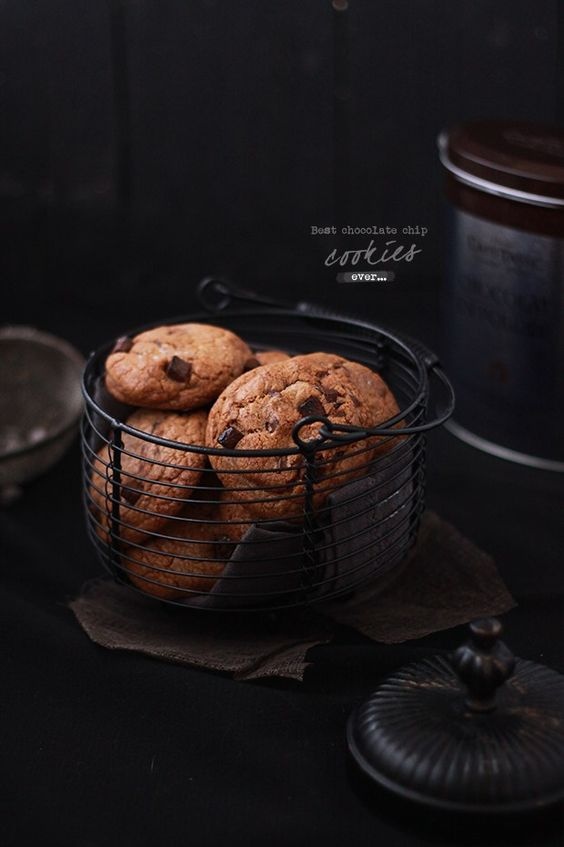
Chip it In, Bake It

Whitman, Massachusetts, 1938

“We had been serving a thin butterscotch nut cookie with ice cream. Everybody seemed to love it, but I was trying to give them something different. So I came up with Toll House cookie. Add up chopped up bits from from a Nestlé semi-sweet chocolate bar into a cookie. The original recipe is called “Toll House Chocolate Crunch Cookies.”
– American Chef Ruth Graves Wakefield, Toll House Inn
(Wakefield, Ruth Graves (1942). Ruth Wakefield’s Toll House Tried and True Recipes. M. Barrows & Company, Inc.)

One of the famous drop cookies, “the chocolate chip cookie” had its’ origins in the early 1900s; wherein chocolate chips or choclate morsels were added to the regular cookie dough as the distinguishing ingredient. With a dough composed of butter, both brown and white sugar, semi-sweet chocolate chips and vanilla; the traditional recipe had evolved. Originally invented by the American chef Ruth Graves Wakefield and chef Sue Brides (1938) when the former owned the Toll House Inn (Whitman, Massachusetts); a popular restaurant that featured home cooking. Wakefield credited Brides with helping her make the famous chocolate chip cookie.

Over the years, variations with different varieties of chocolate, change of ingredients like nuts, oatmeal, raisins and the like paved way. Variations on the original recipe may add other types of chocolate, vegan substitutes as well as additional ingredients such as nuts or oatmeal. The ‘double’ or ‘triple’ chocolate chip cookies are so called when dough flavored with chocolate or cocoa powder are used before chocolate chips are mixed in. These variations of the recipe are often referred to as , depending on the combination of dough and chocolate types.

“If you can’t change the world with chocolate chip cookies, how can you change the world?” Pat Murphy

As the popularity grew, especially during WWII, soldiers from Massachusetts who were stationed overseas shared the cookies they received in care packages from back home with soldiers from other parts of the United States. Soon hundreds of soldiers asked their families to send them some Toll House cookies. Thus began the craze for the chocolate chip cookie with Wakefield receiving letters around the world requesting her recipe.

In proportion to the increased popularity of the choclate chip cookie, the sales of Nestlé’s semi-sweet chocolate used rose. Andrew Nestlé offered Ruth a deal to buy the rights to her recipe, as well as the rights to use her and the Toll House name when advertising his acquisition. The business proposal was accepted by Ruth for one whole dollar and a lifetime supply of Nestlé chocolate. Nestlé quickly launched a new marketing campaign that advertised the chocolate chips primarily as main ingredients for cookies, engraving the recipe for the Toll House Cookie on the package print.

“ One of the best things in life- warm chocolate chip cookies.” Anonymous

In an interview (2017), Sue Brides’ daughter, Peg shared the original recipe that was passed down to her.  The original Toll House cookie recipe, according to Peg:

1 1/2 cups of shortening
1 1/8 cups of sugar
1 1/8 cups of brown sugar
3 eggs
1 1/2 teaspoon of salt
3 1/8 cups of flour (Peg prefers King Arthur all purpose)
1 1/2 teaspoon of hot water
1 1/2 teaspoon of baking soda
1 1/2 teaspoon of vanilla
Chocolate chips (and walnuts)
Bake at 350 degrees for 12-13 minutes
[The Tried and True Recipes cook book specifies “2 bars (7 oz.) Nestlé’s yellow label chocolate, semi-sweet, which has been cut in pieces the size of a pea.”]
(Source:Stephanos, Maria (2017-06-21). “Secret’s out! Here’s the ‘real recipe’ for Toll House chocolate chip cookies”)

With Chocolate Chip Cookie Day being celebrated by foodimentarians tomorrow (August 4th), making similar or own variations of this delectable treat would be a lovely weekend surprise and fun event.

Posted in Family and Society, Life, Personal Musings, Reflections, Stories Around the World, Work

Making the Best Of

“Every experience in your life is being orchestrated to teach you something you need to know to move forward.” Brian Tracy

One of the very common teachings or saying passed on from one generation to the next, especially when hitting road blocks in life are the words “to make the best out of the bad situation”. On hindsight, once when one has landed on other side of the situation, the thought strikes that every “bad situation” has brought out a different side of oneself. Interestingly, whether the “different side” is for the better or the worse depends on oneself alone.

“A pessimist sees the difficulty in every opportunity; an optimist sees the opportunity in every difficulty.” Winston S. Churchill


Have you ever observed a lone ant moving on the ground? When it’s path is blocked, it finds a way around it, scurrying towards the intended or alternate direction somehow. Looking through he glasses of “life”, may of us like these ants are forced to find alternate routes to get to the final point. No matter how big the hindrances may seem, time and life forces one to move on, despite the inner resistance to change from the “deemed normalcy”. As one changes the directions pertaining to the situation, a series of effects are created which when done with the right will, manner, intent and effort will aid in achieving better than what was expected by self or by the world around us. Instead of simply making best of the bad situation; let the “worst situation” bring out the hidden best of ourselves.

“The outcome is not up to you. The outlook is.” Germany Kent


On another occasion, talking to a friend who was concerned about Salmon P. Chase’s ambition for the presidency, and who thought Lincoln should ask Chase to resign, Lincoln observed that Chase’s department was functioning very well, and as long as it continued to do so he would not worry about Chase’s presidential aspirations. The situation reminded him of a time when he and his step-brother were plowing a corn field in Indiana, he driving the horse and his step-brother guiding the plow. The horse, naturally lazy and slow, suddenly rushed across the field so fast the boys could hardly keep pace with him. On reaching the end of the furrow, Lincoln discovered an enormous chin fly fastened to the horse and knocked it off. His step-brother asked why he did that; whereupon Lincoln explained that he didn’t want the horse bitten. “But,” protested his step-brother, “that’s all that made him go!” “Now,” said Lincoln, “if Mr. Chase has a presidential chin fly biting him, I’m not going to knock it off if it will only make his department go.”
Source: Lincoln’s Humour: An Analysis. Benjamin P. Thomas. Journal of the Abraham Lincoln Association. Volume 3, Issue 1, 1981, pp. 28-47

“There is always a solution to any problem. Find opportunities in any circumstance. Never become a victim.” Lailah Gifty Akita


Posted in Daily, Family and Society, Life, Quotes, Stories Around the World

The Need to Listen

“We have two ears and one mouth, so we should listen more than we say.” Zeno of Citium, as quoted by Diogenes Laërtius

The visit to the retailers’ during the end season is marked with a slight wariness. Though the anticipation of rummaging through the variety on display and searching for the “good stuff” are the few of the many reasons that one enters the mall during the peak season; underlying is the feel that one may run into someone that one knows. When the acquaintance is one who has been in regular touch, it is a quick chat but if it is someone who has been out of town for a long time; there is the cup of coffee and a snack brunch or dinner to follow. On the latter encounters, what one later realizes was in the monologue; it was the trait of listening that was being developed.

“Not everyone with a problem needs you to solve it. Sometimes all a person needs is to feel like they’ve been heard. Listening without judging can be more effective than injecting your opinions or trying to solve a problem that doesn’t have an easy answer.” Zero Dean

For those people with a comfortable circle of friends and colleagues, it is the trait of listening that is highly valued. Many a time, when caught in a quandary, more people want to be simply listened to than being poured with advice. The art of listening is indeed a rare one. To be quiet, lend a ear and actually comprehend what one days builds up the relationship, self respect and harmony of both. It may be easy to judge, offer opinions or point out mistakes. Yet those things may be eventually felt by the speaker themselves, once they are allowed to sort out things by themselves. More than speaking, it is listening impartially, openly ans with an interest than builds not just relationships, but also gives insight, forethought as well as learning to be imparted and used in the future. Any relationship is always a coordination of speech, silence, listening, kindness and acceptance. When these seeds are first sown, the plant grows healthy. Only when one learns to listen, will they to be listened to.

“Wisdom is the reward you get for a lifetime of listening when you’d have preferred to talk.” Doug Larson

We all know what it’s like to get that phone call in the middle of the night. This night was no different. Jerking up to the ringing summons, I focused on the red, illuminated numbers of my clock. It was midnight and panicky thoughts filled my sleep-dazed mind as I grabbed the receiver. ‘Hello?’ My heart pounded, I gripped the phone tighter and eyed my husband, who was now turning to face my side of the bed. ‘Mum?’ The voice answered. I could hardly hear the whisper over the static. But my thoughts immediately went to my daughter. When the desperate sound of a young crying voice became clear on the line, I grabbed for my husband and squeezed his wrist.
‘Mum, I know it’s late. But don’t … don’t say anything until I finish. And before you ask, yes I’ve been drinking. I nearly ran off the road a few miles back and…’ I drew in a sharp, shallow breath, released my husband and pressed my hand against my forehead. Sleep still fogged my mind, and I attempted to fight back the panic. Something wasn’t right. ‘… and I got so scared. All I could think of was how it would hurt you if a policeman came to your door and said I’d been killed. I want to come home. I know running away was wrong. I know you’ve been worried sick. I should have called you days ago but I was afraid, afraid …’
Sobs of deep-felt emotion flowed from the receiver and poured into my heart. Immediately I pictured my daughter’s face in my mind, and my fogged senses seemed to clear, ‘I think …. ‘ ‘No! Please let me finish! Please!’ She pleaded, not so much in anger, but in desperation. I paused and tried to think what to say. Before I could go on, she continued. ‘I’m pregnant, Mum. I know I shouldn’t be drinking now … especially now, but I’m scared, Mum. So scared!’
The voice broke again, and I bit into my lip, feeling my own eyes fill with moisture. I looked up at my husband, who sat silently mouthing, ‘Who is it?’ I shook my head and when I didn’t answer, he jumped up and left the room, returning seconds later with a portable phone held to his ear. She must have heard the click in the line because she asked, ‘Are you still there? Please don’t hang up on me! I need you. I feel so alone.’
I clutched the phone and stared at my husband, seeking guidance. ‘I’m here, I wouldn’t hang up,’ I said. ‘I should have told you, mum. I know I should have told you. But, when we talk, you just keep telling me what I should do. You read all those pamphlets on how to talk about sex and all, but all you do is talk. You don’t listen to me. You never let me tell you how I feel. It is as if my feelings aren’t important. Because you’re my mother you think you have all the answers. But sometimes I don’t need answers. I just want someone to listen.’
I swallowed the lump in my throat and stared at the how-to-talk-to-your-kids pamphlets scattered on my nightstand. ‘I’m listening,’ I whispered.

‘You know, back there on the road after I got the car under control, I started thinking about the baby and taking care of it. Then I saw this phone booth and it was as if I could hear you preaching to me about how people shouldn’t drink and drive. So I called a taxi. I want to come home.’ ‘That’s good honey,’ I said, relief filling my chest. My husband came closer, sat down beside me and laced his fingers through mine. ‘But you know, I think I can drive now.’ ‘No!’ I snapped. My muscles stiffened and I tightened the clasp on my husband’s hand. ‘Please, wait for the taxi. Don’t hang up on me until the taxi gets there.’ ‘I just want to come home, Mum.’ ‘I know. But do this for your Mum. Wait for the taxi, please.’
I listened to the silence in fear. When I didn’t hear her answer, I bit into my lip and closed my eyes. Somehow I had to stop her from driving. ‘There’s the taxi now.’ Only when I heard someone in the background asking about a Yellow Cab did I feel my tension easing. ‘I’m coming home, Mum.’

There was a click, and the phone went silent. Moving from the bed, tears forming in my eyes, I walked out into the hall and went to stand in my 16-year-old daughter’s room. My husband came from behind, wrapped his arms around me and rested his chin on the top of my head. I wiped the tears from my cheeks. ‘We have to learn to listen,’ I said to him. He studied me for a second, and then asked, ‘Do you think she’ll ever know she dialed the wrong number?’ I looked at our sleeping daughter, then back at him. ‘Maybe it wasn’t such a wrong number.’
‘Mum, Dad, what are you doing?’ The muffled voice came from under the covers. I walked over to my daughter, who now sat up staring into the darkness. ‘We’re practicing,’ I answered. ‘Practicing what?’ she mumbled and laid back on the mattress, but her eyes already closed in slumber. ‘Listening,’ I whispered and brushed a hand over her cheek.

Author Unknown

“The art of conversation lies in listening.” Malcom Forbes

Posted in Family and Society, Life, Quotes, Stories Around the World

Step Over, Move Ahead

“Be of good cheer. Do not think of today’s failures, but of the success that may come tomorrow. You have set yourselves a difficult task, but you will succeed if you persevere; and you will find a joy in overcoming obstacles. Remember, no effort that we make to attain something beautiful is ever lost.” Helen Keller

With the university applications for the new academic session closed for the present year, many have been forced to decide to apply for the available options or to forgo a year and attempt again for better courses either through scholarships, exams or interviews while doing a regular course or working part-time. For each applicant, witnessing the huge amount of unrest and mental stress warring with their inner dreams and ambitions; the struggle to break out of the chaos is evident and the sheer will required to do so is immense. Similar emotions are felt when trying for employment, change of careers or a higher grade position. Breaking out of the web of constant trials, stress, rejections and fear of the uncertainty needs courage, effort and will, to use what one perceives as road blocks into opportunities or learning sessions.

“Everyone has the ability to increase resilience to stress. It requires hard work and dedication, but over time, you can equip yourself to handle whatever life throws your way without adverse effects to your health. Training your brain to manage stress won’t just affect the quality of your life, but perhaps even the length of it.” Amy Morin

Problems are a part of life, or even vice -versa; life has it’s own problems stored at each turn or corner. At times, they may all pop up together; while at other times it’ll be one by one, most common though when we least foresee or expect them. When one learns to step over the rocks in the path or shake off the dirt and grime; continue ahead altering or following the route; the journey then taken may be more interesting, than simply sitting and staring at those very rocks. Like the river that goes on it;s course finding a way across the rocks, turning the rough corners smooth over time; such should be the attitude that one adopts towards the “rocks in their path”.

“When you reach for the stars, you are reaching for the farthest thing out there. When you reach deep into yourself, it is the same thing, but in the opposite direction. If you reach in both directions, you will have spanned the universe.” Vera Nazarian

One day the donkey of a farmer fell into a well. He brayed and screamed terribly, calling for help. The farmer ran up and threw up his hands: “How can you get him out of there?” Then he reasoned: “My donkey is old. He did not have much time left. I was still going to get a new young donkey. And the well, all the same, almost dried up. I was going to bury it for a long time and dig a new well in another place. So why not do it now? At the same time I’m burying a donkey so that there is no smell of decomposition ”. He invited all his neighbors to help him bury the well. All together they took up shovels and began to throw the earth into the well. The donkey immediately understood what was happening and began to publish a terrible squeal. And suddenly, to everyone’s surprise, he fell silent. After a few earth shots, the farmer decided to see what was down there. He was amazed at what he saw there. Every piece of earth that fell on his back was shook off and crushed with his feet. Very soon, to everyone’s amazement, the donkey appeared above – and jumped out of the well!

“Always make a total effort, even when the odds are against you.” Arnold Palmer

Posted in Daily, Food, Stories Around the World

Of Cheesecake, Origins, Style and Evolution

Pound the cheese until smooth and pasty. Mix the pounded cheese in a brass pan with honey and spring wheat flour. Heat the cheese cake “in one mass”, allow to cool and serve. ( Records from the oldest known Greek recipe, Athenaeus 230 A.D.)

One of the well loved desserts of “cheese cake” has its’ origins as early as the Greek civilizations of 6th century B.C. . Although it was believed that the first cheese cake may have been created on the Greek island of Samos, this mayn’t be exact. In fact, cheese and related products may have been there since the domestication of animals and use of milk by the primitive man. Th earliest evidence of cheese cake, was as per Greek records ( 5th century records of Greek physician Aegimus, Olympic records of 776 B.C. or Athenaeus writings of 230 A.D.) during sports and weddings (as the main wedding cake). Then the basic ingredients of flour, cheese, honey and wheat were taken in the right amounts and baked.

With the conquering of Greece by the Romans, the “cheesecake recipe” was modified to include crushed cheese and eggs. Either baked under a hot brick and served warm, or put into the pastry as a filling; the Roman cheesecake known as “libuma” was meant for special occasions. Cato the Elder’s De Agri Cultura accounts the earliest cheesecake recipes, which mentions three types; libum, savillum and placenta. The latter is almost like the modern cheesecake recipe with a crust that is separately prepared and baked.

“A dessert without cheese is like a beautiful woman with only one eye.” Anthelme Brillat

With the extension of Roman empire, later fall and rise of other civilization; cuisines and recipes were exchanged, experimented and evolved throughout Europe. From Great Britain to Eastern Europe, each region had their unique differences of ingredients, texture, method and presentation of cheesecake. The twelfth century had seen, a cheesecake recipe in the English cookbook, Forme of Curry (1390). Described as a flour based sweet food, various accounts also state cheesecake recipes as “cheese cut into very small pieces, soaked in milk for three hours; the mixture strained and eggs, butter and sugar being added (accounts of chef in employ of Henry VIII).”

Although the name “cheesecake” was used since the 15th century; the modern form of “cheesecake” had evolved around the 18th century. Then yeast was substituted with beaten eggs; thereby removing the overpowering yeast flavour and make it more “dessert-ish” and sweet. With immigration and migration to Americas, the recipes were further modified. The modern American cream cheese was developed in 1872 as an accidental discovery by William Lawrence (Chester, New York) as he tried to recreate the soft, French cheese Neufchâtel. Although he had made an “unripened cheese”, heavier and creamier than the regular; similar creations were made independently by other dairymen.

“New York means many different things to me. It certainly means cheesecake, more species of cheesecake than I ever knew existed: rum, orange, hazelnut, chocolate marble, Italian, Boston, and of course, New York.” David Frost

On a technical point, cheesecake today is more as a torte (based on number of eggs), tart or flan than being a “cake” as they have a separate crust, soft filling and the absence of flour in most recipes. In fact, modern cheesecake comes as two different types; of the baked cheesecake or cheesecakes made with uncooked cream-cheese on a crumbled-biscuit base.

With cheesecakes being broadly categorized as two basic types of baked or unbaked, each region or continent have their own versions or varieties. Like the most popular variety of South African made with whipped cream, cream cheese, gelatin filling, buttered digestive biscuit crust with Amarula liqueur, if not baked or the Asian style cheesecake of cornstarch and eggs (Japan) or cottage cheese, sugar and nuts ( Indian chhena poda, Odishan recipe) or the common unbaked Australian cheesecakes; one can modify the recipe for more fruit based or sweet (chocolate, vanilla or caramel) based flavouring.

“My favourite pudding is a toss-up between cheesecake – proper, New York cheesecake – and apple crumble and custard. Custard is very important, or dark chocolate mousse. Tea: probably Earl Grey, splash of milk.” Tom Hiddleston

For a more global cheesecake style, one can experiment and base recipes as per the French style (Neufchâtel cheese, gelatin), Italian-style (ricotta or mascarpone cheese, sugar, vanilla extract, small bits of candied fruit and sometimes barley flakes), Polish sernik, Russina vatrushka or like in the United Kingdom and Ireland.

The latter make their cheesecake typically with a base of crushed, buttered biscuits and often topped with a fruit compote. The usual filling is a mixture of cream cheese, sugar, cream and gelatin at times. Popular non fruit variations are banoffee, coffee, tea, chocolate, Irish cream, white chocolate, marshmallow flavors and even smoked salmon (Scotland). The New York style (heavy cream or sour cream based) and Chicago style (baked cream-cheese, fluffy with a shortbread based crust) cheesecakes are few of the popular American varieties.

The versatility, wide variety and variants, ease as well as simple ingredients of cheesecake are what makes them popular for quick occasions, simple desserts or more elaborate functions. To celebrate the National Cheesecake Day (July 30th), it would be fun to start a “cheesecake” tradition or recipe for family and friends. After all, cheese refines with age, in taste, flavours and texture. Intermixing recipes for new palatable combinations would be an interesting experimentation for the homemaker, artisan as well as the “chef’s eye”.