Posted in Daily, Family and Society, Life, Quotes, Reflections, Stories Around the World

“Just Some Time”

“Love your family. Spend time, be kind & serve one another. Make no room for regrets. Tomorrow is not promised & today is short.” Unknown

Even after long hours at work and tackling the chores at home; the only thing that satisfies my children is time spent with them alone. From reading to them, simply sitting together in the lawn or watching the traffic together from the bench; all they want is time spent without any activities, gadgets, interference or constraints at that moment. The younger they are, they crave for such moments.

“Your children get only one childhood. Make it memorable.” Regina Brett

Although lifestyle today offers innumerable comforts, one thing that still is never sufficient is time. The root struggle in handling time is dividing it between work, family and for self. Being a family, as far as children are concerned, no amount of gadgets, toys, books or cartoons can substitute their bonding time with siblings and parents. Constant negligence and lack of the latter can lead to dependence on the former, which can have lasting implications on the education, personality as well as psychological traits of the child.

“ At the end of your life, you will never regret not having passed one more test, not winning one more verdict, or not closing one more deal. You will regret time not spent with a husband, a friend, a child, a parent.” Barbara Bush

Looking back to our childhood from the present today, the memories of fun, trips and experiences with parents, siblings, cousins, family and friends is what makes the hard and unhappy moments of today better. Besides these childhood memories and experiences to an extent, are what shaped us to the person of today. On reflecting, what matters more than worldly good or presents as well as gifts, is quality time with loved ones.

“If you want your children to turn out well, spend twice as much time with them and half as much money.” Abigail Van Buren

The acts of today, reflects in the future of tomorrow. No matter how busy working parents or guardians are, spending just ten minutes with their children makes all the difference in the world to them. Children always light up the adult lives, with their innocence, joyous nature and selfless thinking. The change in their behaviour and attitude is a reflection of the love that they perceive. Too much or too little of love, care and attention is dangerous. Remembering our childhood moments and experiences will aid us in making the childhood of our own children memorable.

“ Your children can be around you all day, but if you don’t spend quality time with them and you don’t pay attention to them and talk to them and listen to them, it doesn’t matter that they’re just around you.” Brandy Norwood

Once, a man returned home late from work, as always, tired and twitching, and saw that a five-year-old son was waiting for him at the door. “Dad, how much do you get? ” “That is none of your business!,” the father was indignant.”Why do you need it? “
– I just want to know. Please tell me how much you get per hour?
– Well, 100 rubles. Why?
“Dad …” the son looked up at him with very serious eyes. Dad, can you borrow me 50?
“You asked only so that I could give you money for some stupid toy?”, he shouted. “Immediately march to your room and go to bed! You can not be such an egoist! I work all day, I get tired, and you behave yourself so stupidly.”
The kid quietly went to his room and closed the door behind him. And his father continued to stand in the doorway and get angry at his son’s requests. But after a while he calmed down and began to reason sensibly: “Maybe he really needs to buy something very important.” When he entered the nursery, his son was already in bed.
– You are not sleeping, son? – he asked.
– No, Dad. Just lying down, answered the boy.
“I seem to be too rude to you,” said the father. “I had a hard day, and I just broke. Forgive me. Here, hold the money you asked for.”
The boy sat up in bed and smiled.
– Oh, father, thanks! he exclaimed happily.

Then he climbed under the pillow and took out some more crumpled banknotes. His father, seeing that the child already had money, became angry again. And the kid put all the money together, and carefully counted the bills, and then looked at his father again.
– Why did you ask for money if you already have it? – grumbled his father.
– Because I had not enough. But now I just have enough, – the child replied.
– Dad, there are exactly one hundred. Can I buy one hour of your time? Please come back tomorrow from work early, I want you to have dinner with us.

Moral: I just wanted to remind you that our life is too short to spend it at work. We should not allow it to flow through our fingers, and not give at least a tiny piece of it to those who really love us — our closest people. If we are not tomorrow, our company will very quickly replace us with someone else. And only for family and friends it will be a really big loss, which they will remember all their life. Think about it, because we spend much more time working than family.
Source: vk.com (translated to english)

“ I don’t think quantity time is as special as quality time with your family.”  Reba McEntire

Posted in Daily, Food, Stories Around the World

Of Ice-cream, Soda and Evolution…

“Summer would not be summer without Ice-cream. Ice-cream is the favorite currency of love.” Puck

For my kids, summer translates into picnics, beaches, barbecues and of course, never to forget it, “the ice-cream“. Being in the National Ice cream Month (July) with the end of the week marking the National Ice cream Day (third Sunday of July), the truce between the “young ones” and their “veggies” was an ice cream a day for dessert. As a part of improvisation of the existing recipes and combinations, delving into the evolution and progress of ice cream makes for an interesting read.

Although the origins of this “summer dessert” have been rough traced back to the 4th century B.C.; the modern day versions with the wide variety of flavours as well as presentations were made feasible only by the 18th century. Early records of it’s popularity include the Roman emperor Nero (37-68 CE) who ordered ice to be brought from the mountains and combined with fruit toppings and King Tang (618-97 CE) of Shang, China who had a method of creating ice and milk concoctions. While “Ice cream” may have been likely brought to Europe from China. As legends go, when Italian duchess Catherine de’ Medici married the Duke of Orléans (1533), the French court had few Italian chefs who had recipes for flavored ices or sorbets. A century later, Charles I of England was impressed by the “frozen snow” that he offered his own ice cream maker a lifetime pension in return for keeping the formula a secret, so that ice cream could be a royal prerogative. While there is no historical evidence to support these legends, the recipes for ices, sherbets and milk ices had evolved gradually over time and were usually served in the fashionable royal courts or in the upper class society.

“Without ice cream, there would be darkness and chaos.” Don Kardong

As recipes for flavoured ices began to be published for the household cooks and ice storing became more feasible, flavoured ices were enjoyed by the middle class society. Towards the early 19th century, Augustus Jackson had created several popular ice cream flavours, packed them into tin cans and distributed them to the ice cream parlours of Philadelphia. Credited with inventing an improved method for manufacturing of ice cream, he is technically considered as the modern day father of ice cream.

Going years ahead, the Franklin’s Institute semi-centennial celebration (1874) saw the creation of the ice cream float by Robert McCay Green, Pennsylvania. The traditional account was on that particularly hot day, Mr. Green ran out of ice for the flavored drinks he was selling and used vanilla ice cream from a neighboring vendor, thereby inventing a new drink. As published by his own account in the Soda Fountain magazine (1910), states that after some experimenting (after effect of competition with nearby vendors), he had decided to combine ice cream and soda water. During the celebration, he sold vanilla ice cream with soda water and a choice of 16 flavored syrups. Although there are at least three other claimants for the invention of ice cream float, namely Sanders, Mohr and Guy; wherein the latter is said to have absentmindedly mixed ice cream and soda (1872), to his customer’s delight. However may the legends go, the combination of ice cream and soda have stayed on.

“Sometimes life is just what it is, and the best you can hope for is ice cream.”  Abbi Waxman

From being in a boxed container to served with soda, sprinkles, toppings and more, ice cream has evolved from being a simple street or roadside treat to an artistic rendering for functions. Ice cream with its’ many variants like ice lolly, Malyasian Ais kacang, Turkish dondurma, gelato, kulfi and the like; are all here to stay and evolve, changing the “sweet trends” of dessert over time.


Posted in Daily, Life, Personal Musings, Stories Around the World

Quest for “Essence” of Life

“If we don’t feel love within our own selves, then do wealth and success matter as much?” – Lewis Howes (School of Greatness podcast)

Entering into the final year of school, my niece had been asking about advice for further education and career guidance. While exploring various choices and options, what brought to mind was the similar situation faced earlier in life. Looking down the lane, one eventually realizes that one needs to follow their dreams in order to find inner content. Success and wealth depends on how one defines it, but without love in life, the latter becomes a big meaningless journey.

“Love is our true destiny. We do not find the meaning of life by ourselves alone – we find it with another.” Thomas Merton

For basic comfort and necessities, no matter how educated one may be; at the end what really matters is bread and butter as well as shelter, sleep and someone to share this life with. All success achieved or wealth earned will be futile if one has nobody to open up to or spend some time with. No doubt, wealth and success have their own worth and are indeed a necessary part of life. Yet if one was to welcome them, shunning out basic humaneness and kindness that love for humanity brings along with it; both wealth and success may have a fruitless run, either in the present generation or the next.

“The foundation stones for a balanced success are honesty, character, integrity, faith, love and loyalty.” Zig Ziglar

Love, Wealth and Success
Author Unknown

A woman came out of her house and saw three old men with long white beards sitting in her front yard. She did not recognize them. She said, “I don’t think I know you, but you must be hungry. Please come in and have something to eat.”
“Is the man of the house home?” they asked. “No”, she said. “He’s out.” “Then we cannot come in”, they replied.
In the evening when her husband came home, she told him what had happened. “Go tell them I am home and invite them in,” he said. The woman went out and invited the men in. “We do not go into a house together,” they replied. “Why is that?” she wanted to know. One of the old men explained: “His name is Wealth,” he said pointing to one of his friends, and said pointing to another one, “He is Success, and I am Love.” Then he added, “Now go in and discuss with your husband which one of us you want in your home.”
The woman went in and told her husband what was said. Her husband was overjoyed. “How nice!” he said. “Since that is the case, let us invite Wealth. Let him come and fill our home with wealth!” His wife disagreed. “My dear, why don’t we invite Success?” Their daughter-in-law was listening from the other corner of the house. She jumped in with her own suggestion: “Would it not be better to invite Love? Our home will then be filled with love!”

“Let us heed our daughter-in-law’s advice,” said the husband to his wife. “Go out and invite Love to be our guest.” The woman went out and asked the three old men, “Which one of you is Love? Please come in and be our guest.” Love got up and started walking toward the house. The other two also got up and followed him.

Surprised, the lady asked Wealth and Success: “I only invited Love, why are you coming in?” The old men replied together: “If you had invited Wealth or Success, the other two of us would’ve stayed out, but since you invited Love, wherever He goes, we go with him. Wherever there is Love, there is also Wealth and Success!”

Posted in Daily, Food, Stories Around the World

OF Fries, Origin and Evolution

Thin or thick, served hot, soft or crispy and had as snack food or in accompaniment to main course of lunch or dinner; french fries or just fries (known as chips or finger fries) are batonnet or allumette-cut deep fried potatoes. An all time favourite especially for children, foodies, surprise occasions; they can be had salted or plain, or with ketchup, vinegar, mayonnaise, local specialty sauces and dips, or even be topped more heavily as chilli cheese fries, poutine and the like.

“Even if I’m eating healthy, I let myself indulge with french fries. That’s my favorite thing. You only live once!” Kate Mara

Like all the best things in the “food dictionary”, the origin or creator of these “golden strips” aren’t exactly known. Although the general consensus is that the “French Fry” is more of “Belgian origin than French.”

Potatoes were first introduced to Europe through the Spanish. On the Spanish exploration of Americas, they had encountered potatoes among the native food supply. As accounts of Jimenez de Quesada and the Spanish forces ( 1537) detail the discovery of potatoes among the native villages of Colombia, where they were called as “truffles” initially. When potatoes were brought back to Spain and introduced to Italy too. Then these potatoes were quite small, bitter and didn’t grow well in both places. Over time, larger and less bitter varieties were cultivated and gradually accepted elsewhere in Europe. Spain then controlled much of the modern day Belgium. While historical accounts indicate that Belgians were frying up ( or sauteing) thin strips of potatoes ( 17th to 18th century) in the Meuse Valley between Dinat and Liege. This idea could possibly arise from the original Belgian cuisine which usually fried small fish as part of their staple meals. With shortage of fish in winter, potatoes were an alternative.

“I try to have no absolute nos. I love french fries, I like a good burger, and I like pie. And that’s okay.” Michelle Obama

To explain the “French” of the French fries would be possible when two historical events are taken into account. What once the French had considered as hog feed or cause of various diseases, the change in their opinion due to potatoes was largely credited to the French Army medical officer Antoine-Augustine Parmentier, who was a captive of the Seven Years War and had survived on potatoes as a part of his prison rations. On his return back to France, he had aggressively campaigned as well as cultivated potatoes, promoting it’s benefits to the upper classes as well.

Also during the Franco-Austrian War, which had taken place near around the modern day Belgium, the possibility that French soldiers were introduced to the potato fries by the Belgians exists. Although gradually potato was accepted and cultivated in France; the famine of 1785 made potatoes popular in France. Slowly newer recipes and modes of cooking these spuds were tried. Once discovered or invented or improvised (from Belgian fries?), these fries became popular, especially in Paris, where they were known as “frites” and sold by push-cart vendors on the streets.

“Show me a person who doesn’t like french fries and we’ll swap lies.” Joan Lunden

Whether from Belgium or France, once these “frites” became popular, through colonization, migration as well as wars; they had become a much loved food on the menus across Europe, Britain and Americas. With the spread of fast food chains, these “frites” began to be introduced to the world largely as “French Fries”.

“If I could eat French fries every day of my life, I would.” Adrienne C. Moore

The modern day french fries, though best loved when salted, spiced and fried in oil; for more healthier options can be baked (or even grilled) with seasonings, toppings and all. From the various types of cut fries (crinkle-cut or wavy, curly, shoestring, steak, tornado, waffle) to different preparations like french fry sandwiches, chilli cheese fries, chorrillana to mention a few as well as alternatives like sweet potatoes or potato wedges; one can go creative with these frites. To celebrate the National French Fry day ( July 13th) it would be fun to go on a limb and try the regular to the different combination of the modern fries. For the more experimental ones, it would be interesting to combine fries to the regular dishes. For those of us who dislike potatoes or want healthier options, try baking sweet potatoes, thinly sliced carrots or beetroot with seasoning and all. After all the whole point of food is to relish various flavours, experiment, enjoy and simply have fun.

Posted in Daily, Family and Society, Life, Quotes, Reflections, Stories Around the World

From “Being Helped” to “Helping”

“Those who are the happiest are those who do the most for others.” Booker T. Washington

Raising children is never easy. From the first child, parents or guardians have to devise a system which encompasses love, teaching, helping and guiding them to live a life rich in love, joy, of right values and principles. From infancy to toddler-hood, being too small to do the simple things like brushing their teeth, the morning routine, tying laces or filling a glass of water; these are done by elders, adults or even the bigger children. Yet along the way as they grow older, at times, the coddling doesn’t stop. When an adult puts on shoes for a healthy seven year old, something has gone wrong somewhere. When a healthy ten year old child refuses to make their bed, put their toys away or need to be fed their breakfast; the “coddling” may be a little overdone.

“You will discover that you have two hands. One is for helping yourself and the other is for helping others.” Audrey Hepburn

Every child needs their space to grow. Once they are let to do s, only then will they develop and learn to think. Basic life skills are necessary for any child. They start young, from being able to put on their shoes themselves, to dressing themselves and helping small in the household. When a child from school refuses to note their father’s tired face and demand to go out for shopping a new toy; alterations and right changes have to be made in the set routine to ensure that these children grow up to responsible and develop humaneness fr the society of tomorrow.

“Never get tired of doing little things for others, sometimes those little things occupy the biggest parts of their hearts.”  Unknown

As children are taught to help in the simple things of life, they bloom internally and learn to gain joy on helping others. Rightly said that, “Charity begins at home”; what these young minds learn, observe and undergo in their childhood are carried over to their adulthood and eventually, these same teachings, principles and feelings are carried down over to the generations that they raise. There’s an interesting post from one of my social network pages (translated to English), that goes on to show how children can be taught as “What can we do for you ?”

Being the “grownups” of today, we need to teach our children to “help after being helped when they were small”, so that the basic values of kindness, love, humaneness and service are always carried on, in the future society.

“Everybody can be great…because anybody can serve. You don’t have to have a college degree to serve. You don’t have to make your subject and verb agree to serve. You only need a heart full of grace, a soul generated by love.” Martin Luther King Jr.

Today I understood raising children correctly. The mother-in-law came to us, as always, brought a bunch of gifts to the children, as always, began her little aggressive concern:
– Let me smear you a sandwich! Let me wear you socks! Sit-sit, grandmother will wash the apple-clean-cut-lay!
As always, this is a bit annoying and even annoying for all of us. I have independent children, who clean their own sandwiches and smear apples. And then there was such a stunning stream of turbulent activity!
And a six-year-old son suddenly asked at dinner:
“Grandma, what can we do for you?”
– What? – Grandmother did not understand.
– You do so much for us! – Ilya explained, – You take care of us, care for us. So I ask, and what can WE do for YOU?
He so matured, so deliberately said it, that I felt myself at that moment, as if an angel from heaven had come down and handed me the medal for motherhood. All my pedagogical throwings, all my megawatts of energy and kilometers of nerves, piles of books on education, thousands of arms that fell, all came together today and crystallized into the phrase: “What WE can do for YOU.”
Ksenia Smyslova

“People will forget what you said, people may forget what you did, but they will never forget how you made them feel.” Maya Angelou

Posted in Daily, Food, Stories Around the World

Of Piña Colada, Origin and Evolution

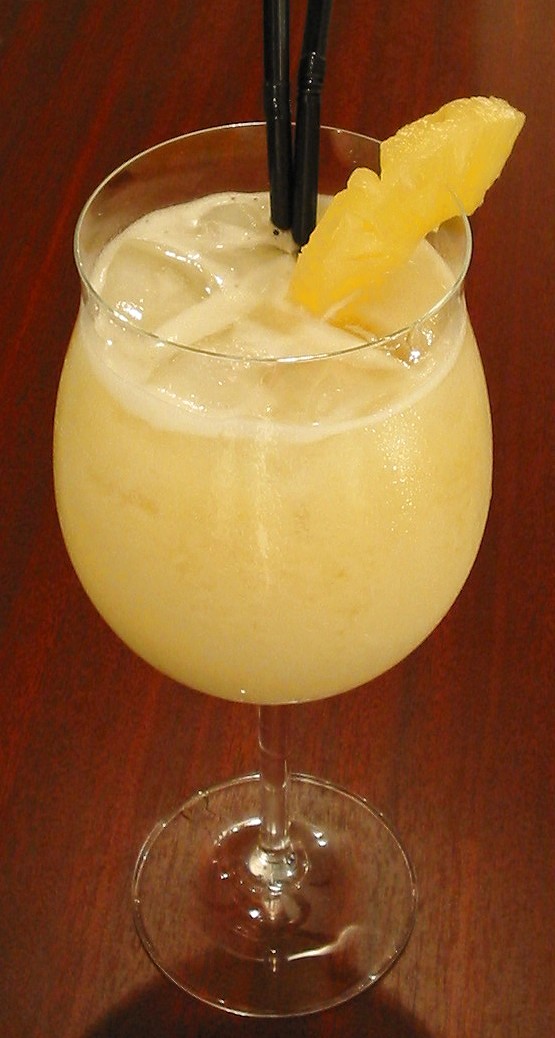
“Blend or shake 6 ounces of pineapple juice, 3 ounces of coconut cream, 1½ ounces of white rum and crushed ice until smooth. Serve in chilled glasses, garnished with pineapple wedge and/or a maraschino cherry.” – Piña Colada (1954 recipe)

Proclaimed as the national drink by Puerto Rico (1978), this cocktail although steadily popular in all Spanish and Portuguese speaking countries, is widely enjoyed across the world. The popularity is affirmed by it being a part of the world of entertainment, from music, popular lyrics to cinemas. For instance, “Escape (The Piña Colada Song)” by American musician Rupert Holmes (1979) had reached the number one spot and stayed there for few weeks.

While the name piña colada literally means “strained pineapple” in Spanish; this sweet cocktail is made with rum, coconut cream or coconut milk and pineapple juice. Usually served either blended or shaken with ice, it may be garnished with either a pineapple wedge, maraschino cherry or both.

Legends abound the origin of this cocktail. The earliest known legend states that Puerto Rican pirate Roberto Cofresí, to boost his crew’s morale, gave them a beverage or cocktail that contained coconut, pineapple and white rum; what would be later known as the famous piña colada (19th century). This recipe was believed to be lost with his death (1825). Yet this story is widely disputed by food historians.

By popular belief, the creation of the piña colada was credited to bartender Ramon “Monchito” Marrero (1954). Working in the Beachcombers Bar of the Caribe Hilton, one of the premier luxury hotels in San Juan; he was asked by hotel management to create a signature drink that captured the flavors of the island. By his account, Marrero had spent three months experimenting with hundreds of combinations before perfecting his sweet, frothy concoction of rum, cream of coconut and pineapple juice. Once introduced it had gained mass popularity. Marrero mixed up and served his creation at the hotel for 35 years until his retirement (1989). Concurrently another barman, Spaniard Ricardo Gracia who had served drinks at the Caribe Hilton, had claimed that he invented the cool, creamy cocktail. As per the interview to the Coastal Living magazine (2005), a strike by a coconut-cutters union (1954) had prevented him from serving up the popular mixed drink of rum, cream of coconut and crushed ice in its traditional sliced coconut. When forced to improvise, Gracia had poured the drink into a hollowed-out pineapple. When the fruit’s added flavor proved popular, Gracia said he added freshly pressed and strained pineapple juice to the previous combination of rum and cream of coconut, to create the piña colada.

Concurrently two miles west of the Caribe Hilton, another San Juan hotspot stakes its claim as the birthplace of piña colada. As attested by the marble plaque outside the entrance of the Restaurant Barrachina ( established late 1850s), Ramon Portas Mingot, a Spanish mixologist who wrote cocktail books and worked in the top bars of Buenos Aires, had made the first piña colada (1963) inside its doors.

Although the piña colada, was born in Puerto Rican capital of San Juan; the identity of the bartender who first mixed up the iconic rum-based cocktail remains a point of contention. However the modern-day beach cocktail wouldn’t be possible until the invention of Coco Lopez, a pre-made cream of coconut (1954). Developed by Ramon Lopez-Irizarry, an agriculture professor at the University of Puerto Rico; he had blended cream from the hearts of Caribbean coconuts with natural cane sugar, which later became an integral part of the island’s piña coladas.

Over the years, different proportions of the core ingredients, as well as different types of rum, may all be used in the piña colada to create different and new signature varieties. While frozen piña coladas are also served today; other named variations like the Amaretto colada (amaretto substituted for rum),  Chi chi (vodka in place of rum), the Virgin piña colada or piñita colada ( non alcoholic, without the rum) or even the Soda colada (resembles the original recipe, but soda is used instead of coconut milk) to list a few. For the more resourceful or food connoisseurs and experimenters, piña colada can be blended into smoothies, milk shakes, cupcakes or even into cheesecake.

With National Piña Colada (July 10th) being celebrated tomorrow, it would be fun to experiment and create a similar based concoction, or simply enjoy the flavours of the original piña colada to mark special occasions.

CARIBE HILTON’S PIÑA COLADA RECIPE

2 ounces rum
1 ounce cream of coconut
1 ounce heavy cream
6 ounces fresh pineapple juice
1/2 cup crushed ice

Mix rum, cream of coconut, heavy cream and pineapple juice in a blender. Add ice and mix for 15 seconds. Serve in a 12-ounce glass and garnish with fresh pineapple and a cherry.

Posted in Daily, Family and Society, Life, Personal Musings, Quotes, Stories Around the World, Work

Navigate From Within

“Life is like a game of cards. The hand you are dealt is determinism; the way you play it is free will.” Jawaharlal Nehru

One of the advantages of chance meetings with old friends, colleagues or neighbours when one has time on their hands, is the quick catch up session followed by exchange of news as well contact details. In that short time, information is passed about common acquaintances who have moved on, made changes or are still there. For those who have done better, we often compare ourselves to them. For those who have done worse, we acknowledge that their life has taken a different turn and at times, blame fate. What we almost always fail to realize is that, commenting about others progress (whether one wants to or not) never really makes a difference, for each holds their own destiny in their hand.

“Lots of folks confuse bad management with destiny.” Kin Hubbard

Destiny, has been one of the concepts that man prefers to fall back on, when things never go the way planned. Post any setback, the reactions range from blame those around one to the sequence of events, circumstances and so on and so forth; everything but the person alone. The drawback of such a cycle, is that, once started it is difficult to break it. Moreover, the tendency to always indulge in the cycle of acts persists.

“Everywhere man blames nature and fate, yet his fate is mostly but the echo of his character and passions, his mistakes and weaknesses.” Democritus

Another way that man deals with setbacks is to hire “services” that offer to point out the right time as per mathematical, astrological, zodiac or other elemental methods of calculation. Little does one realize, that plans, setbacks, success and failure all lies within one person, their reaction to sequence of events in relation to their plans, dreams and hopes in life. Destiny, success, hard work, plans, hope and achievement all starts within. One decides wisely for oneself; knowing their own limitations, merits and lapses.

“The only person you are destined to become is the person you decide to be.” Ralph Waldo Emerson

To face destiny and achieve success requires one to introspective, willing to learn and observe from own as well as others’ lives. By blinding the eyes of the mind, the path taken will always be wrought with weeds of trouble, failures and uncertainties. To stay strong, one has to believe that they can navigate, as long as one knows how, where and what to look for. Man always has the discernment to make plans and tune destiny to work in one’s favour, provided one always believes in themselves, knows oneself with flaws, strength and all.

“If we would see the color of our future, we must look for it in our present; if we would gaze on the star of our destiny, we must look for it in our hearts.”
Canon Farra

The Warrior’s Destiny

A great Japanese warrior named Nobunaga was going to war with a fierce enemy with only one-tenth the number of men the opposition commanded. He knew that he could win the fight with a well planned strategy, but his soldiers were in doubt. On the way the leader stopped at a Shinto shrine and told his men: “After my visit to the shrine I will toss a coin. If the head comes, we will win; if tails, we will lose. Destiny holds us in her hand.” Nobunaga entered the shrine and offered his prayers. Then he came forth and tossed a coin in front of his men. Heads appeared. The soldiers were filled with confident and were eager to win the battle.
“No one can change the hand of destiny,” one of his attendants told him after the battle.
“Indeed not,” said Nobunaga and showed the coin which was doubled with heads on the both side.

“ Destiny is not a matter of chance, it is a matter of choice; it is not a thing to be waited for, it is a thing to be achieved.” William Jennings Bryan