Posted in Christian, Daily, Personal Musings, Stories Around the World

Jump With Faith

“Who of you by worrying can add a single hour to your life? Since you cannot do this very little thing, why do you worry about the rest?” ( Luke 12:25-26 (NIV))

When we always enter unknown territory, from being simply new at the workplace gatherings to high school reunions or settling into a new town to relocating to a new profession or hearing bad news in the hospital; the feeling of wariness transcends in all of us. In those times, there is nothing more comforting than having someone familiar or something familiar to lean on to. The pillar of support can range from family, friends, our church or community to our memories of good times, our old comfort blanket or even our treasured memorabilia. Yet what we often fail to realize is that the strongest comfort comes from none other than Our Father in Heaven. The gentle calmness in the restless mind, the sudden peace that flows through us, the strength to brave the new day and the hope of the new dawn are what we get when we read and understand His Word. Through centuries, the Word of God has withstood the test of time. Yet of all the things fickle in this world, His Word will never change like the weather nor will His Hope ever leave us when we put our entire trust and faith in Him.

“..But those who hope in the LORD will renew their strength. They will soar on wings like eagles; they will run and not grow weary, they will walk and not be faint.” (Isaiah 40:31)

One day late in the evening a fire broke out in one of the houses. The whole family – the father, mother and children, shocked by what was happening, ran out into the street and watched the fire flare up. And suddenly everyone understood that among them there is no youngest member of the family – a five-year-old son. Most likely, he, frightened by the flame and smoke, instead of going down, climbed the stairs to the very top. One could not even dream of finding him. Suddenly, a window opened and a child’s distorted face appeared in it. In desperation, the father shouted: “Jump!” The kid, seeing only smoke and flames in front of him, shouted, “Dad, I can’t see you!” His father replied, “But I see you, do not be afraid, jump now!”
The boy, having gathered his courage, jumped and found himself right in the arms of his father. It is this faith that God expects from us!

“May the God of hope fill you with all joy and peace as you trust in him, so that you may overflow with hope by the power of the Holy Spirit.” (Romans 15:13)

Like the times when we cast our hope on our firefighters, emergency personnel and technicians, when the going gets tough and shoulders are overburdened; the sooner we cast our cares on to His Shoulders, the lesser will we be troubled and the lesser the hardships will seem For just as the song goes, “our God is an Awesome God, He reigns from heaven above, With wisdom, power, and love, Our God is an awesome God”, so will we be able to face what life throws at us.

“Cast all your anxiety on him because he cares for you. Be alert and of sober mind. Your enemy the devil prowls around like a roaring lion looking for someone to devour. Resist him, standing firm in the faith, because you know that the family of believers throughout the world is undergoing the same kind of sufferings. And the God of all grace, who called you to his eternal glory in Christ, after you have suffered a little while, will himself restore you and make you strong, firm and steadfast.” ( 1 Peter 5:7-10)

Posted in Family and Society, Quotes, Stories Around the World

Our Civic Duty

Children need to get a high-quality education, avoid violence and the criminal-justice system, and gain jobs. But they deserve more. We want them to learn not only reading and math but fairness, caring, self-respect, family commitment, and civic duty. Colin Powell

During my school days, we used to have certain phrases painted on the walls. Among them, one was “cleanliness is next to godliness”. From the very early days of our foray into the world of learning, my school had taken the duty of educating us for society and the neighbourhood very seriously. While in smaller classes it was morning prayer followed by song and then the checking of our general appearance and neatness by our teachers as we sat down for our classes, it was more than that as we entered the higher grades. The early morning assembly which was marked by the prayer song, concise news headlines, thought for the day and school happenings in brief ended with a brief inspection by the prefects or senior class leaders as we headed to our classrooms.

“By its very definition, civic responsibility means taking a healthy role in the life of one’s community. That means that classroom lessons should be complemented by work outside the classroom. Service-learning does just that, tying community service to academic learning.” John Glenn

The message underlying all this entire proceedings was to be involved in our surroundings as well as that neatness and cleanliness should arise within us and spread over to our environment as well. One of the defaults of the present day is that we neglect to lay stress on the civic duty we all have being a part of community, society and country. By turning a blind eye to our civic responsibilities, the effect will impact not just the present but the future societies too.

“Ask not what your country can do for you; ask what you can do for your country.” John F. Kennedy

Contrary to common thinking, civic duty doesn’t need much effort if everything does their own bit. It can start from the grass-root levels of family, neighbourhood and schools. As history has proven time and again, the essence of strong civilizations and countries lies in their commitment of its’ people as well as their civic sense. When the fellow-feeling strengthened by kindness and mutual respect with sense of common duties and interests is strong, then the social life would be both healthy, comfortable and invigorating.

“Democracy is not simply a license to indulge individual whims and proclivities. It is also holding oneself accountable to some reasonable degree for the conditions of peace and chaos that impact the lives of those who inhabit one’s beloved extended community.” Aberjhani

This is one of the posts I had read through my social network pages, (translated to English) which prompted me to think that unless we start to educate our children about their civic duty and environment, we would pay a heavy price either now or later.

As I taught my son not to litter

When my son was about seven years old, and we all went to a small picnic place somewhere outside the city, stopped at a gas station and bought ice cream. As we were going in the car, we were enjoying the journey with my son having the ice cream. Then my son opens the window and throws the wrap. As the speed of the car was low, I was able to very quickly navigate and park the car on the side of the road. Silently I got out of the car, opened the trunk and freed one of the packages from the products. I took my son out of the car and asked to him collect all the garbage from the curb. My son’s pride was affected and my wife also tried to reason with me. Finally she went to the car and explained to her son that until he brought me a full package of garbage, we would not go any further, and accordingly all the fun we were supposed to have will not be there.

My son first with tears, and then with some kind of excitement in his eyes went to collect garbage. I took the second package and went with him. In less than half an hour, we cleared a small stretch of road of the traces of our people’s livelihoods and returned to the car. Then I explained to my son why he was sent to collect the garbage, because Russia is his homeland, and he must love his homeland. I spoke a lot, tedious (as my wife thinks) with examples, so that he understood why he was made to do so. In the end my son asked: Why did you go to collect for me?
“The fact that you threw the wrap out the window is, first of all, my mistake. I missed something in your upbringing, and therefore should have been punished along with you.”
Soon my son will be 13 years old, he has two little sisters, and yesterday I enjoyed watching how he tells them not to litter.

Posted in Life, Reflections, Stories Around the World, Work

Building the House

There was a foreman. All his life he built houses, but he became old and decided to retire. “I quit,” he told the employer. “I am retiring. I will be with my old woman with grandchildren to nurse. His boss was sorry to part with this man, and he asked him: ” Listen, let’s do it, build the last house and we will retire. With a good premium!” The foreman agreed. According to the new project, he had to build a house for a small family, and it began: coordination, search for materials, testing. The foreman was in a hurry because he had already seen himself in retirement. If he didn’t finish something, he simplified it, bought cheap materials, as they could be delivered faster. He felt that he was not doing his best work, but he justified himself by saying that this was the end of his career. Upon completion of construction, he called the owner who inspected the house and said, ” Now this is your house! Take the keys and move in. All documents are already completed. This is a gift from the company for many years of work.” What the foreman experienced was known only to him alone! He was standing red with shame, while everyone around them clapped their hands, congratulated him on his new home and thought that he was blushing with shyness, and he was blushing with shame for his own carelessness. He was aware that all the mistakes and shortcomings were now his problems, and everyone around him thought that he was embarrassed by an expensive gift. And now he had to live in the only house that he built poorly.
Today we are building a house in which we will move in tomorrow. And how your house will be depends only on you.

Like the foreman, we all are involved in our businesses, work, neighbourhood and various other activities that set off a chain reaction. When we don’t resolve to put our heart into our work, actions and words; considering that the outcome will not affect, we would have never been more wrong in our estimation and forecast.

Everything we do matters. Going about our lives as we see fit, if not right may dearly cost us. Whether with passion or disinterest; with desire to excel or with carelessness; with effort or a lazy attitude, in the end what goes around comes around.

We are all in the process of constructing something in life. When we are not happy with what we see or the consequences of what we have been building over the years, its’ time to change before it becomes too late. Time never waits but when it gives us an opportunity for corrective measures, grab it with both hands before that too is taken out of the picture.

Posted in Life, Personal Musings, Reflections, Stories Around the World

Notion to Concept : Resolutions

And now we welcome the new year. Full of things that have never been. Rainer Maria Rilke

With the year coming to a close, the most frequently asked question and the most discussed topic, besides the plans for the new year, are if one has made any new resolutions for the next year. The tradition of “New Year’s Resolutions” simply translates into a list of resolves to change the undesired characteristics, traits or behaviour, as well as to accomplish one’s list of personal goals, wishes or dreams. Contrary to popular belief, this isn’t technically a new age phenomenon or a modern trend.

“Whatever it is you’re scared of doing, Do it.” Neil Gaiman

As far as history has traced to approximately 4000 years ago, early Babylonians made promises to their gods at the beginning of each year to return the borrowed and pay their dues. Similar trend was seen among the Romans as well. Fast forwarding to the medieval era, knights re-affirmed their commitment to chivalry every year by taking the “peacock vow” at end of the Christmas season. There are many religious parallels especially in Judaism, the Lent season where one has to reflect on one’s wrongdoings and make amends.

“Move out of you comfort zone. You can only grow if you are willing to feel awkward and uncomfortable when you try something new.” Brian Tracy

Yet the trend caught on especially at the end of the Great Depression where more people began to make New Year Resolutions. While research has shown that resolution made during the new year were more likely to succeed, each one has their own story and version of events. All said, if we decide to make them keeping them short, simple, targeted and realistic, will make the resolutions happen. For being human we need to look forward to something each day and resolutions give the hope that things do change when we try.

“For last year’s words belong to last year’s language, And next year’s words await another voice.” T.S. Eliot

Posted in Life, Quotes, Reflections, Stories Around the World

Feed which Wolf

The two wolves

A Native American grandfather was talking to his grandson about how he felt. He said, “I feel as if I have two wolves fighting in my heart. One wolf is the vengeful, angry, violent one. The other wolf is the loving, compassionate one.” The grandson asked him, “Which wolf will win the fight in your heart?” The grandfather answered: “The one I feed.”

For those of us who are avid readers of cartoons, comic strips and the “kids fun pages” in the newspaper, may have heard of the famous line, “I am what I am, and that’s all that I am.” These words I first came across when I read Popeye, the Sailor. The truth we become what we feed ourselves. Our actions echo what our thoughts dwell in. The behaviour and our outlook reflects the character that lives as a result of what we think and believe in.

Every day we have plenty of opportunities to get angry, stressed or offended. But what you’re doing when you indulge these negative emotions is giving something outside yourself power over your happiness. You can choose to not let little things upset you. Joel Osteen

In our lives we come across many situations and people. With the unpredictable nature of time, if we react to everything then we end up being buried in a quagmire of bad thoughts and emotions. Instead on dealing with unpleasantness, glean off the bad parts and only retain the better sections. Let the words enter through one ear and exit the other, bypassing the cortical cells which store the memories and words. To an extent while we can’t control what others say to us, what we can control is our reaction to it. Retain the better parts, for those will sustain us. If the bad parts hold no truth, then leave it. Yet if they are mistakes on our part, it’s easier to accept our faults when genuine and then move in. For staying stuck in a rut, is no way to live life.

I realized that if my thoughts immediately affect my body, I should be careful about what I think. Now if I get angry, I ask myself why I feel that way. If I can find the source of my anger, I can turn that negative energy into something positive. Yoko Ono

Posted in Daily, Food, Stories Around the World

Winter, Soup and Holidays

“What a marvelous resource soup is for the thrifty cook – it solves the ham-bone and lamb-bone problems, the everlasting Thanksgiving turkey, the extra vegetables.” Julia Child

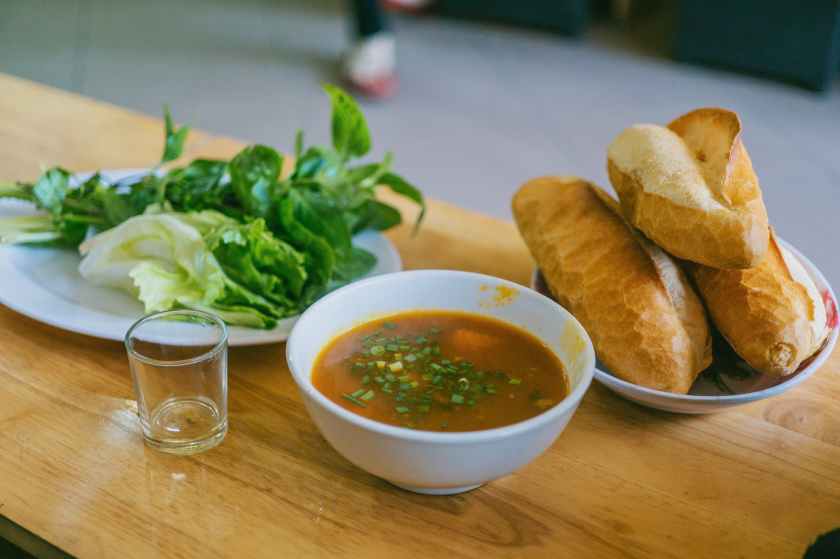
With the season’s celebrations underway, one of the ideal ways to put the extra meat and vegetables to good use is to make them into soup. From the clear soups ( bouillon, consomme) to thick (purees, bisques, veloutes) soups are a consistent favourite with many. Its origins can be traced back to the Roman Era as evidenced by use of the middle English word “soup” from the Old French “soupe” which in turn is derived from “suppa” of Late Latin of Germanic roots. Additionally evidence of existence of soup can be found to as early as 20,000 BC with the discovery of the technique of “boiling” and waterproof jars. Yet since then, soup has been revolutionized to the traditions, customs, flavours, taste as well as style of the local cuisine to the extent that soup is not simply a starter or appetizer but also eaten as dessert or with fruit, as well as being served hot or cold.

“Soup is a lot like a family. Each ingredient enhances the others; each batch has its own characteristics; and it needs time to simmer to reach full flavor.” Marge Kennedy

Come December with the cold and snow, there’s nothing more apt than having pepper pot soup. This soup made from scraps meat and peppercorn had gained mass popularity during the Revolutionary War days in Colonial America. As the legend goes, during the battle of Valley Forge in an exceptionally cold harsh winter of 1777-78, food was often scarce and conditions deplorable. The soldiers were low on food and Christopher Ludwick, a baker general of the Continental Army, gathered whatever food he could scrounge together to feed the cold and frail soldiers. Gathering scraps of tripe, meat, and some peppercorn, he mixed the ingredients together with some other seasonings and created the hot, thick, and spicy soup we now know as pepper pot soup. It quickly became known as “the soup that won the war” as the soup gave the soldiers the warmth and strength that they needed to push the enemies back through the harsh winter weather.

It is impossible to think of any good meal, no matter how plain or elegant, without soup or bread in it. M. F. K. Fisher

From the Belgian Waterzool to the Russian Solyanka, Vietnamese Pho, Partan bree of Scotland; each country, place and local cuisine have their own version of soup of meat and vegetables. Whichever name it may be by, essentially soups ward off the wintry chill satisfying not just the palate and hunger, but also keep us simply warm, comfortable and nice.

Posted in Daily, Family and Society, Stories Around the World, Work

When the Geese Fly

“Teamwork begins by building trust. And the only way to do that is to overcome our need for invulnerability.” – Patrick Lencioni

In this season, as the year comes to an end; each one of us may be busy with our own projects, either related to home, or being on holiday mode as a group or family, neighbourhood or community gatherings especially those of Christmas and New Year as well as school celebrations, plays, parties and the like. Amidst all this, we are involved with a team of people with us being either at or near the apex or as a part of the body. In all these events we are being a part of the bigger crowd or leading one. To have a good time, not just in teamwork but enjoying our work as well, it would do us good to emulate the geese.

“Teamwork is the ability to work together toward a common vision. The ability to direct individual accomplishments toward organizational objectives. It is the fuel that allows common people to attain uncommon results.” – Andrew Carnegie

The geese teach us their lesson of teamwork with both the members as well as the leader fulfilling their roles. When we acquire a bit of their sense, we will realize we can achieve much better and save more time, effort and energy. Above all, by using the sense of a goose, we will discover than any project or task can be fun and enjoyable.

“If I have seen further, it is by standing on the shoulders of giants.” – Isaac Newton

A sense of a goose

Next Autumn, when you see geese heading south for the winter, flying in a “V” formation, you might consider what science has discovered as to why they fly that way. As each bird flaps its wings, it creates an uplift for the bird immediately following. By flying in a “V” formation, the whole flock adds at least 71 percent greater flying range than if each bird flew on its own. People who share a common direction and sense of community can get where they are going more quickly and easily, because they are travelling on the thrust of one another.

When a goose falls out of formation, it suddenly feels the drag and resistance of trying to go it alone and quickly gets back into formation to take advantage of the lifting power of the bird in front. If we have the sense of a goose, we will stay in formation with those people who are heading the same way we are.

When the head goose gets tired, it rotates back in the wing and another goose flies point. It is sensible to take turns doing demanding jobs, whether with people or with geese flying south.

Geese honk from behind to encourage those up front to keep up their speed. What message do we give when we honk from behind?

Finally – and this is important – when a goose gets sick or is wounded by gunshot, and falls out of the formation, two other geese fall out with that goose and follow it down to lend help and protection. They stay with the fallen goose until it is able to fly or until it dies; and only then do they launch out on their own, or with another formation to catch up with their own group. If we have the sense of a goose, we will stand by each other like that.