Posted in Family and Society, Life, Random Thoughts, Stories Around the World

One Vs. Two

Reading from the storybook wasn’t exactly a night ritual but more of an evening time practice. While the young mind holds thoughts of lions not getting their dinner or the stag running from the hunter; they are busy figuring out how the ending works and all are happy or sad. Yet for the adult mind, these ending linger and reflect out the similar analogy in the modern busy lives.

One of the recent reads was about the “lion who didn’t get it’s meal” because for a scant second he though to get more and gave chase without securing his first catch. Area lot of us like this lion ? A few of times, each of us may have felt a similar vein. Entering the race for securing a better project or incentive as compare to one hand, in view of better long term incentives. In few cases the decision may have been alright, while in the other cases it may have cost us quite a bit for that extra run. Whether the “cost” was worth it, only hindsight would prove.

“When one door closes another door opens; but we so often look so long and so regretfully upon the closed door, that we do not see the ones which open for us.” Alexander Graham Bell

The importance lies in knowing when to give chase and when to recognize the opportunity at hand, secure it and then embark on the hunt for the better opportunity. As the “greedy lion” always teaches us that a bird in hand is worth two in the bush; the difference lies in not just recognizing the essence or what is held within the hand but also to keep it anchored and use it to better ourselves. Identifying is one, but using it is another. In the hunt for the dove flying above, the sparrow at hand has more to offer. Learning that difference helps us to not just climb ladders for growth or success but also to pursue the meaningful things at own door than be embroiled in the fathomless pursuit of “deemed happiness or requirements” of life in general.

“The Greedy Lion. It was an incredibly hot day and a lion was feeling very hungry. He crawled out of his den and searched here and there, but he could only find a small hare. He caught the hare, but with some hesitation as he knew the hare wouldn’t fill him up. As the lion was about to kill the hare, he spotted a deer coming his way and thought, “Instead of eating this small hare, let me eat that big deer.” So he let the hare go and went after the deer, but it vanished in the forest. The lion now had nothing to eat as the hare was also long gone.” (Source: vk.com)

‘Der Spatz in der Hand ist besser als die Taube auf dem Dach’.

Posted in Christian, Family and Society, Life, Reflections, Stories Around the World

Not to Condemn

At the turn of the spring, the yard resembles the after-effects of a wind-storm. As rakes get into action and leaves get piled up, a pit is dug for the dead leaves side-by-side before the dusk turns to night. The fear of the dead leaves starting an unprecedented fire always lies in the mind. The bush-fires of Australian and the Californian wildfires are some of the most damaging wildfires as recorded by time. While most of the times, the initiator is nature; the Northern Californian Carr Fire (2018) wasn’t so. These sparks rose from a trailer whose tire had burst en-course scraping the metal against the pavement. This wildfire had burnt nearly 230,000 acres, destroyed thousands of homes and lives as well as rendering many moribund. One can only imagine the shame, grief and remorse the couple who had driven the trailer felt.

“… for whenever our heart condemns us, God is greater than our heart, and he knows everything.” (1 John 3:20)

As the survivors came to know about the details of wildfire, there were those who had condemned them and highlighted on the ramifications of being negligent and careless. Yet there were those survivors who on hearing that the couple were overcome with grief and shame, had extended their support to them with grace and kindness. They also had formed social media pages to show the same. As one survivor had written that blaming anyone doesn’t bring back the lost homes; accidents happen and no matter how much a burden one carries, we will all get through this together. (Source: https://edition.cnn.com/2018/08/15/us/carr-fire-community-sends-notes-trnd/index.html)

To condemn another is relatively easy, but one has to learn to accept that condemnation doesn’t bring the loss back; neither does it reverse the hands of time. The act of condemnation, whether it be towards ourselves or others, is something that can damage the inner soul. Being human, one is prone to make innumerable mistakes. The latter of which some are accidental or made of ignorance, while the others are deliberate. Whatever the nature may be, correcting the mistake and taking care not to entertain a repeat is of more value. Condemning one doesn’t change anything. For some it may make one feel better, but to what extent. While for others, learning from mistakes or pointing out mistakes and their cause doesn’t give the right to condemn anyone or equate to the same.

“The Lord redeems the life of his servants; none of those who take refuge in him will be condemned.” (Psalm 34:22)

Everyone is redeemable through His Grace. Each of us have our own cache of mistakes, errors or carelessness. As we learn from them and regrets get accumulated, one has to realize that His Saving Grace will get us through all this. As the Scriptures say throughout, God is greater than our hearts. As Christ calls us towards repentance, He helps us to unmask the shame, grief and remorse engulfing us. Through His Divine Grace and redemption, our hearts can be at ease in once again. Though there may be many things, happenings and events that one wishes one could turn back or undo; God draws us out of them. He offers His Grace, His Love, His Understanding and His Peace to help us calm our restless heart, thoughts and soul again.

“For by grace you have been saved through faith. And this is not your own doing; it is the gift of God, not a result of works, so that no one may boast.” (Ephesians 2:8-9)

Posted in Personal Musings, Photography Art, Reflections, Stories Around the World

Seasons, Phases and Shades

“I don’t know what lies around the bend, but I’m going to believe that the best does.” Anne of Green Gables

While attending the biennial workshop held as a part of the company policy on updating their employees, many of us signed up mainly for the chance to visit another interesting place. In fact the venue itself was one of the appealing factors of this time’s workshop. Based on the recommendations of the previous city visitors (though it was three years old) we had decided to visit the local famous haunts. To our surprise, while most tourist places had stayed on(or even updated), some of the local popular places like the delis, square gardens as well as city walks had changed quite significantly.

While the entire week went in a whirlwind of various sessions, trips to the local areas, experimenting with new dishes; our experiences were a little different from the previous accounts we were told. Though our experiences were different, it was a lovely stay for the season we were in.

“Even seasonal situations can bring with them lessons that last a lifetime. If the love doesn’t last, it prepares you for the one that will.” Mandy Hale

Each of our days brings in a lot of scenes, flavours and experiences. Our own experiences may be seen in a different light by others. While one may have a good memory, the others may share a not so good or sad memory. To pass judgement too quickly based on a single happening would be to deprive oneself of the whole picture.

Each event or person has their own phases. While one phase mayn’t turn out to be well, it doesn’t mean that it is a lost cause. Instead give it some time, for then one would discover that things weren’t so bad but an interesting experience  seen so in the due course of time.

The Seasons of Life 
There was a man who had four sons. He wanted his sons to learn to not judge things too quickly. So he sent them each on a quest, in turn, to go and look at a pear tree that was a great distance away. The first son went in the winter, the second in the spring, the third in summer, and the youngest son in the fall. When they had all gone and come back, he called them together to describe what they had seen.

The first son said that the tree was ugly, bent, and twisted.
The second son said no – it was covered with green buds and full of promise.
The third son disagreed, he said it was laden with blossoms that smelled so sweet and looked so beautiful, it was the most graceful thing he had ever seen.
The last son disagreed with all of them; he said it was ripe and drooping with fruit, full of life and fulfilment.

The man then explained to his sons that they were all right, because they had each seen but one season in the tree’s life. He told them that you cannot judge a tree, or a person, by only one season, and that the essence of who they are – and the pleasure, joy, and love that come from that life – can only be measured at the end, when all the seasons are up. If you give up when it’s winter, you will miss the promise of your spring, the beauty of your summer, fulfillment of your fall. Don’t judge a life by one difficult season. Don’t let the pain of one season destroy the joy of all the rest.

Posted in Daily, Food, Stories Around the World

A Pound and Two

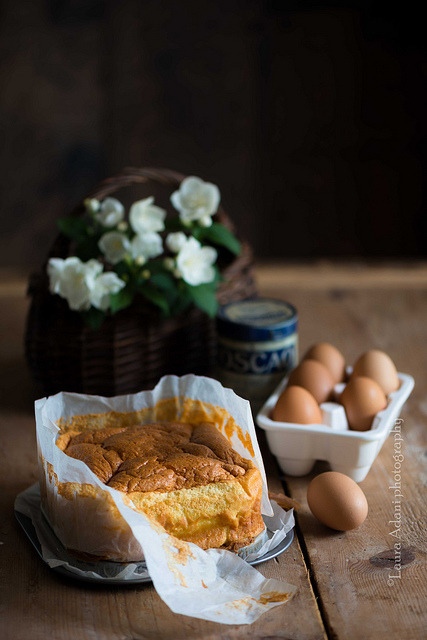
Coming back from school, there is a flurry of running feet. Keeping aside their bags, lunch kits back in the kitchen, a quick wash and the most expectant question, “What’s for tea?” While most days, it’s the simple bread, butter and jam that rocks the tiny kitchen table; some days it’s an elaborate snack meal. Well yesterday it was pound cake added to the simple mix. The difference was in it being elaborate and homemade.

Made from the traditional ingredients of flour, butter, eggs and sugar, the pound cake gets it’s name from the measure of one pound of each. Baked in either a loaf pan or a Bundt mold, dusted with powdered sugar, lightly glazed or layered with a coat of icing on or between the slices; these cakes have been dates back to the early 17th century. Early variations involved the replacement of the flour with cornmeal made from dried corn (maize), the creation then being known as Indian meal.

While for the English it is a pound, for the French it is “quatre-quarts”, means four quarters. With equal weights present in each of the four quarters, the same quantity of four ingredients are used. Depending on the occasion, certain areas use rum (Christmas Eve), mashed bananas or the addition of choclate or lemon juice, simply for flavour.

Moving ahead to the German cuisine, the Eischwerteig mit Fett (roughly “egg-weight dough with fat”) is a recipe very similar to the pound cake, but referenced in multiples of the weight of the average egg used. The recipe calls for measures for such a cake to be baked in a spring form tin (26 cm) as four eggs, 3 egg-weights of butter, 4 egg-weights of sugar, three egg weights of flour and one egg-weight of starch. Adding it up, it makes a close English pound of each or the French four equal quarters. With terms of measures being in base egg-weight, scaling it up or down helps not just in the quantity but addition of ingredients for the added variation like the Falscher Rehrücken (fake venison saddle with bitter chocolate and almonds) or the Nußkuchen (hazelnut cake).

With numerous variations on the traditional pound cake and certain countries and regions having their own signature and distinctive styles, one can stretch their creativity and imagination. From the inclusion of vanilla, almond or orange extracts to the incorporation of dried fruit as well as proportionate alteration to the measures, tea-time can turn out to be an anticipated wait , creative expression and simply, an indulgence after a tiring or busy day.

“Pound Cake.
The old rule–and there is none better–calls for one pound each of butter, sugar and flour, ten eggs and a half wine glass of wine and brandy. Beat the butter to a cream and add gradually a pound of sugar, stirring all the while. Beat ten eggs without separating until they become light and foamy. Add gradually to the butter and sugar and beat hard. Sift in one pound sifted flour and add the wine and brandy. Line the cake pans with buttered paper and pour in the well beaten mixture. Bake in a moderate oven. This recipe may be varied by the addition of raisins, seeded and cut in halves, small pieces of citron or almonds blanched and pounded in rose water. Some old fashioned housekeepers always add a fourth of a teaspoon of mace. The mixture may be baked in patty tins or small round loaves, if preferred, putting currants into some, almonds or raisins in the rest. Pound acake is apt to be lighter baked in this way. The cakes may be plain or frosted, and they will grow richer with the keeping in placed in stone jars.”
—The New York Evening Telegram Cook Book, Emma Paddock Telford [Cupples & Leon:New York] 1908 (p. 126)

Posted in Family and Society, Life, Personal Musings, Photography Art, Quotes, Stories Around the World, Work

Standing Strong

One of the longest suspension bridges of those days, this hybrid cable-stayed or suspension bridge; it was opened on May 24, 1883 to be the first fixed crossing over the East River, connecting the boroughs of Manhattan and Brooklyn. Renamed to Brooklyn Bridge (1915), proposals for this bridge were made in the early 19th century with the design plan initiated by architect John A. Roebling a famed canal engineer and bridge designer, completed by his son Washington A. Roebling. In those times, the initial design plans were considered to be a feat highly improbable to be accomplished. Yet applying the concepts of the known studies into practice in the modernization process, use of the wire-rope concept, suspension principles, anchorages and caissons.

“This is the vocation of our own and of every age: to grasp the knowledge that already exists, to make it our own, and in so doing to develop it further and raise it to a higher level; in thus appropriating it to ourselves we make it something different than it was before.” Georg Friedrich Wilhelm Hegel (1770-1831)

During during the initial surveys, an accident saw the amputation of Jon A. Roebling’s crushed toes, resulting in a tetanus infection leaving him in incapacitated and untimely death (June-July, 1869). As his son, Washington A. Roebling took over the project, the construction of the bridge continued and several improvements were made on the bridge design and the building of the two large pneumatic caissons which became the foundation of the two towers. Unfortunately a fire onsite (1870) in one of the pneumatic caissons caused him to suffer from decompression sickness, severely affecting his health and rendering him unable to move, talk or even visit the site.

Determined to continue the project, he had developed a code of communication with his wife using the only finger that he could move and tapping out the instructions against her arm. As for his wife, Emily Warren Roebling, she taught herself bridge construction, continued the day-to-day supervision and project management among other duties of the chief engineer. As recorded in McCullough’s The Great Bridge (New York: Simon and Schuster, 1972) that “nowhere in the history of great undertakings is there anything comparable” to Roebling conducting the largest and most difficult engineering project ever “in absentia.”

“Strength does not come from winning. Your struggles develop your strengths. When you go through hardships and decide not to surrender, that is strength.” Arnold Schwarzenegger

Over the years, undergoing subtle changes and renovations, the Brooklyn Bridge still stands tall, a witness to exemplary will, strength and belief in ow dream, even in the face of strenuous hardship and hurdles. This great bridge recounts one of the most inspiring tales of motivation, perseverance and determination to own up their dream and make them come true.

In the face of repeated roadblocks, both father, son and his wife never gave up their dream. Though adversaries were rampant, they still found a way around it and completed one of the most finest structures in architecture, laying down a strong bind to the infrastructure that helped the economy flourish.

Each of us have our own set of snags as we set about a project. While some may be on a physical level, others may be at the personal front, or psychological or emotional extent. Facing all these impediments, one must always keep their true dream close to their heart. Where one can get support, take help. To know own strengths through struggles takes immense courage and iron will to stay on course and make sure it happens. As long as one thinks, plans, moves ahead, knows and firmly believes that one can do it, one will.

Posted in Food, Photography Art, Quotes, Random Thoughts, Stories Around the World

Green, Leap and Fun

“Please send something green for snack time during the first break tomorrow.”
(School diary, as read on February 28,2020)

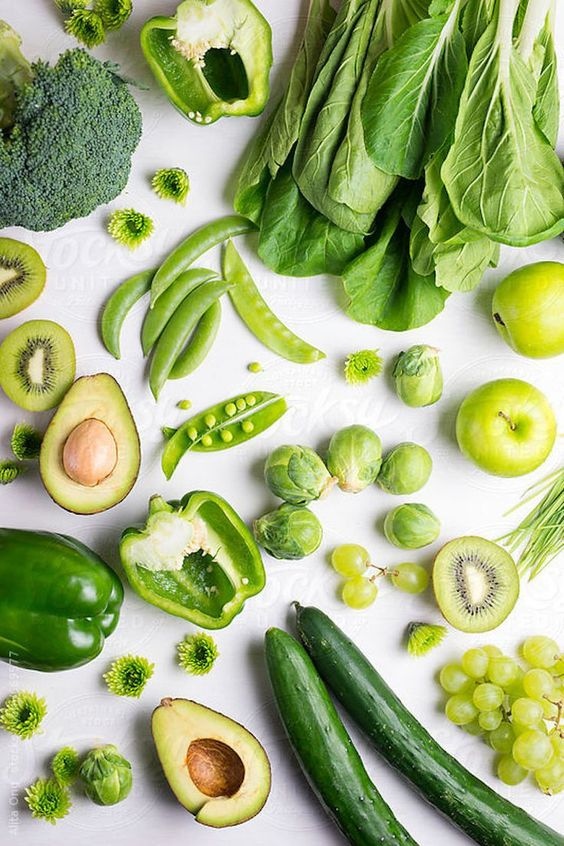
On seeing the note above, the eyebrows went up and a quick glance at the clock ensured a quick browse through the recipes. As night was approaching, a solution had to be reached before the shops were shut for the day. The quick trip downtown resulted in meeting a couple of parents rushing in. With the queue being long, a quick round of talk and news exchange, left me feeling grateful that my task was just in the food arena. To mark the leap year, the kinder-gardeners and primary schoolers were tasked with bringing something green for snack hour and “the world around us” hour; while the middle schoolers had to present projects, fun facts and presentations to mark the history, science and special for the Leap Day.

Leap Day, technically was first observed by those who followed the Gregorian calendar marking the extra-revolutionary hours of six, cumulatively every four years by making it a special day, marked at the end of February. While popular folk traditions first used to mark this day as Bachelor’s Day, various traditions and customs were added on over the years. The concept of “leap day” has been associated with frogs (re-read as leaping frogs) or as to do something “green”. More popular towards the early 21st century, the latter “green” was meant as an initiative by multinational companies so that employees could use the extra day to improve the environment. Those added twenty four hours were meant for change to energy efficient measures, create compost heaps, going green, a “no” to plastic as well as practicing the concept of “reuse, reduce and recycle”.

Moving over to the kitchen preparations for leap day, it was thin brown mint sandwiches, couple of cucumbers and a green apple that made my morning light, quick and green.

For others out there on the same boat of experimentation with something “green and edible”, there are numerous options ranging from green coloured cupcakes to crepes with a heavy dose of crushed mint, coriander or even basil in the batter, the green smoothies, the green cookies, pistachio flavoured ice-cream or even the good old pickles and peas for lunch.

Either way leap day is meant to that extra-something not done previously. As for “the non-edible going-green” process, sticking to it for this year and on, would be wonderful step to enjoy more future leap years on this land that we live on.

“Today is an ephemeral ghost… A strange amazing day that comes only once every four years. For the rest of the time it does not “exist.” In mundane terms, it marks a “leap” in time, when the calendar is adjusted to make up for extra seconds accumulated over the preceding three years due to the rotation of the earth. A day of temporal tune up! But this day holds another secret—it contains one of those truly rare moments of delightful transience and light uncertainty that only exist on the razor edge of things, along a buzzing plane of quantum probability…
A day of unlocked potential.
Will you or won’t you? Should you or shouldn’t you?
Use this day to do something daring, extraordinary and unlike yourself. Take a chance and shape a different pattern in your personal cloud of probability!”
Vera Nazarian, The Perpetual Calendar of Inspiration

Posted in Daily, Family and Society, Personal Musings, Stories Around the World, Work

Maintain the “Equipoise”

While entering work, there was a new notice at the bulletin next to the elevator. It was a new poster based on Don Miguel Ruiz, “The Four Agreements”. With the elevator still stuck on the top floors and time on my hands, a quick run through the words of these agreements provided a fresh perspective.

“Every human is an artist. The dream of your life is to make beautiful art.” Don Miguel Ruiz

On detailed reading and review of the poster resulted in one accepting the beauty of the words. While these work agreements may help to pave a better work place scenario, when practised in the true spirit, they aid one to stay happy within.

There are endless encounters with people in our daily lives. On some days, it may be a few, on other days it may be a lot many. Yet all these contacts leave an impression in the mind of which some may be happy, some give off a feel of kindness or at times, a negative vibe around each experience. Yet when one tends to brood over and feed on the negative vibe more, the inner peace gets lost.

“I am content; that is a blessing greater than riches; and he to whom that is given need ask no more.” Henry Fielding

By keeping the humanness in our basic interactions; more than the positive impact left, it is the feeling of happiness and contentment within that leaves one in peace. Every hour of our lives has a lot to offer. Time is never predictable, neither is the chance to experience the joy of living. If the inner balance is upset, efforts must be made to regain it. Those efforts always start from within. For to to be in harmony with the inner self, is a gift of Grace in itself.

Be impeccable with your word. “Speak with integrity. Say only what you mean. Avoid using the word to speak against yourself or to gossip about others. Use the power of your word in the direction of truth and love.”

Don’t make assumptions. “Find the courage to ask questions and to express what you really want. Communicate with others as clearly as you can to avoid misunderstandings, sadness and drama. With just this one agreement, you can completely transform your life.”

Don’t take anything personally. “Nothing others do is because of you. What others say and do is a projection of their own reality, their own dream. When you are immune to the opinions and actions of others, you won’t be the victim of needless suffering.”

Always do your best. “Your best is going to change from moment to moment; it will be different when you are healthy as opposed to sick. Under any circumstance, simply do your best, and you will avoid self-judgment, self-abuse and regret.”

Source: Don Miguel Ruiz, author of The Four Agreements: A Practical Guide to Personal Freedom (1997)