Posted in Food, Stories Around the World

A Slice of Crust, Filling and History

“Things that really matter are the things that gold can’t buy, so let’s have another cup o’ coffee and let’s have another piece o’ pie.” Irving Berlin

In the initial years of domestication, life in the kitchen revolved around one step meals. From casseroles to pasta and pie, homemade food was simple, basic and hassle free. One of the first recipes to attempt with the oven were the pie recipes, something that our grandmother used to to do on a weekend basis. Today with dessert pies being the classic in any restaurant, it makes for a welcome change from the usual simple desserts for the weekend lunch.

Interestingly the concept of pie making can be traced to as early as the Neolithic era of Egyptians. Pie essentially meant anything edible encased in a tough pastry shell mainly served as a baking dish, storage container or serving vessel, initially too hard to actually eat. As historical evidence points out, these early forms of pies are known as galettes, which essentially are rustic free-form pies. These pie-like treats were made with oat, wheat, rye or barley; then filled with honey and the dish was baked over hot coals. As Egyptian hieroglyphics and drawings show that the bakers to the pharaohs incorporated nuts, honey, and fruits in bread dough, a primitive form of pastry.

As the Greeks carried over the tradition of galettes; they had modified the pies during their period by making a flour-water paste wrapped around the meat, which served to cook the latter and seal their juices. When the Romans had conquered Greece, they had used various types of meat including oysters, mussels, lampreys, fish in every course of meal, sometimes even dessert . As written in the records of De Agricultura by the Roman Statesman Marcus Porcius Cato (234-149 B.C.), the recipe most popular during his era was known as the “Placenta” or “libum”. They were made more like a cheesecake, baked on or sometimes inside a pastry base, these were the initial pie/cake.

Through the gateways of the Roman cuisine, the trend of pie making made it’s inroads into the European cuisine, adapting itself to the local customs and imbibing itself with the traditional cuisine. The initial pies were known as “coffins” or “coffyns” (the word actually meant a basket or box). There were savory meat pies with the crusts or pastry being tall, straight-sided with sealed-on floors and lids. The open-crust pastry (no tops or lids) were known as “traps.” Holding an assortment of meat and sauce components, these pies were baked more like a modern casserole with the crust being the pan, its pastry tough and inedible. The crust was often made several inches thick to withstand many hours of baking. The initial pie prototypes were more savoury than sweet and were a mix of top-cased than open ones (known as tarts today). The sweet pies were more of the “tart” variety.

“Tak gode Applys and gode Spycis and Figys and reysons and Perys and wan they are wel brayed colourd wyth Safroun wel and do yt in a cofyn and do yt forth to bake wel.” (Recipe for apple tart, 1379) Source:The Forme of Cury, A Roll Of Ancient English Cookery, Compiled, about A.D. 1390, by the Master-Cooks of King Richard II.

As to the etymology of the word “pie”, the source may be traced to the magpie, a bird that was known for collecting odds and ends especially the shiny ones and storing them in it’s nest (visualize the similarity). Considering that the Medieval pies also contained many different animal meats including chickens, crows, pigeons and rabbits, the possibility rests on that similarity for the modern word of “pie”.

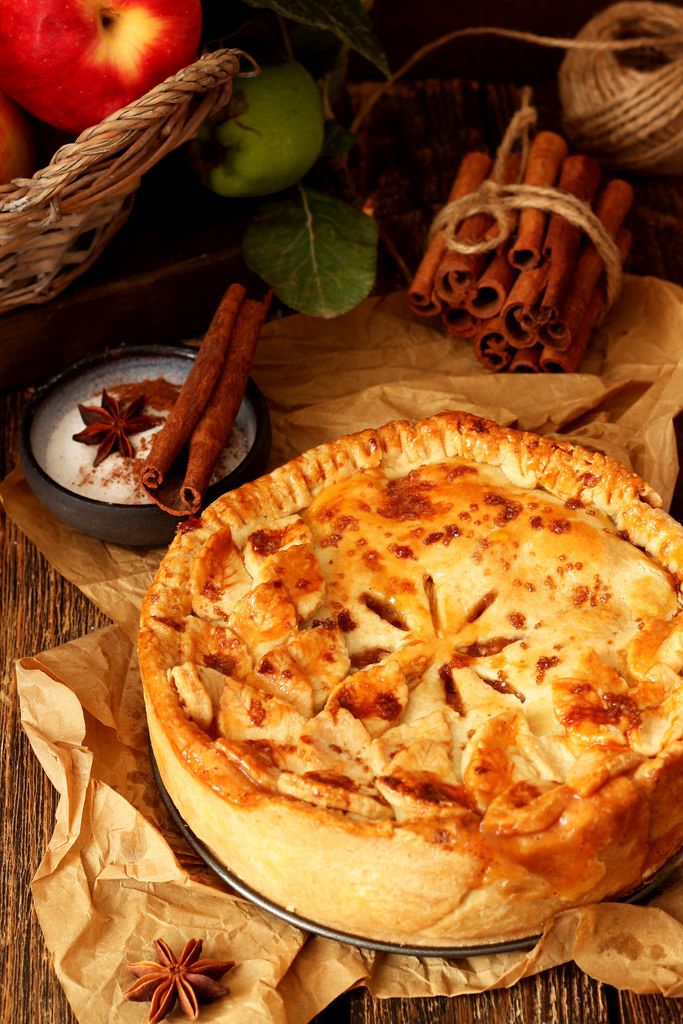
The modern pies are baked dish, with a pastry dough casing that completely contains a filling of various sweet or savoury ingredients and meant to be eaten. From sweet pies with fillings of fruit, nuts, brown sugar or sweetened vegetables like rhubarb or the savoury pies like the steak pie, Jamaican patty with plain meat, eggs and cheese (quiche) or a mix of the vegetables and meat (pot pie(, pies today are meant to be edible as a whole. And the crusty cover can be made from the typical shortcrust pastry meant for pies or even substituted by powdered biscuits, mashed potatoes, bread crumbs to give a soft or strong edible base or cover.

Modern pies carry a whole lot of tradition and history behind each dish typical of a particular cuisine. Knowing that and adding on to those ingredients, giving the pie making a special flavour and zing tot he final dish. After one of the best places to experiment, experience and recreate the flavours of history is the kitchen.

Posted in Family and Society, Personal Musings, Quotes, Random Thoughts, Work

Trace Not These Steps

Interacting with peers on the neighbourhood level, workplace to society on the whole, one walks through various situations. From the good-natured ribbing to snide remarks, comments are always being passed around, whether one wants to actively join in it or happens in own presence; inevitably it happens. In such moments, getting affected is easy. Among all those remarks, taking some in the true sense and few with a pinch of salt or just let them float above the mind helps.

“Keep on the sunny side.” Ada Blenkhorn

To keep the mind sane and thoughts happen, a lot of just walking away helps. To pass a remark in defense to company who really wants to pull one down, doesn’t really help. Instead time gets wasted in sorting out blurry thoughts all the time, some of which in hindsight, one realizes isn’t really worth it. To keep the thoughts in one’s right mind, one needs to learn when to leave or abstain from joining in purposeless and meaningless thoughts. Once we learn to walk away from the taunts and comments, one learns to embrace the challenges as they come, keeping the mind of reasonable thoughts, sane, happy, clam and at peace with a will to put the inner best forward.

“A lot of walking away will do your life good.
Walk away from arguments that lead you to anger and nowhere.
Walk away from people who deliberately put you down.
Walk away from the practice of pleasing people who choose to never see your worth. Walk away from any thought that undermines your peace of mind.
Walk away from judgmental people, they do not know the struggle you are facing and what you have been through. All away from your mistakes and fear, they do not determine your fate.
The more you walk away from things that poison your soul, the healthier your life will be.”
Dodinsky

Posted in Christian, Life, Personal Musings, poetry, Random Thoughts

Setting the Clock Right

Before closing for the weekend, there was a final briefing to plan the schedule for the following week. With a quick glance at the clock, the briefing had started. With a quick glance at the clock, the briefing had started. After the set of instructions said and a slew of ideas discussed, the hands of the clock hadn’t progressed. Or in other words, the clock on the wall was dead.

Each one of us have our own internal clocks, ranging from the physical, mental and the spiritual type. While the former may get it’s due share through workout sessions, balance of the diet scales and taking the stress free zone; it is the latter that at times, needs a push. The human nature needs to maintain it’s innate balance by engaging the emotional, mental and spiritual aspect. When those clocks aren’t wound properly they may fail to function in synchronous with the remaining aspects of human life, creating a chaos within. Each sphere of our life needs help to function properly. By constant prayer, faith and belief in His Word, there would be help to restart our clock when it ceases to function properly. For everything goes as per His Time.

“And, behold, I am with thee, and will keep thee in all places whither thou goest, and will bring thee again into this land; for I will not leave thee, until I have done that which I have spoken to thee of.” (Genesis 28:15)

A Boy and His Watchmaker

This watch my father did on me bestow,
A golden one it is, but ’twill not go,
Unless it be at an uncertainty:
But as good none as one to tell a lie.
When ’tis high day my hand will stand at nine;
I think there’s no man’s watch so bad as mine.
Sometimes ’tis sullen, ’twill not go at all,
And yet ’twas never broke nor had a fall.

Watchmaker.

Your watch, though it be good, through want of skill
May fail to do according to your will.
Suppose the balance, wheels, and springs be good,
And all things else, unless you understood
To manage it, as watches ought to be,
Your watch will still be at uncertainty.
Come, tell me, do you keep it from the dust,
Yea, wind it also duly up you must?
Take heed, too, that you do not strain the spring;
You must be circumspect in every thing,
Or else your watch, were it as good again,
Would not with time and tide you entertain.

Comparison.

This boy an emblem is of a convert,
His watch of the work of grace within his heart,
The watchmaker is Jesus Christ our Lord,
His counsel, the directions of his Word;
Then convert, if thy heart be out of frame,
Of this watchmaker learn to mend the same.
Do not lay ope’ thy heart to worldly dust,
Nor let thy graces over-grow with rust,
Be oft’ renewed in the’ spirit of thy mind,
Or else uncertain thou thy watch wilt find.
-John Bunyan

Posted in Daily, Food, Stories Around the World

Third Wave and On…

“Coffee is a hug in a mug.” Anonymous

On a long postponed visit to the extended family line, we had to put in a three hour journey to-and-back. While waiting in the traffic and not being in the principal driver’s seat was an added incentive for window shopping. Naturally the sign of “discount” had your truly squinting to make out the deals. But it was the special offer of “The Flying Squirrel” (exclusively bought online) and Seven Beans that had snared my attention. After seconds of hedging, my husband had the car in park while I made a quick dash for it. With our luck in alignment, the buy didn’t take much time and we were on back homeward bound.

“It’s amazing how the world begins to change through the eyes of a cup of coffee.” Donna A. Favors

Interestingly “The Flying Squirrel” or “Seven Beans” is but two of the many brands caught in the “wave of coffee”. Entering into the artisanal food category, the third wave coffee movement is a retrospective entry of coffee wherein both coffee lovers and manufacturers share the joy and appreciation of high quality coffee. Like fine varieties of wine and cheese, the third wave of coffee explores the connoisseur-ship, stimulation of the senses and exploration of taste in a simple but buoyant cup of coffee. The unique characteristics of that simple coffee bean are highlighted, ranging from the diverse methods of growing, cultivation, processing, roasting as well as the practices and salient variables among the coffee bean cultivars and beverage preparation.

“The first wave of American coffee culture was probably the 19th-century surge that put Folgers on every table, and the second was the proliferation, starting in the 1960s at Peet’s and moving smartly through the Starbucks grande decaf latte, of espresso drinks and regionally labeled coffee. We are now in the third wave of coffee connoisseurship, where beans are sourced from farms instead of countries, roasting is about bringing out rather than incinerating the unique characteristics of each bean, and the flavor is clean and hard and pure.” Jonathan Gold, LA Weekly. (March 2008, Pulitzer Prize winning food critic on the third wave of coffee)

Technically the terminology of “third wave coffee” was most widely attributed to Trish Rothgeb, a coffee professional in an article for the Roasters Guild newsletter titled “Norway and Coffee,” (2003) with the first mainstream media mention in an National Public Radio piece about barista competitions. Although there is a lesser known reference in an obscure trade publication called “Tea & Coffee Trade Journal Asia” (1999) by specialty coffee pioneer Timothy Castle obliquely referring to the same. While the first and second waves dealt in the ready availability and highlight the countries of origin with (or not) of their signature dark roast profile (respectively), the third wave coffee is often associated with the concept of ‘specialty coffee’ with reference to the specialty grades of green (raw and unroasted) coffee beans (distinct from commercial grade coffee) or specialty coffee beverages of high quality and craft. Though coined earlier (1974), “specialty coffee” was meant to refer to high-quality beans scoring 80 points or more on a 100-point scale.

“It doesn’t matter where you’re from – or how you feel… There’s always peace in a strong cup of coffee.” Gabriel Bá

There is something in a cup of coffee that is dearly enjoyed across all age groups, from different countries, professions and cultures. To add to one’s own special highlight to that cup of coffee, along with the coffee wave, the addition of a tinge of vanilla, whisky, chocolate, cinnamon, cardamom or hot chocolate, can do wonders. Not to forget the ice-cream for the kids. Little wonder then, one would chose to miss an opportunity to ride “that coffee wave”.

Posted in Life, Personal Musings, poetry, Random Thoughts

Myriad Shades of Nature

“I think that to one in sympathy with nature, each season, in turn, seems the loveliest.” Mark Twain

An unexpected fill in for an outstation workshop had resulted in the journey to the city of my high school days, one of my Alma maters. Landing at the airport, with the cold winds and temperatures dropping down fast, the journey had caught me unawares especially as the winter winds had long left my residence towards the first month of the year. Acclimatizing to the sudden change makes one realize the manifold faces of nature.

“In Ohio seasons are theatrical. Each one enters like a prima donna, convinced its performance is the reason the world has people in it.” Toni Morrison

Like the sudden change of the winds, so does the emotions and complexity of those moments. Experiences in life bring forth the faces of emotions from within. From the quiet feelings of contentment to blooming happiness as the uneasiness, anger and fury at difficult situations, life takes one on a myriad of emotions similar to the roller coaster ride of nature. One needs all the bad to feel the beauty of the good. Like the pristine winter white can echo the contentment as well as loneliness, so does the fledgling spring echo the new life in the bleak canvas as well the blistering heat of summer which bring out the joy of outdoors to the prequel of the rains of autumns cold but leave a touch of colour when there. One needs them all to feel complete. For contentment doesn’t come when we have the best of the best, but learn to appreciate the present in the midst of the worst.

The Human Seasons

Four Seasons fill the measure of the year;
There are four seasons in the mind of man:
He has his lusty Spring, when fancy clear
Takes in all beauty with an easy span:
He has his Summer, when luxuriously
Spring’s honied cud of youthful thought he loves
To ruminate, and by such dreaming high
Is nearest unto heaven: quiet coves
His soul has in its Autumn, when his wings
He furleth close; contented so to look
On mists in idleness–to let fair things
Pass by unheeded as a threshold brook.
He has his Winter too of pale misfeature,
Or else he would forego his mortal nature.

John Keats

Posted in Christian, Daily, Family and Society, Personal Musings, Quotes, Random Thoughts

Stars in the Dark

Helping out my niece with their science assignment, we had rigged up a makeshift primitive telescope to take the pictures of the night sky. The purpose was to either get a constellation or two in full focus or click a shooting star. As the project was underway, the beauty of the night sky was something to reckon with. All the twinkling lights reminded of the bright points scattered across the vast dark canvas.

Looking at one of the many mysteries of nature and gifts of life, one often feels the awe and magnificence in His Works. Though at times, unbidden thoughts enter the mind, especially during the trying days, of “Why me?”and as the feeling of helplessness overwhelms; it is the faith in the hope of a better day tomorrow that helps one survive.

Faith is a bluebird you see from afar.
It’s for real, and as true as the first evening star.
You can’t touch it, or buy it, or wrap it up tight;
But it’s there just the same, making things turn out right.
– Rufus Wainwright (The Rescuers, 1977)

Faith is the anchor in the unbidden thoughts of negativity, self-doubt, depressive or defeated nature, which often occur every now and then. Getting out across these boulders and pits, requires something as simple but deeply profound as faith. Days like those which promote the negativism can be shot down by the Faith one holds deep inside.

“Faith is deliberate confidence in the character of God whose ways you may not understand at the time.” Oswald Chambers

One can’t possibly get everything figured out. There are things that happen, either in a single moment or as a sequence of events; that mayn’t be explained by simple logic or by own understanding. During those standstill moments, it is the inner Faith that helps us find a way to get to the light of tomorrow. And the more when one is thrown off the deep edge, devoid of the understanding why; the more one can deepen their Faith in the glory of His Way, His Will and His Word. Life never makes sense, but by faith in the hope that things will eventually work out, difficulties are crossed out, trouble overcome and the inner spirit strengthened making the present livable. For one day in the future, these days of the past will be acknowledged for their way in them making our Faith stronger in Him and helping one to reach those better days of the tomorrow.

Posted in Family and Society, Life, Personal Musings, poetry, Reflections

On the Canvas

“Real generosity towards the future lies in giving all to the present.” Albert Camus (Notebooks 1935-1942)

One of the best things about entertaining a group of toddlers, is their spontaneity. Following their flow of energy, children are more keen on dwelling in the “now”. What about the adult “nows”? More or less, they do happen more in the professional sphere than the personal zone. Eventually some “now” never happens, neither does “the later”.

As each of us “adult” reserve their time and energy for the tomorrow, those proposed plans mayn’t happen. Time has it’s own flow. At times the tomorrows may work out, at times it mayn’t be so. If it was done at the “now” of then, then maybe it would be have happened or done only. Time has and always will be contrary. Sometimes as the toddlers say “let’s play tent” or “play with us” maybe some of the most precious memories made as one unwinds from work than catching up with “the telly”.

“It’s being here now that’s important. There’s no past and there’s no future. Time is a very misleading thing. All there is ever, is the now. We can gain experience from the past, but we can’t relive it; and we can hope for the future, but we don’t know if there is one.” George Harrison

Time has a beginning and ending, but those moments in between are what fills up the blank canvas. It may be filled by phases of dark hues, spots of brightness scattered in the dark template or hues of varying colours depending on own choice. As one decides on how the space on the canvas needs to be made so for the future days, take care that the spaces of now don’t go void.

Hymn to Time

Time says “Let there be”
every moment and instantly
there is space and the radiance
of each bright galaxy.

And eyes beholding radiance.
And the gnats’ flickering dance.
And the seas’ expanse.
And death, and chance.

Time makes room
for going and coming home
and in time’s womb
begins all ending.

Time is being and being
time, it is all one thing,
the shining, the seeing,
the dark abounding.

Ursula K. Le Guin (1929-2018)
(From Late in the Day: Poems 2010-2014 (PM Press, 2015). Copyright © 2015 by Ursula K. Le Guin.).