
Posted in Daily, Food, Stories Around the World

“Pop” the Corn

One of the appealing reasons of having the children start off the early weekend at the family homestead are the possibility of enjoying the late movie nights. While all their cousins gather for fun night followed by sleepover, we adults can enjoy a late night with either a marathon movie run with that huge tempting bowl of popcorn. Minus this combination, the movie runs feel incomplete. Along with the numerous flavourings and seasonings, each popcorn night lets the experimentation streak run free.

“Have you ever pondered the miracle of popcorn? It starts out as a tiny, little, compact kernel with magic trapped inside that when agitated, bursts to create something marvelously desirable. It’s sort of like those tiny, little thoughts trapped inside an author’s head that? in an excited explosion of words?suddenly become a captivating fairy tale!” Richelle E. Goodrich

One of the first use of the first use of wild and early cultivated corn was popping. Food historians believe that popped corn was integral to the South American regions as well as a part of the Aztec Indian ceremonies (early 16th century). As recorded by Bernardino de Sahagun, “And also a number of young women danced, having so vowed, a popcorn dance. As thick as tassels of maize were their popcorn garlands. And these they placed upon (the girls’) heads.” To date, the oldest ears of popcorn ever found were discovered in west central New Mexico(Bat Cave, 1948 and 1950) and dated to about four thousand years old.

Not just for basic food, popcorn was also used as decoration for ceremonial headdresses, necklaces and ornaments on statues of their gods (Aztec Indian), including Tlaloc, the god of rain and fertility. Following the traditions of Peruvian Indians, “They toast a certain kind of corn until it bursts. They call it pisancalla, and they use it as a confection (Spaniard Cobo, 1650).” Accounts of French explorers wrote of Iroquois people popping tough corn kernels in pottery jars filled with heated sand.

Early Spanish accounts write of various ceremonies honouring their gods as, “They scattered before him parched corn, called momochitl, a kind of corn which bursts when parched and discloses its contents and makes itself look like a very white flower; they said these were hailstones given to the god of water.” Finding it’s place among burial grounds as well, these kernels of popcorn were so well preserved that they would pop even though they were a thousand years old.

With colonization, trade imports and exports, popcorn had entered into the food patterns of the settlers and colonists. Initially through the 19th century popping of the kernels was achieved by hand on the stove-top. In fact the term “popped corn” first appeared in John Russell Bartlett’s Dictionary of Americanisms(1848) with the very early years seeing them popped by hand and added as ingredients to various products. Although popcorn was beloved by families as a late-night snack in front of the fire, or at picnics and sociables; mass consumption of the treat took off after Charles Cretors, a Chicago based entrepreneur who had built the first popcorn-popping machine (late 1890s) with the arrival of street carts with fully equipped steam-powered popcorn makers.

Adding to the ease of availability was the fairly inexpensive cost, such that it became a popular snack especially during the Great Depression. With the snack being popular especially at the movies as well as drive in shows, carnivals, fairs and matches, it became an essential part of these events. Over time popcorns have evolved from their basic style to a varied range of flavoured variants like caramel chipotle, coffee caramel and kettle, cheddar; although the classic butter and salt still stays ahead on the favoured list.

“Of course life is bizarre, the more bizarre it gets, the more interesting it is. The only way to approach it is to make yourself some popcorn and enjoy the show.” David Gerrold

Not just for the basic munch time, popcorn has found it’s place in numerous recipes like cheesy popcorn bread, power bars, glazed into sweet treats, muffins or as an add on to the salads, cereals, healthy mixes or simply into edible or inedible art, going beyond the food zone. Little wonder then why this kernel of delight has stayed on since it’s evolution from the very early years, still being a favourite then and now, with age never being a barrier.

Posted in Family and Society, Life, Personal Musings, poetry, Quotes, Random Thoughts

To “Get Set…Go”

“Promise me you’ll always remember: You’re braver than you believe, and stronger than you seem, and smarter than you think.” Christopher Robin to Pooh, A.A. Milne

With careful precision, a pair of tiny grubby hands steadily held the sticks and fixed them onto the muddy ground. Nearby a pair of dried leaves lay scattered along with a couple of stones and more tiny sticks. The process of building a village map was done with great concentration and considerably deliberate thought. Little does the mind know whether the rain would wash away the model or if the thin sticks would be blown away. They make it because they really want to. For this toddler, getting set and doing is more important than only figuring out the possibility of whether it could be done. For them, to know they have to try it themselves.

“It is not because things are difficult that we do not dare; it is because we do not dare that things are difficult” Seneca the Younger

No one knows till they try. This basic innate courage to do the dream is slowly lost as the years progress. While the adult mind has learnt the ability to think; it tends to dwell more in the thinking than the doing part. The possibility of difficulties and fear of losing out features more prominently than getting down and doing. Eventually when one decides to get down to doing it, what runs out fast is “time”. Sad reality of time is once over, it can never be brought back.

“According to the ancient Chinese proverb, A journey of a thousand miles must begin with a single step.” John F. Kennedy

Anything big happens with the initial small steps. While the whole world may say that “to think of the possible”; when the heart says the dream is possible, get to doing it. Things will always eventually work out and fall into place. Follow one’s own plan, instead f relying solely on the words around them. Listen, think and act; not simply listen, over think and procrastinate. Over time, one realizes that the beauty of what was once deemed impossible is priceless as it became possible. To experience such feelings of peace, contentment, fulfillment and happiness are few of the simple things that define our lives.

“A problem is a chance for you to do your best.” Duke Ellington

It Couldn’t Be Done
Edgar A. Guest

Somebody said that it couldn’t be done,
But he with a chuckle replied
That maybe it couldn’t, but he would be one
Who wouldn’t say so “till he tried.”
So he buckled right in with the trace of a grin
On his face. If he worried, he hid it.
He started to sing as he tackled the thing
That couldn’t be done, and he did it.

Somebody scoffed: “Oh, you’ll never do that;
At least no one ever has done it.”
But he took off his coat and took off his hat
And the first thing he knew he’d begun it.
With the lift of his chin and a bit of a grin,
Without any doubting or quiddit,
He started to sing as he tackled the thing
That couldn’t be done, and he did it.

There are thousands to tell you it cannot be done,
There are thousands to prophesy failure;
There are thousands to point out to you, one by one,
The dangers that wait to assail you.
But just buckle right in with a bit of a grin,
Then take off your coat and go to it;
Just start in to sing as you tackle the thing
That cannot be done, and you’ll do it.

“You can do anything you decide to do.” Amelia Earhart

Posted in Christian, Daily, Life, poetry, Reflections

As They Grow, I Pray…

“See that you do not despise one of these little ones. For I tell you that their angels in heaven always see the face of my Father in heaven.” Matthew 18:10

Starting the new session of post Sunday church teaching for the primary children, a sense of joy and happiness surface on seeing those little faces listen avidly to the teachings and stories of the Bible. In one class alone, there would be many interesting behaviours to be seen. Some would listen keenly, others would giggle a bit and ask questions and the select few who were the mischief makers in class. All in all, teaching a class of primary schoolers brings forth a sense of fun, contentment and opens the insight to their guileless and innocuous behaviour.

“Love the Lord your God with all your heart and with all your soul and with all your mind. This is the first and greatest commandment. And the second is like it: ‘Love your neighbor as yourself.” Matthew 22:37-39

What happens over the years as they mature to adolescence ? Observing and listening to my adolescent niece, one often wonders how the values and innocence of childhood have been influenced by the modernism of the world around as well as the complicated adult lives. The snide remarks, eve teasing and bullying may have been picked up from the adults the initiators interact, observe or live with. As a consequence, the vicious chain of “wrong behaviour” gets extended on to the younger generations. What one never imagines, is the far reaching impact of this into the future. Over time, will inter-relations be more strained and living more surrounded by indirect communication and social media or the virtual world than building real meaningful relationships in the lives allotted to one.

“In the same way, let your light shine before others, that they may see your good deeds and glorify your Father in heaven.” Matthew 5:16

During the conversation with adolescents of my family, is when one hopes that children never lose their innate guileless and loving nature. No matter how fast or where one grows, their childlike thinking, openness, straightforward words and happy nature shouldn’t be lost over the years. On seeing those happy faces, no matter how weary the adult mind becomes, the hope for a brighter future for the generations ahead is still cherished.

“May the God of hope fill you with all joy and peace in believing, so that by the power of the Holy Spirit you may abound in hope.” Romans 15:13

A Prayer For Our Children

Our children who live on earth,
Holy are each and every one of you.
May good dreams come,
Your way be found,
And heaven and earth rejoice with you.

May you be given
All you need for life
And may you accept our mistakes
As you allow yourself
To make mistakes and grow.

Lead us with imagination
And true integrity,
For yours are the minds, the hearts, and the souls
To heal the world
Now and forever.

Anonymous

Posted in Daily, Food, Stories Around the World

Of Pasta, Origin and Style

“Life is a combination of magic and pasta.” Federico Fellini

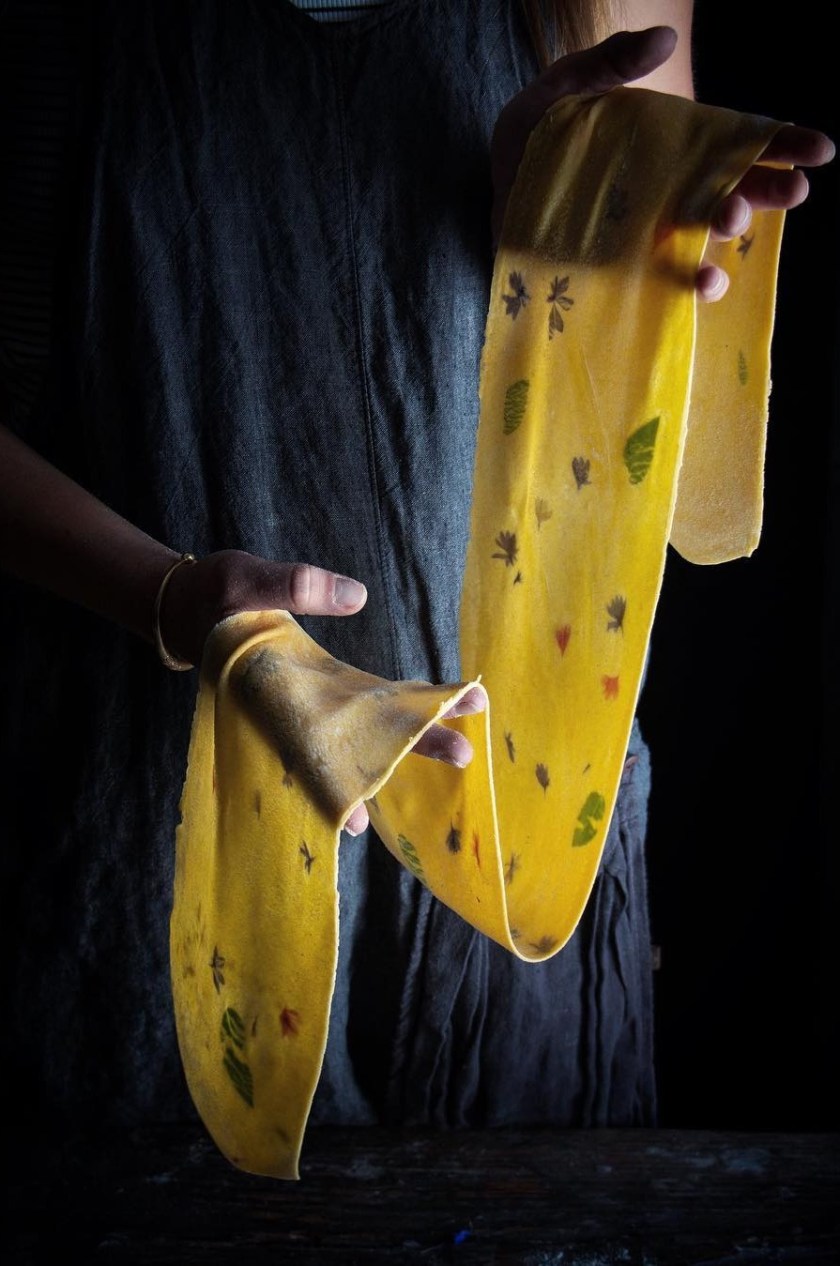
Typically made from an unleavened dough of durum wheat flour (semolina) mixed with water or eggs, formed into various shapes or as sheets, then cooked by boiling or baking, pasta has been there since the ancient years. Although etymology speaking, the first English attestation of the word “pasta” (1874) comes from Italian pasta, which was from the Latin pasta, the latter being the  Latinization of the Greek παστά (pasta) meant as “barley porridge”.

“You don’t need a machine to make pasta: a rolling pin and a fast hand can create a smooth, if thick, sheet.” Yotam Ottolenghi

Broadly divided as two categories of fresh (pasta fresca, prepared traditionally by hand or at home) and dried (pasta secca, commercial preparation). One of the advantages of pasta is it’s versatility from being the main course to a side dish, as salad or as a filler for sandwiches or as an accompaniment to main course or as light lunches. Classically there are three main kinds of prepared dishes. One type is the pasta asciutta (or pastasciutta) wherein the cooked pasta is plated and served with a complementary side sauce or condiment. Another is the pasta in brodo, in which the pasta is part of a soup-type dish. The third category is the pasta al forno where the pasta is incorporated into a dish that is subsequently baked in the oven.

Tracing the origin of pasta, the entire roots don’t lead back to Italy alone. The writings of Horace (1st century AD) mention lagana (singular: laganum) made of fine sheets of fried dough used in the daily menu. Athenaeus of Naucratis (2nd century AD) provides a recipe attributed to Chrysippus of Tyana(1st century AD) wherein sheets of dough made of wheat flour and the juice of crushed lettuce, then flavoured with spices and deep-fried in oil. However the method of cooking these sheets of dough does not correspond to the modern pasta, although the basic ingredients and perhaps the shape were similar. Food historians have noted several milestones, similar to pasta. Like the itrion (mentioned by Greek physician Galen, 2nd century AD) as homogeneous compounds made of flour and water, later modified as a boiled dough known as itirum common to Palestinian lands (300 to 500 AD) and recorded so in the Talmud. The Arab physician and lexicographer Isho bar Ali (9th century AD) defines itriyya, the Arabic cognate, as string-like shapes made of semolina and dried before cooking. A form of itriyya is laganum (Latin) which refers as a thin sheet of dough, a precursor of the modern Italian lasagna.

“You can buy a good pasta but when you cook it yourself it has another feeling.” Agnes Varda

The North African areas had couscous (steamed balls of crushed durum wheat semolina or of pearl millet and sorghum), more like droplets of dough which is less malleable than pasta. Rustichello da Pisa writes in his Travels that Marco Polo described a food similar to “lagana”. With traces of pasta being found in Ancient Greece and later Arabian cuisine records of similar dishes, pasta has come a long way before being ingrained into the Italian cuisine and culture. The first concrete information concerning pasta products in Italy dates from the 13th or 14th century. And as far as shapes of pasta and their sauces are concerned, there is a whole mine of information out there. From long to short, minute pasta for soups (pastina) or pasta all’uovo (egg pasta), there are many varieties of the basic pasta. For those of us, who need them gluten free, alternatives include rice flour, brown rice, shirataki noodles, chickpea, quinoa, corn, millet, buckwheat and amaranth to mention a few with certain varieties of gluten free being multigrain (mix of all above).

Although pasta dishes are generally simple, individual dishes vary in preparation with the flavors of local cuisine being incorporated when possible. With the mood for autumn setting in and ingredients varying to availability and choice, spicing up a basic pasta dish to the more elaborate style can set the creative cooking into full swing with an undeniable delectable pleasure for the palate and the taste buds. A bit of pasta can add plenty of spice, the way one wants it so.

Posted in Daily, Family and Society, Personal Musings, poetry, Reflections, Work

Improvise and Lighten

“Keep love in your heart. A life without it is like a sunless garden when the flowers are dead. The consciousness of loving and being loved brings a warmth and a richness to life that nothing else can bring.” Oscar Wilde

As the late summer rains hit the early evening skies, the drive back from work got longer than usual, with the roads being slippery and visibility strained. Consequently the “train of late” followed. Late dinner, the bedtime of children delayed, house still in a mess and chores left undone. It takes all of one’s mental will to not scream but handle the situation to the best of their capacity. The entire mood can be made dark for not just one person but rest of the related people (here the family) when things go berserk. The anger of one person can be transferred to the rest, creating a negative ripple effect and impact the peace and happiness of the rest along the way. Or one can chose to make the best of the situation. Instead of putting the blame on anyone, it would be a thousand times better to find humour in the fiasco, ending the day on a better note and lighter mood.

“We do not remember days, we remember moments.” Cesare Pavese

Unknowingly (more than knowingly) one is making moments and memories by every minute. While at times, we may have the “good times” , others may be the “bad times”. Yet it is how one handles them that makes the difference year-round. Each negative thought or action that one has or does, influences the feelings, memory and actions of those around one especially children; if not immediately, then later over a period of time. When one masters the art of dealing the situation at hand, in a light or positive mood; then the emotions and memories transferred to the others would be positive, uplifting and an enriching experience for both the doer and the rest around them. All of us have it in us, to make the best of ourselves. Though it’s alright to rave and rant at the moment, buckle up and start doing their own best to make the situation better. Doing so, will not enrich our own treasure chest of memories but make memorable ones for later and for others.

“Life is a gift, and it offers us the privilege, opportunity, and responsibility to give something back by becoming more.” Tony Robbins

A glorious recipe for the soul
Fold two hands together,
And express a dash of sorrow;
Marinate it overnight,
And work on it tomorrow.

Chop one grudge in tiny pieces
Add several cups of love,
Dredge with a large-sized smile,
Mix in ingredients from above.

Dissolve the hate within you,
By doing a good deed;
Cut in and help your friend,
If he or she should be in need.

Stir in laughter, love and thankfulness,
From the heart it has to come;
Toss with genuine kindness, then
share with folks who may need some.

The amount of people served,
Will all depend on you …
This recipe can feed an entire world,
If you really want it to!

Author Unknown


Posted in Daily, Family and Society, Personal Musings, Stories Around the World, Work

Share the Light

“We only have what we give.” Isabel Allende

During the floods that had hit my hometown a year ago, it was a difficult time. Some from the community had lost a sizable amount of crop, livestock and trade; others had their homes uprooted and some escaped by an inch. The aftermath saw everyone pitching in, with funds pouring in from different corners around the globe. No one was left alone to pick up the pieces and rebuild again. Everyone, from the community, volunteers and outsiders had pitched in to restore the neighbourhood.

“There is no exercise better for the heart than reaching down and lifting people up.” John Holmes

Connectedness is an essential part of our lives. Unless one learns to help those around him, self improvement wouldn’t be within their own reach. For a person to grow, the environment around him has to be whole. Take a child’s life for instance. His world is complete when he receives the love, care and joy. Then the happiness is spread around him, lighting up the lives around him. Yet when the little one is troubled by any tiny aspect, the whole mood shifts. How different will it be for the adult ?

For one person to prosper, he must be at peace with those around him. The welfare of one person depends not on him alone, but when he learns to help others. Life of one has and will always be measured not by material gains alone; but by the numerous lives it touches with positive vibes. Each one has a pair of hands, to help and be helped. Harmony rests not with self alone, but also with the world around one.

“In teaching others we teach ourselves.” Traditional proverb

Growing Good Corn
There once was a farmer who grew award-winning corn. Each year he entered his corn in the state fair where it won a blue ribbon. One year a newspaper reporter interviewed him and learned something interesting about how he grew it. The reporter discovered that the farmer shared his seed corn with his neighbours.
‘How can you afford to share your best seed corn with your neighbours when they are entering corn in competition with yours each year?’ the reporter asked.
‘Why sir,’ said the farmer, ‘didn’t you know? The wind picks up pollen from the ripening corn and swirls it from field to field. If my neighbours grow inferior corn, cross-pollination will steadily degrade the quality of my corn. If I am to grow good corn, I must help my neighbours grow good corn.’
Source:James Bender (Author of How to Talk Well, published in 1994 by McGraw-Hill Book Company Inc.)

Posted in Daily, Life, Personal Musings, poetry, Quotes, Reflections, Work

Close the Lid

“No river can return to its source, yet all rivers must have a beginning.” Proverb

During the recent cleaning spree of the attic, I had chanced across the old job applications, which I had filed away for prospective future use. Leafing through them bought back memories of the initial struggle, the difficult hours, poor pay and the constant mental strain of the uncertainty of employment. However today, all these feelings don’t sting anymore. May be it’s because I have accepted that life does throw it’s disappointments at us, once in a while. Or may be it is because I had decided to make the best of the situation and closed the lid on the previous failures, after learning what they had to teach.

“Every new beginning comes from some other beginning’s end.” Seneca

All of us, have come across the feelings of regret, either personal, professional, physical or social. Yet the difference lies in how we react to them, learn form them or move on. The choice is ours to decide and act on. When one tends to foster the bad feelings and breed them, it isn’t the present that only takes a setback but the future too. Doing so would never help us to grow in life or reach the full potential. Let the past failures stay there. Instead carry forward the learning from those experiences and shape the future akin to the dream within.

“Starting over is an acceptance of a past we can’t change, an unrelenting conviction that the future can be different, and the stubborn wisdom to use the past to make the future what the past was not.” Craig D. Lounsbrough

Yesterday’s Door
I have shut the door on yesterday,
Its sorrows and mistakes.
I have locked within its gloomy walls
Past failures and mistakes.

And now I throw the key away,
And seek another room.
And furnish it with hope and smiles,
And every spring-time bloom.

No thought shall enter this abode
That has a taint of pain.
And envy, malice, and distrust
Shall never entrance gain.

I have shut the door on yesterday
And thrown the key away.
Tomorrow holds no fear for me,
Since I have found today.

Author Unknown

“Every day brings a chance for you to draw in a breath, kick off your shoes, and dance.” Oprah Winfrey