Posted in Daily, Food, Stories Around the World

Of “Catchup” and Origins…

“Three tomatoes are walking down the street – a papa tomato, a mama tomato and a little baby tomato. Baby tomato starts lagging behind. Papa tomato get angry, goes over to Baby tomato and squishes him…..and says ‘Ketchup!”
-Uma Thurman in ‘Pulp Fiction’ (1994)

Sweet and tangy, often used as a condiment for the “hot or fried, greasy” dishes and at times, as an add on for dressings, sauces or flavouring for the main course dishes; “ketchup” or “catchup” has evolved into being almost a must in every household. In fact, to flavour the most mundane or for a quick scratch meal; ketchup is the answer. Little wonder then with hoards of “tomato sauce” enthusiasts around, a whole day has been dedicated as National Ketchup Day (June 5th).

Typically made from tomatoes, sugar, vinegar, assorted seasonings and spices; this sauce had initial recipes of egg whites, mushrooms, oysters, mussels, or walnuts, among other ingredients. Some of these ingredients have been modified and labelled under other sauces; such that the term “ketchup” (earlier known as catsup, catchup, red sauce, ketsup) refers to the unmodified tomato ketchup (not the mushroom ketchup). While the specific spices and flavors may vary; most commonly include onions, allspice, coriander, cloves, cumin, garlic, mustard and sometimes celery, cinnamon or ginger.

“You know, you really can’t beat a household commodity – the ketchup bottle on the kitchen table.” Adlai Stevenson

Condiments and sauces have been an accompaniment for main course meals a s well as snacks from the very early days of civilizations. Delving into the origins and roots of “ketchup”, this concoction of the Orient had been passed on to the colonists. The 17th century Chinese cuisine included a concoction of pickled fish and spices; known as kôe-chiap (Amoy dialect) or kê-chiap meaning the brine of pickled fish (like salmon juice) or shellfish. Seen in the Malay States (Malaysia and Singapore) of early 18th century; as kicap or kecap (pronounced “kay-chap”) English colonists had first tasted it. The English settlers had taken it back with them, later to their American colonies. Over time “kecap” had evolved into catchup” or “ketchup”. From an etymological point of view, multiple competing theories offer explanations for the name “ketchup”, yet the most widely believed is the Malay or Chinese origin.

“I mix mayonnaise, ketchup and brandy and a little bit of mustard. This is a heck of a good sauce for seafood.” Jose Andres

Originally and historically, the initial preparations of the English ketchup had mushroom (sometimes even walnuts) rather than tomatoes as primary ingredient(1750 to 1850). While many variations of ketchup were created, the tomato-based version appeared a century later after other types. The early versions had anchovies placing its’ roots to fish-sauce ancestry. The mid-1850s saw anchovies being dropped from the ingredients.

Gather a gallon of fine, red, and full ripe tomatoes; mash them with one pound of salt.
Let them rest for three days, press off the juice, and to each quart add a quarter of a pound of anchovies, two ounces of shallots, and an ounce of ground black pepper.
Boil up together for half an hour, strain through a sieve, and put to it the following spices; a quarter of an ounce of mace, the same of allspice and ginger, half an ounce of nutmeg, a drachm of coriander seed, and half a drachm of cochineal.
Pound all together; let them simmer gently for twenty minutes, and strain through a bag: when cold, bottle it, adding to each bottle a wineglass of brandy. It will keep for seven years. – Recipe for “Tomato Catsup” from 1817
(Source: Wikipedia and Apicius Redivivus: Or, The Cook’s Oracle: Wherein Especially the Art of …)

“I can fry hollandaise, I can fry ketchup, I can fry mustard.” Wylie Dufresne

Besides the primary use as a condiment, add on to the marinade or to the minced mix as well as converting it sauces like brown ( barbeque) sauce, sweet and sour sauce or red remoulade; ketchup has its’ own special uses too.

  • Shine copper and silverware with ketchup, with the latter being a very effective cleaning agent. At times, mixing it with Worcestershire Sauce enhances the cleaning effect. Ketchup can be used to clean up the tarnish from the car parts, as well as a great agent to shine up alloy based metals; though it won’t clean up the dirt. The technique would be to first clean and remove the dirt, then use ketchup to add the shine.
  • To correct green highlights in bleached hair, ketchup can be used. Besides ketchup acts as a great conditioner, bringing back the natural oils into the hair.
  • Last but the most creative use of ketchup is its’ use as fake theatrical blood. Additionally ketchup as well as its’ bottle acts as a great base for food based paints and dyes for “toddler art and paint fun”.

With more than the “food” factor for ketchup, this condiment will continue to remain as an essential part of the pantry and the household, whatever may come.  For every food experimenter, getting creative and adding a bit of sweet, sour and tangy flavours to the routine recipes can lead to entertaining and surprising new flavours, combinations as well as artistic renderings ( like Eureka!!).  


Posted in Family and Society, Life, poetry, Quotes, Reflections

Finding the “Shade”

“Folks are usually about as happy as they make their minds up to be.” Abraham Lincoln

With summer break nearing to an end and summer camps coming to a close, the excited chatter and the melee around were a welcome sight last weekend. Like every year, contests were held and best prizes were announced. Interestingly during the course of events, especially at the award ceremony, the expressions on the faces of many adults, parents or guardians and the like had caught the eye. While kids were happy that they had or hadn’t secured a prize, the momentary disappointment as well loss of happiness on the adults’ faces was a cause for surprise. At the end of the day, the tussle of thoughts were whether prizes do really matter or is the joy of the vent more fun.

“Happiness is when what you think, what you say, and what you do are in harmony.” Mahatma Gandhi

The catch to happiness always depends on how one defines it. One can be happy or sad for the same reason. One can find joy for the moments or consistently ponder over the uncertainty of the next and lose sight of the present. Like there are many shades to a single colour, there are innumerable ways on how to react to a particular situation as well as choose the face of our happiness. Eventually everything boils down to our understanding of happiness in life and what it comprises of.

“Now and then it’s good to pause in our pursuit of happiness and just be happy.” Guillaume Apollinaire

When we react to any event, they are two main faces that can happen. Either we chose to be happy or change the mood such that the events don’t shadow the inner happiness or peace. On the other hand, we can let the sequence of events affect one’s actions, words and thoughts dimming or darkening the mood for the day. What we fail to realize that all the wile, people around us, near or far are affected by one’s own after-effects. The change of moods can start off a chain reaction of words or actions, which in some cases, once said may not be easily taken back. When those affected around us are children, what those young minds grasp and learn from the adult behaviour goes a long way to influence and shape theirs. The next time one cribs about losing one’s happiness; look around and ponder within whether we are solely responsible for it or not. For the actions belong to others, but power of thoughts, remedial thinking and words are in our own court.

“When one door of happiness closes, another opens, but often we look so long at the closed door that we do not see the one that has been opened for us.” Helen Keller

What Is Happiness?

So, what is that happiness, people?
Ones answer, “It is to be mingled
With cards, alcohol and flirtations –
And all kinds of tempting sensations.

The others have beatitude’s vision
In money and higher position:
In flattering ‘kindly’ permitted,
And awe of the workers submitted.

The thirds think that it is in actions
Reflecting the perfect relations:
Sweet kindness, good care, attention
And general hearts’ comprehension.

The fourths think that it’s just advises
To meet with your dear sunrises,
To tell her your love and your favor
And go together forever.

And sometimes the meaning is longing
That it is the permanent burning:
The job, dreams and searching enlivened,
The pair of the wings for the heaven!

I think that in all enterprises,
Has happiness different sizes:
From peaks to a lowest mound,
Depending from people around.

-Eduard Asadov, Translated by Yevgeny Bonver, March, 2001

“True happiness arises, in the first place, from the enjoyment of one’s self.” Joseph Addison

Posted in Daily, Family and Society, Personal Musings, Quotes, Stories Around the World

To Say Something

“If you can’t say something nice, don’t say nothing at all”.

For avid animation film viewers or parents of children, Bambi may have made an appearance on their screens or watch list. As the original movie Bambi (1942) revolves around the life of a fawn, who would be the future guardian of the forest; one of his close friends was an eager, energetic rabbit named Thumper.

When Bambi, newly born, was being presented to all the forest creatures as the future young prince of the glen, Thumper remarks accurately that he is “kinda wobbly” whereupon his own mother inquired if he remembered what his father had impressed upon him earlier that day. Thumper, drawing circles with his hind left foot, says haltingly, “If you can’t say something nice… don’t say nothing at all.” Also known as the “Thumperian principle”, “Thumper’s rule” or “Thumper’s law”; this principle holds true then and even now.

“Be nice. And if you can’t do that, just don’t be mean.” Richelle E. Goodrich

When looking deeply into the growing society, one often sees unkindness, thoughtless words, bullying and impolite talk becoming more rampant day by day, especially towards those on less social standing than oneself. In order to instill a sense of pleasantness, kind thoughts and gracious behaviour; Mayor Keith Summey of North Charleston proclaimed June 1st as “Say Something Nice Day” (2006). Joined by Dr. Mitchell Carnell, the author of Say Something Nice: Be a Lifter at Work, the South Baptist Convention and the Charleston-Atlantic Presbytery; this day was recognized to remember and celebrate people who provide society with a variety of services from bus drivers, teachers, healthcare workers, law and order. Additionally it was marked as a day to be kind to the special people in our lives, like children, grandparents and the elderly. Above all, this day offers a great opportunity to apologize to people that one may have wronged or hurt them through one’s behaviour, especially when done intentionally be it when in range or fit of anger.

“Be nice to each other. You can make a whole day a different day for everybody.” Richard Dawson

To one’s surprise and perhaps the biggest truth, is that, it doesn’t take much to be nice for a day. True that each one has their own share of likes, dislikes, opinions, understanding, perceptions, assumptions, expectations and thoughts, and so on. Yet the beauty of coexistence as a humane society is that there is place for all. From appreciation of others, noticing or acknowledging their presence by kind words or simple courtesy greetings to complimenting personality traits to styles, or simply greeting others with pleasant words are few of the many ways to be spread ” the happy feel” around oneself. While each one of us may have our own personal inner struggles, it doesn’t give a leeway to be rude or obnoxious to others. Life has always it’s curves and it’s how we navigate the choppy waters and narrow hard beaten roads that makes all the difference during the travel. These roads that we take are what matters more than somehow just reaching the final destination.

“The main thing that you have to remember on this journey is, just be nice to everyone and always smile.” Ed Sheeran

Posted in Daily, Food, Musique, Stories Around the World

“Rocky Road” When On the Go

“I am not plain, or average or – God forbid – vanilla. I am peanut butter rocky road with multicolored sprinkles, hot fudge and a cherry on top.” Wendy Mass

Imagine a sewing scissors, ice cream and the whole house to oneself. As per one source, when William Dreyer of Oakland, California ( March 1929) had eyed these items on a spring day; he had cut up some walnuts and marshmallows and added them to his chocolate ice cream; similar to his friend Joseph Edy’s chocolate candy creation with walnuts and marshmallows. Later walnuts were replaced by pieces of toasted almonds. Variations of this combination with add on of nuts, whole or diced and even flavoured marshmallows with chocolate ice cream ( no choclate chips in the original one) had led to the creation of “rocky road ice cream”.

Post the era of the Wall Street Crash of 1929, Dreyer and Edy gave the flavor its current name “to give folks something to smile about in the midst of the Great Depression.” Another claim to this creation was by Fentons Creamery, Oakland who stated that Dreyer based his recipe on a Rocky Road-style ice cream flavor invented there by George Farren. The latter had blended his own Rocky Road-style candy bar into ice cream which Dreyer had modified.

“I hope your only rocky road is chocolate.” Amanda Mosher

While in Australia (1853), the “rocky road” was created. Rocky road was a type of cake made up of milk chocolate and marshmallow which is usually served in individual portions such as a cupcake or brownie. With exact origins debatable, the rocky road was created as a way to sell confectionery which had lost it’s flavour during the long trip from Europe and was mixed with locally-grown nuts and cheap chocolate to enhance the taste. As per this account, the name “rocky road” comes from the rocky road that travelers had to take to reach the gold fields. Although, many companies based in the Americas have laid claim to this creation as well.

Rocky road has it’s own variations as per the local flavour. With the traditional Australian rocky road being made of glace cherries, milk chocolate (sometimes dark or white chocolate), desiccated coconut, nuts (mostly peanuts) and marshmallow; Bahrain’s rocky road has milk chocolate, Nutella and pistachios. Moving west ward bound, the traditional British Rocky Road (1971) contains dried fruit, biscuit, milk chocolate ( rarely substituted by dark or white chocolate) with a light dusting of icing sugar over it.

Regardless of the type of Rocky road, whether as store bought or homemade cake, brownies, ice cream or served as topping over coffee, hot chocolate, sundaes or other sweet combinations; missing out on this delight before the summer comes to an end would be sinful. With foodimentarians celebrating tomorrow as National Rocky Road Day ( June 2nd); it would be fun, creative as well as a palatal delight to indulge in this delectable dessert for a change.

“I hear those ice cream bells and I start to drool,
Keep a couple quarts in my locker at school
Yeah, but chocolate’s gettin’ old,
And vanilla just leaves me cold,
There’s just one flavor good enough for me, yeah me,
Don’t gimme no crummy taste spoon, I know what I need, baby
I love rocky road,
So won’t you go and buy a half gallon baby
I love rocky road,
So have another triple scoop with me, OW!”

Lyrics of “I Love Rocky Road” by “Weird Al” Yankovic (1983)

Posted in Daily, Food

Of Macaron and Macaroon

“Orange pekoe flavor, with that gold confection dust on the top.” She holds one up to demonstrate. “Mascarpone filling.” She bites it clean in half and shows me the middle. “Rose jelly in the center.”
“Sounds good to me. What shall we call it?”
“I don’t know.”
I reach over and pick up a macaron, the texture, weight, and balance all perfect. Symmetry, lightness, both shells with excellent feet, wedded together with a smooth filling. Nodding with approval, I place it on my tongue. She is right; the orange and rose flavors melt lustily in your mouth. It’s just like Mama- all bright and full of surprises.” – Hannah Tunnicliffe, The Color of Tea

Known as “macaron” or “French macaroon”, this sweet meringue-based confection is made with egg white, icing sugar, granulated sugar, almond powder or ground almond and food coloring. Typically served with a ganache, buttercream or jam filling sandwiched between two such cookies (similar to a sandwich cookie), macarons have been one of the little delights gaining wide popularity globally. Mildly moist, melting when eaten; this confection is characterized by a smooth squared top, a ruffled circumference, referred to as the “crown” (or “foot” or “pied”) and a flat base. Macarons can be made in a wide variety of flavors that range from the traditional vanilla, raspberry, chocolate to the unusual flavours of foie gras, matcha and so on. There is some variation in whether the term macaron or macaroon is used, and the related coconut macaroon is often confused with the macaron.


Macarons are a little different from macaroons, wherein both start off with a base of egg whites and sugar. But macaroons are with the base is typically whipped into a stiff meringue , like meringue cookies. Whereas, for macarons after the meringue is whipped, a combination of powdered sugar and finely ground almonds gets folded in, not too much or too little. The resulting semi-liquid batter is piped into exact rounds and baked.

The origin of the macarons are quite debatable. Although macarons today are credited to France, the first known appearance of the macaron in Europe was believed to be back in the Middle Ages. In those times, the macaron was a small sweet made of almonds, egg white and sugar, crunchy on the outside and soft on the inside. As some food historians believe that, these “macarons” were initially made in Italy as a consequence of the Arab troops from modern Tunisia ( around 9th century AD), landing in Sicily. They had brought new foods along with them like lemons, rice, pistachios as well as a rich repertoire of nut-based sweets like almond paste candies wrapped in dough. In fact, the term “macaron” shares similarity to the Italian macaroni, which puts a shadow of doubt over it being a French creation.


Since the 8th century, Macarons have been produced in the Venetian monasteries. Yet they gained wide popularity in the French court, when the Italian pastry chef who were brought by Catherine de’ Medici when she had married King Henry II of France, during the Renaissance Era. During those years of the 16th century, macarons were known as ‘priest’s bellybuttons,’ due to the pastry’s shape. Yet as per Larousse Gastronomique, the macaron was created in 1791 in a convent near Cormery. Legend says that two Carmelite nuns, seeking asylum in Nancy during the French Revolution (1792), baked and sold the macaron cookies in order to pay for their housing. Later these nuns were known as the “Macaron Sisters”. These early years saw macarons being served without special flavors or fillings.

Towards the early 1990s, the modern day macarons had began to take shape. Largely credited to Pierre Desfontaines, the pastry chef and owner of the Parisian café, Ladurée; the modern day macaron was made when he had decided to take two macarons and fill them with ganache. The result was an instant success. These original “Gerbet” or “Paris Macaron” were composed of two almond meringue discs filled with a layer of buttercream, jam, or ganache filling. Similar styles were also claimed to be started by another baker, Claude Gerbet.

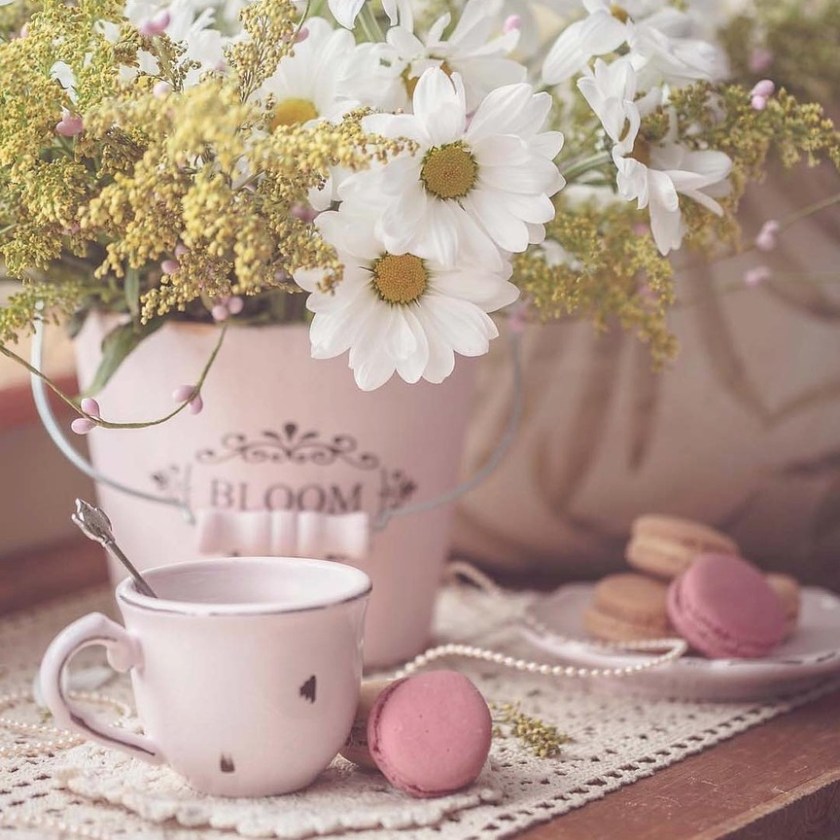
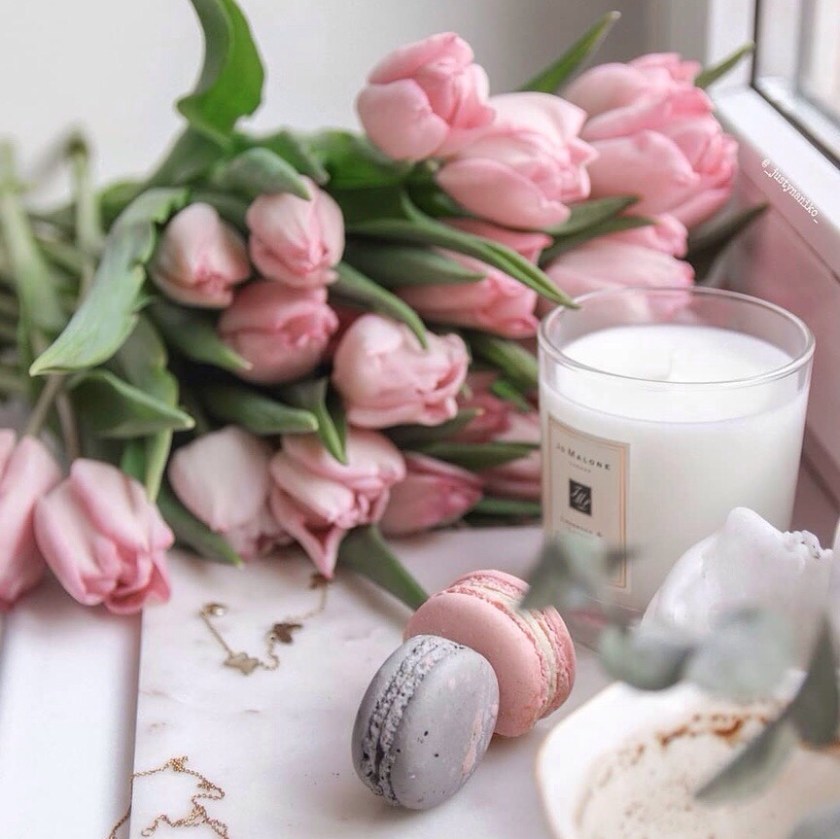
By the 1930s, macarons were served in two’s with the addition of jams, liqueurs, and spices. Since then macarons have evolved from a humble almond cookie to a versatile treat, coming in a variety of colours and flavours; alluring both to the taste buds, the experimenters’ kitchen as well as the creative mind. Towards the 21st century, confectioners started offering macarons with a difference in flavor between filling and cookie, in both savoury (Basil mint or Thai curry) and sweet styles. Little wonder that there are two days devoted to macarons with Macaron Day (March 20th) and National Macaroon Day ( May 31st) being celebrated across the world. Explore this little treat to enter another world of desserts, more than sandwich cookies, little delights both flavour some and edible art.


Posted in Daily, Life, Personal Musings, Quotes, Work

Patience to Thy Own

“Patience is when you’re supposed to get mad, but you choose to understand.” Anonymous

At the grocers’ en-route from work, as the shopping was underway, the realization that the long list taped to the refrigerator door was still stuck on there, had raised the annoyance levels. Consequently the shopping was a very quick one and while paying for the bill and for the rest of the journey, the niggling sense that the shopping was incomplete and things were still undone was lingering on. The journey back was disturbing for one’s peace of mind. Later on, while defusing the day’s stress with tea, the fact that one is least patient with one’s own self struck the core thoughts.

“One minute of patience, ten years of peace.” ~ Greek proverb

One of the first subjects is patience towards oneself, although we often tend to lose sight of this fact. By tolerating oneself means that on seeing our own mistakes and shortcomings or failures, one shouldn’t be distraught to an unnecessary extent or be greatly upset or indignant. For all these are signs of pride, leading to one’s own downfall. Instead accept that even oneself is prone to make mistakes. Understanding this requires the patience towards self first. For once we learn to be patient with one’s self, then only will the art of patience with others’ and in our daily lives be the routine norm.

“Have patience, my friend, have patience; For Rome wasn’t built in a day! You wear yourself out for nothing In many and many a way! Why are you nervous and fretty When things do not move along fast; Why let yourself get excited Over things that will soon be past?” – Gertrude Tooley Buckingham, “Patience”

Being human implies that all of us will make mistakes. There are no perfect people in this world. One is prone to stumble and fall, on way or the other. Unless we learn to have patience to correct our steps and put one foot in front of the other, we will never move on or away from our own troubles. Accepting the ignorance of own mind, heart and thoughts; learning to be careful and cautious but having the patience to accept the fact that we have been wrong, will aid us in finding help from His Grace, to rise again and turn the day’s mood from sour to happy. Patience with own help us not only to learn from our mistakes, but also to grow ourselves. If one is not patience with oneself, who else will be patient with us.

“Have courage for the great sorrows of life and patience for the small ones; and when you have laboriously accomplished your daily task, go to sleep in peace. God is awake.” Victor Hugo

“Patience Is Not the Ability to Wait:
Patience is not the ability to wait. Patience is to be calm no matter what happens, constantly take action to turn it to positive growth opportunities, and have faith to believe that it will all work out in the end while you are waiting.” Roy T. Bennett, The Light in the Heart

Posted in Daily, Life, Personal Musings, poetry

Writing on the Asphalt

“Even your past pain can be a blessing to someone. Hope-lifters are willing to reach back and pass hope on.” Kathe Wunnenberg

One of the perks of waiting in the city traffic, is that there are an endless sightings to view. From observing the roadside shops, their wares or whether they are new or already around, and doing a little bit of “window shopping” to noticing the passersby that walk on the sidewalks and reading the graffiti and artwork on the walls; these are the few things that keep the Thoughts, mind and eyes occupied during the traffic wait in the city as compared to the highway.

Yet what catches the eye and leaves an impression is the graffiti on the walls. Form the local city news to artwork defining the city or the town, to words of famous sayings; these have words that linger on in the mind imparting and affecting the mood of the day subtly. While walking on the sidewalk especially when the parking spot is a considerable distance away from the final destination, the writing on the sidewalk as well on the walls of the various buildings on the street; trigger old memories, feelings of nostalgia either of the fortunate or unfortunate events that we hold on to in our minds, giving a sense of thankfulness for the unasked or asked blessings given to us at the low points in our lives.

All these words reflect the emotions of many and each word read with thought or subconsciously leaves an impact. While graffiti is usually frowned on, beautiful sayings leaving the sense of hope, kindness and love are needed to remind oneself of the distance we have journeyed, the struggles we had underwent and the unaccounted and saving graces that we have all been blessed with. Each one has indeed their own baggage, but by giving hope we not only lighten the burden of others’ but also learn how to carry and deal with our baggage better. For the light of one candle never loses out by sharing its’ flame with others, they all die depending on their length of time.

“Even one’s yesterdays could not continue to stir and move in a man’s mind unless there were a future for those yesterdays to make.” Mary Ellen Chase

“Everything will be fine! I recognized! ”-
The inscription on the pavement chalked.
I stood for a long time in affection
And I admit, I did not want to leave.

Who wrote and for whom – I do not know,
But these lines have warmed my soul,
Like forget-me-nots in mid-May,
Like white snowdrops of April.

A simple and short phrase,
At first glance – so wise,
But how much optimism gives at once,
And lights up joyful smiles!

Everything will be fine? Of course it will be!
And I want to believe it boldly!
It’s great to give hope to people,
Even if it’s just on chalk on asphalt …

Natalya Smirnova

“Hope is not easily defined, but impossible to embrace without faith. The more we search for meaning in what seems hopeless; we realize that our “hopelessness” is a state of mind, not a reality.” Carol Bright