
Posted in Family and Society, Life, poetry, Reflections, Work

For “Better” Tomorrow

“You cannot escape the responsibility of tomorrow by evading it today.” ~ Abraham Lincoln

Many of us keep planners and appointments, sometimes a s a part of our work requirements and other times to get our work done. Not to get the context wrong, keeping planners is important for without a plan, one would be steered wrong and get lost in the chaos. Yet as life will teach us, there are certain that we can’t keep postponing or rescheduling waiting for the “better tomorrow”.

As we go about our day, keeping a continuous watch on our humaneness is a must irrespective of whether we are in a lack of time or stressed and so on. The more we make excuses, the higher the chances that things will be put off again for the “next tomorrow”. The joy of the gift of “present” or “today” is realized only when we look back at the “yesterday” from the “tomorrows” that we enter. Unless we learn to treat the relationships of today with respect, give time for oneself today and be kind now; there would be no guarantee that tomorrow we may be able to do so. Being aware of this is important as “Time” is known for its fickle nature.

“Finish each day and be done with it. You have done what you could. Learn from it… tomorrow is a new day.” ~ Ralph Waldo Emerson

We think tomorrow we will be more diligent
And better, more useful, kind
Today we are rude, but tomorrow we are gentle,
After all, tomorrow we will be wiser.

Tomorrow we will see an old friend,
And tomorrow we will write to our relatives.
And tomorrow we will do someone a favor,
Not only our own, but someone else’s.

Tomorrow we will forgive each other without reproach,
And tomorrow we will understand each other.
And tomorrow we will apply the whole experience of spiritual lessons,
and will carry it out!

Tomorrow we will repent in the life of a barren
In the last death-delirium.
Dress naked, feed the hungry,
Share someone else’s need.

So in the plans for tomorrow, then hidden in the fog,
Year after year is carried away …
And what if tomorrow takes and deceives?
What if it doesn’t come at all?

Vera Kushnir

Posted in Daily, Food, Stories Around the World

Of Noodle, Origin, Evolution and Style

“Noodles are not only amusing but delicious.” ~ Julia Child

Derived from the German word “Nudel”, noodles has been one of the earliest staple food for many civilizations. Made from unleavened dough which is stretched, extruded or rolled flat and cut into a variety of shapes,as long thin strips or strings to waves, helices, tubes, strings or shells to mention a few.  Often pan fried or deep fried, they can be made from wheat, rice, buckwheat, acorn meal and even seaweed.

The oldest historical mention of noodles are in the Chinese records as per a book dated to the eastern Han dynasty (25 to 220 BC). Archaeological evidence unearthed an earthenware bowl that contained 4000-year-old noodles at the Lajia, China. These noodle were said to resemble “lamian”, which are a type of Chinese noodle that is made by repeatedly pulling and stretching the dough by hand. In fact records show that the earliest Chinese noodles, don’t appear as strands of dough but were shaped into little bits, formed from bread dough and thrown into a wok of boiling water. This type of noodles, known as “mian pian” is still eaten in modern day China.

The udon (wheat noodles) of Japan were adapted from the Chinese by Buddhist monks. Across Europe and Near East, records mention about fried sheets of dough called lagana ( first century BC). Greek and Latinized itrium refer to homogenous mixture of flour and water, boiled in the case of the latter. The Jerusalem Talmud (fifth century A.D.) mentions itrium. Arabs adapted the form to a string-like pasta, “itriyya” made of semolina and dried before cooking. Regional specializations of noodles and pasta began, with concrete information traced back to 13th and 14th century Italy. Since then on, pasta as well as noodles have been globalized.

Various varieties have been present globally, forming the staple diet of many local cuisines. While in China, chefs pull the thinnest of noodles, “la mian”, bathing them in a long-simmering beef soup with chili, coriander and crumbles of meat. Whereas, “Spätzle” egg noodles are the highlight in Germany and the Alps and Italy delicate thin sheets of spinach noodles are rolled out, baked with bolognese and bechemel sauce. The Indian cuisine has its’ own rice noodles, “idiyappam” and Thai cusine have their “Khanom chin”.

Bake it, chill or fry them, or toss them along with rice after boiling them, noodles can be simple and basic or artsy and innovative, the choice is ours. Little wonder why then march 11th has been celebrated as “Eat your Noodles” Day by foodimentarians globally.

“I wouldn’t exactly call it ‘cooking’ but I can make noodles. That means I can boil water, put the pasta in and wait until it’s done.” ~ Devon Werkheiser

Posted in Christian, Life, Personal Musings, Reflections, Stories Around the World

Proportioning the Ingredients

Life offers its’ own share of ups and downs. At certain phases we feel swamped by the “n” number of “downs” we may be going through. Yet little do we realize that what happens to us may not be in our hands to a certain extent, how we react to it is. And this makes all the difference in the world, of whether we would be able to bring the “downs” to “ups” or reverse the trend of “falls” to our benefit.

The boy complains to his grandmother about his bad life: about problems at school, with his parents, with health. And the grandmother at this time is preparing to eat. She asks her grandson if he is hungry, if she wants something to eat. “Of course,” the grandson replies.
Then the grandmother says:” Here, take the margarine. “
“Foo,” the grandson protests.
– Maybe two raw eggs? – offers grandmother.
– Well, granny!
“What about flour and soda?” – trying to grandmother.
“Granny,” her grandson reasoned, “All this is inedible.”
To which the grandmother responds, ” That’s right, individually, these products are not very tasty, but if they are properly combined, they will make an amazingly tasty cake!”

Likewise for all the sufferings, trials and tribulations; something will come out of it as long as we believe, trust, hope and have faith that things will turn out to be fine eventually. For by His recipe, in the end, something extraordinary will come out.

Posted in Daily, Food

Basics, Creativity and Flour

“Your bread assumes the shape of the pan you use to bake your flour. Therefore stand still and know that you can’t use a rounded pan and ever get squared bread. Change the pan and change the shape of the bread!” Israelmore Ayivor

One of the items landing a place on the “weekly shopping list” is flour and the like. Whether the principal cereal we take be cassava or wheat, rice, corn or chickpea; flour is the necessity of any home cooking or kitchen experimentation.

While the earliest archaeological evidence for wheat seeds crushed between simple millstones to make flour dates to 6000 BC; other types of flour have been in use in various countries. With the Industrial Revolution, mills as well preservation techniques of flour were drastically modified and improved. As flour began to be enriched and trade and transport options increased; flour trading became prosperous. Throw in the green revolution and flour of all types began to be available in any places.

“I love using rice as a flour; I’ll grind roasted rice and dip fish in that. It gives a beautiful, crunchy texture.” Marcus Samuelsson

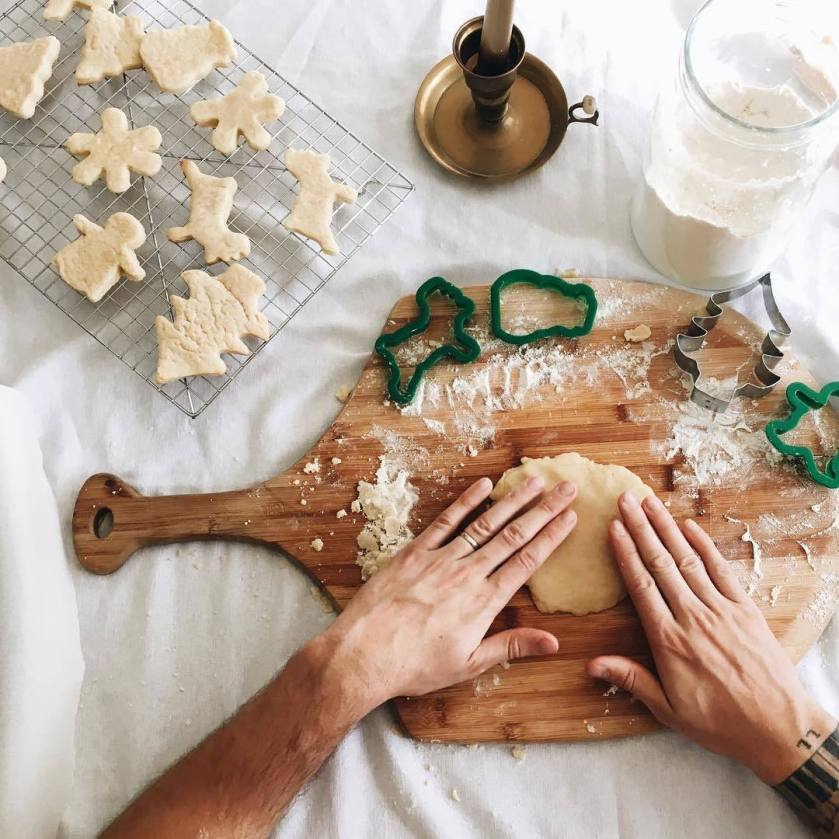
Being in the National Flour month (as per most foodimentarians), for those of us with gluten problems can resort to rice flour, chickpea flour as well as banana flour. There are many replacements for wheat in the recipes. More fascinating aspects is that non cereal flours like soybean, arrowroot, quinoa are other options to look into. And flour doesn’t restrict itself to being in the meal or as desserts but can also be a part of the gravy as well. With all varieties being available in most supermarkets and groceries; trying new recipes ( all time favourite of rice flour vadais or besan laddoos) can be fun for family, friends as well as a break from the busy world of work, entertainment and schedules.

Gravy is the simplest, tastiest, most memory-laden dish I know how to make: a little flour, salt and pepper, crispy bits of whatever meat anchored the meal, a couple of cups of water or milk and slow stirring to break up lumps.” Dorothy Allison

Posted in Daily, Family and Society, Life, Personal Musings, Quotes, Stories Around the World

Echoes In Us

“A boy and a girl were playing together. The boy had a collection of beautiful marbles. The girl had some candies with her. The boy offered to give the girl all his marbles in exchange for all her candies. The girl agreed. The boy gave all the marbles to the girl, but secretly kept the biggest and the most beautiful marble for himself. The girl gave him all her candies as she had promised. That night, the girl slept peacefully. But the boy couldn’t sleep as he kept wondering if the girl had hidden some more tasty candies from him the way he had hidden his best marble.”

Although this is a childhood tale; at some time in our lives, we would have behaved a little like the boy or the girl. For those of us who remember those moments, the niggling sense of unease fills us all, disturbing our inner peace and quiet. On occasions like these when one looks back, what comes forefront to mind is that, “Was the holding back worth it or would the peace brought by honesty made our day more beautiful instead ?”

“Honesty is the first chapter in the book of wisdom.” Thomas Jefferson

As we grow older and mature with age, we realize that there are many things in life that are more worth when shared than kept hidden. There would be occasions that would call for an honest response on one hand, but would cause unrest and distress on the other hand. Dealing with an honest attitude is like stepping into murky waters sometimes. Brute honesty while well appreciated can cause more hurt when delivered in a thoughtless and tactless manner. Being honest isn’t confined to being brute. Instead one can be honest with a heavy dose of kindness laced with gentleness. The endpoint is the clarity of the conscience. There is nothing more disturbing that having a niggling thought intruding the mind, like a pesky buzz near the ear. As we strive to make sure that the conscience is always at ease, life becomes simple, better and sweet.

“A clear conscience is more valuable than wealth.” Tagalog (Filipino) saying

Posted in Daily, Family and Society, Reflections, Stories Around the World, Work

Fruitful but Maligned

Somethings Never Change.

Returning from the workplace last evening, felt like a scene back from the high school days; with the immense relief felt when escaping the hurtful environment of words, snide comments and remarks, done on the pretext “good-natured” ribbing.

“Some people won’t be happy until they’ve pushed you to the ground. What you have to do is have the courage to stand your ground and not give them the time of day. Hold on to your power and never give it away.” Donna Schoenrock

Fast forwarding from school days to college and university and then on to the work area, these things still keep happening. Ironically while today often grievous insults and behaviours come to front; in a very large scale, bullying is still been done in a very silent manner. As children, initially when related to parents and teachers; most of the time one is told to take things in stride or to deal with it in a quiet manner. Once when things get out of hand, authorities are involved. Though by then, most damage is done. This same cycle, involving the bully, bully-victim and victim continues on through the lives of the involved.

Breaking this trend is never easy. The first start is through education both at home and school grounds, followed by neighbourhood and community. As children, the streak of cruelty and bullying varies depending on temperament, environment and influence; though school is the place where they exercise it very often. Curbing these tends and making them understand the harm caused is important.

“Words have great power that could make or break others…so please be care with them.” Timothy Pina

Recently one teacher decided to share her experience in a similar situation. Her method was very successful, so she decided to talk about it in one of the social networks; which has been posted below.

“Once, before starting classes, I went to the store and bought two apples. They were almost the same: the same color, about the same size … At the very beginning of the classroom hour I asked the children: “What is the difference between these apples?”. They were silent, because there was not really much difference between the fruits. Then I took one of the apples and, turning to him, said: “I don’t like you! You are a nasty apple! ” After that, I threw the fruit on the floor. The disciples looked at me as if they were crazy. Then I handed the apple to one of them and said: “Find something in it that you don’t like and throw it on the ground too”. The disciple obediently fulfilled the request. After that I asked to transfer the apple further. I must say that children easily found some flaws in the apple: “I don’t like your tail! You have a nasty skin! Yes, there are only worms in you! ”They said, and each time they threw an apple on the ground.
When the fruit came back to me, I again asked if the children saw any difference between this apple and the second one, which all this time was lying on my table. They were again confused, because, despite the fact that we regularly threw an apple on the floor, it did not receive any serious external damage and looked almost the same as the second one. Then I cut both apples. The one that lay on the table was snow-white inside, everyone liked it very much. The children agreed that they would have eaten it with pleasure. But the second was inside brown, covered with bruises, which we set for him. Nobody wanted to eat it. Then I said: “Guys, but this is because we made him that way! This is our fault! ”
In the class there was a deathly silence. A minute later, I continued: “The same happens with people when we insult or call them names. Outwardly, this practically does not affect them, but we inflict a huge amount of internal wounds!” Before my children, nothing ever came so quickly. Everyone began to share their life experiences, how unpleasant they were when they were called names. We all cried one by one, and then laughed together,” the teacher told her story.

“With ignorance comes fear- from fear comes bigotry. Education is the key to acceptance.” Kathleen Patel

Posted in Life, Personal Musings, Quotes, Stories Around the World, Work

Finding the Peace

“As we all know, there is inner beauty and outer beauty. If we examine inner beauty, to me there is nothing more beautiful than inner peace, in a man or a woman.” Alice Greczyn

Nature has always withstood the test of time, surviving amidst the chaos and regaining the inner calm from the storms. Likewise, we humans are always in a constant silent battle between the external influences and the inner being in order to preserve one’s harmony, peace and quiet. As the outer forces try to knock us off our track; staying true to oneself echoes to the world that each one rules oneself. Even in the midst of the chaos, true inner peace still rules us as long as we remember to acknowledge, nourish and cherish its’ existence.

The parable of peace

Once a rich man wanted to hang a picture in his room, at one glance at which he would feel at ease in his soul. And for the most “quiet” picture, he promised to pay one million. Learning of this, artists from different parts of the country began to send him their work. After reviewing thousands of paintings, the rich man chose only two, which seemed to him the most successful.
The first was bright, rainbow and peaceful. On it, the artist depicted an absolutely idyllic landscape: the crystal clear blue lake glistened brightly under the rays of the summer sun, the trees standing around stretched towards the water with their branches; majestic white swans cut through the watery surface, and on the horizon could be seen a village and graceful horses grazing in the meadow.
The second picture is radically different from the first. On it, the artist depicted high cliffs, at the foot of which the sea raged. The storm waves were so high that they reached almost the middle of the cliff. Low dark gray clouds obscured the sky, and at the top of the cliff were frightening silhouettes of trees, illuminated by flashes of lightning.
To call this picture calm even the language did not turn. But, if you look closely, you could see a small bush that grew out of a gap in the rock. On it was a small nest with a tiny bird inside. She hatched out her chicks with a proud and imperturbable air, without worrying at all about the insanity surrounding her.

What picture do you think the rich man chose? Of course, the second. Because it radiates peace of mind much stronger than the first. After all, real peace is manifested not when everything is quiet and serene around, but when, in spite of everything that happens around you, you continue to keep calm inside yourself!