
Posted in Daily, Food, Musique, Stories Around the World

A Penny, A Bun…

Hot cross buns!
Hot cross buns!
One a penny, two a penny,
Hot cross buns!

If you have no daughters,
give them to your sons.
One a penny, two a penny,
Hot cross buns!
– Roud Folk Song Index Number (13029)

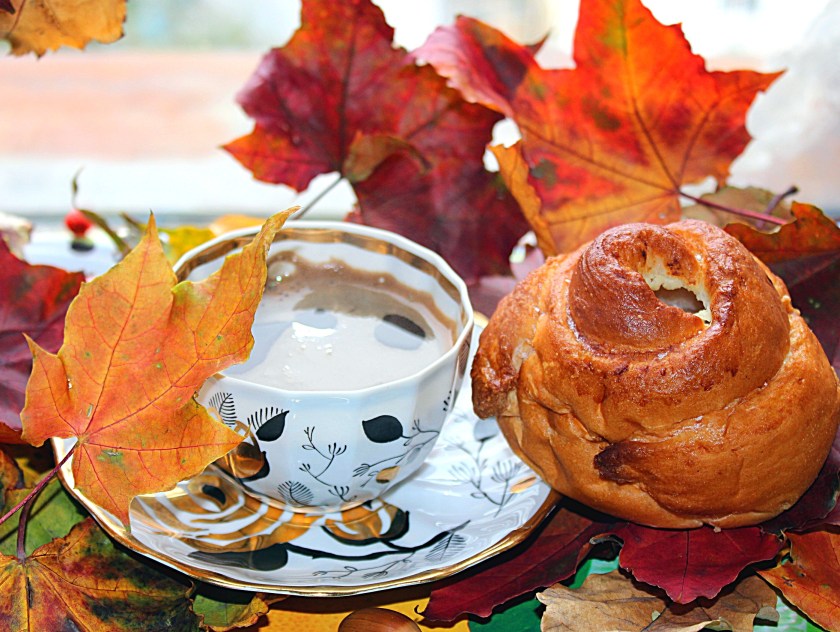
Almost every parent, guardian or caregiver has heard of the predefined set of nursery rhymes (ranging from Twinkle Twinkle Little Star to Ba Ba Black Sheep), especially when trying to make the young mind learn a bit of the English language, rhymes and songs. The above song “Hot Cross Bun” is no stranger to the set of these rhymes. However it was the smell of freshly baked buns (butter buns, fruit buns mainly) from the bakery near my workplace that would account for the sudden thoughts of “Hot Cross Bun” ( originally an English street cry) being dredged up from the grey cells. Like those memories that linger, thoughts of a pot of tea with fresh buns do enter the list of sudden urges for the taste buds occasionally.

This spiced sweet bun usually made with fruit and traditionally marked with a cross (as sugar toppings or partially sliced through) was associated with the end of Lent and is usually eaten on Good Friday. At times, spices are also added. These days hot cross buns are available all year round at most places, even in the supermarket chains with varieties like toffee, orange-cranberry, salted caramel and chocolate, apple-cinnamon, coffee flavoured, white chocolate and raspberry, banana and caramel, sticky date and the list goes on to being more creative and flavoured in certain bakeries and delis.

The exact origin of “hot cross buns” was historically believed to be associated with the rise of Christianity. During the Lent period, plain buns were made without any dairy products and eaten hot or toasted. Although archaeological evidence suggest that the Greeks (6th century) may have marked cakes with a cross. While one theory states that the Hot Cross Bun originated when where Brother Thomas Rodcliffe, a 14th Century monk at St Albans Abbey (1361), developed a recipe (similar to hot cross bun) called an ‘Alban Bun’ and distributed them to the local poor on Good Friday.  Though the London street cry,”Good Friday comes this month, the old woman runs. With one or two a penny hot cross buns”, which had appeared in Poor Robin’s Almanac (1733) was the first ever definite record of hot cross buns. On trying to trace if these buns were made earlier than 18th century London, records of recipes come to a blank.

More of interest are the numerous traditions and beliefs surrounding these “hot cross” buns. While one says that buns baked and served on Good Friday will not spoil or grow mouldy during the subsequent year, others encourage keeping these buns purely for medicinal purposes or are carried along for long sea voyages to protect against shipwreck. Few kitchens may have a “hanging hot cross bun” which gets replaced every year, done so as to protect against fires and ensure that all breads turn out to be perfect and exquisite.

Be it the Lent season or not, hot cross buns are one of the best spiced buns are to have, especially hot or toasted ( or cold as per preference). The more the variety, the better. Moreover, one doesn’t need to wait for the right time to indulge that heavenly taste and flavour. With creative flavourings on the rise, these buns are definitely worth a try.

Posted in Daily, Food

Back to “Mush Meal”

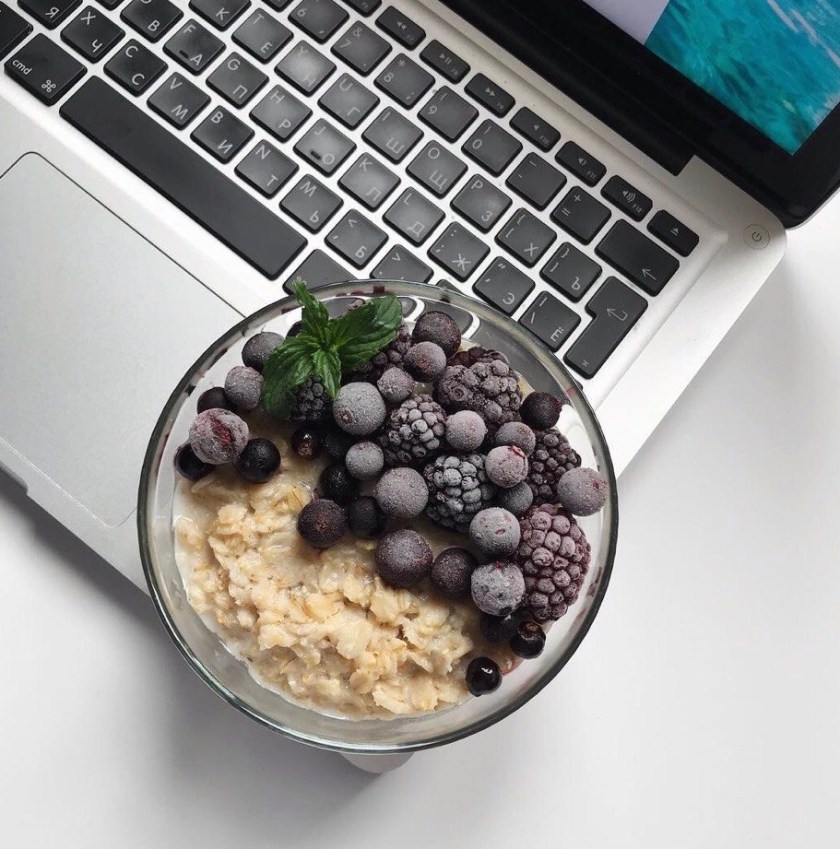
Spooning the porridge into my nephew’s mouth; while doing a short stint of baby-sitting at the family home, was indeed a remarkable experience. The mush meal of ragi with jaggery had lead to early memories of feeding my toddler and creative ways that were tried to mash the cereals, convert them into an exciting enticing gooey mush and trying to prevent the “spit battle” with these young people. While most of the gooey mesh landed in the little mouth (more than on the bib); surprisingly the porridge pot was emptied by the adults ranging from twelve years to fifty. Though it was not just gooey creamy mush but laced with a couple of raisin, honey, dried cranberries and dates as a post luncheon quick dessert.

And for anyone who thinks that these mush meals are just for these infants, think twice before refusing the wholesome meal of grits (ground corn meal), semolina and milk porridge or the good old oats or wheat porridge laced with plenty of fresh berries, treacle on top and caramelized sugar to go, all complete with an omelette and bread to satisfy the morning hunger pangs, especially when meals have to quick, simple, wholesome and varied.

From the very early days of primitive cooking, the making of these mush meals was what sustained them especially during the lean periods when meat was scare or inedible. Besides requiring very basic preparatory time, these meals could be prepared anywhere and everywhere as long as one had a supply of grains, water, a pan and the fire. Add-ons of sugar, wild berries, honey, vegetables and meat were something that had evolved over the years.

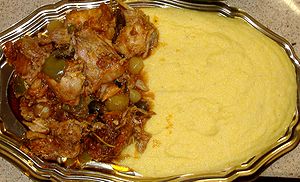
As for the good old porridge, there are plenty of varieties to be tried. From the South American Avena (drink prepared with stewed oatmeal, milk, water, cinnamon, clove and sugar), Malaysian and Indonesian preparation of Bubur ayam (rice congee with shredded chicken meat), Italian Polenta (cornmeal boiled into a porridge, eaten directly or baked, fried, grilled) and the Swedish or Finnish “Vispipuuro” ( sweet, wheat semolina (manna) dessert porridge made with berries) are just a few of the numerous varieties and styles of these mush meals or porridge.

If one still feels that these mush meals as breakfast are off the menu; modify them a bit and serve them as sweet puddings. Besides being quick and basic, these desserts have an easy way of keeping everyone, (small or big), happy and second helpings are often a battle, especially the more sweeter they get. For a change of breakfast scene, getting a start with porridge may bring back memories of the early childhood years, quick meals and less dish up effort and time.

Posted in Daily, Food

Of Panini, Origin and Evolution

Meaning small bread or bread rolls as derived from the Italian panini [paˈniːni] or panino; these sandwiches are made with Italian bread (such as ciabatta and michetta), usually served by grilling or toasting. While the modern panini may have baguette as the bread; the deli ingredients of the horizontally cut bread can be filled with one’s own choice. From salami, cheese, ham, vegetables sliced or pickled; the choices are aplenty.

“[Panini] are said to have originated in Lombardy, Italy, in response to the demand among Milanese office workers for a quick lunch without sacrifice in flavor and quality. In both Italy and the United States, panini are eaten for lunch and as snacks and appetizers. In Italy, sandwich shops traditionally wrap the bottom of the panino in a crisp white paper napkin, providing a practical solution to drips while enhancing aesthetics. Quality Italian bread is an absolute must for a killer panini, and most sandwich chefs will opt for a relatively thin artisan bread like grooved focaccia or ciabatta, slicing it in half horizontally. Panini are always grilled, so most restaurants and cafes have invested in professional grooved sandwich presses that flatten and heat the sandwich while creating a crunch, buttery outer crust.” -American Sandwich: Great Eats from all 50 States, Becky Mercuri [Gibbs Smith:Salt Lake City UT] 2004 (p. 81)

The earliest precursor of panini was believed to be in the 16th century Italian cookbook; food historians have traced these sandwiches to the trendy Milanese bars, called paninoteche (1960s). As their popularity had crossed the Atlantic in the mid-1970s, the first American reference to panini dates to 1956. With each city having their own distinctive version of panini, variation were developed in plenty. During the 1980s, “paninaro” had evolved which was the youngsters’ culture typical of teenagers to enjoy a meet and eat place like the sandwich bars, such as Milan’s Al Panino. These had later evolved to the initial style of fast food restaurants opened in Italy.

Over time, panini had evolved to more flavours and texture with the bread changing type along with the mix. As their popularity spread across the seas to the Asian continent and the Orient, the portability, easy preparatory, individual taste and choice have contributed to their fair share in the menus across the globe. Little wonder, why then August had been dedicated as the month of the panini  by experimental foodimentarians, for every kitchen of theirs would have made or had the “panini” at some point of time.

Posted in Daily, Food

Of “Portable Pies”

Although the modern lifestyle had attracted the tradition of “having food on the go” ranging from well wrapped portable sandwiches, cupcakes, tarts, salads to mention a few; portable pies were in existence since ancient times. Popularly known as “turnovers”, these portable pies were made by placing a filling on a piece of dough, folding the dough over, sealing, and baking it. Made sweet or savory, “turnovers” are often made as a sort of portable meal or dessert, similar to a sandwich; had for breakfast, snacks, desserts or quick picnics. From being baked to fried, fillings include fruits (apples, blueberries and cherries), meats ( chicken, beef and pork), vegetables (sweet potatoes, carrots, peas), eggs or even cheese. Specialty versions are made with fillings of wild rabbit and leek.

Traditionally turnovers are usually sweet, with popular pastry being the classical puff pastry. Known as sweet tarts initially, the term turnovers had come to reference around the eighteenth century. Made then as a sort of small, typically individual pie or pasty, in which the filling is placed on one side of a piece of rolled-out pastry and the other side is then turned over’ to cover it, forming a semicircular shape (Sporting Magazine, 1798).

Though these “turnovers” may have been there across different cuisine, albeit under other popular names. From the empanada of South and Central America (mixture of chopped meats, hard-boiled eggs, minced vegetables, olives, raisins, highly seasoned), the Russian pirozhki (meat, fish, cabbage, mushrooms or cheese), the famous Cornish pasties (large turnovers filled with beef, onions, turnips), Chinese dimsum (meat, fish, vegetables), Indian Samosas (chickpeas, potatoes, spices), Polish Pierogies, Middle Eastern Sanbousic (cheese and dill) and the Greek Spanokopitas (fillings of spinach, cottage and feta cheese with olives) are few among the many “global turnover” choices to experiment with as “quick meals or snacks” on the go.

With arising global popularity, little wonder then Turnovers have their own days. To mark celebrated food days of the National Apple Turnover Day (July 5th) as well as the World Chocolate Day (July 7th), sweet apple turnovers drizzled with chocolate may be a good way to mark them. For kitchen chefs, experimenting with turnovers may be a change from the regular desserts or savoury versions can be stuffed with meat leftovers, vegetables or just sweet fillings, depending on the mood of the hour. From sweet, savoury to spicy or cheesy; “turnover pies” have a variety of taste to offer, besides being a “quick solution” for sudden brunches, high teas or simply cravings.

Posted in Daily, Food

“Raisin” It Up

“Inject a few raisins of conversation into the tasteless dough of existence.” O. Henry

Being simply dried sweet grapes, raisins were the second in choice as a sweetener till the medieval times with honey being the top choice. The majority of the world’s supply of raisins comes from California, dried from Thompson seedless (95 percent), muscadine, or Black Corinth (Zante) grapes. Other main producers of Mosctael grapes are the USA, Turkey, Greece and Australia.

Originating from the Latin Racemus, from the ancient times raisins were in use. As evidence from history shows, raisins were an accidental discovery when they were found dried on the vines as early as 2000BC. The ancient Phoenicians and Armenians had taken the first steps in perfecting viticulture, the process of grape growing and selection.

While the Phoenicians started colonial vineyards in the areas of Malaga and Valencia of Spain and in Corinth (Greece)around 120-900BC; the Armenians founded their vineyards in Persia. These high yield growing areas had the perfect climate for making raisins and were also close to Greece and Rome, the first markets for raisins. Muscat raisins (over-sized with seeds and of fruity full flavor) were the primary crop in Malaga and Valencia. Corinth had grown the “Currants” which were tiny seedless, tangy raisins, where historians believe they got their name.

As the Phoenicians and Armenians began to trade raisins with the Greeks and the Romans who consumed them in large quantities; their popularity grew as well as their value. From being given as prizes to barter to trade or cure for ailments; raisins were always in demand. Raisins were a part of Hannibal’s troops rations when he had crossed the Alps.

“Raisins are a thing that lasts, they come in small boxes, and you always feel like eating raisins, even at six in the morning. A raisin is always an appropriate snack.” Fran Lebowitz

Although in popular demand, it wasn’t until the 11th century that raisins were seen in Europe. One of the reasons were the difficulty in maintaining the quality of the raisins for the long travel. By the 11th century, with improved packing and shipping techniques as well knights returning home from the crusades bringing back raisins with them, a huge market and demand was created.

By mid-14th century, the English cuisine included raisins and currants as it’s integral parts. As viticulture spread to France and Germany, grapes and raisins had entered the European cuisine spreading over to their colonial conquests. As viticulture had been perfected in Spain, grapes were being used to make products such as dry table wine, sweet dessert wines and Muscat raisins. With the colonization of the Americas and Mexico of today, their knowledge of viticulture had followed them there. By the 18th century, the Franciscan fathers had settled as far north as present-day Sonoma, California. Viticulture and its strong influence on California agriculture, was one of the enduring legacies left behind by the colonial rule. With the seedless grape variety (thin-skinned, seedless, sweet and tasty) being grown by the English immigrant William Thompson, newer variants of the products were created. By the late 1800s, once the Armenians (descended from the first founders of vineyards in Persia) began settling in the San Joaquin Valley, viticulture had progressed in California with supplies for raisins to nearly half the world, making it the largest producer anywhere.

“The wrinklier the raisin, the sweeter the fruit.” Alan Tudyk

Like most dried fruits, raisins can add the flavour to most recipes, ranging from the breakfast menu to elaborate meals as well as desserts. While buying raisins, their freshness can be determined by the containers being squeezable less hard and less rattling when shaken. Being blanched or plumped up (soak in hot water), sliced or chopped, added midway or at the end; the mode of introducing them into the recipes alters the flavours of the cooking giving a different effect at each step. Their popularity is marked by April holding two raisin days as National Raisin & Spice Bar Day (April 5th) and National Raisin Day (April 30th) celebrated by foodimentarians. Either way, into recipes or had directly, raisins spruce up the meal, both for the palate and nutrition wise.

“My indulgences are Skittles and rum raisin ice cream.” Sanya Richards-Ross

Posted in Daily, Food

Benedict’s Way with the Eggs

“Sometimes life is a feast with eggs Benedict & hollandaise sauce, waffles & strawberries, sausage links & hashed brown potatoes. And sometimes life is scrambled eggs. In the end, your stomach gets full all the same. And years from now, you may not remember exactly what you ate.” Lisa Schroeder

Known as Eggs Benedict or Eggs Benny, this traditional American that consists of two halves of an English muffin topped with a poached egg, bacon or ham, and hollandaise sauce. The dish was first popularized in New York City and mostly served for breakfast or as brunch.

Interestingly, there are many conflicting accounts as to the origin of Eggs Benedict.The earliest record is based on the menu of Delmonico’s of lower Manhattan whcih states that “Eggs Benedict was first created in our ovens in 1860.” One of its former chefs, Charles Ranhofer had published the recipe for Eggs à la Benedick in 1894.

As per other sources, based on the interview of Lemurel Benedict, a retired Wall Street stock broker recorded in the “Talk of the Town” column of The New Yorker in 1942. As per his words, in 1894 he had wandered into the Waldorf Hotel hoping to find a cure for his morning hangover and had ordered “buttered toast, poached eggs, crisp bacon, and a hooker of hollandaise”. The dish had impressed Oscar Tschirky, the maître d’hôtel that it had earned its’ place on the breakfast and luncheon menus with modifications like ham for the bacon and a toasted English muffin for the toast.

Another claim to this creation was made by Edward P. Montgomery on behalf of Commodore E. C. Benedict. Montgomery wrote a letter to then The New York Times food columnist (1967) which included a recipe he had received through his uncle, a friend of Commodore Benedict. This recipe had varied greatly from the Ranhofer version, especially in the hollandaise sauce, recording the addition of a “hot, hard-cooked egg and ham mixture”.

Today many variations are available globally, often varied as per the local cuisine and favourite add on preparation. Like for instance, substitute the streaky bacon for the ham and add a slice of tomato to get Eggs Blackstone. While Eggs Blanchard states to add Béchamel sauce for Hollandaise and Eggs Florentine includes spinach instead of the ham or adds it underneath (where previously there were added to poached or shirred eggs). Eggs Omar (also known as a steak benedict) substitutes a small steak in place of the ham, and sometimes replaces the hollandaise with béarnaise.

In fact each ingredient of the original Eggs Benedict can be substituted to make a new or exotic variant adaptable to the local culture, food trends and seasonal ingredients. One can substitute the ham for salmon (smoked or plain) to make Eggs Atlantic, Eggs Hemingway or Eggs Norvégienne among the the many locale names for it. This is one of the most common variant found in places where bacon or pork products can’t be served. Additionally the ham can be substituted by corned beef, Irish bacon, pork “debris” (Eggs Cochon) or some even prefer hash browns to the ham.

To make the original Eggs Benedict more creative is to add sliced avocados or the the bread can be substituted by Hollard rusks, a large buttermilk biscuit (Eggs Cochon) or even toast. Either Eggs Benedict can give numerous variations with one’s own favourite ingredients and make for a healthy breakfast in the morning melee or even had as an evening snack. Little wonder then, that a whole day was devoted as National Eggs Benedict Day ( April 16th). Besides having fun with plenty options to modify it, they make a healthy and wholesome food, with palatable mix ups as well inspiring creative cooking and art in the kitchen.

“She dipped a clean pinkie into the hollandaise in the bowl. It coated her finger like a sheath of yellow velvet. Despite her nerves, she plated swiftly and surely. She lifted the poached eggs clear from the shimmering, hot water with a safecracker’s touch, laying each one with infinite care in place on top of its foundation of English muffin and Canadian bacon. Silky drizzle of hollandaise, sprinkle of fresh parsley, grind of black pepper, framed with creamed spinach, dusted with paprika. Done.” Brian O’Reilly, author of Angelina’s Bachelors

Posted in Daily, Food

“Cobble” it Together

“Cherry cobbler is shortcake with a soul.” Edna Ferber

With summer round the corner and plenty of fruits to go around, desserts are always the reason why the meal gets completed in the twinkling of an eye, especially for the children. Even with the lack of time or frozen products over, dessert can be done soon, especially when bits of fruit over biscuit dough, batter or dumpling are baked to give the warm “cobbler” feel of the spring and summer skies.

Believed to have originated from the archaic word “cobeler” (recorded from 1859) meaning wooden bowl, cobblers were essentially a byproduct of the early years of European settlement in the Americas, especially by the English and the Dutch. They had initially emerged as a makeshift version of the popular pie recipes as a trail-modified desert.

“My earliest memory is making peach cobbler with my grandmother. A wonderful memory. I grew up in a restaurant family – B.B.Q. restaurant.” Rick Bayless

Unable to make the traditional puddings or pies, due to lack of ingredients or equipment as the settlers moves westward, modifications were made to the original methods. Consequently various ingredients were “cobbled together” with the available fruit, more common as peaches, plum or cherries, which were dried, preserved or canned, leavened dough (using baking powder) and an open fire. The initial cobbler were being made with a covered stewed filling with a layer of uncooked plain biscuits or dumplings, fitted together.

“Chocolate’s okay, but I prefer a really intense fruit taste. You know when a peach is absolutely perfect… it’s sublime. I’d like to capture that and then use it in a dessert.” Kathy Mattea

Cobblers were meant to be more palatable and sweet than pretty. Fruit, however it came, was dumped into a Dutch oven, topped with globs of biscuit dough and baked over an open fire until golden brown. Soon cobblers were quickly integrated into the settler diet, with the sweet dish being eaten for breakfast, as first course or as a main dish. Towards the late 19th century, the cobbler was officially labeled as a dessert.

“My earliest memory is making peach cobbler with my grandmother. A wonderful memory. I grew up in a restaurant family – B.B.Q. restaurant.” Rick Bayless

With modern technology of preservation, trade and transport; cobblers today have been vastly modified to include many fruit varieties including raspberries, blackberries as well being topped with cinnamon or vanilla essence, adding colours and flavours to the original version. Variants like grunts, pandowdy and slumps are Canadian Maritimes and New England varieties of cobbler are labelled when they are typically cooked on the stove-top or in an iron skillet or pan, with the dough on top in the shape of dumplings. The name originates from the grunting sound they make while cooking. Other popular variants include the apple pan dowdy (an apple cobbler whose crust has been broken and perhaps stirred back into the filling), the Betty or Brown Betty ( made with breadcrumbs or bread pieces or graham cracker crumbs and fruit, usually diced apples, in alternating layers, baked covered with a consistency of bread pudding) and the buckle (made with yellow batter like cake batter with the filling mixed in with the batter) among many others.

On the other hand, the scone-topped cobbler predominates in the UK where they are made both as sweet or savoury. While the common sweet fillings include apple, blackberry or peach; the savoury ones consists of beef, lamb or mutton as a casserole filling, sometimes with a simple ring of cobbles around the edge, rather than a complete layer, to aid cooking of the meat. The savoury versions may be topped with cheese or herb scones.

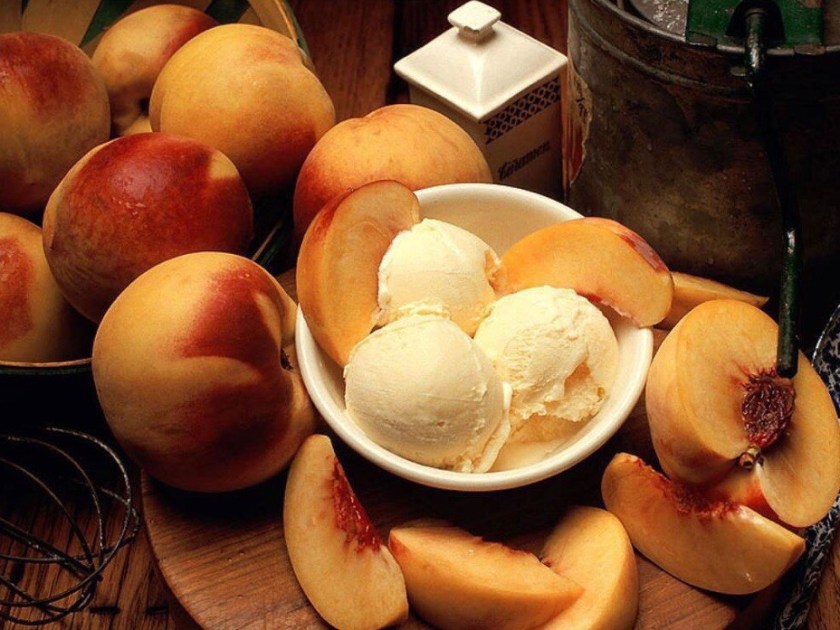
Over the years, cobblers have remained popular especially as they were quick to make for the luncheons and brunches. Little wonder then that the Georgia Peach Council declared April 13th National Peach Cobbler Day. Taking a bite of the rosy fruit cradled in warm pillows of cinnamon-scented dough and blanketed with the melted vanilla ice cream brings rich splendor to the senses, giving warmth and happiness all the way. For all the foodists at heart, have a little bite of cobbler to revel in the taste of sunny skies and warm sunshine.

“There are a couple of different types of food I eat a lot. I was raised in the South, in Tennessee, so I’m going to go with comfort food, soul food. I would probably start with collard greens and candied baby carrots and then have some biscuits and white gravy – and for dessert, probably blackberry cobbler.” Megan Fox