Posted in Family and Society, Life, Reflections, Stories Around the World

Aim of Schooling

“Intelligence plus character-that is the goal of true education.” Martin Luther King Jr.

As an infant grows up into a toddler entering childhood, one of the first things parents do, is to rush them into pre-school or centers for education to foster their growth of knowledge, skills and learning. Then the next stage is to ensure their admission into the best schools of the locality with high marks performance of marks and grades. Schooling is an extensive way of learning whereby understanding and ability of students are passed on from one initiation to the next by guidance and examinations. The primary purpose of schooling is not just to impart knowledge, but to enable the children of today to be productive for the distant tomorrow of society and to lead the future.

Education comes from within; you get it by struggle and effort and thought. Napoleon Hill

School doesn’t pave the way only to be literate, get jobs, vote or to be a professional. Instead it broadens the horizons, helps to find the inner talents and gifts, putting them to good use. School initiates children for the basics of life, finding self confidence and ability to stand on their own feet, rooting for the right ideals and strong principles. Unfortunately the current scenario of schools and education is to stereotype each child and mould them into a particular profession, whether it is by their choice is irrelevant. The fault lies not only with them alone, but also with parents and society who classify children based on their professional qualifications and job capacities.

“Do not train a child to learn by force or harshness; but direct them to it by what amuses their minds, so that you may be better able to discover with accuracy the peculiar bent of the genius of each.”  Plato

The catch to all the school based learning is whether it prepares our children for the realities of life. As they mature into young adults, children and adolescents get trapped in the social structure of thoughts, patterns and needs of the society foregoing their own likes, talents and gifts. Just like the eagles which soars the skies and cheetah the land, substitute their places or confine them in boxes, they lose their ability to fight, survive and appreciate life. This scenario could be metaphorically extended to children who are being moulded into the schools for grades and marks alone. Instead we, society as a whole, lose out on special talents, skills and art. There is more to life than jobs, grades, marks and examinations. Though they are indeed necessary, they are not what life is all about. For the most successful person that we know with the best grades making good money can be the unhappiest, dissatisfied or mentally disturbed on the inside. Let each child look beyond the exams and do what they love and excel in. The rest will follow.

This letter to the parents of students was written by the director of the Singapore school. But what do you want to be read by all parents in all schools in the world.
“Dear Parents. Your children will begin examinations soon. I know that you are all very worried that they should pass them well. But please remember: among the students in this exam there will be an artist who does not need to understand mathematics thoroughly. There will be an entrepreneur for whom history or English literature is not so important. A musician who does not need chemistry. An athlete for whom physical education is more important than physics. Great if your child gets good grades. But please do not deprive them of their self-confidence and dignity, if this does not happen. Tell them that this is normal, that this is just an exam. They are created for much more significant things in life. Tell them that whatever their assessment, you love them and you will not judge them. Please do it – and just watch how they will then conquer the world. One exam or a bad mark will not take away their dreams and talent. And please, do not consider doctors and engineers the only happy people on the planet. With best regards, the director of the school “

Posted in Daily, Food, Quotes

Fritters for Weekend

You don’t want to make a steady diet of just lettuce. You don’t want to make a steady diet of fried chicken. Paula Deen

On a walk down the streets in India, the sight of stalls or shops selling fried pakoras or bhajji and the like are a common feature. Not seeing them would make the trip incomplete and less interesting. While it is National Fritter Day tomorrow, fritters have been the heart-line of Indian snacks or appetizers especially the savoury ones. The platter of fritter-like street foods is long with pakoras or bhajji, vadas and bondas to list a few.

Pakoras or bhajjis as they popularly called across most states of India are made usually from vegetables like onion, potatoes, chillies, cauliflowers; although banana, groundnuts, buckwheat, fish and bread pakoras are made. Making their global presence known, newer varieties of pakoras are being experimented with the local flavours like the Haggis pakora (a Scottish snack food of traditional Scottish haggis ingredients with the spices, batter and preparation method of Indian pakoras).

“So do not fritter away your days. Sooner than you fear, you will stand before a mirror in a care home, look at your body, and think, E.T., locked in a ruddy cupboard for a fortnight.” ― David Mitchell, Cloud Atlas

Contrary to the meaning of the noun, fritters are something irresistible deep-fried delicious once-in-a-while treats. Fritters are fried foods consisting of batter or bread filled with ingredients of a wide variety ranging from sweet to savoury tastes. The fillings can be single or mix of vegetables, like onion, potatoes, spinach or cereals like cornflour or milk-based (cheese), meat, seafood and even fruits like bananas or apples.

“Little critters fried like fritters come out crunchy and divine.”- Gregory Maguire

Call them by any name, but fritters have been popular across many countries. From gorengan of Indonesia, Malaysian cucur, Nigerian akara, tater tots and Hushpuppy to name a few, each country has their own version of fritters.

“I don’t want someone shoving his views down my throat, unless they’re covered in a crunchy candy shell”- Stephen Colbert.
To add on to the quote, “or a frittery crunchy taste” sometimes.


Posted in Daily, Reflections, Stories Around the World

Reality of the Gingerbread Man

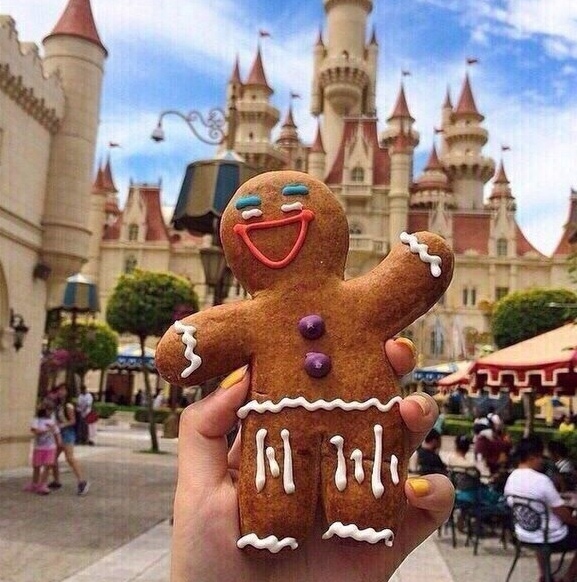
Ever since my toddler had got his own storybook about “The Gingerbread Man”, he has been fascinated by the large cookie that can run. Little wonder then that he chose to read this book more than thrice a day at different sittings.

The story centers around an old woman who baked a gingerbread man which leapt from her oven and runs away. The woman and her husband give chase but are unable to catch him. The Gingerbread Man then outruns several farm workers and farm animals while taunting them, only to fall prey to the fox. The tale ends with the latter catching and devouring the gingerbread man.

Although he is too young to understand the hidden concepts, sometimes I do wonder if this tale is an underhand way to get at adults for our possessive streak, trust issues as well as the habitual lying we either weave ourselves or get caught in.

Just as every person or animal runs after the gingerbread claiming it,the question arises if the person has a right to claim it. We often reinforce it to children that just because we want it, doesn’t mean that it is ours or that we can have it. Isn’t true for adults too where our whims and tendencies trigger the possessive streak many a time. Second is the trust issue. Like the spider and the fly, we often fall prey to trickery as we see want we want to see or hear what we want to interpret. Though for the innocent children it is more important to know who to trust an when to call for help; this lesson doesn’t change as we become adults. The world is an ocean, filled with delights and sharks. To experience the former, one has to steer clear of the latter. The third is about the lies. Black or grey or white, lies are lies and fibs are fibs. While sometimes we engage them with good intentions, the dangers of being caught makes one uneasy at any point of time. For a man without credibility and honesty is like an unreliable car or gadget.

Setting aside the story, there is something special about gingerbread, either shaped as a doll, cookies or even the houses. One chunk at a time, they not only add colour to the flavours but also add to fun times in the kitchen with delicious batter to sample.

Posted in Family and Society, Food

Culture of Fast Food

The rise of the urban development has been directly proportional to the growth of fast food culture.

In 1951 Merriam-Webster had recognized the term “Fast food” as “of, relating to or specializing in food that can be prepared and served quickly” or ” designed for ready availability, use or consumption and with little consideration given to quality or significance (adj.)(noun)”. Although contrary to popular belief, fast food has been there since the times of the Romans. The cities of the Roman empire had marketplaces like the Forum with food vendors who sold baked goods and cured meats to the urban population living in “the insulae” (similar to multi-story apartment blocks). Functioning more or less like a simple eating establishment, bread soaked in wine, cooked vegetables and stews later on were available. The trends continued through the ages and the civilizations as seen in China of the 12th century where fried dough, soups and stuffed buns were snack foods. Meanwhile the markets of their contemporaries in Persia (now Baghdad) sold processed legumes, purchased starches and even ready-to-eat meats. Moving ahead during the Middle Ages, large towns and major urban places like London and Paris had numerous vendors with stalls of ready to eat dishes such as pies, pasties, flans, waffles, wafers, pancakes and cooked meats. With the rapid industrial revolution, booming of towns, progresses in the food and science industry, the ready to eat meals underwent rapid changes, for better then but worse now. Along with the era of colonization, wars, immigration and emigration , the fast paced food industry had picked up in leaps and bounds.

Not everyone necessarily needs new things all the time and creative designs. It’s good to have luxury restaurants and fast-food restaurants. You need both. Rei Kawakubo

From prepackaged food sold at convenience stores, street vendors, filling stations to fast food outlets, the entire scenario revolves around quick service when “on the go” preferring finger food to “the cutlery food”. “Take-away” or “take-out” with “drive-through” options, all started off as the fast-paced life took over with people working two to three jobs, lack of provisions or money or time to cook the regular meals. Of late, the development of technology has allowed one to order food through the smart phone applications.

You can do good work simply staying up all night and eating nothing but junk food, but probably not in the long term. John Mulaney

Despite the popular assumption that fast food and junk food are the same, they are not. True although there is an overlap between the terms, they are not entirely substitute terms. Fast food refers to the fast assembly process for the preparation of the food, where food is ready in a matter of minutes. Junk food is labelled based on the little nutritional value of the food which is high calorie, high sodium with or without high saturated fat, sugar or salt content.

I follow my own advice: eat less, move more, eat lots of fruits, vegetables, and grains, and don’t eat too much junk food. It leaves plenty of flexibility for eating an occasional junk food. Marion Nestle

While the taste buds are tempted and cravings are fulfilled, on the downside the price to pay on the long run with risk of colorectal cancer, obesity, high cholesterol and depression to list a few. As good things always come in small packages, to downsize the portions, space out the intake and nutritionally substitute the fast food as well as retaining the taste are the few of the tricks to tackle the constant pull to it.

“The problem is when that fun stuff becomes the habit. And I think that’s what’s happened in our culture. Fast food has become the everyday meal.” Michelle Obama

As we mark any occasion or dining out with fast or junk food, keeping it in moderation makes us guilt-free to enjoy the pleasures once in a while. As been proven time and again, too much of anything spoils the fun.

Posted in Family and Society, Life, Quotes, Reflections

A Child of Today

To me there is no picture so beautiful as smiling, bright-eyed, happy children; no music so sweet as their clear and ringing laughter. P. T. Barnum

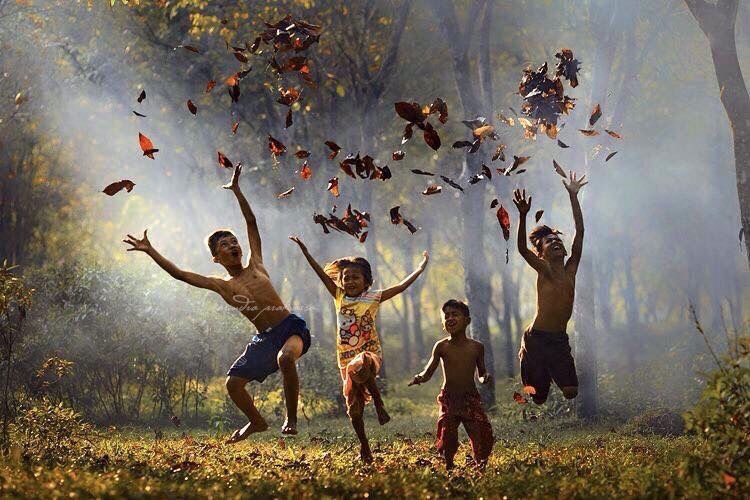
On the occasion of India celebrating every 14th of November as Children’s Day (celebrated on the day of birth of the first Prime Minister of Independent India and one of the great leaders who dearly loved children, Pt. Jawaharlal Nehru ); it would be meaningful if we reflect how our children are faring in the world of today. With the advent of technology, nuclear families, both parents working and the rise of the internet; one often wonders what has happened to the playgrounds, parks and neighbourhood lots where once we used to play in our childhood. Of course, this must be a moot point to ponder with the rise of “modernization, development and smart technology kids”. Though, it leaves room for thought on whether we have lost the genes of physical play (not just the hands or feet) and creative thinking with strategy as well as group interaction. Pretty difficult to decide on it, when all the modern gadgets claim the development of the very same genes.

Remember that children, marriages, and flower gardens reflect the kind of care they get. H. Jackson Brown, Jr.

These days, I often dread to read the entire newspaper in the mornings. With the rising rate of crime and delinquency against the children as well as by the children, it brings to shameful light of the neglect and selfishness that we as adults are engaged in. Besides not caring for the young, sometimes we ourselves indulge in acts causing danger to them. To quote the author Pam Leo,”Children are mirrors, they reflect back to us all we say and do.” Have you ever heard of a lioness killing its’ healthy young in their pride or healthy eaglets being killed by their own ? Are we better than the animals or worse ?

6 “If anyone causes one of these little ones—those who believe in me—to stumble, it would be better for them to have a large millstone hung around their neck and to be drowned in the depths of the sea. 10 “See that you do not despise one of these little ones. For I tell you that their angels in heaven always see the face of my Father in heaven. (Mathew 18:6 and 10, New International Version) One thing for sure, we have lost the sound of a child’s laugh as they are too caught up in the web of modernized theoretical learning, violence, fear and technology. If we become too late to change this, we are facing with the coming of the dark ages of carbon clones, monotonous, violence with production lines of robotic and mechanical output boxes instead of bright, creative or artistic minds with gentle hearts.

“There are only two lasting bequests we can hope to give our children. One is roots; the other, wings. Hodding Carter”

Practical learning starts in the family and community where children learn the basics of humaneness, love, respect, harmony and kindness. As they venture into the portals of education they learn the principles and mechanics of nature, science, art as well as history. While these aspects are important all the same, care should be taken that character is built with love, respect and mutual acceptance as well understanding of humanity. In the process of gaining an education, the ethos of life should not be lost or buried under purely selfish interests. Remember the era of the dinosaurs versus the mammals.

The greatest legacy one can pass on to one’s children and grandchildren is not money or other material things accumulated in one’s life, but rather a legacy of character and faith. Billy Graham

So while we watch the next generation growing up, whether we be foster or birth parents, guardians, educators, aunts, uncles, singles or couples; make the difference through families, neighbourhoods as well as communities. No matter how small the attention and care may be for us, for the child it is a big matter. For trees never become big, tall, provide shade or bear fruit unless we understand what they need and take due care of them. For the children learn from us, just by watching us, leave alone words and lectures. For, “Each day of our lives we make deposits in the memory banks of our children. Charles R. Swindoll” With that, lets hope we as adults change so that our children grow to leave a beautiful legacy for the distant years, though only time shall know.

Posted in Daily, Food, Quotes

Art on modified Focaccia

The solution to some weekday nights when the day is too busy followed by a high tea on crashing after the working hours, is pizza especially when the ready-made base is available and all you need are the toppings. For the record, although the flat bread pizza is credited to Naples of Italy around the 16th century, flavoured topping added to bread have been there since the development of farming of the primitive man.

Everybody likes pizza! It’s a quick and easy clean-up meal. Buddy Valastro

While the Ancient Greeks had their plakous (flat bread flavoured with toppings of herbs, onions, cheese and garlic), the ancient Persians baked flat-breads with cheese and dates while the Aeneid (a Latin epic poem by Virgil) tells of meals of round cakes (like pita bread) topped with cooked vegetables. Among the various suggestions made to the origins of modern pizza, pizzarelle (Kosher for passover cookies eaten by Roman Jews) and other Italian paschal breads are in the list. Yet the most widely accepted precursor of pizza was the focaccia, a flat bread known to the Romans as panis focacius, to which toppings were added. Other varieties of flat-breads across the globe include the Chinese bing (a wheat flour-based food with a flattened shape), the Indian parantha, naan and roti (where toppings and mix varies) and Finnish rieska. Add on cheese, meat, vegetables and seasonings to make the French quiche or German zwiebelkuchen.

Pizza is a great segue into unfamiliar flavors – plus, you can pile on the veggies. Maneet Chauhan

In 16th-century Naples, the pizza was a galette flatbread sold in the streets and known as a dish for the poor people. Later it was replaced by oil, tomatoes and diverse toppings with cheese or mozzarella twining it. Modern pizza developed in Naples, when tomato was added to the focaccia in the late 18th century. Initially pizza was mainly eaten in Italy and by emigrants from there. After World War II, as the Allied troops stationed in Italy came to enjoy pizza along with other Italian foods, it was brought out to the rest of the world.

Kids want to saute, to cut the pizza, to see how the ingredients come together. If you let them do the fun stuff, they’ll develop skills and interests that will stay with them forever. Guy

Today with a surplus of options and wide diversity of toppings available, it is no wonder that a whole month (October) has been dedicated to pizza. As they say, one things running through all the toppings is cheese that sticks together.

Ideas are like pizza dough, made to be tossed around. Anna Quindlen


Posted in Christian, Personal Musings, Stories Around the World

Reaching the Crossbar

Grace is one of the concepts of Christianity which is quite hard to comprehend in real life. In Western Christian theology, grace has often been defined, not as a substance of any kind which is created, but as “the love and mercy given to us by God because God desires us to have it not necessarily because of anything we have done to earn it”. In other words Grace is described as favour, the free and undeserved help that God gives us to respond to his call to become children of God, adoptive sons, partakers of the divine nature and of eternal life. It is understood to be a spontaneous gift from God to people “generous, free and totally unexpected and undeserved” that takes the form of divine favor, love, clemency, and a share in the divine life. In Eastern Christianity, the working of God completely, not a created substance of any kind that can be treated like a commodity is what Grace is all about.

Although across the different denominations of Christianity, the definition varies the essential concept that it is not created but bestowed on. On reading the Bible we realize that although man has sinned, it is by His Love and His Mercy that we have been given a second chance. More importantly it is by His Grace that despite our lapses and our adherence to the shortcuts of living the right way, we are given another try.

While teaching the concepts of Christian principles to younger children, it is quite difficult to say in terms of definitions. So here is a story that I had seen through my social pages, (though it is translated into English) that gives us an idea about the concept of His Grace.

“Once after the second liturgy, I was drinking tea with a bun. Suddenly, a father came up to the table with a son of about five years old. The boy’s face didn’t seem bright to me. It seemed to be one of those children who are interested only in MARS and SNICKERS and how to get them from their parents. But suddenly the boy looked anxiously at his parent and asked: “Dad, tell me what grace is.”
Hearing this with surprise, I almost choked on tea, urgently stopped chewing and froze, so as not to miss a word. Let me explain why. First, I myself was not clear what grace is. Second, I was wondering how to explain this to another. And third, it was completely incomprehensible to me how to explain this to a five-year-old child. That’s why I froze waiting for to see what reply the dad will say. He twisted his eyes in a funny manner and said to his son: “I better not tell you, but I will show you what grace is.” And they went to our sports ground. And I followed them. “Jump to the high crossbar,” said the dad. It became clear to me that the boy would not jump to reach it in any way. And for sure as he jumped and he was convinced of this. “And now you jump, and I will add grace,” said the parent. The boy jumped, his father’s hands caught him and in a moment he … WAS STANDING on the crossbar. The boy squealed with delight and told the father that he did not agree to live without grace anymore. And me too. Thank God! – Yuri Klyagin”