Posted in Daily, Family and Society, Photography Art, poetry

Who You Are

As I was watching the preschoolers laugh and joyously enter the gates of their daycare, what passed through my mind was how much will change for them through the years. On a retrospective view, we had started off the years of toddler-hood with all innocence and a joyous outlook. As the years go by, we learn of names, colours, sizes and preferences. When the teenage years come, it becomes to more of a personal struggle to find ourselves. Sometimes we get lucky and find our settings and tuning by youth. Yet there are days when we still lose our bearings and need a little soul searching to get back on track. Whereas, some of us will need more years to wander to get the right track. When we heed to too many directions, we get confused and discover that we have lost ourselves on the way. Instead of running in circles and loops, to break free is the only way out. The truth is deep inside we know who we are, we only need to listen to it more to find and define ourselves back. Else the eternal doubt of “Who are you…” will always linger in mind, heart and soul.

Not by Erin Hanson

You are not your age,
Nor the size of clothes you wear,
You are not a weight,
Or the colour of your hair.
You are not your name,
Or the dimples in your cheeks,
You are all the books you read,
And all the words you speak,
You are your croaky morning voice,
And the smiles you try to hide,
You’re the sweetness in your laughter,
And every tear you’ve cried,
You’re the songs you sing so loudly,
When you know you’re all alone,
You’re the places that you’ve been to,
And the one that you call home,
You’re the things that you believe in,
And the people that you love,
You’re the photos in your bedroom,
And the future you dream of,
You’re made of so much beauty,
But it seems that you forgot,
When you decided that you were defined,
By all the things you’re not.

Posted in Daily, Food

Pancakes Across the Globe

If there is any food, since prehistoric times which has been carried over in families and homes to the present day; it has to be batter rich and poured on plate, ready to be eaten when done. Called by various names across the globe, pancake (a.k.a. hotcake, griddlecake or flapjack) has been a constant item on the breakfast or comfort foods menu both across the East and the West as well North and South. While the structure and components vary across the globe, the essential ingredient of cereal based flour (wheat, buckwheat, oats, rice and so on) in the batter leavened or unleavened has been the central theme of almost all the pancakes across the homes and diners world-wide. As food changes as per the local flavours, pancakes even when called by different names can be made either sweet or savoury but is essentially akin to quick breads or flat breads. While its’ not only by proportions, but also by the local available flavours each type of pancake has their own story to tell and cuisine to belong to.

Flour. Baking Powder. Sugar. Milk. Eggs. Butter. Pinch of Salt. Mix, Pour and heat. Pancakes are ready. 
The toppings added varies according to seasons and availability. Kaiserschmarrn is an Austrian pancake with raisins, almonds, apple jam or small pieces of apple, split into pieces, and sprinkled with powdered sugar. They can be made thin and filled with jam, chocolate sauce or hazelnut spread. A traditional version includes filling pancakes with cheese, pouring yogurt over them, and then baking in an oven. While Æbleskiver are traditional spherical shaped Danish pancakes, Ålandspannkaka made in Finland is an extra thick variety of oven-made pancake which includes the addition of cardamom and either rice pudding or semolina porridge to the dough.

Flour. Milk. Eggs. Pour and then Crêpes are ready. They are very thin pancakes that are served with a sweet (fruit, ice cream, jam, chocolate spread) or savoury filling (cheese, ham, seafood, spinach). In some places, galette (or galette bretonne) is prepared which is a large thin pancake made of buckwheat flour, often cooked on one side only. Farinata ( also known as socca) are pancakes made from chickpea flour and black pepper as seasoning and are quite popular in the Mediterranean regions. In South Africa, a “pancake” is a crêpe known as a pannekoek. Pannekoeke are usually served with cinnamon-flavoured sugar (sometimes lemon juice) that is either allowed to dissolve into and soften them. To retain the crispy texture, they have to be eaten immediately.

Short-grain rice. Dal. Fenugreek seeds.Salt. Mix for Batter. Soft crepes. Dosa ready to go. By thickening the batter and adding savouries, it’s uttapam. With fermented rice flour appam is made while gram flour is used to make salty pancakes (cheela). In Nepal, chataamari is the savoury rice pancake cooked with meat or eggs on top or served plain. Chinese pancakes may be either savoury or sweet, and are generally made with dough mostly consisting of water, flour, and vegetable oil.The Indonesian pancake serabi is made from rice flour and coconut milk and can include fruit toppings, chocolate, meat or even ground peanuts. While in the Philippines, bibingka is made from rice flour, eggs, and coconut milk, whereas in Japan, Okonomiyaki are made from flour, egg, cabbage and a choice of ingredients.

Irrevocably pancakes have become a part of the tradition and culture of the place. Traditionally pancakes are eaten on Shrove Tuesday (or as Mardi Gras or Fat Tuesday), which is known as “Pancake Day” in a few Western countries like Canada, the United Kingdom, France. Historically, pancakes were made on Shrove Tuesday so that the last of the fat or lard was used up before Lent as meat products were avoided during Lent. Additionally pancake art as well as pancake fund raising breakfast have been on the rise. Besides with the rise of tourism along the banana pancake trail, exploring and having fun filled experiences is on the bucket list of many.

Ranging from many emotions, pancake fundraising breakfast campaigns to absolute food art, pancakes remind us of home, comfort and warmth. To quote Kathleen Flinn, “I don’t have to tell you I love you. I fed you pancakes.” With a varied range of mixes, toppings, fillings and side-dishes for the different types of pancake mixes results in an surfeit of ideas for quick breakfasts on weekdays, rich calorie laden meals for the lazy weekends or a delightful delicious cuisine of art and hospitality. Looks like pancake are here to stay for a long time to come with newer recipes to be experimented and tried.

Posted in Family and Society, Personal Musings, Photography Art, Stories Around the World

Being Humane

Empathy not simply sympathy. Insight not being obtuse. Warmth not just words.

I truly believe that everything that we do and everyone that we meet is put in our path for a purpose. There are no accidents; we’re all teachers – if we’re willing to pay attention to the lessons we learn, trust our positive instincts and not be afraid to take risks or wait for some miracle to come knocking at our door. Marla Gibbs

Some of the greatest lessons that we can learn is by observing human interaction. In such a scenario, childhood is where we can be keen witnesses where the innocence, kindness and attitude of children haven’t yet been gate-crashed by the chaos of the world that we as adults have created. Although now in the present world, even their guilelessness has not been spared. Yet there are instances where children have shown us the resilience of the human nature especially when when they meet their own peers who are not to their same level. One real life evidence of this is in “Perfection at the Plate” where “everyone can play” , written by Rabbi Paysach Krohn, a popular lecturer and best-selling author of the ArtScroll Maggid series of short stories. Do read on.


Perfection at the Plate

In Brooklyn, New York, Chush is a school that caters to learning-disabled children. Some children remain in Chush for their entire school careers, while others can be mainstreamed into conventional yeshivos and Bais Yaakovs. There are a few children who attend Chush for most of the week and go to a regular school on Sundays. At a Chush fund-raising dinner, the father of a Chush child delivered a speech that would never be forgotten by all who attended. After extolling the school and its dedicated staff, he cried out, “Where is the perfection in my son Shaya? Everything that Hashem does is done with perfection. But my child cannot understand things as other children do. My child cannot remember facts and figures as other children do. Where is Hashem’s perfection?” The audience was shocked by the question, pained by the father’s anguish and stilled by his piercing query. “I believe,” the father answered, “that when Hashem brings a child like this into the world, the perfection that He seeks is in the way people react to this child.” He then told the following story about his son Shaya.

Shaya attends Chush throughout the week and Yeshivah Darchei Torah in Far Rockaway on Sundays. One Sunday afternoon, Shaya and his father came to Darchei Torah as his classmates were playing baseball. The game was in progress and as Shaya and his father made their way towards the ball field, Shaya said, “Do you think you could get me into the game?”

Shaya’s father knew his son was not at all athletic, and that most boys would not want him on their team. But Shaya’s father understood that if his son was chosen in, it would give him a comfortable sense of belonging. Shaya’s father approached one of the boys in the field and asked, “Do you think my Shaya could get into the game?” The boy looked around for guidance from his teammates. Getting none, he took matters into his own hands and said, “We are losing by six runs and the game is already in the eighth inning. I guess he can be on our team and we’ll try to put him up to bat in the ninth inning.” Shaya’s father was ecstatic as Shaya smiled broadly. Shaya was told to put on a glove and go out to play short center field, a position that exists only in softball. There were no protests from the opposing team, which would now be hitting with an extra man in the outfield.

In the bottom of the eighth inning, Shaya’s team scored a few runs but was still behind by three. In the bottom of the ninth inning, Shaya’s team scored again and now with two outs and the bases loaded and the potential winning runs on base, Shaya was scheduled to be up. Would the team actually let Shaya bat at this juncture and give away their chance to win the game? Surprisingly, Shaya was told to take a bat and try to get a hit. Everyone knew that it was all but impossible, for Shaya didn’t even know how to hold the bat properly, let alone hit with it. However as Shaya stepped up to the plate, the pitcher moved in a few steps to lob the ball in softly so that Shaya should at least be able to make contact.

The first pitch came in and Shaya swung clumsily and missed. One of Shaya’s teammates came up to Shaya and together they held the bat and faced the pitcher waiting for the next pitch. The pitcher again took a few steps forward to toss the ball softly towards Shaya. As the next pitch came in, Shaya and his teammate swung the bat and together they hit a slow ground ball to the pitcher. The pitcher picked up the soft grounder and could easily have thrown the ball to the first baseman. Shaya would have been out and that would have ended the game. Instead, the pitcher took the ball and threw it on a high arc to right field, far and wide beyond the first baseman’s reach. Everyone started yelling, “Shaya, run to first! Shaya, run to first!” Never in his life had Shaya run to first.

He scampered down the baseline wide eyed and startled. By the time he reached first base, the right fielder had the ball. He could have thrown the ball to the second baseman who would tag out Shaya, who was still running. But the right fielder understood what the pitcher’s intentions were, so he threw the ball high and far over the third baseman’s head, as everyone yelled, “Shaya, run to second! Shaya, run to second.” Shaya ran towards second base as the runners ahead of him deliriously circled the bases towards home. As Shaya reached second base, the opposing shortstop ran towards him, turned him towards the direction of third base and shouted “Shaya, run to third!” As Shaya rounded third, the boys from both teams ran behind him screaming, “Shaya, run home! Shaya, run home!”

Shaya ran home, stepped on home plate and all 18 boys lifted him on their shoulders and made him the hero, as he had just hit the “grand slam” and won the game for his team. “That day,” said the father who now had tears rolling down his face, “those 18 boys reached their level of perfection. They showed that it is not only those who are talented that should be recognized, but also those who have less talent. They too are human beings, they too have feelings and emotions, they too are people, they too want to feel important.”

Origins: The story given above is Perfection at the Plate, a work of Rabbi Paysach Krohn. It appeared in his 1999 book, Echoes of the MaggidEchoes is a collection of  “heartwarming stories and parables of wisdom and inspiration.” It is the fifth such tome in the “Maggid” series. Rabbi Krohn says that the story is true and that he was told it by Shaya’s father, who is a friend of his. (The “Chush” school mentioned in the piece is the Jewish Center for Special Education on Kent Street in Brooklyn, a school that caters to Yiddish-speaking children of Orthodox Hasidic Jews. ) Note: In Judaism, HaShem (lit. “the Name”) is used to refer to God, when avoiding God’s more formal title, Adonai (lit. “My Master”).

Posted in Daily, Life, Photography Art, Random Thoughts

Switch to Outdoors

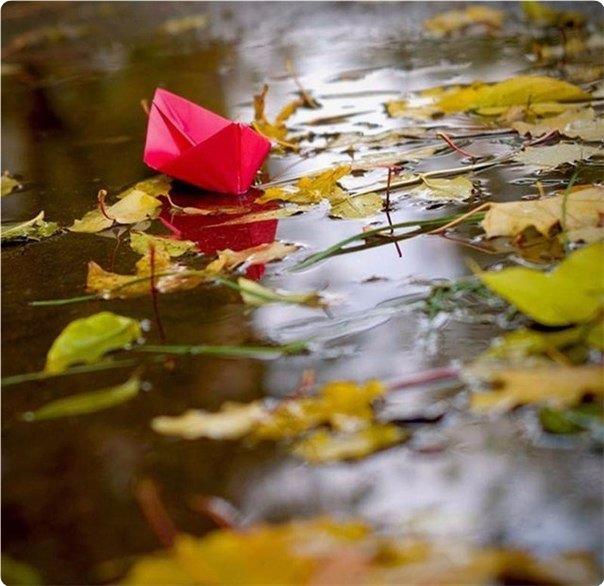
With the autumn winds and rains in full swing, the outdoors offer a walk filled with an array of colours. For the children, non rainy days of autumn are spent outside for they beckon them like beacons of joy and fun. To experience days like these, living in the country is better than the cities. There’s nothing better than the fields, the green and the beauty of nature to revamp and rejuvenate ourselves after a long day. Although it is true that the cities afford to give us the modern living, but the daily existence gets mundane and boring after a while. In fact the growth of modern technology to the feasibility of internet or app based food and groceries delivery, online shopping deals, excessive indoor entertainment options and increased working hours with limited breaks have all contributed its’ fair share to the humdrum existence. Even worse is when the regular childhood hours of outside play is substituted with gadgets and indoor toys.

The aftermath was that the entire focus shifted to living within the walls of our homes, to the point of limiting our daylight exposure. The recent report released by VELUX has highlighted the statistics and data researched about the “indoor generation”. The consequences are alarming not only to our physical well being but emotional and mental health too of the present and future generations.

To break from the daily routine of work-home-work cycle isn’t easy, especially for the city dwellers. The options though limited are feasible. First is to get outdoors as frequently possible especially during office breaks. If that is limited, try walking through a public park before joining the regular commute. Second, bring nature and daylight into our homes. Although we live smack in the city, the bigger the windows, the greater amount of sunlight in our homes Third, bring nature into our house with indoor plants, rooftop or balcony wall gardens and increase the ventilation. Fourth give allotted time for outside play especially for the kids. It would be great if the entire family spends some quality time outdoors. Fifth and the best option is to get out of the town over the weekend at least fortnightly or monthly and rejuvenate with nature. With many bed and breakfast establishments open all over the countryside, the break would be worth it. And for those of us who have extended family living in the country, it pays to visit them once in a while.

Despite all the modern conveniences that man has invented, it is the soothing and peaceful presence of nature that offers peace and brings not just physical wellness but emotional and mental sanity.

Posted in Daily, Food, Photography Art

Cookie-Art Moments

Being trapped in the kitchen with a bored toddler in the early evening hours while it’s raining outside and the electricity is out is a very risque situation. Left in the lantern light, one option to put all the excess energy into good use was to bake cookies. Time flew as we started off with the mixing the wheat flour, butter and powdered sugar for the dough. Although halfway through, a bit of the batter was missing with a mischievous grinning kid nowhere to be found. Finally the cookie dough in varied shapes was ready to be baked . As the electricity was still out, I had to improvise and bake the cookies in the pan as the electricity was still out.  On the whole, an hour and half later I had a plate of fresh cookies, a happy toddler drinking his milk and time well spent.

It’s spontaneous moments like these which make life more fun. Moreover, when our children grow up and leave the nest, it’s memories like these which will hold dear in our hearts. To quote Crystal Woods ,“I want to take all our best moments, put them in a jar, and take them out like cookies and savor each one of them forever.”

Posted in Family and Society, Life, Personal Musings, Stories Around the World

True Purpose of Education

Today, October 5 would be the 24th year of the International Teachers Day ( a.k.a World Teacher’s Day). Initially established in 1994, this day focuses on the appreciation of educators especially teachers and even university professors as well as their role played in the development of students; thus giving an immense contribution to society. Although in some countries it may be celebrated on different days, many nations have given importance  and appreciation to the role of the teachers in the society. 
With generations of teachers in the family, everyone strongly believes that education is beyond the blackboards and the books. During my high school days, I had chanced to read the “Letter to His Son’s Teacher” , a letter Abraham Lincoln had allegedly wrote to his son’s school teacher on the first day of class. Though the letter is every parent’s wish that their children would learn, sources and citations are insufficient to claim that the letter was originally written by Abe Lincoln. 

In spite of the query of authenticity, this letter holds additionally to subject or textbook learning what teachers and educators should make sure their students learn. For those of us, who haven’t read it, the letter is as follows.  

“My son starts school today. It is all going to be strange and new to him for a while and I wish you would treat him gently. It is an adventure that might take him across continents. All adventures that probably include wars, tragedy and sorrow. To live this life will require faith, love and courage.

So dear Teacher, will you please take him by his hand and teach him things he will have to know, teaching him – but gently, if you can. Teach him that for every enemy, there is a friend. He will have to know that all men are not just, that all men are not true. But teach him also that for every scoundrel there is a hero, that for every crooked politician, there is a dedicated leader.

Teach him if you can that 10 cents earned is of far more value than a dollar found. In school, teacher, it is far more honorable to fail than to cheat. Teach him to learn how to gracefully lose, and enjoy winning when he does win.

Teach him to be gentle with people,tough with tough people. Steer him away from envy if you can and teach him the secret of quiet laughter. Teach him if you can – how to laugh when he is sad, teach him there is no shame in tears. Teach him there can be glory in failure and despair in success. Teach him to scoff at cynics.

Teach him if you can the wonders of books, but also give time to ponder the extreme mystery of birds in the sky, bees in the sun and flowers on a green hill. Teach him to have faith in his own ideas, even if every one tell him they are wrong.

Try to give my son the strength not to follow the crowd when everyone else is doing it. Teach him to listen to every one, but teach him also to filter all that he hears on a screen of truth and take only the good that comes through.

Teach him to sell his talents and brains to the highest bidder but never to put a price tag on his heart and soul. Let him have the courage to be impatient, let him have the patience to be brave. Teach him to have sublime faith in himself, because then he will always have sublime faith in mankind, in God.

This is the order, teacher but see what best you can do. He is such a nice little boy and he is my son.”

Life as we all know isn’t restricted to books alone or to the hard facts of knowledge. It is a blend of learning, thinking, emotional and social responsibilities with innate faith in God and oneself. To live a life of meaning will require us to look beyond the desk of  assignments and grades alone. They are indeed essential in order to dream of aims, ambitions and to reach them as well. Yet there is a world out there beyond that, which every parent wishes their child would learn so as to eventually would carve a niche for themselves in it.  


Posted in Daily, Food, Photography Art

Squash-Fun with Jam-Art

Last weekend we had a charity auction at church, consequence of which I had landed with two crates of black grapes i.e. about 20 kg. Nevertheless two days, everyone was sick of grapes even mixed with oatmeal, pancakes or desserts. Hence, it was a unanimous decision to make grape squash yesterday.

So towards late noon yesterday, the kitchen counters were grape stained and I ended with four big bottles of grape squash. The trick in making them right was to proportionate the grape extract to the sugar in a 1:2 proportion with the entire water required being equal to the amount of grape extract. In three simple steps;it was ready. First wash the grapes and boil them in just sufficient water so it gets cooked and while boiling continuously mash the grapes till it becomes thoroughly juicy. Strain the mix to get the grape extract and measure it. Second is to take the sugar (keep the amount twice the extract), add to it a minimal amount of lemon juice (1 tsp for 2.5 pounds sugar) and water (the entire water used should be equal to amount of grape extract) in a pan; and heat it till the sugar dissolves and bubbles up. To prevent charring of sugar, you make to intermittently stir the mix. Third, let the sugar syrup cool till room temperature and mix it with the grape extract to form a good consistent liquid. One can add grape extract (tonovin, 1 tsp for 2 pints or 1 litre of grape extract) or sodium benzoate (almost same measure as tonovin) if preferred. Since even refrigerated squash gets over fast at home, I had avoided the latter.

On the whole, it was a fun experience for everyone including my two year old son who loved getting grape-stained. As for the remaining grapes, I had decided to make them into jam. Although making jam looks arduous, it’s actually easy and almost similar to squash, with few differences. Here the measure of grapes to the sugar is 2:1. It’s the same for all sweet fruits like strawberries, apricots but for bitter fruits like lemon and oranges we need a slightly higher amount of sugar ( I prefer a 2:1.5 ratio). 

There’s nothing better than having hot dripping homemade jam especially on cakes and in pies or cold jam layered on bread. Besides making jam keeps the kids from getting into mischief indoors especially on cold, rainy days of autumn. As Sandra Dallas said, “Jam on a winter took away the blue devils. It was like tasting summer. ”  Here are some pictures of jam-art to get inspired.