Posted in Daily, Food

Jelly with the Beans

“You can tell a lot about a fellow’s character by his way of eating jelly beans.”  Ronald Reagan

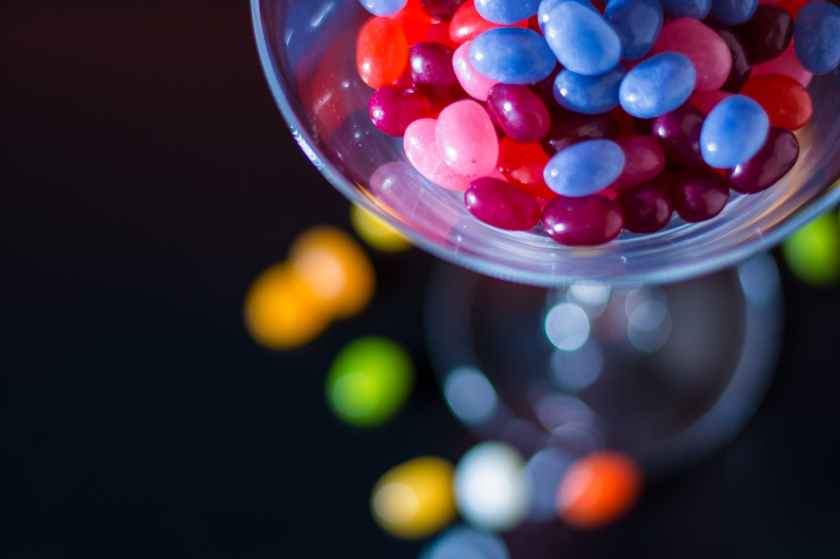
What happens on hybridization of Turkish Delights ( sweet, chewy candy with powdery sugar coating) and Jordan almonds ( almonds encased in a crunchy sugar shell) ? Possibly it may lead to the creation of “the classic candy with a soft chewy center and thin crunchy coating” , famously known as “jelly beans”. For avid Harry Potter readers, “Bertie Botts” may sound familiar with flavours of Banana, Black Pepper, Blueberry, Booger, Candyfloss, Cherry, Cinnamon, Dirt, Earthworm, Earwax, Grass, Green Apple, Marshmallow, Rotten Egg, Sausage, Lemon, Soap, Tutti-Frutti, Vomit and Watermelon.

The exact origins of jelly beans aren’t known. While the Mid Eastern confection of Turkish delight has been there since B.C.; the shell coating process known as “panning” can be traced to the cooks of the Royal Court in 17th century France. Over time, as the two process made its’ way to the Americas and the earliest known appearance of Jelly Beans has been credited there. One commonly cited but unconfirmed proof was an advertisement (1861) for William Schrafft (Boston) promoting the delivery of jelly beans to soldiers in the Union Army duting the Civil War.

Initially, (late 1800s, early 1900’s) jelly beans were sold by weight as penny candy in general stores and taken home in paper bags. By 1930s, jelly beans became part of the Easter holiday partially as it fit in well with its’ round egg-like shape, which was a symbol of the renewal of spring.

Why “jelly” and “bean” ? With candy-makers trying out novelty shapes for candy, the Goelitz family candy-makers has archive lists with candies as vegetables, chestnuts, carrots and turnips as well as bunnies for Easter. Once the bean shaped soft jelly came with shell that won’t let them stick, the name “Jelly beans” have stayed on.

Ever since 1976, there have been two types of jelly beans, gourmet (smaller, softer with shell and middle both flavoured) and traditional (only shells are flavoured). Their basic ingredients include sugar, tapioca or corn syrup, pectin or starch with relatively minor amounts of the emulsifying agent lecithin, anti-foaming agents, an edible wax (carnauba wax, beeswax), salt, confectioner’s glaze and flavouring agents. Depending on the type and flavours, jelly beans take approximately six to ten days to be made. National Jelly Bean Day has been celebrated (April 22nd) by foodimentarians worldwide. With endless flavour possibilities available as well as satisfying the palate and creating edible works of modern art, their popularity still holds true today.

“Jelly beans! Millions and billions of purples and yellows and greens and licorice and grape and raspberry and mint and round and smooth and crunchy outside and soft-mealy inside and sugary and bouncing jouncing tumbling clittering clattering skittering fell on the heads and shoulders and hardhats and carapaces of the Timkin works, tinkling on the slidewalk and bouncing away and rolling about underfoot and filling the sky on their way down with all the colors of joy and childhood and holidays, coming down in a steady rain, a solid wash, a torrent of color and sweetness out of the sky from above, and entering a universe of sanity and metronomic order with quite-mad coocoo newness. Jelly beans!” ? Harlan Ellison (“Repent, Harlequin!” Said the Ticktockman)

Posted in Christian, Family and Society, Food, Life, poetry, Stories Around the World

Of Easter,Tradition and Trends

“I still believe in Santa, the Easter Bunny, the Tooth Fairy and true love. Don’t even try to tell me different.” Dolly Parton

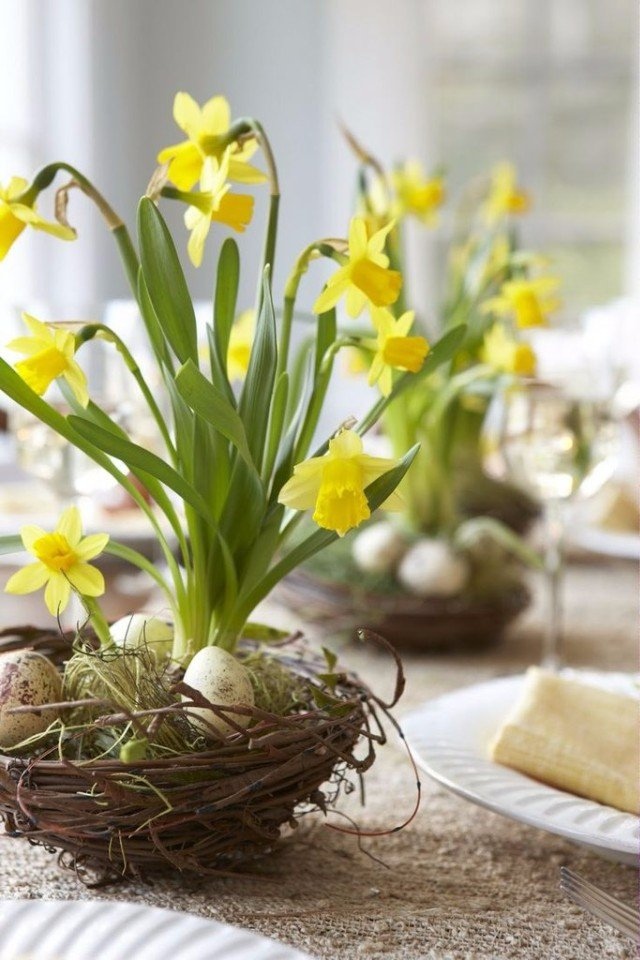
With Easter Sunday being celebrated tomorrow, preparations are quietly underway which would make the day special tomorrow primarily keeping the children in mind. Easter Sunday is the day signifying the love of God for man, a time for hope, renewal and resurrection through His Son. With the season of Lent coming to a close and breaking the Lenten fast involves special significance, especially when one has abstained from something dear to them through this period. Sacrificing something that one is fond of is never easy, but a whole new meaning and character is acquired when we abstain from the “materialistic” pleasure that we being man, often crave every now and then. Which is why, every Easter Sunday meal is something that the entire family and friends look forward to. Besides being a time for togetherness, it also signifies the breaking of the Lenten Fast.

“The blessing of food for the Easter Sunday meal is especially popular among people of Eastern European descent, especially those from Poland. Families prepare baskets with the food they will eat on Easter morning – decorated eggs, sausage, ham, bacon, a loaf of bread with a cross cut into the crust, cheese, salt, horseradish, and butter carved in the shape of a lamb.” Ken Untener, The Little White Book for Easter

Around the world, various traditions are there on Easter. While initially they were modeled after the spring celebrations, later the trends were modified to give new relevance with the basis of the last supper or “Passover” or “Passove Sedar” in mind. Among the Easter Lunch, the fast is often broken by the “star of Easter”; painted, dyed, gilded in various hues, hidden or hung on trees, found on the treasure hunt, bough to church or given as gifts are the “Easter Eggs”. Most of the legends state them to be “symbol of life”.

“I agree. You don’t want it to look boring. It’s [the Easter egg] got to look good otherwise it’s just like every other chocolate. And size does matter when it comes to the egg, as that’s what Easter eggs are all about.” Liam Tomassi

Previously believed by the Egyptian and few Persian civilization of the early times, eggs were considered to be symbolic of after life. Few traditions believe that Mary Magdalene and the Virgin Mary held eggs during the crucifixion or that they were eaten at the first meal after the Resurrection. In the Eastern Orthodox churches, the hard shell of the egg represents the stone walls of Jesus’ tomb, with the egg itself representing the new life of the Resurrection. Eggs also were the easiest, most economical and available foods to eat while breaking the Lenten Fast. This popularity has lead in the presence of “the Easter Egg” predominate every Easter celebration.

“The Easter eggs symbolizes our ability to break out of the hardened, protective shell we’ve surrounded ourselves with that limits our thoughts and beliefs. As we break open our hearts and minds we discover a transformation to new, life enhancing thoughts and beliefs.” Siobhan Shaw

Another popular tradition was the Easter Basket, which was an “Easter Nest” originally. Arising from the concepts of fertility and springtime, Eastern basket was a German tradition which had gained mass popularity. Initially children would make “nests,” filled with grass, in hopes that Peter Cottontail would fill the nest with eggs. Later these nests evolved into baskets, which were bigger, less messier and easy to carry.

Amidst the Easter Eggs in the basket would be the “hollow chocolate bunnies”. While there is no historical or religious documentation on why the bunny represents Easter, the association would be more by the calendar. With Easter mostly during Spring, the month of April showered not only spring flowers but also signals the birth of baby rabbits. Thus spring time and bunnies symbolize birth and renewal. Coat the bunnies with chocolate and hollow them out to fill them with candies; voila the treat is irresistible for every kid in the block.

Other Easter traditions include eating ham or meat to the making of “Hot cross buns” and other breads marked with an X to symbolize the cross are a tradition on many Easter tables. From the “Choreg” of Armenia, Ukranian “Paska”, Polish “Babka” to Tsoureki of Greece, a wide varied variety of sweet breads are made around the world. With eggs being baked in most, these are conspicuously risen breads, quite different from the Passover tradition of unleavened bread.

As we get ready to break the Lenten Period and celebrate Easter, with all the food to be made ready, decorations to put up, church to be readied and tables to be set, the core message of renewal, togetherness and love shouldn’t be forgotten. One of the best ways to spread the message of love would be to share the delectable creations of Easter around.

The Easter Bunny came by today
and left surprises along his way.
Colorful eggs are all around.
With baskets in hand we search the ground.
Hiding in places here and there
Easter eggs are everywhere.
-Author Unknown

Posted in Daily, Food

Learning the “Animal Cracker’s” Way

Eyes closed with eagerness, a tiny little hand dives into a box. Grabbing one bit and clenching the fist so as not to lose that precious little thing, the little hand comes out and palm up, its’ a bear. With a gleeful shout, that little bear is raised up and chomped down. And the hunt for the next “animal cracker” begins.

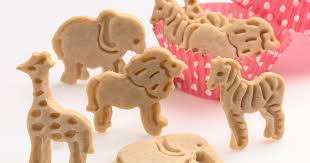
Almost every childhood has been marked by animal crackers or cookies and milk. These particular type of small cookies have been baked in the shape of animals ( zoo or circus), slightly sweet, made by a single layered dough like crackers.

Although the initial varieties were light coloured and slightly sweet; today darker chocolate flavoured or coloured frosted variants have made their way into the supermarket shelves. From the initial “Stauffer’s Biscuit Company produced animal crackers and Nabisco’s “Barnum’s Animals”, today other animal shaped crackers or cookies have gained popularity like Teddy Grahams, Goldfish, Hello Panda and Koala’s March. These differ from traditional animal crackers in flavor and assortment.

“Animal crackers, and cocoa to drink
That is the finest of suppers, I think
When I’m grown up and can have what I please,
I think I shall always insist upon these.”
-Christopher Morley (Founder of ‘Saturday Review’, 1924-1941)

Around 6th to 7th century, the custom of shaping cookies to resemble animals began from the Yule Tribe. During their times, it was common to sacrifice animals to the gods during the Julfest ceremonies, in hope that such offerings would bring a mild winter and an early spring. As the poor people couldn’t afford to kill any of their animals, they gave token sacrifices in the form of animal-shaped breads and cookies. Over the years, animal crackers became household or local bakery goods.

Yet the crisp animal crackers came from the 19th century Victorian England as attractive cookies or biscuits. The “crisp biscuits” (sweet and cookie-like biscuit) were very popular and the English called the ones that shaped like animals “Animals”. During the late 19th century, these “Animals” were imported from England to the United States. Due to their local popularity and high demand, local manufacture also began their own “Animals” making business. American businesses like Stauffer’s Biscuit Company, which still exists today, made their first animal crackers in 1871 York, Pennsylvania.

Around 1889 in England, animal crackers were manufactured as marketing promotions for popular entertainment, P.T. Barnum’s Circus. In 1902 animal cracker boxes designed for “Barnum’s Animals” (became “Barnum’s Animal Crackers” in 1948) were also designed for the Christmas season. The initial cracker boxes had a piece of string to hang them from the Christmas Trees as ornaments.

Almost 54 different animals crackers’ have been created in total, with 37 different animals have been featured into Animal Crackers ( Nabisco’s Barnum’s). The only ones survived the entire lifetime of the product are bears, elephants, lions and tigers. Interestingly among all their “cracker animals”, it’s only the monkey that wears pants. Also rabbits have never been a part of them even today (unlike portrayed in the Shirley Temple Song of 1935). Commemorating the 100th anniversary of Animal Crackers, the “name-our-next animal” contest in 2002 saw the koala bear became the latest addition by beating out the penguin, walrus and cobra in the customer survey.

Thus on National Animal Cracker Day (April 18th) it would remiss not to include the animal crackers on the menu. The range is varied from mini-sized treats to additions into soups, crunchy salads or even with ice-cream, fruit salads, custards or just with tea, having them the old, simple way. For a break from the “adult-life” going back into the childhood treats can be good physical and mental “calorie” breaks.

“Animal crackers in my soup Monkeys and rabbits loop the loop Gosh oh gee but I have fun Swallowing animals one by one In every bowl of soup I see Lions and Tigers watching me I make ’em jump right through a hoop Those animal crackers in my soup When I get hold of the big bad wolf I just push him under to drown Then I bite him in a million bits And I gobble him right down When their inside me where it’s dark I walk around like Noah’s ark I stuff my tummy like a goop With animal crackers in my soup.” Shirley Temple

Posted in Daily, Food

Benedict’s Way with the Eggs

“Sometimes life is a feast with eggs Benedict & hollandaise sauce, waffles & strawberries, sausage links & hashed brown potatoes. And sometimes life is scrambled eggs. In the end, your stomach gets full all the same. And years from now, you may not remember exactly what you ate.” Lisa Schroeder

Known as Eggs Benedict or Eggs Benny, this traditional American that consists of two halves of an English muffin topped with a poached egg, bacon or ham, and hollandaise sauce. The dish was first popularized in New York City and mostly served for breakfast or as brunch.

Interestingly, there are many conflicting accounts as to the origin of Eggs Benedict.The earliest record is based on the menu of Delmonico’s of lower Manhattan whcih states that “Eggs Benedict was first created in our ovens in 1860.” One of its former chefs, Charles Ranhofer had published the recipe for Eggs à la Benedick in 1894.

As per other sources, based on the interview of Lemurel Benedict, a retired Wall Street stock broker recorded in the “Talk of the Town” column of The New Yorker in 1942. As per his words, in 1894 he had wandered into the Waldorf Hotel hoping to find a cure for his morning hangover and had ordered “buttered toast, poached eggs, crisp bacon, and a hooker of hollandaise”. The dish had impressed Oscar Tschirky, the maître d’hôtel that it had earned its’ place on the breakfast and luncheon menus with modifications like ham for the bacon and a toasted English muffin for the toast.

Another claim to this creation was made by Edward P. Montgomery on behalf of Commodore E. C. Benedict. Montgomery wrote a letter to then The New York Times food columnist (1967) which included a recipe he had received through his uncle, a friend of Commodore Benedict. This recipe had varied greatly from the Ranhofer version, especially in the hollandaise sauce, recording the addition of a “hot, hard-cooked egg and ham mixture”.

Today many variations are available globally, often varied as per the local cuisine and favourite add on preparation. Like for instance, substitute the streaky bacon for the ham and add a slice of tomato to get Eggs Blackstone. While Eggs Blanchard states to add Béchamel sauce for Hollandaise and Eggs Florentine includes spinach instead of the ham or adds it underneath (where previously there were added to poached or shirred eggs). Eggs Omar (also known as a steak benedict) substitutes a small steak in place of the ham, and sometimes replaces the hollandaise with béarnaise.

In fact each ingredient of the original Eggs Benedict can be substituted to make a new or exotic variant adaptable to the local culture, food trends and seasonal ingredients. One can substitute the ham for salmon (smoked or plain) to make Eggs Atlantic, Eggs Hemingway or Eggs Norvégienne among the the many locale names for it. This is one of the most common variant found in places where bacon or pork products can’t be served. Additionally the ham can be substituted by corned beef, Irish bacon, pork “debris” (Eggs Cochon) or some even prefer hash browns to the ham.
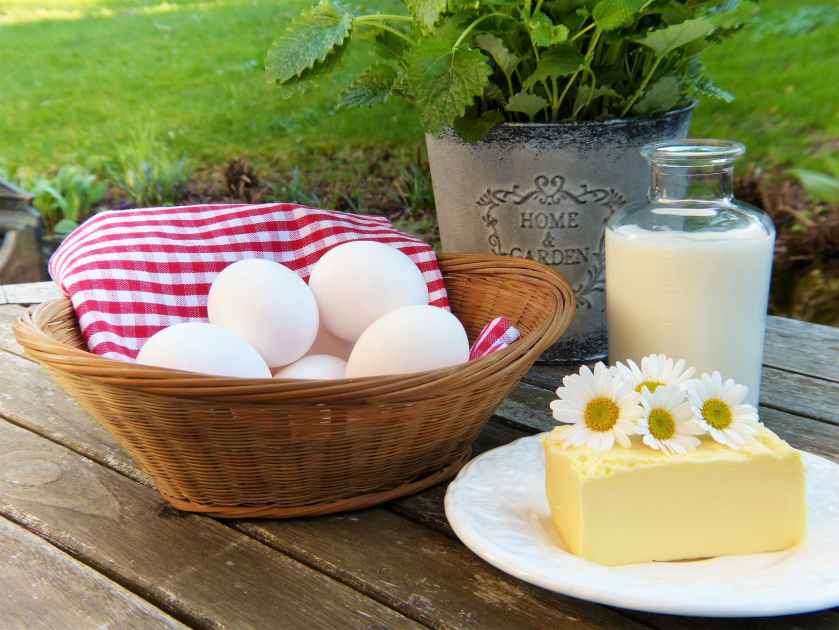
To make the original Eggs Benedict more creative is to add sliced avocados or the the bread can be substituted by Hollard rusks, a large buttermilk biscuit (Eggs Cochon) or even toast. Either Eggs Benedict can give numerous variations with one’s own favourite ingredients and make for a healthy breakfast in the morning melee or even had as an evening snack. Little wonder then, that a whole day was devoted as National Eggs Benedict Day ( April 16th). Besides having fun with plenty options to modify it, they make a healthy and wholesome food, with palatable mix ups as well inspiring creative cooking and art in the kitchen.

“She dipped a clean pinkie into the hollandaise in the bowl. It coated her finger like a sheath of yellow velvet. Despite her nerves, she plated swiftly and surely. She lifted the poached eggs clear from the shimmering, hot water with a safecracker’s touch, laying each one with infinite care in place on top of its foundation of English muffin and Canadian bacon. Silky drizzle of hollandaise, sprinkle of fresh parsley, grind of black pepper, framed with creamed spinach, dusted with paprika. Done.” Brian O’Reilly, author of Angelina’s Bachelors

Posted in Daily, Food

“Cobble” it Together

“Cherry cobbler is shortcake with a soul.” Edna Ferber

With summer round the corner and plenty of fruits to go around, desserts are always the reason why the meal gets completed in the twinkling of an eye, especially for the children. Even with the lack of time or frozen products over, dessert can be done soon, especially when bits of fruit over biscuit dough, batter or dumpling are baked to give the warm “cobbler” feel of the spring and summer skies.

Believed to have originated from the archaic word “cobeler” (recorded from 1859) meaning wooden bowl, cobblers were essentially a byproduct of the early years of European settlement in the Americas, especially by the English and the Dutch. They had initially emerged as a makeshift version of the popular pie recipes as a trail-modified desert.

“My earliest memory is making peach cobbler with my grandmother. A wonderful memory. I grew up in a restaurant family – B.B.Q. restaurant.” Rick Bayless

Unable to make the traditional puddings or pies, due to lack of ingredients or equipment as the settlers moves westward, modifications were made to the original methods. Consequently various ingredients were “cobbled together” with the available fruit, more common as peaches, plum or cherries, which were dried, preserved or canned, leavened dough (using baking powder) and an open fire. The initial cobbler were being made with a covered stewed filling with a layer of uncooked plain biscuits or dumplings, fitted together.

“Chocolate’s okay, but I prefer a really intense fruit taste. You know when a peach is absolutely perfect… it’s sublime. I’d like to capture that and then use it in a dessert.” Kathy Mattea

Cobblers were meant to be more palatable and sweet than pretty. Fruit, however it came, was dumped into a Dutch oven, topped with globs of biscuit dough and baked over an open fire until golden brown. Soon cobblers were quickly integrated into the settler diet, with the sweet dish being eaten for breakfast, as first course or as a main dish. Towards the late 19th century, the cobbler was officially labeled as a dessert.

“My earliest memory is making peach cobbler with my grandmother. A wonderful memory. I grew up in a restaurant family – B.B.Q. restaurant.” Rick Bayless

With modern technology of preservation, trade and transport; cobblers today have been vastly modified to include many fruit varieties including raspberries, blackberries as well being topped with cinnamon or vanilla essence, adding colours and flavours to the original version. Variants like grunts, pandowdy and slumps are Canadian Maritimes and New England varieties of cobbler are labelled when they are typically cooked on the stove-top or in an iron skillet or pan, with the dough on top in the shape of dumplings. The name originates from the grunting sound they make while cooking. Other popular variants include the apple pan dowdy (an apple cobbler whose crust has been broken and perhaps stirred back into the filling), the Betty or Brown Betty ( made with breadcrumbs or bread pieces or graham cracker crumbs and fruit, usually diced apples, in alternating layers, baked covered with a consistency of bread pudding) and the buckle (made with yellow batter like cake batter with the filling mixed in with the batter) among many others.

On the other hand, the scone-topped cobbler predominates in the UK where they are made both as sweet or savoury. While the common sweet fillings include apple, blackberry or peach; the savoury ones consists of beef, lamb or mutton as a casserole filling, sometimes with a simple ring of cobbles around the edge, rather than a complete layer, to aid cooking of the meat. The savoury versions may be topped with cheese or herb scones.

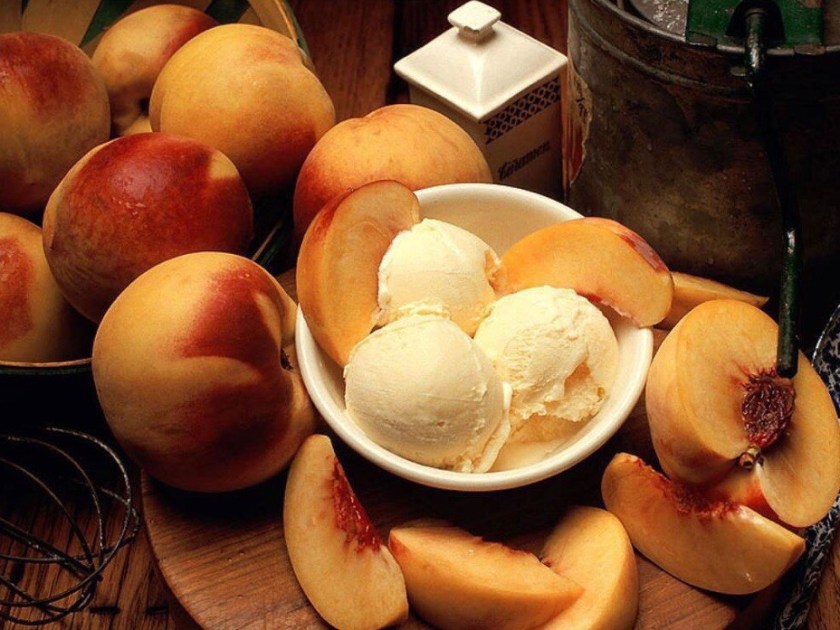
Over the years, cobblers have remained popular especially as they were quick to make for the luncheons and brunches. Little wonder then that the Georgia Peach Council declared April 13th National Peach Cobbler Day. Taking a bite of the rosy fruit cradled in warm pillows of cinnamon-scented dough and blanketed with the melted vanilla ice cream brings rich splendor to the senses, giving warmth and happiness all the way. For all the foodists at heart, have a little bite of cobbler to revel in the taste of sunny skies and warm sunshine.

“There are a couple of different types of food I eat a lot. I was raised in the South, in Tennessee, so I’m going to go with comfort food, soul food. I would probably start with collard greens and candied baby carrots and then have some biscuits and white gravy – and for dessert, probably blackberry cobbler.” Megan Fox

Posted in Daily, Food, Stories Around the World

Of Empanada, Origin and Evolution

“If you were a Colombian, you would have your version of an empanada. If you are an Argentinean, you might find a dough that’s baked and has a butter sheen on it. And then in Ecuador, you’ll find more crispy-fried empanadas. So, yeah, every culture has their own version of empanadas.” Jose Garces

Derived from the Spanish verb “empanar” which translates to “wrap in bread”, these fried or baked pastries stuffed with sweet or savoury filling, known as empanadas have enjoyed widespread global popularity. Across the Caribbean, Latin America, Portugal, Spain, Italy to as far as Philippines; this dish has its’ own local blends that make it delectable and adaptable to every local cuisine.

“You are the olive in my empanada.” Brazilian Saying

Originally believed to be from Galicia, Spain; the empanadas of today may have been the brainchild of the Moors who had occupied Spain for hundreds of years. The idea of wrapping a hardy filling in pastry dough had led to this little delight. Fillings including seafood have been documented in a cookbook published in Catalan, Spain (1520). With the spread of civilization, trade as well as colonization, this savoury delight had travelled around the world. In fact the first empanadas in Western Hemisphere are credited to Argentina with the US celebrating the National Empanada Day on April 8th. While empanadas are a traditional Christmas treat in New Mexico, they’re known as creoles(southwest and south) or as fried pies (southeast) depending on the locality.

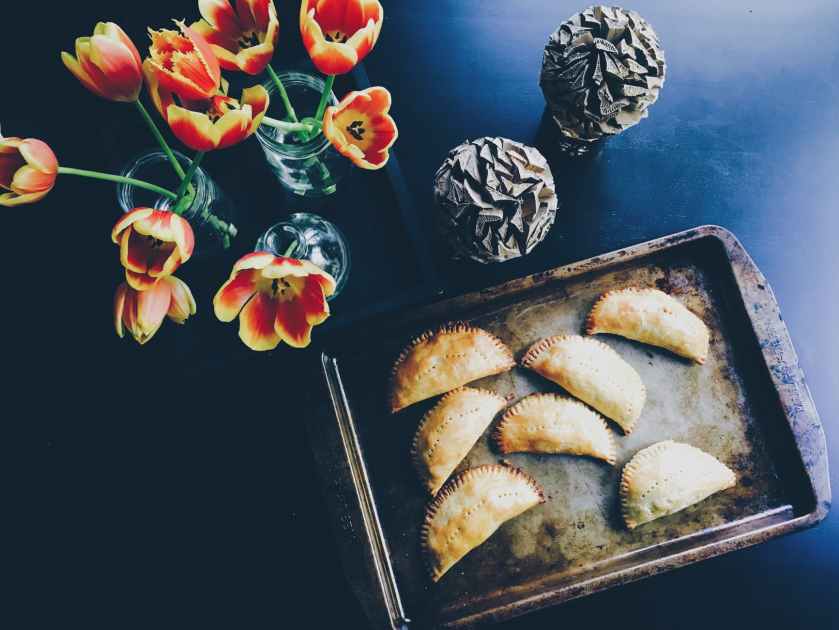
Similar to cut-up pies, empanadas are typically savoury often filled with cod fish or chicken. They are made by folding a disc of thinly rolled dough over the filling into a semicircle and then crimping the edges to seal it. The dough is often made with wheat flour, but can be substituted by corn flour, cornmenal, plantain or potato base, depending on the locally available ingredients. The content of the dough varies on whether the empanadas are to be baked or fried. The art of to make a perfect empanada is to hold the dough spread open, in one hand; while using the other hand to fill it and to crimp the edges. Homemade sweet varients of the empanadas are present in many local cuisines. For instance, the Gujiya is a traditional Indian crescent shaped dessert, similar like a sweet empanada.

There have been various variations similar to empanadas. Catibías, similar to empanadas are made with cassava flour dough with common fillings include ground beef, chicken, guava, and cheese. Pastelitos are similar to empanadas, too, but they’re made with a lighter pastry dough and they can be either baked or fried.

Travelling across the various countries, the ‘Mpanatigghi of Modica (half moon-shaped panzarotti filled with a mixture of almonds, walnuts, chocolate, sugar, cinnamon, cloves and minced beef), meat empanadas (“de pino”) of Chile , panades of Belize and so on, have been the varied presentations of the empanadas. Certain eateries in order to distinguish the varieties, develop a pattern on the pastry fold, crimping style of the edges or burn a letter(an abbreviated indication of the filling) into the dough.

Either way, one of the most easiest delights to be made for a novice cook, are empanadas which serve as quick bites, starters, breakfast, desserts or even for brunches to lunches.

“Don’t be afraid to adapt new ingredients into your own techniques, and traditional ingredients into new recipes.” Jose Garces

Posted in Daily, Food, Uncategorized

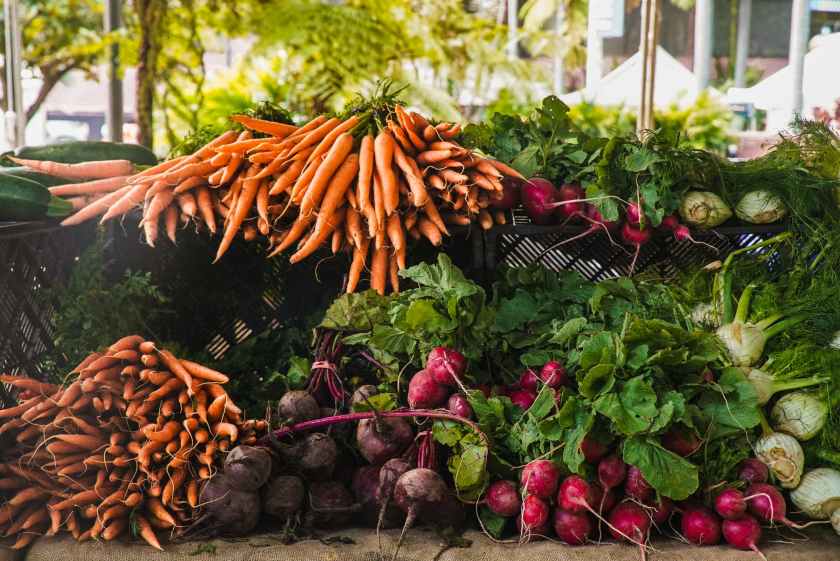
Going “Carrot” All the Way

Being parents or guardians of little children, the most lovable yet tiring and troublesome phase is making them eat their vegetables. The beginnings of this battle with the “veggies” starts when they reach the toddler age, often progressing onto their years, even till high school and beyond.

“When a man is small, he loves and hates food with a ferocity which soon dims. At six years old his very bowels will heave when such a dish as creamed carrots or cold tapioca appear before him.” M. F. K. Fisher

With the advent of various art forms, school activities, newer recipes, extra seasonings and the magic of Bugs Bunny and Popeye the sailor man among others, have brought down the fervor of this battle. Among the various projects among play-schoolers to get them to eat their vegetables was observing special days like the International Carrot Day (4th April). While for the toddlers, activities range from supervised game activities, music, model art with play dough fun and costume art; parents have been tasked with preparing any carroty dish. Ranging from meal based recipes, of soups and main course (pies, curry, sandwiches) to snacks or desserts (“gajjar halwa”, carrot cake or sweet carrot tarts) and juices, the list of recipes is quite extensive. In the course of cooking, there was a couple of “carrot trivia” which make for an interesting read.

“Carrots are devine… You get a dozen for a dime, It’s maaaa-gic!” – Bugs Bunny

Belonging to the family Apiaceae, “Daucus carota”, whose common names include wild carrot, bird’s nest, bishop’s lace, and Queen Anne’s lace (North America), is a herbaceous, mostly biennial white flowering plant native to temperate regions of Europe and southwest Asia, and naturalized to North America and Australia. Interestingly both the words ” Daucus” and “carota” mean orange. Ironically carrots are not always orange, but can also be grown as purple, red, white or yellow variants. Known by the Ancient Greeks as “Karoto” with the plant called as Philtron or “Bird’s Nest”, they were initially grown as medicines, and later as food, also used as insecticidal agent as well. In fact, the Victorians had a carrot based recipe to destroy crickets especially as it was discovered that they were very fond of carrots. The mix was a paste of flour, powdered arsenic with scraped carrots, placed near their habitations.

The role of carrots go beyond the kitchen, with their part cited in the “Trojan War”. As far as legends go ( no documented evidence), the Greek foot soldiers who hid in the Trojan Horse were said to have consumed ample quantities of raw carrots to inactivate their bowels. However, this tale contradicts the fact that carrots are good for constipation. Being a mythical tale, did the soldiers of the Trojan War eat lot of carrots before the fight to clear their intestines and avoid any problems during the important moment ? Most likely, this apocryphal tale was conjured or circulated due to the Hollywood scenes, fiction writers or as a result of the “toddler veggie battles.” Yet their mention in literature is present with the Early Celtic citing them as “Honey Underground”.

“The day is coming when a single carrot, freshly observed, will set off a revolution.” Paul Cezanne

The Wild Carrot is called Queen Anne’s Lace. The reason being Queen Anne of England wore a lacy headdress which some people thought resembled the delicate flower cluster of Wild carrot, giving it its more poetic name, Queen Anne’s lace.

One of the first vegetables to be canned commercially, carrots were marketed on a wide scale. Additionally tobacconists in France used to put a carrot in their bins to prevent their tobacco from drying out. With the progress of preservation and brewery, carrots today, produce more distilled spirit than potatoes. To add on carrot as a sweet snack food, try the “carrot pie flavour jelly bean.” As far as the future holds, carrots are here to stay with their in the market as “bio-fuels“, especially as the oil runs out. So going “carroty” is the theme for now, especially today with trying something “carroty” as a special treat.