Posted in Daily, Food

Puddings..of Chocolate and More

[1730]
“Chocolate Puddings. To a Pint of Cream take eight Eggs, the Whites of four, beat them well together, and mingle with your Cream; put in some Nutmeg, Cinnamon, and Ginger, a quarter of a Pound of Naples Bisket, and a quarter of a Pound of Chocolate grated very fine, put in a little Orange-Flower Water, and a little Citron minc’d; mingle it mighty well together, and if you bake it, put a Sheet of Puff-paste in your Dish, and raise a little Border in the Rim, put in your Pudding and cross-bar it, and ice it with thick Butter and Sugar, and bake it in a gentle Oven, and when bak’d serve it away, or you may boil it if you please.”
—The Complete Practical Cook, Charles Carter, facsimile 1730 edition [Gale Ecco Print Edition:Detroit] (p. 106)

One of the highlights of having warm weather is when impromptu visits are possible, especially on chance meeting of old friends or neighbours. With plenty of delivery services available at ” the fingertips or touch of thumb pads”; it’s often the desserts that need to be made or created in a jiffy. Which is why, certain desserts especially custard, ice cream, puddings to name few easy ones are one of the necessary knows for every “fledgling” cook.


One of the easiest desserts to make with the ingredients of cornstarch or flour, cream, milk, butter and vanilla for the most simple and basic puddings. Adding in cocoa, bananas, battered breadcrumbs and even eggs are the small variations that make an entirely new recipe and flavour of the “new pudding”. Few “pudding pointers” to keep in mind include:

  • Although easy to make, complete and whole attention is required from making the batter to setting it to chill or baking it.
  • Constant stirring is needed while cooking the pudding to avoid lumps or burning.
  • The flavours, texture and consistency is very adaptable, so don’t be afraid of experimenting.
  • Make sure the flour is sieved properly because no matter how it is whisked, if the flour is not smooth it will give you a lumpy texture.
  • To store it, cover it with a plastic wrap to avoid the formation of a layer. The same applies while chilling the pudding too.
  • For baked puddings, grease the tin with butter and then refrigerate it for few minutes. This will form a layer and avoid it from sticking to the base.


With National Chocolate Pudding Day tomorrow, one can go a step further with whole or shots of “pudding cakes” or “pudding shakes” with whipped cream, sprinkles and M &M’s to add on; not to forget the ice cream too.

“Life’s a pudding full of plums.” 
W.S. Gilbert (1836-1911)


Posted in Daily, Food, Stories Around the World

“Canna” with the “petite duchesse”

Ever had “flashes of lighting” alongside “tubes of rich goodness” ? If the answer is in the negative or a query; with the month of June nearing to an end, it would be a good time to take up on the celebratory days of the éclair (choclate éclair, to be very specific, June 22nd) as well as the cannoli (June 16th), respectively. With the local deli’s and bakers’ going on full swing of celebratory discounts as well as interesting combinations to mark these days for foodists; delving a little bit into their food history would be quite interesting.

Originating from the 19th century France, also known as sweet baguette, an éclair was an oblong pastry made with choux dough filled with a cream and topped with chocolate icing. Typically piped into an oblong shape, the dough is baked until it becomes crisp and hollow within. When cooled, the pastry can be filled with a wide range of flavours, like vanilla, coffee or chocolate-flavoured custard (crème pâtissière), with whipped or chiboust cream and then iced with fondant icing. More exotic fillings include pistachio and rum flavoured custard, fruit-flavoured fillings or chestnut purée. If the icing is of caramel, the dessert is known as “a bâton de Jacob.”

Etymology speaking, the pastry title comes from French éclair “flash of lightning”, named so because it is eaten quickly (in a flash). Initially known as “pain à la Duchesse” or “petite duchesse” til the 1850. Towards the 1860s the word eclair took over, both in English and French. Historically the speculation was that this little delight was first made by Antonin Carême (1784–1833), the famous French chef of grande cuisine.

“Leave the gun. Take the cannolis.” Clemenza, in ‘The Godfather’

Moving across to the Sicilian and the Italian-American cuisine, delicate “tube-shaped shells of fried pastry dough”, usually with a sweet, creamy filling (most commonly containing ricotta) have been quite popular especially in the island of Sicily. Known as “cannoli”, they range from sizes of cannulicchi (smaller than finger sized) to the fist-sized proportions typically found south of Palermo, Sicily, in Piana degli Albanesi.

With its roots tracing back to the Middle Ages; this best known Sicilian pastry takes its’ name “cannolo (cannoli in English)” from the long tubular shape, as a diminutive of canna (a cane like reed) like sugar cane stalk. Back in the ninth centruy, Arabs had introduced sugar cane into the Sicilian cooking, thereby replacing honey as the sweetener of Sicilian confectionary to sugar. Similar desserts from the Middle East include Zainab’s fingers (filled with nuts) and qanawāt which were deep fried dough tubes filled with various sweets.

During the medieval years, the tubular shell shape was formed by rolling the paste into a flat, circular shape, then wrapping it around a sugar cane stalk. Legends abound but among them, most lead to the origin from western Sicily, probably in Palermo or nearby. Made often as a springtime item, most commonly associated when sheep produced more milk for ricotta around the Fat Tuesday (Carnevale).

Summer still going strong and picnics in full swing, for the first timers it would be a good time to experiment the sweet delicacies for a change. As for the kitchen experimenters and part time chefs, getting creative with homemade eclairs and cannoli would be a good change from the routine desserts.


Posted in Daily, Food, Musique, Stories Around the World

Evolution of the “Accidental Fudge”

“Sandra turned to the page with the title “Toklas’ Hashich Fudge.” The original hashish brownies. ‘Peppercorns, nutmeg, cinnamon, coriander, stone dates, dried figs, shelled almonds, peanuts,… A bunch of canibus sativa can be pulverized. This along with the spices should be dusted over the mixed fruit and nuts… it should be eaten with care. Two pieces are quite sufficient…” – Allegra Goodman, The Cookbook Collector

Like most of the “delectable sweet pleasures of the palate “, this sugar candy made flavoured with choclate, fruits, nuts and other flavours; had hot or cold has made its’ own mark in the sweet world. These days, various flavours of “fudge” are made, giving them a vibrant as well as visual appeal to the eyes and the palate.

Technically, fudge is made by mixing sugar, butter and milk, heating it to the soft-ball stage and then beating the mixture while it cools down to get a smooth, creamy consistency with fruits, nuts, chocolate, caramel, candies and other flavoring agents being added either inside or on top. Yet the true origins of “fudge” can’t be exactly traced, though it’s believed to have been originated and gained popularity in late 19th century America. However popular belief among food historians was that the first batch was an accidental “fudged” batch of caramels; hence the name “fudge”.


A letter in the archives of Vasser College (1921) written by Emelyn Battersby Hartridge reveals the first documentation of “fudge”. Emelyn wrote that her schoolmate’s cousin made fudge in Baltimore (1886) and sold it for 40 cents a pound. This was the first known sale of fudge. In 1888, Miss Hartridge asked for the fudge recipe, and made 30 pounds of fudge for the Vassar Senior Auction. The recipe was very popular at the school from that point forward. The diary of another student mentions making “fudges” in 1892.

What is it that we love the best,
Of all the candies east or west,
Although to make them is a pest?
Fudges. **


An 1893 letter from another Vassar College student describes “fudges” as containing sugar, chocolate, milk and butter. “Fudges at Vassar” was a recipe printed in The Sun (1895) describing the confections as “Vassar chocolates”, which comprises of sugar, milk, butter and vanilla extract. Fudge became a new confection after word spread to other women’s colleges of the tasty delight. Later, Smith and Wellesley schools each developed their own recipe for fudge. Later fudge-making evolved a variety of flavors and additives as it grew beyond its popularity at colleges.

What perches us upon a chair
To stir a sauce-pan held in air,
Which, tipping, pours upon our hair —
Fudges. **

While the first recipe specified butter, milk and sugar, today, American fudge often differs with whipped cream instead of butter and the addition of chocolate flavouring. There are different types of similar recipes to “fudge” across the globe with the Indian “Barfi”, Polish “Krówki” ( Polish fudge, semi-soft milk toffee candies), the Italian “Penuche” which is a fudge-like candy made from brown sugar, butter, milk and vanilla flavouring; as well as the Scottish “Tablet” (taiblet in Scots). Tablet is a medium-hard, sugary confection made from sugar, condensed milk and butter, brought boiled to a soft-ball stage and allowed to crystallise. It is often flavoured with vanilla or whisky, and sometimes has nut pieces in it.

The versatility of fudge is that it can be had alone cold, or served on top of sundaes,  ice cream and even cakes as hot fudge. With various assortment, variety and fun in the process of fudge making; little wonder then that “a set of ditties”  (**) were made by the college girls during and for the “fudge making process”. On the occasion of National Fudge Day (June 16th), it would be time for some fun, rhymes and sweet cooking for all the “home kitchen chefs” or tasting for the food connoisseurs.

What needs more stirring than oat-mush,
And more still when we’re in a rush,
But what’s e’en sweeter than a “crush”?
Fudges.

What subtle odor doth recall,
To artless minds that “long-owed call,”
On the sweet maiden up the hall?
Fudges. **


Posted in Daily, Food, Musique, Stories Around the World

“Rocky Road” When On the Go

“I am not plain, or average or – God forbid – vanilla. I am peanut butter rocky road with multicolored sprinkles, hot fudge and a cherry on top.” Wendy Mass

Imagine a sewing scissors, ice cream and the whole house to oneself. As per one source, when William Dreyer of Oakland, California ( March 1929) had eyed these items on a spring day; he had cut up some walnuts and marshmallows and added them to his chocolate ice cream; similar to his friend Joseph Edy’s chocolate candy creation with walnuts and marshmallows. Later walnuts were replaced by pieces of toasted almonds. Variations of this combination with add on of nuts, whole or diced and even flavoured marshmallows with chocolate ice cream ( no choclate chips in the original one) had led to the creation of “rocky road ice cream”.

Post the era of the Wall Street Crash of 1929, Dreyer and Edy gave the flavor its current name “to give folks something to smile about in the midst of the Great Depression.” Another claim to this creation was by Fentons Creamery, Oakland who stated that Dreyer based his recipe on a Rocky Road-style ice cream flavor invented there by George Farren. The latter had blended his own Rocky Road-style candy bar into ice cream which Dreyer had modified.

“I hope your only rocky road is chocolate.” Amanda Mosher

While in Australia (1853), the “rocky road” was created. Rocky road was a type of cake made up of milk chocolate and marshmallow which is usually served in individual portions such as a cupcake or brownie. With exact origins debatable, the rocky road was created as a way to sell confectionery which had lost it’s flavour during the long trip from Europe and was mixed with locally-grown nuts and cheap chocolate to enhance the taste. As per this account, the name “rocky road” comes from the rocky road that travelers had to take to reach the gold fields. Although, many companies based in the Americas have laid claim to this creation as well.

Rocky road has it’s own variations as per the local flavour. With the traditional Australian rocky road being made of glace cherries, milk chocolate (sometimes dark or white chocolate), desiccated coconut, nuts (mostly peanuts) and marshmallow; Bahrain’s rocky road has milk chocolate, Nutella and pistachios. Moving west ward bound, the traditional British Rocky Road (1971) contains dried fruit, biscuit, milk chocolate ( rarely substituted by dark or white chocolate) with a light dusting of icing sugar over it.

Regardless of the type of Rocky road, whether as store bought or homemade cake, brownies, ice cream or served as topping over coffee, hot chocolate, sundaes or other sweet combinations; missing out on this delight before the summer comes to an end would be sinful. With foodimentarians celebrating tomorrow as National Rocky Road Day ( June 2nd); it would be fun, creative as well as a palatal delight to indulge in this delectable dessert for a change.

“I hear those ice cream bells and I start to drool,
Keep a couple quarts in my locker at school
Yeah, but chocolate’s gettin’ old,
And vanilla just leaves me cold,
There’s just one flavor good enough for me, yeah me,
Don’t gimme no crummy taste spoon, I know what I need, baby
I love rocky road,
So won’t you go and buy a half gallon baby
I love rocky road,
So have another triple scoop with me, OW!”

Lyrics of “I Love Rocky Road” by “Weird Al” Yankovic (1983)

Posted in Daily, Family and Society, Food

“Food Fun”: Mix , Match and Experiment

“One cannot think well, love well, sleep well, if one has not dined well.”  Virginia Woolf

Imagine a menu planned by kids. This was one of the tasks allotted to my child in his kindergarten class. On first hearing this; for all parents, this plan may set off alarm bells of the aftermath of a mass gastric upsets, whereas secretly many among us crave these foods on certain or many occasions. 


Imagine a list that ranges from Cheetos to ice cream, pancakes, sandwiches and all the sweet as well as the “street food” in the world. While this may sound too good to be true, some of these combinations though weird actually taste good.

Oreos and Orange Juice
Frosted Flakes and Cheese
Soya Sauce on Ice Cream
Apples with Salt, Pepper and Chilli Flakes
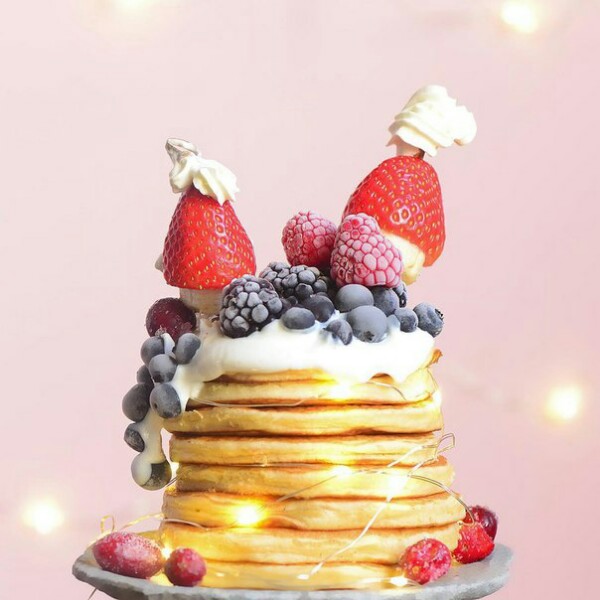
Cake of “Banana Pancakes with Nutella, Cream and Honey”
Avocados and Chocolate
Peanut Butter and Pickle Sandwiches
Bananas on Cheese Toastie
Butter and Sugar Sandwiches
Peanut Butter in Burgers
Rice and Ketchup
Grape Jelly on Scrambled Eggs or Omelettes ..and the list goes on, up to one’s choice of taste, artistic eye and palatable combinations.


Though everyday food involves eating healthy as well enjoying food that we love guilt free, the daily meals get a bit of livening up when we get free with the mix and match, go creative as well as enjoy surprising the taste senses.
With “Eat What You Want Day” (May 11th) is being celebrated today, which was initially started to enjoy a guilt free “indulge in your favourite food” day; this is one of the best days to try weird combinations or have breakfast for dinner, break the routine and let the young ones plan one meal for the day (few of us can tolerate Doritos, pizza and ice cream only to an extent).

Whether one wants to have sweet or sour, or indulge in the “mood for something different to taste” for the day; having fun while eating is the first along with being healthy, wise, happy and creative too.


Posted in Daily, Food, Photography Art, Quotes

Hot, Dark and Chocolaty

Watch the sunrise at least once a year, put a lot of marshmallows in your hot chocolate, lie on your back and look at the stars, never buy a coffee table you can’t put your feet on, never pass up a chance to jump on a trampoline, don’t overlook life’s small joys while searching for the big ones.” H. Jackson Brown, Jr.

First believed to have been created by the Mayans 3000 years ago, this drink has been popularized across the world transitioning from religious or medicinal purposes to being a luxurious and recreational or comfort concoction. Popularly known as hot chocolate or cocoa, (aka drinking chocolate and chocolate tea in Nigeria); it would be a grave error for any chocolate fan to give this drink a miss.

“Love is like swallowing hot chocolate before it has cooled off. It takes you by surprise at first, but keeps you warm for a long time.” Henri Frederic Amiel

Hot chocolate comes in multiple variations including the Latin American spiced chocolate para mesa, the very thick Italian cioccolata calda, Spannish chocolate a la taza to the thinner hot cocoa consumed in the United States. The distiction between “hot cocoa” (from powder made by removing most of the rich cocoa butter from the ground cacao beans) and “hot chocolate” ( melt bar chocolate, already rich in cocoa, sugar and cocoa butter) lies in the cocoa butter, the absence of which makes hot cocoa significantly lower in fat than hot chocolate while still preserving all the antioxidants found in chocolate.

“Some days you get up and you already know that things aren’t going to go well. They’re the type of days when you should just give in, put your pajamas back on, make some hot chocolate and read comic books in bed with the covers up until the world looks more encouraging. Of course, they never let you do that.” Bill Watterson

Add a higher percentage of cocoa solids and cocoa butter, eliminate or decrease the sugar and voila, dark chocolate (also known as black chocolate, plain chocolate, or bitter chocolate) is ready. Although the percentages may vary as per brand, government and industry regulations; dark chocolate has taken the 21st century by storm. Either way, hot or cold; dark or light, bitter or milky; chocolate still reigns supreme among the desserts, gifts, treats and moments of deliciousness and is here to stay.

“You take dark chocolate, you mix it with white milk, and it becomes a delicious drink. That is the chocolate I am talking about.” Ray Nagin

Posted in Daily, Food, Photography Art, Quotes

Chocolate to Cake

“Part of life and part of the enjoyment of life is a croissant and a chocolate cake and eggs and milkshakes and oatmeal. There’s so many things, you have to learn to appreciate it all. When I don’t eat as much as I should, I’m not fun to be around; I’m fussy.” — Nina Dobrev

Almost like development of civilization, chocolate cake or chocolate gâteau made an entrance around late 1800s. Retrospectively that’s a long time considering that chocolate drink was there around the times of the Mayans and Aztecs. Chocolate cake lovers’ need to thank Coenraad van Houten (1828) for extraction of cacao butter and “rock cacao”. With Rodolphe Lindt (1879) developing “conching” for silky smooth chocolate; slowly the experimentation of chocolate began from fillings and glazes to the cake batter.

“Let’s face it, a nice creamy chocolate cake does a lot for a lot of people; it does for me.” Audrey Hepburn

Chocolate decadence took on full swing with molten chocolate cakes with liquid chocolate centers. Furthermore the cakes were infused chocolates with exotic flavors such as tea, red pepper, passion fruit and champagne were popular. Chocolate lounges and artisanal chocolate makers took on the show.

“I had a little epiphany when I was a writer at ‘Chicago’ magazine. I sat down to dinner at the Ritz-Carlton. Somebody poured a white dessert wine with chocolate cake. It was a wine I would never have expected to make sense. The idea of any wine tasting fabulous with chocolate cake was fascinating to me.”  Ted Allen

There are many varieties and variants of chocolate cake especially chocolate layer cake, fudge cake, Joffre cake and Devil’s food cake to list a few. When one feels like celebrating or enjoying the feel of “breaded chocolate”, it triggers the memories and anticipation of delving into that piece of cake of chocolaty goodness. Besides it would be quite remiss for a chocolate lover to crush the taste buds on “National Chocolate Cake Day”. So here’s to that little splurge of calories but irresistible goodness.

“I like quinoa. I like gingerbread. I feel they should be kept separate. I’m not in favor of this thing of making kind of raw, vegan chocolate cake and saying it’s as good as chocolate cake. I mean, just eat cake and be done with it. And then have a separate meal of quinoa.” Bee Wilson