Posted in Food

Being Sloppy, Fun and Creativity

One of the benefits of having out-of-town meetings is that lunch is of the local flavour. Experimenting at the local delis gives burst to a whole new set of flavours. The other point in favour of delis is that one can indulge in that occasional binge food, quite popular in the college days but lost out in the later years. Maybe this would account for the lunch order of sloppy joes with plenty of fries alongside.

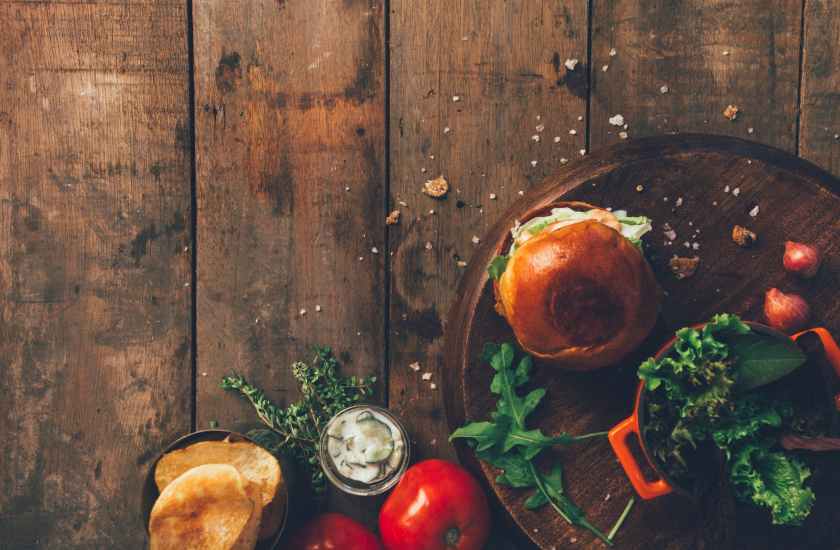
Sloppy joe is basically just a loose meat sandwich, often going by fancier names like Toasted Deviled Hamburgers, Chopped Meat Sandwiches or Hamburg a la Creole. Originating somewhere around the mid-20th century, these sandwiches came into popularity as they were both filling and economical. Meat was stretched by the addition of bread crumbs, tomato paste, eggs, sweet peppers, minced onions, Worcestershire sauce, bottled horseradish, pickle relish and the like; which was then served between bread or as meatballs, meat loaves or hamburger stew. The trend of these loose meat sandwiches caught on. Alternate meat substitutes of late include canned tuna, diced chicken, ground turkey or soyabean mash.

“The origins of this dish are unknown, but recipes for the dish date back at least to the 1940s. It dates in print to 1935. There is probably no Joe after whom it is named–but its rather messy appearance and tendency to drip off plate or roll makes “sloppy” an adequate description, and “Joe” is an American name of proletarian character and unassailable genuineness. There are many individual and regional variations on the dish. In Sioux City, Iowa, a dish of this type is called a “loose meat sandwich,” created in 1934 at Ye Olde Tavern Inn by Abraham and Bertha Kaled.” Encyclopedia of American Food & Drink, John F. Mariani [Lebhar-Friedman:New York] 1999 (p.297).

Varied recipes of sloppy joe, include the pain à la viande and pain fourré gumbo (Quebec) wherein the stewed ground meat are usually served on hot dog buns. Around the Woonsocket area (Rhode Island) the addition of onions, bell peppers and sometimes celery makes it “the dynamite” sandwich. One of the distinction of sloppy joe from the traditional loose meat or tavern sandwiches is the tomato-based sauces used lavishly as the base. Similar meat sandwiches are found in the Chinese cuisine with rou jia mo ( steamed meat on a steamed bun) and the Indian Keema pav which is minced, stewed and curried meat (keema) served in the bread roll (latter known as pav).

Either these loose meat sandwiches are a good substitute for having lunch on the go, or simply a saving tip for student days. Adapting it to the later adult life, these sandwiches can have the meat and mix of choice, the only point is to keep it saucy enough for the sloppy feel. With plenty of ingredients and flavours to choose from, the creativity of the taste buds can go for a ride.

“Sloppy Joes…I remember eating these in the 1940s and suspect they may have been a way of stretching precious ground beef during World War II. Apparently not. My friend and colleague Jim Fobel tells me that in his own quest to trace the origin of the Sloppy Joe, he talked to Marilyn Brown, Director of the Consumer Test Kitchen at H.K. Heinz in Pittsburgh (the Heinz “Joe,” not surprisingly, is reddened with ketchup). Brown says their research at the Carnegie Library suggests that the Sloppy Joe began in a Sioux City, Iowa, cafe as a “loose meat sandwich” in 1930, the creation of a cook named Joe…” The American Century Cookbook: The Most Popular Recipes of the 20th Century, Jean Anderson [Clarkson Potter:New York] 1997 (p. 349)

Posted in Food

Crêpe, Sweet, Savoury or Thalipeeth

Pancakes have always been an essential part of the weekly menu plans. There are lots of sides to a pancake, from the thick ones to stuffed or light paper-thin ones and the sweet or savoury ones. The ease of making delicious pancakes, as a quick morning breakfast, is what makes it a favourite for both the chef and the hungry mouths. One of the family favourites, is the crêpe or crepe.

These light thin pancakes were originally a part of the ancient Greek cuisine, which was one of the earliest creations made on the frying pan like vessels. Though etymologically speaking, the French “crêpe” can be traced to the Latin crispa, the latter means with “creases”. Made both sweet (crêpes sucrées) and savoury (crêpes salées), they can have a variety of fillings, as simple as sugar to the caramelized buttery crêpes Suzette or in flambé style.

Per the norm, sweet crêpes are made with wheat flour (farine de froment) with fillings of chocolate or fruit spread, preserves, sugar, maple or golden syrup, whipped cream, sliced soft fruits or confiture; usually had as a breakfast or dessert special. While savory crêpes though made usually with wheat flour, can be made with non-wheat flours such as buckwheat, rice flour, powdered oats flour, chickpea flour or even sago grains, especially for those who require gluten-free meals. Fillings for the savoury crêpes include cheese, mushrooms, egg products and various meat products.

With simple ingredients, batter can be made and voila crêpes are ready for meals time. Experimenting with diverse recipes, one of the special recipes used when my cousin comes down for a visit is the “thalipeeth”, A savoury multi-grain pancake prepared from roasted grains (rice, wheat, bajra, jowar), legumes (chickpea, black gram) and spices like cumin, crushed star anise or coriander. For the batter ingredients like finely diced onions, fresh coriander or finely chopped vegetables, depending on the mood of the hour. Other flour types include that of tapioca or amaranth seeds; though they all go by local names depending on the regional variations and local flavours. Often served with milk, yoghurt or ghee, it is popular as a breakfast dish or an early evening snack meal.

Made any way, crêpes make for a pleasant morning start or that light touch of sweetness after the lunch. Most of all, they are easy for busy dads and even children, especially when mothers are on the night shift or on out of the town work projects. Getting started with a family crêpes tradition, would be a good project to keep the small hands busy and for light delicious moments of laughter and fun.

Posted in Food, Stories Around the World

Soft, Gooey and Halwa

One of the best things about school holidays is the staying with grandparents. Come summer, it is the time to make not just jams, pickles, fruits syrups and squash but also time to make “halwa”. Making halwa was an elaborate activity. Measuring out the ingredients, dry fruits and getting the big vessels ready to make it, kept us, the grandchildren occupied.

“Halva. Name of a hugely varied range of confections made in the Middle East, Central Asia, and India, derived from the Arabic root hulw, sweet. In 7th century Arabia, the word meant a paste of dates kneaded with milk. By the 9th century, possibly by assimilating the ancient Persian sweetmeat afroshag, it had acquired a meaning of wheat flour or semolina, cooked by frying or toasting and worked into a more or less stiff paste with a sweetening agent such as sugar syrup, date syrup, grape syrup, or honey by stirring the mass together over a gentle heat. Usually a flavouring was added such as nuts, rosewater, or pureed cooked carrots (still a popular flavouring). The finished sweetmeat would be cut into bars or moulded into fanciful shapes such as fish. Halva spread both eastwards and westwards, with the result that is is made with a wide variety of ingredients, methods, and flavourings…” -Oxford Companion to Food, Alan Davidson [Oxford University Press:Oxford] 1999(p.367)

This dense, sweet confection believed to have originated in the Middle East, Central and South Asia is popularly known as halva or halwa, with varying local names. While written records of halva recipes have been in the Arabic Kitab al-Tabikh (The Book of Dishes, early 13th century), these recipes may have been there in the traditional cuisine well before then. These desserts are essentially of two types, flour based or nut butters based.

Relatively more popular in the South Asia, these flour based halvas are slightly gelatinous and made from grain flour (semolina or suji) with other basic ingredients like clarified butter, sugar or honey, dry fruits and flavouring syrups like rose water. The flour is fried in oil, mixing it into a roux and then cooked with a sugary syrup making it into a gelatinous flour based consistency.

Selmolina based halva include the popular Turkish un helvası. Usually made with wheat semolina, sugar or honey, butter or vegetable oil along with raisins, dates, other dried fruits, nuts like almonds or walnuts. This halva is very sweet, of a gelatinous texture with a rich, heavenly feel. The Indian halva recipes primarily use flour with melted butter or ghee and sugar (optional use of acacia gum). Made in various colours ranging from bright orange, red, green to brown and black; they have a gelatinous appearance and are flecked with raisins, cashew nuts, pistachios, almonds and even sesame seeds. Vegetable based recipes (to replace the flour) are there like the popular carrot halwa (gajjar halwa), mung beans halwa (moong dal halwa), doodi halwa (bottle gourd halwa), beetroot halwa to name a few. These are usually prepared with condensed milk and ghee with sugar added to give a moist, flaky texture when freshly prepared. In fact, there are numerous variations of halwa present in the Indian subcontinent with each flavour having its own special appeal.

Other flour based halwas include the Greek cornstarch-gelatinous halva, the Zanzibarian rice flour and coconut milk halva and the Burmese delicacy of Pathein halwa, a dairy-based rice flour halva.

The other variety of halva are nut butter-based. They are made from grinding the oily seeds to paste like consistency like the sesame paste (tahini), sunflower seed butter paste, mixed with hot syrupy sugar cooked to hard-crack state. It can be made crumbly as well. This type is more popular in the Mediterranean, Central Asian and Middle Eastern cuisine and has special tales of its’ own to weave.

“Halwa Al.
Two pounds of sugar, half a pound of bees’ honey, half a bound of sesame oil and four ounces of starch. Stir it middling fine [one the fire until it takes consistency, then spread it on a smooth tile]. Put four ounces of sugar on it, and three ounces of finely pounded pistachios, and musk and rose-water: Spread this filling on it, then cover it with another cloak of halwa and cut it up into triangles. It is as delicious as can be. If you wish, make the filling into meatballs like luqma [luqmat al-qadi], and cover it was the mentioned halawa, and it is saciniyya.” -Medieval Arab Cookery: Essays and Translations, by Maxime Rodinson, A.J. Arberry & Charles Perry [Prospect Books:Devon] 2001 (p. 456)

All said and done, halva, whether bought from the market, made at home or sent from grandma; it carries a ton of memories, nostalgia and a feeling of happiness starting from the first bite itself.  For in every generation, these sweet or savoury (as to own taste) delicacies have delighted and captivated both the old and the young, the weight-watchers and the food-lovers and all those in between and far apart. Little wonder why then, this tradition and culture of halva still lives on over the centuries.

Posted in Food, Stories Around the World

Platter of Warmth and Pasta

Informing my other half, that office hours would extend on till late evening resulted in the first reassurance whether everything was ready for dinner or not. Unfortunately the planned ahead wasn’t in order. Consequently it was a day of either ordering in for the entire family or an immediate quick meals ensemble or emergency cooking. With the sudden downpour, it was the latter that won the toss. Instead of the ever filling mac and cheese, it was pasta and cheese for dinner. While it mayn’t be as close to di Lelio’s “fettuccine alfredo”, it was a dish made of family love, that made the evening one of happiness, warmth and peace.

Tracing the roots of the famed fettuccine alfredo, would an interesting read. Serving fettuccine (flat thick pasta made of egg and flour) with butter and cheese can be found in the 15th century recipes for macaroni romaneschi (Martino da Como, Rome). Here the noodles are cooked in broth or water, butter is then added along with good cheese and varied sweet spices. Variation of the above ingredients with the fresh fettuccine being tossed with butter and Parmesan cheese, the latter forming a smooth rich sauce coating the pasta as it melts leads to the present day “Fettuccine Alfredo”.

As per family accounts, Di Lelio made it for his wife Ines, in order to entice her to eat after giving birth to their first child. Named as fettuccine al triplo burro initially, for the extra butter added while mixing up the fettuccine together. The initial recipes included the use of three ingredients: fettuccine, young Parmesan cheese and butter. As legends go, the original recipes have believed it’s secret lie in the oil added to the pasta dough or the noodles being cooked in milk. Whichever it may be, this dish had caught with the generation then and has been carried over since.

Interestingly as important as the taste, was the tossing of the fettuccine with the cheese and butter; such that the entire procedure was an art in itself. No matter how busy or dull the day may have been, Combining the essence of warm plate of homeliness, love, comfort food as well as warmth makes this dish; be it the homemade version or the dining out in-style brings out the best feelings within.

“This act of mixing the butter and cheese through the noodles becomes quite a ceremony when performed by Alfredo in his tiny restaurant in Rome. As busy as Alfredo is with other duties, he manages to be at each table when the waiter arrives with the platter of fettuccine to be mixed by him. As a violinist plays inspiring music, Alfredo performs the sacred ceremony with a fork and spoon of solid gold. Alfredo does not cook noodles. He does not make noodles. He achieves them.” — George Rector (1933)

Posted in Food

More than Nuts and Chocolate…

Trying to get a stubborn toddler or a pre-teen to have breakfast is worse than negotiating a board meeting. In fact, getting the latter going is way easier than the former. For every parent, guardian or care-giver who has to battle this, there are plenty of antics up our sleeves.

Which is why every year, there is a rigorous scanning for coupons, online discounts and offers on the first week of February. Yes, it is the month for the best buys and hoard on Nutella. Be it an elder or the young one, Nutella can get most of them to get start and moving onto the breakfast table in the morning hours.

Though, Italian in origin, Nutella has put itself on the world map, may be because of it’s easy acceptability among the young and old. Though many similar brands and spreads have cropped up, there is something about this one that gets the most stubborn young mind to grace the breakfast table. More than the nutritional value it is the morning calorie intake, for the growing bones that one is worried about.

In order to stretch the tiny amount of Nutella, various indigenous methods have been attempted by yours truly. The sole purpose was to just get the flavour in, for the breakfast feel to kick in. From adding it to pancake (or even dosa) batter, including it in minimal amounts along with the sandwich filing, waffle mix, potato pancakes, idli (fermented rice cakes), cereals as well as oats; new indigenous methods are still underway like the nutella lasagna, nutella pasta or even the nutella burgers, rice and chicken. As for quick desserts (nutella mug cakes), a zing to the coffee, icing to the homemade cakes, impromptu anniversary or celebration cakes, doughnut dips and fillings; this hazelnut and choclate spread makes life a wee bit easier. Little wonder why this chocolate and hazelnut spread is till making waves in the kitchens and off the shelves.


Posted in Food, Stories Around the World

The “Brownie” Way

“And I’ve just pulled a new brownie out of the oven: a deep, dark chocolate base with a praline pecan topping, sort of a marriage of brownie and that crispy top layer of a good pecan pie.” Stacey Ballis (author of Wedding Girl)

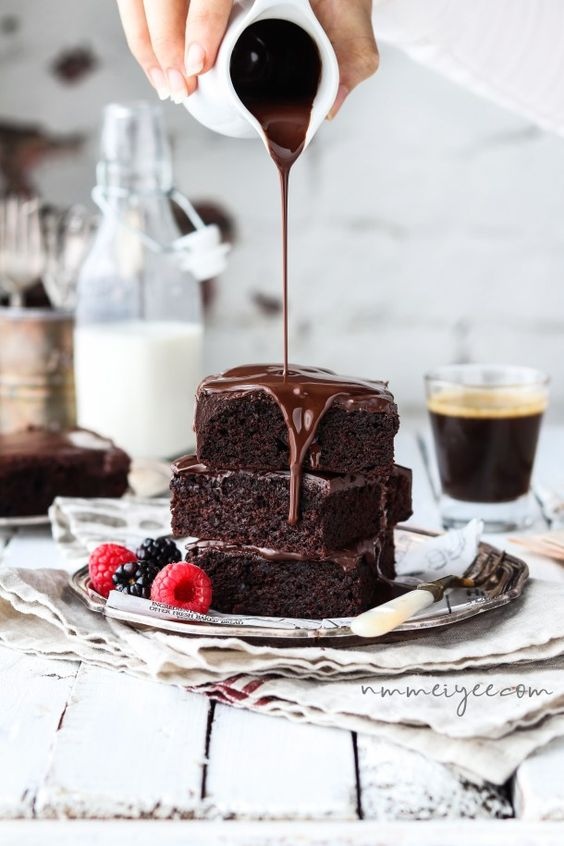
Something quick, easy and delectable are few of the pre-requisites required for adding to the list of holiday baking. If chocolate is added in, the better. It would be something that blend in with other well loved and basic desserts. That something would be square, baked or frozen cut choclate cake pieces, more popularly known as the “brownie”. Coming in a variety of forms, from fudgey to cakey with nuts, fudge, frosting, cream cheese, chocolate chips and the favourites included in the batter; the brownie is an all-time favourite of many. Like sheet cookies, they may eaten by self or with milk, ice cream (a la mode), topped with whipped cream or sprinkled with powdered sugar and fudge.

Like all delectable treats, brownies have their own share of legends. As one legend credits the brownie to the creative ingenuity of Palmer House Hotel pastry chef (1893) for the Palmer House Brownie with walnuts and an apricot glaze made for the Chicago World’s Columbian Exposition on the request of the owner’s socialite wife Bertha Palmer. The first-known printed use of the word “brownie” was to describe a dessert in the Boston Cooking-School Cook Book by Fannie Farmer (1896 version) in reference for a cookie-type confection that was colored and flavored with molasses and made in fluted marguerite molds. Later further publications like The Boston Cooking-School Cook Book (1906) edited by the same Fannie Merritt Farmer records a recipe brownie as an adaptation of her chocolate cookie recipe to a bar cookie baked in a rectangular pan. Another well record as written in the Baking Classics (Betty Crocker) is of a housewife who was making a chocolate cake but forgot to add baking powder. When her cake didn’t rise properly, instead of tossing it out, she cut and served the flat pieces (Bangor, Maine) which would probably account for the Bangor Brownies.

As food historians try to still trace the exact inventor of the “brownie” while the legends credit it to added melted chocolate to a batch of biscuits (added by mistake) or the cook who didn’t have enough flour while baking a cake; brownie are one of the simple things that can be made quite elaborate for the festive season. For instance consider the sandwich brownie (with an ice-cream, cream, icing sugar, meringue or peanut butter as the filling in the middle) or the layered brownie with double chocolate chip at the base, then the layer of Oreos and finally brownie batter on billows of cream cheese, a delight for the wintry holidays. As for the mix, add a scent of cinnamon, essence of the vanilla (blondie twist), sprinkle of the flavours of star-anise, honey or even a little of the cayenne for that extra “hot” to the sweet; brownie can be made as to own choice, flavours and twists. A platter of homemade special brownie can give an extra zest to the holidays. So set, get and go experimenting for a new family festive tradition.

1907
Lowney’s Cook Book
Boston, Massachusetts

Bangor Brownies (p 261)
¼ cup butter
1 cup brown sugar
3 squares chocolate
1 egg
½ to ¾ cup flour
1 cup nut meats
¼ teaspoon salt

“cut in strips”
Source: New England Recipes 

Posted in Daily, Food, Stories Around the World

As Simple as “Sandwich”

Typically there in almost every household menu, whether it be a snack meal, lunch or dinner or simply a flash picnic meal, ranging from being savoury to sweet or deli made as well as simple and loaded with plenty of fillings, sandwiches have been undeniably had by the old and the young, at some point of time. The popularity lies in it’s ease in making it as well as having it, tapering each menu as per own individual choice.

“The idea of a sandwich as a snack goes back to Roman times. Scandinavians perfected the technique with the Danish open-faced sandwich, or smorroebrod, consisting of thinly sliced, buttered bread and many delectable toppings.” DeeDee Stovel ( author of Picnic: 125 Recipes with 29 Seasonal Menus)

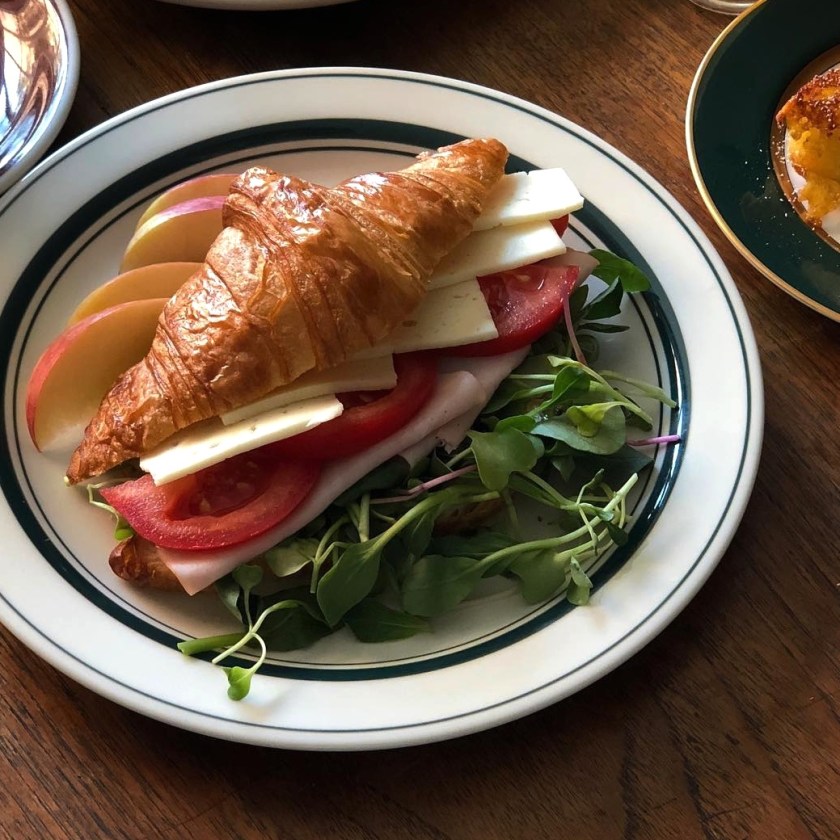
Fillings of either a savoury kind (vegetables, sliced cheese, meat and the like) or simply something sweet and buttery placed on or between slices of bread (two or more) make up the basic sandwich. Although in general, if two or more pieces of bread serve as a wrap or container holding in a set of fillings, which can be had as finger foods, constitute “the sandwich”. Though the name “sandwich” is attributed to John Montagu, 4th Earl of Sandwich, this basic combination has been there quite earlier.

The use of bread (including flat-breads) or bread-like staple to lie over and under or simply cover up or used to scoop up, enclose or wrap up another mix of ingredients was used in such a fashion in various cultures across the continents. Throughout Western Asia and northern Africa areas, the indigenous cuisine had the use of flat-breads ( bread baked in flat rounds, contrasted tot he European loaf), whih were used to scoop or wrap small amounts of food (in a spoon like fashion) while having the meal.

As per records, Hillel the Elder (ancient Jewish sage) had wrapped meat from the Paschal lamb and bitter herbs in a soft matzah—flat, unleavened bread—during Passover (like a modern wrap). The European Middle Ages saw “trenchers” (thick slabs of coarse and usually stale bread) being used as plates. After the meal, these food-soaked trenchers were fed to dogs. Seventeenth century Netherlands had the immediate culinary precursor (with a direct connection to the English sandwich)as recorded by the naturalist John Ray that in the taverns beef hung from the rafters “which they cut into thin slices and eat with bread and butter laying the slices upon the butter”, which were served as the Dutch “belegde broodje” an open-faced sandwich.

“It’s like making a sandwich. I start with the bread and the meat. That’s the architecture. Add some cheese, lettuce and tomato. That’s character development and polishing. Then, the fun part. All the little historical details and the slang and the humor is the mayonnaise. I go back and slather that shit everywhere. The mayo is the best part. I’m a bit messy with the mayo.” Laini Giles

Moving forwards to the eighteenth century England, the popularity of the sandwich arose as the popular myth that bread and meat sustained Lord Sandwich at the gambling table (as recorded in Tour to London by Pierre-Jean Grosley). As legend goes Lord Sandwich ( being a very conversant gambler and into many portfolios for the government) didn’t take the time to have a meal during his long hours playing at the card table. Instead he would ask his servants to bring him slices of meat between two slices of bread. This habit (well known among his gambling friends) enticed them to order as “the same as Sandwich!”. Thus the terminology “sandwich” was born. Alternative account as written by N.A.M.Rodger (Sandwich’s biographer), who suggests that Sandwich’s commitments to the navy, politics and the arts meant that the first sandwich was more likely to have been consumed at his work desk. As per records the original sandwich was a piece of salt beef between two slices of toasted bread.

What was initially perceived as food that men shared while enjoying a game or drink as social nights, the sandwich slowly began appearing in polite society as a late-night meal among the aristocracy. With the rise of the industrial era and the working classes as well as the ease of making and inexpensive ingredients, the popularity of the sandwich rose in the nineteenth century. The street vendors had popularized the sandwich sales (London, 1850). Also typically serving liver and beef sandwiches, sandwich bars were set up (especially in western Holland). The sandwich was first promoted as an elaborate meal at supper, in the United States. As bread became a staple of the American diet (early 20th century), the sandwich became the same kind of popular, quick meal following the widespread trend of the Mediterranean and European cuisine.

“I love sandwiches. Let’s face it, life is better between two pieces of bread.” Jeff Mauro

By itself, sandwich has a wide range of varieties, from the simple PB&J sandwich to the more complicated fillings. Broadly mentioning the major types of sandwich include those with the two slices of bread (or halves of a baguette or roll) with other ingredients between; more complex sandwiches like club, hero, hoagie or submarine sandwich, open-faced sandwich and the pocket sandwiches. Based on the fillings as well as type of sandwich, there is the BLT, cheese sandwich, French dip, hamburger, Monte Cristo, muffuletta, pastrami on rye, peanut butter and jelly sandwich, cheese-steak, Reuben and sloppy joe to mention a few.

Few misnomers include the sandwich cookies and ice cream sandwiches, named by analogy not because of them being bread containing food are generally not considered sandwiches in the sense of a bread-containing bits. Another variant is the layer cake or sandwich cake, made of multiple stacked sheets of cake, held together by frosting or another filling type like such as jam or other preserves.

“Enjoy every sandwich.” Warren Zevon

Sandwiches, today can be filled with a variety of fillings, ingredients based on choice, availability, ingenuity and locality. From the Baloney salad sandwich to the Vietnamese Bánh mì or the Chilean Churrasco, French croque-madam, Chinese Rou jia mo, Southeast Asian Roti john, Finnish Ruisleipä and Hunagrian Zsíroskenyér to mention a few, the sandwich culture has evolved in a way. Keeping in a more creative manner fillings can range from the more bizarre like popcorn or marshmellows to Oreo cookies or the more intricate and spicy curry for a change. So when in a flurry for time, getting creative with a sandwich can o wonders for the body, mind and soul.

“I put some flour, salt, and spices in a freezer bag and then put the pieces of lamb in and then went shake-shake-shake. The lamb was nicely covered with the flour. I browned the lamb and then put it aside. Then I fried some onion with cinnamon, cloves, and cardamom, added some tomatoes and then the lamb, and cooked until the lamb was all flaky. I mixed chopped lettuce, pieces of avocado, and pomegranate seeds, along with a little bit of lemon juice. I cut the pita bread open, put the lamb curry in, and then the lettuce-avocado mixture. All done!” Amulya Malladi (author of Serving Crazy with Curry)