Posted in Daily, Food

Back to “Mush Meal”

Spooning the porridge into my nephew’s mouth; while doing a short stint of baby-sitting at the family home, was indeed a remarkable experience. The mush meal of ragi with jaggery had lead to early memories of feeding my toddler and creative ways that were tried to mash the cereals, convert them into an exciting enticing gooey mush and trying to prevent the “spit battle” with these young people. While most of the gooey mesh landed in the little mouth (more than on the bib); surprisingly the porridge pot was emptied by the adults ranging from twelve years to fifty. Though it was not just gooey creamy mush but laced with a couple of raisin, honey, dried cranberries and dates as a post luncheon quick dessert.

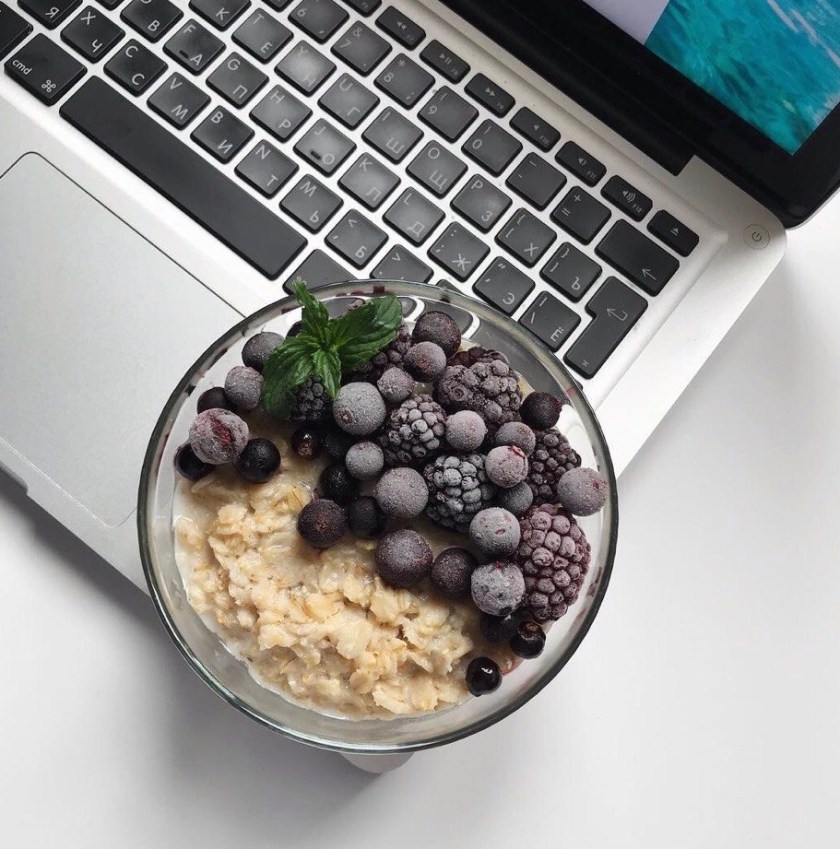
And for anyone who thinks that these mush meals are just for these infants, think twice before refusing the wholesome meal of grits (ground corn meal), semolina and milk porridge or the good old oats or wheat porridge laced with plenty of fresh berries, treacle on top and caramelized sugar to go, all complete with an omelette and bread to satisfy the morning hunger pangs, especially when meals have to quick, simple, wholesome and varied.

From the very early days of primitive cooking, the making of these mush meals was what sustained them especially during the lean periods when meat was scare or inedible. Besides requiring very basic preparatory time, these meals could be prepared anywhere and everywhere as long as one had a supply of grains, water, a pan and the fire. Add-ons of sugar, wild berries, honey, vegetables and meat were something that had evolved over the years.

As for the good old porridge, there are plenty of varieties to be tried. From the South American Avena (drink prepared with stewed oatmeal, milk, water, cinnamon, clove and sugar), Malaysian and Indonesian preparation of Bubur ayam (rice congee with shredded chicken meat), Italian Polenta (cornmeal boiled into a porridge, eaten directly or baked, fried, grilled) and the Swedish or Finnish “Vispipuuro” ( sweet, wheat semolina (manna) dessert porridge made with berries) are just a few of the numerous varieties and styles of these mush meals or porridge.

If one still feels that these mush meals as breakfast are off the menu; modify them a bit and serve them as sweet puddings. Besides being quick and basic, these desserts have an easy way of keeping everyone, (small or big), happy and second helpings are often a battle, especially the more sweeter they get. For a change of breakfast scene, getting a start with porridge may bring back memories of the early childhood years, quick meals and less dish up effort and time.

Posted in Daily, Food, Quotes

Lessons from the Kitchen

“Find something you’re passionate about and keep tremendously interested in it.” Julia Child

The second week of August always results in a tussle for the television remote, especially during the evening hours, before dinner. Eventually one gets to watch the latest sports round up or the current political scenes; while the other ends up watching You Tube for the vintage episodes of Julia Child’s shows namely “The French Chef”. Marking the birth week of Julia Child who had made French cooking sound feasible, few shows presenting her famous recipes, episodes or the iconic movie Julie & Julia (2009), paying a tribute to this legendary chef. Though one mayn’t be an avid chef or interested in the art of cooking, there are a couple of lessons on the kitchen front that Julia Child had taught her viewers over the years.

“You’ll never know everything about anything, especially something you love.” Julia Child

“…no one is born a great cook, one learns by doing.” Julia Child, My Life in France

The first few years away from the home environment results in one learning the basic few cooking skills. As the years move on, with the intermixing of cuisines and experimentation, taste buds refine and the likes develop. Entering into relationships and the adult life of the family, cooking for loved ones including making or recreating dishes as per their taste. As one’s own family evolves, cooking comes from the heart. In sequence, what comes from the heart is born out of love, care and interest for the loved ones. Such purpose will conquer the fear of “the dish going bad or wrong”. Along with finesse, it is the dash of love that matters the most.

“The only real stumbling block is fear of failure. In cooking you’ve got to have a what-the-hell attitude.” Julia Child

“You don’t have to cook fancy or complicated masterpieces – just good food from fresh ingredients.” Julia Child

During the early years, kitchens were fun especially during the rainy days. Learning to mix the flour, knead it and make flatbread was more about fun and doing, than understanding what happens. Then as home science begins during the middle school and science is explored further, one begins to comprehend the science in the kitchen. Later once alone, cooking becomes an experimentation of flavours, mix of colours, interest and imagination. Eventually cooking evolves into a form of art and science, spiking the interest of the mind as well as the senses.

“The more you know, the more you can create. There’s no end to imagination in the kitchen.” Julia Child via Lynn Gilbert, Particular Passions: Talks With Women Who Have Shaped Our Times

“One of the secrets, and pleasures, of cooking is to learn to correct something if it goes awry; and one of the lessons is to grin and bear it if it cannot be fixed.” Julia Child, My Life in France

Over the years from a novice to learning to master the meals for family and friends, there have been epic disasters, emergency restaurant bookings, late night takeaways and unplanned visits for the family homestead dinners. Yet through the mess, mistakes have been understood and corrected. New recipes and cuisines experimented, modified and old, tested or tried recipes redone with one’s own signature style. Through the uphills and downhills in the kitchen, it is still the fun that stays in the memories made for the self, with children, family and friends around. Man mayn’t live by bread alone, but making it in style, from scratch and with own flavours gives a full sense of accomplishment, happiness within and fun memories to hold onto for a lifetime.

“This is my invariable advice to people: Learn how to cook- try new recipes, learn from your mistakes, be fearless, and above all have fun!” Julia Child, My Life in France

Posted in Daily, Food, Stories Around the World

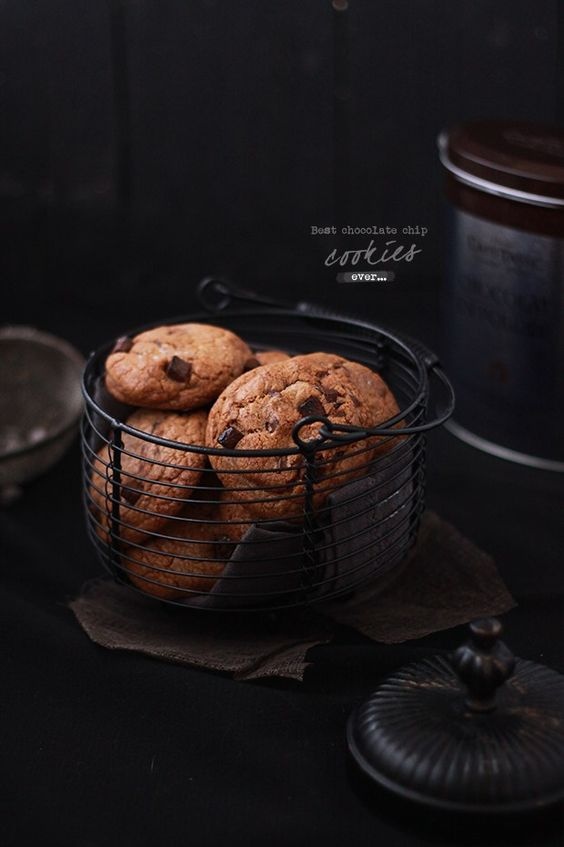
Chip it In, Bake It

Whitman, Massachusetts, 1938

“We had been serving a thin butterscotch nut cookie with ice cream. Everybody seemed to love it, but I was trying to give them something different. So I came up with Toll House cookie. Add up chopped up bits from from a Nestlé semi-sweet chocolate bar into a cookie. The original recipe is called “Toll House Chocolate Crunch Cookies.”
– American Chef Ruth Graves Wakefield, Toll House Inn
(Wakefield, Ruth Graves (1942). Ruth Wakefield’s Toll House Tried and True Recipes. M. Barrows & Company, Inc.)

One of the famous drop cookies, “the chocolate chip cookie” had its’ origins in the early 1900s; wherein chocolate chips or choclate morsels were added to the regular cookie dough as the distinguishing ingredient. With a dough composed of butter, both brown and white sugar, semi-sweet chocolate chips and vanilla; the traditional recipe had evolved. Originally invented by the American chef Ruth Graves Wakefield and chef Sue Brides (1938) when the former owned the Toll House Inn (Whitman, Massachusetts); a popular restaurant that featured home cooking. Wakefield credited Brides with helping her make the famous chocolate chip cookie.

Over the years, variations with different varieties of chocolate, change of ingredients like nuts, oatmeal, raisins and the like paved way. Variations on the original recipe may add other types of chocolate, vegan substitutes as well as additional ingredients such as nuts or oatmeal. The ‘double’ or ‘triple’ chocolate chip cookies are so called when dough flavored with chocolate or cocoa powder are used before chocolate chips are mixed in. These variations of the recipe are often referred to as , depending on the combination of dough and chocolate types.

“If you can’t change the world with chocolate chip cookies, how can you change the world?” Pat Murphy

As the popularity grew, especially during WWII, soldiers from Massachusetts who were stationed overseas shared the cookies they received in care packages from back home with soldiers from other parts of the United States. Soon hundreds of soldiers asked their families to send them some Toll House cookies. Thus began the craze for the chocolate chip cookie with Wakefield receiving letters around the world requesting her recipe.

In proportion to the increased popularity of the choclate chip cookie, the sales of Nestlé’s semi-sweet chocolate used rose. Andrew Nestlé offered Ruth a deal to buy the rights to her recipe, as well as the rights to use her and the Toll House name when advertising his acquisition. The business proposal was accepted by Ruth for one whole dollar and a lifetime supply of Nestlé chocolate. Nestlé quickly launched a new marketing campaign that advertised the chocolate chips primarily as main ingredients for cookies, engraving the recipe for the Toll House Cookie on the package print.

“ One of the best things in life- warm chocolate chip cookies.” Anonymous

In an interview (2017), Sue Brides’ daughter, Peg shared the original recipe that was passed down to her.  The original Toll House cookie recipe, according to Peg:

1 1/2 cups of shortening
1 1/8 cups of sugar
1 1/8 cups of brown sugar
3 eggs
1 1/2 teaspoon of salt
3 1/8 cups of flour (Peg prefers King Arthur all purpose)
1 1/2 teaspoon of hot water
1 1/2 teaspoon of baking soda
1 1/2 teaspoon of vanilla
Chocolate chips (and walnuts)
Bake at 350 degrees for 12-13 minutes
[The Tried and True Recipes cook book specifies “2 bars (7 oz.) Nestlé’s yellow label chocolate, semi-sweet, which has been cut in pieces the size of a pea.”]
(Source:Stephanos, Maria (2017-06-21). “Secret’s out! Here’s the ‘real recipe’ for Toll House chocolate chip cookies”)

With Chocolate Chip Cookie Day being celebrated by foodimentarians tomorrow (August 4th), making similar or own variations of this delectable treat would be a lovely weekend surprise and fun event.

Posted in Daily, Food, Stories Around the World

From Sundae to “Cones”

With the Ice cream month of July, coming to a near end; indulging in the various combinations and food innovations with ice cream being a primary ingredient is a must. Although summer was never an excuse to indulge in the delights of ice cream, the latter is a good enough reason to beat the intermittent summer heat as well as the monsoon blues.

“Always serve too much hot fudge sauce on hot fudge sundaes. It makes people overjoyed, and puts them in your debt.” Judith Olney

Going creative to serve and enjoy ice cream was what lead to the origin of the ice cream sundae as well as the ice cream cone. Regarding the legends leading to the creation of the ice cream sundae, the frequent underlining factor was that, it was a variation of the popular ice cream soda. Made towards the 20th century, one factor that played a role in it’s creation was the banning of soda on Sundays in Illionis. Quite soon, it’s popularity took over with ice cream sundae becoming the weekend semi-official confection. As accounted by the Ice Cream Trade Journal (1909) along with plain or French sundae, other exotic varieties were listed like Robin Hood sundae, Cocoa Caramel sundae, Black Hawk sundae, Angel Cake sundae, Cinnamon Peak sundae, Opera sundae, Fleur D’Orange sundae, Tally-Ho Sundae, Bismarck and George Washington sundaes, to list a few.

Besides the ice cream, partially what lures some, is the fascinating cone that comes with it. The soft crunchiness adds to the flavours of the ice cream. The ice cream cone, poke (Ireland and Scotland) or cornet is usually made of a wafer similar in texture to a waffle, as a dry pastry which enables ice cream to be had held in the hand. From wafer (or cake) cones, waffle cones to sugar cones, there are different types of ice cream cone; styled also as pretzel cones, chocolate-coated cones or even double wafer cones. From the regular conical, pointed base to flat shaped base, cones can be shaped as the latter to stay upright by self.

As early as 1825, edible cones were mentioned in the French cookbooks with Archambault’s description of rolling a cone from little waffles. Towards the 19th century, English cook A.B.Marshall’s (1888) recipe for “Cornet with Cream” said that “the cornets were made with almonds and baked in the oven, not pressed between irons”. While edible cones were patented independently by two Italian entrepreneurs(1902-03), the fashion of the ice cream cone had gained momentum at the St. Louis World’s Fair (1904). There Arnold Fornachou, a concessionaire who was running an ice cream booth had ran short on paper cups. Buying waffles from Ernest Hamwi, a waffle vendor nearby; Fornachou rolled the waffles into cones to hold the ice cream.

Although this was the most widely circulated story, much dispute is still laid as to where ice-cream cones became mainstream. Credit for the ice cream cone was also claimed by Abe Doumar and the Doumar family can also claim credit for the ice cream cone. Likewise Doumar had also created rolled up the waffles with a scoop of ice cream on top. He began by selling the cones at the St. Louis Exposition which became an instant success. In fact he had set up the Doumar’s Drive In, Norfolk, Virginia (1907). Even today it operates at the same location established initially, making it a Hampton Roads landmark.

“I doubt whether the world holds for anyone a more soul-stirring surprise than the first adventure with ice cream.” Heywood Broun

To complete the ice cream experience; mixing the different styles of ice cream soda, sundae, toppings, flavours served in waffles or cones would add to the fun as well as palatable experimentation, bringing delight not just to the taste cravings or as comfort food, but also as an artistic rendering to the eye. After all ice cream lifts not just the taste cravings but the mood as a whole experience, which is what a part of life is about.

Posted in Daily, Food, Stories Around the World

Of Ice-cream, Soda and Evolution…

“Summer would not be summer without Ice-cream. Ice-cream is the favorite currency of love.” Puck

For my kids, summer translates into picnics, beaches, barbecues and of course, never to forget it, “the ice-cream“. Being in the National Ice cream Month (July) with the end of the week marking the National Ice cream Day (third Sunday of July), the truce between the “young ones” and their “veggies” was an ice cream a day for dessert. As a part of improvisation of the existing recipes and combinations, delving into the evolution and progress of ice cream makes for an interesting read.

Although the origins of this “summer dessert” have been rough traced back to the 4th century B.C.; the modern day versions with the wide variety of flavours as well as presentations were made feasible only by the 18th century. Early records of it’s popularity include the Roman emperor Nero (37-68 CE) who ordered ice to be brought from the mountains and combined with fruit toppings and King Tang (618-97 CE) of Shang, China who had a method of creating ice and milk concoctions. While “Ice cream” may have been likely brought to Europe from China. As legends go, when Italian duchess Catherine de’ Medici married the Duke of Orléans (1533), the French court had few Italian chefs who had recipes for flavored ices or sorbets. A century later, Charles I of England was impressed by the “frozen snow” that he offered his own ice cream maker a lifetime pension in return for keeping the formula a secret, so that ice cream could be a royal prerogative. While there is no historical evidence to support these legends, the recipes for ices, sherbets and milk ices had evolved gradually over time and were usually served in the fashionable royal courts or in the upper class society.

“Without ice cream, there would be darkness and chaos.” Don Kardong

As recipes for flavoured ices began to be published for the household cooks and ice storing became more feasible, flavoured ices were enjoyed by the middle class society. Towards the early 19th century, Augustus Jackson had created several popular ice cream flavours, packed them into tin cans and distributed them to the ice cream parlours of Philadelphia. Credited with inventing an improved method for manufacturing of ice cream, he is technically considered as the modern day father of ice cream.

Going years ahead, the Franklin’s Institute semi-centennial celebration (1874) saw the creation of the ice cream float by Robert McCay Green, Pennsylvania. The traditional account was on that particularly hot day, Mr. Green ran out of ice for the flavored drinks he was selling and used vanilla ice cream from a neighboring vendor, thereby inventing a new drink. As published by his own account in the Soda Fountain magazine (1910), states that after some experimenting (after effect of competition with nearby vendors), he had decided to combine ice cream and soda water. During the celebration, he sold vanilla ice cream with soda water and a choice of 16 flavored syrups. Although there are at least three other claimants for the invention of ice cream float, namely Sanders, Mohr and Guy; wherein the latter is said to have absentmindedly mixed ice cream and soda (1872), to his customer’s delight. However may the legends go, the combination of ice cream and soda have stayed on.

“Sometimes life is just what it is, and the best you can hope for is ice cream.”  Abbi Waxman

From being in a boxed container to served with soda, sprinkles, toppings and more, ice cream has evolved from being a simple street or roadside treat to an artistic rendering for functions. Ice cream with its’ many variants like ice lolly, Malyasian Ais kacang, Turkish dondurma, gelato, kulfi and the like; are all here to stay and evolve, changing the “sweet trends” of dessert over time.


Posted in Daily, Food, Stories Around the World

OF Fries, Origin and Evolution

Thin or thick, served hot, soft or crispy and had as snack food or in accompaniment to main course of lunch or dinner; french fries or just fries (known as chips or finger fries) are batonnet or allumette-cut deep fried potatoes. An all time favourite especially for children, foodies, surprise occasions; they can be had salted or plain, or with ketchup, vinegar, mayonnaise, local specialty sauces and dips, or even be topped more heavily as chilli cheese fries, poutine and the like.

“Even if I’m eating healthy, I let myself indulge with french fries. That’s my favorite thing. You only live once!” Kate Mara

Like all the best things in the “food dictionary”, the origin or creator of these “golden strips” aren’t exactly known. Although the general consensus is that the “French Fry” is more of “Belgian origin than French.”

Potatoes were first introduced to Europe through the Spanish. On the Spanish exploration of Americas, they had encountered potatoes among the native food supply. As accounts of Jimenez de Quesada and the Spanish forces ( 1537) detail the discovery of potatoes among the native villages of Colombia, where they were called as “truffles” initially. When potatoes were brought back to Spain and introduced to Italy too. Then these potatoes were quite small, bitter and didn’t grow well in both places. Over time, larger and less bitter varieties were cultivated and gradually accepted elsewhere in Europe. Spain then controlled much of the modern day Belgium. While historical accounts indicate that Belgians were frying up ( or sauteing) thin strips of potatoes ( 17th to 18th century) in the Meuse Valley between Dinat and Liege. This idea could possibly arise from the original Belgian cuisine which usually fried small fish as part of their staple meals. With shortage of fish in winter, potatoes were an alternative.

“I try to have no absolute nos. I love french fries, I like a good burger, and I like pie. And that’s okay.” Michelle Obama

To explain the “French” of the French fries would be possible when two historical events are taken into account. What once the French had considered as hog feed or cause of various diseases, the change in their opinion due to potatoes was largely credited to the French Army medical officer Antoine-Augustine Parmentier, who was a captive of the Seven Years War and had survived on potatoes as a part of his prison rations. On his return back to France, he had aggressively campaigned as well as cultivated potatoes, promoting it’s benefits to the upper classes as well.

Also during the Franco-Austrian War, which had taken place near around the modern day Belgium, the possibility that French soldiers were introduced to the potato fries by the Belgians exists. Although gradually potato was accepted and cultivated in France; the famine of 1785 made potatoes popular in France. Slowly newer recipes and modes of cooking these spuds were tried. Once discovered or invented or improvised (from Belgian fries?), these fries became popular, especially in Paris, where they were known as “frites” and sold by push-cart vendors on the streets.

“Show me a person who doesn’t like french fries and we’ll swap lies.” Joan Lunden

Whether from Belgium or France, once these “frites” became popular, through colonization, migration as well as wars; they had become a much loved food on the menus across Europe, Britain and Americas. With the spread of fast food chains, these “frites” began to be introduced to the world largely as “French Fries”.

“If I could eat French fries every day of my life, I would.” Adrienne C. Moore

The modern day french fries, though best loved when salted, spiced and fried in oil; for more healthier options can be baked (or even grilled) with seasonings, toppings and all. From the various types of cut fries (crinkle-cut or wavy, curly, shoestring, steak, tornado, waffle) to different preparations like french fry sandwiches, chilli cheese fries, chorrillana to mention a few as well as alternatives like sweet potatoes or potato wedges; one can go creative with these frites. To celebrate the National French Fry day ( July 13th) it would be fun to go on a limb and try the regular to the different combination of the modern fries. For the more experimental ones, it would be interesting to combine fries to the regular dishes. For those of us who dislike potatoes or want healthier options, try baking sweet potatoes, thinly sliced carrots or beetroot with seasoning and all. After all the whole point of food is to relish various flavours, experiment, enjoy and simply have fun.

Posted in Daily, Food, Photography Art

Cooking to Culinary Arts

“Tell me what you eat, and I will tell you what you are.” Jean Anthelme Brillat-Savarin

For most gastronomes, culinary specialists, chefs, nutritionists as well as home cooks, food being cooked, served or even eaten reflects a lot of the “mood within”. For instance, if one is extremely tired after a long day, the easiest meal to make in a jiffy for a home cook is pasta and cheese followed by ice cream for the sweet end. On the other hand, to mark any special occasion, the requirement of a full three course meal (salad or appetizer, main course and meat) completed by a splendid (if not necessarily elaborate) dessert is a must. When in an angry mood, every chef at heart will go with their inner basic meal, not tuning to art of the eye, but just ensuring that the basic taste is palatable. Too irritated or bothered to cook, it will be pizza or “Chinese order” on the house. And when the mood is sad, it will be the comfort food , homemade, with a striking resemblance to one’s childhood or mother’s style, or the fast food version.

“The preparation of good food is merely another expression of art, one of the joys of civilized living.” Dione Lucas

Essentially, cooking is a very sensitive art. While one mayn’t have the intensive training or qualification to be a chef of Michelin three or five star rated restaurant, but if one can make a complete wholesome meal for self, family and friends, that alone is enough. In fact, cooking is an expression of love. For every ingredient which balances the meal, it is a reflection of the care, precision and the basics of science behind it.

“Anybody can make you enjoy the first bite of a dish, but only a real chef can make you enjoy the last.” Francois Minot

The “effective cooking” of today, is a balance of food and fun, of taste, experimentation and readily available ingredients. While baking involves following the written or “handed down” instructions to the point; cooking involves a little experimentation of ingredients, spices as well as art. The evolution of cooking into “culinary arts” over the years, has resulted in a whole new range of varied dishes blended together with taste, nutrition, quality, tradition, serving, managing as well as visual presentation to complete the effect.

“The discovery of a new dish confers more happiness on humanity, than the discovery of a new star.” Jean Anthelme Brillat-Savarin

Entering into the month of “culinary arts” (July); the professional cooks and chefs who bring innovative cuisine from their kitchens to our tables every day are being recognized not just for their talent but devotion as well as contribution to cooking as an art form. For the home cook to experiment with technique and style, vast differences can be made by the order of adding the ingredients, plating as well as trying and blending the new recipes with the old ones. To start off, experimenting in small amounts can be tried. While most of the time, home cooking involves the regular, to celebrate this month, it would be good to plate the regular different or try something new altogether. For every cook, is indeed a chef with a hidden artistic side.

“Culinary tradition is not always based on fact. Sometimes it’s based on history, on habits that come out of a time when kitchens were fueled by charcoal.” Alton Brown

“In the abstract art of cooking,
ingredients trump appliances,
passion supersedes expertise,
creativity triumphs over technique,
spontaneity inspires invention,
and wine makes even the worst culinary disaster taste delicious.”
Bob Blumer