Posted in Daily, Food, Stories Around the World

Simple, Smoked and Short

One of the downsides of having to work far from home, is to not only the commute but also getting the meals right. With lunch packed and breakfast a tight run, getting the right share of calories is a constant battle. While fruit and salad can be quite easy and handy; for unexpected long hours it keeps the hunger pangs at bay only for a short while. While vending machines, cafes and delis are there plenty around, they cause significant hurt to the wallet as well as physique. Which is why short quick healthy meals get highlighted and tagged, to be learnt as soon as feasible.

One of the first endeavors was to modify the healthy combination of carbs and proteins right, by the basic sandwiches. The first to be subjected was “pastrami on rye”, making it to own adaptation and specifications. Technically of Romanian origin, pastrami is a meat product usually made from beef brisket, lamb or turkey. The raw meat is brined, partially dried, seasoned with herbs and spices, then smoked and steamed. Etymologically, the name “pastrami” can be traced to Roamnian pastrama; the latter being traced to the Bulgarian pastrija or Turkish pastirma or “bastirma” meaning pressed meat.

While earlier meat shops used to process them, these days they are readily available in the commercial chain grocers or supermarkets, commonly made as per the norms of the locality, either from lamb, turkey or meat. One of the advantages of the “pressed meat” is that it can be cut into thin wafer slices, medium cuts or slices or a really large filled sandwich of choice. The best part is there is no frying or oil involved.

As the sandwich chains and delis got onto the trend, serving meat sandwiches especially pastrami sandwiches became a novelty. For all sandwich lovers, it is a must. While for school or office lunches, this makes a good change from the routine and a break form the elaborate morning kitchen preparations. That one hour of lunch break can be made into a light, wholesome and healthy meal.

“You sit down at Katz’s and you eat the big bowl of pickles and you’re eating the pastrami sandwich, and halfway through you say to yourself, I should really wrap this up and save it for tomorrow. But the sandwich is calling you: Remember the taste you just had.” Mario Batali

Posted in Food, Stories Around the World

Cookies, Spices and Holidays

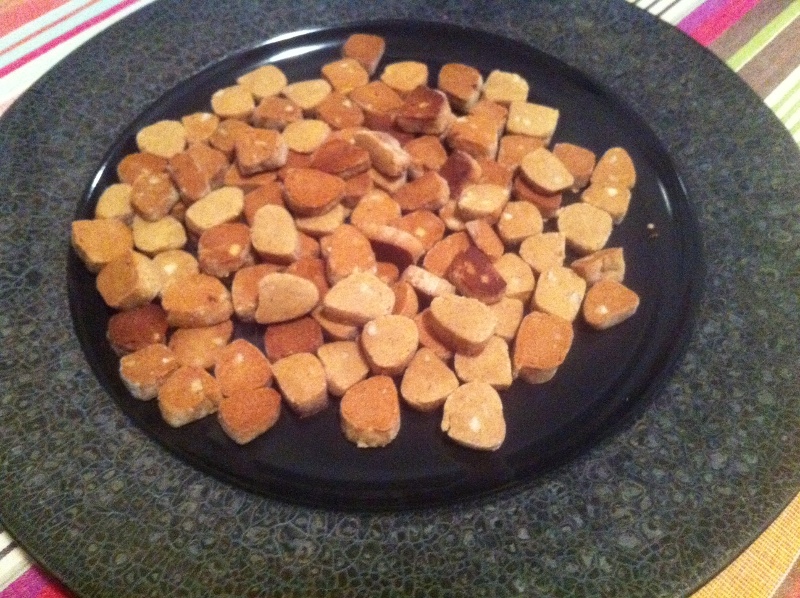
No Christmas or winter holidays would be complete without the tiny peppernuts, cookies baked and stored in tins, kept for the cold nights or after hours of carolling. Made with plenty of assistance, these holiday cookies come by many different names, varying from region to region, with their own legends behind them. These tiny spice cookies are quite popular as holiday treats, known as pepernoten (Dutch), pfeffernuesse or peppernuts (English) or pebernødder in Danish. While the exact origin maybe uncertain, traditional beliefs links these cookies to the Dutch feast of Sinterklaas, where children receive gifts from St. Nicholas. Since 1850, these cookies have been a part and parcel of the European yuletide celebrations.

Flour, brown sugar, sugar, cloves, cinnamon.

Unlike the name “peppernut”, these cookies don’t always contain nuts in its ingredients. The size of the cookie, roughly similar to nuts and can be eaten as a handful, which probably accounts for the name. The ease of making these pfeffernüsse has resulted in a varied range of recipes, with variations made in the used of the amounts of aromatic spices like cinnamon, cloves, mace, nutmeg, cardamom or anise as well as the sweeteners used, ranging from options of powdered sugar, brown sugar, molasses, honey or a fine dusting of icing sugar. To make the dough similar to the early century versions, leavening agents like potassium or ammonium carbonate are used to get the sticky and dense consistency.

Accounting for the regional variations pepernoots are similar Dutch cookie-like confectionery. Certain recipes are similar to the Pfeffernüsse although they look completely different when baked. Other recipes vary in the adding of cardamom, pepper, butter, vinegar, eggs, brown syrup to the usual holiday cookie ingredients of flour (wheat or rye), cinnamon and cloves. Light brown and square shaped, they are fairly chewy and harden gradually when exposed to the air.

“Best of all are the decorations the grandchildren have made ~ fat little stars and rather crooked Santas, shaped out of dough and baked in the oven.” Gladys Taber

In addition to the baking, the customs with these pepernoten (or pepernoots) stay on. From hiding handfuls of them through the room so that children can look for them or hiding pocketfuls of them while caroling or for ice skating breaks. In earlier days, new parents would place one or two carrots underneath the infant’s pillow so that Sinterklaas would then come and bless the child by showering the infant with “pepernoten”.

Modifying these recipes by choice, making them gluten-free or adding the favourite ingredients and toppings gives these holiday cookies a personal touch and flavour. In the midst of all, getting the ingredients kneaded with help of many tiny hands gives these holiday spice cookies a pleasant feel and memories full of warmth and laughter worth treasuring for life.

“Peacekeeper Christmas Spice Cookies 225g butter, softened 200g sugar 235ml molasses 1 egg 2 tbsp. sour cream 750g all-purpose flour 2 tbsp. baking powder 5g baking soda 1 tsp. ground cinnamon 1 tsp. ground ginger pinch salt 145g chopped walnuts 145g golden raisins 145g chopped dates In a large mixing bowl, cream the butter and sugar together. Add the molasses, egg and sour cream; mix well. Combine the flour, baking powder, baking soda, cinnamon, ginger and salt; gradually add to creamed mixture. Stir in walnuts, raisins and dates. Chill for 2 hours or until easy to handle. On a floured surface, roll out dough finely. Cut with a 21/2-inch round cookie cutter. Place on greased baking sheets. Bake at 325°F for 12–15 minutes. Cool completely.”
Jenny Colgan (Christmas at the Cupcake Cafe)

Posted in Daily, Food, Uncategorized

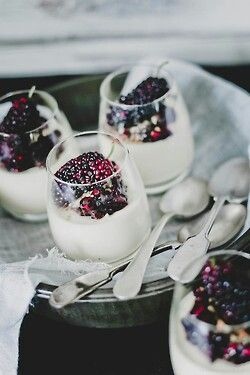
Of Parfait, Choice and Style

For any meal, the finale is marked by that delightful bit of sweetness. With the rising awareness of eating healthy and right, the right balance has to be struck at times between the temptation of the sugar craving to close the meal and to stay on the low healthy calorie counter too. Which is why “parfait” has evolved since it’s inception to the present day.

The oldest known recipe can be traced to 1894, of French origin where it had started off as a frozen dessert. While the French prefer to make the base from cream, egg, sugar and syrup creating a perfect custard-like puree, known as “the parfait”; whereas the American counterpart includes an artful layering of varied ingredients like granola, nuts, yogurt, liqueurs with a topping of fruits or whipped cream layered and served in a tall glass.

Of recent, with new trends and various experimentation, parfaits have been introduced without the cream and liqueurs. Instead they are made by simply layering the fresh fruits ranging from berries, cut peaches, strawberries with yogurt , granola or nuts; served as a healthy snack, breakfast option or a light meal, as a change from the regular. Which ever way it may be, the popularity of the parfait lies not only in it’s ease of preparation and the delectable indulgence but also in the appealing art it holds in itself.

Posted in Food, Stories Around the World

Of Milk, Flour and Flavours

With the sweet tooth running pretty strong in the family genes, the question “what’s for dessert?” comes first, even before the table is laid. When the baking comes to a lull, the ever ready alternative comes as long as milk is plenty and available. From the Spanish Arroz Con Leche to the Muhalabieh of the Middle East or malabi (Israeli milk pudding), French Teurgoule, British Blancmange to the Indian Kheer or Persian Firni, there are countless variations and possibilities to the regular recipes of milk based puddings and desserts. Interestingly each dish in this vast list has their own history and legend behind them.

Milk. Rice flour ( of recent cornstarch). Sugar. Rosewater. Vanilla extract. Chopped nuts.

With legendary origins dating to Sassanid Persia (224-651), the milk based pudding Mhallabiyeh ( or Muhalabieh in Middle East, Israeli malabi) has been often made with the basic ingredients of rice, sugar, rice flour and milk. Although in the Middle Ages, muhallebi and blancmange (European counterpart) were made with shredded chicken.

As the legend goes, Muhallebi was first served by a Persian cook (late seventh century) to an Arab general, Al-Muhallab ibn Abi Sufra who had liked the dish and named it after him. Thereby this dish had entered the Arab cuisine. The initial recipes (10th century) were based on three versions of the basic dish: milk thickened with ground rice, milk with rice grains and chicken and an egg custard (without rice). Records from two 13th-century Arab cookbooks (one by al-Baghdadi, another from Andalusia) have recipes of a spiced pudding variation made with mutton instead of chicken. The Ottoman Empire has written records of two versions of muhallebi: a version with shredded chicken (tavuk gögsü) served during the reign of Mehmed the Conqueror and a later recipe(1530) for a meatless version flavored with rose water. Later records give a recipe for muhallebi named as “Ramazan cakes” (19th century English cookbook). This recipe records of boiling milk together with rice flour and sugar until the mixture reduces followed by which the pudding is then flavored with rose or jasmine extract and allowed to cool before it is sprinkled with powdered sugar.

Modern variations of the initial recipe has been seen in the substitution of the rice flour (or addition at times) by cornstarch or wheat starch depending on the thickness, consistency and creaminess required. The Israeli “malabi” is made from cream and milk cooked with corn starch and rose syrup, the latter being used primarily for flavouring. It is often topped with chopped pistachios, desiccated coconut, almond slivers as well as orange water flavorings. On the other hand, the Cyprian mahalebi (or mahalepi or muhallebi) is devoid of milk. Instead it is made from water, sugar, nisete flour ( or cornstarch/corn flour), rose water and when it is set, they add. When the muhallebi is set the Cypriots add rose called triantafyllo (rose squash /cordia/syrup) on top of it.

While making Muhallebi at home, various alternatives and add-ons to the classical recipe may be tried. More elaborate concoctions can be tried, like layering this pudding on a biscuit base for a chewy feel to balance out the sweet milky taste; or modify it as a drink based dessert. No matter what, with the sweetness of the milk (cream added as per preference) to balance out the taste of cereal and additional flavourings with various toppings and garnishes, this dessert will be a well loved addition to the list of no bake desserts.

Posted in Food, Stories Around the World

Of Kladdkaka and Chocolate

Butter. Eggs. Sugar. Cocoa or chopped dark chocolate. Vanilla sugar. Flour. Pinch of Salt.
Minimum Baking Time.

While prepping a sudden luncheon meet for old friends, the dessert dish had to be something different, for we three ladies were all dessert connoisseurs. Hunting down for quick cake recipes, had led to the Swedish Kladdkaka, a gooey choclate cake that requires the very basic ingredients and minimum preparatory as well as baking time. This venture had led to the revelation of interesting tidbits and details of this favoured Swedish delight.

Kladdkaka, literally translated as gooey or messy cake (more commonly known as “chocolate mud cake” is a dense sticky chocolate cake with a soft and gooey center, often served with whipped cream or vanilla ice cream and raspberries. Widely believed to be one of the best cakes for chocoholics, there are many variations to the standard recipe for this delight. One of the major reason for it’s gooey nature (quite different from brownies and other regular sugar cookies) is the absence of baking soda in this preparation. With just mild whisking, the absence of air bubble results in the stickiness.

While tracing the exact origin of this cake didn’t lead to any specific occasion or person, it is believed to have been inspired by the brownie or the French chocolate cake recipe; with its’ origin being at a time when baking soda wasn’t routinely available (probably around World War II). Another theory was that Kladdkaka came from Örebro where Gudrun Isaksson (1938) baked brownies from a recipe she received from the USA. As baking powder was difficult to get hold of then, the dough became liquid resulting in the chocolate mud cake. Alternatively it was believed that this cake came to Sweden via the editor-in-chief of the Veckojournalen (1968), Margareta Wickbom who had visited a cafe in Paris where she tasted chocolate cake and brought home the recipe. It was known as “Elake old man’s muffins” then, believed to be made first in muffin form.

Regardless of the roots, with the simplicity of the recipe, ingredients and quick baking time, it makes for a welcome change for the quick but elaborate dessert. Variations are there with coffee added to the regular flavour or making the cake on block chocolate to give a whitish texture to it, adding fruits or nuts as well as making the batter more lighter or luxurious or give it a flour-less twist. So for the kitchen experimenters or home chefs, dessertarian and chocoholics, here is another recipe and delight to add to the ever growing list.

“This cake is one of those cakes I take for granted somehow. I love it so much but I rarely bake it. Before I started baking like crazy, about 5 years ago, I used to bake two times a year, tops. Two times a year, that’s it. And when I did, it was always “kladdkaka” (roughly translated “sticky cake” or “gooey cake” but I’ll just call it Swedish chocolate cake). Why kladdkaka then? Well, first of all, it was the only recipe I knew how to make. Second, it’s probably the easiest thing you could possibly make, and it’s just so darn delicious. You simply have to make this one! And don’t forget to serve it with whipped cream (vanilla ice cream is ok as well)!”
Linda Lomelino, Call Me Cupcake

(Sources: http://kladdkakerecept.blogspot.com/, https://culturedarm.com/a-swedish-kladdkaka-recipe/)

Posted in Daily, Food, Photography Art, Stories Around the World

Little like the “Donut”

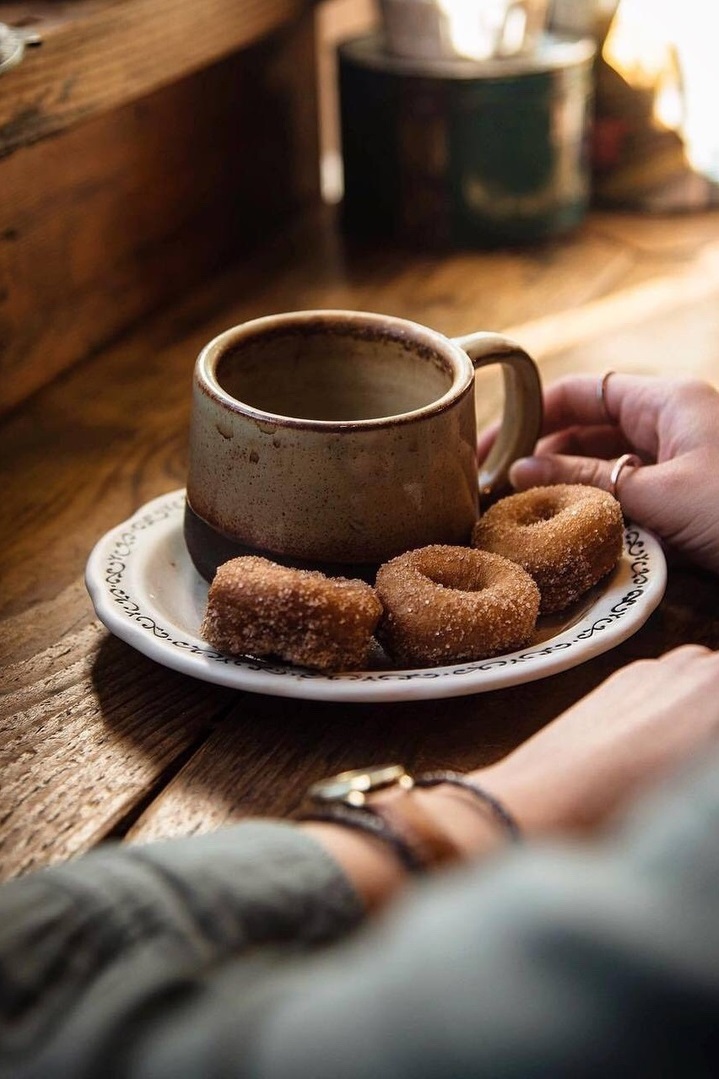
Deeply fried, made from flour dough, typically ring shaped with a hole or similar round shaped (without the hole), or filled with various toppings and flavourings, this sugar delight goes by the more popular name of “donut”. While donut may be considered more of an 18th century preparation with their origin more likely from the Dutch oliekoek, fried dough based confectionery has been there for quite some time in the various indigenous cuisines across the globe. The tradition of frying foods in edible oils have been evidenced to the era of Ancient Greece and Rome. As other cultures began to adapt their own methods over time, different variations came into the local cuisines, though the roots may trace back to common ground.

Made usually from flour (can include finely milled or regular variety) with a mix of water, eggs, milk, sugar, oil, shortening or leavening agents as well as flavourings added to the dough which is then shaped(or not) and deep fried. While doughnuts may be based on their shapes as rings, filled, balls, flattened spheres or twists; other variants include the cake type (like old fashioned doughnut) and the yeast-risen doughnuts. Exploring the indigenous variants to the modern “doughnuts” based on the indigenous cuisines, there a huge number of delicacies that fill the list with legends of their own.

“New mysteries. New day. Fresh doughnuts.” David Lynch

What happens when a baker accidentally drops a ball of dough into a pan of hot oil ? The resulting culinary experimentation would result in a light, spongy ring of dough fried in oil, when had in the Maghrebi cuisine, is known as “Sfenj” (translated as sponge). Also known as Khfaf (Algeria) or bambalouni (Tunisia), Sfenj is usually had for breakfast or tea, had plain or sprinkled with sugar or dipped to drizzled in honey or sweet syrup. Originating in the Al-Andalus era (8th to 10th century), the accidental drop of dough, had evolved to be an important part of the Andalusi cuisine, spreading over to the Banumarin dynasty (Morocco, 1270-1465) and then onto the France (13th century) where it had inspired beignets. Making homemade Sfenj, all depends on how long one wants the dough to rise and temperature of the oil while frying. Of recent, there have been recent variations to the regular sfenj, that is “Sfenj matifiyya” (sfenj pounded flat and fried a second time) and the “Sfenj matifiyya bil-baydh” (sfenj matifiyya with an egg added before refrying).

Moving across to the French Beignet (almost similar to the English fritter), these are basically a type of deep-fried pastry. Although beignets were more popular in the medieval French cuisine, the earliest similar forms may have been there in Ancient Rome. With the basic ingredients of flour, granulated sugar, evaporated milk, shortening agents and confectioner’s sugar; beignets can be made in various varieties depending on the pastry type used. While the French-style beignet is essentially deep fried choux pastry, beignets made with yeast pastry ( boules de Berlin) or those made with chestnut flour (Corsica, beignets de farine de châtaigne) with the latter being known as fritelli, are just few of the variants made. While making at home, many variations, add-ons or substitutes to the usual dough mix may be made, starting with the flour or adding of mashed bananas (plantains) or berries just to start off a few changes. Beignets may be served either as sweet desserts or breakfast food, the choice is own.

There are countless styles and variations to the various forms of “deep-fried dough” across the globe. While exploring and experimenting with the various cuisines, absorbing those recipes into the home kitchen and indigenous cuisine makes the fun part of cooking. Food is essential to life. Imbibing a litte bit of the food culture into the usual mix would not only excite the cooking bug or the palatal buds, but also start off a pleasant home and family tradition. After all, experiences are the what fills the treasure chests of life.

“Frosting was his favorite. He liked to eat doughnuts at every meal. Because it was healthier to eat six small meals a day than three large ones, he restricted himself: jellied for breakfast, glazed for brunch, cream-filled for lunch, frosting for linner, chocolate for dinner, and powdered sugar for 2 a.m. supermarket stakeout. Because linner coincided with the daily crime peak, he always ate his favorite variety to ease him. Frosting was his only choice now, and upsetting his routine was a quiet thrill.” Benson Bruno ( author of A Story That Talks about Talking Is Like Chatter to Chattering Teeth, and Every Set of Dentures Can Attest to the Fact That No..)
Posted in Daily, Food, Stories Around the World

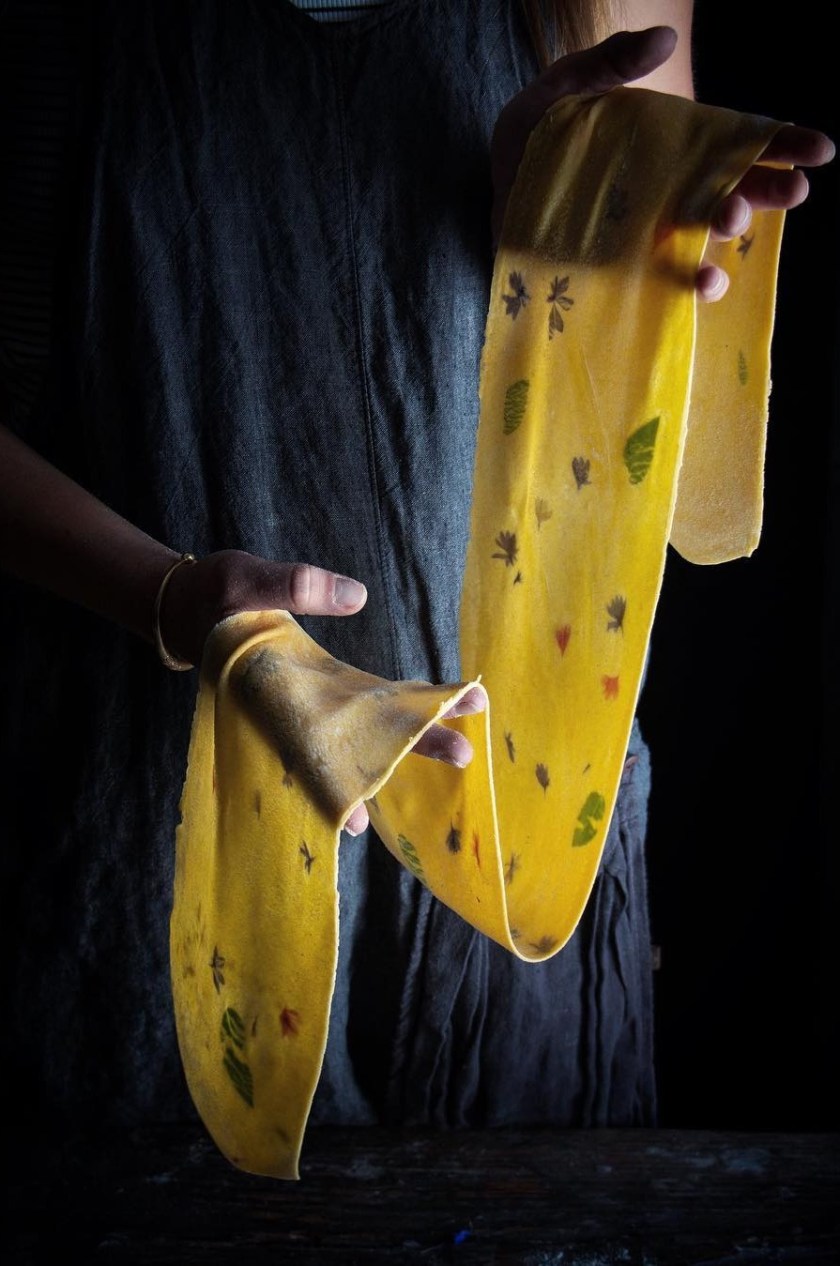
Of Pasta, Origin and Style

“Life is a combination of magic and pasta.” Federico Fellini

Typically made from an unleavened dough of durum wheat flour (semolina) mixed with water or eggs, formed into various shapes or as sheets, then cooked by boiling or baking, pasta has been there since the ancient years. Although etymology speaking, the first English attestation of the word “pasta” (1874) comes from Italian pasta, which was from the Latin pasta, the latter being the  Latinization of the Greek παστά (pasta) meant as “barley porridge”.

“You don’t need a machine to make pasta: a rolling pin and a fast hand can create a smooth, if thick, sheet.” Yotam Ottolenghi

Broadly divided as two categories of fresh (pasta fresca, prepared traditionally by hand or at home) and dried (pasta secca, commercial preparation). One of the advantages of pasta is it’s versatility from being the main course to a side dish, as salad or as a filler for sandwiches or as an accompaniment to main course or as light lunches. Classically there are three main kinds of prepared dishes. One type is the pasta asciutta (or pastasciutta) wherein the cooked pasta is plated and served with a complementary side sauce or condiment. Another is the pasta in brodo, in which the pasta is part of a soup-type dish. The third category is the pasta al forno where the pasta is incorporated into a dish that is subsequently baked in the oven.

Tracing the origin of pasta, the entire roots don’t lead back to Italy alone. The writings of Horace (1st century AD) mention lagana (singular: laganum) made of fine sheets of fried dough used in the daily menu. Athenaeus of Naucratis (2nd century AD) provides a recipe attributed to Chrysippus of Tyana(1st century AD) wherein sheets of dough made of wheat flour and the juice of crushed lettuce, then flavoured with spices and deep-fried in oil. However the method of cooking these sheets of dough does not correspond to the modern pasta, although the basic ingredients and perhaps the shape were similar. Food historians have noted several milestones, similar to pasta. Like the itrion (mentioned by Greek physician Galen, 2nd century AD) as homogeneous compounds made of flour and water, later modified as a boiled dough known as itirum common to Palestinian lands (300 to 500 AD) and recorded so in the Talmud. The Arab physician and lexicographer Isho bar Ali (9th century AD) defines itriyya, the Arabic cognate, as string-like shapes made of semolina and dried before cooking. A form of itriyya is laganum (Latin) which refers as a thin sheet of dough, a precursor of the modern Italian lasagna.

“You can buy a good pasta but when you cook it yourself it has another feeling.” Agnes Varda

The North African areas had couscous (steamed balls of crushed durum wheat semolina or of pearl millet and sorghum), more like droplets of dough which is less malleable than pasta. Rustichello da Pisa writes in his Travels that Marco Polo described a food similar to “lagana”. With traces of pasta being found in Ancient Greece and later Arabian cuisine records of similar dishes, pasta has come a long way before being ingrained into the Italian cuisine and culture. The first concrete information concerning pasta products in Italy dates from the 13th or 14th century. And as far as shapes of pasta and their sauces are concerned, there is a whole mine of information out there. From long to short, minute pasta for soups (pastina) or pasta all’uovo (egg pasta), there are many varieties of the basic pasta. For those of us, who need them gluten free, alternatives include rice flour, brown rice, shirataki noodles, chickpea, quinoa, corn, millet, buckwheat and amaranth to mention a few with certain varieties of gluten free being multigrain (mix of all above).

Although pasta dishes are generally simple, individual dishes vary in preparation with the flavors of local cuisine being incorporated when possible. With the mood for autumn setting in and ingredients varying to availability and choice, spicing up a basic pasta dish to the more elaborate style can set the creative cooking into full swing with an undeniable delectable pleasure for the palate and the taste buds. A bit of pasta can add plenty of spice, the way one wants it so.