Posted in Food, Stories Around the World

Coffee, Sugar and a Twist

One of the big benefits of work-from-home option, are the ease of getting a slow mornings. With a large chunk of time, saved from missing the commute, one can savour the first bite of coffee, the afternoon aroma of the beans and the night experimentation with newer styles. Though one downside is that, too many regular coffee or the plain espresso, makes one want to grab for a cafe made latte for a change. With the present situation, as one can’t go to the cafe, the quest is on to bring the cafe home. The subsequent research for cafe-made coffees to be experimented at home lead to plenty of “aha” moments.

“Come on, don’t you ever stop and smell the coffee?” Justina Chen Headley

Getting into mood of completing the daily work requirements, the daily shot in different shades of black to brown is what keeps the morning work to the grind. So with the home espresso machine in tow, the regular morning shot was had with a small twist the past couple of days. When the bite of coffee needs to be mellowed a tinge, the regular shot of espresso can be diluted by little milk (less than 100ml) for the Manilo, which is actually a flat-white but lot smaller.

Going towards the Cuban tradition to drink coffee strong and sweet where the sugar is often mixed with the coffee beans prior to the latter being brewed, making the homemade Cuban espresso involves knowing the traditional way. The traditional method of brewing coffee was the filter method using a cloth cone; but the modern brewing recipes prefer a moka pot than the espresso machine. Made best using the darker roasts (preferably Italian or Spanish), a little of the the espresso shot is taken, sweetened with natural brown sugar and then the whole mix whipped. The mixture is then added to the remaining espresso and vigorously mixed into a creamy foam, the espuma or espumita. A sweeter and more viscous coffee is made by this method, than by adding the normal brown sugar to the espresso. This espresso brewed with sugar goes by various cafe names like the Café Cubano, Cuban coffee, Cuban espresso, cafecito, Cuban pull, or Cuban shot. Another technique is to place the sugar (white or brown) in the cup as the coffee is dripped into it; the whole mix then stirred into a froth. Adapting to the takeaway option, “the Cuban Colada” is 3–6 shots of Cuban-style espresso in a cup along with small demitasses to take to work.

Though deceptively simple, this Miami café Cubano has few variations. One is the cortado, made of an espresso mixed with a roughly equal amount of warm or steamed milk to reduce the acidity. The milk is not frothy and “texturized”. The Cuban cortadito is generally mixed with heated sweetened condensed milk. Other styles include the café con leche condensada or bombón (espresso with condensed milk) and the leche y leche. The latter is made with condensed milk integrated throughout and a dollop of cream resting on top. The café cortado (espresso with a dash of milk) is almost similar to the Italian macchiato or the French noisette (hot milk to espresso is 1:2 ratio).

Another style is the Café con leche which literally translated from Spanish means “coffee with milk”. Originating as an Spanish coffee beverage, the espresso (strong and bold) is mixed with scalded milk in an approximate 1:1 ratio. If the amount of milk is higher, it becomes the café con leche en vaso or café con leche de desayuno. This preparation is closer to the Italian caffè latte or latte, than the French café au lait. The Cuban “Café con leche” is made when the espresso (without the sugar) is poured to the desired darkness into the cup of hot or steamed milk.

Researching on the Cuban coffee style alone resulted a whole new set of recipes and ideas being unlocked. Adding a personal variation based on the time of the day, especially iced for the noon makes for an nice twist to the usual. In the midst of all these concoctions, the only requirement is the mix being drinkable. That being the must, the rest is purely on the recipe, imagination and what is at hand. With all this being there, little reason why the lock-down hasn’t resulted in being a drag so far. Letting this first phase of the “espresso specialties” sink in, the next few days would result in plenty of interesting trials as well as errors.

Posted in Food

Thin or Thick, Stuffed or Impressed

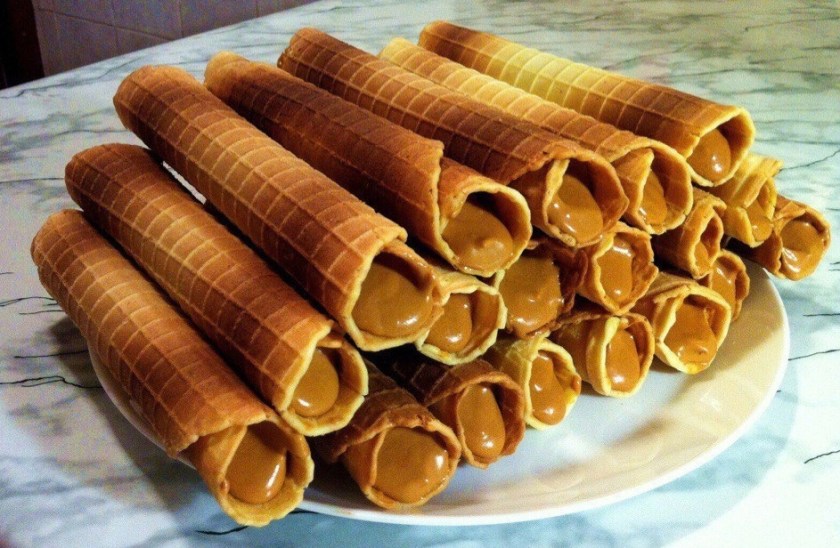
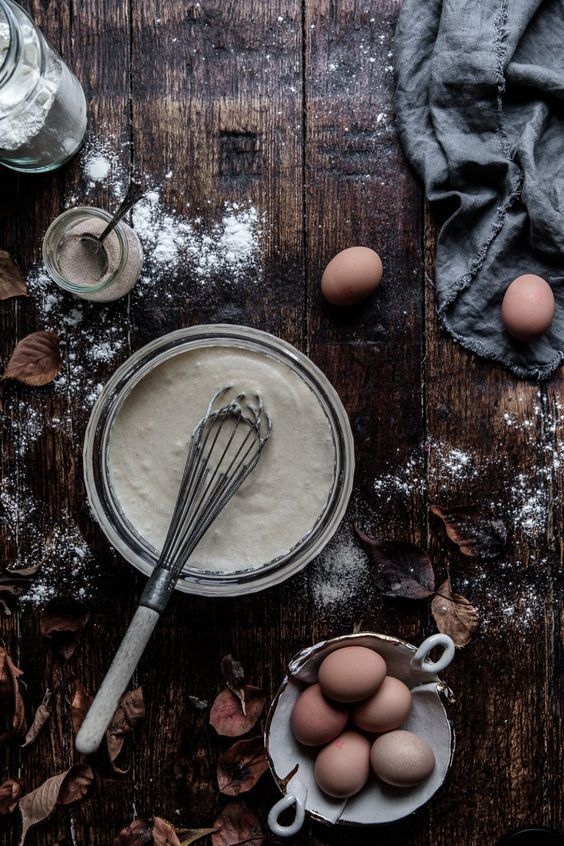
With the Lenten period still on and more hours at home, the breakfast menu has been varied depending on the choice of each as well as the helping hands available on deck. Which is why there is plenty of batter made in the morning. From pancakes to waffles, there is plenty of fun and chaos to welcome the mornings.

Interestingly waffles aren’t a recent recipe, but can be traced to the ancient Greeks. Believed to have descended from the Ancient Greek obleios, it was flat cakes made by baking batter between two hot irons. For the impressed patterns, exclusive to places or establishments, had originated in the middle ages. The early Middle Ages (9th to 10th century) saw the simultaneous emergence of communion wafer irons (fer à hosties or hostieijzers) and the wafer irons (moule à oublies). While the former depicted typically the imagery of Jesus and His crucifixion; the latter had impressions of more trivial Biblical scenes or just simple impressed designs often serving as emblems.

Both the communion wafer and the oublie, was mostly made of grain flour and water. From the 11th century onward, flavorings like orange blossom water, sourced honey and other ingredients came to being and establishing themselves firmly in the list of ingredients. Eaten piping hot, the initial waffles were sold on great religious feasts days with the best quality waffles known as metiers.

“The ancient Greeks used to cook very flat cakes, which they called obleios, between two hot metal plates. This method of cooking continued to be used in the Middle Ages by the obloyeurs who made all sorts of oublies, which were flat or rolled into coronets. The oublie became the waffle in the 13th century, when a craftsman had the idea of forging some cookie plates reproducing the characteristic pattern of honeycombs, which at that time were called gaufres (from the Old French wafla).” Larousse Gastronomique, Completely Revised and Updated [Clarkson Potter:New York] 2001 (p. 1285)

Though the initial waffles had originated on one side of the world, it had crossed the continents to entrench themselves into the local cuisine. Exploring the flavour of waffles, the subtle or gross changes have been made in the various ingredients going into the batter.

Known locally as “grid cake” or “grid biscuits”, the Hong Kong style waffles are usually made on the streets. Large, round and divided into four quarters; these waffles served as snacks with peanut butter, butter and sugar spread on it. Sweetened by the addition of eggs, evaporated milk; these waffles have the rich flavour of yolk, chocolate or honey melon. Changing the pattern to the ball-shaped form, these waffles are then known as eggette or gai daan jai. Adding a little of pandan (herbaceous tropical plant) and coconut milk into the batter, Vietnamese pandan waffles gives the distinctive green and chewy feel inside, though brown and crispy look outside; often best eaten plain. Keeping the batter a little more spicy, one can add a little of wasabi to give the touch of Japanese cuisine. Coming to a more variant style are the Thailand hot-dog waffles. With the hot dog cooked within the long waffles, they bear their similarity to the corn dogs. Otherwise the essential batter remains the same.

At home, while adding the South East Asian flavour to the waffles, a little of fine chopped spring onion greens, couple of coriander chopped, a bit of mashed carrot and beets gave the waffles a burst of colour. With plenty of jam, honey and sugar; the colorful waffles may have found favour with the young eaters. If not, there are always plenty of pancake batter to go around.

[1849]
“Waffles
Put two pints of rich milk into separate pans. Cut up and melt in one of them a quarter of a pound of butter, warming it slightly; then, when it is melted, stir it about, and set it away to cool. Beat eight eggs till very light, and mix them gradually into the other pan of milk, alternately with half a pound of flour. The mix it by degrees the milk that has the butter in it. Lastly, stir in a large table-spoonfull of strong fresh yeast. Cover the pan and set it near the fire to rise. When the batter is quite light, heat your waffle-iron, by putting it among the coals of a clear bright fire; grease the inside with butter tied in a rag, and then put in some batter. Shut the iron closely, and when the waffle is done on one side, turn the iron on the other. Take the cake out by slipping a knife underneath; and then heat and grease the iron for another waffle. Send them to table quite hot, four or six on a plage; having buttered them and strewed over each a mixture of powdered cinnamon, and white sugar. Or you may send the sugar and cinnamon in a little glass bowl.” 
-Directions for Cookery in its Various Branches, Miss Leslie [Philadelphia, 1849]. (p. 359)

Posted in Food

Of the Hand, Bread and Cake

Imagine feeding an infant who absolutely refuses to have any pureed or steamed food, cereals or mashed vegetables. The struggle during that phase was when the taste of milk alone was acceptable. In those it was the good old mashed bananas that came to the rescue. With just enough sugar and plenty of coaxing, the bawling stopped and the spitting stopped. Once the toothless smile changed then, a repeat phase started when the favourite word especially on seeing the plate was “No”!! Then again, the only favoured food was “nana” for that curved piece of yellow fruit. One had to scourge the books and net for various rcipes based on bananas. It was banana pancakes, mashed bananas, fritters and so on. Frankly wth the constant presence of banana, the rest of the family got sick and tired of it, but not the toddler.

The sudden recollection was due to the presence of a large bunch of bananas. The hand was a gift from our neighbours for a successful crop year. While we could just have a few of them, the old recipes were then referred for baking the holiday favourite banana bread.

Measuring out the all-purpose baking flour, one could often relate to the women of the Great Depression Era. With necessities running short and budgets tight; making perishables last was important. With the advent of baking soda and powder, the addition of ripe or overripe bananas to the flour gave the regular bread a different texture, taste and a welcome change from the usual. Over time the regular banana bread evolved to the a mix of the favourites of the diner like the banana raisin bread, banana nut bread, chocolate chip banana bread and the banana dates bread.

“Banana Tea Bread
1 3/4 c. sifted all-purpose flour,  2 teasp. baking powder, 1/4 teasp. baking soda, 1/2 teasp. salt, 1/3 c. shortening, 2/3 c. granulated sugar, 2 eggs, well-beaten, 1 c. mashed, ripe bananas (2-3 bananas)
Sift together flour, baking powder, soda, salt. Work shortening with a spoon until fluffy and creamy, then add sugar gradually while continuing to work with a spoon, until light. Add eggs and beat well with a spoon. Add flour mixture alternately with the bananas, a small amount at a time, beating smooth with a spoon, after each addition. Turn into a greased or oiled loaf pan about 9″ X 5″ X 3″. Bake in a moderate oven of 350 degrees F. for 1 hour 10 min., or until done. 1/2 c. chopped walnuts, or 1 c. chopped dates may be added.” – Good Housekeeping Cook Book, completely revised edition [Farrar & Rinehart:New York] 1942, 1944 (p. 482)

Though the popularity of the banana bread, muffins and cakes rose in the 20th century cookbooks; banana cakes and different variants were indigenous to the South East Asian cuisine. The Gao (steamed, flour based banana cakes) were a part of the Chinese meals, often served along with it or at tea. The Vietnamese Bánh chuối (sweet banana cake or bread pudding) was made with ripe bananas or plantains, coconut milk, sugar, white bread, shredded young coconut, condensed milk, butter, egg and vanilla extract. There were two main varieties, Bánh chuối nướng which was baked banana cake with a golden-brown, crisp exterior and the Bánh chuối hấp (“steamed banana cake”) with rice starch added. Another preparation of steam banana cakes are the Indonesian “Kue nagasari”, which is made using banana, mung bean flour or rice flour, coconut milk and sugar.

Keeping the choices and taste of the family in mind, it was an interesting venture at trying out the steamed version of banana cakes for a change. The outcome will be seen during the office lunch hour. While balking at the initial thought of letting the gift go to waste; the smell of the freshly baked banana bread as well as steamed cakes makes the hours in the kitchen worth their while.

“Banana Cake
Beat to a cream a quarter of a cup of butter, add a half cup of sugar and one egg; when very light, stir in enough flour to make a stiff dough; roll into a thin sheet and line a square, shallow baking pan. Peel five good, ripe bananas, and chop them very fine; put them over the crust in a pan, sprinkle over a half cup of sugar, the pulp of five tamarinds soaked in a quarter of a cup of warm water; squeeze over the juice of two Japanese oranges, put over a tablespoonful of butter cut into pieces, a saltspoonful of mace, and two tablespoonfuls of thick cream. Grate over the top two small crackers, bake in a moderate oven a half hour, and cut into narrow strips to serve.” – Mrs. Rorer’s New Cook Book, Sara Tyson Rorer [Arnold and Company:Phildadelphia] 1902 (p. 697)

Posted in Food, Stories Around the World

Soft, Gooey and Halwa

One of the best things about school holidays is the staying with grandparents. Come summer, it is the time to make not just jams, pickles, fruits syrups and squash but also time to make “halwa”. Making halwa was an elaborate activity. Measuring out the ingredients, dry fruits and getting the big vessels ready to make it, kept us, the grandchildren occupied.

“Halva. Name of a hugely varied range of confections made in the Middle East, Central Asia, and India, derived from the Arabic root hulw, sweet. In 7th century Arabia, the word meant a paste of dates kneaded with milk. By the 9th century, possibly by assimilating the ancient Persian sweetmeat afroshag, it had acquired a meaning of wheat flour or semolina, cooked by frying or toasting and worked into a more or less stiff paste with a sweetening agent such as sugar syrup, date syrup, grape syrup, or honey by stirring the mass together over a gentle heat. Usually a flavouring was added such as nuts, rosewater, or pureed cooked carrots (still a popular flavouring). The finished sweetmeat would be cut into bars or moulded into fanciful shapes such as fish. Halva spread both eastwards and westwards, with the result that is is made with a wide variety of ingredients, methods, and flavourings…” -Oxford Companion to Food, Alan Davidson [Oxford University Press:Oxford] 1999(p.367)

This dense, sweet confection believed to have originated in the Middle East, Central and South Asia is popularly known as halva or halwa, with varying local names. While written records of halva recipes have been in the Arabic Kitab al-Tabikh (The Book of Dishes, early 13th century), these recipes may have been there in the traditional cuisine well before then. These desserts are essentially of two types, flour based or nut butters based.

Relatively more popular in the South Asia, these flour based halvas are slightly gelatinous and made from grain flour (semolina or suji) with other basic ingredients like clarified butter, sugar or honey, dry fruits and flavouring syrups like rose water. The flour is fried in oil, mixing it into a roux and then cooked with a sugary syrup making it into a gelatinous flour based consistency.

Selmolina based halva include the popular Turkish un helvası. Usually made with wheat semolina, sugar or honey, butter or vegetable oil along with raisins, dates, other dried fruits, nuts like almonds or walnuts. This halva is very sweet, of a gelatinous texture with a rich, heavenly feel. The Indian halva recipes primarily use flour with melted butter or ghee and sugar (optional use of acacia gum). Made in various colours ranging from bright orange, red, green to brown and black; they have a gelatinous appearance and are flecked with raisins, cashew nuts, pistachios, almonds and even sesame seeds. Vegetable based recipes (to replace the flour) are there like the popular carrot halwa (gajjar halwa), mung beans halwa (moong dal halwa), doodi halwa (bottle gourd halwa), beetroot halwa to name a few. These are usually prepared with condensed milk and ghee with sugar added to give a moist, flaky texture when freshly prepared. In fact, there are numerous variations of halwa present in the Indian subcontinent with each flavour having its own special appeal.

Other flour based halwas include the Greek cornstarch-gelatinous halva, the Zanzibarian rice flour and coconut milk halva and the Burmese delicacy of Pathein halwa, a dairy-based rice flour halva.

The other variety of halva are nut butter-based. They are made from grinding the oily seeds to paste like consistency like the sesame paste (tahini), sunflower seed butter paste, mixed with hot syrupy sugar cooked to hard-crack state. It can be made crumbly as well. This type is more popular in the Mediterranean, Central Asian and Middle Eastern cuisine and has special tales of its’ own to weave.

“Halwa Al.
Two pounds of sugar, half a pound of bees’ honey, half a bound of sesame oil and four ounces of starch. Stir it middling fine [one the fire until it takes consistency, then spread it on a smooth tile]. Put four ounces of sugar on it, and three ounces of finely pounded pistachios, and musk and rose-water: Spread this filling on it, then cover it with another cloak of halwa and cut it up into triangles. It is as delicious as can be. If you wish, make the filling into meatballs like luqma [luqmat al-qadi], and cover it was the mentioned halawa, and it is saciniyya.” -Medieval Arab Cookery: Essays and Translations, by Maxime Rodinson, A.J. Arberry & Charles Perry [Prospect Books:Devon] 2001 (p. 456)

All said and done, halva, whether bought from the market, made at home or sent from grandma; it carries a ton of memories, nostalgia and a feeling of happiness starting from the first bite itself.  For in every generation, these sweet or savoury (as to own taste) delicacies have delighted and captivated both the old and the young, the weight-watchers and the food-lovers and all those in between and far apart. Little wonder why then, this tradition and culture of halva still lives on over the centuries.

Posted in Daily, Food

Basic, Staples and Gluten-free..

During childhood years, school breaks were one of the most awaited days. Not just for the fact that schools were closed, but also for the reason was that our parents would enroll us in the various extra-curricular activities or we could stay at our cousins’ place (on both sides of the family lines) for a part of the break. Staying with them was huge fun, not just for the camaraderie of cousins but also to be a part of various experimentation especially when one of my close-knit cousins was diagnosed with inflammatory bowel disease. So for a period of time, we were off wheat based diet and that is when the experimentation started. After all the salads and rice got tedious, my aunt had made few of the first gluten-free pancakes, of them one was the “potato pancake”.

Known as boxties, latkes, raggmunkar or simply potato pancakes, these are shallow-fried pancakes of grated or ground potato, matzo meal or flour (rice based or wheat) mixed with egg or applesauce (binding ingredient) and flavored with grated garlic or onion and seasoning. They can be had as savoury (with sour cream or cottage cheese), sweet dessert (with apple sauce, maple syrup or sugar), topped with spice condiments or just had plain. From mashing the potatoes to making pancake-shaped croquettes, there are plenty of variations with this basic meal. Interestingly with change of place, country or cuisine; these “potato pancakes” have a history of their own.

“Boxty on the griddle; boxty on the pan. If you can’t make boxty, you’ll never get a man!” (an old Irish rhyme)

One of the traditional potato pancakes, is the Irish boxty. The essence of the recipes (with regional variations) are the potatoes, finely grated and served fried. Recipe of the common version is of finely grated raw potato or mashed potato with flour (gluten-free in our case), baking soda, buttermilk, and sometimes egg. While the grated potato may be strained to remove some starch and water, it isn’t necessary. The mixture is fried on a griddle pan for a few minutes on each side, similar to a normal pancake.

When the flour is removed, one of the recipes is the Rösti or rööschti, a Swiss dish consisting mainly of potatoes, in the style of a fritter. Originating as a breakfast dish of the farmers (Bern), it has now become a Swiss favourite with plenty of European and trans-Atlantic variations. Rösti dishes are made with coarsely grated potato, either cooked or raw. With the potatoes being parboiled or grated raw, oil, butter or another fat may be added with salt and pepper. The potato mix is then shaped into rounds or patties (five inches to half inch thickness) and more commonly had pan-fried than baked. While the basic rösti consists of nothing but potato, a number of additional ingredients like bacon, onion, cheese, apple or fresh herbs are added, depending on the regional variations.

Keeping the consistency to a batter type, the Korean Gamja-jeon (or potato pancakes) is a variety of jeon (Korean style pancake), made by pan-frying finely grated potato on a frying pan with any type of vegetable oil until golden brown. Traditionally Gamjajeon is made with only potato, salt, and oil; though the grated potato may be enriched with slivers of carrots, onions or scallions, sliced mushrooms, or garlic chives, which adds color and crunchy texture to the dish. Had garnished with shredded fresh red and green chili pepper or served with a dipping sauce of soy sauce and vinegar.

There are numerous more variations to these recipes, like the Brigand’s pancake, Swedish raggmunkar, potatisplättar, rårakor and potatisbullar or the Polish placki ziemniaczane to name a few. If not for these simple changes, my cousin would have had a trying gluten-free diet. In fact, these traditional recipes make for an interesting variation from the regular cuisine. If one is not a fan of potatoes, sweet potatoes are an option. Though if one wants more gluten-free recipes, there are many others to choose from. With all these delectable variations, it is quite surprising that a bit of potatoes can bring out a lot of fun.

Posted in Food, Stories Around the World

Nuts, Caramel and Snack

Nearing the end of the first month of the 2020s, the constant battle between sugar cravings, snacking and healthy leads one to explore alternative options. Keeping the sugar, sodium and fats intake to a limit isn’t always an easy task. As for all those health snacks, keeping the hidden sugars in the range is always the catch. Exploring the healthy snack recipes, adding a little sugar to the nuts makes the traditional brittle a healthy snack, especially for the cold hungry wintry evenings.

One of the earliest confectionery types, brittle is essentially flat broken pieces of hard sugar candy embedded with pecans, almonds or peanuts, or simply a mixed range of nuts. Depending on the local availability, the mix can be of walnuts, pistachios (Middle Eastern) or even sesame seeds. While peanut brittle still stays high on the radar, variations and mixes are a local delight. To name a few variations include the French croquant, Greek pasteli, Punjabi chikki or Indian gachak, Chinese Huasheng tang to name a few. 

“An Excellent Receipt for Groundnut Candy
To one quart or molasses add half a pint of brown sugar and a quarter of a pound of butter; boil it for half an hour over a slow fire; then put in a quart of groundnuts, parched and shelled; boil for a quarter of an hour, and then pour it into a shallow tin pan to harden.” —The Carolina Housewife, Sarah Rutledge, facsimile copy 1847 edition, with an introduction by Anna Wells Rutledge [University of South Carolina Press:Columbia] 1979 (p. 219) (1847)

Most of the traditional recipes calls for first caramelizing the sugar, corn syrup or honey and then the nuts are mixed with the caramelized sugar with the spices or leavening agents added last. While some result in a liquid like consistency which is poured out and troweled to uniform thickness; other recipes may have a grainy consistency of which the brittle is then prepared into tiny balls. When the brittle is cooled, it can be had as tiny bite sized snacks.

An interesting variation is the Paraguayan “Ka’í Ladrillo”, a typical dessert made mainly with peanuts and molasses. This high protein snack needs toasted peanuts and molasses. Few varieties include a tinge of sour orange or grapefruit juice to give a bittersweet taste to diminish the excessive sweetness.

Keeping the sugar and fat content in sights, sometimes modifying the good old traditional mixes gives an easy, pack-able as well as feasible options. For life in bite-sized portions saves for some memorable experiences.

“Peanut Brittle I
Sugar, 2 cups
Water, 2/3 cup
Cream of tartar, 1/4 teaspoon
Molasses, 2 tablespoons
Salt, 1/2 teaspoon
Cream, 2 tablspoons
Baking soda, 1/2 teaspoon
Peanuts, shelled, 1 cup
Combine sugar, water and cream of tartar in a heavy saucepan. Plce over low heat and stir until sugar is dissolved; cook without stirring to 280 degrees F. (brittle). Wipe down crystals from sides of pan with a damp cloth wrapped around the tines of a fork. Add molasses, salt and cream. Cook slwoly to 290 degrees F., stirring slowly but constantly. Remove from stove. Quickly stir in soda and peanuts. (Be sure that soda is free from lumps. Pour onto an oiled surface–a shallow pan or marble slab–in a very thin layer. When cool enough to handle, the brittle may be grasped at the edges and stretched into a very thin sheet. When cold break into medium-sized pieces. Note: If peanuts are raw, add a sirup at 250 degrees F. instead of at the end. Makes about 1 pound.”
—Woman’s Home Companion Cook Book [P.F. Collier & Son:New York] 1942 (p. 788-789) [NOTE: Peanut Brittle II consists of sugar, baking soda and peanuts only. This book also offers recipes for coconut brittle, Chocolate-Nut Brittle and Bran-Nut Brittle.]

Posted in Daily, Food, Stories Around the World

Third Wave and On…

“Coffee is a hug in a mug.” Anonymous

On a long postponed visit to the extended family line, we had to put in a three hour journey to-and-back. While waiting in the traffic and not being in the principal driver’s seat was an added incentive for window shopping. Naturally the sign of “discount” had your truly squinting to make out the deals. But it was the special offer of “The Flying Squirrel” (exclusively bought online) and Seven Beans that had snared my attention. After seconds of hedging, my husband had the car in park while I made a quick dash for it. With our luck in alignment, the buy didn’t take much time and we were on back homeward bound.

“It’s amazing how the world begins to change through the eyes of a cup of coffee.” Donna A. Favors

Interestingly “The Flying Squirrel” or “Seven Beans” is but two of the many brands caught in the “wave of coffee”. Entering into the artisanal food category, the third wave coffee movement is a retrospective entry of coffee wherein both coffee lovers and manufacturers share the joy and appreciation of high quality coffee. Like fine varieties of wine and cheese, the third wave of coffee explores the connoisseur-ship, stimulation of the senses and exploration of taste in a simple but buoyant cup of coffee. The unique characteristics of that simple coffee bean are highlighted, ranging from the diverse methods of growing, cultivation, processing, roasting as well as the practices and salient variables among the coffee bean cultivars and beverage preparation.

“The first wave of American coffee culture was probably the 19th-century surge that put Folgers on every table, and the second was the proliferation, starting in the 1960s at Peet’s and moving smartly through the Starbucks grande decaf latte, of espresso drinks and regionally labeled coffee. We are now in the third wave of coffee connoisseurship, where beans are sourced from farms instead of countries, roasting is about bringing out rather than incinerating the unique characteristics of each bean, and the flavor is clean and hard and pure.” Jonathan Gold, LA Weekly. (March 2008, Pulitzer Prize winning food critic on the third wave of coffee)

Technically the terminology of “third wave coffee” was most widely attributed to Trish Rothgeb, a coffee professional in an article for the Roasters Guild newsletter titled “Norway and Coffee,” (2003) with the first mainstream media mention in an National Public Radio piece about barista competitions. Although there is a lesser known reference in an obscure trade publication called “Tea & Coffee Trade Journal Asia” (1999) by specialty coffee pioneer Timothy Castle obliquely referring to the same. While the first and second waves dealt in the ready availability and highlight the countries of origin with (or not) of their signature dark roast profile (respectively), the third wave coffee is often associated with the concept of ‘specialty coffee’ with reference to the specialty grades of green (raw and unroasted) coffee beans (distinct from commercial grade coffee) or specialty coffee beverages of high quality and craft. Though coined earlier (1974), “specialty coffee” was meant to refer to high-quality beans scoring 80 points or more on a 100-point scale.

“It doesn’t matter where you’re from – or how you feel… There’s always peace in a strong cup of coffee.” Gabriel Bá

There is something in a cup of coffee that is dearly enjoyed across all age groups, from different countries, professions and cultures. To add to one’s own special highlight to that cup of coffee, along with the coffee wave, the addition of a tinge of vanilla, whisky, chocolate, cinnamon, cardamom or hot chocolate, can do wonders. Not to forget the ice-cream for the kids. Little wonder then, one would chose to miss an opportunity to ride “that coffee wave”.