Posted in Daily, Food, Stories Around the World

Simple, Smoked and Short

One of the downsides of having to work far from home, is to not only the commute but also getting the meals right. With lunch packed and breakfast a tight run, getting the right share of calories is a constant battle. While fruit and salad can be quite easy and handy; for unexpected long hours it keeps the hunger pangs at bay only for a short while. While vending machines, cafes and delis are there plenty around, they cause significant hurt to the wallet as well as physique. Which is why short quick healthy meals get highlighted and tagged, to be learnt as soon as feasible.

One of the first endeavors was to modify the healthy combination of carbs and proteins right, by the basic sandwiches. The first to be subjected was “pastrami on rye”, making it to own adaptation and specifications. Technically of Romanian origin, pastrami is a meat product usually made from beef brisket, lamb or turkey. The raw meat is brined, partially dried, seasoned with herbs and spices, then smoked and steamed. Etymologically, the name “pastrami” can be traced to Roamnian pastrama; the latter being traced to the Bulgarian pastrija or Turkish pastirma or “bastirma” meaning pressed meat.

While earlier meat shops used to process them, these days they are readily available in the commercial chain grocers or supermarkets, commonly made as per the norms of the locality, either from lamb, turkey or meat. One of the advantages of the “pressed meat” is that it can be cut into thin wafer slices, medium cuts or slices or a really large filled sandwich of choice. The best part is there is no frying or oil involved.

As the sandwich chains and delis got onto the trend, serving meat sandwiches especially pastrami sandwiches became a novelty. For all sandwich lovers, it is a must. While for school or office lunches, this makes a good change from the routine and a break form the elaborate morning kitchen preparations. That one hour of lunch break can be made into a light, wholesome and healthy meal.

“You sit down at Katz’s and you eat the big bowl of pickles and you’re eating the pastrami sandwich, and halfway through you say to yourself, I should really wrap this up and save it for tomorrow. But the sandwich is calling you: Remember the taste you just had.” Mario Batali

Posted in Food, Stories Around the World

Gooey, Sweet and Special

One of the advantages of the cellular networks is that news travels fast. Work promotions, kindergarten winnings, new projects or ideas accepted and launches as well as new family additions are few of the positive news that spreads fast. Some surprises call for impromptu celebrations which essentially involves something sweet. While instant baked goods mayn’t be available at hand round the clock, there is something about marzipan that can do wonders for the most basic of desserts.

Primarily consisting of sugar or honey and almond meal, marzipan is a confection with a wide array of uses. While it is often made into chocolate covered (or plain) sweet treats or as imitations of fruits, vegetables, cars, toys and the like; it can also be used as glazing for icing cake, biscuits or shaped into small figurines atop cakes especially meant for personalizing celebrations. It can also be added as a baking ingredient to the traditional recipes ( like the stollen, banket, king cake).

Tracing the origins, marzipan was believed to have originated through two different, though converging routes. One was via the Northeast Mediterranean line, introduced to Eastern Europe through the Turks, while the other possible origin was the Iberian Peninsula line, predominantly from the Al-Andalus area of Spain. With it’s widespread popularity, marzipan has numerous variations. While in Germany sugar and almonds are ground into a paste, syrup can be used to sweeten the mixture (France) while Middle East marzipan may include a dash of rosewater. Almonds may be replaced by apricot or peach kernels, to make a similar product known as the “persipan”. Other alternatives include substitution with soy paste or almond essence.

Homemade marzipan comes ready with very basic ingredients of almond paste (or freshly made almond meal), egg whites and sugar. Besides getting creative with marzipan made edible animals, figurines or delectable icing and decorative ideas; chunks of marzipan when added to cookie dough or cake batter make for an interesting twist to the taste. Wit marzipan, something simple can be made into simply amazing with basic ingredients, whole lot of creativity and plenty of ideas.

“Madre Carmela’s favorite nuts were almonds. Not only did she like the way they tasted the best among all nuts, but she loved the flavor they imparted to Sicilian desserts from cakes to biscotti, and her favorite of all, Frutta di Martorana- the perfect fruit-shaped confections made from pasta reale, or marzipan, which required plenty of almonds. Who would have thought that the base for an elegant, regal dessert like marzipan came from such a simple ingredient as the almond?”
― Rosanna Chiofalo, Rosalia’s Bittersweet Pastry Shop

Posted in Family and Society, Life, Random Thoughts, Stories Around the World

Au revoir to Hello

Bidding adieu to the last few hours of the year brings back fond memories as well as interesting traditions followed to welcome the new year. While the last day may be a holiday, for some it is the last few hours of another work day. Yet battling the traffic and rushing to make it to home base for the last few hours is done so as to usher in the next year with family and friends. While some are on a rampage while setting up the traditional new year watch night, attend the night service, host the family gathering, get the first few traditional customs of the new year ready and the like, the option lies in joining the fray or sitting on the sidelines and enjoying the celebrations.

As we usher in the next year, customs both family and country wise may be followed. From the Siberian tradition of diving into a frozen lake while holding a tree trunk to be placed underneath the ice or the Singaporean tradition of releasing wishing spheres into the river, painting front doors red (Chinese), sprinkling salt on the doorstep (Turkey) are just few of the countless traditional new year customs. Each home and family can make their won set of traditions. Be it enjoying a glass of champagne or ice-cream for the children after the night watch service to having fireside games, each of us can make our own tradition to usher in the new year.

“In our perfect ways. In the ways we are beautiful. In the ways we are human. We are here. Happy New Year’s. Let’s make it ours.” Beyoncé

Through all the celebrations, one mustn’t fail to remember that each day is a new year, a chance to do something new, for the better and an opportunity for new chances and attempts. Each new day is an opportunity to make our closest dreams come true. Life always holds a myriad of new beginnings, it is taking them on and changing the circumstances for making oneself better that makes all the difference.

Posted in Daily, Food, Stories Around the World

Christmas, Candy and Canes

What is the best to keep a crowd of noisy children quiet ? The best option would be to give a bag of sweets, preferably mints or hard boiled candies for then there would be snatches of quiet.

On similar lines as per folklore, the choirmaster at Cologne Cathedral ( Cologne, Germany 1670) wished to quieten the noise made by the children during the long Living Crèche ceremony of Christmas Eve at church. He asked the local candy maker for some “sugar sticks” and add a crook to the top of each stick. While the latter would have probably been meant to be symbolic of the shepherds visiting Infant Christ as well as to justify the practice of giving candy to children during worship services. With the white colour of converted sticks, children were taught about Christian belief in the sinless life of Jesus.

Their popularity from Germany had spread to the rest of Europe, wherein these candy canes were handed out during plays reenacting the Nativity. Another legend connects candy canes to the anniversary of the death of St. Nicholas (343 A.D.) with the candy cane representing the crozier or bishop’s staff of St. Nicholas. Though other legends may run through various locals, the candy cane especially the classical red and white one is synonymous with Christmastide. Records also mention of August Imgard (Wooster, Ohio, 1847) decorating a small pine tree with paper ornaments and candy canes.

With the similarity to the polkagris, candy canes are a part of Christmas tradition which stays on till New Year. From the simple red and white ones to the more coloured and striped ones, with various flavours of peppermints to spicy or salty variants, candy canes keep the confectioners busy for the end of the year season. Intermixing the essence of candy cane into varied desserts, from cookies to truffles or cupcakes, experimentation with candy cane is an experience in itself. With the smells of candy canes and Christmas time, the golden yesteryear of childhood still stay fresh in the mind. For that is what happy memories are all about.

Posted in Food, Photography Art, Stories Around the World

Flavoured, Festive and Wine

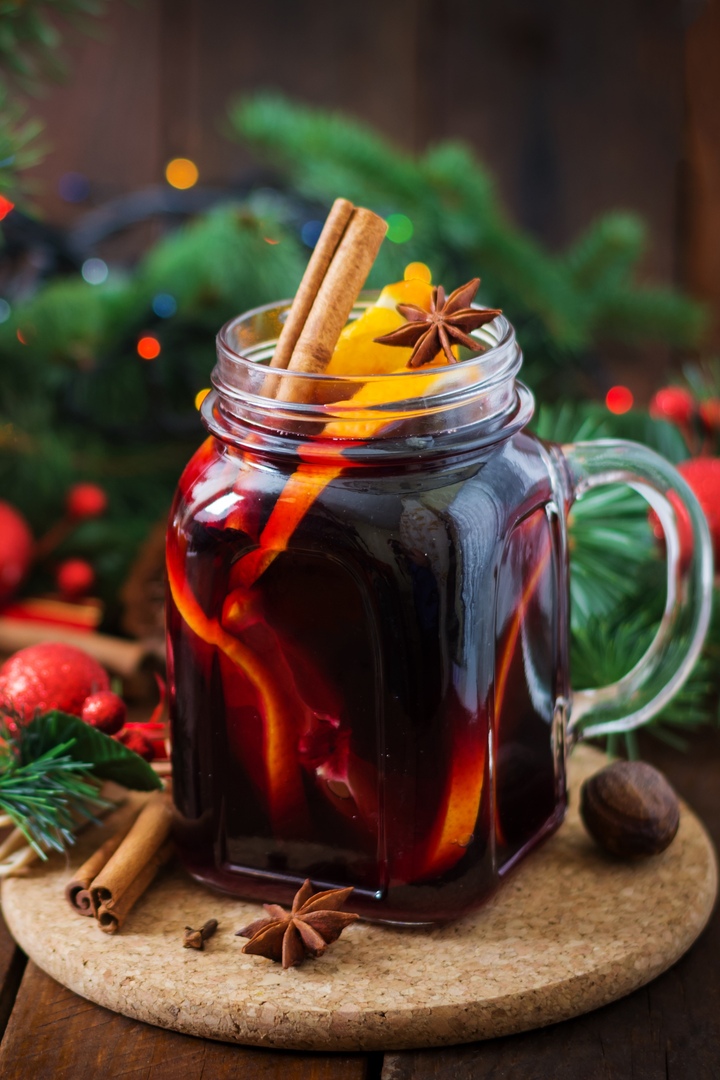
No festive season is complete without the traditional accompaniment of wine. For winter, the entire holidays and Christmas centers around the mulled wine. Traditionally mulled wine, also known as spiced wine, is usually made with red wine along with various mulling spices and sometimes raisins which may be served warm. While most versions are alcoholic, there are many non-alcoholic variations especially for children during Christmas.

Tracing the origins of mulled wine, the second century Roman cuisine saw records of wine being spiced and heated in some areas. Although their era came to an end, certain aspects of the Roman cuisine had been merged with the local cuisine. As wine and viticulture spread along the rest of Europe and till the Scottish border, various variations and traditions with mulled wine entered into the local cuisine and culture. As recorded in the Medieval English cookbook “The forme of Curry” (1390) mentions “Pur fait Ypocras …” (mulled wine) to grind together cinnamon, ginger, galangal, cloves, long pepper, nutmeg, marjoram, cardamom, and grains of paradise (“spykenard de Spayn”, rosemary may be substituted), mix them with red wine and sugar (form and quantity unstated).

Early variations include the concept of mulled wine being transferred to mulled ale, mulled cider or mulled apple juice. Though today recipes for mulled wine include the combination of orange, lemon, cinnamon, nutmeg, fennel seed (or star anise), cloves, cardamom, and ginger. Usually the spices are combined and boiled in a sugar syrup, then red wine is added, heated and served usually in small porcelain glass mugs.

A quick way to make it would be to add a tea bag of spices to red wine, which is heated along slices of orange or lemon. Common variations include the addition of brandy or ginger wine.Served with an orange or lemon slice garnish studded with cloves, cinnamon or star anise; this brings winter Christmas in a mug. Not just confined to wine; mulling spices can be added to beer and cider, as in the preparation of Wassail punch, a recipe since the Victorian Era.

While known as mulled wine in English based cuisine, other varieties are indigenous to the different cuisines with the difference ranging from the type of wine used, method of preparation as well as the spice mix. For instance Glühwein popular in German-speaking countries and Alsace (France) is made from red wine with the addition of vanilla pods to the spices. Glögg, gløgg or glögi, which is mulled wine in the Nordic countries (sometimes spelled as glog or glug) are made wiht stronger spirits like rum, vodka, brandy or just plain fruit juices. Vinho quente served in the Brazil is typically made with red wine, cinnamon sticks and cloves. On the other hand, greyano vino served in Bulgaria is made of red wine, homey and peppercorn.

With the festive and holiday season in full swing, mulled wine essentially brings the warmth of the season in a cup. In fact, it is one of the best seasons to start the traditional family recipe of own. More than the experimentation, it is the memories that get passed on over the years.

TO MULL WINE.
INGREDIENTS.- To every pint of wine allow 1 large cupful of water, sugar and spice to taste.
Mode.-In making preparations like the above, it is very difficult to give the exact proportions of ingredients like sugar and spice, as what quantity might suit one person would be to another quite distasteful. Boil the spice in the water until the flavour is extracted, then add the wine and sugar, and bring the whole to the boiling-point, then serve with strips of crisp dry toast, or with biscuits. The spices usually used for mulled wine are cloves, grated nutmeg, and cinnamon or mace. Any kind of wine may be mulled, but port and claret are those usually selected for the purpose; and the latter requires a very large proportion of sugar. The vessel that the wine is boiled in must be delicately cleaned, and should be kept exclusively for the purpose. Small tin warmers may be purchased for a trifle, which are more suitable than saucepans, as, if the latter are not scrupulously clean; they spoil the wine, by imparting to it a very disagreeable flavour. These warmers should be used for no other purpose.
(Traditional recipe for Mulled Wine. Mrs Beeton’s Book of Household Management. 1869. Revised edition. Pg.929-930 (Paragraph 1961))

Posted in Daily, Food, Photography Art, Uncategorized

Tea with a Difference

Catching up with the extended family cousins who have been seriously bitten by the “travel bug” leads to often enlightening conversations and interesting accounts. In the course of discussion was their recent rove into the Tibetan lands. Asides the details of their stay and visits, what caught the curiosity of yours truly was their tea culture.

“When tea becomes ritual, it takes its place at the heart of our ability to see greatness in small things. Where is beauty to be found? In great things that, like everything else, are doomed to die, or in small things that aspire to nothing, yet know how to set a jewel of infinity in a single moment?” Muriel Barbery (author of The Elegance of the Hedgehog)

Interestingly the Tibetan tea culture primarily includes the butter tea and the sweet milk tea. Other varieties include the Pu’er Tea, green tea, milk tea and boiled black teas. The most favoured tea is the butter tea, known as po cha (Tibetan, Wylie: bod ja, “Tibetan tea”) or cha süma ( Eastern Tibet, Wylie: ja srub ma, “churned tea”) or suyóu chá (Mandarin Chinese) or gur gur (Ladakhi language). Made from tea leaves, yak butter, water, and salt in the traditional way, wherein the butter, milk and salt are added to the brewed tea. Although the variation today is to use the butter made from cow’s milk based on the latter’s wider availability and lower cost.Had by itself or used as an accompaniment for eating tsampa by pouring onto it or dipping the tsampa into it and mixing well.

The quality of the butter tea is enhanced by boiling the tea leaves to achieve a dark brown colour (takes almost half a day) or turns black (steep the tea leaves). One method involves skimmed the dark brown tea, pouring into a cylinder filled with fresh yak butter and salt and then the whole mix is shaken. The resulting thick liquid is then poured into tea pots or jars. Another method is to add salt to the steeped black tea, stirring the mix through the horse air (or reed) colander into the wooden butter churn with a large lump of butter then added to it. Then it is churned (or rapid stirring in wooden bowl) till the proper consistency of the tea is achieved and then transferred to copper pots kept warmed on a brazier. Modern day alternatives include tea bags, butter and blender.

Like the detailed preparation of butter tea, the Tibetan tea drinking culture has many rules. As per their custom, butter tea is drunk in separate sips. After each sip, the host refills the bowl to the brim. As a rule the guest never drains his bowl, instead it is to be constantly topped up. If the guest doesn’t wish to drink, the best thing to do is leave the tea untouched until the time comes to leave and then drain the bowl. This signifies the observance of etiquette, without any offense to the host. Another set of rules to follow is when one is invited to a house for tea. The host will first pour some highland barley wine. The guest must dip his finger in the wine and flick some away, which is done so three times to represent respect for the Buddha, Dharma and Sangha. Then the cup will be refilled two more times and on the last time it must be emptied or the host will be insulted. After this the host will present a gift of butter tea to the guest, who will accept it without touching the rim of the bowl. The guest will then pour a glass for himself, and must finish the glass or be seen as rude.

Not just limited to drinking but also serving butter tea has it’s own special set of tea-ware. From special porcelain cups to wooden bowls set with gold, silver or copper, or made from these metals as well jade, the Tibetan tea-ware is an art by itself. Interestingly like Tibet, most of the East Asian countries have their own special tea customs, so much so that the tea culture of each country has a rich and varied history behind it. That for tea connoisseurs is the beauty of tea, in itself and being a part of rich vibrant cultures, their customs and traditions, lending the subtle depth and significance to the art and concept of tea.

“The first cup moistens the throat;
The second shatters all feelings of solitude;
The third cleans the digestion, and brings to mind the wisdom of 5,000 volumes;
The fourth induces perspiration, evaporating all of life’s trials and tribulations;
With the fifth cup, body sharpens, crisp;
And the sixth cup is the first on the road to enlightenment;
The seventh cup sits steaming – it needn’t be drunk, as from head to feet one rises to the abode of the immortals.”
–Lu Tong, 9th century

Posted in Food, Stories Around the World

Of Milk, Flour and Flavours

With the sweet tooth running pretty strong in the family genes, the question “what’s for dessert?” comes first, even before the table is laid. When the baking comes to a lull, the ever ready alternative comes as long as milk is plenty and available. From the Spanish Arroz Con Leche to the Muhalabieh of the Middle East or malabi (Israeli milk pudding), French Teurgoule, British Blancmange to the Indian Kheer or Persian Firni, there are countless variations and possibilities to the regular recipes of milk based puddings and desserts. Interestingly each dish in this vast list has their own history and legend behind them.

Milk. Rice flour ( of recent cornstarch). Sugar. Rosewater. Vanilla extract. Chopped nuts.

With legendary origins dating to Sassanid Persia (224-651), the milk based pudding Mhallabiyeh ( or Muhalabieh in Middle East, Israeli malabi) has been often made with the basic ingredients of rice, sugar, rice flour and milk. Although in the Middle Ages, muhallebi and blancmange (European counterpart) were made with shredded chicken.

As the legend goes, Muhallebi was first served by a Persian cook (late seventh century) to an Arab general, Al-Muhallab ibn Abi Sufra who had liked the dish and named it after him. Thereby this dish had entered the Arab cuisine. The initial recipes (10th century) were based on three versions of the basic dish: milk thickened with ground rice, milk with rice grains and chicken and an egg custard (without rice). Records from two 13th-century Arab cookbooks (one by al-Baghdadi, another from Andalusia) have recipes of a spiced pudding variation made with mutton instead of chicken. The Ottoman Empire has written records of two versions of muhallebi: a version with shredded chicken (tavuk gögsü) served during the reign of Mehmed the Conqueror and a later recipe(1530) for a meatless version flavored with rose water. Later records give a recipe for muhallebi named as “Ramazan cakes” (19th century English cookbook). This recipe records of boiling milk together with rice flour and sugar until the mixture reduces followed by which the pudding is then flavored with rose or jasmine extract and allowed to cool before it is sprinkled with powdered sugar.

Modern variations of the initial recipe has been seen in the substitution of the rice flour (or addition at times) by cornstarch or wheat starch depending on the thickness, consistency and creaminess required. The Israeli “malabi” is made from cream and milk cooked with corn starch and rose syrup, the latter being used primarily for flavouring. It is often topped with chopped pistachios, desiccated coconut, almond slivers as well as orange water flavorings. On the other hand, the Cyprian mahalebi (or mahalepi or muhallebi) is devoid of milk. Instead it is made from water, sugar, nisete flour ( or cornstarch/corn flour), rose water and when it is set, they add. When the muhallebi is set the Cypriots add rose called triantafyllo (rose squash /cordia/syrup) on top of it.

While making Muhallebi at home, various alternatives and add-ons to the classical recipe may be tried. More elaborate concoctions can be tried, like layering this pudding on a biscuit base for a chewy feel to balance out the sweet milky taste; or modify it as a drink based dessert. No matter what, with the sweetness of the milk (cream added as per preference) to balance out the taste of cereal and additional flavourings with various toppings and garnishes, this dessert will be a well loved addition to the list of no bake desserts.