Posted in Daily, Food, Stories Around the World

The “Petit Four” Story

“It was the best first kiss in the history of first kisses. It was as sweet as sugar. And it was warm, as warm as pie. The whole world opened up and I fell inside. I don’t know where I was, but I didn’t care. I didn’t care because the only person who mattered was there with me.” Sarah Addison Allen (author of The Sugar Queen)

Craving for a snack between meals, especially during office hours wherein it is a situation between the need for the sugar versus the knowing that control is a must (mind vs. body), the deli across the road offers a relief during the short breaks. With the variety of mignardises of petit four on display, these cravings can be satisfied when their effect runs too hard.

Known more commonly as petit four than mignardises, the former word when literally translated from French means “small oven”. These small bite sized single piece confectionery or savoury appetizer arose in the 18th and 19th century French cuisine.

Before the gas ovens had been invented, those years saw the large brick ovens (more common Dutch design) being used. The latter used to take a long time to heat up (especially to the bread baking temperatures) as well as cool down. Taking advantage of the stored heat, bakers used these ovens to bake pastry during the cooling process which was known as baking à petit four (literally “at small oven”).

Walking into any French patisserie, these assorted small desserts are usually called mignardises; whereas the hard, buttery biscuits are called petits fours. Similar to the petit four is the classical Austrian confection of pastry known as Punschkrapfen or Punschkrapferl (punch cake), which has a legend of it’s own.

These petits fours come in three main varieties, as Petit Fours Glacé (“glazed”) predominantly served as iced or decorated tiny cakes topped with marzipan covered in fondant or icing. The second category includes savoury bite-sized appetizers usually served at cocktail parties or buffets known as Salé (“salted”). The third category are the Sec (“dry”) which encompasses dry cookies, dainty biscuits, baked meringues, macarons, sable beurre, palmiers, duchesses and puff pastries, all baked at low temperatures for a long time. Other categorizations also include the Petits fours frais which are any small pastries like sponge cakes like madeleine, financiers, creme filled pastries like eclairs or tartlets, all these must be eaten the same day they are made for the quality is lost if they sit longer. On the healthier front, there is the “Petits fours Deguises”, made of fresh or dried fruit dipped in a sweet coating such as chocolate or cooked sugar.

Homemade petit fours can be made on a more simple and creative way with plenty of icing sugar, fondant, candied bit and pieces as well as the good old chocolate to add to the flavours and sparkle it to a work of art. With this wide assortment of treats, petit fours are indeed a delightful to enjoy that little bit of sugar, the concentrated way or slightly less or simply be savoury for a change.

Posted in Daily, Food, Photography Art, Stories Around the World

Little like the “Donut”

Deeply fried, made from flour dough, typically ring shaped with a hole or similar round shaped (without the hole), or filled with various toppings and flavourings, this sugar delight goes by the more popular name of “donut”. While donut may be considered more of an 18th century preparation with their origin more likely from the Dutch oliekoek, fried dough based confectionery has been there for quite some time in the various indigenous cuisines across the globe. The tradition of frying foods in edible oils have been evidenced to the era of Ancient Greece and Rome. As other cultures began to adapt their own methods over time, different variations came into the local cuisines, though the roots may trace back to common ground.

Made usually from flour (can include finely milled or regular variety) with a mix of water, eggs, milk, sugar, oil, shortening or leavening agents as well as flavourings added to the dough which is then shaped(or not) and deep fried. While doughnuts may be based on their shapes as rings, filled, balls, flattened spheres or twists; other variants include the cake type (like old fashioned doughnut) and the yeast-risen doughnuts. Exploring the indigenous variants to the modern “doughnuts” based on the indigenous cuisines, there a huge number of delicacies that fill the list with legends of their own.

“New mysteries. New day. Fresh doughnuts.” David Lynch

What happens when a baker accidentally drops a ball of dough into a pan of hot oil ? The resulting culinary experimentation would result in a light, spongy ring of dough fried in oil, when had in the Maghrebi cuisine, is known as “Sfenj” (translated as sponge). Also known as Khfaf (Algeria) or bambalouni (Tunisia), Sfenj is usually had for breakfast or tea, had plain or sprinkled with sugar or dipped to drizzled in honey or sweet syrup. Originating in the Al-Andalus era (8th to 10th century), the accidental drop of dough, had evolved to be an important part of the Andalusi cuisine, spreading over to the Banumarin dynasty (Morocco, 1270-1465) and then onto the France (13th century) where it had inspired beignets. Making homemade Sfenj, all depends on how long one wants the dough to rise and temperature of the oil while frying. Of recent, there have been recent variations to the regular sfenj, that is “Sfenj matifiyya” (sfenj pounded flat and fried a second time) and the “Sfenj matifiyya bil-baydh” (sfenj matifiyya with an egg added before refrying).

Moving across to the French Beignet (almost similar to the English fritter), these are basically a type of deep-fried pastry. Although beignets were more popular in the medieval French cuisine, the earliest similar forms may have been there in Ancient Rome. With the basic ingredients of flour, granulated sugar, evaporated milk, shortening agents and confectioner’s sugar; beignets can be made in various varieties depending on the pastry type used. While the French-style beignet is essentially deep fried choux pastry, beignets made with yeast pastry ( boules de Berlin) or those made with chestnut flour (Corsica, beignets de farine de châtaigne) with the latter being known as fritelli, are just few of the variants made. While making at home, many variations, add-ons or substitutes to the usual dough mix may be made, starting with the flour or adding of mashed bananas (plantains) or berries just to start off a few changes. Beignets may be served either as sweet desserts or breakfast food, the choice is own.

There are countless styles and variations to the various forms of “deep-fried dough” across the globe. While exploring and experimenting with the various cuisines, absorbing those recipes into the home kitchen and indigenous cuisine makes the fun part of cooking. Food is essential to life. Imbibing a litte bit of the food culture into the usual mix would not only excite the cooking bug or the palatal buds, but also start off a pleasant home and family tradition. After all, experiences are the what fills the treasure chests of life.

“Frosting was his favorite. He liked to eat doughnuts at every meal. Because it was healthier to eat six small meals a day than three large ones, he restricted himself: jellied for breakfast, glazed for brunch, cream-filled for lunch, frosting for linner, chocolate for dinner, and powdered sugar for 2 a.m. supermarket stakeout. Because linner coincided with the daily crime peak, he always ate his favorite variety to ease him. Frosting was his only choice now, and upsetting his routine was a quiet thrill.” Benson Bruno ( author of A Story That Talks about Talking Is Like Chatter to Chattering Teeth, and Every Set of Dentures Can Attest to the Fact That No..)

Posted in Daily, Food, Stories Around the World

Of Pasta, Origin and Style

“Life is a combination of magic and pasta.” Federico Fellini

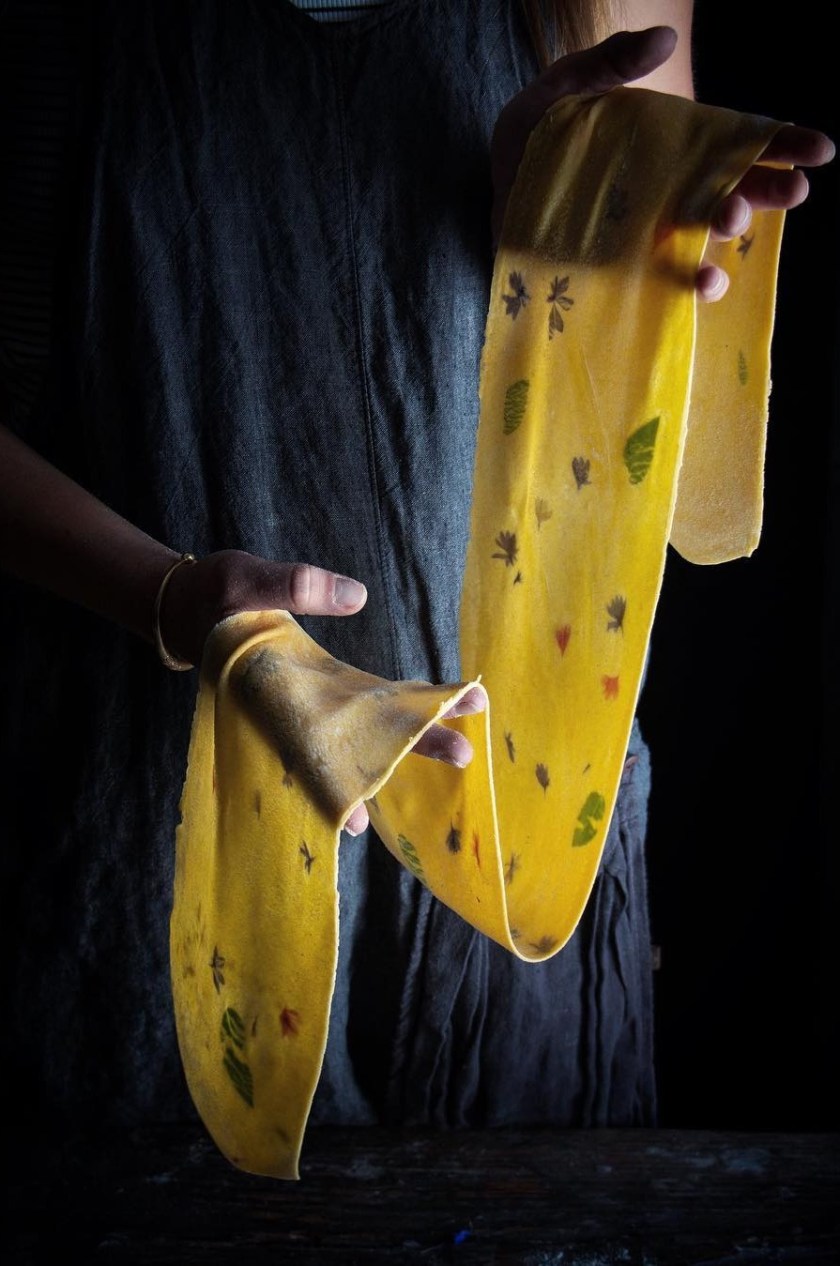
Typically made from an unleavened dough of durum wheat flour (semolina) mixed with water or eggs, formed into various shapes or as sheets, then cooked by boiling or baking, pasta has been there since the ancient years. Although etymology speaking, the first English attestation of the word “pasta” (1874) comes from Italian pasta, which was from the Latin pasta, the latter being the  Latinization of the Greek παστά (pasta) meant as “barley porridge”.

“You don’t need a machine to make pasta: a rolling pin and a fast hand can create a smooth, if thick, sheet.” Yotam Ottolenghi

Broadly divided as two categories of fresh (pasta fresca, prepared traditionally by hand or at home) and dried (pasta secca, commercial preparation). One of the advantages of pasta is it’s versatility from being the main course to a side dish, as salad or as a filler for sandwiches or as an accompaniment to main course or as light lunches. Classically there are three main kinds of prepared dishes. One type is the pasta asciutta (or pastasciutta) wherein the cooked pasta is plated and served with a complementary side sauce or condiment. Another is the pasta in brodo, in which the pasta is part of a soup-type dish. The third category is the pasta al forno where the pasta is incorporated into a dish that is subsequently baked in the oven.

Tracing the origin of pasta, the entire roots don’t lead back to Italy alone. The writings of Horace (1st century AD) mention lagana (singular: laganum) made of fine sheets of fried dough used in the daily menu. Athenaeus of Naucratis (2nd century AD) provides a recipe attributed to Chrysippus of Tyana(1st century AD) wherein sheets of dough made of wheat flour and the juice of crushed lettuce, then flavoured with spices and deep-fried in oil. However the method of cooking these sheets of dough does not correspond to the modern pasta, although the basic ingredients and perhaps the shape were similar. Food historians have noted several milestones, similar to pasta. Like the itrion (mentioned by Greek physician Galen, 2nd century AD) as homogeneous compounds made of flour and water, later modified as a boiled dough known as itirum common to Palestinian lands (300 to 500 AD) and recorded so in the Talmud. The Arab physician and lexicographer Isho bar Ali (9th century AD) defines itriyya, the Arabic cognate, as string-like shapes made of semolina and dried before cooking. A form of itriyya is laganum (Latin) which refers as a thin sheet of dough, a precursor of the modern Italian lasagna.

“You can buy a good pasta but when you cook it yourself it has another feeling.” Agnes Varda

The North African areas had couscous (steamed balls of crushed durum wheat semolina or of pearl millet and sorghum), more like droplets of dough which is less malleable than pasta. Rustichello da Pisa writes in his Travels that Marco Polo described a food similar to “lagana”. With traces of pasta being found in Ancient Greece and later Arabian cuisine records of similar dishes, pasta has come a long way before being ingrained into the Italian cuisine and culture. The first concrete information concerning pasta products in Italy dates from the 13th or 14th century. And as far as shapes of pasta and their sauces are concerned, there is a whole mine of information out there. From long to short, minute pasta for soups (pastina) or pasta all’uovo (egg pasta), there are many varieties of the basic pasta. For those of us, who need them gluten free, alternatives include rice flour, brown rice, shirataki noodles, chickpea, quinoa, corn, millet, buckwheat and amaranth to mention a few with certain varieties of gluten free being multigrain (mix of all above).

Although pasta dishes are generally simple, individual dishes vary in preparation with the flavors of local cuisine being incorporated when possible. With the mood for autumn setting in and ingredients varying to availability and choice, spicing up a basic pasta dish to the more elaborate style can set the creative cooking into full swing with an undeniable delectable pleasure for the palate and the taste buds. A bit of pasta can add plenty of spice, the way one wants it so.

Posted in Daily, Family and Society, Personal Musings, Stories Around the World, Work

Share the Light

“We only have what we give.” Isabel Allende

During the floods that had hit my hometown a year ago, it was a difficult time. Some from the community had lost a sizable amount of crop, livestock and trade; others had their homes uprooted and some escaped by an inch. The aftermath saw everyone pitching in, with funds pouring in from different corners around the globe. No one was left alone to pick up the pieces and rebuild again. Everyone, from the community, volunteers and outsiders had pitched in to restore the neighbourhood.

“There is no exercise better for the heart than reaching down and lifting people up.” John Holmes

Connectedness is an essential part of our lives. Unless one learns to help those around him, self improvement wouldn’t be within their own reach. For a person to grow, the environment around him has to be whole. Take a child’s life for instance. His world is complete when he receives the love, care and joy. Then the happiness is spread around him, lighting up the lives around him. Yet when the little one is troubled by any tiny aspect, the whole mood shifts. How different will it be for the adult ?

For one person to prosper, he must be at peace with those around him. The welfare of one person depends not on him alone, but when he learns to help others. Life of one has and will always be measured not by material gains alone; but by the numerous lives it touches with positive vibes. Each one has a pair of hands, to help and be helped. Harmony rests not with self alone, but also with the world around one.

“In teaching others we teach ourselves.” Traditional proverb

Growing Good Corn
There once was a farmer who grew award-winning corn. Each year he entered his corn in the state fair where it won a blue ribbon. One year a newspaper reporter interviewed him and learned something interesting about how he grew it. The reporter discovered that the farmer shared his seed corn with his neighbours.
‘How can you afford to share your best seed corn with your neighbours when they are entering corn in competition with yours each year?’ the reporter asked.
‘Why sir,’ said the farmer, ‘didn’t you know? The wind picks up pollen from the ripening corn and swirls it from field to field. If my neighbours grow inferior corn, cross-pollination will steadily degrade the quality of my corn. If I am to grow good corn, I must help my neighbours grow good corn.’
Source:James Bender (Author of How to Talk Well, published in 1994 by McGraw-Hill Book Company Inc.)

Posted in Daily, Food, Stories Around the World

Yorkshire, Pudding and a Twist

Flour. Eggs. Milk.

On one quiet Sunday afternoon, these four staple ingredients in the pantry brought out the urge to try something different for the Sunday dinner. As the option of sweet or savoury were being considered, the experimentation ran into attempts at making Yorkshire pudding.

One of the most favoured English dishes, Yorkshire pudding is a baked pudding which can be served in numerous ways. From being a main course dish served with meat and gravy or filled with banger and mash or made into dessert with fillings of chocolate, the options keep on changing depending on the choice of ingredients, the size of the pudding, and the accompanying components of the dish.

“Make a good batter as for pancakes; put in a hot toss-pan over the fire with a bit of butter to fry the bottom a little then put the pan and butter under a shoulder of mutton, instead of a dripping pan, keeping frequently shaking it by the handle and it will be light and savoury, and fit to take up when your mutton is enough; then turn it in a dish and serve it hot.
– A recipe for “a dripping pudding” as published in the book “The Whole Duty of a Woman” by Lady A; Kenrick, William (1737).

While the exact origins of this dish aren’t traced to any particular era, the recipe in records was seen in the sixteenth century. Originally this dish was believed to be served as first course to dull the appetite for the main meat and vegetables served as the second course. In poorer households, the pudding was often served as the only course. As to the name “Yorkshire”, the probability lies in the crispier batter of the pudding in this region, made so by the higher temperatures produced by the coal.

One of the reasons of its’ popularity lies in the ease of cooking. By pouring the batter made from milk (or water), flour and eggs ( basic ratio of 1/3rd cup flour and 1/3rd liquid per egg), into preheated, oiled, baking pans, ramekins or muffin tins (in the case of miniature puddings), they can be made steamed, in the pan or ovens. A steamed recipe involves covering the pudding with grease proof paper to steam it and then serve with jam and butter (1926).

“It is an exceeding good pudding, the gravy of the meat eats well with it,” states Glasse. “…. To set your stew-pan on it under your meat, and let the dripping drop on the pudding and the heat of the fire come to it, to make it of a fine brown.” (recipe as recorded in The Art of Cookery Made Plain and Easy by Hannah Glasse (1747)).

The versatility of the Yorkshire pudding can be felt across the various cuisines. With Laplanders (also known as popovers) of the American cuisine, these are light rolls made from an egg batter similar to that of Yorkshire pudding, typically baked in muffin tins or dedicated popover pans (straight-walled sides rather than angled). Similar dishes ( batter based savoury dishes) include the French gougère (a savoury choux pastry mixed with cheese), Bismarck or Dutch baby pancakes, takoyaki (a Japanese puff batter dumpling with octopus) or the more elaborate dish of “Toad in the Hole”. Traditional variants with local flours like sago, split gram flour, gluten free or palaeo based Yorkshire puddings and the like have been tried. The beauty of experimentation of the different recipes lies in simple adaptation, palatability and above all, bringing a bit of another culture to the table.

Half a pound of flour
1 ounce of butter
2 eggs
Milk to mix
Put the half-pound of flour into a basin and rub in the butter. Make a hollow in the centre of the mixture and break in the egg, beat well adding the milk gradually until all is mixed. Then beat for a further fifteen minutes, when the mixture coats a spoon it is ready. Grease a pudding basin and pour in the mixture, cover with greaseproof paper and steam for one and a half hours. Serve with jam, butter and sugar. [Note, for cooking the water should only come half way up the dish.
Source: Recipes Past and Present. A Wootton Bridge Historical website

Posted in Daily, Life, Quotes, Reflections, Stories Around the World

Change the Grounds

“Without change there is no innovation, creativity, or incentive for improvement. Those who initiate change will have a better opportunity to manage the change that is inevitable.” William Pollard

Talent is indeed a precious thing. Many of us have a wide range of talents, from science to mechanics, music, poetry, performing arts and even sporting events. Yet at times, these talents are hidden or tempered down by the circumstances of time; at each phase of one’s life. Over the course of years, the innate art will present itself in many forms. Like the homemaker who loves embroidery livens up their homes with quilt art or the hidden musician who sings for their children.

What will happen when one chooses to change their circumstances or the environment around them ?

“Eagle, thou art an eagle. Stretch forth thy wings and fly.”

Then one would discover the true potential within them. There have been instances of adults in their forties signing up for music classes and those in their fifties trying their hand at pottery. One is never too old, too young or too busy to do what they really want to. If the talent and will is within one, then it would manifest itself when the efforts are made in the right circumstances, true surroundings and when the will within burns bright. As soon as one believes in their real potential, then soaring high would be within oneself.

“We accept the verdict of the past until the need for change cries out loudly enough to force upon us a choice between the comforts of inertia and the irksomeness of action.” Billings Learned Hand

Fable of the Eagle and the Chicken
A fable is told about an eagle that thought he was a chicken. When the eagle was very small, he fell from the safety of his nest. A chicken farmer found the eagle, brought him to the farm, and raised him in a chicken coop among his many chickens. The eagle grew up doing what chickens do, living like a chicken, and believing he was a chicken.
A naturalist came to the chicken farm to see if what he had heard about an eagle acting like a chicken was really true. He knew that an eagle is king of the sky. He was surprised to see the eagle strutting around the chicken coop, pecking at the ground, and acting very much like a chicken. The farmer explained to the naturalist that this bird was no longer an eagle. He was now a chicken because he had been trained to be a chicken and he believed that he was a chicken.

The naturalist knew there was more to this great bird than his actions showed as he “pretended” to be a chicken. He was born an eagle and had the heart of an eagle, and nothing could change that. The man lifted the eagle onto the fence surrounding the chicken coop and said, “Eagle, thou art an eagle. Stretch forth thy wings and fly.” The eagle moved slightly, only to look at the man; then he glanced down at his home among the chickens in the chicken coop where he was comfortable. He jumped off the fence and
continued doing what chickens do. The farmer was satisfied. “I told you it was a chicken,” he said. The naturalist returned the next day and tried again to convince the farmer and the eagle that the eagle was born for something greater. He took the eagle to the top of the farmhouse and spoke to him: “Eagle, thou art an eagle. Thou dost belong to the sky and not to the earth. Stretch forth thy wings and fly.” The large bird looked at the man, then again down into the chicken coop. He jumped from the man’s arm onto the roof of the farmhouse. Knowing what eagles are really about, the naturalist asked the farmer to let him try one more time. He would return the next day and prove that this bird was an eagle. The farmer, convinced otherwise, said, “It is a chicken.”

The naturalist returned the next morning to the chicken farm and took the eagle and the farmer some distance away to the foot of a high mountain. They could not see the farm nor the chicken coop from this new setting. The man held the eagle on his arm and pointed high into the sky where the bright sun was beckoning above. He spoke: “Eagle, thou art an eagle! Thou dost belong to the sky and not to the earth. Stretch forth thy wings and fly.” This time the eagle stared skyward into the bright sun, straightened his large body, and stretched his massive wings. His wings moved, slowly at first, then
surely and powerfully. With the mighty screech of an eagle, he flew.
–(In Walk Tall, You’re A Daughter Of God, by Jamie Glenn)

Posted in Daily, Food

Of Apples, Pastry and Sugar

“It looked like the world was covered in a cobbler crust of brown sugar and cinnamon.” Sarah Addison Allen, First Frost

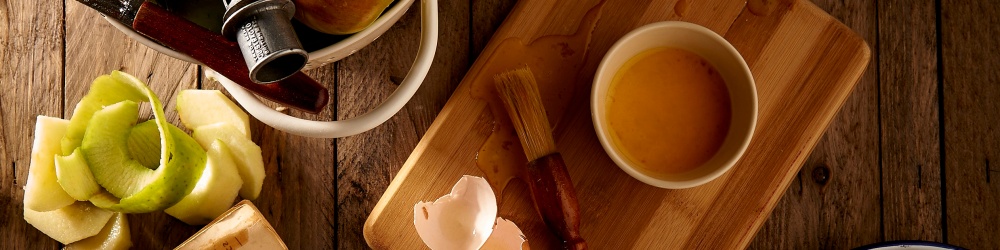
Peel the apples, uncore the slices and lay them on pastry crusts. The hole from the core may be filled with cinnamon, butter and sugar and sometimes dried fruit such as raisins, sultanas, or currants. Wrap the pastry crust around the apples and seal the seams to form them as dumplings. Place the dumplings on the pan, pour the spiced sauce over it and bake it in the oven. Voila, baked dumplings.
Lack of time or power outage for the electricity run oven.
Boil the dumplings and serve with brown sugar, cinnamon, berry preserve, maple syrup, honey, cottage cheese, chocolate syrup or any toppings of choice. That’s boiled dumplings for dessert.

These pastry-wrapped apple were among the earliest fruit puddings, being a popular add on at major social gatherings and had at all social levels. Served as breakfast, main side dish or dessert, there were popular and could be had cold, hot or just as it was. Although the boiled versions were the initial recipes, it was the baked ones that were more popular across the menus of established restaurants.

“A man cannot have a pure mind who refuses apple dumplings.” Charles Lamb

While the Austrians have their apfelnockerln (“large, soft” apple dumplings), Czech cuisine have their fruit dumplings, including apple known as ovocné knedlíky and are eaten with quark or tvaroh cheese, often served as a complete meal. The German Apfelklöße (1801) are elaborate “small pudding of apples,” cored and filled with jam or marmalade, sometimes raisins or nuts, wrapped in pastry, boiled, and topped with a sweetened sauce containing raisins, sugar, cinnamon, and wine. While in the United Kingdom, these apple dumplings were referred to as form of suet puddings with the prepared dumplings tied in cloth and boiled. On the other side of the western sphere, apple dumplings were considered as cultural staples (United States).

Seasonal fruits were used similarly to make fruit dumplings. Like the Austrian and Hungarian Knödel ( dumplings stuffed with plums), Crotian Knedle sa šljivama (dessert dish of plum dumpling with a potato dough), Austrian Marillenknödel (apricot dumplings) and the traditional Czech recipes of dumpling filled with plums, apricots, strawberries or blueberries. A similar dish is baked apples (minus the pastry shell). Unpeeled apples are cored (some preparations remove only the top part of the core leaving a half-inch at the bottom) and stuffed with fillings such as butter, brown sugar, currants, raisins, nuts, oatmeal, spices and other ingredients.

Made any way, boiled or baked, pastry covered or not, these perfect pocket sized simple desserts are perfect add-ons for simple, elaborate or too tired to cook days. With imagination running riot, what better way is there to make perfect use of the cold weather, indulge the sugar cravings with apples and sweet and make way for this traditional recipe not just simple and wholesome but a treat for the artistic eye and creative cooking.