Posted in Daily, Food, Stories Around the World

Of Pickles, Beyond the “Pickled Peppers”

Peter Piper picked a peck of pickled peppers,
A peck of pickled peppers Peter Piper picked;
If Peter Piper picked a peck of pickled peppers,
Where’s the peck of pickled peppers Peter Piper picked?
-“Peter Piper” Lyrics (Roud Folk Song Index number 1945)

With a preschool child in the family, the tunes of nursery rhymes runs through out most of the time. Consequently the well-known alliteration tongue-twister English rhyme was a challenge for both the child and the parents, especially the latter.

Interestingly although John Harris (1756-1846) had published the earliest version of this tongue twister in Peter Piper’s Practical Principles of Plain and Perfect Pronunciation (London,1813); this rhyme was apparently known at least a generation earlier. The subject of the rhyme as asserted by few authors was Pierre Poivre, an eighteenth-century French horticulturalist and government administrator of Mauritius, who once investigated the Seychelles’ potential for spice cultivation.

Following the train of words and thoughts, “pickles” was the food-based research over the weekend. The food preparation technique of “pickling” is the process of preserving or extending the lifespan of food by either anaerobic fermentation in brine or immersion in vinegar or vinaigrette. Typically changing the texture, taste and flavour, there are a wide variety of vegetables, fruits, meats, fish (and even eggs) which can be pickled and varying methods to chose from. Preserving perishable foods for months, the pH of pickles are maintained at 4.6 or less, which kills most bacteria. Additional antimicrobial herbs and spices like mustard seeds, garlic, cinnamon or cloves, may be added. The flavours of the final product of “pickle” depends mainly on the acidity or salinity of the solution, the temperature of fermentation, and the exclusion of oxygen. Although used in moderation for the fear of acidity and spiciness linked to carcinogenic properties, pickles have been a part of the food culture from the beginning.

As far as origins are traced, “pickles” or similar forms had made their appearance as early as 2400 BC with archaeological evidence from the area of Mohenjo Daro civilization (Tigris Valley) of northwest Indian Subcontinent. From being Cleopatra’s prized beauty secrets or in popular writings, “pickles” were the earliest foods considered as a necessity for long sea voyages, road travels, for soldiers or simply to preserve food for the harsh seasons or periods of time.

Though “pickle” had early roots, from an etymology point, this late Middle English word (c.1400) came probably from the Middle Dutch of pekel or East Frisian päkel or German pökel, all meaning “brine”. Going further beyond, the word is of uncertain origin or original meaning.

Pickles aren’t limited to being salty or spicy alone, they can be sweet, sour, hot or a combination of them. Each area has their own method of pickling, most handed down from one generation to the next, as a family tradition. South Asian pickles (popularly known as achar or achaar in most areas, term of ?Persian origins) are varied in their making, include seasonal vegetables, fruits and meats, generally mixed with salt, spices and vegetable oils; set to mature in a moistureless medium. Moving on to Southeast Asia (Singapore, Indonesian and Malaysian) pickles, or “acar” were typically made of cucumber, carrot, bird’s eye chilies, shallots, papaya and pineapple; seasoned with vinegar, sugar and salt. Further east, Koreans have kimchi while the Japanese pickled plums and daikon.

Whereas in the Middle East pickles from peppers, olives to lemons; while in mst of Western Asia pickles (called torshi in Persian, tursu in Turkish and mekhallel in Arabic) are commonly made from turnips, peppers, carrots, green olives, cucumbers, cabbage, green tomatoes, lemons and cauliflower. Eastern Europeans introduced various forms of lacto-fermented cabbage, known as sauerkraut. In Russia, the leftover brine (called rassol in Russian) is used for cooking traditional soups, like shchi, rassolnik and solyanka. When the English and the Europeans had arrived in the Americas; they brought their method for creating sweet pickles with vinegar, sugar and spiced syrup. Pickled cucumbers (most often referred to simply as “pickles”), olives and sauerkraut are most commonly seen in the United States and Canada.

Combining all these methods, “pickling” is indeed an art, with each area, region, country or community having their own special technique of making them. Little wonder that although the National Pickle Day is celebrated by foodimentarians ( primarily in US) on November 14th, the National Pickle Month (July) is indeed to explore and recreate these “global” pickles dishes. With rain on and off, there’s nothing more creative than “recreating historical foods” diverse and variant in their own style.\

Posted in Daily, Family and Society, Life, Quotes, Reflections, Stories Around the World

From “Being Helped” to “Helping”

“Those who are the happiest are those who do the most for others.” Booker T. Washington

Raising children is never easy. From the first child, parents or guardians have to devise a system which encompasses love, teaching, helping and guiding them to live a life rich in love, joy, of right values and principles. From infancy to toddler-hood, being too small to do the simple things like brushing their teeth, the morning routine, tying laces or filling a glass of water; these are done by elders, adults or even the bigger children. Yet along the way as they grow older, at times, the coddling doesn’t stop. When an adult puts on shoes for a healthy seven year old, something has gone wrong somewhere. When a healthy ten year old child refuses to make their bed, put their toys away or need to be fed their breakfast; the “coddling” may be a little overdone.

“You will discover that you have two hands. One is for helping yourself and the other is for helping others.” Audrey Hepburn

Every child needs their space to grow. Once they are let to do s, only then will they develop and learn to think. Basic life skills are necessary for any child. They start young, from being able to put on their shoes themselves, to dressing themselves and helping small in the household. When a child from school refuses to note their father’s tired face and demand to go out for shopping a new toy; alterations and right changes have to be made in the set routine to ensure that these children grow up to responsible and develop humaneness fr the society of tomorrow.

“Never get tired of doing little things for others, sometimes those little things occupy the biggest parts of their hearts.”  Unknown

As children are taught to help in the simple things of life, they bloom internally and learn to gain joy on helping others. Rightly said that, “Charity begins at home”; what these young minds learn, observe and undergo in their childhood are carried over to their adulthood and eventually, these same teachings, principles and feelings are carried down over to the generations that they raise. There’s an interesting post from one of my social network pages (translated to English), that goes on to show how children can be taught as “What can we do for you ?”

Being the “grownups” of today, we need to teach our children to “help after being helped when they were small”, so that the basic values of kindness, love, humaneness and service are always carried on, in the future society.

“Everybody can be great…because anybody can serve. You don’t have to have a college degree to serve. You don’t have to make your subject and verb agree to serve. You only need a heart full of grace, a soul generated by love.” Martin Luther King Jr.

Today I understood raising children correctly. The mother-in-law came to us, as always, brought a bunch of gifts to the children, as always, began her little aggressive concern:
– Let me smear you a sandwich! Let me wear you socks! Sit-sit, grandmother will wash the apple-clean-cut-lay!
As always, this is a bit annoying and even annoying for all of us. I have independent children, who clean their own sandwiches and smear apples. And then there was such a stunning stream of turbulent activity!
And a six-year-old son suddenly asked at dinner:
“Grandma, what can we do for you?”
– What? – Grandmother did not understand.
– You do so much for us! – Ilya explained, – You take care of us, care for us. So I ask, and what can WE do for YOU?
He so matured, so deliberately said it, that I felt myself at that moment, as if an angel from heaven had come down and handed me the medal for motherhood. All my pedagogical throwings, all my megawatts of energy and kilometers of nerves, piles of books on education, thousands of arms that fell, all came together today and crystallized into the phrase: “What WE can do for YOU.”
Ksenia Smyslova

“People will forget what you said, people may forget what you did, but they will never forget how you made them feel.” Maya Angelou

Posted in Daily, Food, Stories Around the World

Of Piña Colada, Origin and Evolution

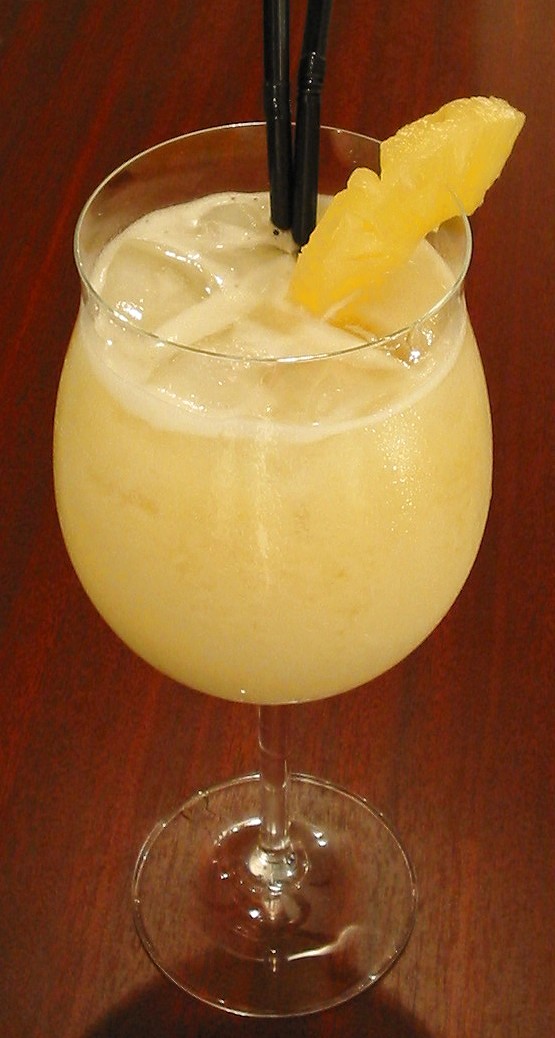
“Blend or shake 6 ounces of pineapple juice, 3 ounces of coconut cream, 1½ ounces of white rum and crushed ice until smooth. Serve in chilled glasses, garnished with pineapple wedge and/or a maraschino cherry.” – Piña Colada (1954 recipe)

Proclaimed as the national drink by Puerto Rico (1978), this cocktail although steadily popular in all Spanish and Portuguese speaking countries, is widely enjoyed across the world. The popularity is affirmed by it being a part of the world of entertainment, from music, popular lyrics to cinemas. For instance, “Escape (The Piña Colada Song)” by American musician Rupert Holmes (1979) had reached the number one spot and stayed there for few weeks.

While the name piña colada literally means “strained pineapple” in Spanish; this sweet cocktail is made with rum, coconut cream or coconut milk and pineapple juice. Usually served either blended or shaken with ice, it may be garnished with either a pineapple wedge, maraschino cherry or both.

Legends abound the origin of this cocktail. The earliest known legend states that Puerto Rican pirate Roberto Cofresí, to boost his crew’s morale, gave them a beverage or cocktail that contained coconut, pineapple and white rum; what would be later known as the famous piña colada (19th century). This recipe was believed to be lost with his death (1825). Yet this story is widely disputed by food historians.

By popular belief, the creation of the piña colada was credited to bartender Ramon “Monchito” Marrero (1954). Working in the Beachcombers Bar of the Caribe Hilton, one of the premier luxury hotels in San Juan; he was asked by hotel management to create a signature drink that captured the flavors of the island. By his account, Marrero had spent three months experimenting with hundreds of combinations before perfecting his sweet, frothy concoction of rum, cream of coconut and pineapple juice. Once introduced it had gained mass popularity. Marrero mixed up and served his creation at the hotel for 35 years until his retirement (1989). Concurrently another barman, Spaniard Ricardo Gracia who had served drinks at the Caribe Hilton, had claimed that he invented the cool, creamy cocktail. As per the interview to the Coastal Living magazine (2005), a strike by a coconut-cutters union (1954) had prevented him from serving up the popular mixed drink of rum, cream of coconut and crushed ice in its traditional sliced coconut. When forced to improvise, Gracia had poured the drink into a hollowed-out pineapple. When the fruit’s added flavor proved popular, Gracia said he added freshly pressed and strained pineapple juice to the previous combination of rum and cream of coconut, to create the piña colada.

Concurrently two miles west of the Caribe Hilton, another San Juan hotspot stakes its claim as the birthplace of piña colada. As attested by the marble plaque outside the entrance of the Restaurant Barrachina ( established late 1850s), Ramon Portas Mingot, a Spanish mixologist who wrote cocktail books and worked in the top bars of Buenos Aires, had made the first piña colada (1963) inside its doors.

Although the piña colada, was born in Puerto Rican capital of San Juan; the identity of the bartender who first mixed up the iconic rum-based cocktail remains a point of contention. However the modern-day beach cocktail wouldn’t be possible until the invention of Coco Lopez, a pre-made cream of coconut (1954). Developed by Ramon Lopez-Irizarry, an agriculture professor at the University of Puerto Rico; he had blended cream from the hearts of Caribbean coconuts with natural cane sugar, which later became an integral part of the island’s piña coladas.

Over the years, different proportions of the core ingredients, as well as different types of rum, may all be used in the piña colada to create different and new signature varieties. While frozen piña coladas are also served today; other named variations like the Amaretto colada (amaretto substituted for rum),  Chi chi (vodka in place of rum), the Virgin piña colada or piñita colada ( non alcoholic, without the rum) or even the Soda colada (resembles the original recipe, but soda is used instead of coconut milk) to list a few. For the more resourceful or food connoisseurs and experimenters, piña colada can be blended into smoothies, milk shakes, cupcakes or even into cheesecake.

With National Piña Colada (July 10th) being celebrated tomorrow, it would be fun to experiment and create a similar based concoction, or simply enjoy the flavours of the original piña colada to mark special occasions.

CARIBE HILTON’S PIÑA COLADA RECIPE

2 ounces rum
1 ounce cream of coconut
1 ounce heavy cream
6 ounces fresh pineapple juice
1/2 cup crushed ice

Mix rum, cream of coconut, heavy cream and pineapple juice in a blender. Add ice and mix for 15 seconds. Serve in a 12-ounce glass and garnish with fresh pineapple and a cherry.

Posted in Daily, Food

Of “Portable Pies”

Although the modern lifestyle had attracted the tradition of “having food on the go” ranging from well wrapped portable sandwiches, cupcakes, tarts, salads to mention a few; portable pies were in existence since ancient times. Popularly known as “turnovers”, these portable pies were made by placing a filling on a piece of dough, folding the dough over, sealing, and baking it. Made sweet or savory, “turnovers” are often made as a sort of portable meal or dessert, similar to a sandwich; had for breakfast, snacks, desserts or quick picnics. From being baked to fried, fillings include fruits (apples, blueberries and cherries), meats ( chicken, beef and pork), vegetables (sweet potatoes, carrots, peas), eggs or even cheese. Specialty versions are made with fillings of wild rabbit and leek.

Traditionally turnovers are usually sweet, with popular pastry being the classical puff pastry. Known as sweet tarts initially, the term turnovers had come to reference around the eighteenth century. Made then as a sort of small, typically individual pie or pasty, in which the filling is placed on one side of a piece of rolled-out pastry and the other side is then turned over’ to cover it, forming a semicircular shape (Sporting Magazine, 1798).

Though these “turnovers” may have been there across different cuisine, albeit under other popular names. From the empanada of South and Central America (mixture of chopped meats, hard-boiled eggs, minced vegetables, olives, raisins, highly seasoned), the Russian pirozhki (meat, fish, cabbage, mushrooms or cheese), the famous Cornish pasties (large turnovers filled with beef, onions, turnips), Chinese dimsum (meat, fish, vegetables), Indian Samosas (chickpeas, potatoes, spices), Polish Pierogies, Middle Eastern Sanbousic (cheese and dill) and the Greek Spanokopitas (fillings of spinach, cottage and feta cheese with olives) are few among the many “global turnover” choices to experiment with as “quick meals or snacks” on the go.

With arising global popularity, little wonder then Turnovers have their own days. To mark celebrated food days of the National Apple Turnover Day (July 5th) as well as the World Chocolate Day (July 7th), sweet apple turnovers drizzled with chocolate may be a good way to mark them. For kitchen chefs, experimenting with turnovers may be a change from the regular desserts or savoury versions can be stuffed with meat leftovers, vegetables or just sweet fillings, depending on the mood of the hour. From sweet, savoury to spicy or cheesy; “turnover pies” have a variety of taste to offer, besides being a “quick solution” for sudden brunches, high teas or simply cravings.

Posted in Daily, Family and Society, Life, Personal Musings, poetry, Quotes

Power of the “Little Things”

“Success in life is founded upon attention to the small things rather than to the large things; to the every day things nearest to us rather than to the things that are remote and uncommon.” Booker T. Washington

Of the many attributes that binds man, family, friends, community and neighbourhood in general, is the art of paying attention. Simply put, the secret of happiness, love, respect and kindness have a common subset of “attention”.

“Give whatever you are doing and whoever you are with the gift of your attention.” Jim Rohn

Excellence at work or the chosen field, lies in the art of doing it well and as per the targets or goals set. All this would be void without due attention being paid to each and every aspect.

Time spent for family and children can be sought only when attention is paid to what may seem trifle things, but can make the daily grind seem lighter. For instance, putting the breakfast dishes in the sink, putting toys on the play corner only, soiled clothes in the cloth basket (not on the floor) may seem trivial, but when done properly echoes to the other person that one does care.

Patiently listening to a colleague’s woes. Forgotten calls replied when possible. Due help given whenever possible, especially when requested. Being around for hospital visits with parents, as they grow old. Though these may seem trivial at that moment; for the other person it means big.

“Attention is vitality. It connects you with others. It makes you eager. Stay eager.” Susan Sontag

As far as family, friends and loved ones go; actions do speak louder than words. The essence of love, respect and kindness isn’t reflected in the big things, but the small things of life, that really matter the most. To seek happiness of home, family, friends or community is in the individual minutes of small, quickly forgettable pleasures of a hugs, smiles, kind look, heartfelt compliment and countless small, but kind thoughts and sincere feelings, all arising when one pays due attention to those who around them. Love, kindness, joy and peace also need their daily bread.

“I love you” in the family vocabulary.
Sounds in other kind words:
“I will hang the linen myself on the balcony”,
“Let’s go on a holiday to the dacha to mother”.

“Cool, dress warmly”,
“Let the angels lead you everywhere”,
“Didn’t work out this time? Come on bolder!”,
“Get some sleep, I will wash the dishes in a flash”.

We sometimes do not notice much, The
most important thing is not grasping the essence,
With honeyed tea served in bed,
“I love” and the native people say.

Inna Kucherova (Translated to English)

Posted in Daily, Food, Photography Art

Cooking to Culinary Arts

“Tell me what you eat, and I will tell you what you are.” Jean Anthelme Brillat-Savarin

For most gastronomes, culinary specialists, chefs, nutritionists as well as home cooks, food being cooked, served or even eaten reflects a lot of the “mood within”. For instance, if one is extremely tired after a long day, the easiest meal to make in a jiffy for a home cook is pasta and cheese followed by ice cream for the sweet end. On the other hand, to mark any special occasion, the requirement of a full three course meal (salad or appetizer, main course and meat) completed by a splendid (if not necessarily elaborate) dessert is a must. When in an angry mood, every chef at heart will go with their inner basic meal, not tuning to art of the eye, but just ensuring that the basic taste is palatable. Too irritated or bothered to cook, it will be pizza or “Chinese order” on the house. And when the mood is sad, it will be the comfort food , homemade, with a striking resemblance to one’s childhood or mother’s style, or the fast food version.

“The preparation of good food is merely another expression of art, one of the joys of civilized living.” Dione Lucas

Essentially, cooking is a very sensitive art. While one mayn’t have the intensive training or qualification to be a chef of Michelin three or five star rated restaurant, but if one can make a complete wholesome meal for self, family and friends, that alone is enough. In fact, cooking is an expression of love. For every ingredient which balances the meal, it is a reflection of the care, precision and the basics of science behind it.

“Anybody can make you enjoy the first bite of a dish, but only a real chef can make you enjoy the last.” Francois Minot

The “effective cooking” of today, is a balance of food and fun, of taste, experimentation and readily available ingredients. While baking involves following the written or “handed down” instructions to the point; cooking involves a little experimentation of ingredients, spices as well as art. The evolution of cooking into “culinary arts” over the years, has resulted in a whole new range of varied dishes blended together with taste, nutrition, quality, tradition, serving, managing as well as visual presentation to complete the effect.

“The discovery of a new dish confers more happiness on humanity, than the discovery of a new star.” Jean Anthelme Brillat-Savarin

Entering into the month of “culinary arts” (July); the professional cooks and chefs who bring innovative cuisine from their kitchens to our tables every day are being recognized not just for their talent but devotion as well as contribution to cooking as an art form. For the home cook to experiment with technique and style, vast differences can be made by the order of adding the ingredients, plating as well as trying and blending the new recipes with the old ones. To start off, experimenting in small amounts can be tried. While most of the time, home cooking involves the regular, to celebrate this month, it would be good to plate the regular different or try something new altogether. For every cook, is indeed a chef with a hidden artistic side.

“Culinary tradition is not always based on fact. Sometimes it’s based on history, on habits that come out of a time when kitchens were fueled by charcoal.” Alton Brown

“In the abstract art of cooking,
ingredients trump appliances,
passion supersedes expertise,
creativity triumphs over technique,
spontaneity inspires invention,
and wine makes even the worst culinary disaster taste delicious.”
Bob Blumer

Posted in Daily, Food, Stories Around the World

Mix Them as “Mock” or “Cocktails”

One of the social necessities of being a part of a bigger, corporate or franchise based workforce, is attending the social or business social networking, popularly under the banner of “cocktail” evenings. At times, the conversations are silently laced with hunger pangs after a long day or the stress of the day filtering through the thoughts, which can be quite dangerous especially when thoughts and words don’t really gel well with the situation. While primarily the whole purpose is to extend the social “work based” or business connections, one can hardly ignore the “hors d’oeuvre” or appetizers as well as the baseline of the gathering, “cocktails or mocktails”.

“If it’s a cocktail party, I generally make five or six different things, and I try to choose recipes that feel like a meal: a chicken thing, a fish or shrimp thing, maybe two vegetable things, and I think it’s fun to end the cocktail party with a sweet thing.” Ina Garten


While the inventor of the cocktail evenings is quite a controversial topic, with some believing it to be Alec Waugh of London or Mrs. Julius S. Walsh Jr. of St. Louis, Missouri (May 1917). The former had detailed that the Alec Waugh noted that the first cocktail party in England was hosted by war artist Christopher Nevinson (1924) while Mrs. Walsh invited 50 guests to her house on a Sunday at high noon for a one-hour affair. The St. Paul’s Pioneer Press newspaper had declared that “The party scored an instant hit,” and stated that within weeks cocktail parties had become “a St. Louis institution”.

“A cocktail done right can really show your guests that you care.” Danny Meyer

Whether purely alcoholic or fruit based, a cocktail is essentially both palate satisfying as well as a work of “art”. As defined, “cocktail” is an alcoholic mixed drink, which is either a combination of spirits, or one or more spirits mixed with other ingredients such as fruit juice, lemonade, flavored syrup, or cream. Technically it contains alcohol, sugar and a bitter or citrus. While there are various types of cocktails, based on the number and kind of ingredients added; their origins are debated.


Also, when a mixed drink contains only a distilled spirit and a mixer, such as soda or fruit juice, it is a highball. When it contains only a distilled spirit and a liqueur, it is a duo. On adding a mixer to the duo, it becomes a “trio”. The additional ingredients may be sugar, honey, milk, cream, and various herbs. Mixed drinks without alcohol that resemble cocktails are known as “mocktails” or “virgin cocktails”.

“A cocktail can be made by the bartender. But the cocktail also can be made by the chef.” Jose Andres

The first use of the term “cocktail” is highly debatable. As per The London Telegraph, a satirical newspaper article (March 20, 1798) about what must have been a hell of a party had accounted the drinks imbibed by William Pitt (the younger) which included “L’huile de Venus,” “parfait amour,” and “‘cock-tail (vulgarly called ginger.)’” The challenge was whether “cocktail” in this article truly referred to an alcoholic drink, or something else. Another record was the article from The Farmer’s Cabinet ( Vermont, April 28, 1803), where to drink a cocktail was claimed to be “excellent for the head.” By 1806, the word “cocktail” had reached it’s current meaning as defined by the newspaper, Balance and Columbian Repository( May 13, 1806), the editor defined a cocktail as: “a stimulating liquor composed of spirits of any kind – sugar, water, and bitters.”


The exact derivation is attributed to multiple origins. One origin of “cocktail” is as a mispronunciation of the French word for eggcup “coquetier” (said as cocktay in English). In the late 18th century, apparently Antoine Amédée Peychaud, a New Orleans apothecary and inventor of Peychaud bitters had served brandy mixed with his bitters in eggcups. The second belief states that the name is derived from the term “cock tailings,” which was the practice of tavern owners combining the dregs (tailings) of nearly empty barrels together into a single elixir that was sold at bargain prices. In those days, the spigot of a barrel was sometimes referred to as a “cock.” Another reference was from the “cock tail” of regular “adulterated” horses entered into the races with the thoroughbred horses of docked tails, which during the early 17th century. As Liquor and races go hand in hand, this theory states that “mixed or adulterated drinks” were likened to the “cocktail” of the regular ( non-thoroughbred) horses in the race.

Whatever and however the origin may be, from mocktail to cocktails, the evenings for social or business purposes need them to keep the conversations flowing, mixing work with comparatively less stress of the regular work schedule. With summer in full swing, it would make these occasions more entertaining as well as in demand.