Posted in Food, Stories Around the World

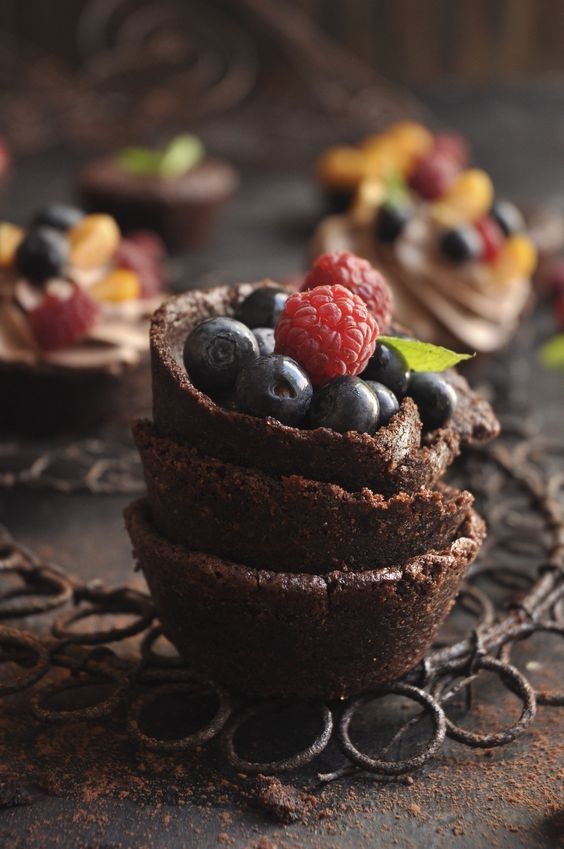
The “Brownie” Way

“And I’ve just pulled a new brownie out of the oven: a deep, dark chocolate base with a praline pecan topping, sort of a marriage of brownie and that crispy top layer of a good pecan pie.” Stacey Ballis (author of Wedding Girl)

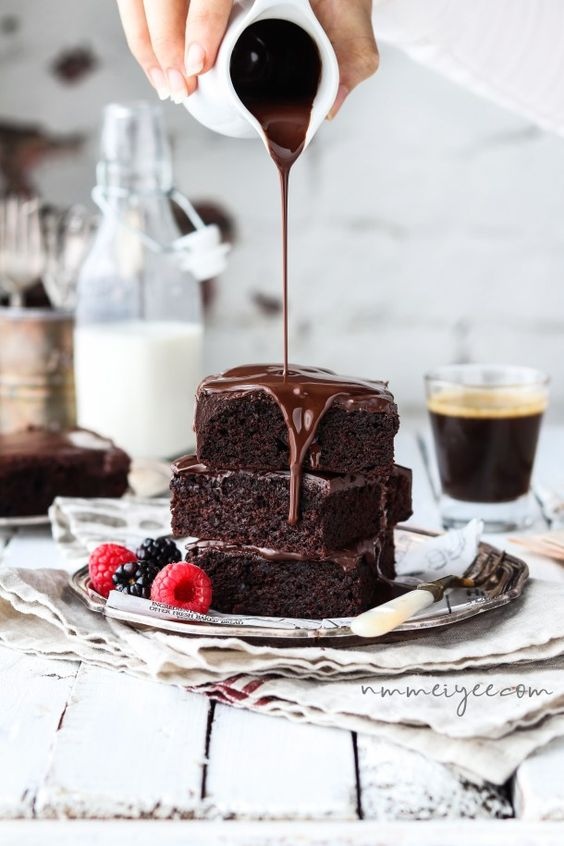
Something quick, easy and delectable are few of the pre-requisites required for adding to the list of holiday baking. If chocolate is added in, the better. It would be something that blend in with other well loved and basic desserts. That something would be square, baked or frozen cut choclate cake pieces, more popularly known as the “brownie”. Coming in a variety of forms, from fudgey to cakey with nuts, fudge, frosting, cream cheese, chocolate chips and the favourites included in the batter; the brownie is an all-time favourite of many. Like sheet cookies, they may eaten by self or with milk, ice cream (a la mode), topped with whipped cream or sprinkled with powdered sugar and fudge.

Like all delectable treats, brownies have their own share of legends. As one legend credits the brownie to the creative ingenuity of Palmer House Hotel pastry chef (1893) for the Palmer House Brownie with walnuts and an apricot glaze made for the Chicago World’s Columbian Exposition on the request of the owner’s socialite wife Bertha Palmer. The first-known printed use of the word “brownie” was to describe a dessert in the Boston Cooking-School Cook Book by Fannie Farmer (1896 version) in reference for a cookie-type confection that was colored and flavored with molasses and made in fluted marguerite molds. Later further publications like The Boston Cooking-School Cook Book (1906) edited by the same Fannie Merritt Farmer records a recipe brownie as an adaptation of her chocolate cookie recipe to a bar cookie baked in a rectangular pan. Another well record as written in the Baking Classics (Betty Crocker) is of a housewife who was making a chocolate cake but forgot to add baking powder. When her cake didn’t rise properly, instead of tossing it out, she cut and served the flat pieces (Bangor, Maine) which would probably account for the Bangor Brownies.

As food historians try to still trace the exact inventor of the “brownie” while the legends credit it to added melted chocolate to a batch of biscuits (added by mistake) or the cook who didn’t have enough flour while baking a cake; brownie are one of the simple things that can be made quite elaborate for the festive season. For instance consider the sandwich brownie (with an ice-cream, cream, icing sugar, meringue or peanut butter as the filling in the middle) or the layered brownie with double chocolate chip at the base, then the layer of Oreos and finally brownie batter on billows of cream cheese, a delight for the wintry holidays. As for the mix, add a scent of cinnamon, essence of the vanilla (blondie twist), sprinkle of the flavours of star-anise, honey or even a little of the cayenne for that extra “hot” to the sweet; brownie can be made as to own choice, flavours and twists. A platter of homemade special brownie can give an extra zest to the holidays. So set, get and go experimenting for a new family festive tradition.

1907
Lowney’s Cook Book
Boston, Massachusetts

Bangor Brownies (p 261)
¼ cup butter
1 cup brown sugar
3 squares chocolate
1 egg
½ to ¾ cup flour
1 cup nut meats
¼ teaspoon salt

“cut in strips”
Source: New England Recipes 

Posted in Daily, Food, Stories Around the World

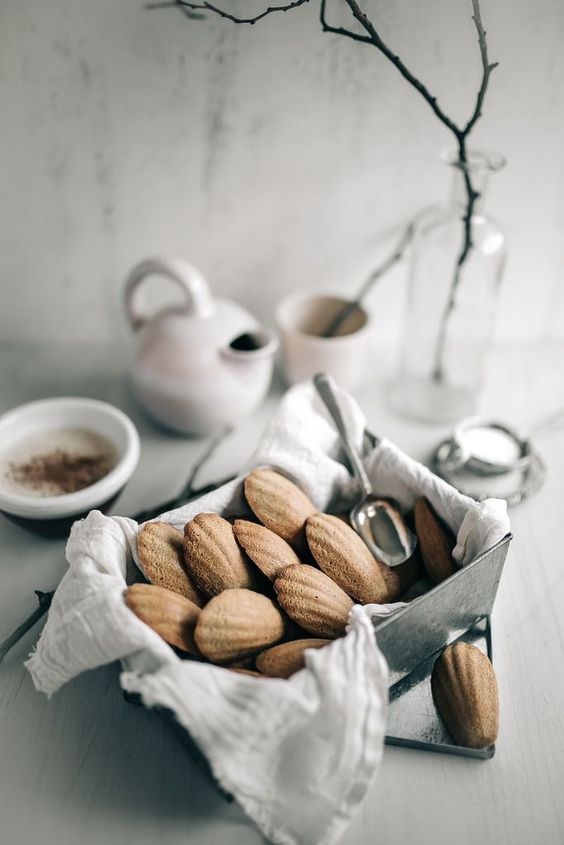
Madeleine for holidays

Entering into the last month of the year, the delight of enjoying the twilight mornings with the warm cup of tea in the bitter chill of the air, would be better with a little of the small crunchy or tiny delights to add to the tea. In fact with holidays round the corner, a regular stock of the ready homemade sweet dry desserts especially cakes, cookies and biscuits would come in handy.

Among them are the treats of small sponge cakes with their distinctive shell-like shape, baked in pans and can be made with the basic ingredients. Known as the madeleine or petite madeleine, these traditional small cakes trace their origins to the Lorraine region in northeastern France. By legend these cakes have been there in the 17th century French cusine, although the increased use of metal moulds (18th century) had led to their increased use. By the end of the 19th century, the madeleine is considered a staple of the diet of the French bourgeoisie.

By etymology, the term madeleine describes “a small cake”. Made from génoise cake batter (with the suspended air in the mixed batter giving the volume to the cake) with traditional recipes adding on finely ground almonds, nuts or lemon zest for their special lemony flavour. In Britain, similar cakes are baked in dariole molds, they are coated in jam, desiccated coconut and topped with glacé cherry.

“On a pound of flour, you need a pound of butter, eight egg whites & yolks, three fourths of a pound of fine sugar, a half glass of water, a little grated lime, or preserved lemon rind minced very finely, orange blossom praliné; knead the whole together, & make little cakes, that you will serve iced with sugar.”
“Cakes à la Madeleine”. Menon, Les soupers de la Cour ou L’art de travailler toutes sortes d’aliments, p.282 (1755)

The madeleine has been mentioned by the culinary writers during the Napoleonic era, especially in the recipe books of Antonin Carême and Grimod de la Reynière. One record of the first recipe traces to the “cakes à la Madeleine and other small desserts” (1758) of a French retainer of an Irish Jacobite refugee, Lord Southwell. Tracing the roots of “Madeleine”, there are several interesting legends pertaining to the origin of the cake. While one considers the name centered from a female character of Lorraine, probably a chef with the patron being Paul de Gondi (17th century cardinal), owner of a castle in Commercy. Another legend consider the inventor to be Madeleine Paulmier, cook for Stanislaus I, duke of Lorraine and exiled King of Poland (18th century). As the legend goes, Louis XV (son-in-law of the duke) charmed by the little cakes prepared by Madeleine Paulmier (1755), named them after her and Maria Leszczyńska, his wife had introduced them soon afterward to the court in Versailles which soon became a favoured French recipe. Two legends link the cake with the pilgrimage to Compostela (Spain) where Madeleine, a pilgrim is said to have brought back the recipe from her voyage or a cook named Madeleine is said to have offered little cakes in the shape of a shell to the pilgrims passing through Lorraine. While another legend states that Madeleine was the creation from the kitchens of Prince Talleyrand by the pastry chef Jean Avice (19th century) who is said to have baked little cakes in Aspice moulds.

Not just in the kitchen, but Madeleine have made their significant impact in literature with Proust’s “episode of the madeleine” as an instance of involuntary memory in his book In Search of the Lost Time. Similar to the madeleine are the “financiers” or the Malaysian Bahulu. One of the benefits of getting down to making Madeleine for the holidays is the ease in its’ preparation, variability of ingredients as well as the versatility of it being a part of the small and the large holiday get-togethers. As for the simplicity in style, a little of “food art” will make the difference. Adding to the festive spirit, madeleine can indeed spice up the holiday season this year.

Posted in Daily, Food, Uncategorized

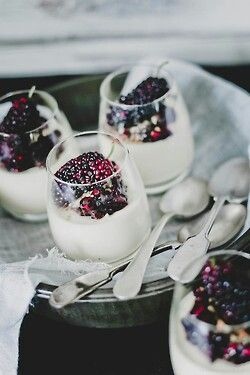
Of Parfait, Choice and Style

For any meal, the finale is marked by that delightful bit of sweetness. With the rising awareness of eating healthy and right, the right balance has to be struck at times between the temptation of the sugar craving to close the meal and to stay on the low healthy calorie counter too. Which is why “parfait” has evolved since it’s inception to the present day.

The oldest known recipe can be traced to 1894, of French origin where it had started off as a frozen dessert. While the French prefer to make the base from cream, egg, sugar and syrup creating a perfect custard-like puree, known as “the parfait”; whereas the American counterpart includes an artful layering of varied ingredients like granola, nuts, yogurt, liqueurs with a topping of fruits or whipped cream layered and served in a tall glass.

Of recent, with new trends and various experimentation, parfaits have been introduced without the cream and liqueurs. Instead they are made by simply layering the fresh fruits ranging from berries, cut peaches, strawberries with yogurt , granola or nuts; served as a healthy snack, breakfast option or a light meal, as a change from the regular. Which ever way it may be, the popularity of the parfait lies not only in it’s ease of preparation and the delectable indulgence but also in the appealing art it holds in itself.

Posted in Daily, Food, Stories Around the World

The “Petit Four” Story

“It was the best first kiss in the history of first kisses. It was as sweet as sugar. And it was warm, as warm as pie. The whole world opened up and I fell inside. I don’t know where I was, but I didn’t care. I didn’t care because the only person who mattered was there with me.” Sarah Addison Allen (author of The Sugar Queen)

Craving for a snack between meals, especially during office hours wherein it is a situation between the need for the sugar versus the knowing that control is a must (mind vs. body), the deli across the road offers a relief during the short breaks. With the variety of mignardises of petit four on display, these cravings can be satisfied when their effect runs too hard.

Known more commonly as petit four than mignardises, the former word when literally translated from French means “small oven”. These small bite sized single piece confectionery or savoury appetizer arose in the 18th and 19th century French cuisine.

Before the gas ovens had been invented, those years saw the large brick ovens (more common Dutch design) being used. The latter used to take a long time to heat up (especially to the bread baking temperatures) as well as cool down. Taking advantage of the stored heat, bakers used these ovens to bake pastry during the cooling process which was known as baking à petit four (literally “at small oven”).

Walking into any French patisserie, these assorted small desserts are usually called mignardises; whereas the hard, buttery biscuits are called petits fours. Similar to the petit four is the classical Austrian confection of pastry known as Punschkrapfen or Punschkrapferl (punch cake), which has a legend of it’s own.

These petits fours come in three main varieties, as Petit Fours Glacé (“glazed”) predominantly served as iced or decorated tiny cakes topped with marzipan covered in fondant or icing. The second category includes savoury bite-sized appetizers usually served at cocktail parties or buffets known as Salé (“salted”). The third category are the Sec (“dry”) which encompasses dry cookies, dainty biscuits, baked meringues, macarons, sable beurre, palmiers, duchesses and puff pastries, all baked at low temperatures for a long time. Other categorizations also include the Petits fours frais which are any small pastries like sponge cakes like madeleine, financiers, creme filled pastries like eclairs or tartlets, all these must be eaten the same day they are made for the quality is lost if they sit longer. On the healthier front, there is the “Petits fours Deguises”, made of fresh or dried fruit dipped in a sweet coating such as chocolate or cooked sugar.

Homemade petit fours can be made on a more simple and creative way with plenty of icing sugar, fondant, candied bit and pieces as well as the good old chocolate to add to the flavours and sparkle it to a work of art. With this wide assortment of treats, petit fours are indeed a delightful to enjoy that little bit of sugar, the concentrated way or slightly less or simply be savoury for a change.

Posted in Food, Stories Around the World

Of Kladdkaka and Chocolate

Butter. Eggs. Sugar. Cocoa or chopped dark chocolate. Vanilla sugar. Flour. Pinch of Salt.
Minimum Baking Time.

While prepping a sudden luncheon meet for old friends, the dessert dish had to be something different, for we three ladies were all dessert connoisseurs. Hunting down for quick cake recipes, had led to the Swedish Kladdkaka, a gooey choclate cake that requires the very basic ingredients and minimum preparatory as well as baking time. This venture had led to the revelation of interesting tidbits and details of this favoured Swedish delight.

Kladdkaka, literally translated as gooey or messy cake (more commonly known as “chocolate mud cake” is a dense sticky chocolate cake with a soft and gooey center, often served with whipped cream or vanilla ice cream and raspberries. Widely believed to be one of the best cakes for chocoholics, there are many variations to the standard recipe for this delight. One of the major reason for it’s gooey nature (quite different from brownies and other regular sugar cookies) is the absence of baking soda in this preparation. With just mild whisking, the absence of air bubble results in the stickiness.

While tracing the exact origin of this cake didn’t lead to any specific occasion or person, it is believed to have been inspired by the brownie or the French chocolate cake recipe; with its’ origin being at a time when baking soda wasn’t routinely available (probably around World War II). Another theory was that Kladdkaka came from Örebro where Gudrun Isaksson (1938) baked brownies from a recipe she received from the USA. As baking powder was difficult to get hold of then, the dough became liquid resulting in the chocolate mud cake. Alternatively it was believed that this cake came to Sweden via the editor-in-chief of the Veckojournalen (1968), Margareta Wickbom who had visited a cafe in Paris where she tasted chocolate cake and brought home the recipe. It was known as “Elake old man’s muffins” then, believed to be made first in muffin form.

Regardless of the roots, with the simplicity of the recipe, ingredients and quick baking time, it makes for a welcome change for the quick but elaborate dessert. Variations are there with coffee added to the regular flavour or making the cake on block chocolate to give a whitish texture to it, adding fruits or nuts as well as making the batter more lighter or luxurious or give it a flour-less twist. So for the kitchen experimenters or home chefs, dessertarian and chocoholics, here is another recipe and delight to add to the ever growing list.

“This cake is one of those cakes I take for granted somehow. I love it so much but I rarely bake it. Before I started baking like crazy, about 5 years ago, I used to bake two times a year, tops. Two times a year, that’s it. And when I did, it was always “kladdkaka” (roughly translated “sticky cake” or “gooey cake” but I’ll just call it Swedish chocolate cake). Why kladdkaka then? Well, first of all, it was the only recipe I knew how to make. Second, it’s probably the easiest thing you could possibly make, and it’s just so darn delicious. You simply have to make this one! And don’t forget to serve it with whipped cream (vanilla ice cream is ok as well)!”
Linda Lomelino, Call Me Cupcake

(Sources: http://kladdkakerecept.blogspot.com/, https://culturedarm.com/a-swedish-kladdkaka-recipe/)

Posted in Daily, Food, Photography Art, Stories Around the World

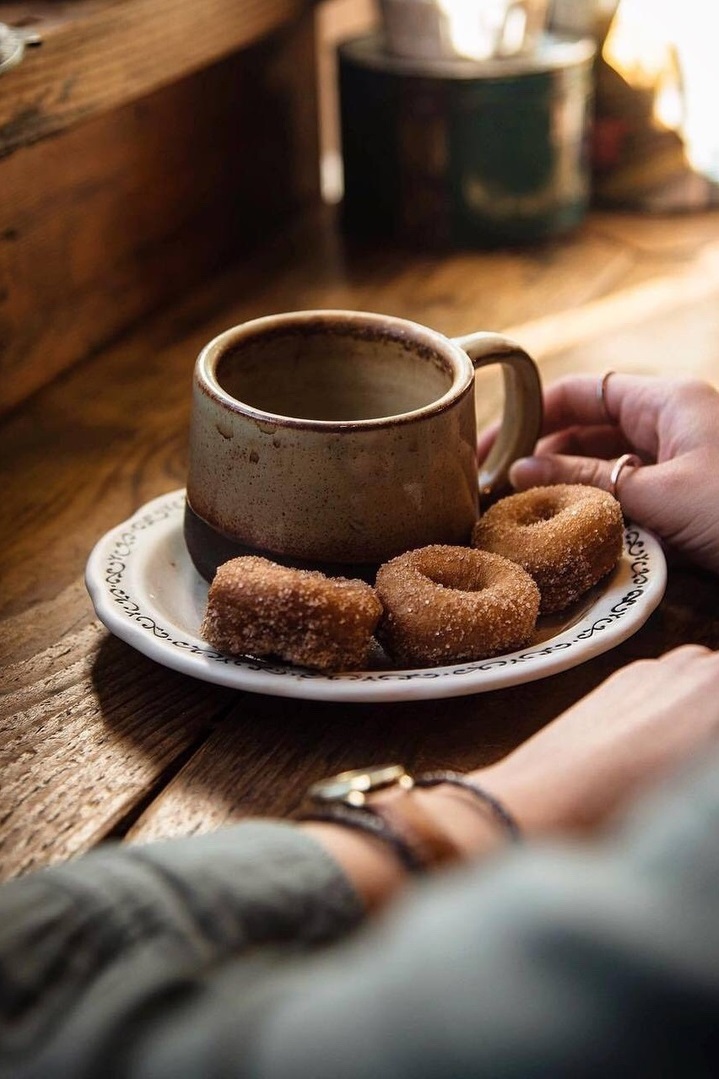
Little like the “Donut”

Deeply fried, made from flour dough, typically ring shaped with a hole or similar round shaped (without the hole), or filled with various toppings and flavourings, this sugar delight goes by the more popular name of “donut”. While donut may be considered more of an 18th century preparation with their origin more likely from the Dutch oliekoek, fried dough based confectionery has been there for quite some time in the various indigenous cuisines across the globe. The tradition of frying foods in edible oils have been evidenced to the era of Ancient Greece and Rome. As other cultures began to adapt their own methods over time, different variations came into the local cuisines, though the roots may trace back to common ground.

Made usually from flour (can include finely milled or regular variety) with a mix of water, eggs, milk, sugar, oil, shortening or leavening agents as well as flavourings added to the dough which is then shaped(or not) and deep fried. While doughnuts may be based on their shapes as rings, filled, balls, flattened spheres or twists; other variants include the cake type (like old fashioned doughnut) and the yeast-risen doughnuts. Exploring the indigenous variants to the modern “doughnuts” based on the indigenous cuisines, there a huge number of delicacies that fill the list with legends of their own.

“New mysteries. New day. Fresh doughnuts.” David Lynch

What happens when a baker accidentally drops a ball of dough into a pan of hot oil ? The resulting culinary experimentation would result in a light, spongy ring of dough fried in oil, when had in the Maghrebi cuisine, is known as “Sfenj” (translated as sponge). Also known as Khfaf (Algeria) or bambalouni (Tunisia), Sfenj is usually had for breakfast or tea, had plain or sprinkled with sugar or dipped to drizzled in honey or sweet syrup. Originating in the Al-Andalus era (8th to 10th century), the accidental drop of dough, had evolved to be an important part of the Andalusi cuisine, spreading over to the Banumarin dynasty (Morocco, 1270-1465) and then onto the France (13th century) where it had inspired beignets. Making homemade Sfenj, all depends on how long one wants the dough to rise and temperature of the oil while frying. Of recent, there have been recent variations to the regular sfenj, that is “Sfenj matifiyya” (sfenj pounded flat and fried a second time) and the “Sfenj matifiyya bil-baydh” (sfenj matifiyya with an egg added before refrying).

Moving across to the French Beignet (almost similar to the English fritter), these are basically a type of deep-fried pastry. Although beignets were more popular in the medieval French cuisine, the earliest similar forms may have been there in Ancient Rome. With the basic ingredients of flour, granulated sugar, evaporated milk, shortening agents and confectioner’s sugar; beignets can be made in various varieties depending on the pastry type used. While the French-style beignet is essentially deep fried choux pastry, beignets made with yeast pastry ( boules de Berlin) or those made with chestnut flour (Corsica, beignets de farine de châtaigne) with the latter being known as fritelli, are just few of the variants made. While making at home, many variations, add-ons or substitutes to the usual dough mix may be made, starting with the flour or adding of mashed bananas (plantains) or berries just to start off a few changes. Beignets may be served either as sweet desserts or breakfast food, the choice is own.

There are countless styles and variations to the various forms of “deep-fried dough” across the globe. While exploring and experimenting with the various cuisines, absorbing those recipes into the home kitchen and indigenous cuisine makes the fun part of cooking. Food is essential to life. Imbibing a litte bit of the food culture into the usual mix would not only excite the cooking bug or the palatal buds, but also start off a pleasant home and family tradition. After all, experiences are the what fills the treasure chests of life.

“Frosting was his favorite. He liked to eat doughnuts at every meal. Because it was healthier to eat six small meals a day than three large ones, he restricted himself: jellied for breakfast, glazed for brunch, cream-filled for lunch, frosting for linner, chocolate for dinner, and powdered sugar for 2 a.m. supermarket stakeout. Because linner coincided with the daily crime peak, he always ate his favorite variety to ease him. Frosting was his only choice now, and upsetting his routine was a quiet thrill.” Benson Bruno ( author of A Story That Talks about Talking Is Like Chatter to Chattering Teeth, and Every Set of Dentures Can Attest to the Fact That No..)

Posted in Daily, Food

Sparkles on the Cups

Originally referred to as number cakes or “1234 cakes” (based on the measures of the ingredients), these sugary delicacies of 1700s have reached their own level of importance and appeal for the dessertarian of the present era.

“Cupcakes take the cake.” Unknown Author

While the earliest description of today’s cupcake was based as a recipe for “a light cake to bake in small cups” as written in American Cookery (1796) by Amelia Simmons, the term “cupcake” itself was seen earlier as per Eliza Leslie’s Receipts cookbook in “Seventy-five Receipts for Pastry, Cakes, and Sweetmeats” (1828). Though the early 19th century saw the distinction between “cup cake” (based on measures or cups” and the cupcake, the difference was more for the baker’s perspective. Over the years, cupcakes turned from the simple delights to those with frosting, icing, sprinkles and sparkles. With the redesigning and reassembling and additions of ingredients, flavours and colours, the “cupcake” became a palatable fest and an art by itself. For special occasions, elaborately designed and frosted cupcakes have replaced the specially designed cakes, for a while.

With the arise of a variety of cupcakes, many other variants to the regular baking techniques have been seen. Like the popular “cake in mug” (made in a microwave) or “cake in a jar” are other ways of making cupcakes. By the latter technique, a glass jar instead of muffin tins or cupcake liners is used to bake the mix. Of the specially designed variants, are the fairy cakes or butterfly cake, a variant of cupcake made from any flavour of the cake. The top of the cupcake is cut off or carved out with a spoon and cut in half. Butter cream, whipped cream, jam or similar sweet fillings are spread into the hole. Finally the two cut halves are stuck into the butter cream to resemble butterfly wings with the “wings of the cake” being often decorated using icing to form various patterns.

Likewise “cake balls” are individual portion of cake, round like a chocolate truffle, coated in chocolate and made from crumbled cake mixed with frosting (than being baked) made as a sphere. Yet the specialty are in the “gourmet cupcake” of today, a recent variant of the routine cupcake. These “gourmet cupcakes” are large filled cupcakes, based around a variety of flavor themes like Tiramisu, Cappuccino, Oreo cookie shards, M &M rich and other exotic flavours.

“When you look at a cupcake, you’ve got to smile.” Anne Byrn

With each cupcake getting it’s special days, for the Chocolate Cupcake Day (October 18th) it would be fun to redesign the simple chocolate cupcakes as elaborate fairy cakes, sprinkles and icing or simply experiment and enhance the available recipe to an exotic twist. For that’s the fun with the sugar rush and art of dessert.